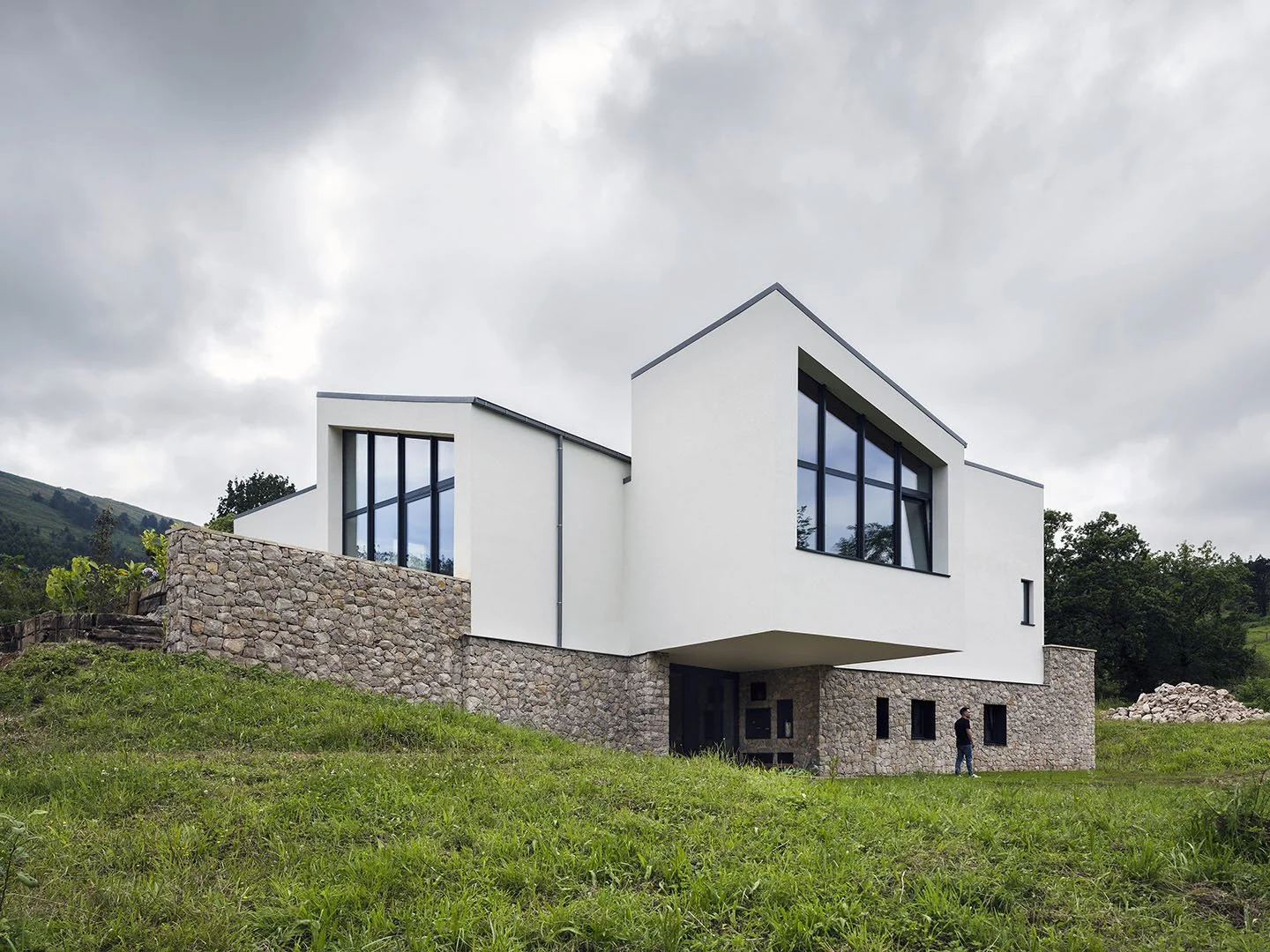
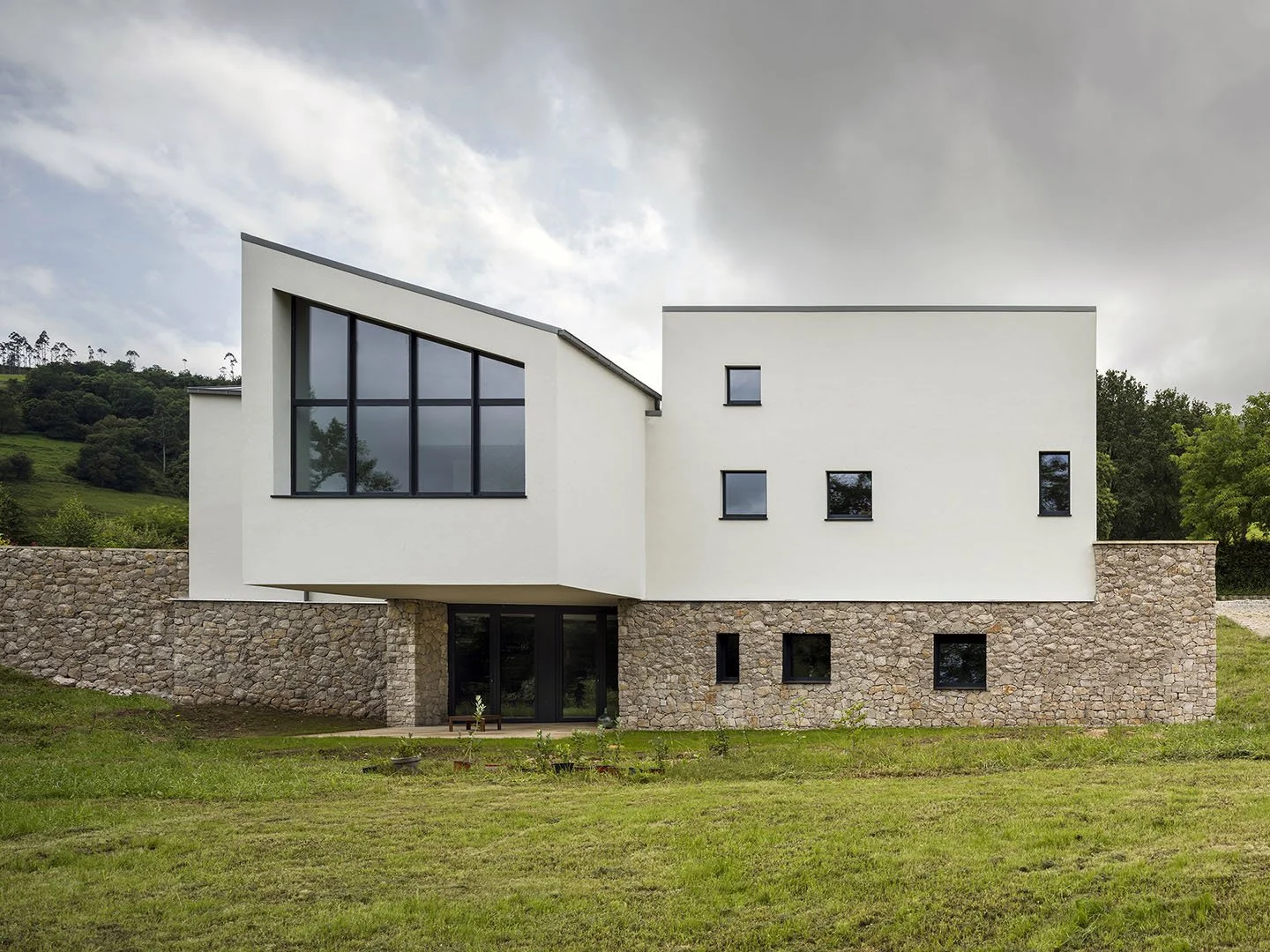
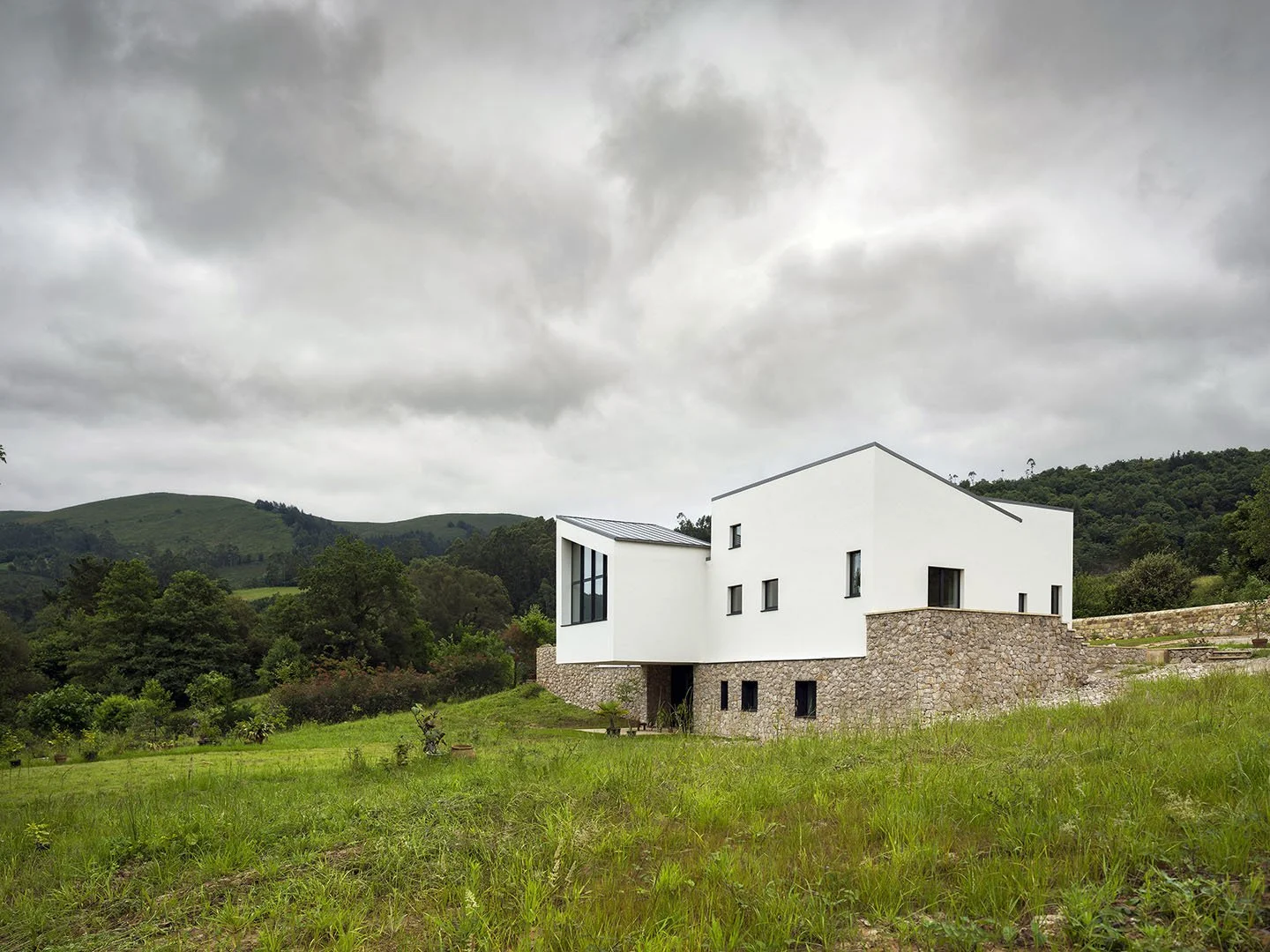
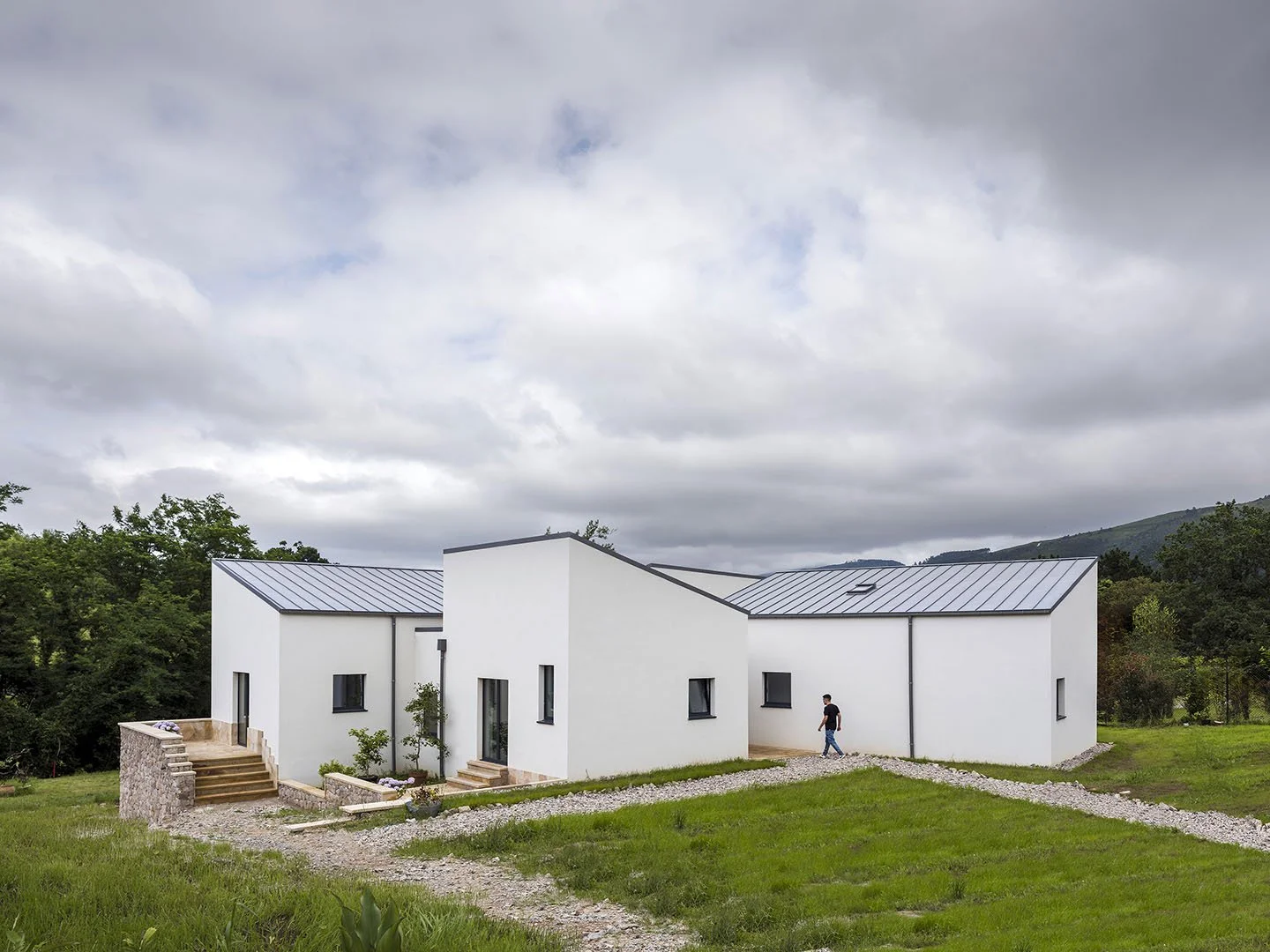
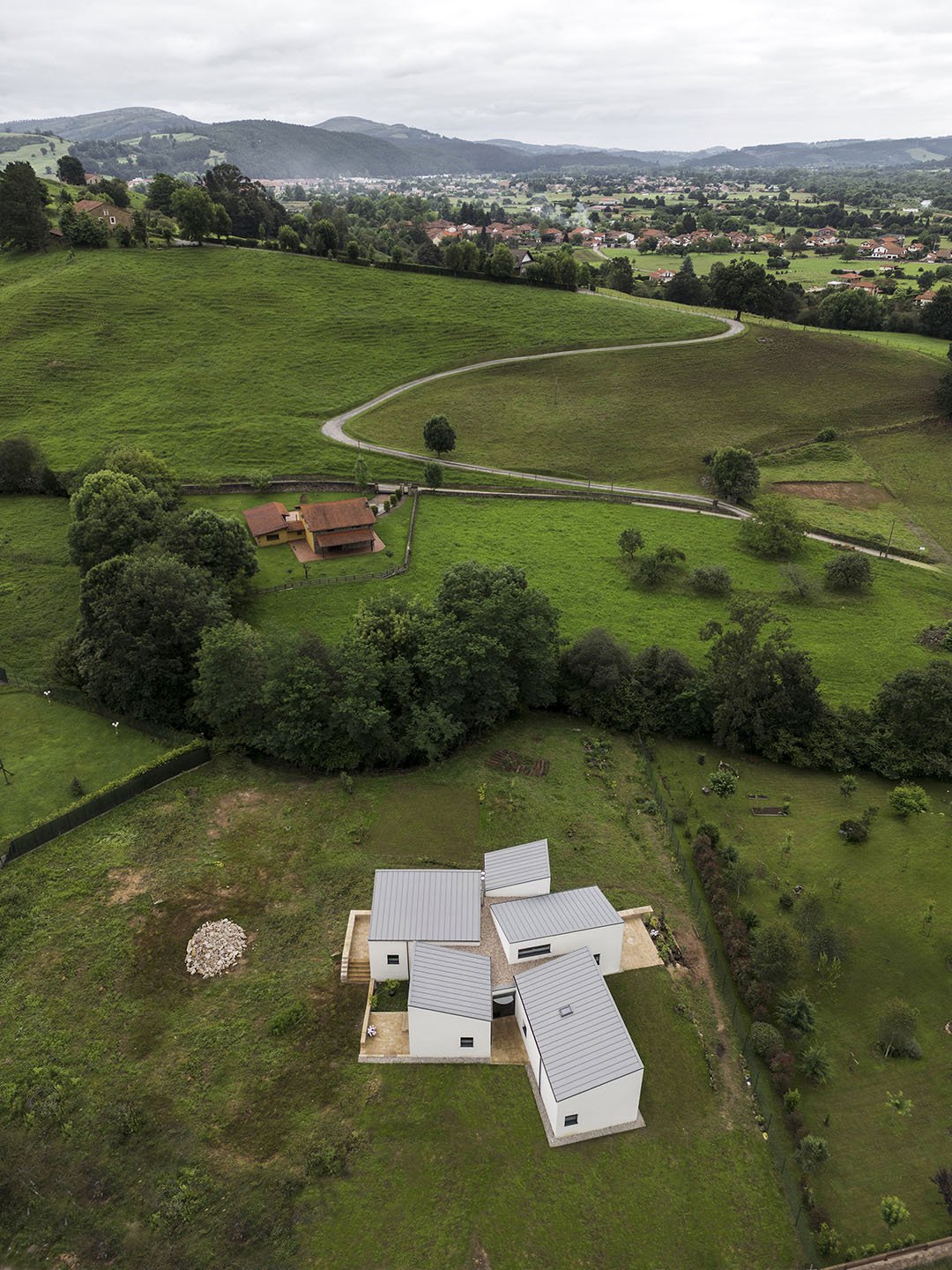
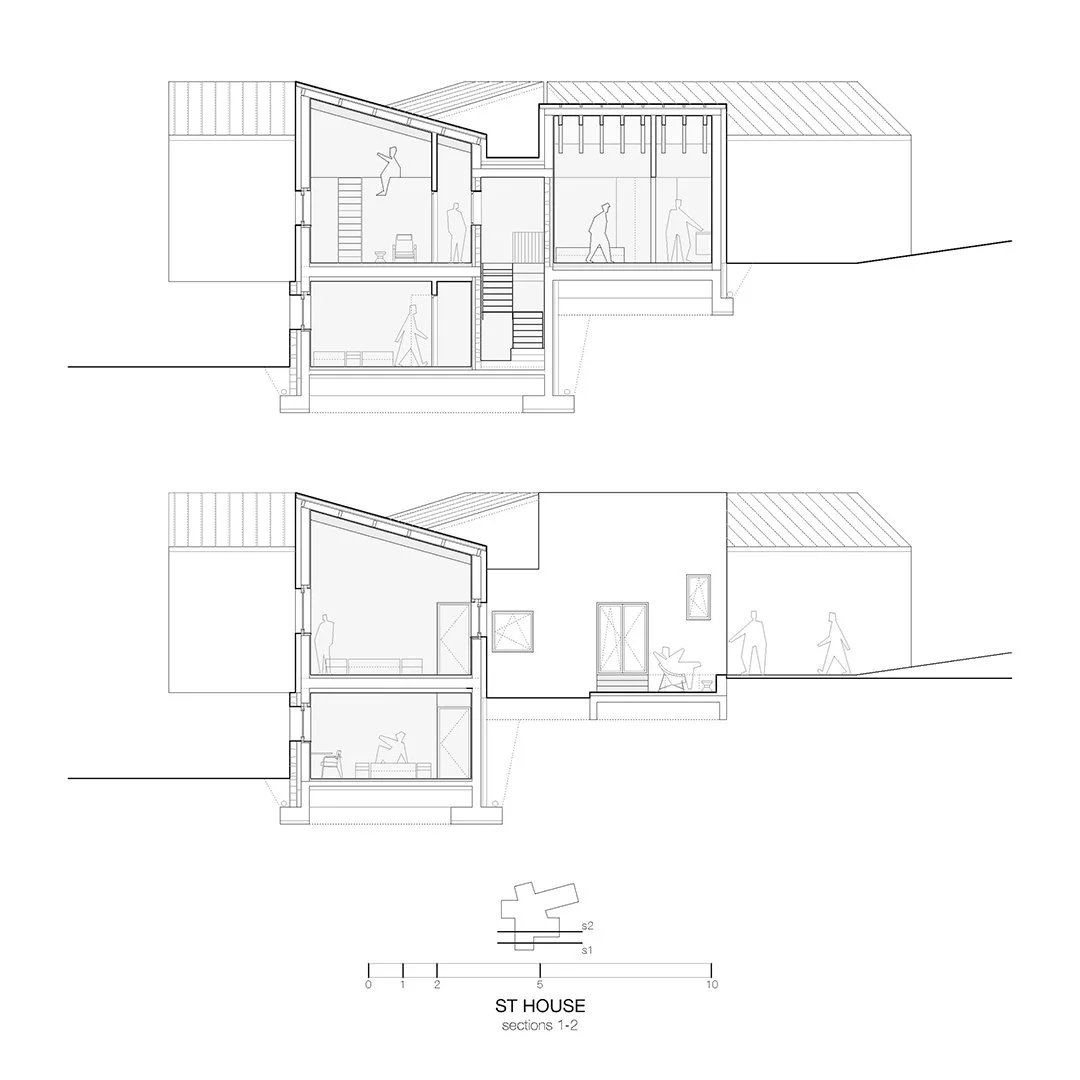
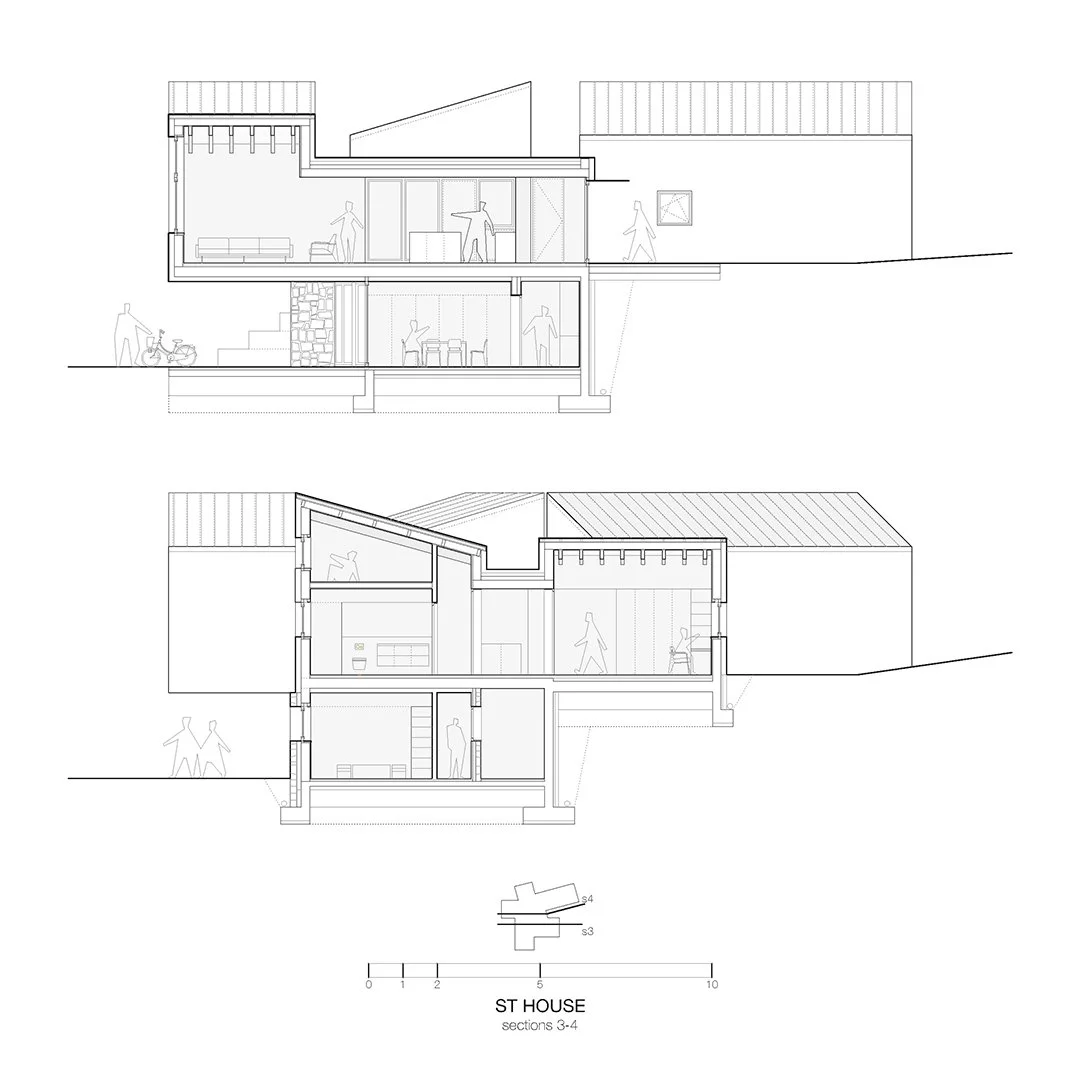
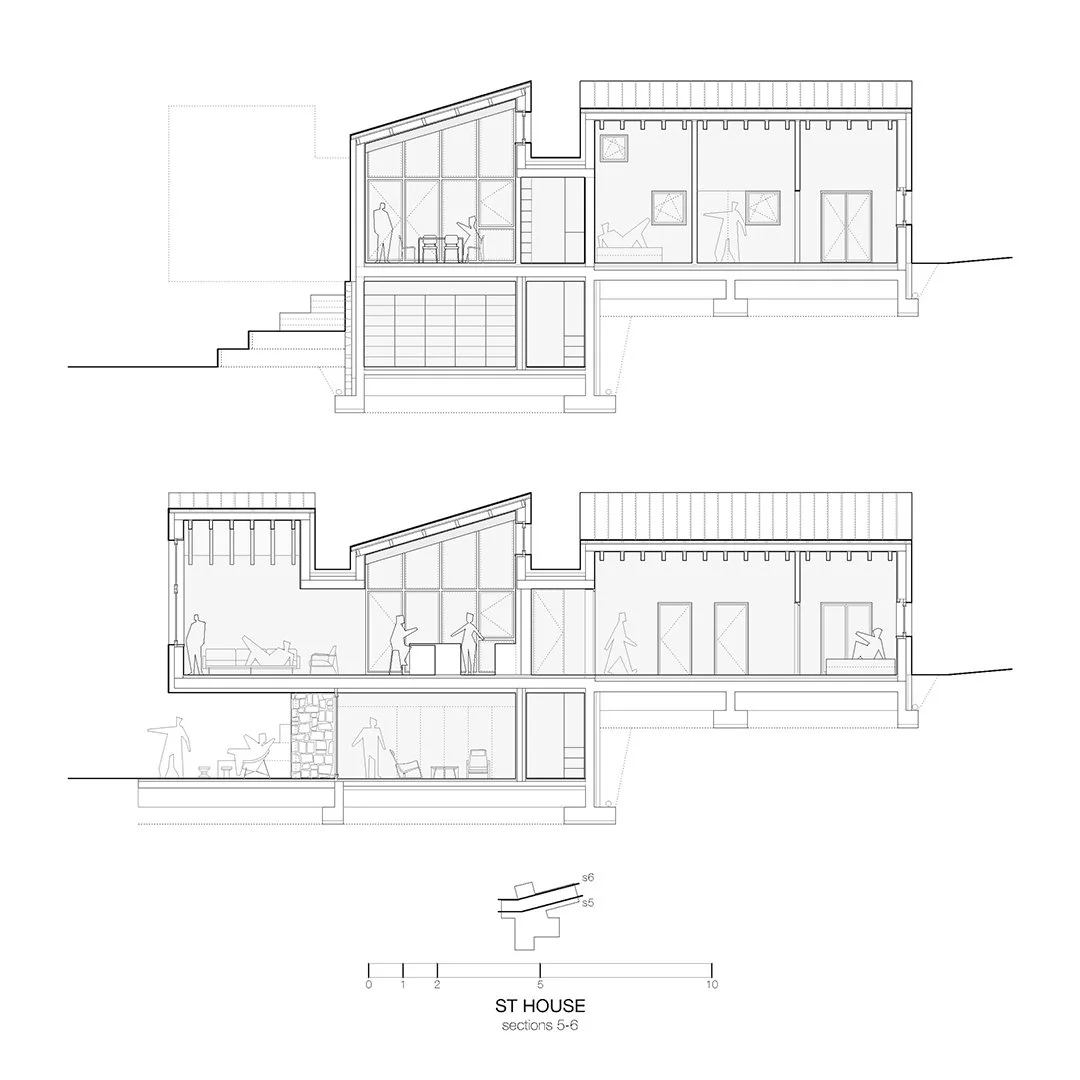
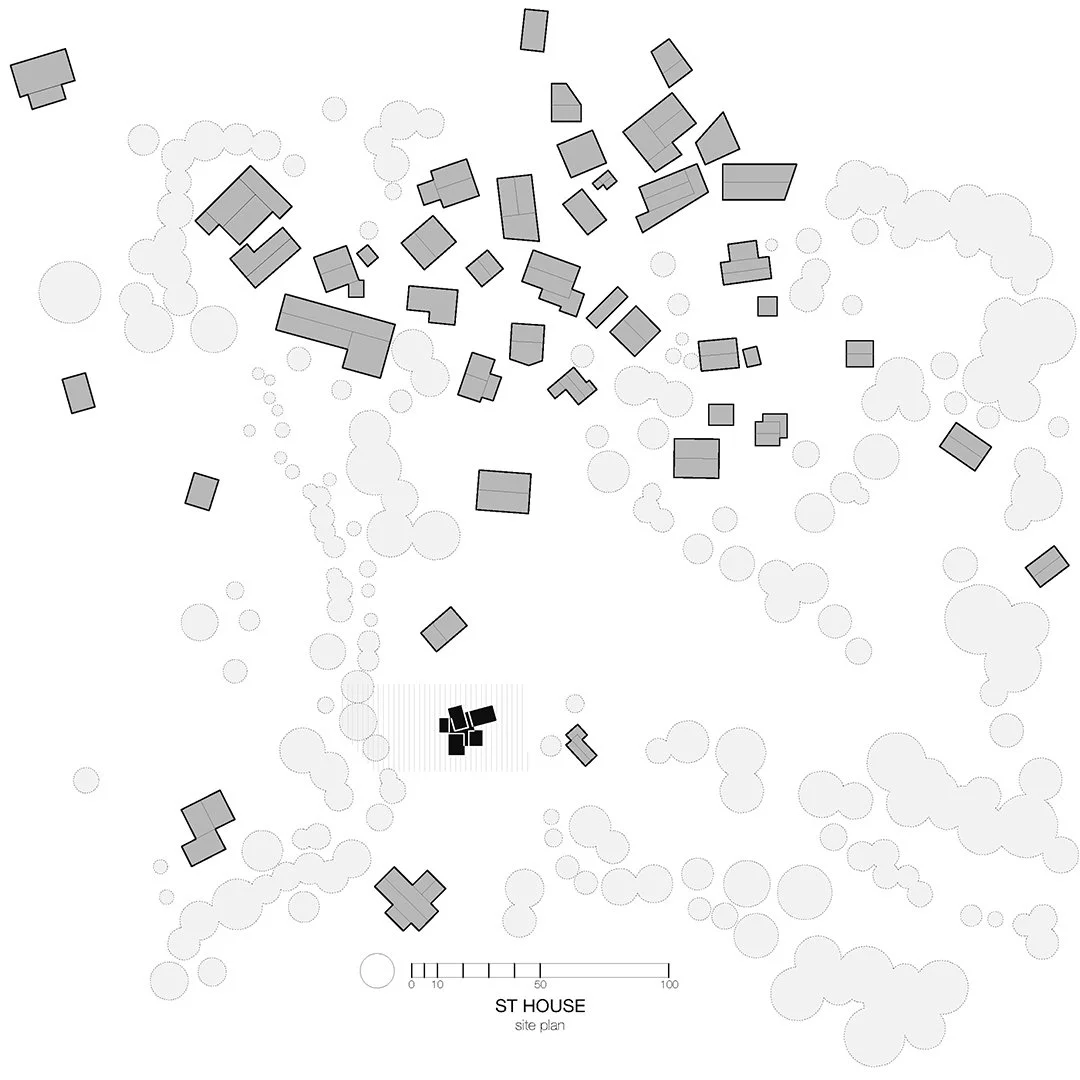
Perched on a sloping site at the edge of Santibáñez, a rural settlement characteristic of Cantabria’s Pasiego valleys, the house is strategically positioned to maximise its relationship with the landscape. Midway up the hillside, with a stream marking its lower boundary, the site commands uninterrupted views in all directions, reinforcing its integration with the natural surroundings.
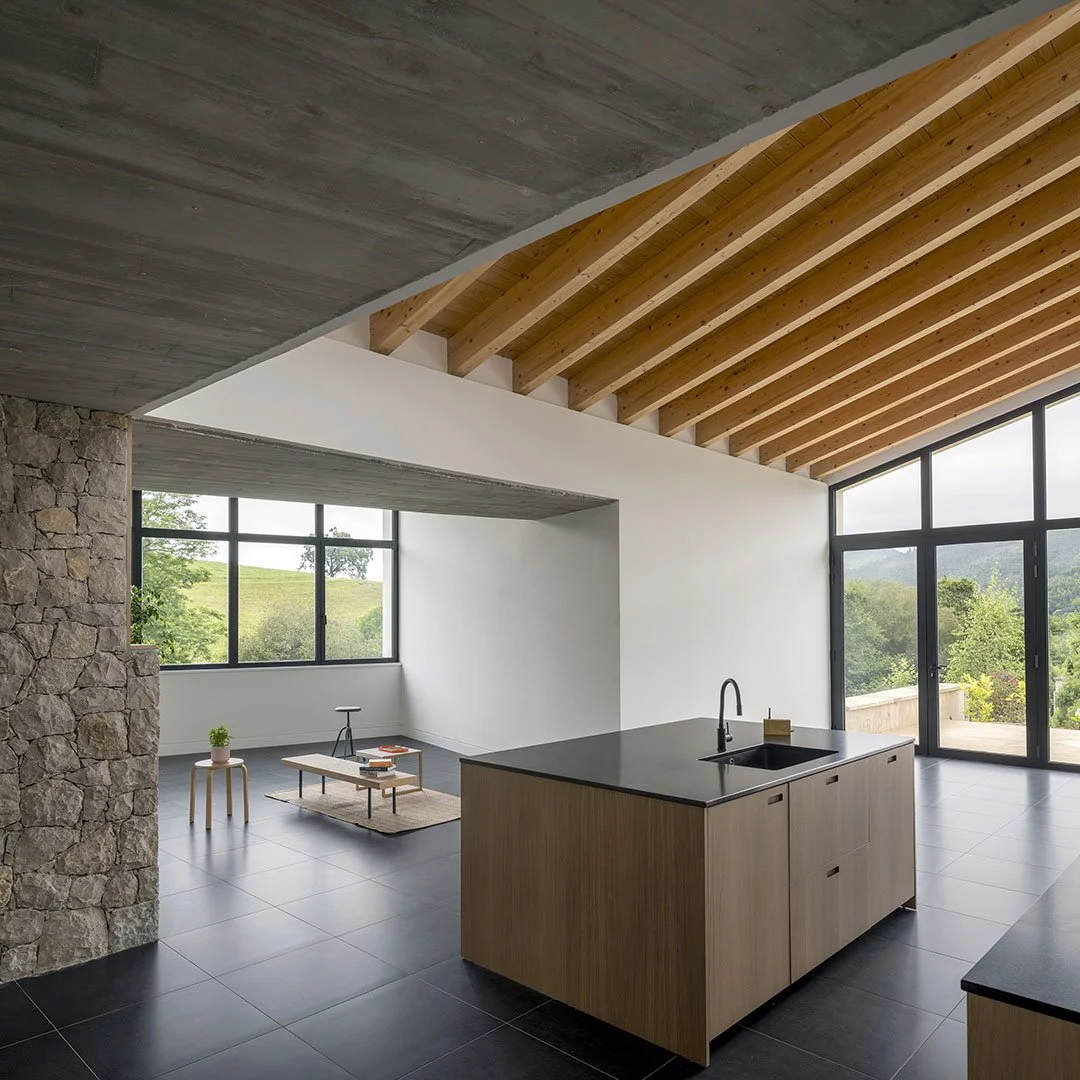
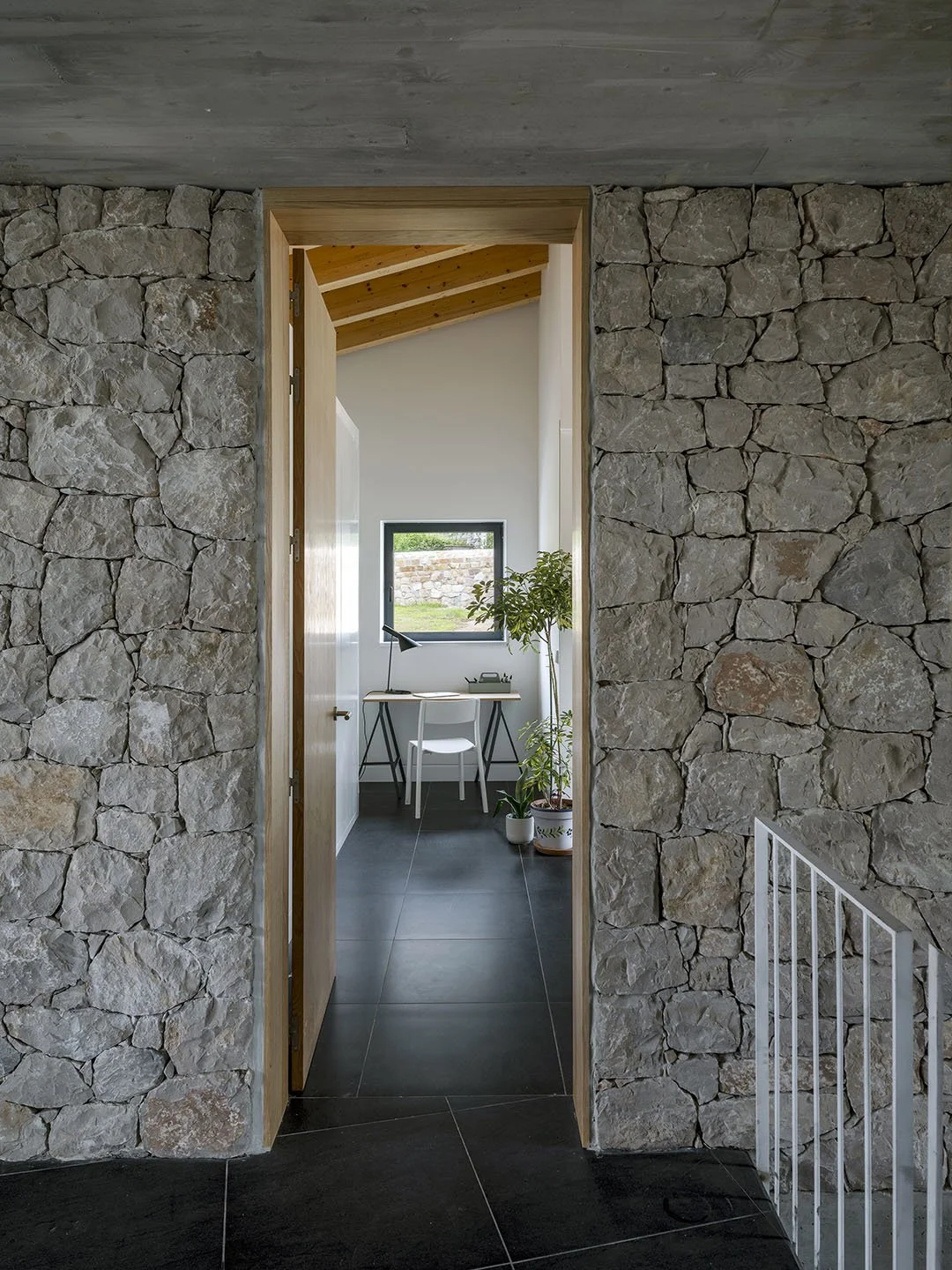
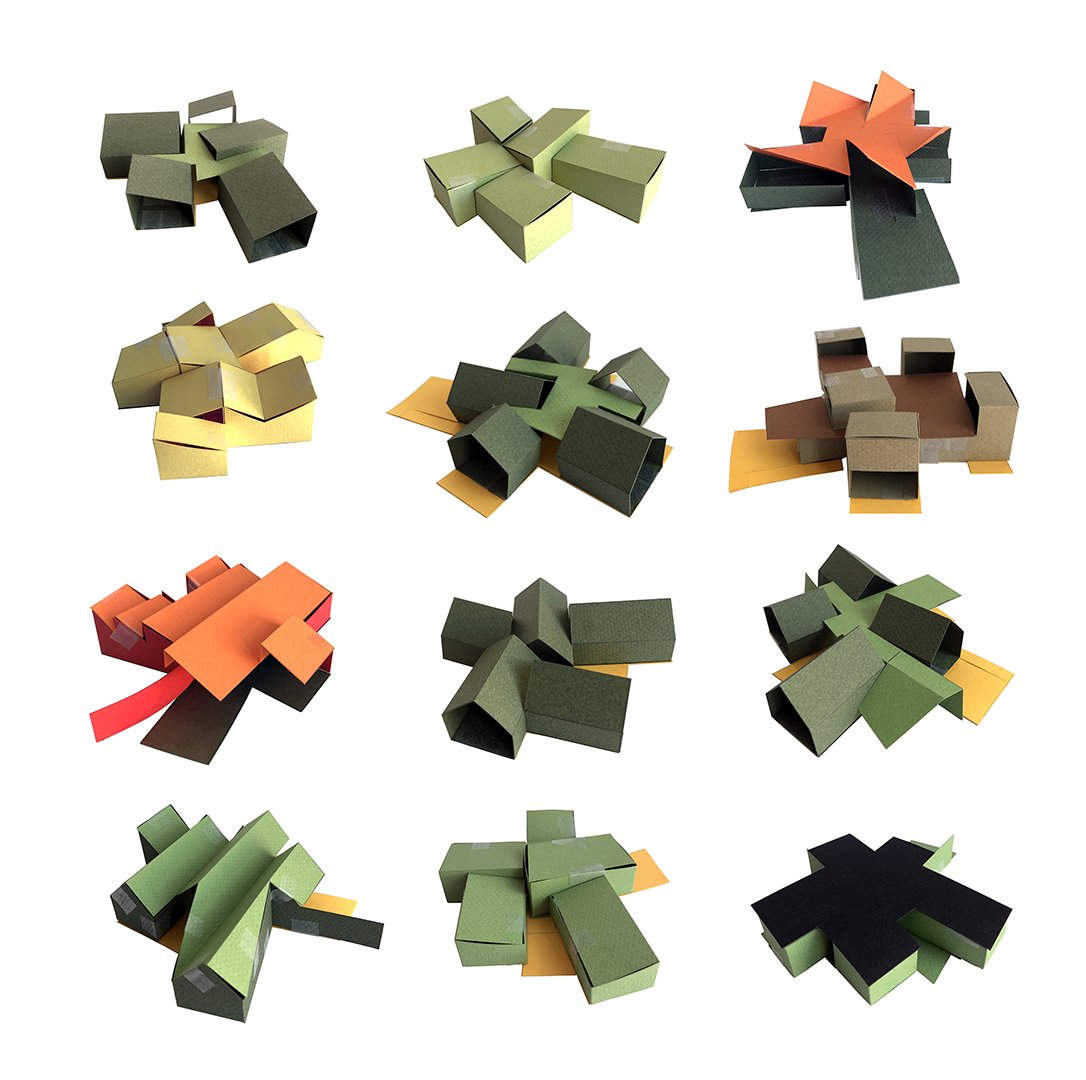
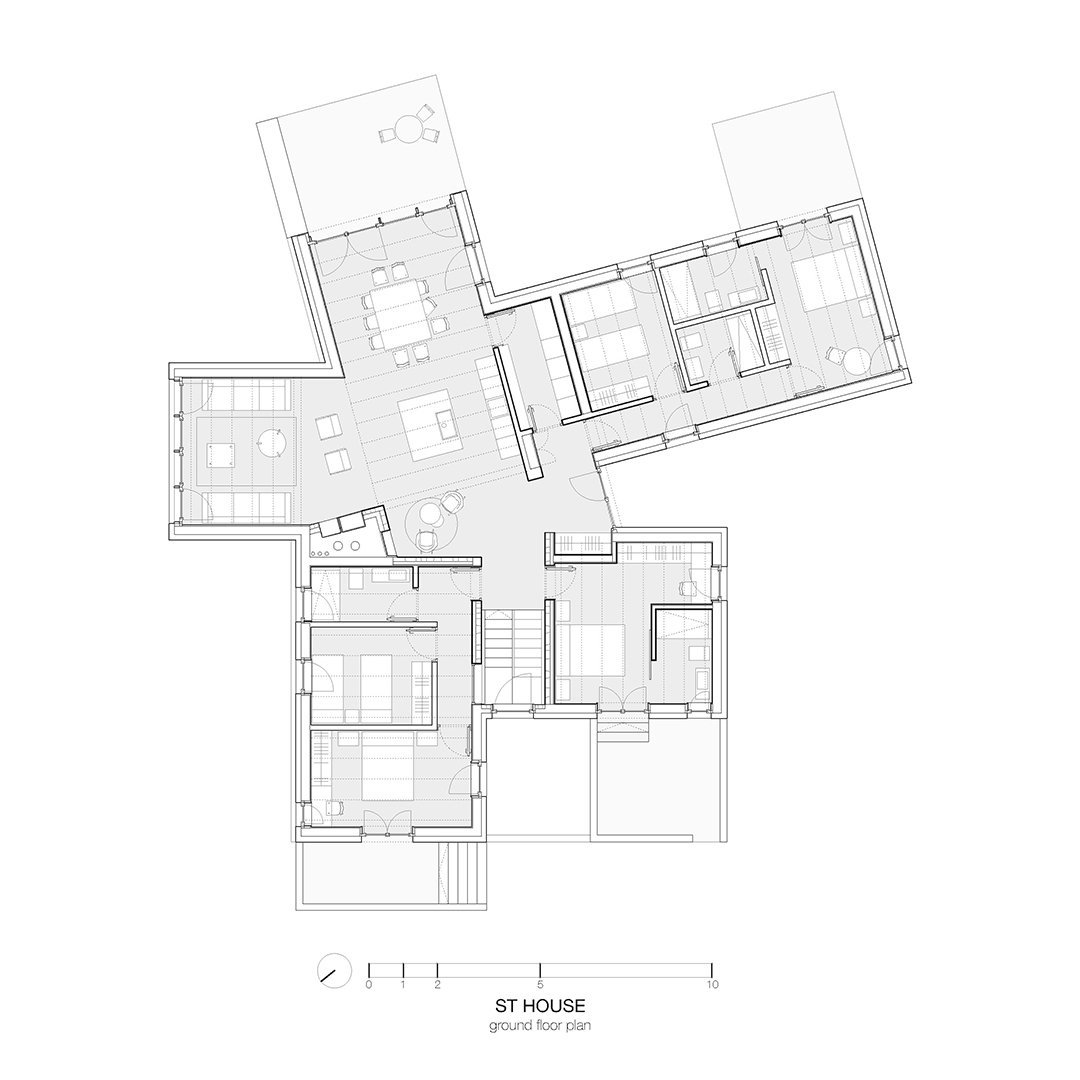
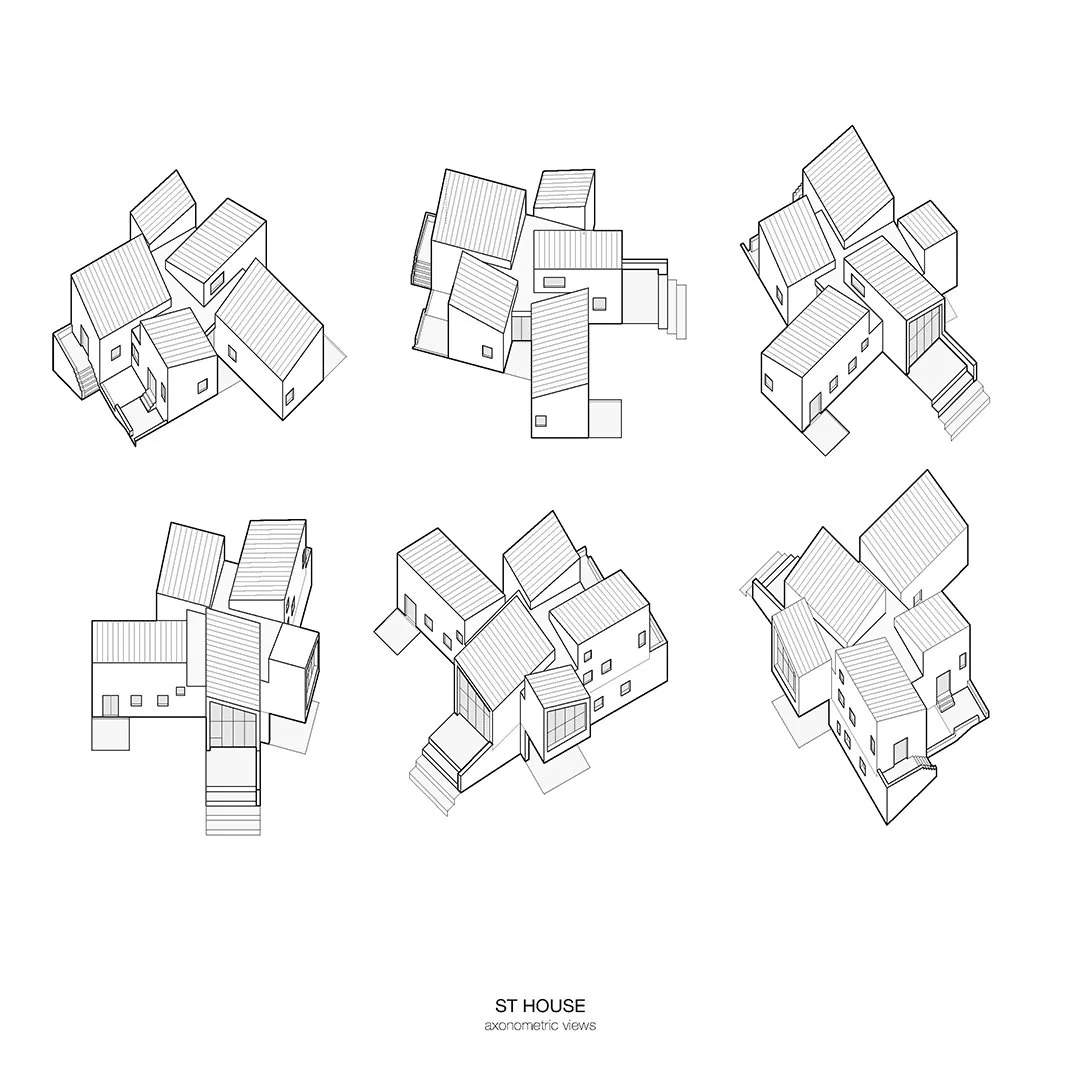
The programme, conceived as a shared family dwelling for three siblings, is articulated through five independent yet interrelated volumes. Three house private living quarters—one for each sibling—ensuring autonomy and seclusion, while the remaining two accommodate communal functions, including living, dining, and kitchen spaces. Circulation and storage are consolidated in the interstitial spaces, which mediate between the individual units. The scheme is designed to be flexible, allowing for dynamic shifts in privacy and occupation, accommodating both shared and solitary living arrangements.
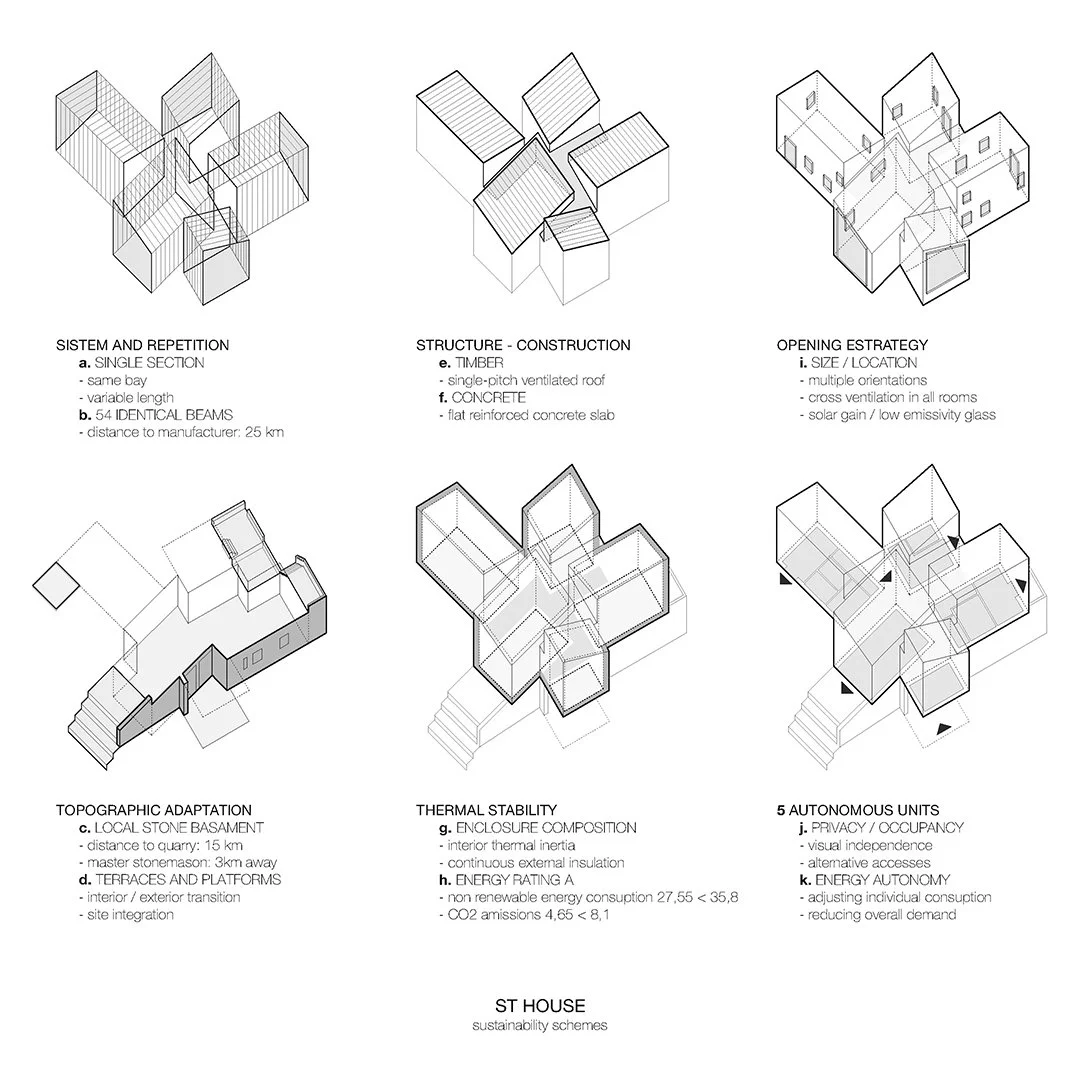
Spatial and material strategies prioritise passive environmental performance. The compact massing and composition of the building envelope—combining high thermal inertia internal walls with a generous external insulation layer—ensure thermal stability while mitigating the high surface-area-to-volume ratio. The calibrated positioning of openings optimises solar gain and promotes cross-ventilation throughout. Each volume operates as an autonomous energy unit, allowing for individual consumption control and reducing overall demand.
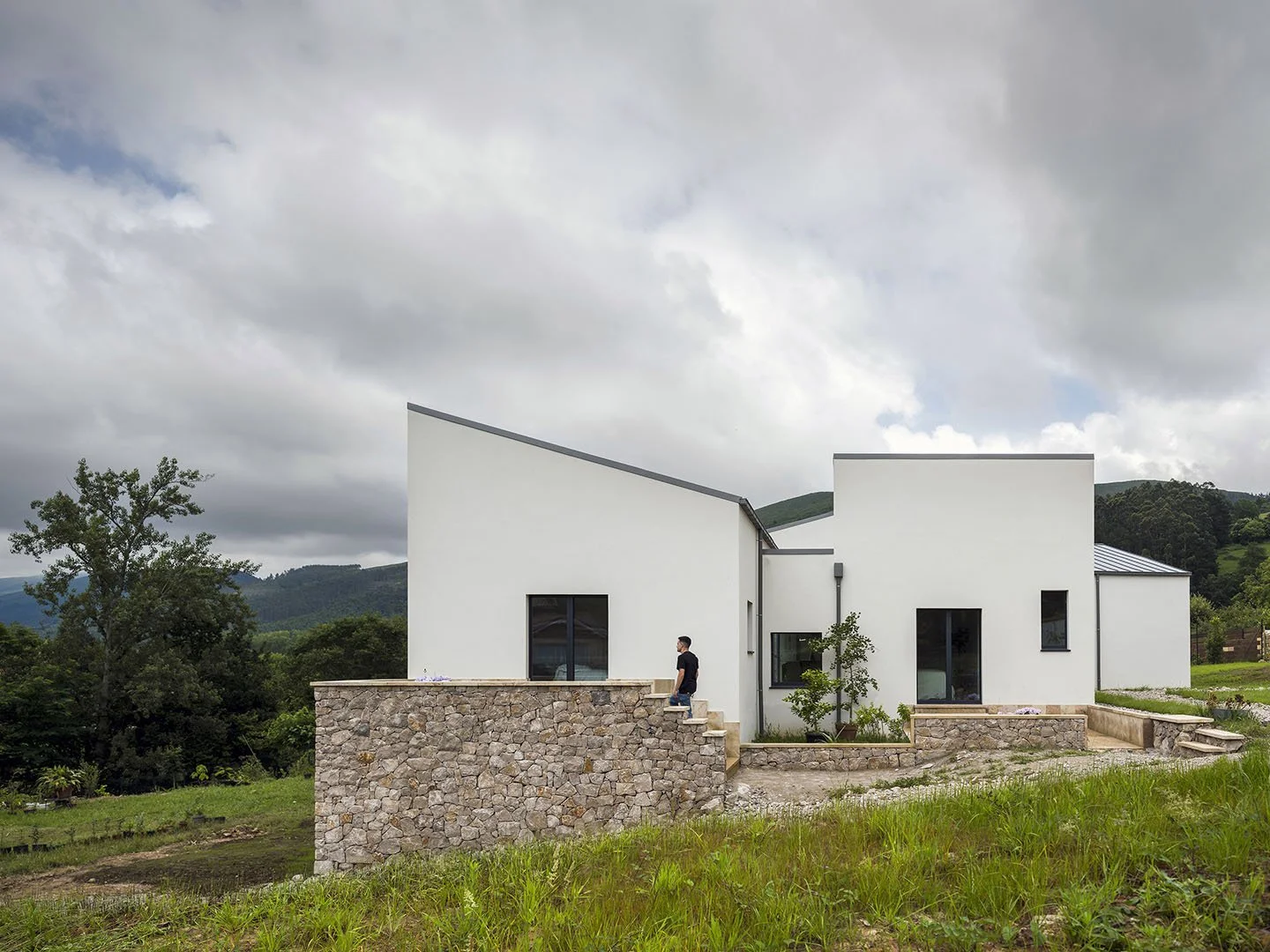
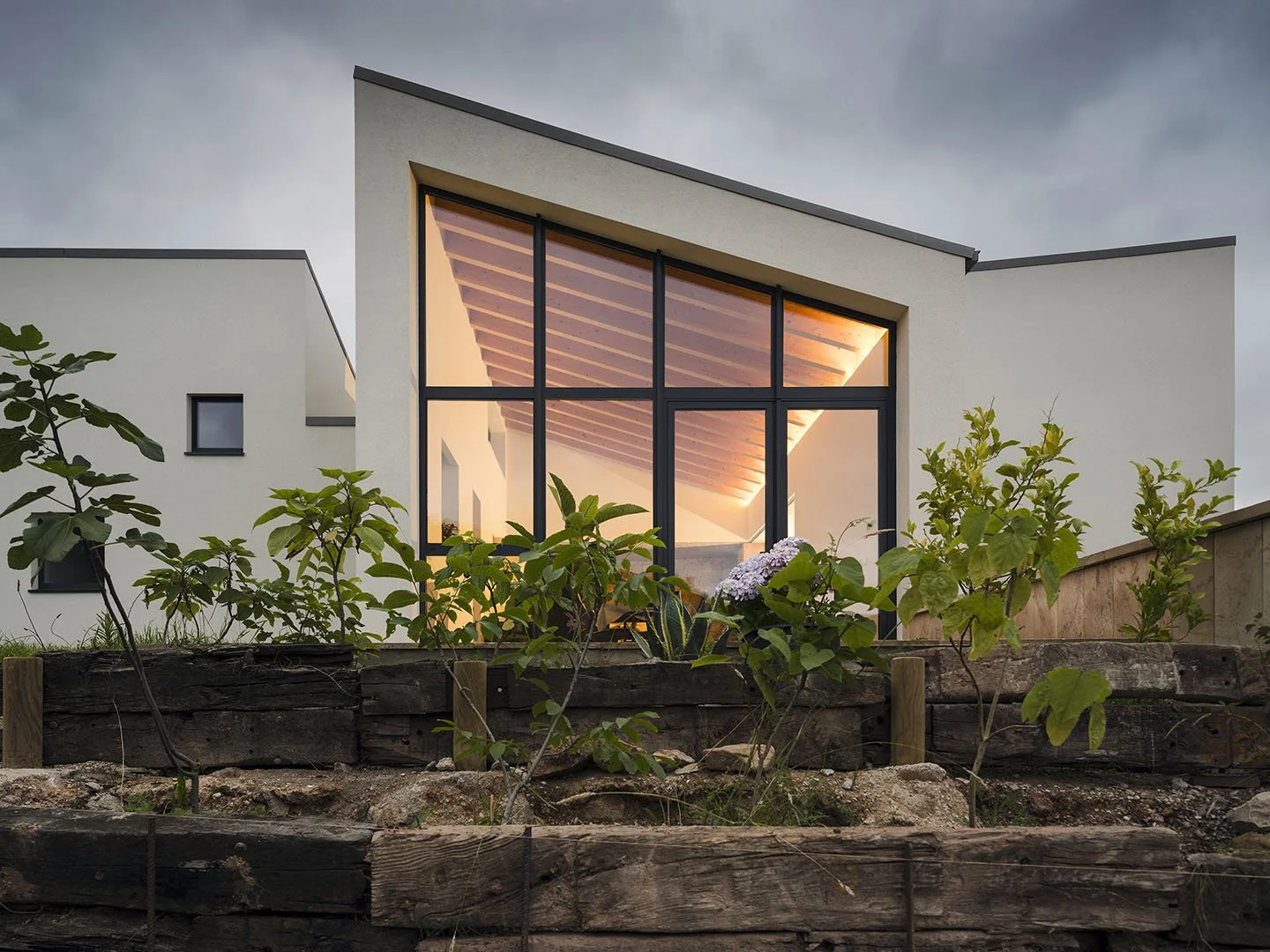
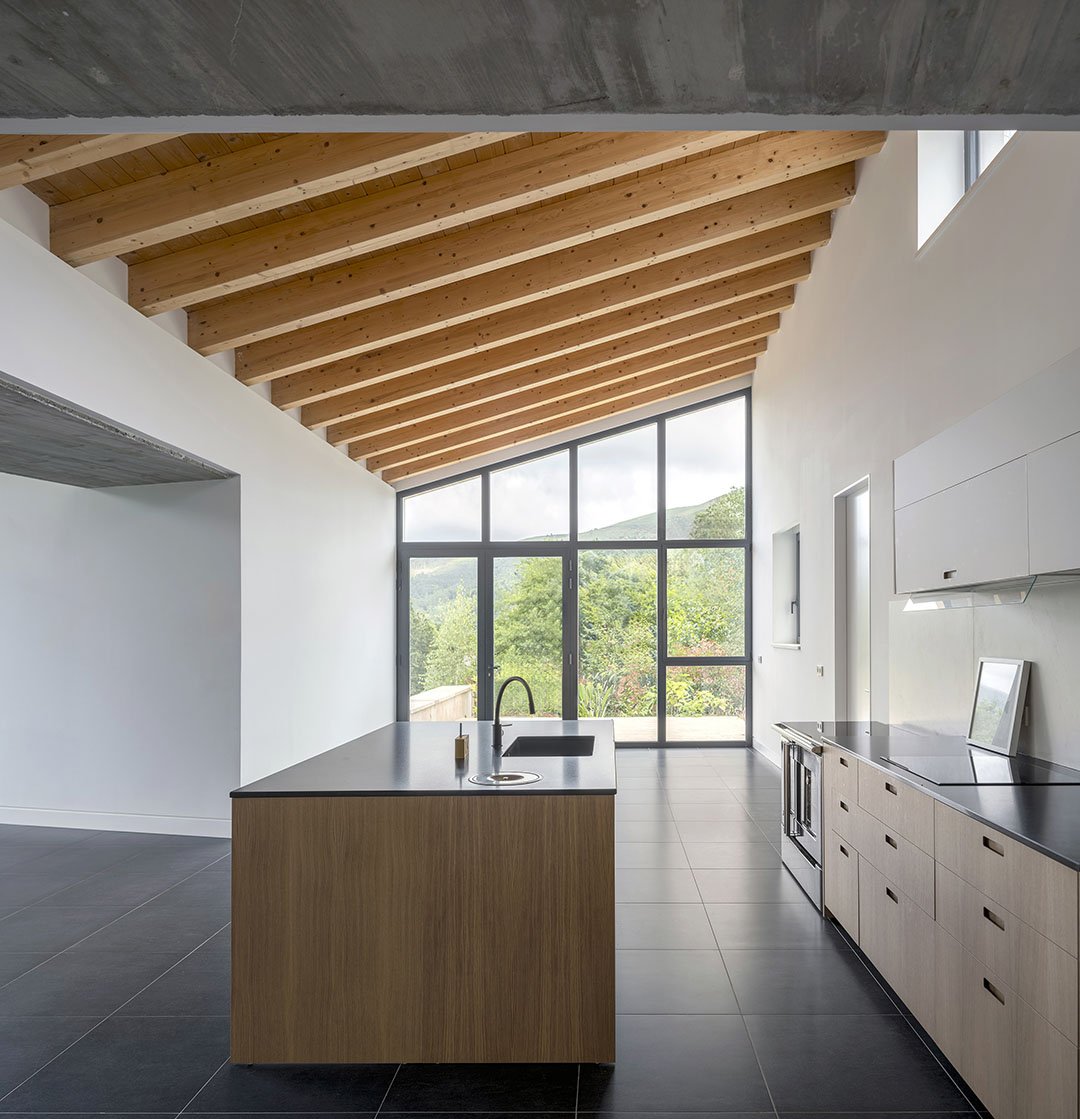
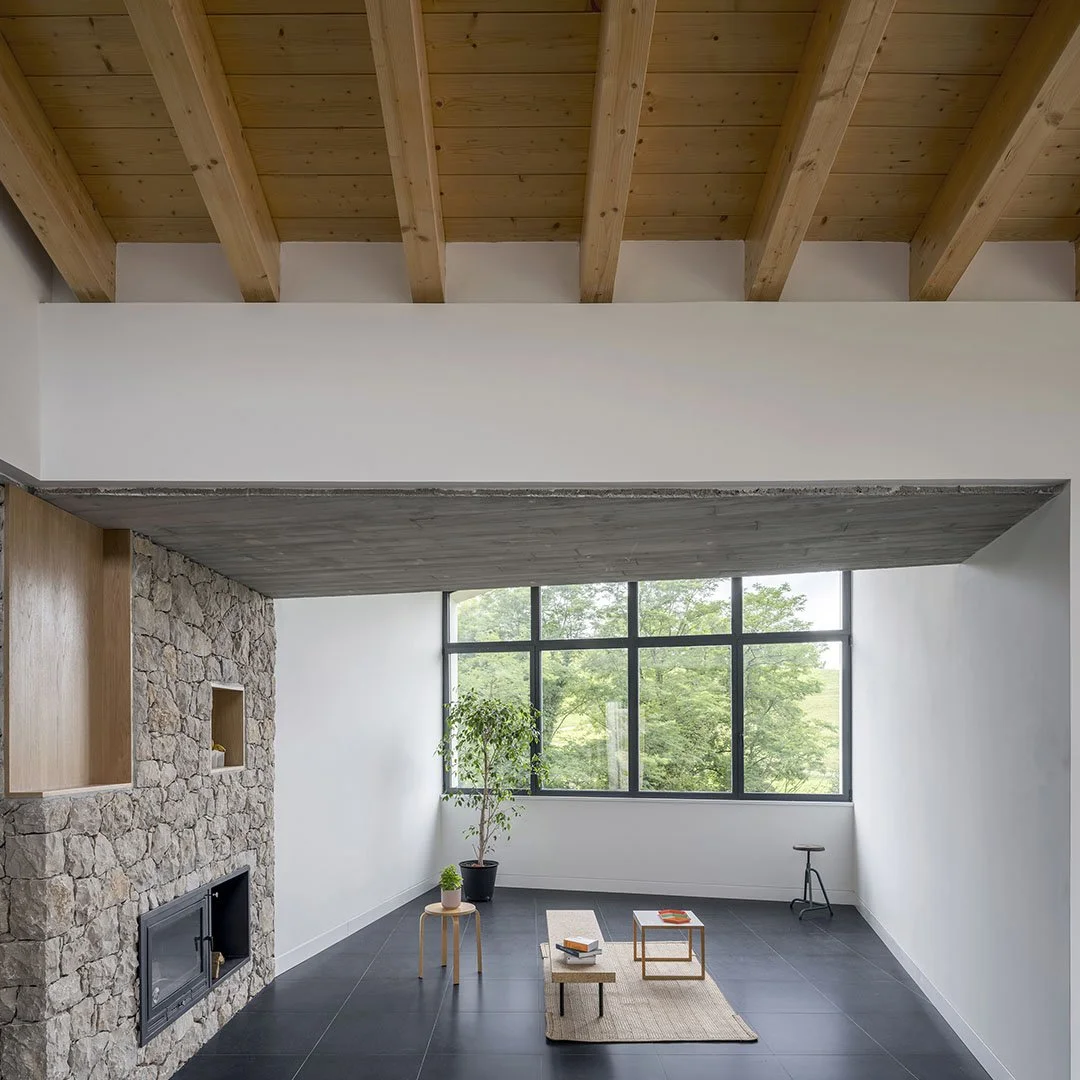
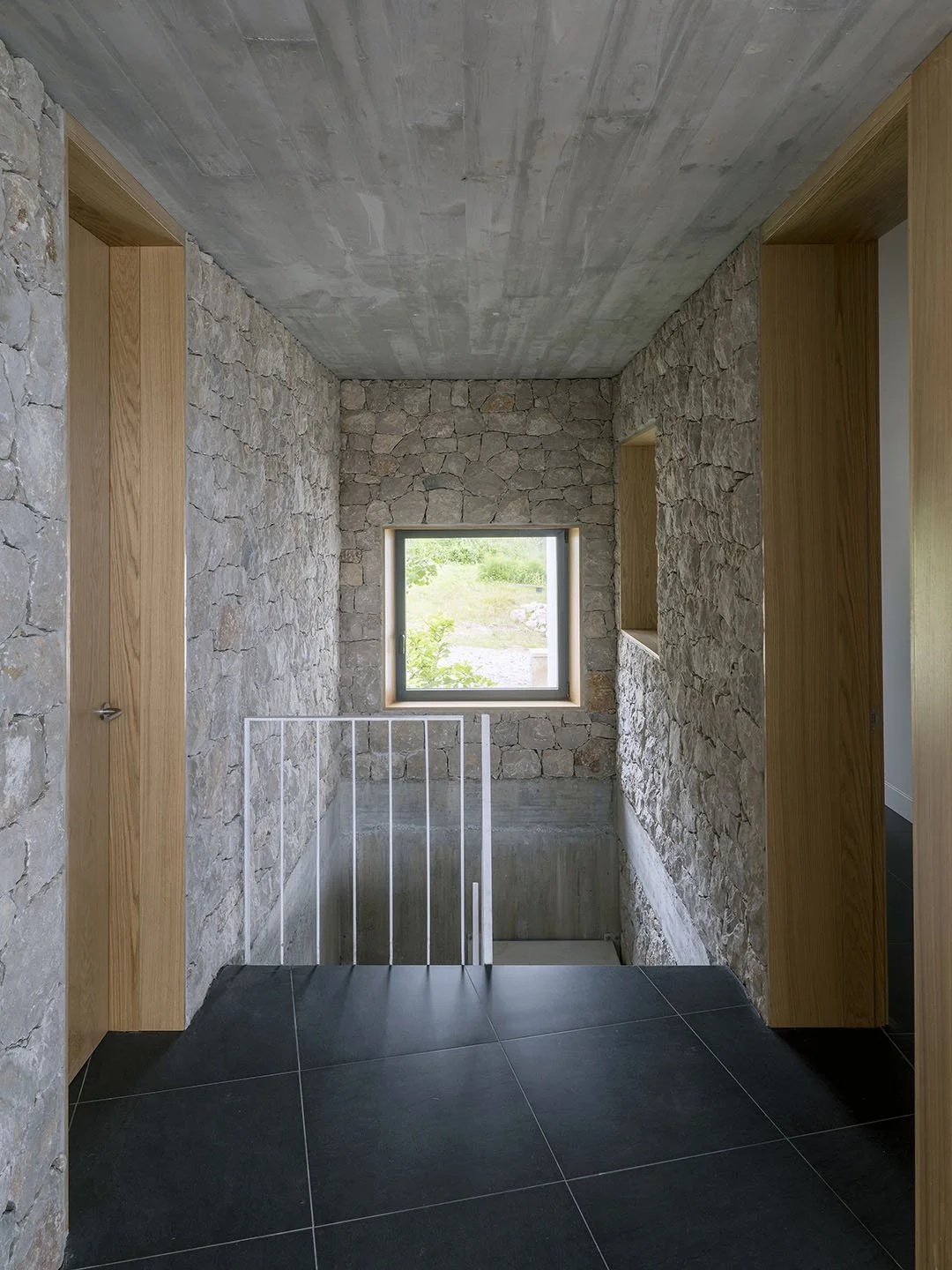
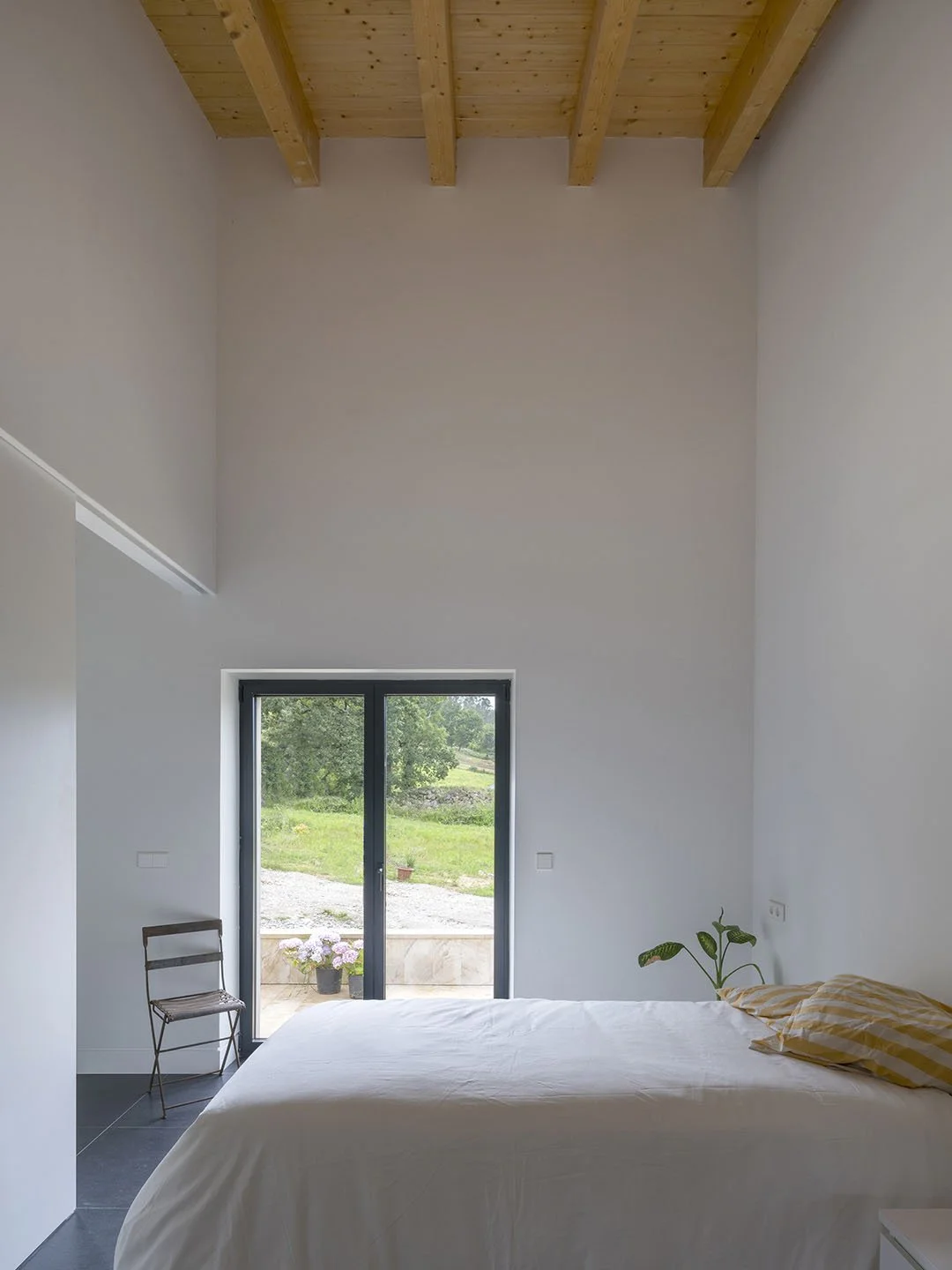
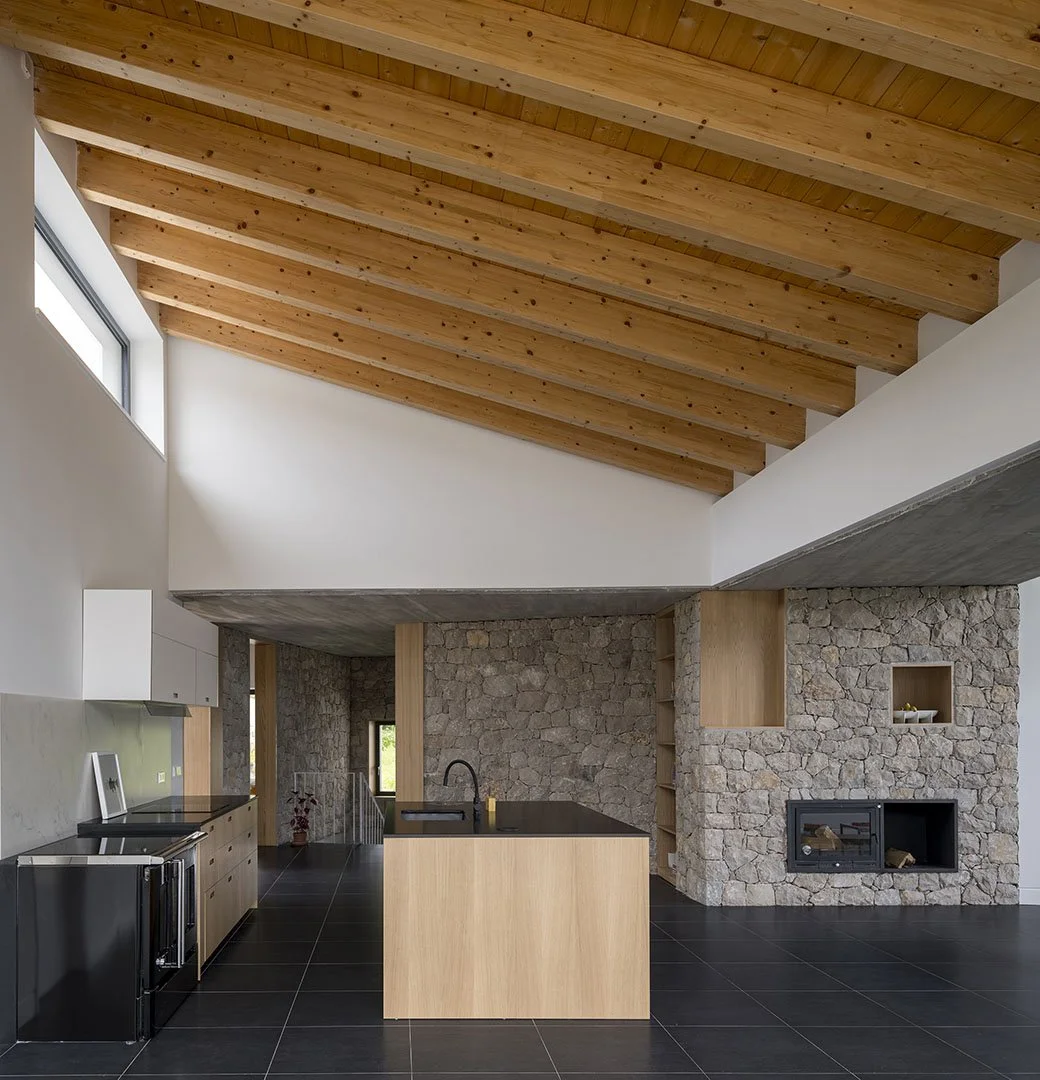
Despite the apparent geometric complexity of the composition, each volume follows a rigorous spatial and constructional logic. The five regular forms are positioned in response to topography and orientation, maximising views and independent access. Constructed with single-pitch timber roofs, they share a consistent structural rhythm, a repetitive sectional profile, and systematic modulation, while their lengths vary according to programme requirements. The interstitial spaces are unified by a flat concrete slab. Exposed timber and concrete define the interior, establishing a clear dialogue between structure, materiality, and domesticity.
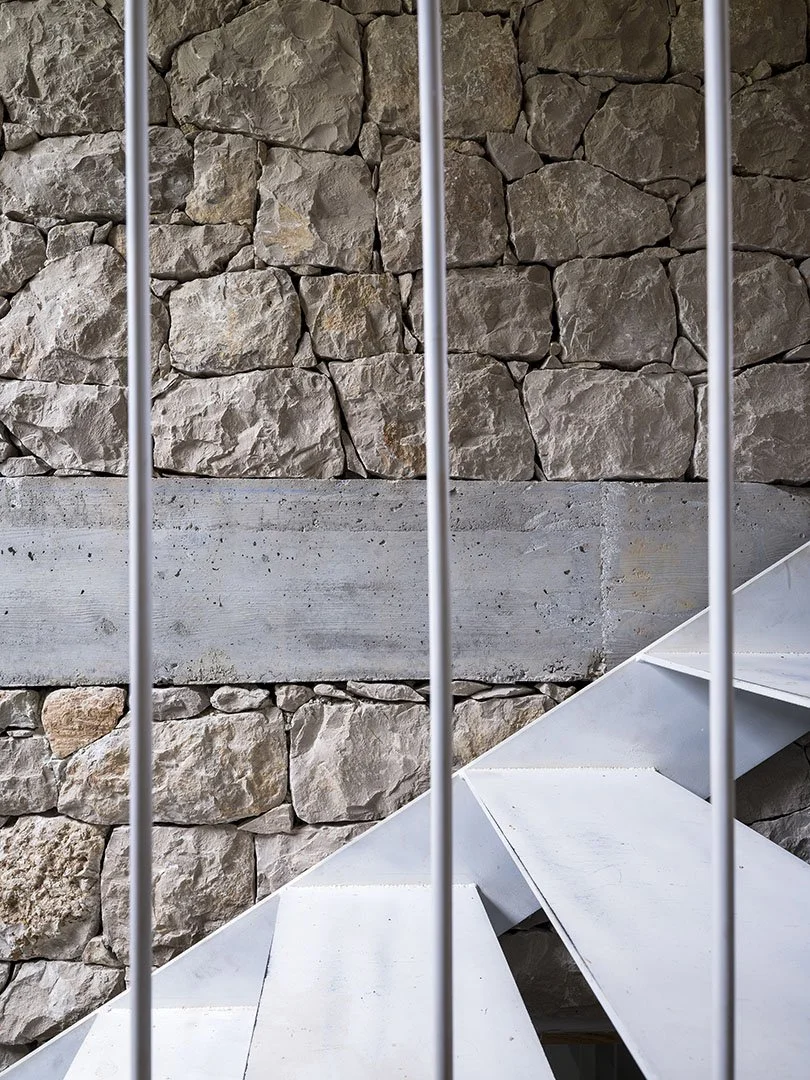
A base of locally sourced stone negotiates the site’s natural slope, anchoring the house within its terrain. A series of terraces and retaining walls articulate the transition between the built and natural environment, embedding the architecture within its context. The façade is conceived as a series of shifting planes that dissolve into the landscape, subtly reinterpreting the local vernacular and the valley’s undulating topography. Text description by the architects.