The commission for Galeo Pavilion emerged from a client’s request for an independent lodging unit, conceived as a space primarily for adolescents and their guests, yet located on the same coastal site as the family’s main holiday residence in Chorrillos, central Chile. The brief was direct: a freestanding pavilion of 8 by 8 meters on a pre-prepared clearing, with earthworks and retaining walls already completed and construction intended to begin within a month.
This framework imposed both clarity and urgency on the architectural response. The design needed to be resolved quickly, with precise decisions regarding form, structure, and materials, while also integrating with a landscape that had already been partially shaped. The resulting pavilion is compact but highly flexible, designed to operate both as a semi-private dwelling and as a communal gathering space.
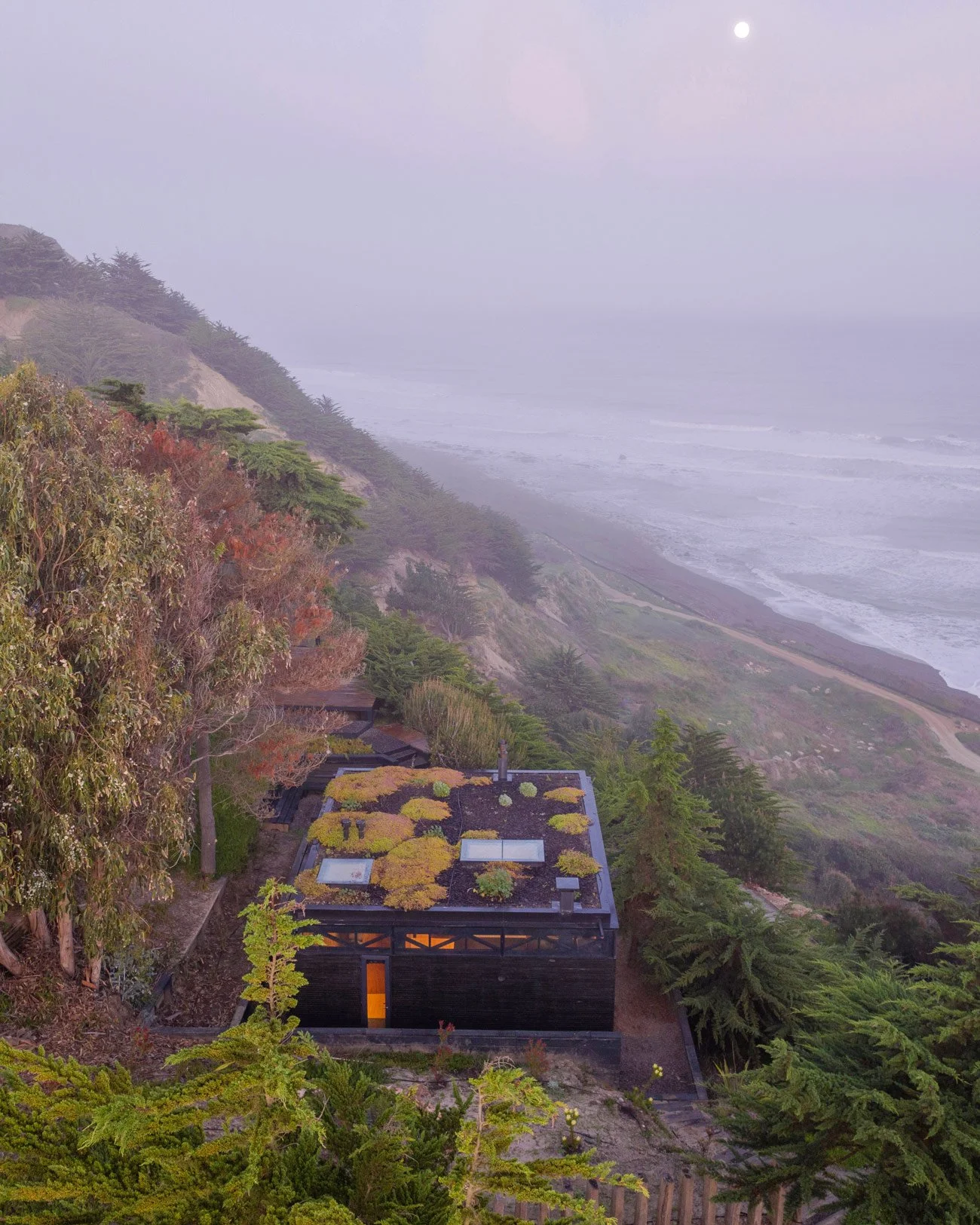
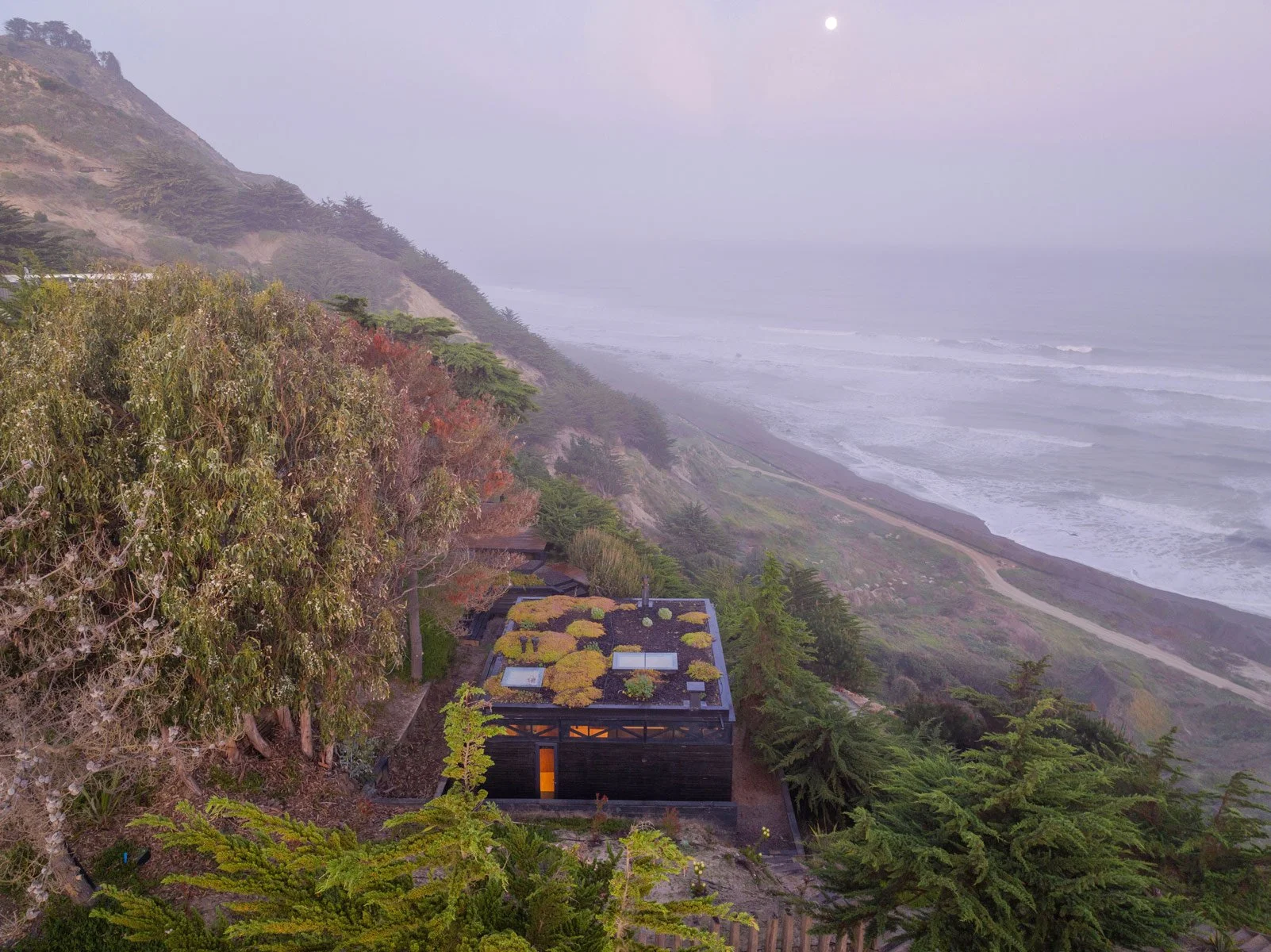
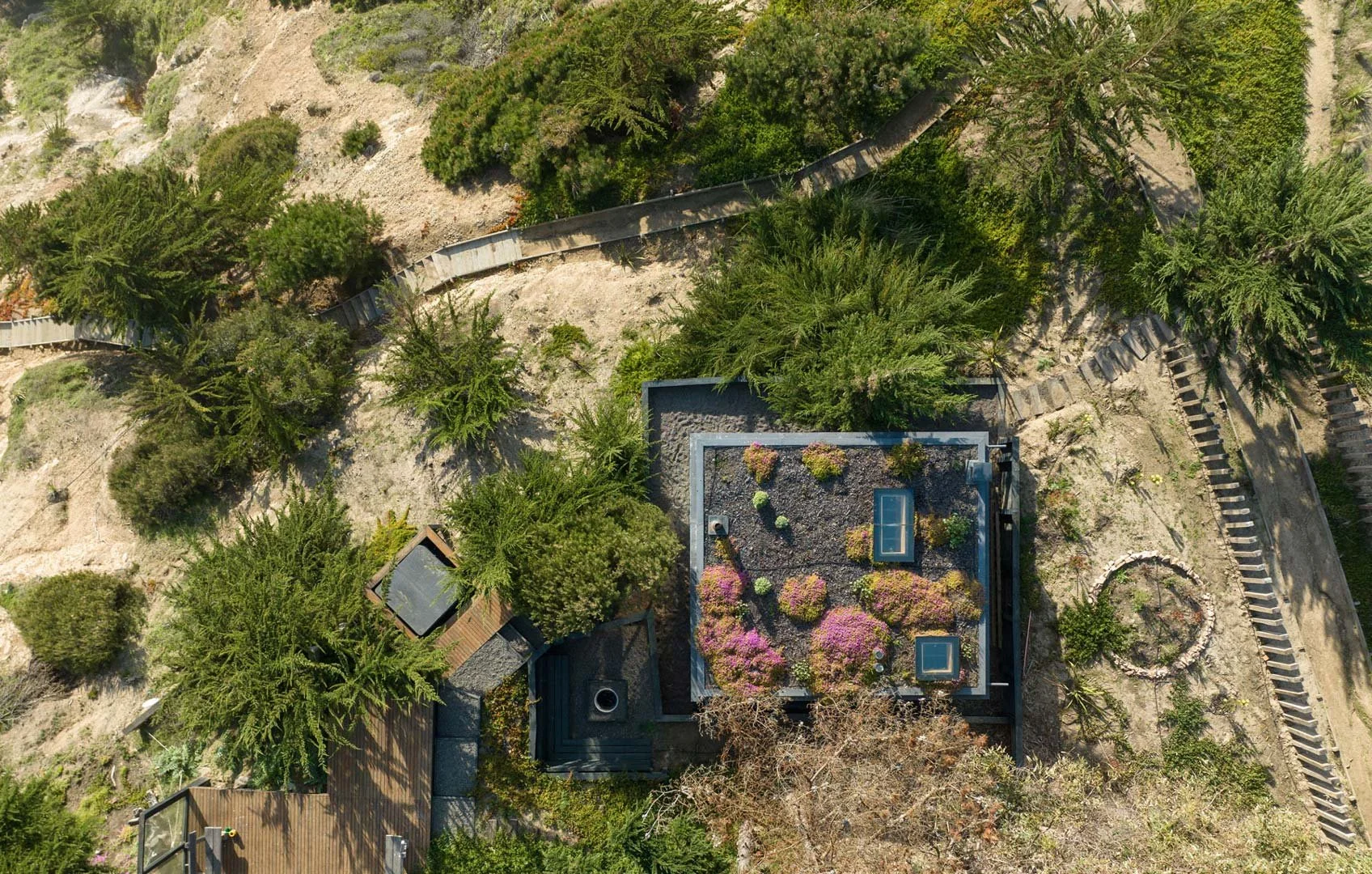
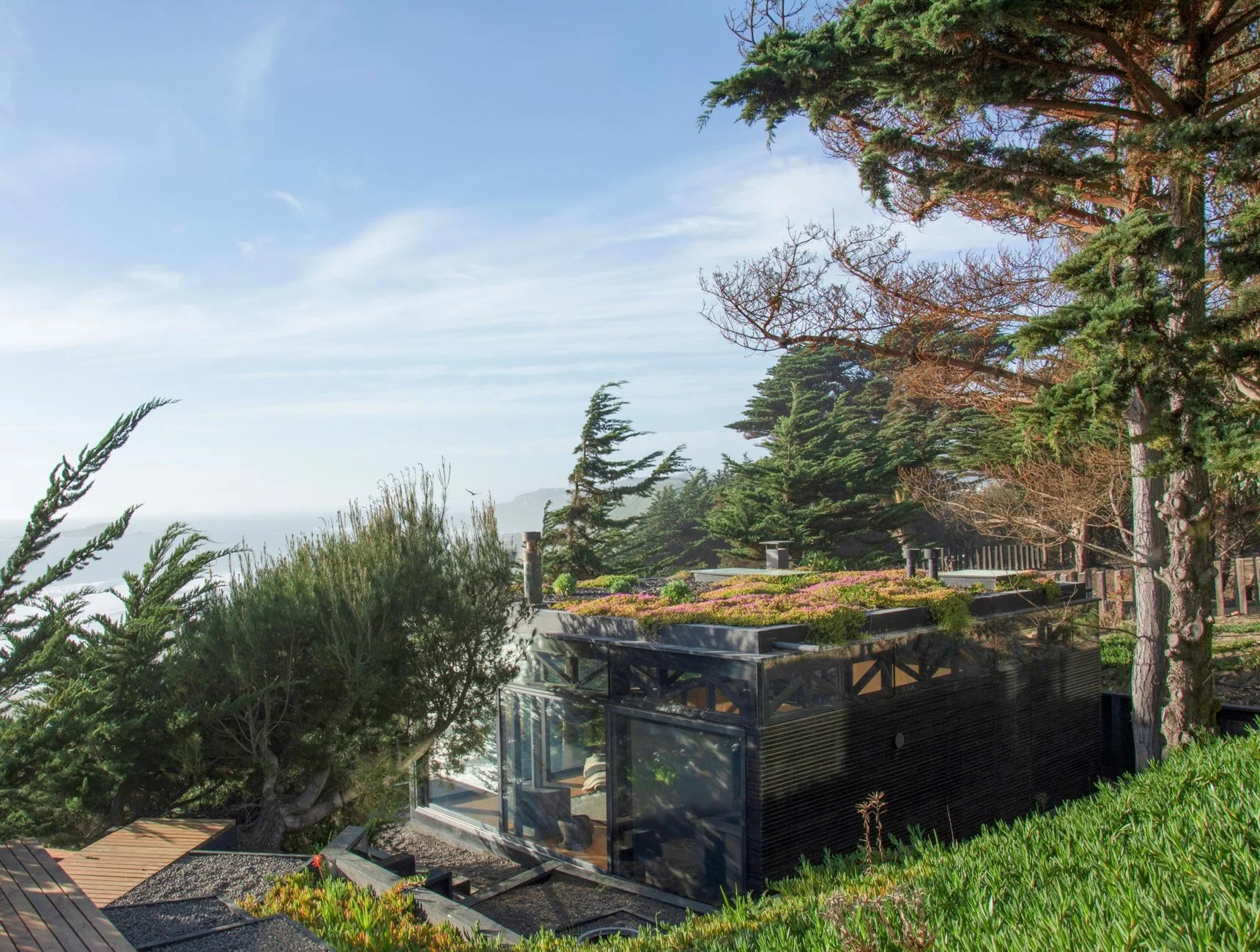
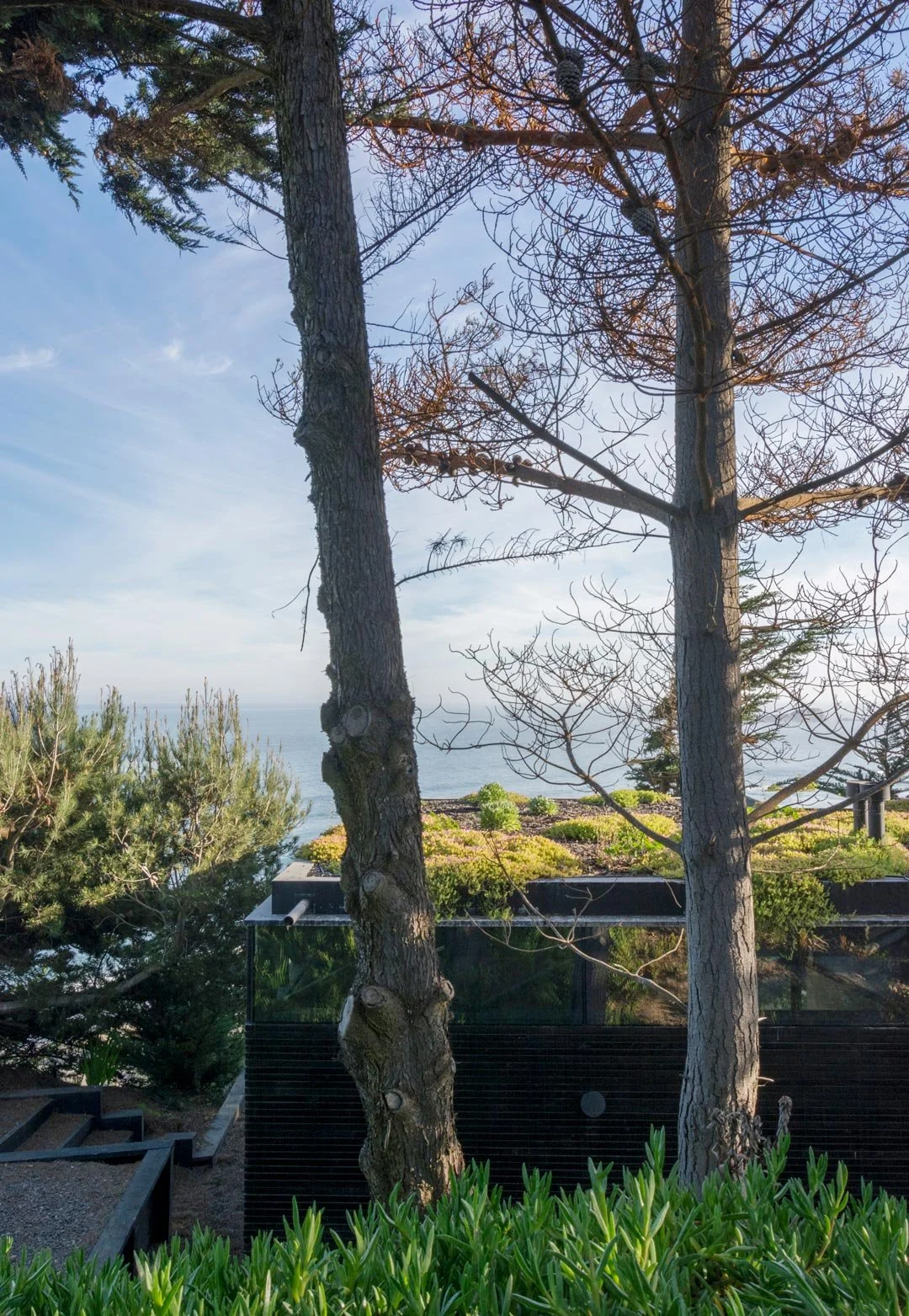
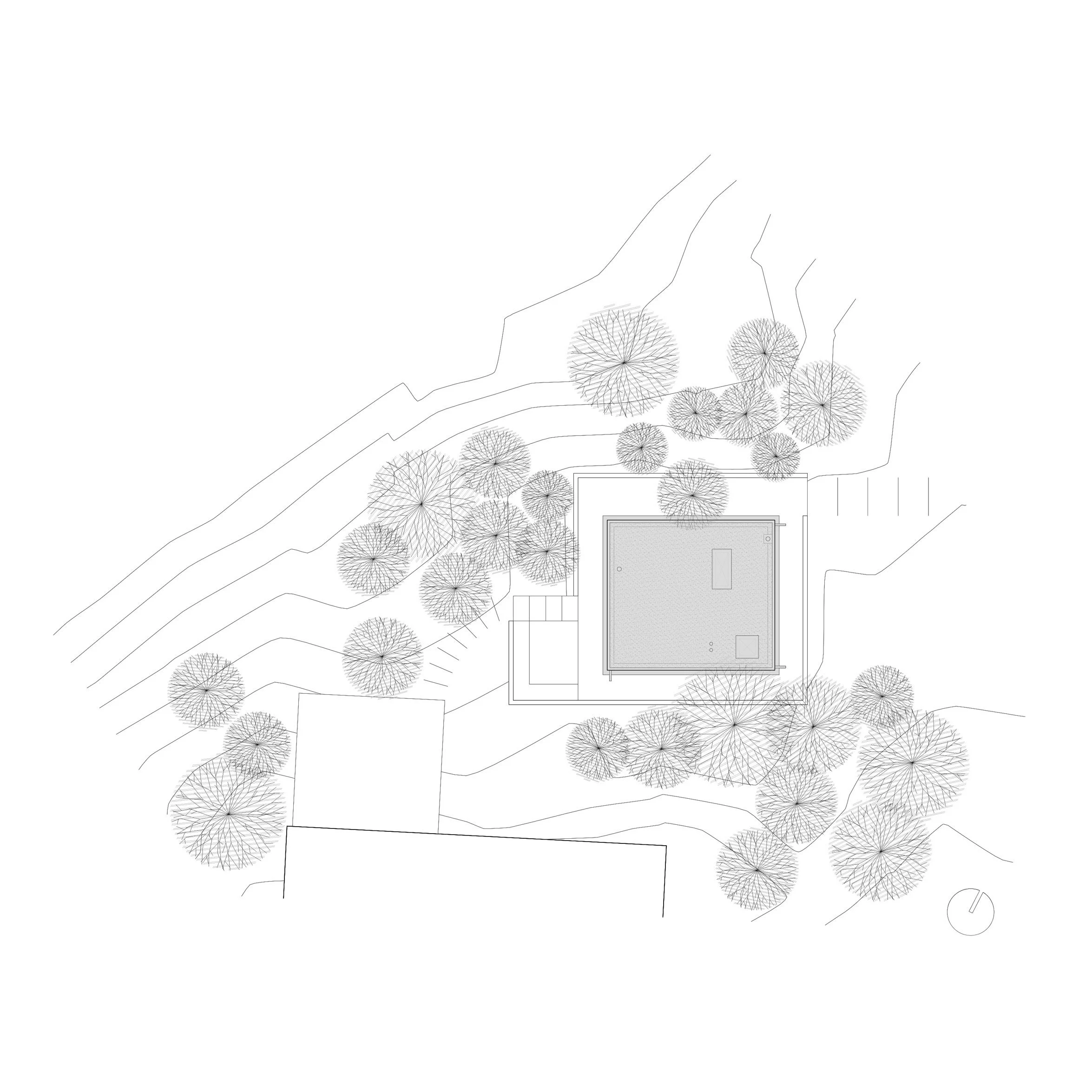
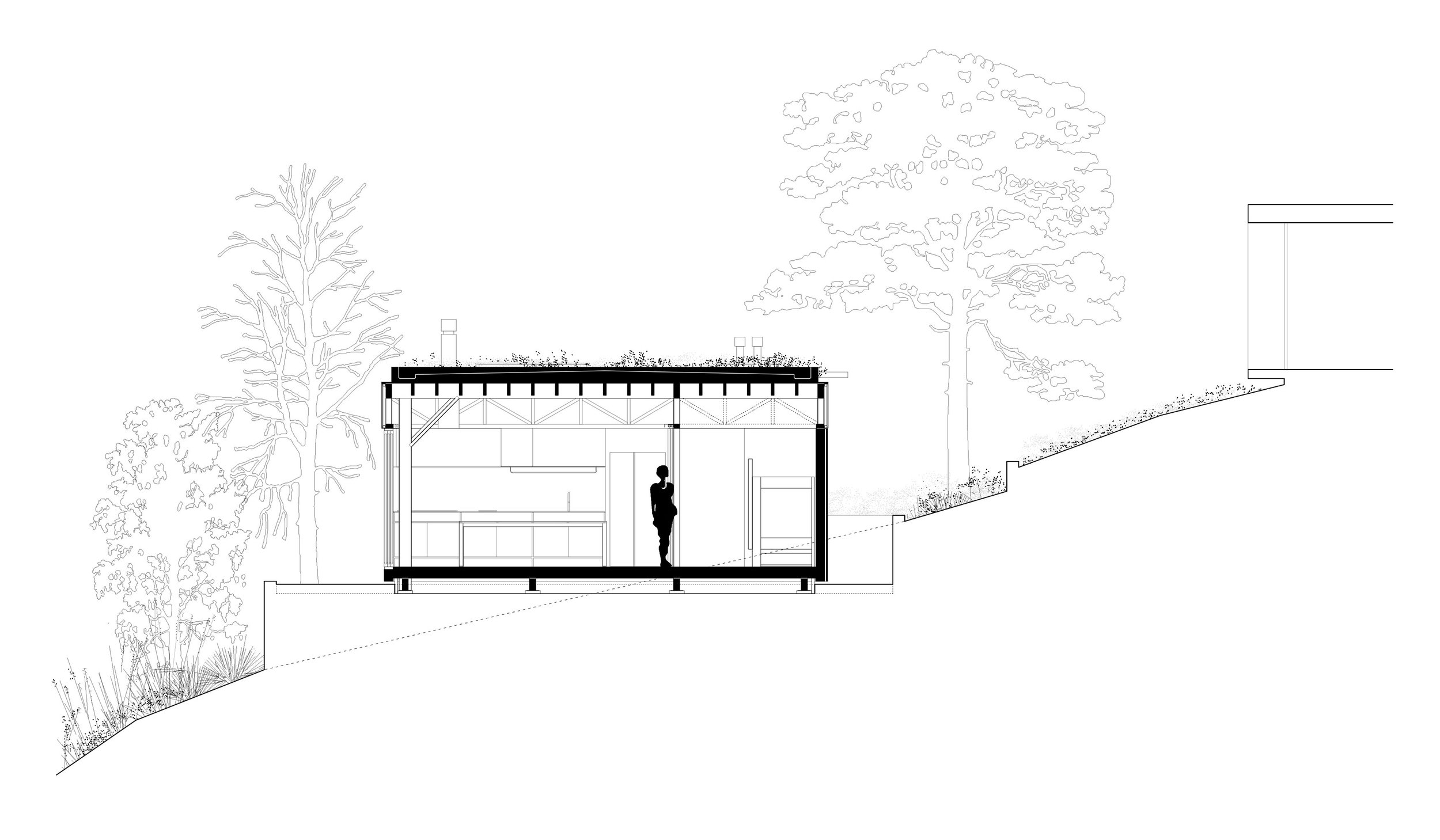
Site and Positioning The pavilion occupies a plateau immediately adjacent to the main family house, with its floor aligned to the level of the principal residence. This proximity required careful negotiation: the new construction needed to provide independence for its occupants while also maintaining a sense of continuity with the existing home and the surrounding landscape.
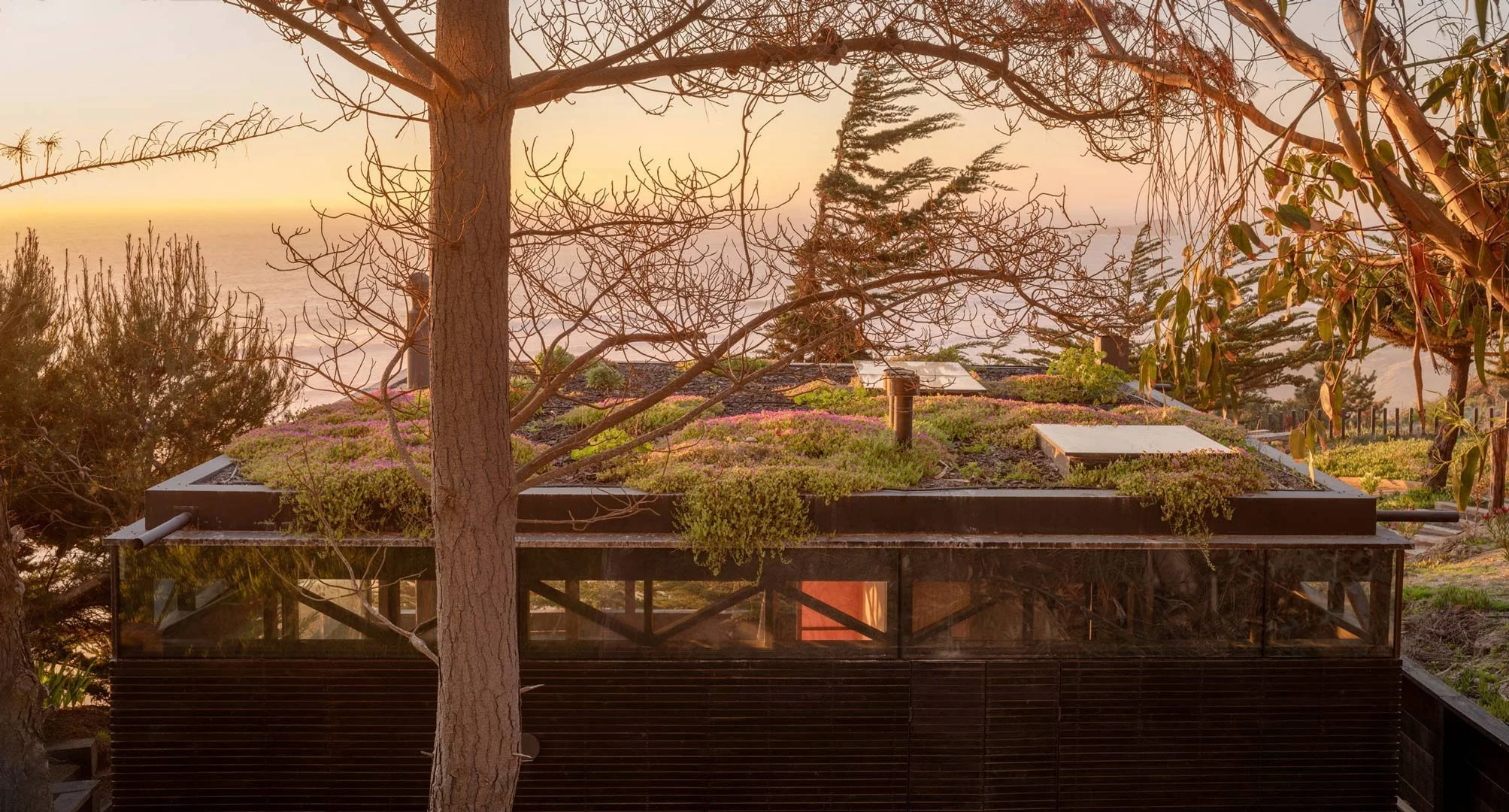
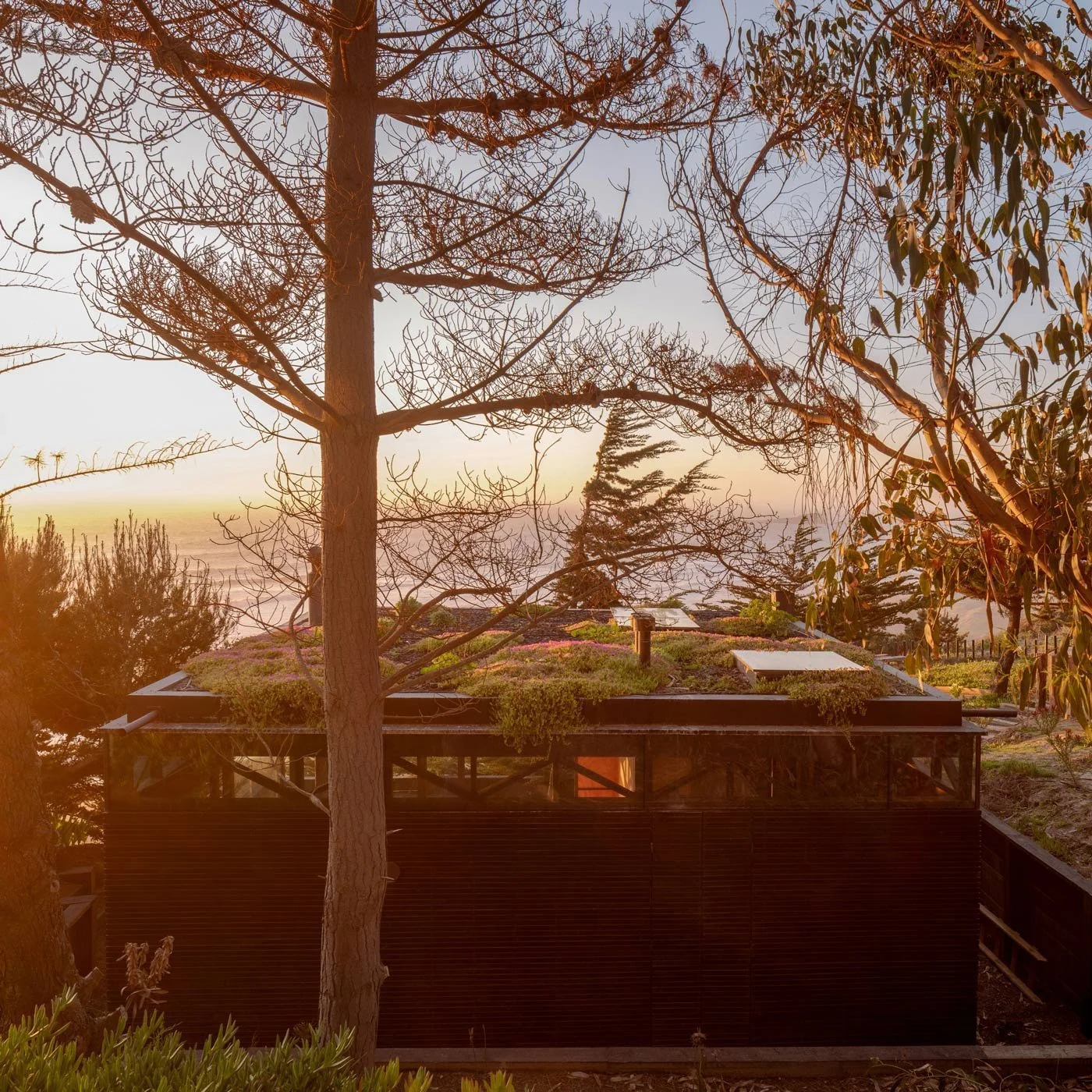
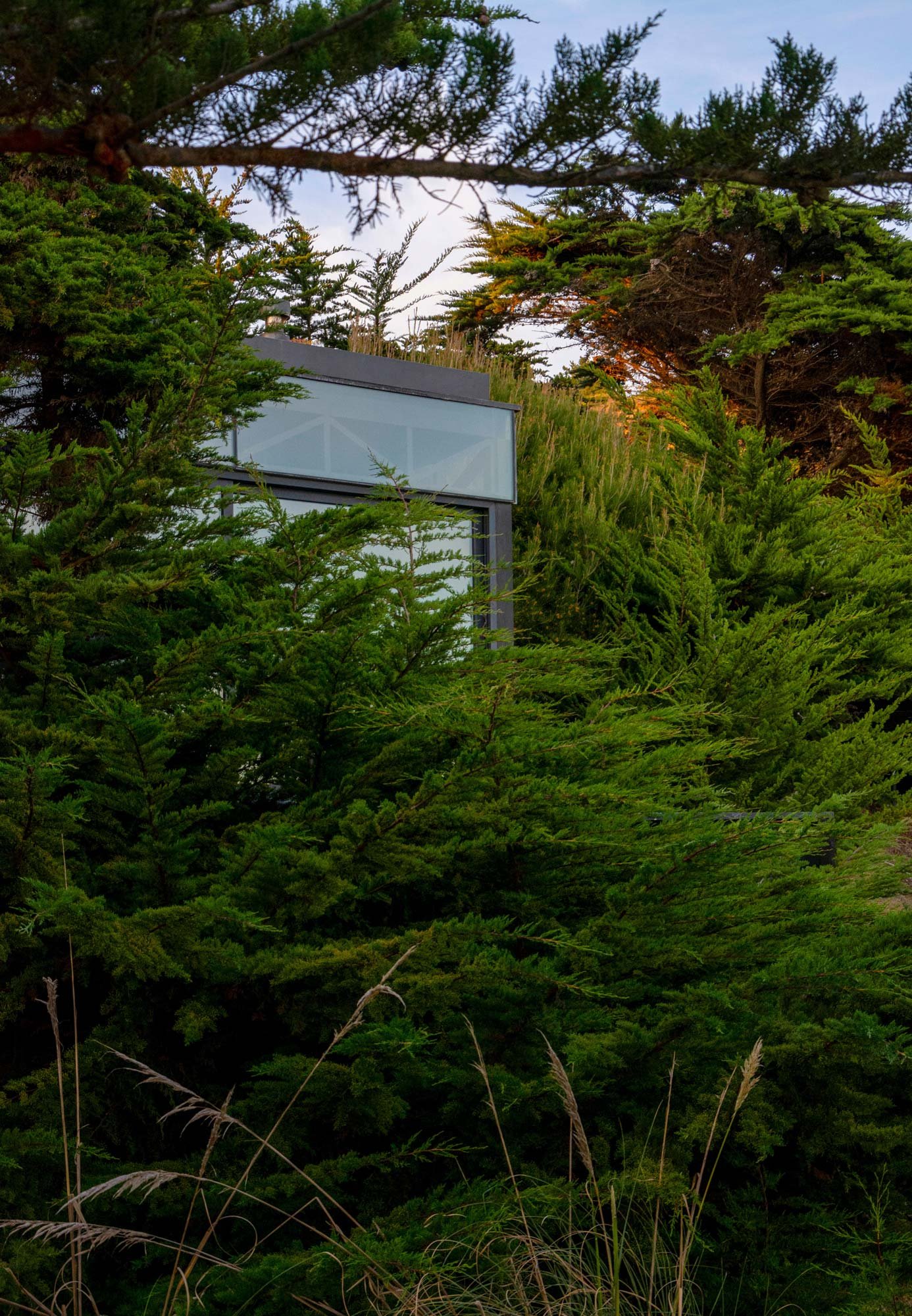
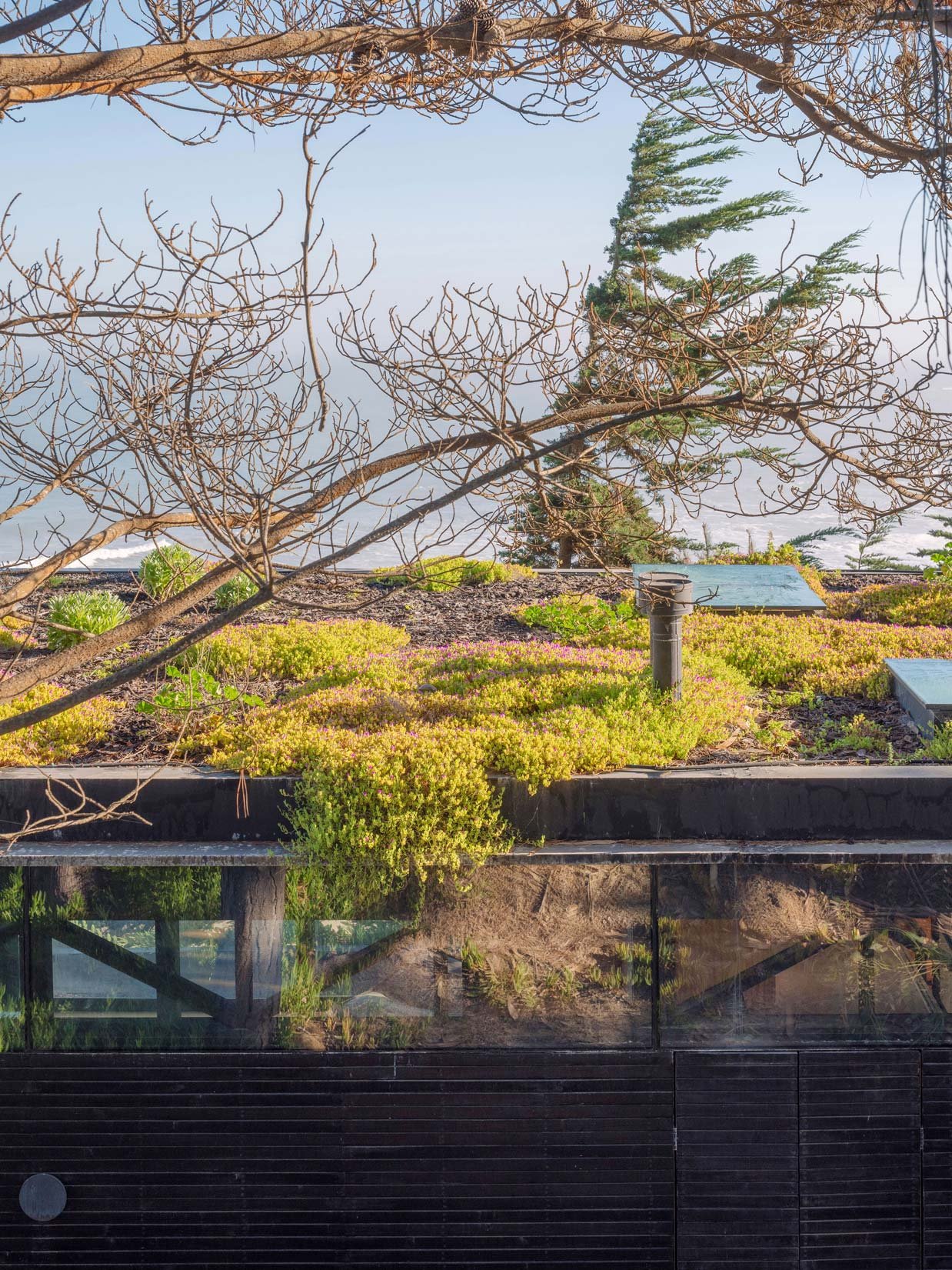
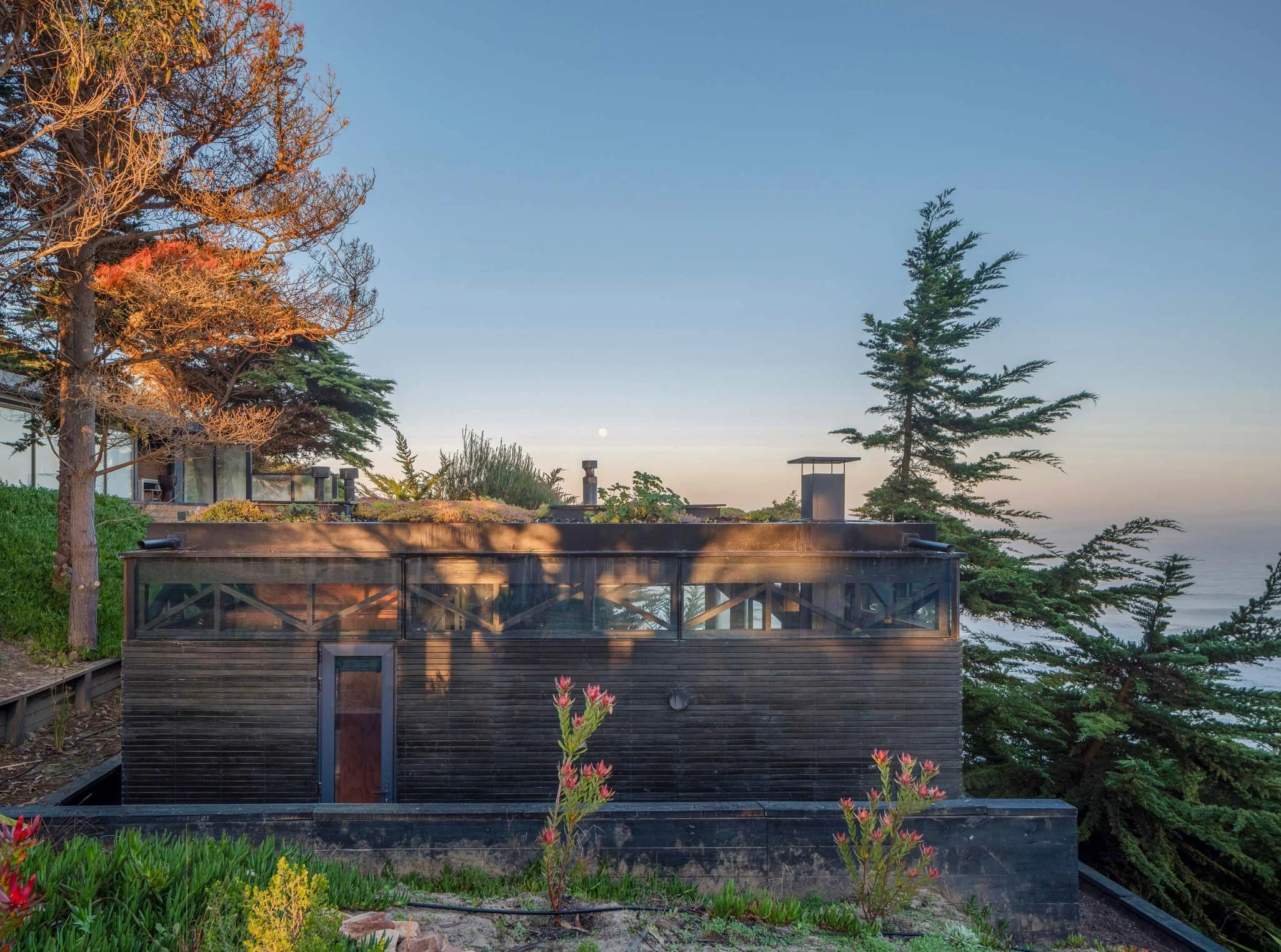
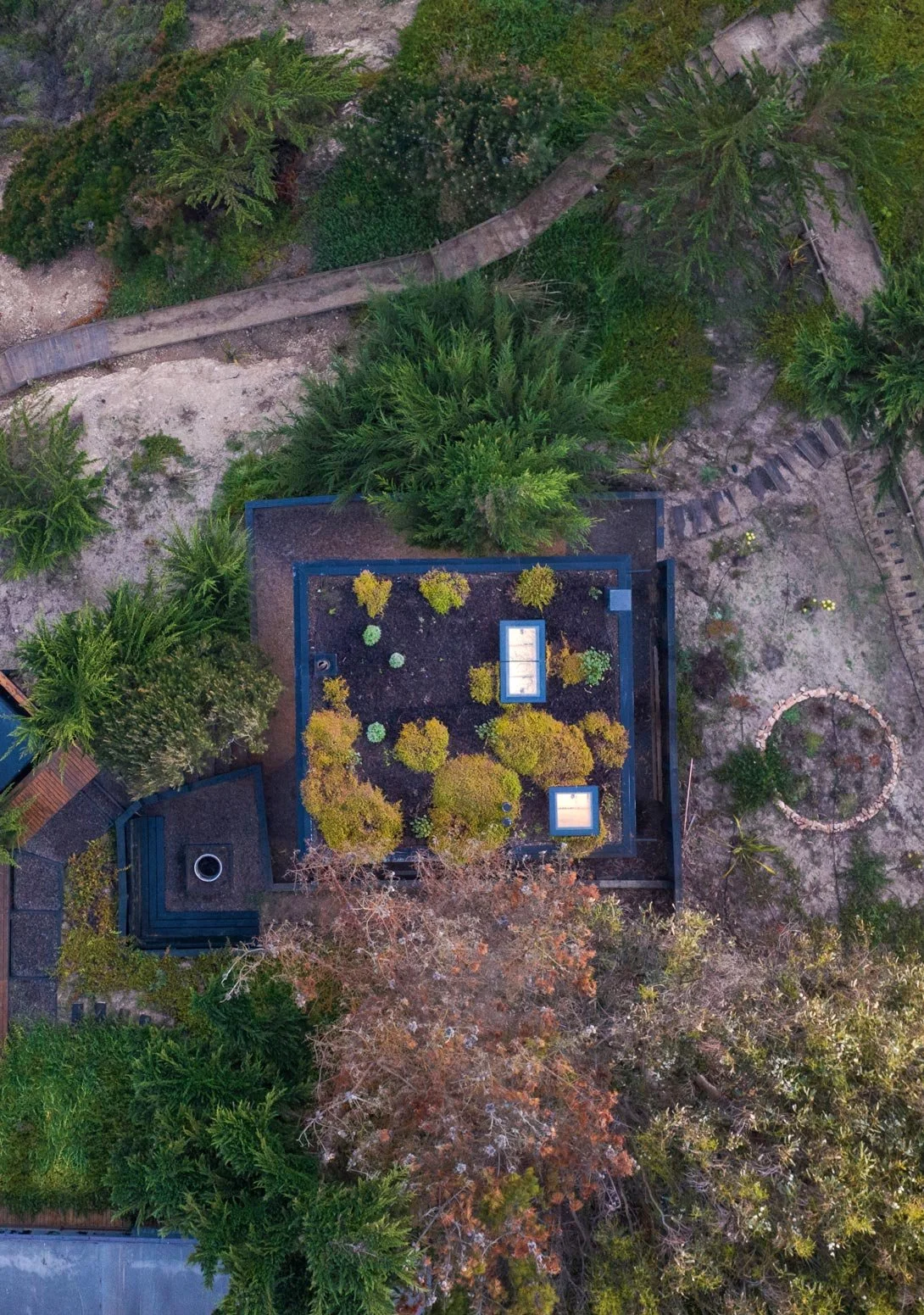
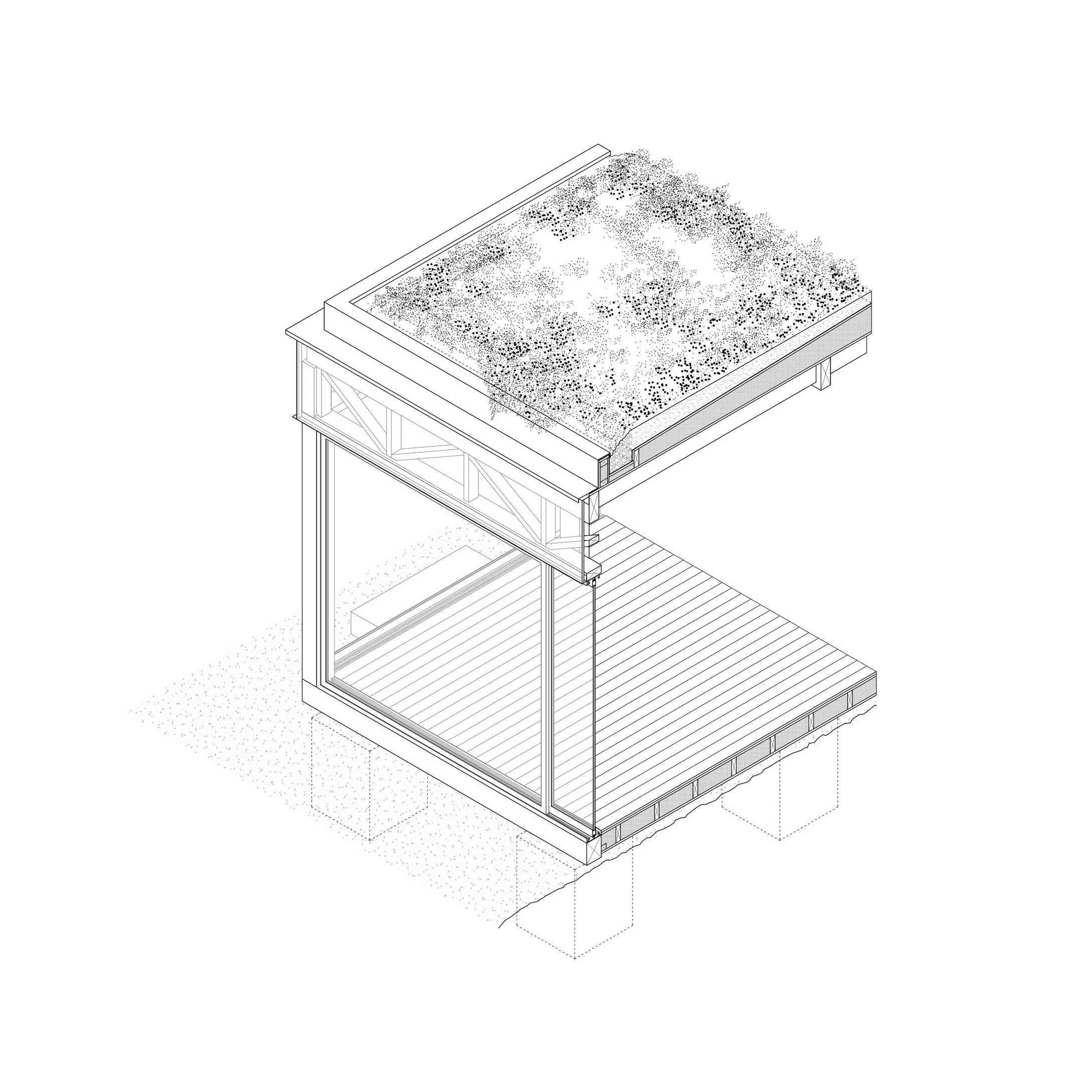
A green roof was introduced to achieve this dual condition. By extending the vegetation over the roof plane, the pavilion merges visually into the terrain and reads as a continuation of the landscape when viewed from above or from the main house. The roof also performs as a buffer — softening the presence of the new structure, reducing heat gain under strong coastal sunlight, and contributing to acoustic insulation between the two dwellings.
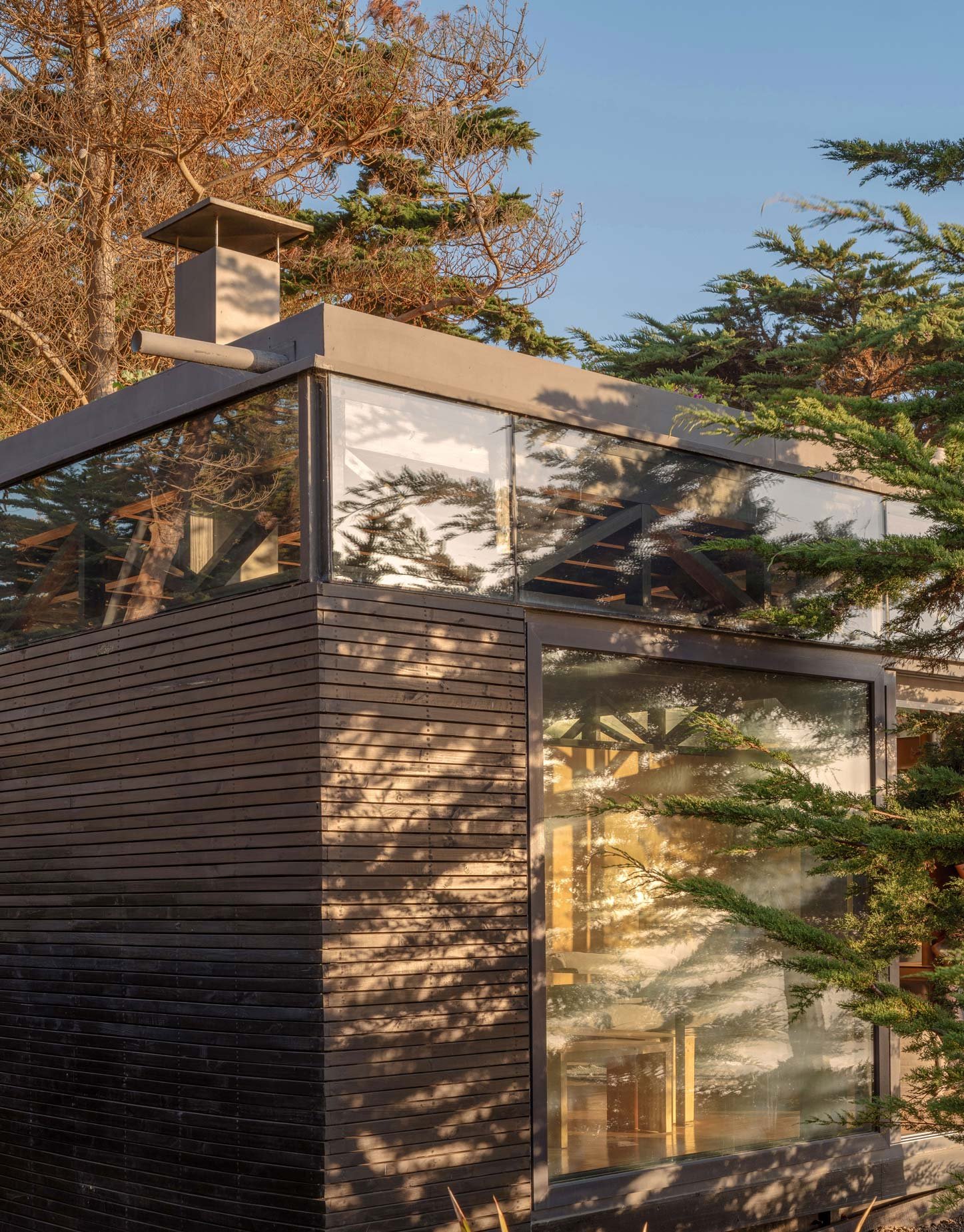
Form and Transparency The architectural form is deliberately simple: a rectilinear volume capped by the green roof. The expression of this volume is shaped by a continuous glazed band inserted between the roof plane and the solid wall surfaces. This glass strip reflects the surrounding vegetation, lightens the massing of the building, and visually separates roof from enclosure. The gesture creates a sense of permeability without compromising enclosure, and when approached from the landscape, the pavilion appears at once grounded and light.
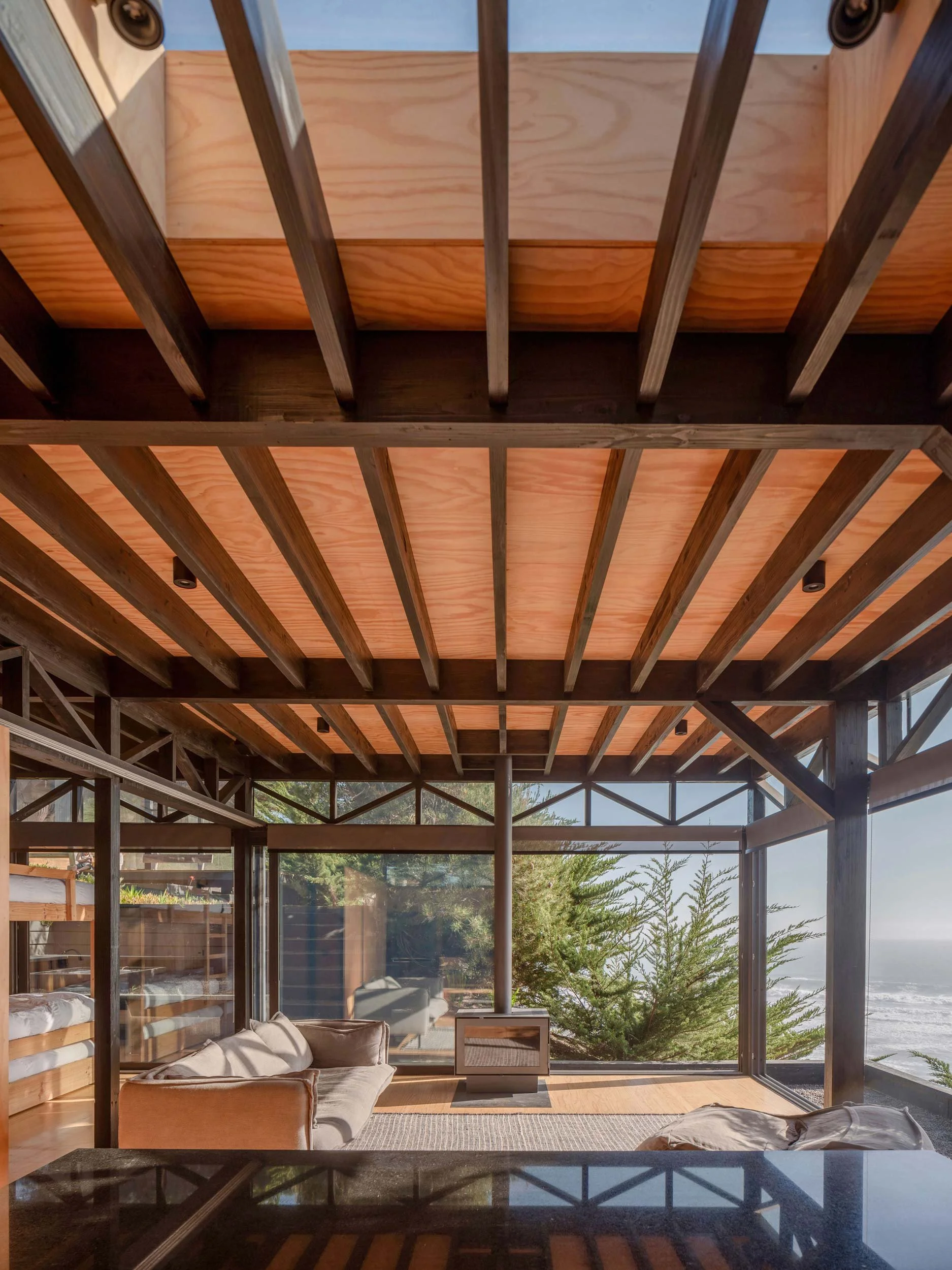
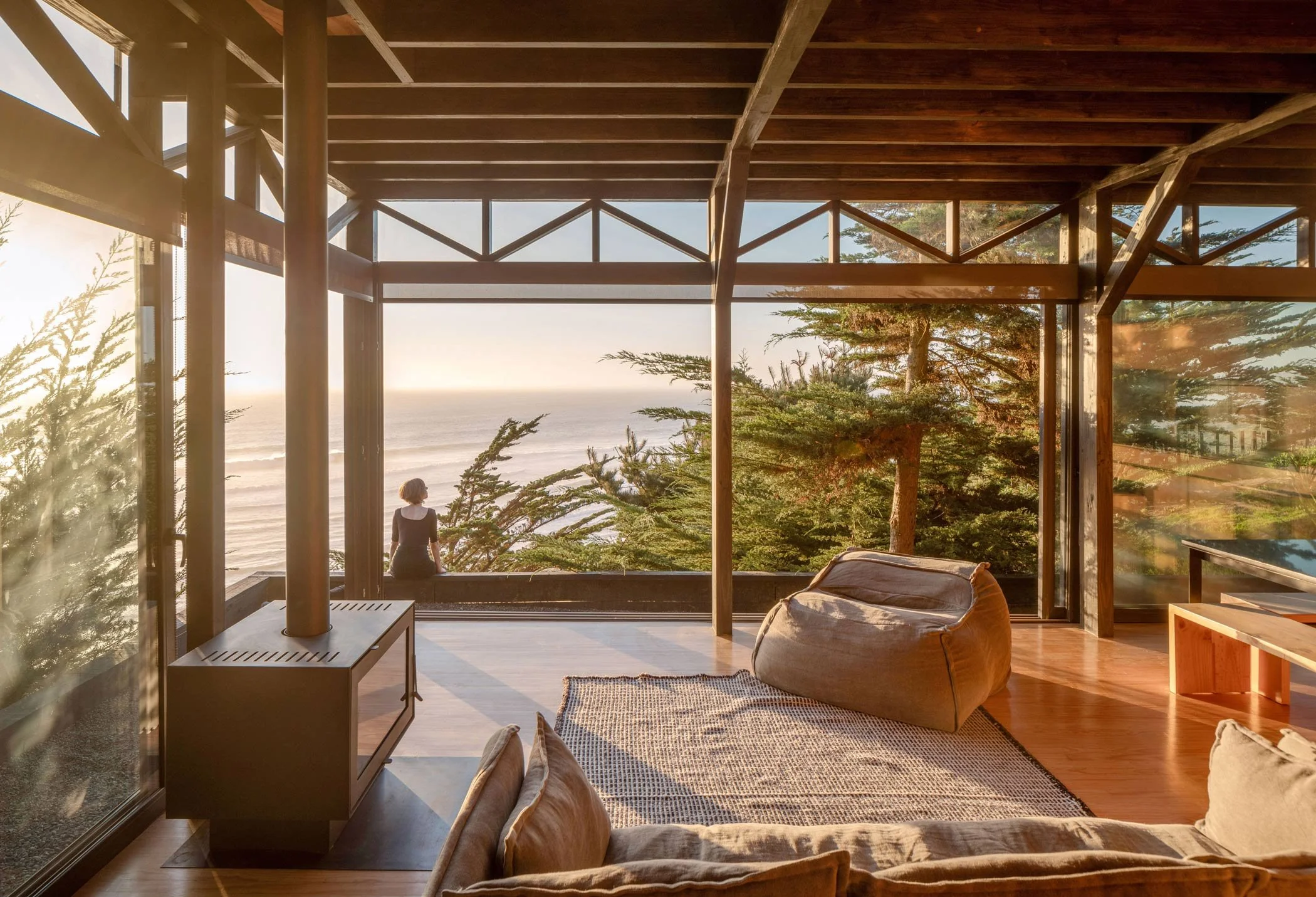
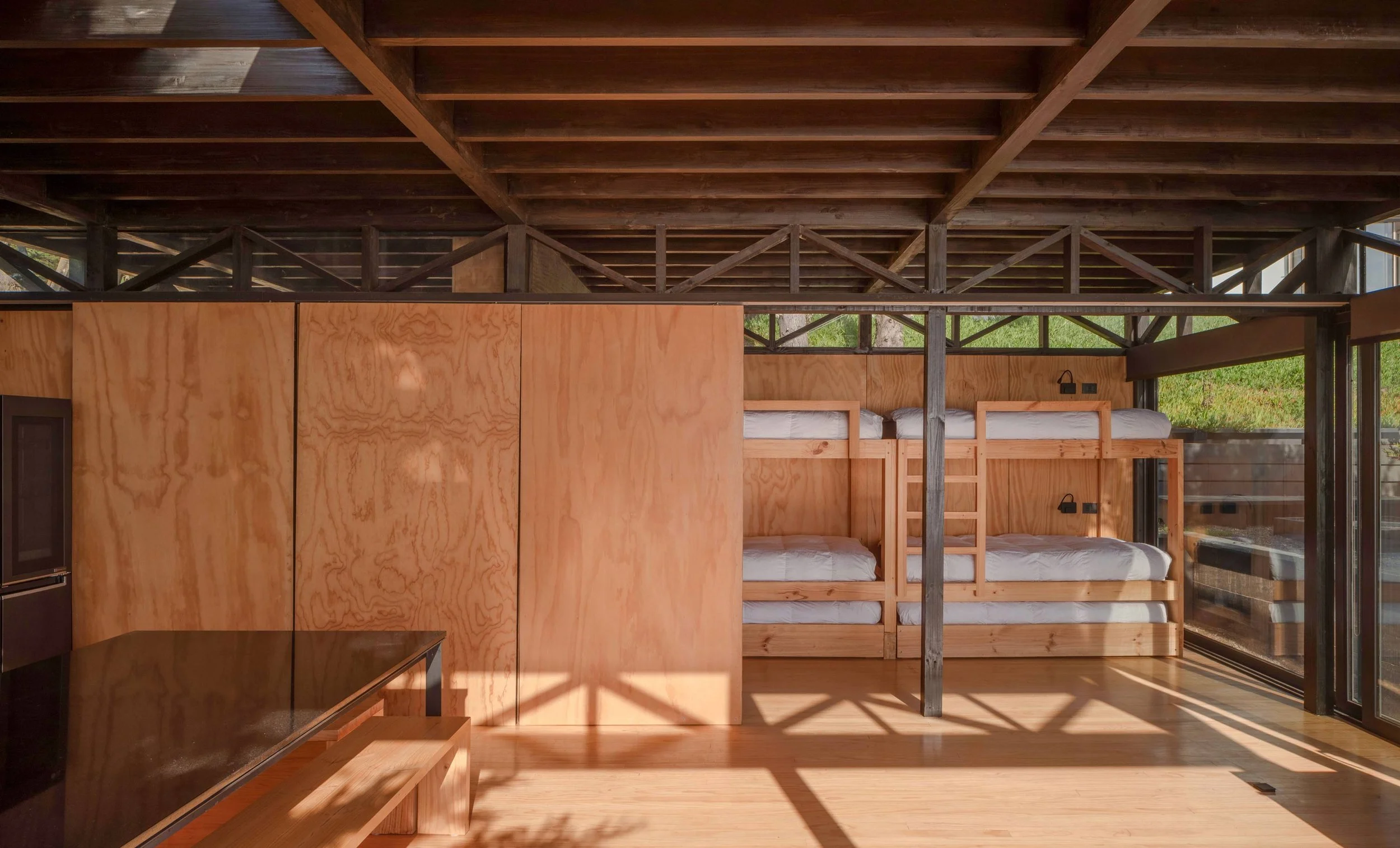
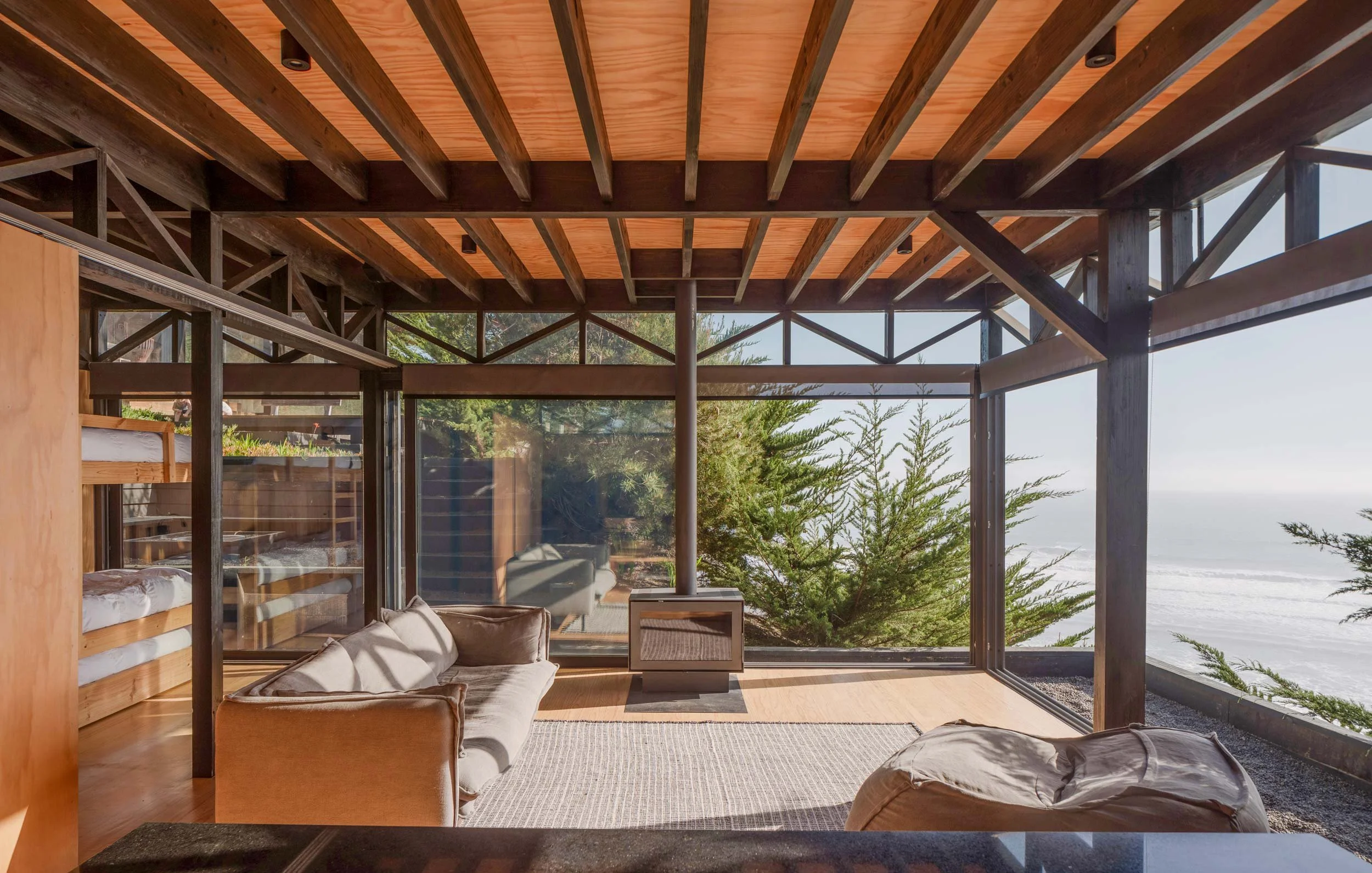
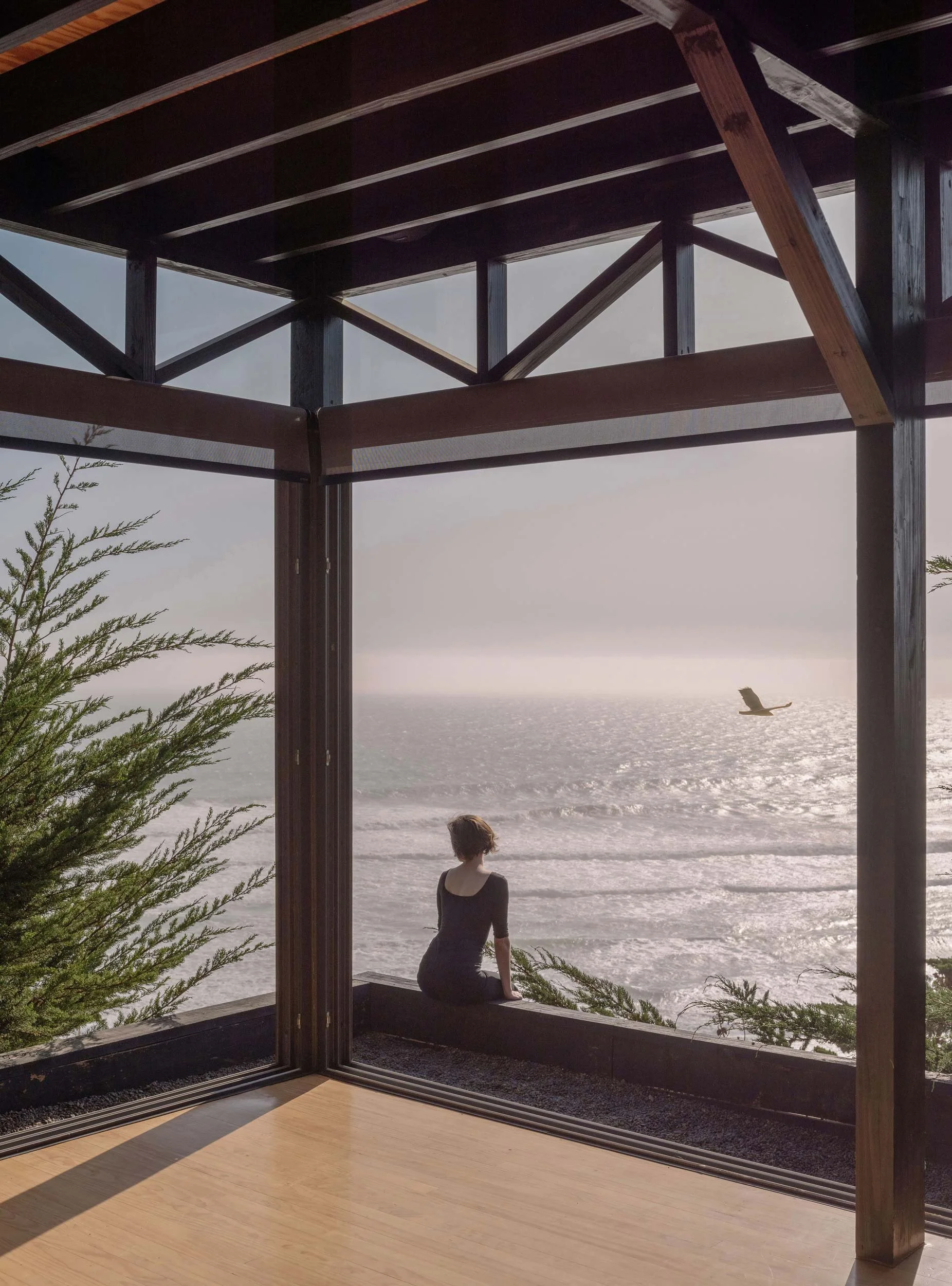
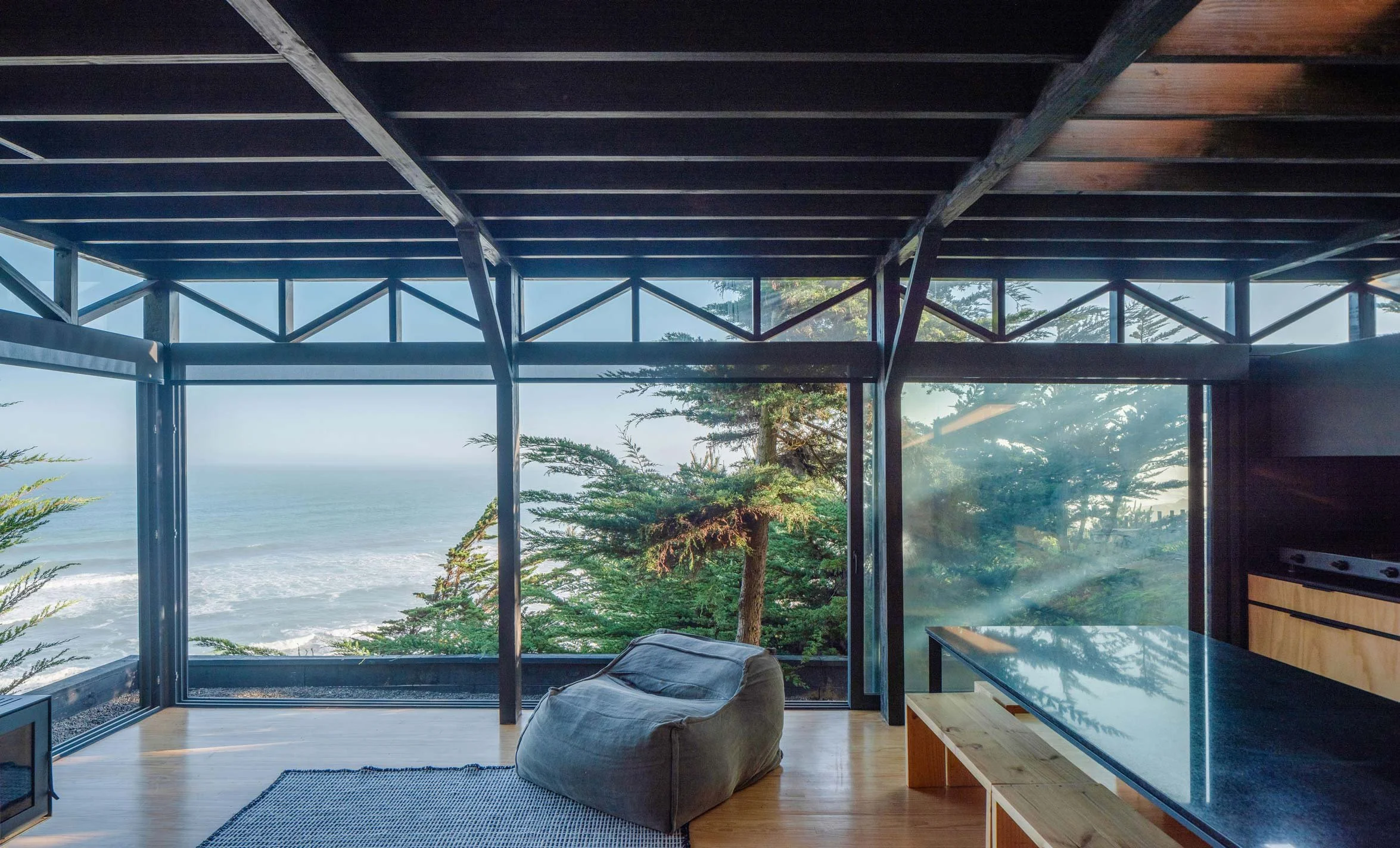
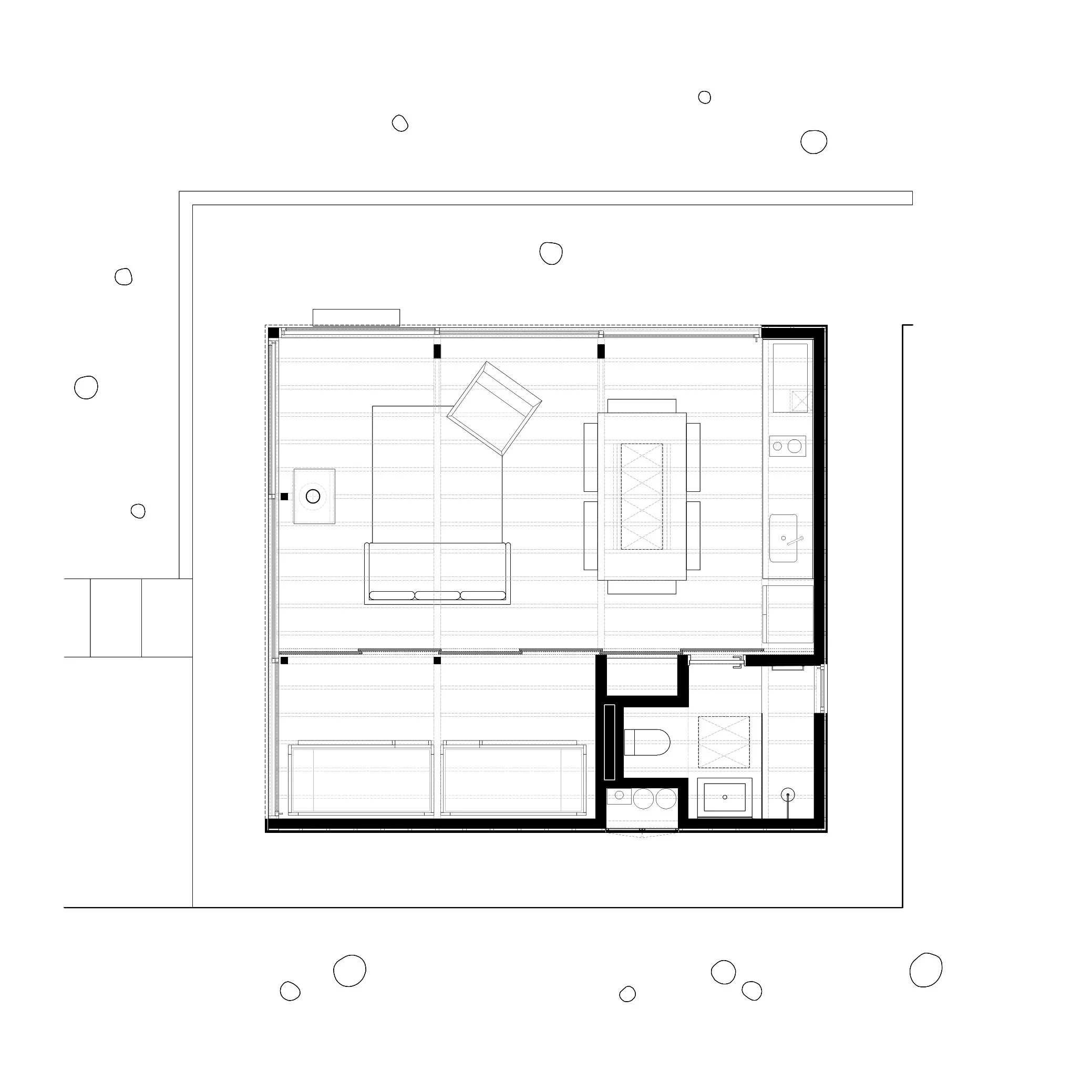
Toward the sea, the façade is composed of large sliding glass doors that extend across the full width of the structure. These elements allow the pavilion to open entirely to the horizon, effectively dissolving the boundary between interior and exterior. In use, the living area becomes a semi-open terrace, functioning as a quincho — a typology deeply embedded in Chilean domestic culture as a space for barbecuing, gathering, and socializing.
By contrast, the rear and lateral façades are kept opaque, clad in darkened pine boards. Facing the main house and neighboring plots, these elevations seek privacy and restraint, receding into the shade of surrounding vegetation. The contrast between the transparent ocean-facing side and the opaque rear expresses the dual role of the pavilion: extroverted toward the landscape, introverted toward the domestic environment.
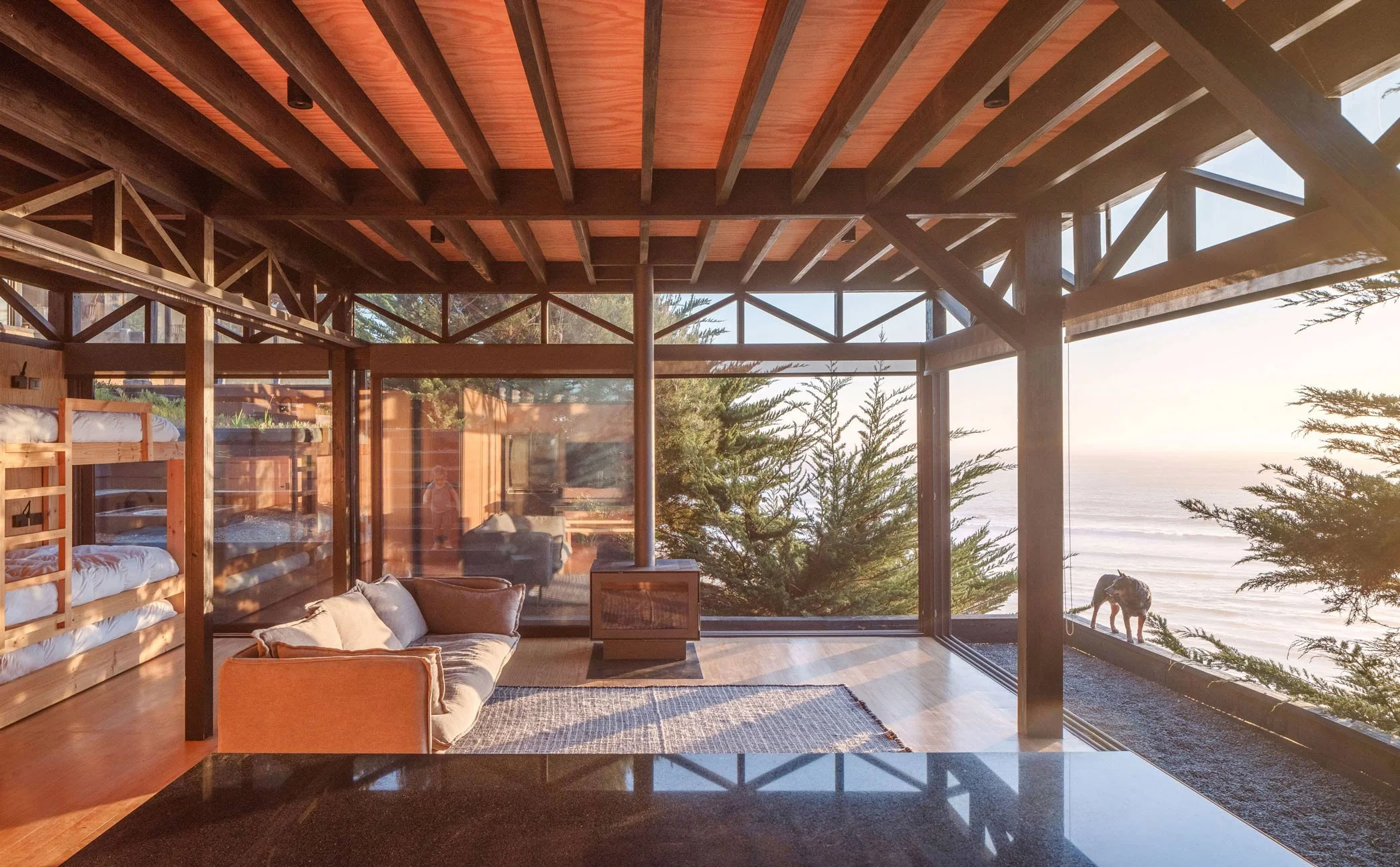
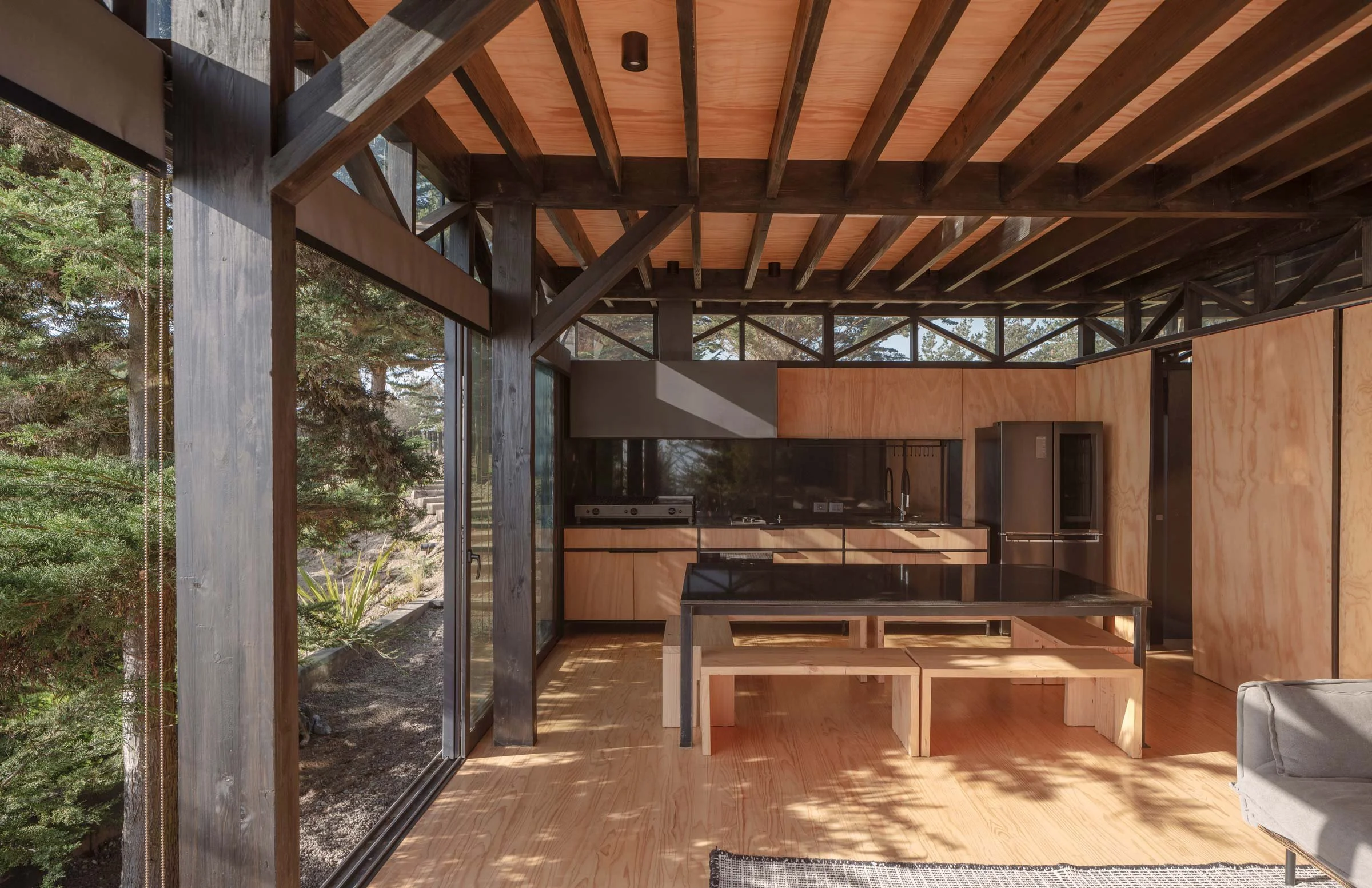
Program and Flexibility The interior is organized with an emphasis on flexibility. The main programmatic requirement was to provide space for social interaction while accommodating overnight stays for multiple users. To this end, the majority of the floor plate is dedicated to an open-plan living and dining space, complete with an indoor barbecue.
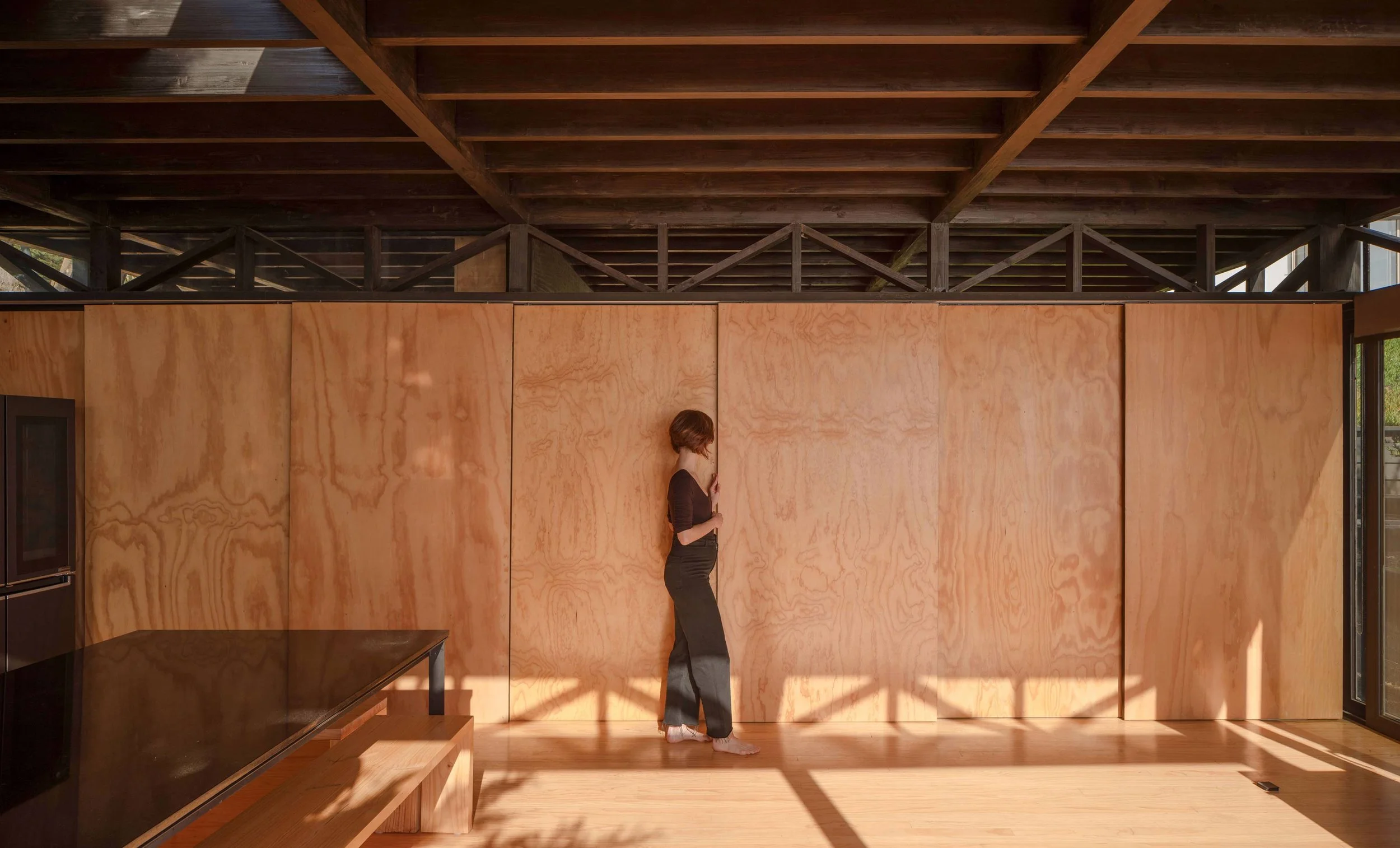
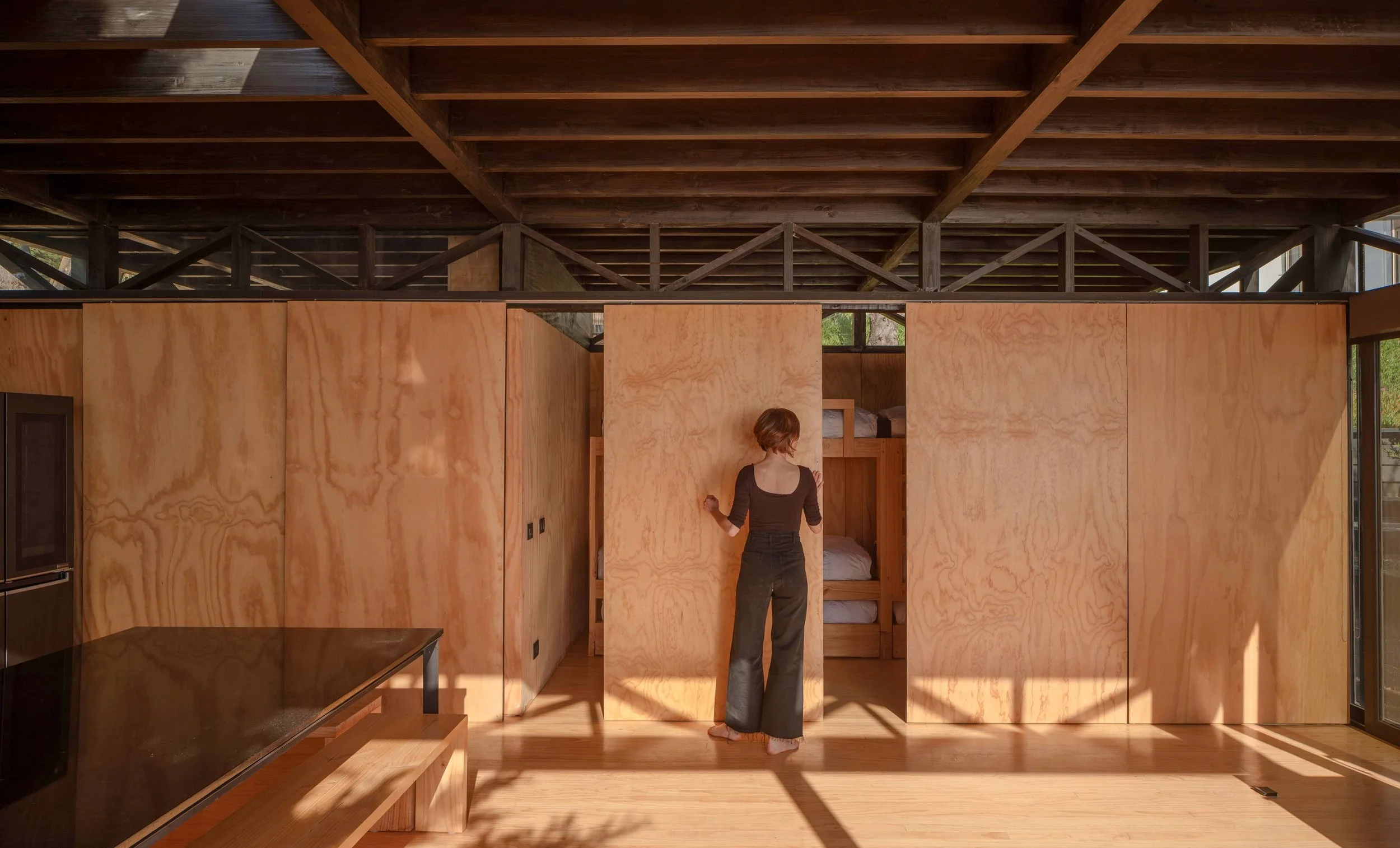
Sleeping quarters are integrated behind movable panels that conceal six bunk beds. These sliding elements can be retracted and stacked, allowing the beds to merge seamlessly into the main room when not in use. In practice, this enables the pavilion to shift between different modes: a spacious open hall for gatherings during the day, or a hybrid communal-sleeping environment when required.
The strategy reflects an understanding of how adolescents and young guests inhabit space — valuing adaptability, communal activity, and permeability between formal functions. The pavilion can serve as a festive hub, a quiet retreat, or an auxiliary dwelling, depending on circumstance.
Material Strategy A disciplined material palette was developed to achieve clarity and spatial cohesion within the compact volume. The guiding principle was to reduce visual noise by limiting the number of finishes and maintaining consistency between surfaces, furniture, and built-in elements.
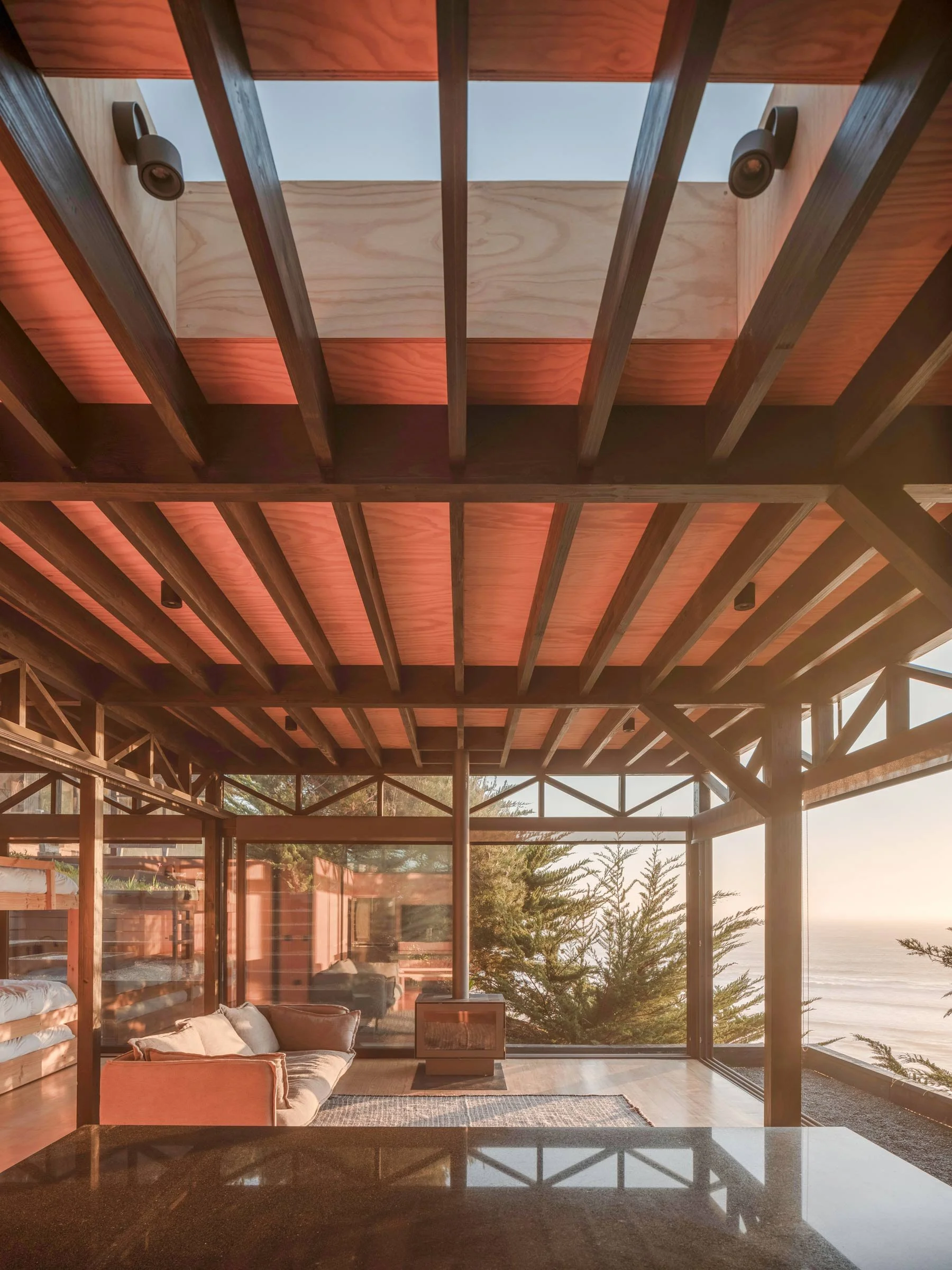
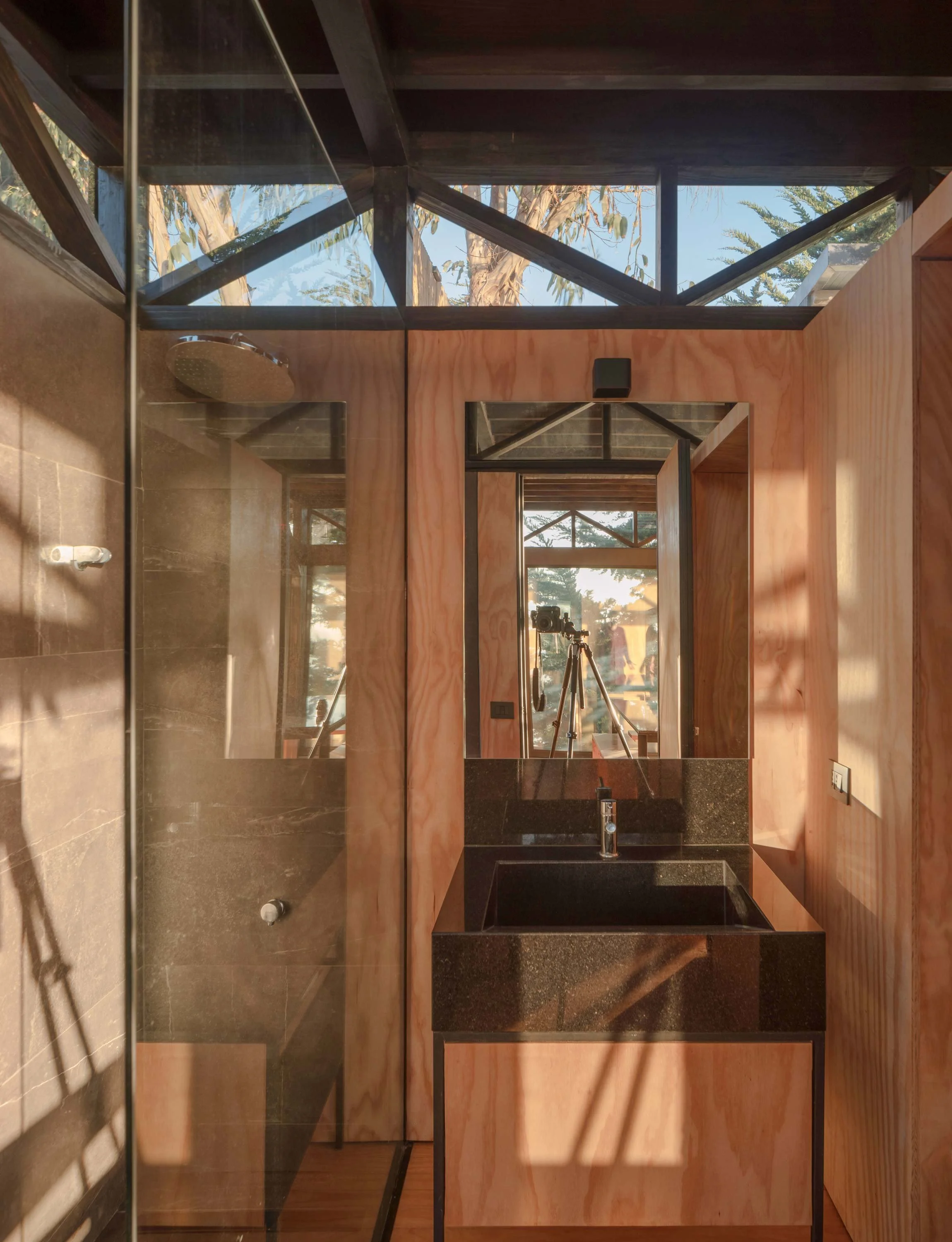
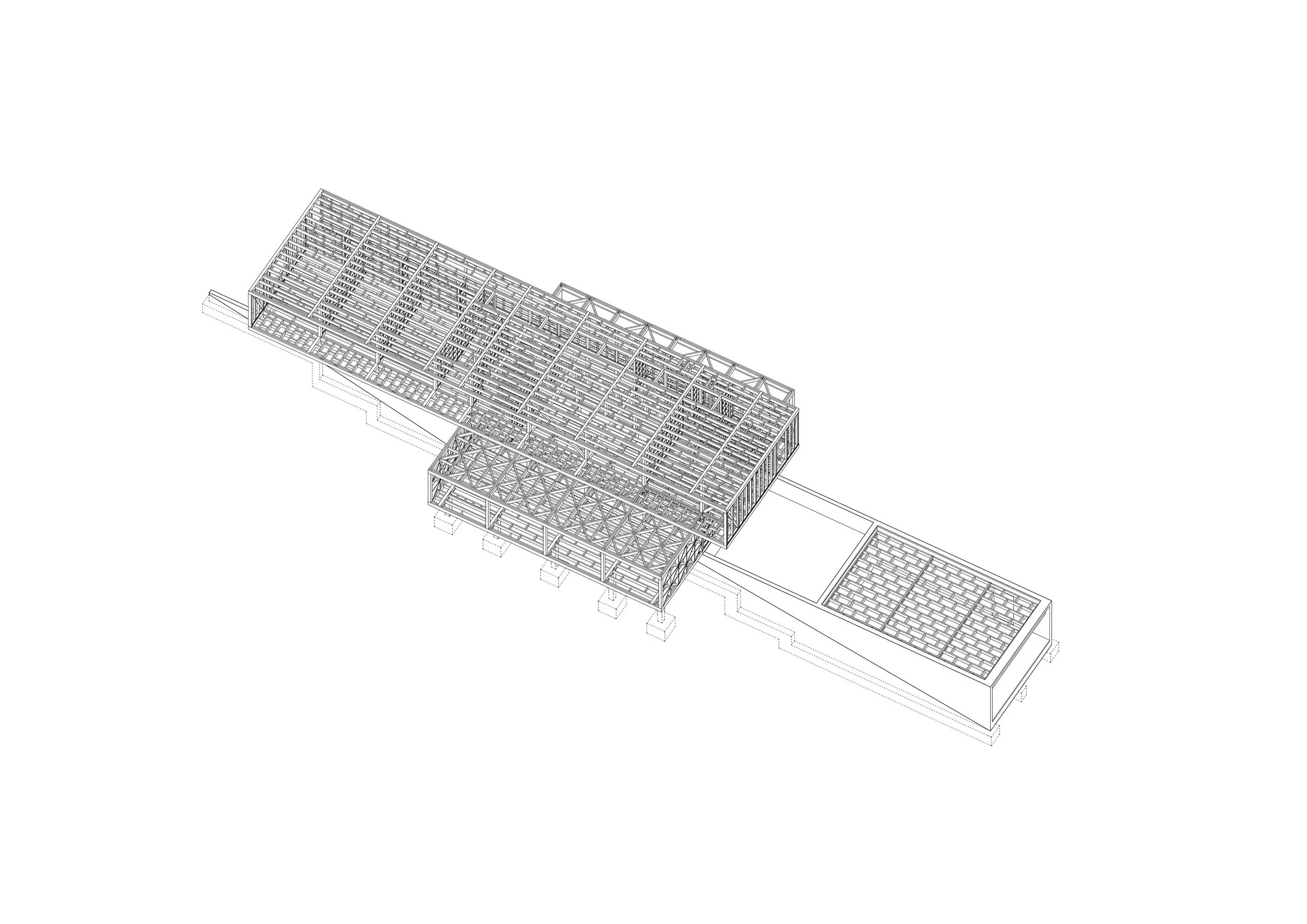
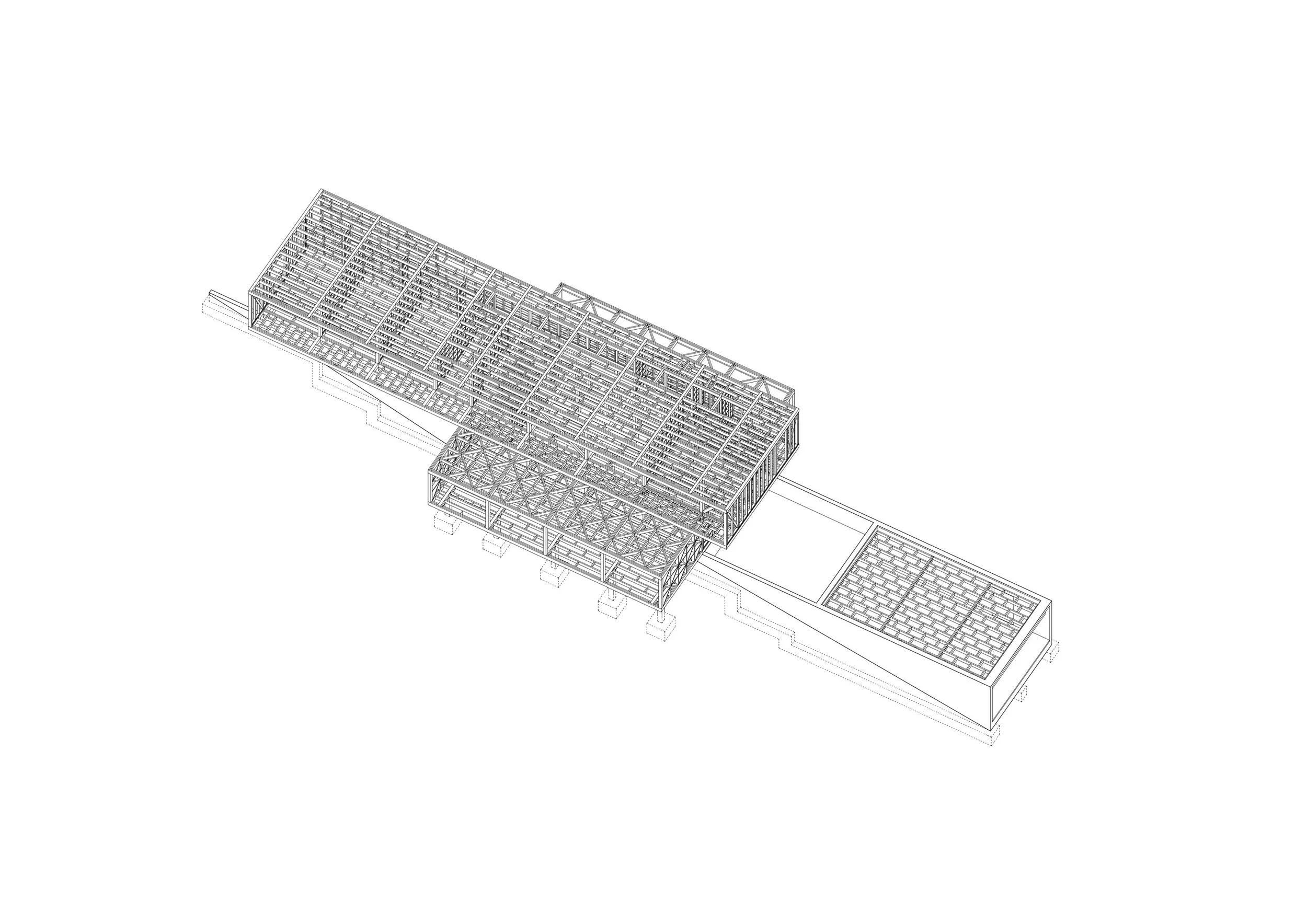
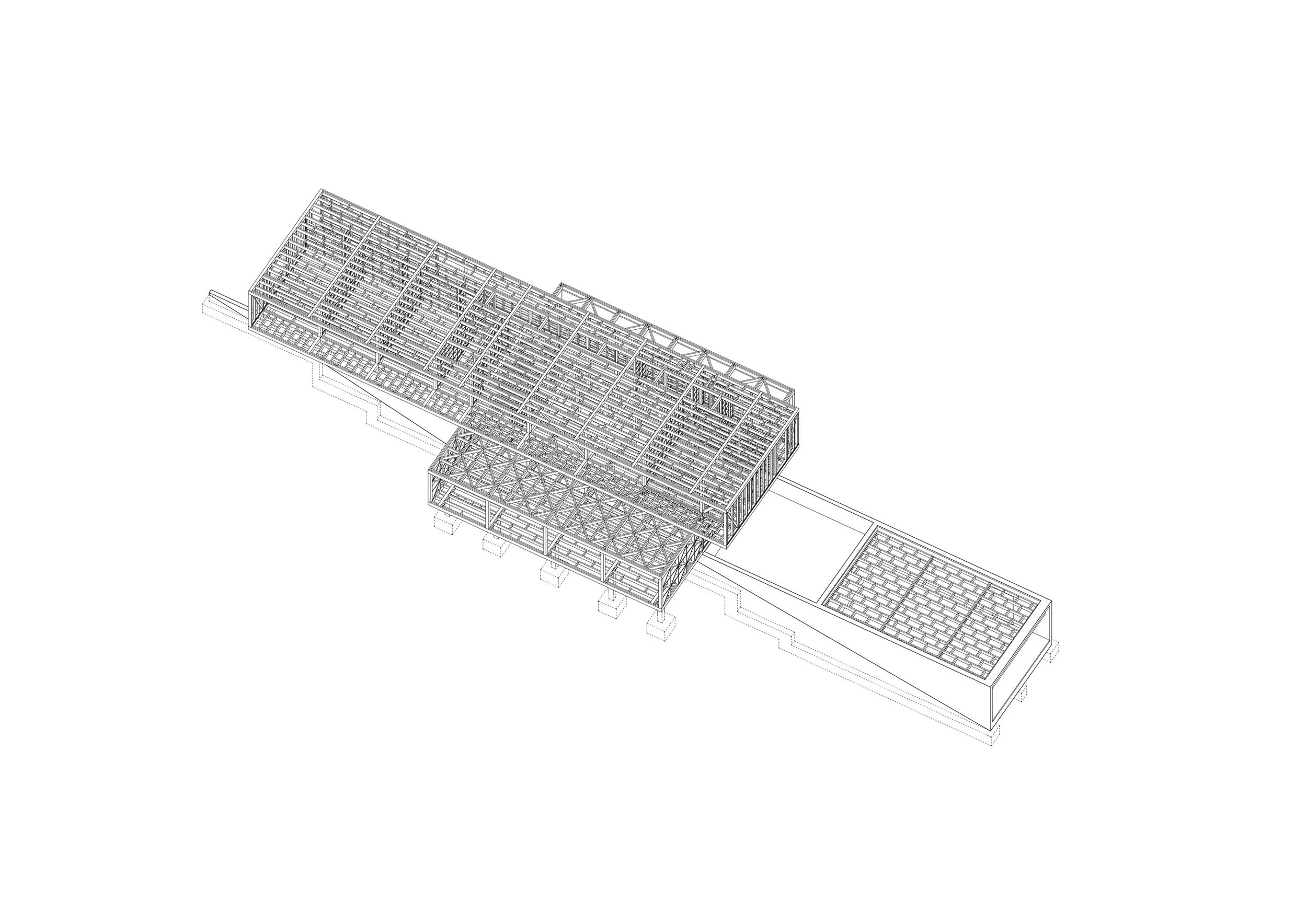
The structural frame, expressed throughout the interior, is composed of laminated timber finished with a semi-transparent black stain. This treatment gives a uniform tone, aligning with the dark exterior cladding while revealing the texture of the material.
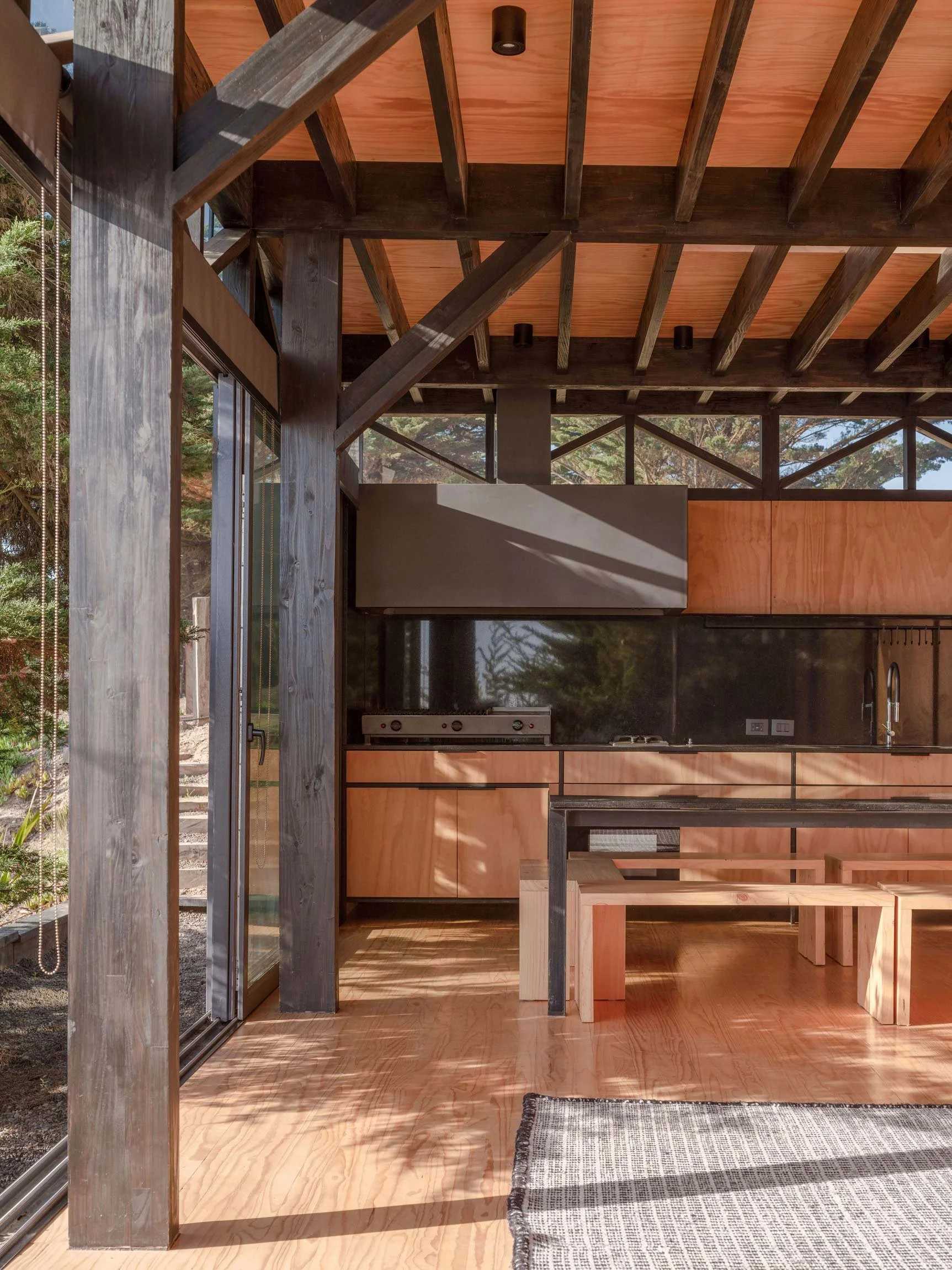
For wall surfaces, doors, cabinetry, and movable partitions, plywood panels treated with a colorless stain were employed. Floors and larger items of fixed furniture — including the dining benches and bunk beds — were made from solid pine, also treated without pigment. This combination establishes a continuity of tone and texture across surfaces, allowing functional elements to recede visually and reinforcing a sense of openness within the limited footprint.
The decision to employ pine and plywood responds to both budgetary and practical considerations. As locally available materials, they are cost-effective and familiar to the construction workforce, ensuring quality execution within a compressed timeline. Their adaptability permitted the customization of elements such as sliding partitions and integrated furniture without resorting to expensive or imported alternatives.
Within this framework, certain focal points were deliberately upgraded to more durable and refined materials. The kitchen countertop, dining table, and bathroom vanity were fabricated from granite and metal, providing durable working surfaces while reflecting surrounding light and landscape. These pieces introduce moments of material intensity without disrupting the overall restraint of the palette.
Interior Atmosphere The interior is designed to maximize the perception of space within a modest footprint. By treating partitions, storage, and furniture with the same material palette, visual clutter is minimized. Movable elements disappear into the background when not in use, freeing the open-plan core.
Natural light plays a central role in this perception. The glazed band beneath the roof introduces diffuse daylight while framing views of treetops and sky. The sliding façade facing the ocean admits abundant sunlight and allows natural ventilation, transforming the pavilion into a semi-outdoor room in favorable weather.
When closed, the transparency of the glazing maintains a visual connection to the horizon, ensuring that the interior remains expansive despite its size. The result is a flexible environment where interior and exterior are continuously interwoven.
Construction Logic Construction proceeded on a platform prepared by prior earthworks and retaining structures. This preconditioned site allowed the project to focus on efficient assembly. The timber structure and cladding were executed using methods familiar to the local workforce, reducing risk of delay and ensuring reliability in detailing.
The restrained palette of materials not only reduced costs but also simplified logistics. Repetition of finishes across elements facilitated procurement and minimized on-site adjustments. The emphasis on local skills and standardized materials supported the tight schedule without compromising on design intent.
Cultural Resonance At the heart of the pavilion lies its function as a quincho. In Chilean domestic culture, the quincho is a semi-exterior space where cooking, eating, and socializing converge. By extending this typology into a fully inhabitable structure, the project reinterprets a familiar cultural practice within a contemporary architectural language.
This cultural reference informed several design choices: the open-plan layout, the integration of the barbecue as a central fixture, the permeability of the façade, and the emphasis on flexible communal occupation. The pavilion thereby occupies a space between domesticity and landscape, between private dwelling and collective gathering. Text description by the architects.