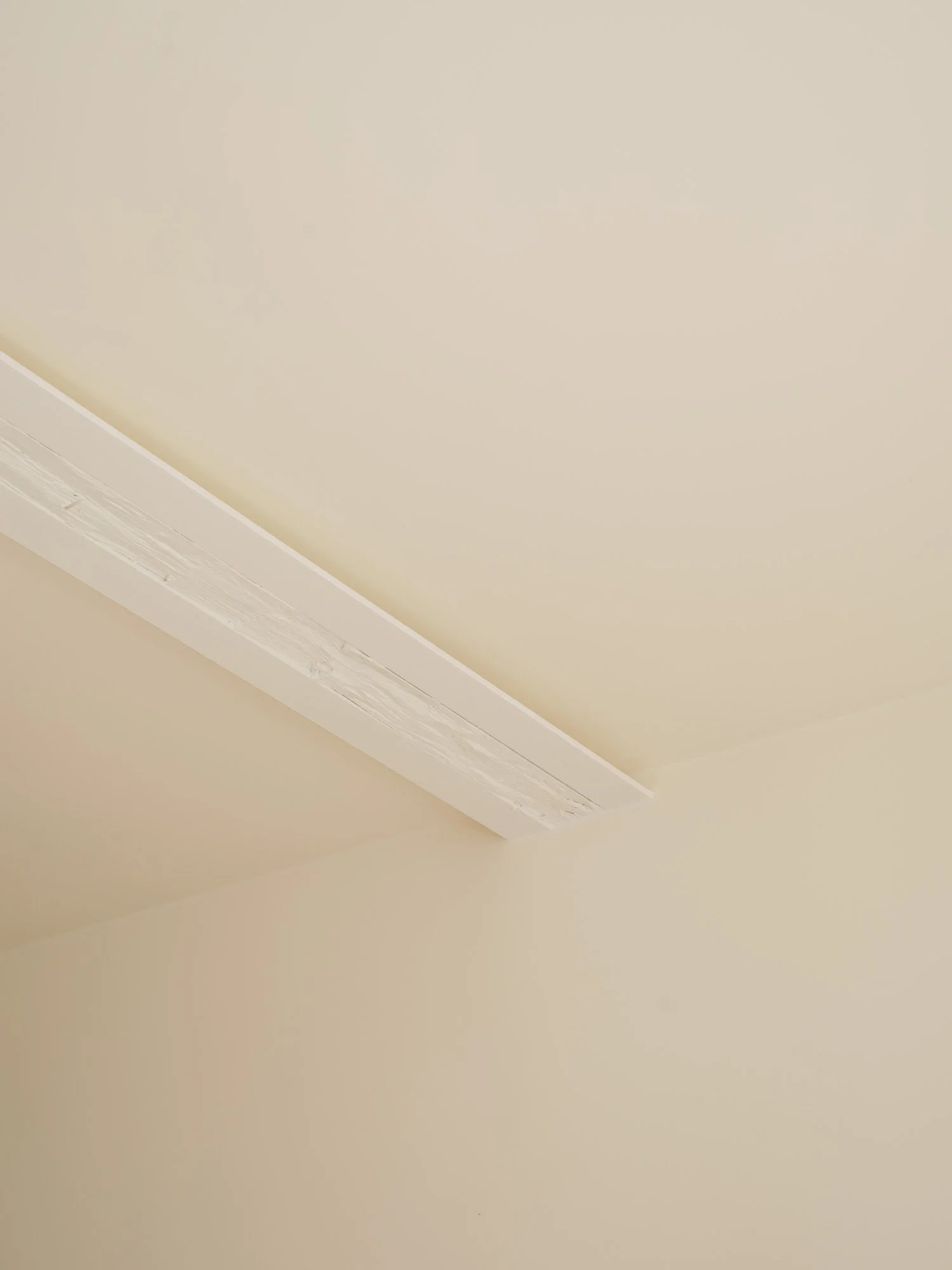
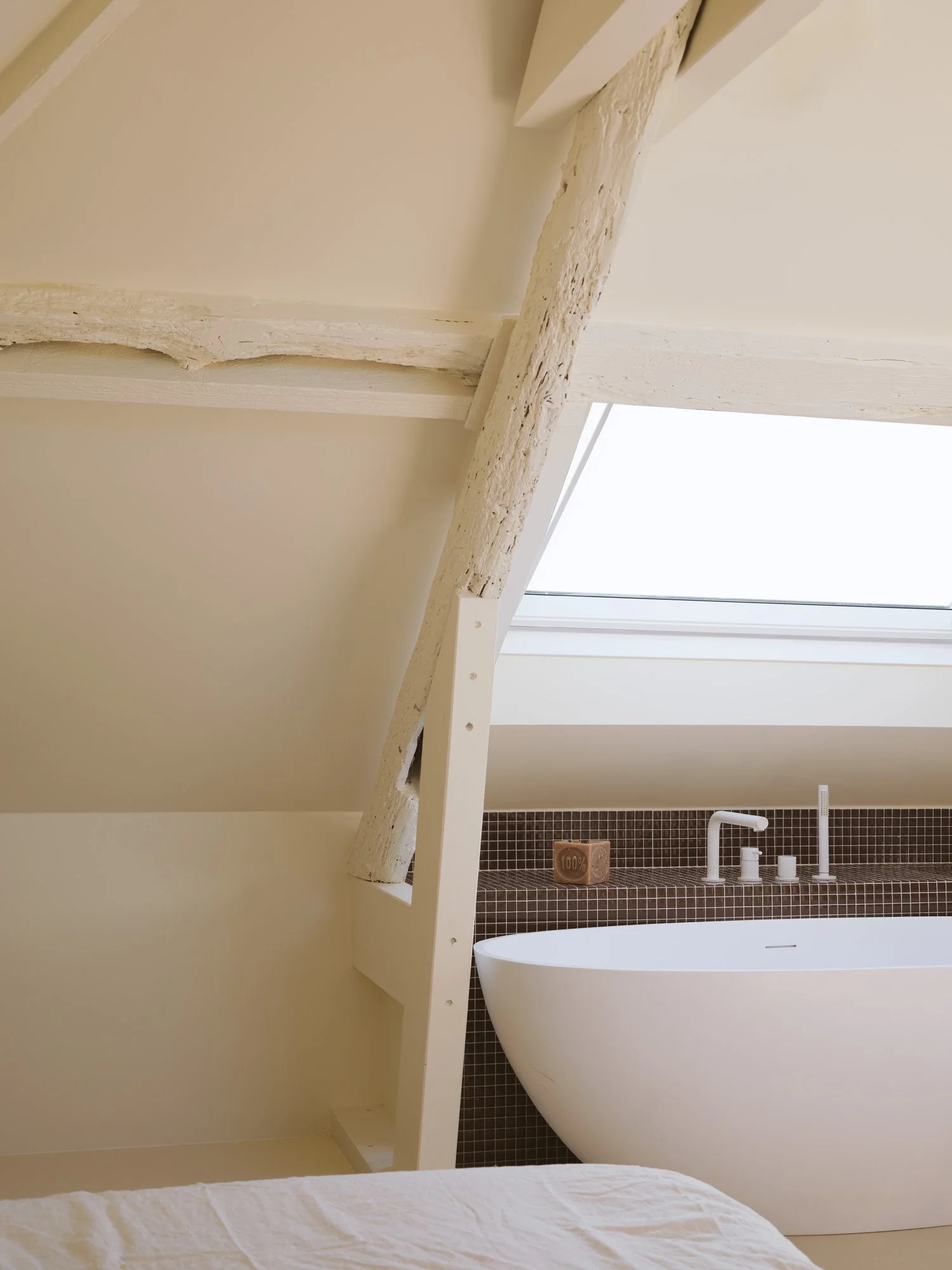
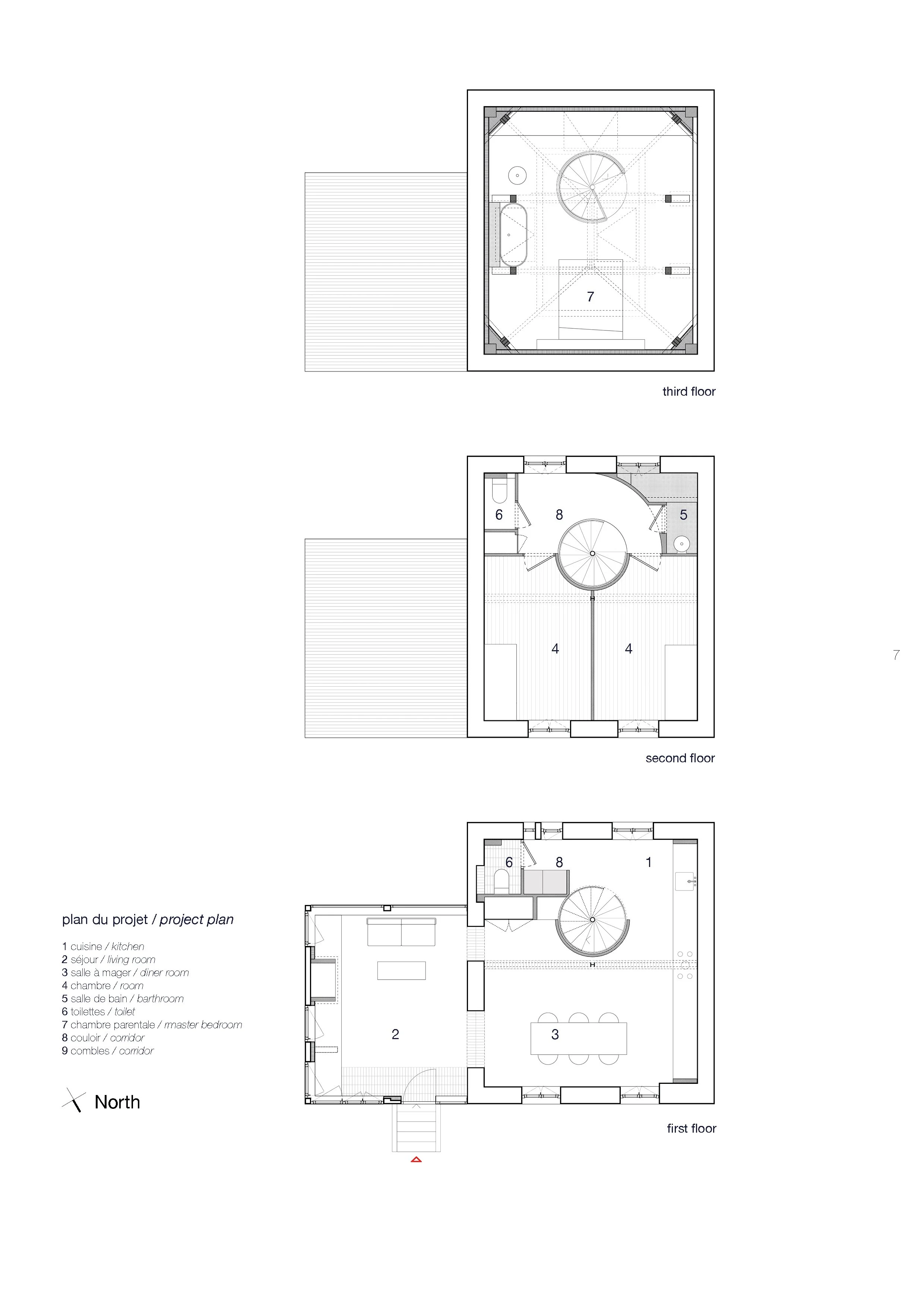
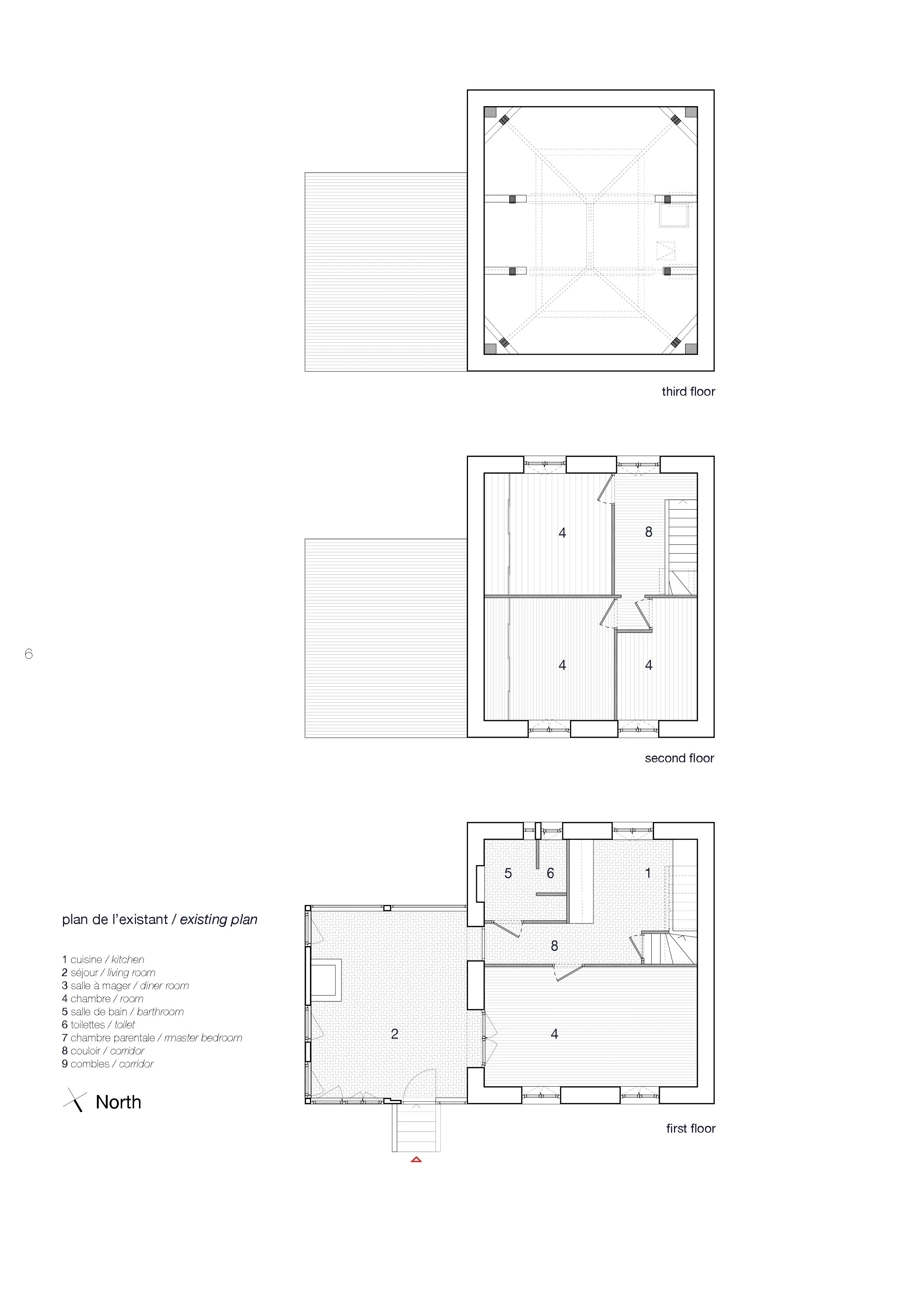
The original layout, typical of the period, divided the house into two bays by a semi-load-bearing partition wall. Its removal required underpinning works at ground floor and first-floor levels, a major structural intervention that made it possible to open up the volumes and completely reorganize the interior spaces.
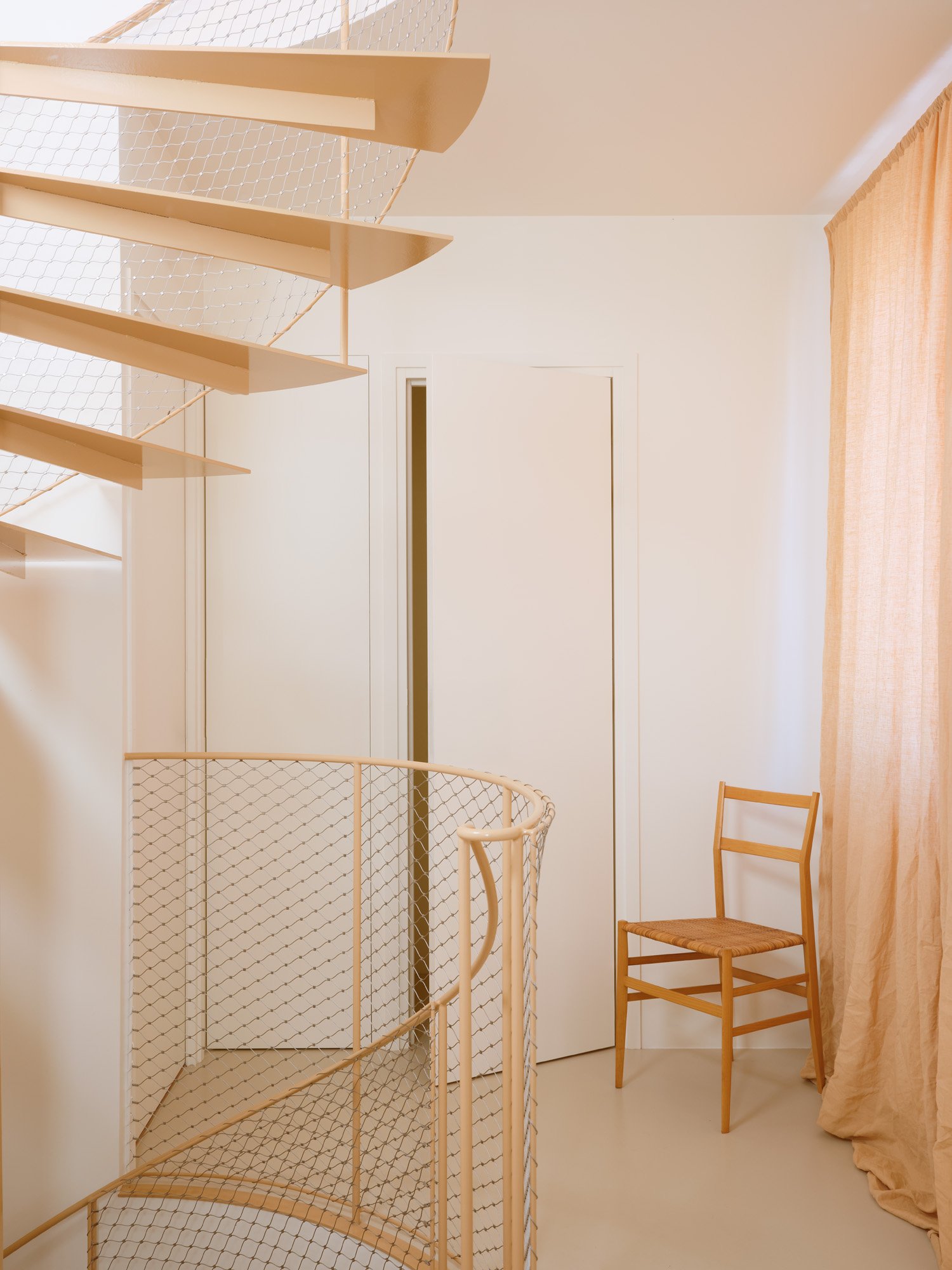
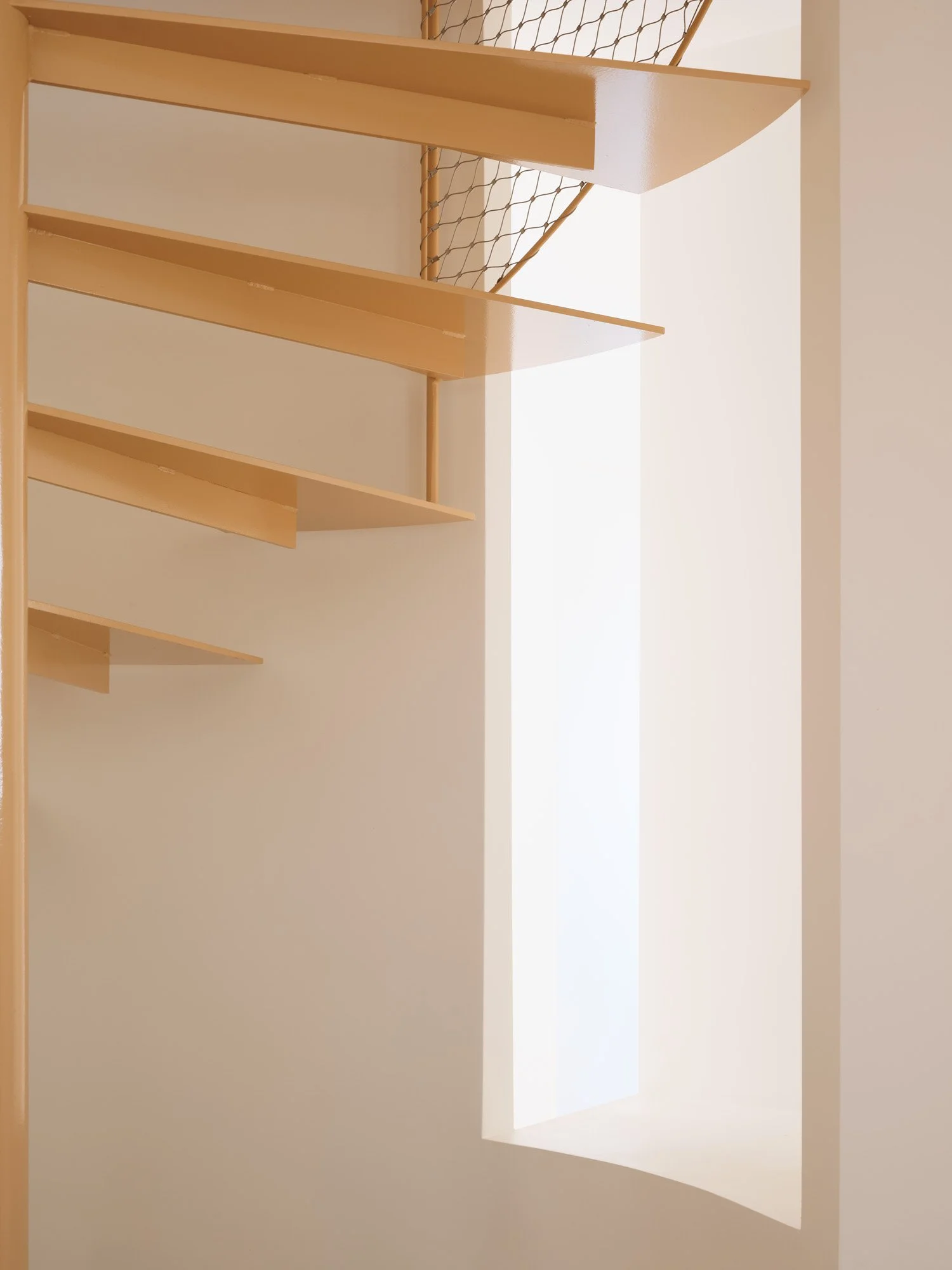
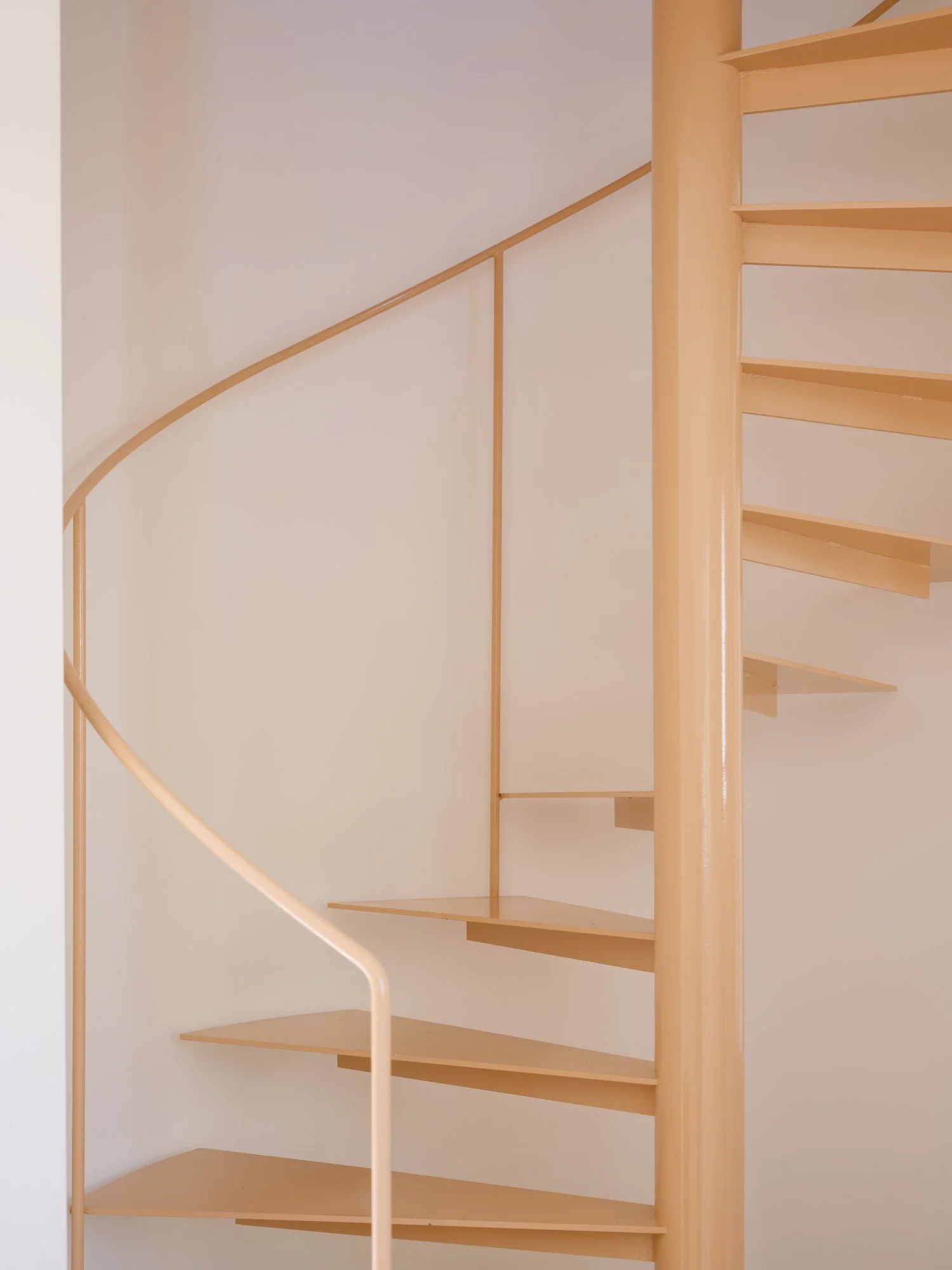
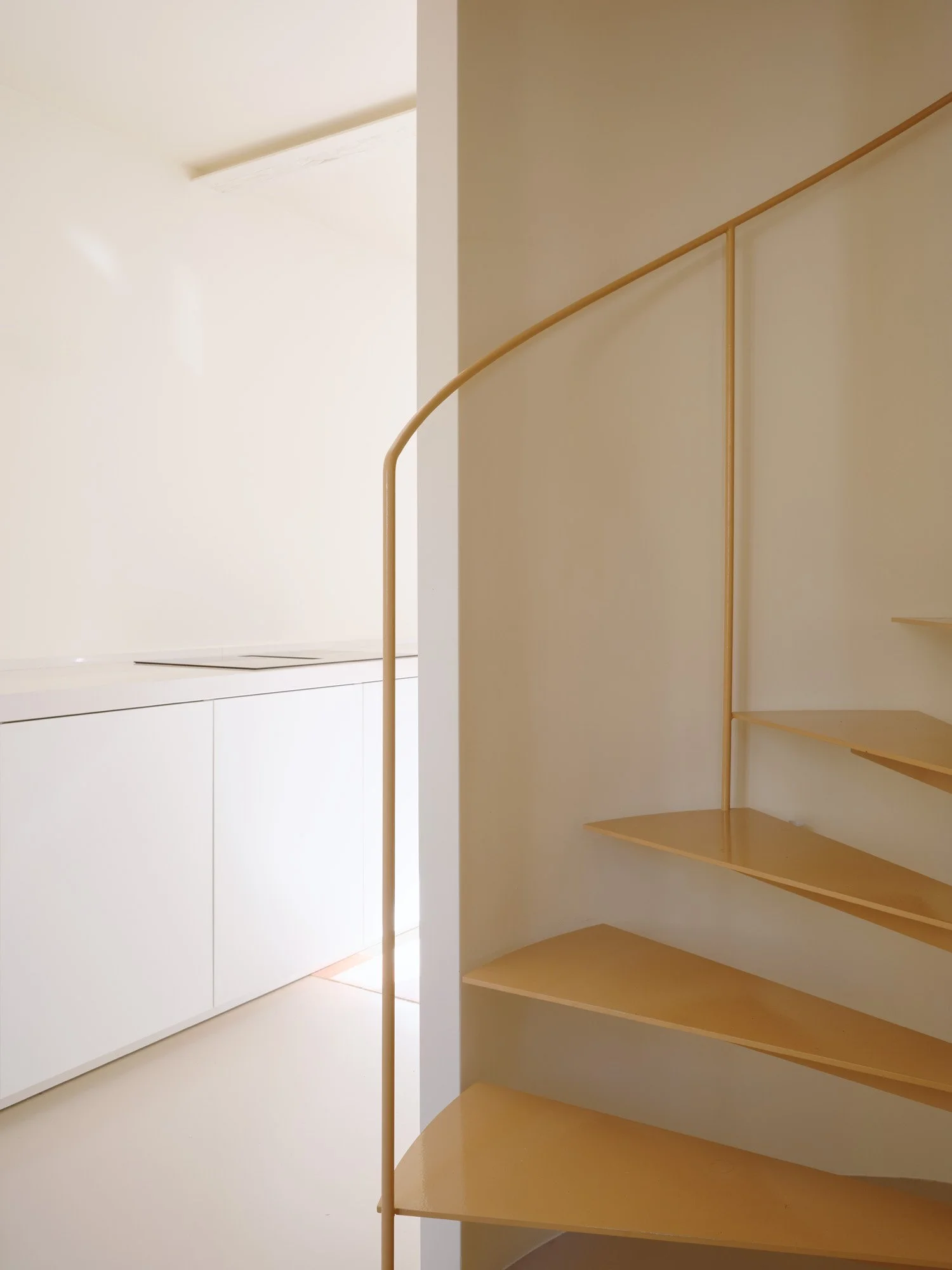
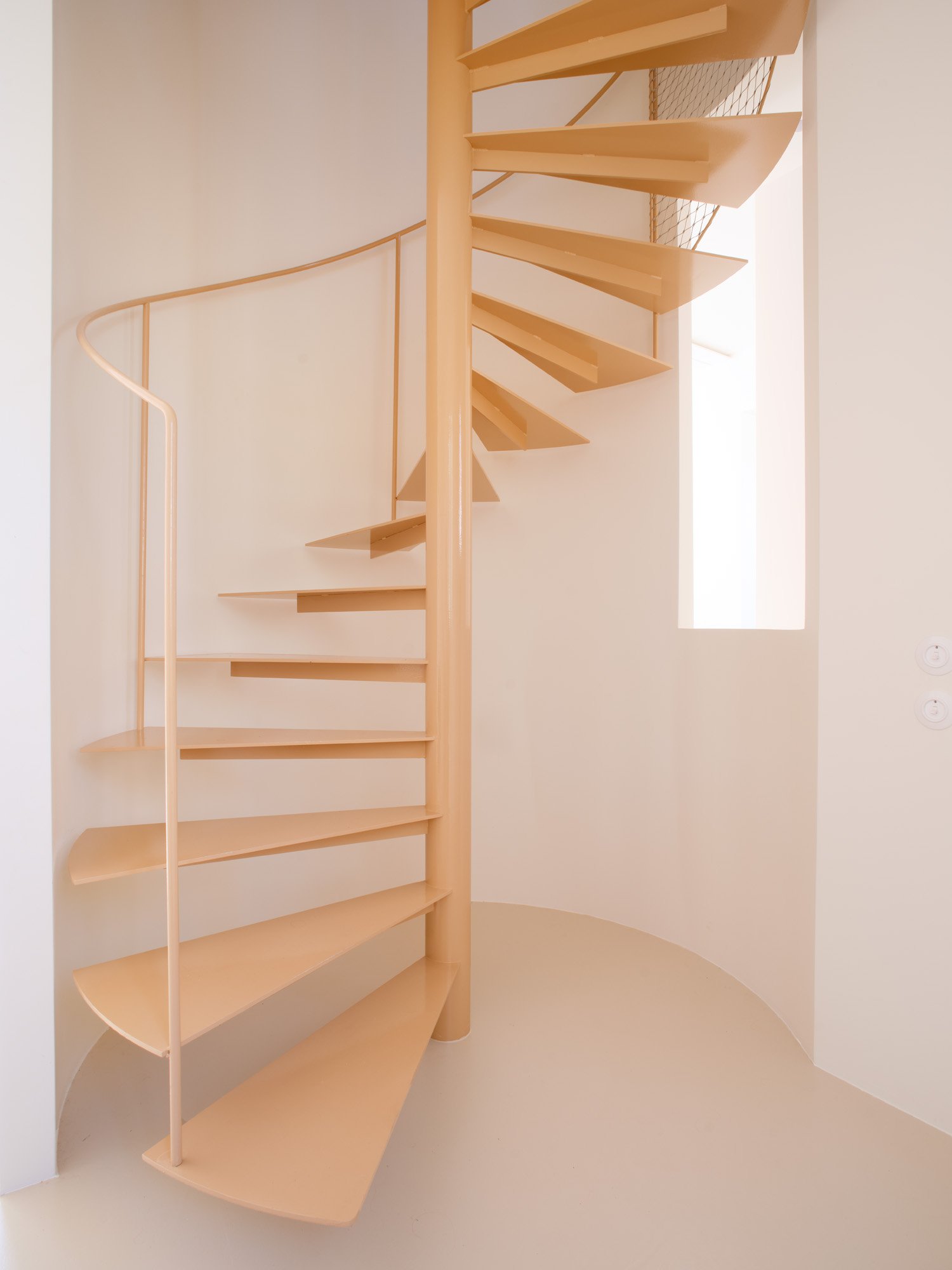
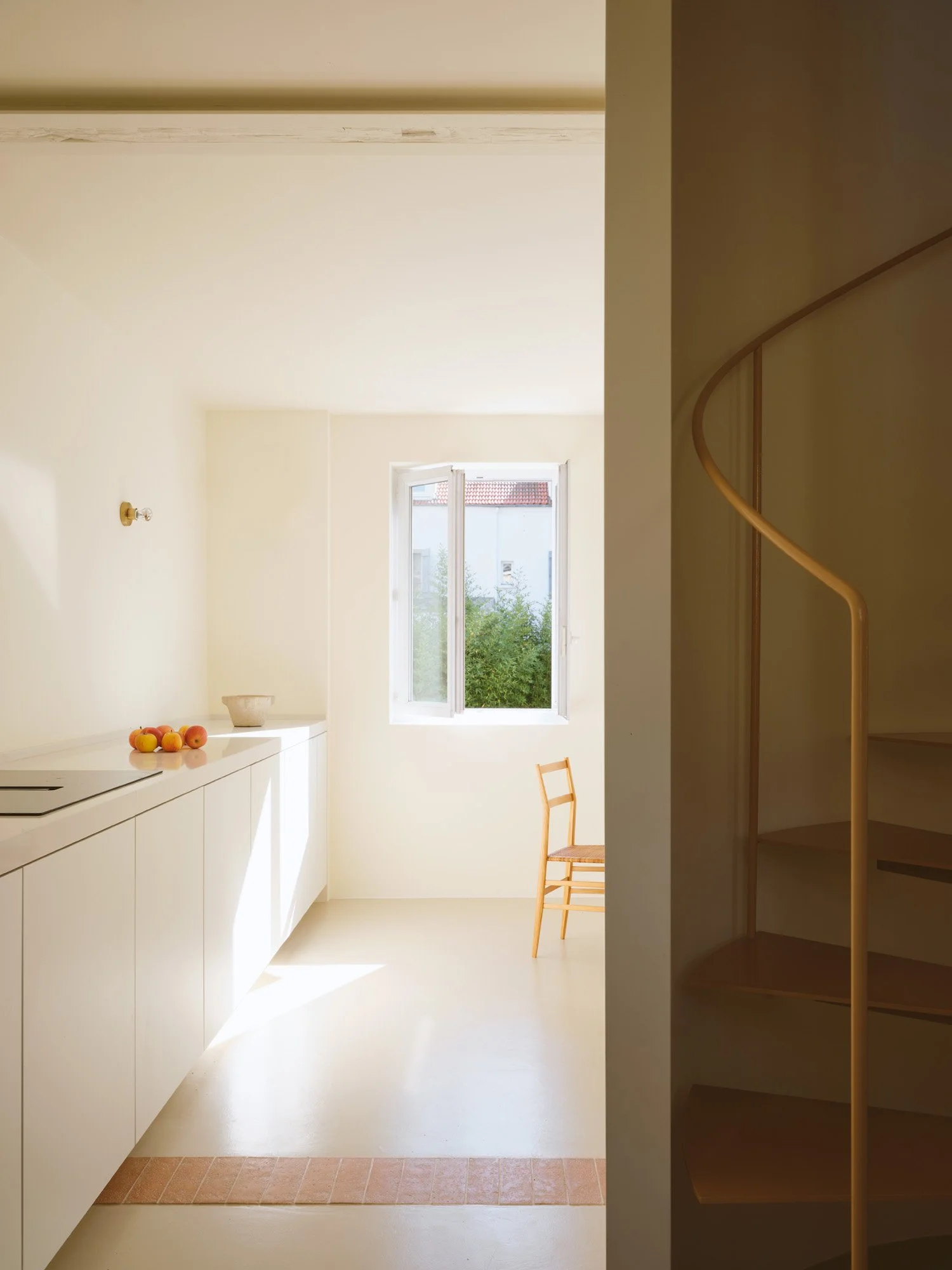
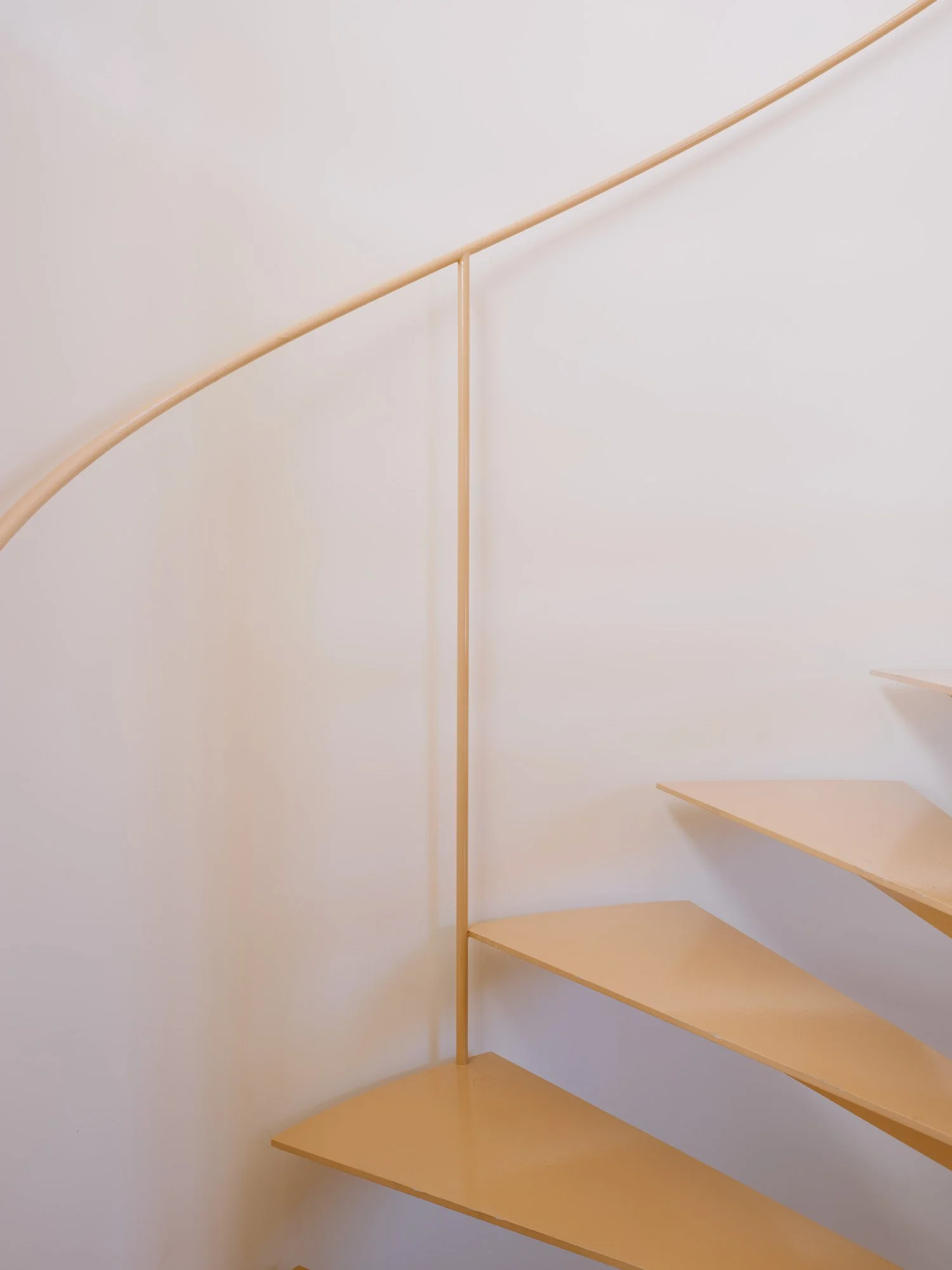
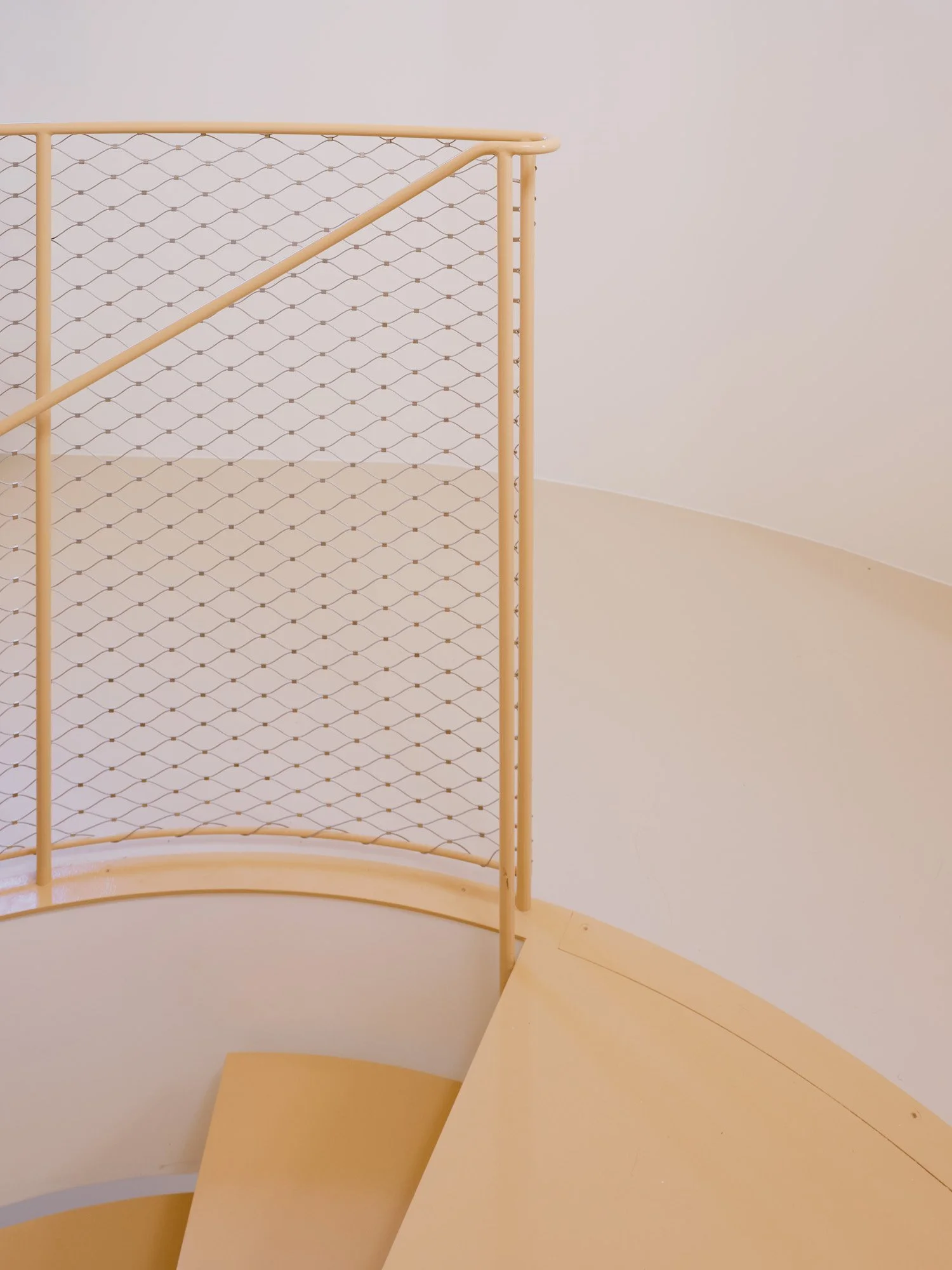
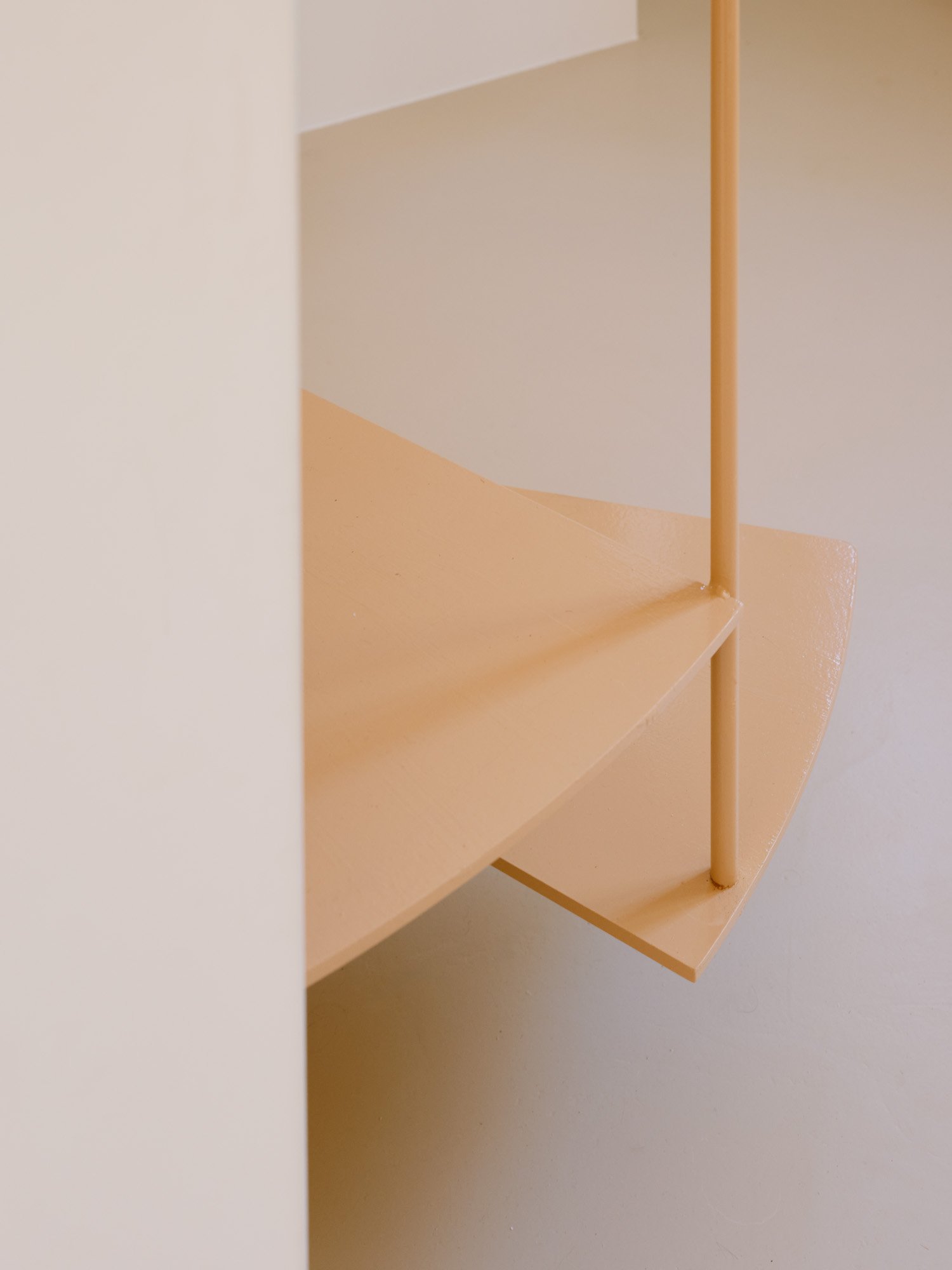
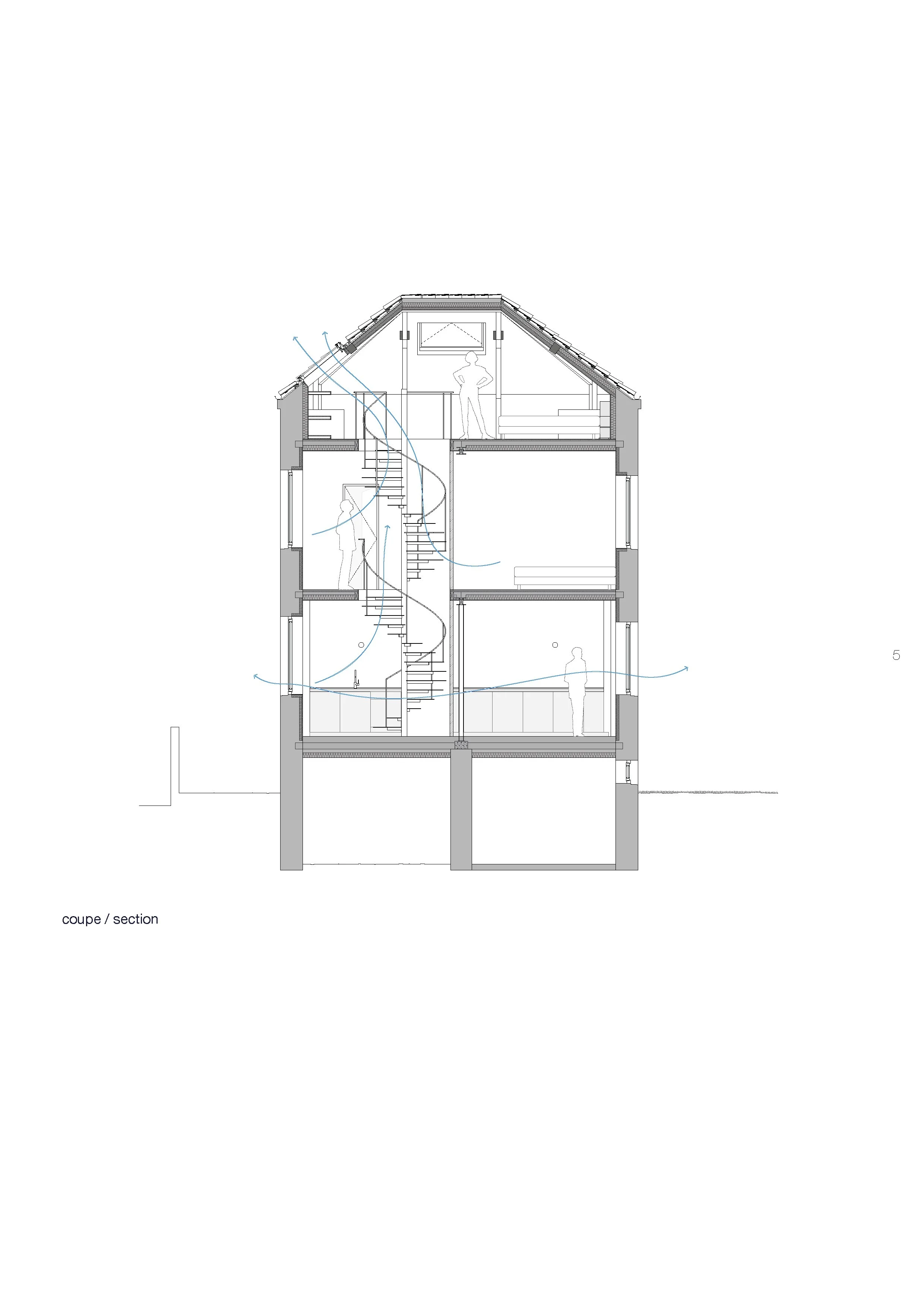
This opening of the plan allows for the insertion of a metal spiral staircase at the center of the house, creating a vertical connection to the previously unused attic space. The staircase’s simple geometry and light lines structure the spaces and provide natural vertical ventilation, encouraging the circulation of air and light throughout the house.
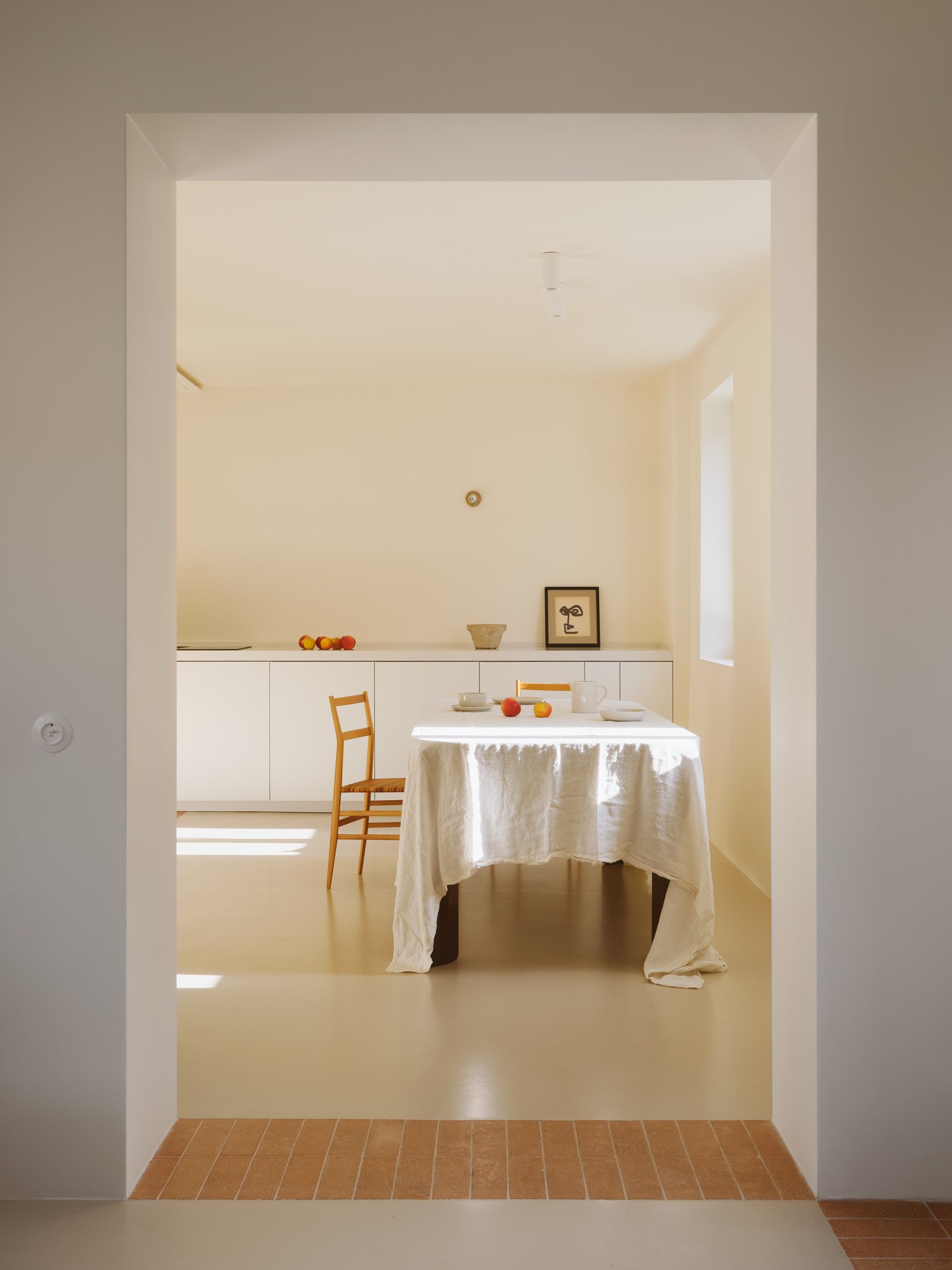
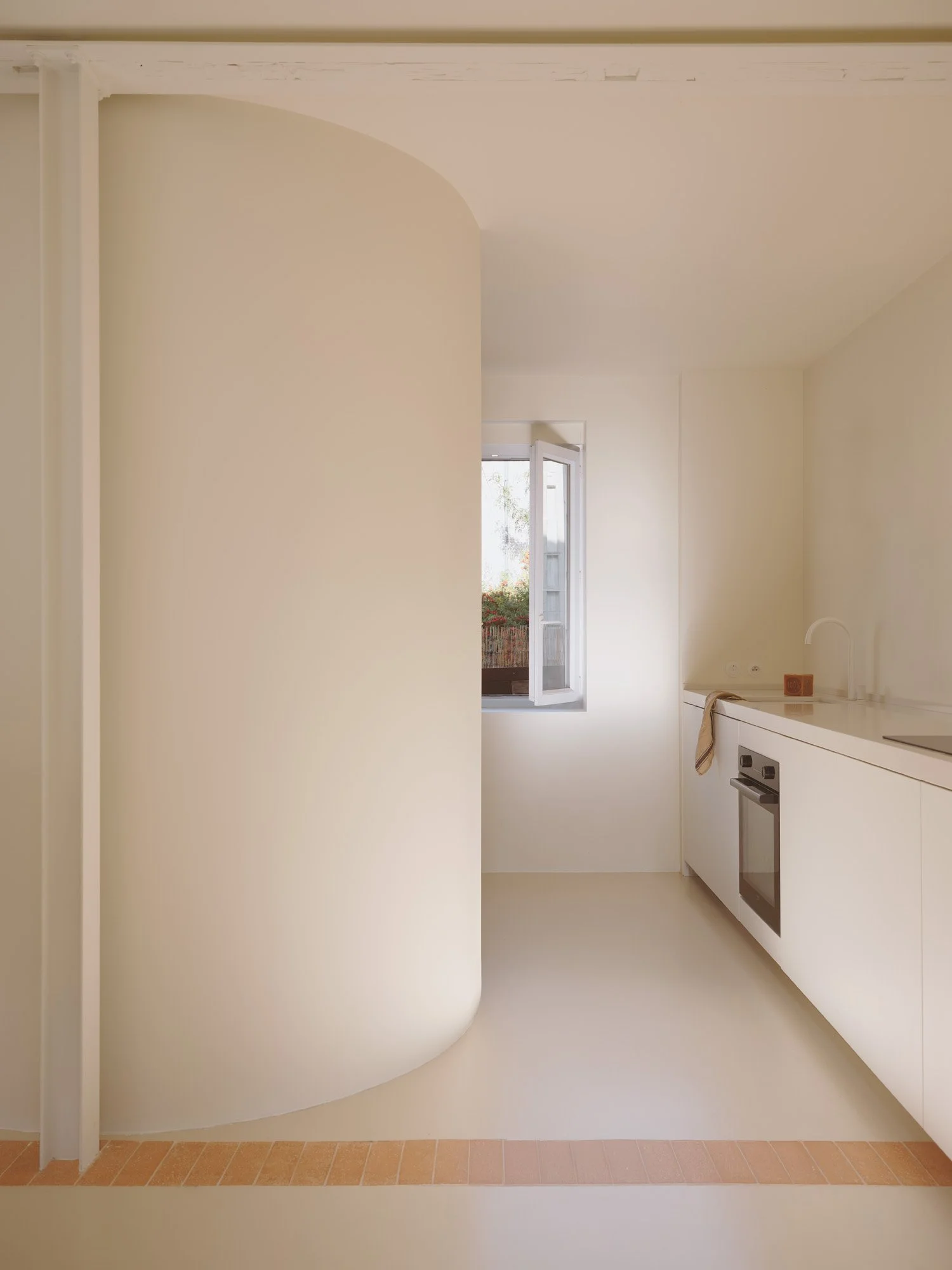
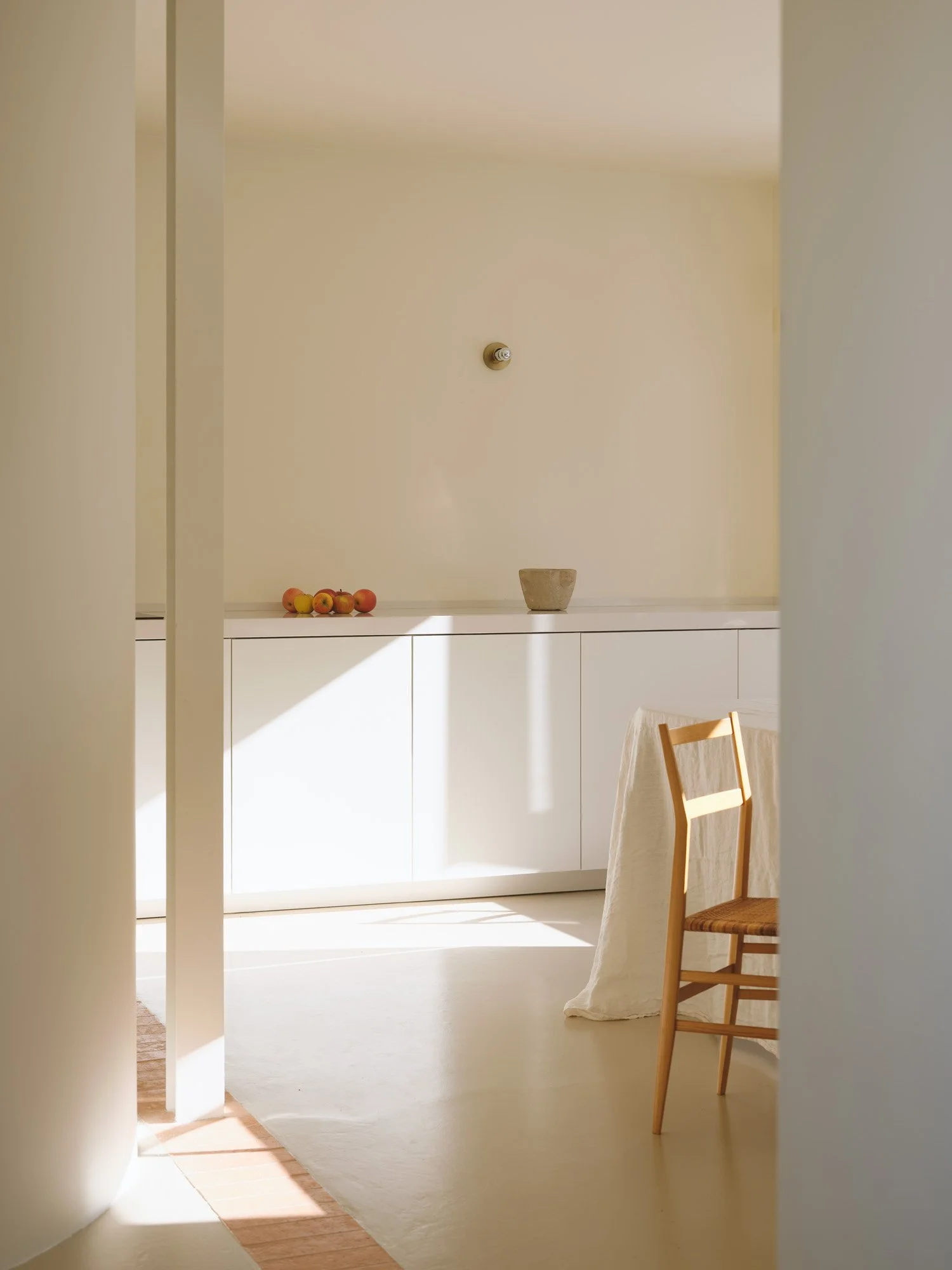
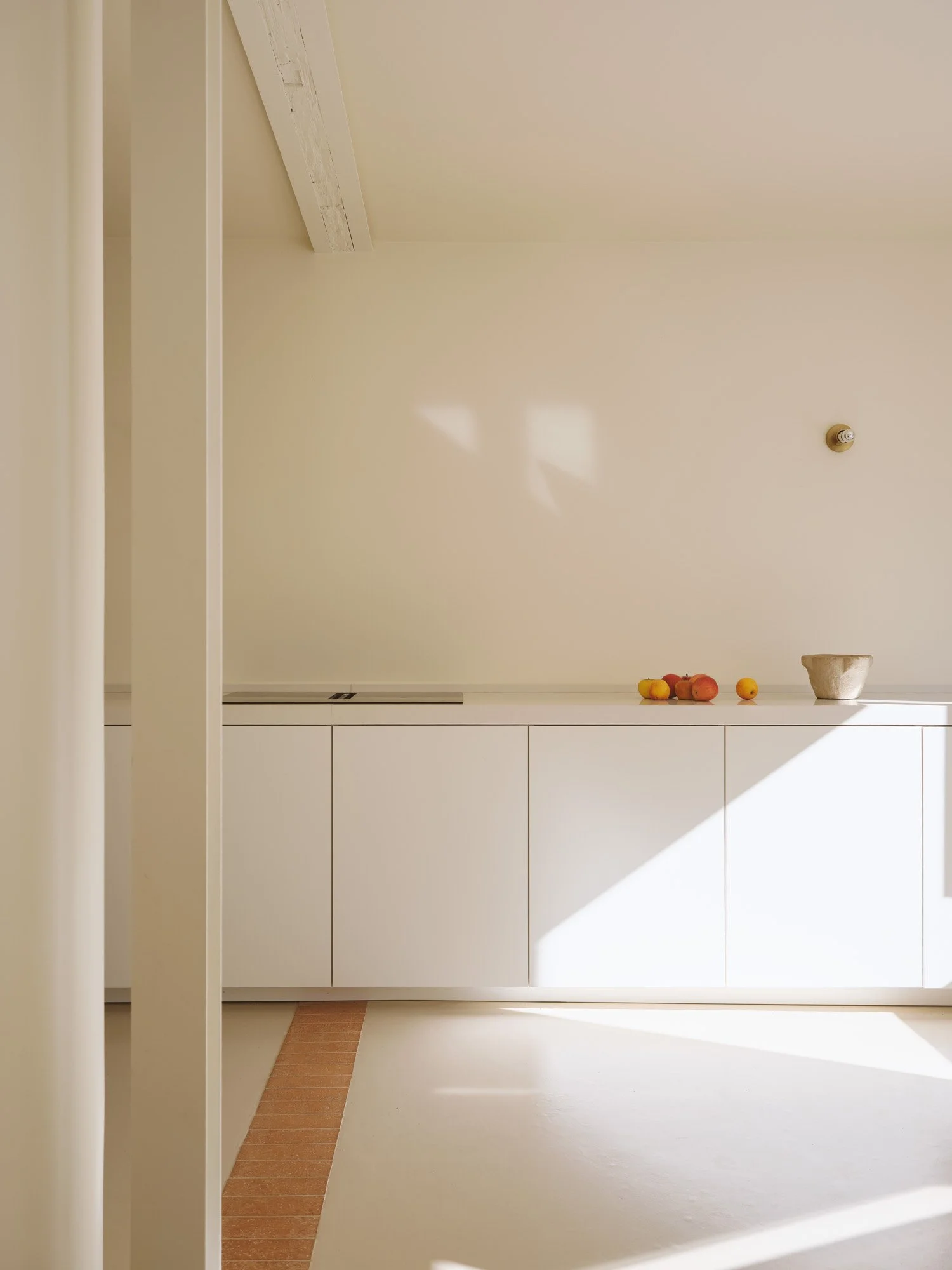
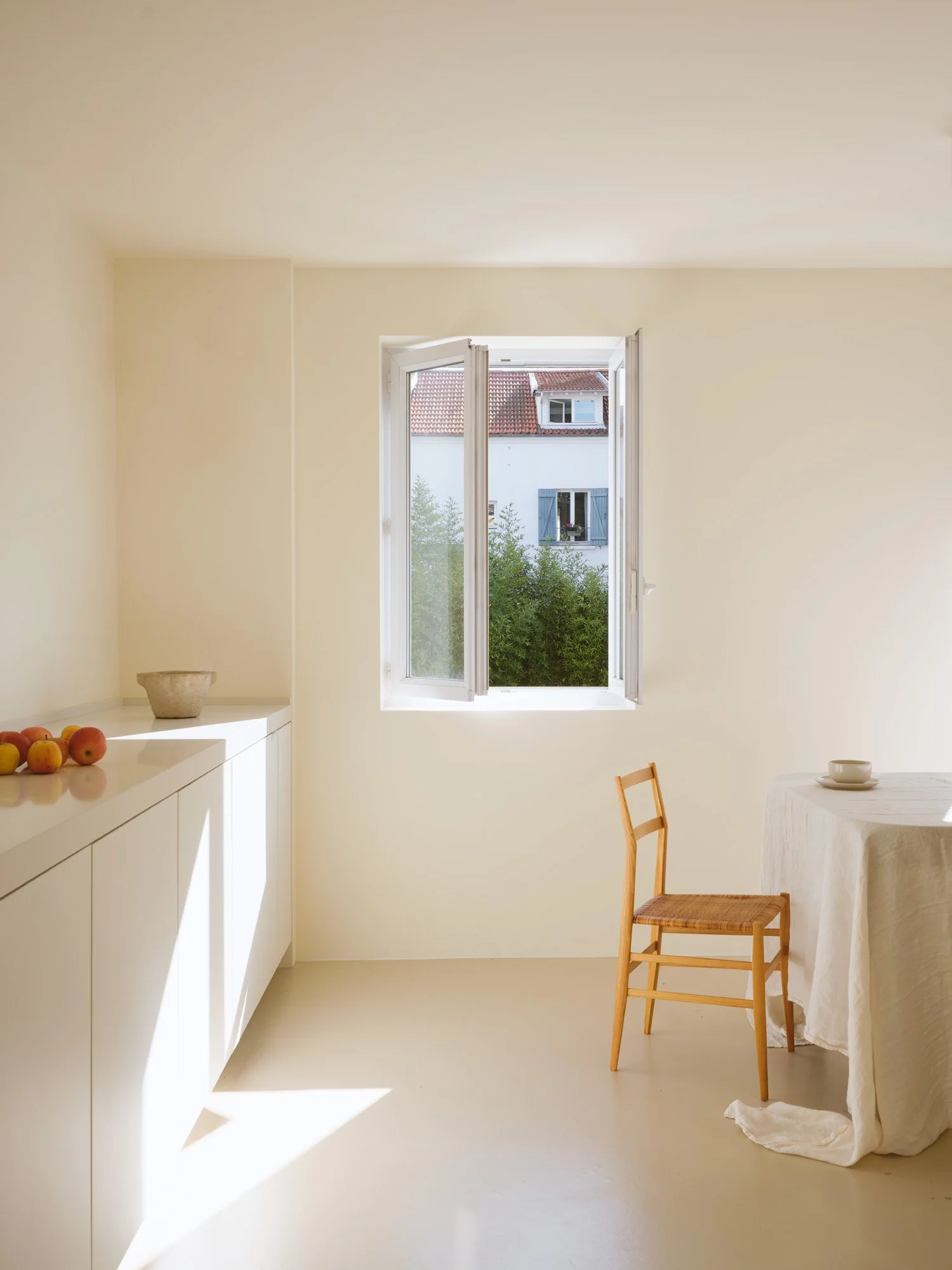
On the ground floor, the kitchen is developed as a long, low linear element connecting the two façades, creating through-views and reinforcing the spatial continuity of the ground-floor living areas.
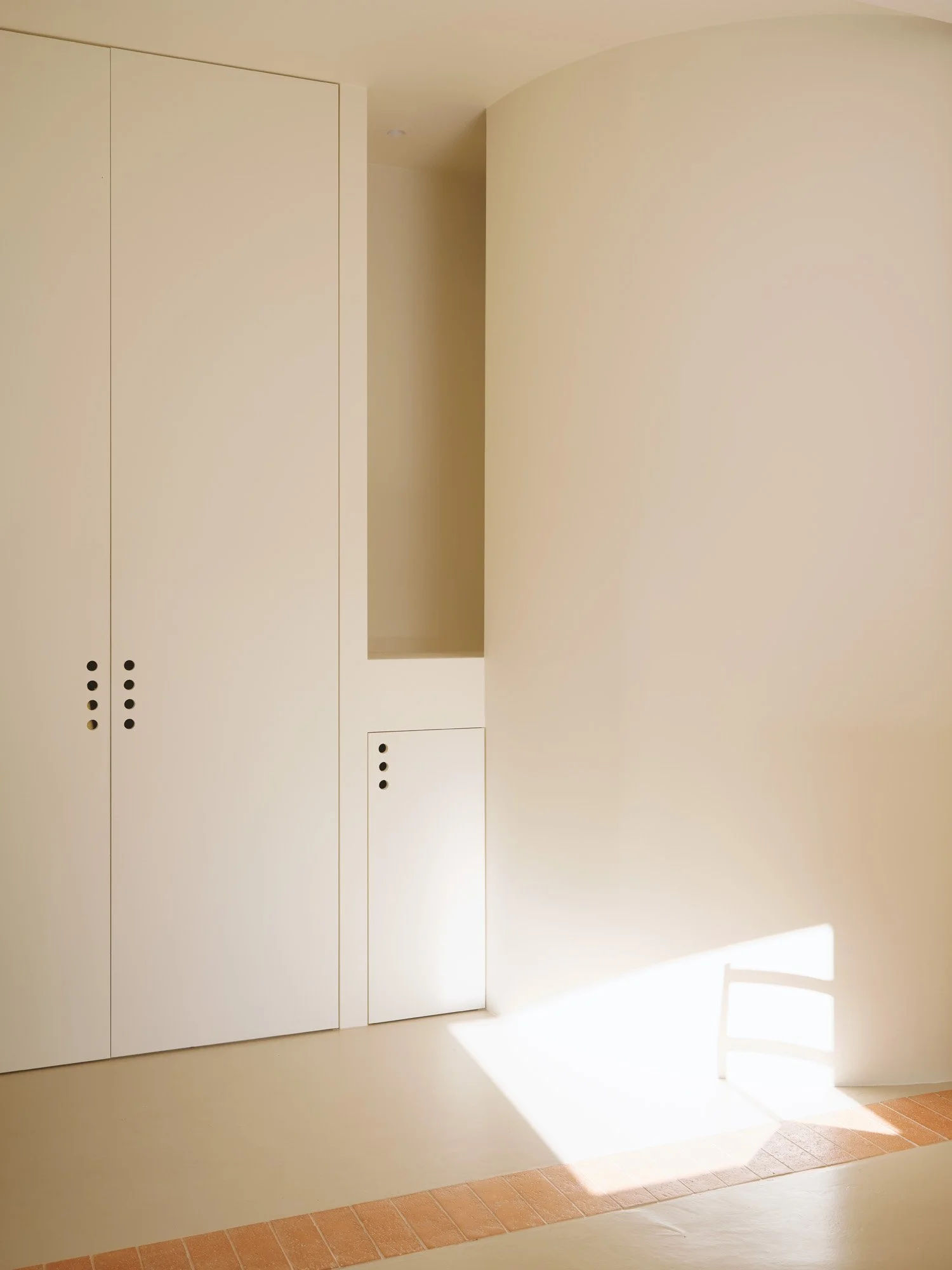
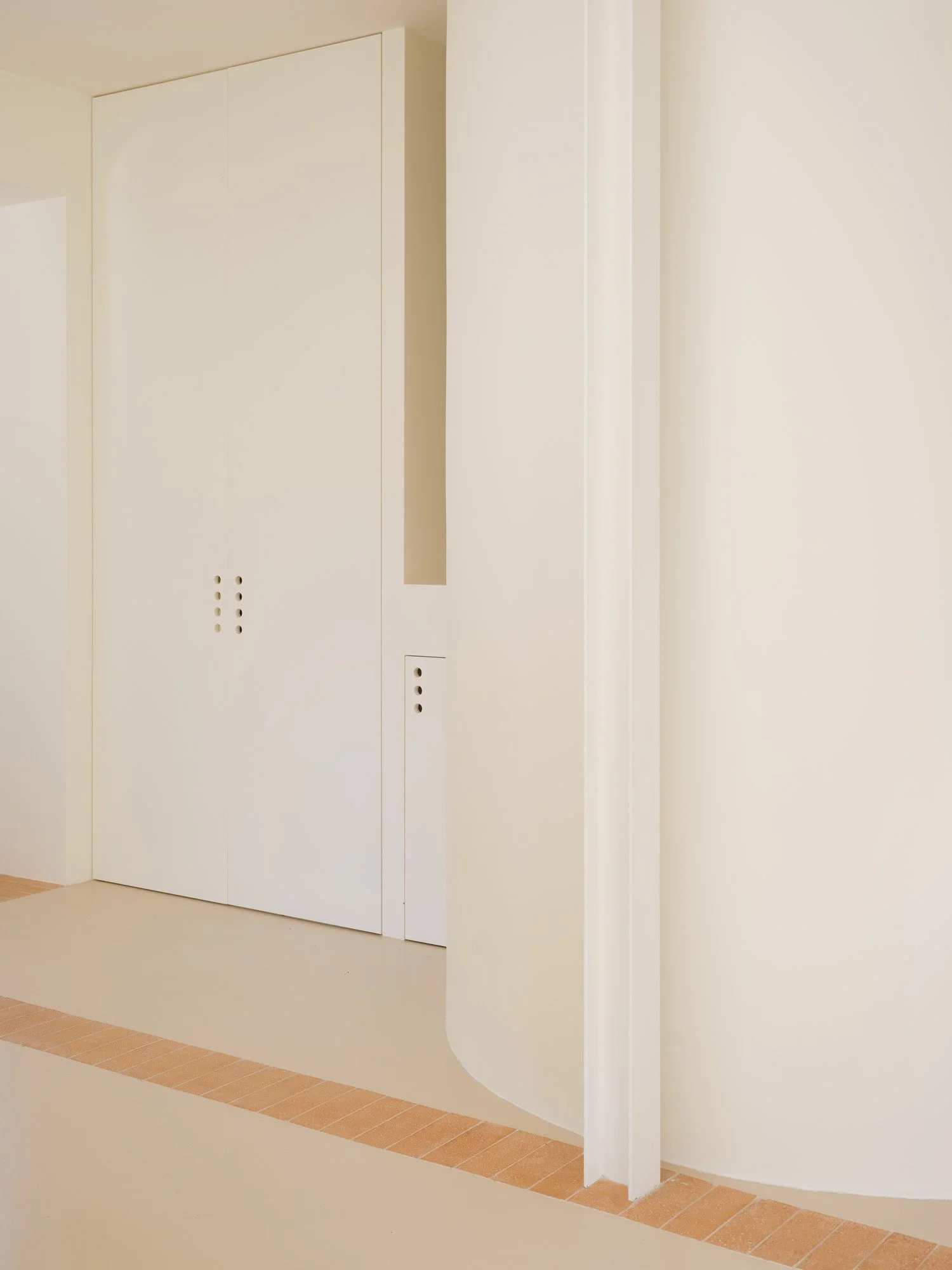
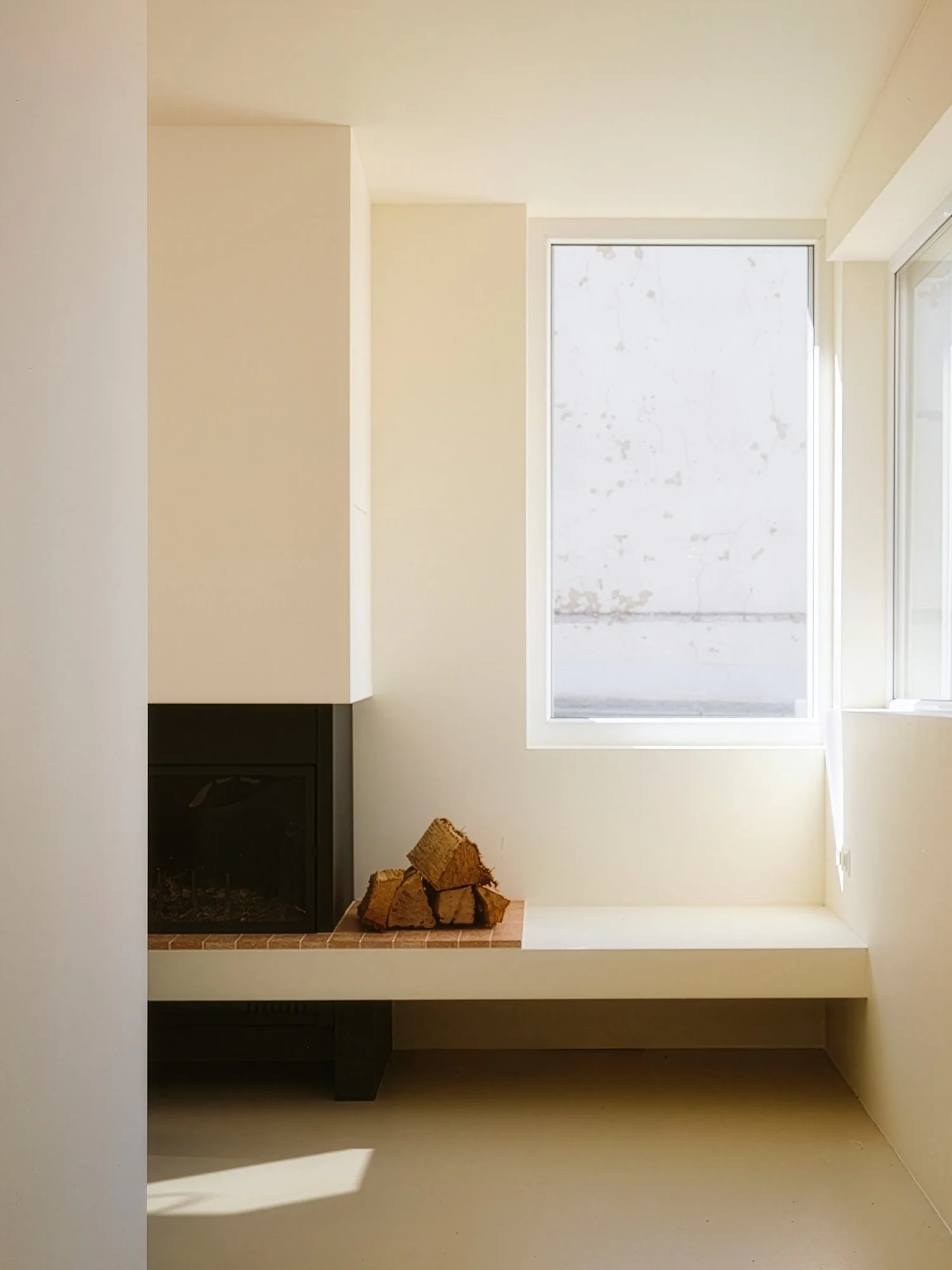
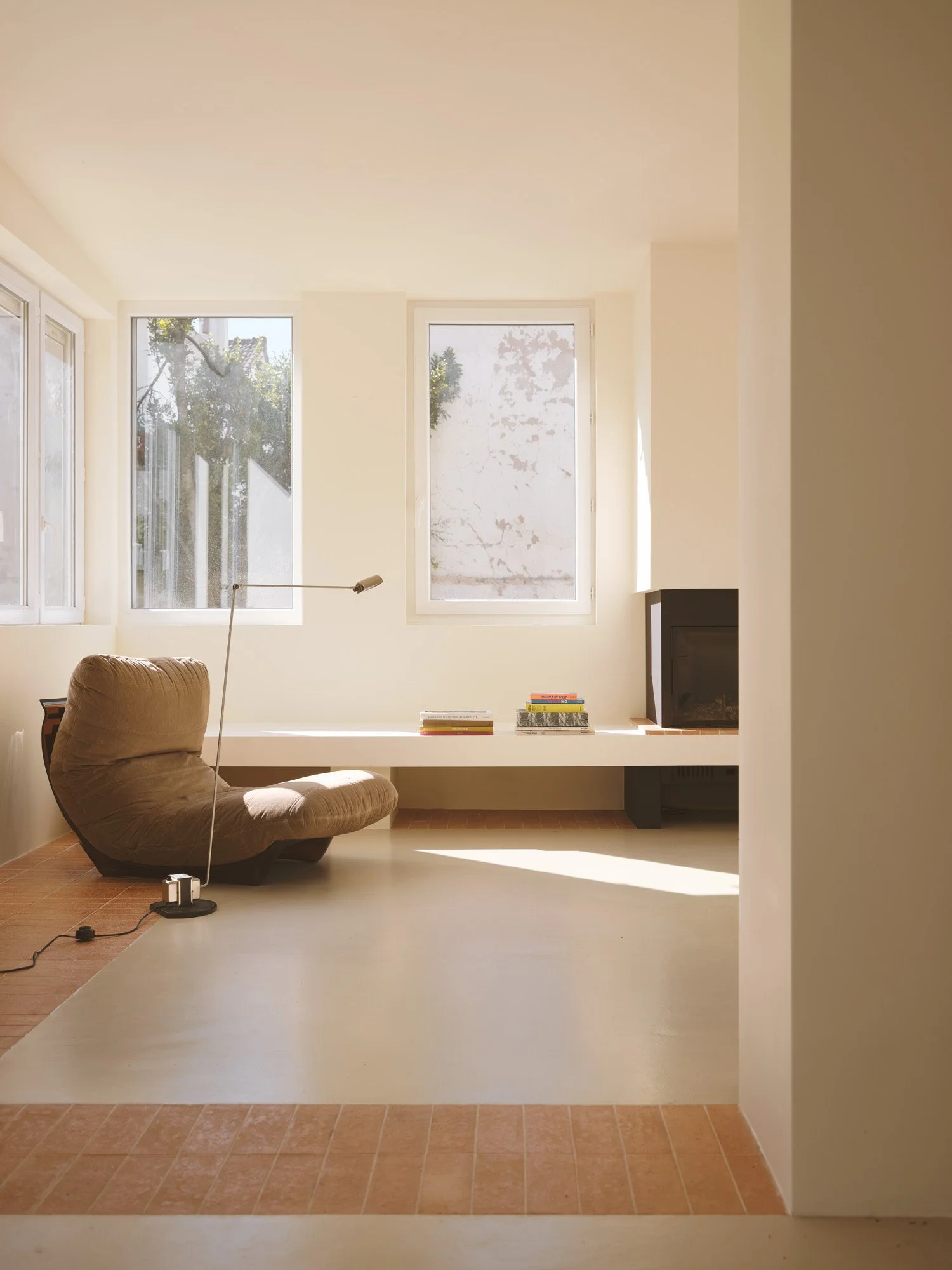
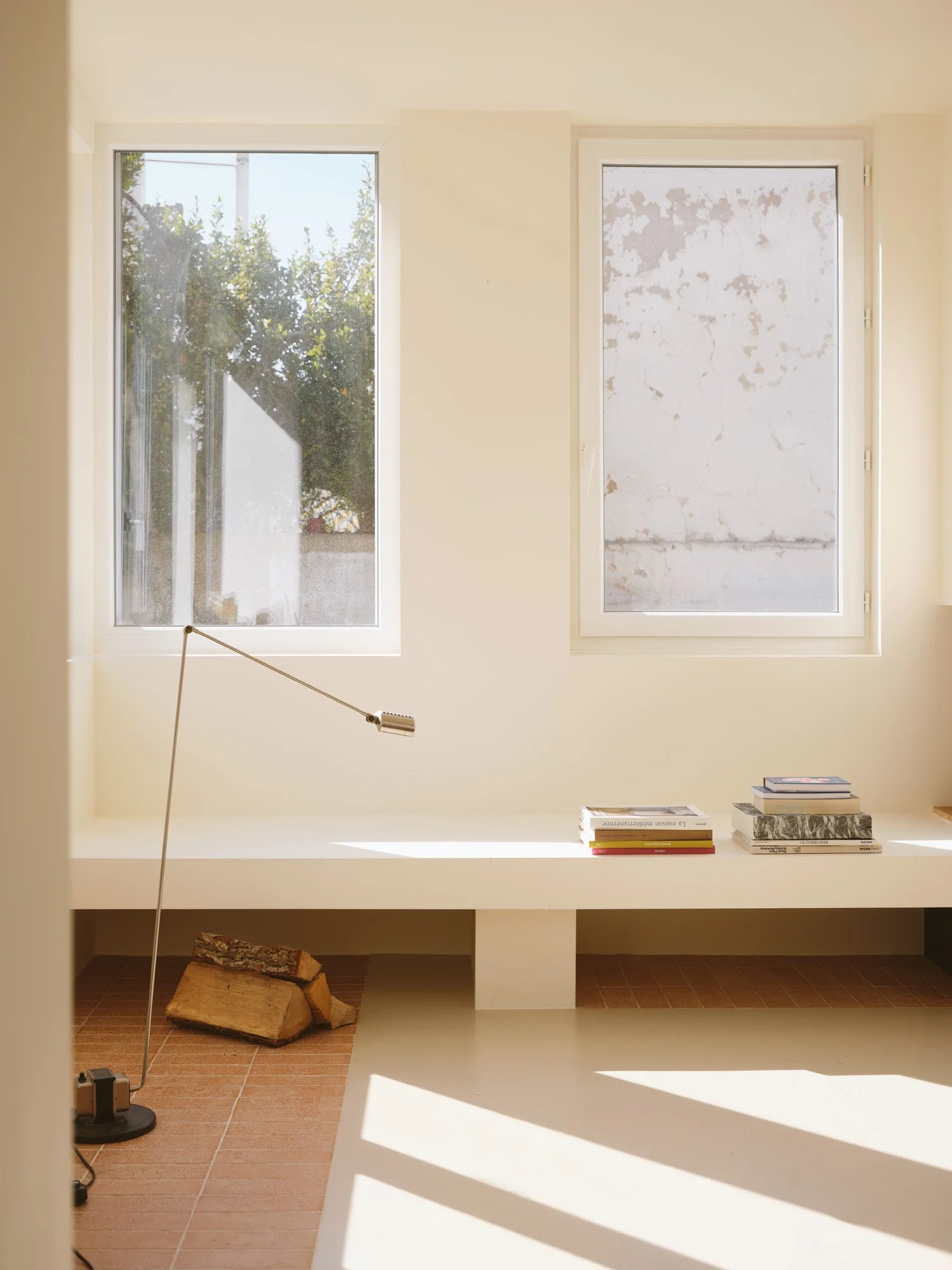
The project embraces a minimalist approach, expressed through simple and consistent materials, notably a continuous, uniform floor, punctuated by a few interventions in pink terracotta. This material palette unifies the spaces and establishes a warm, luminous atmosphere.
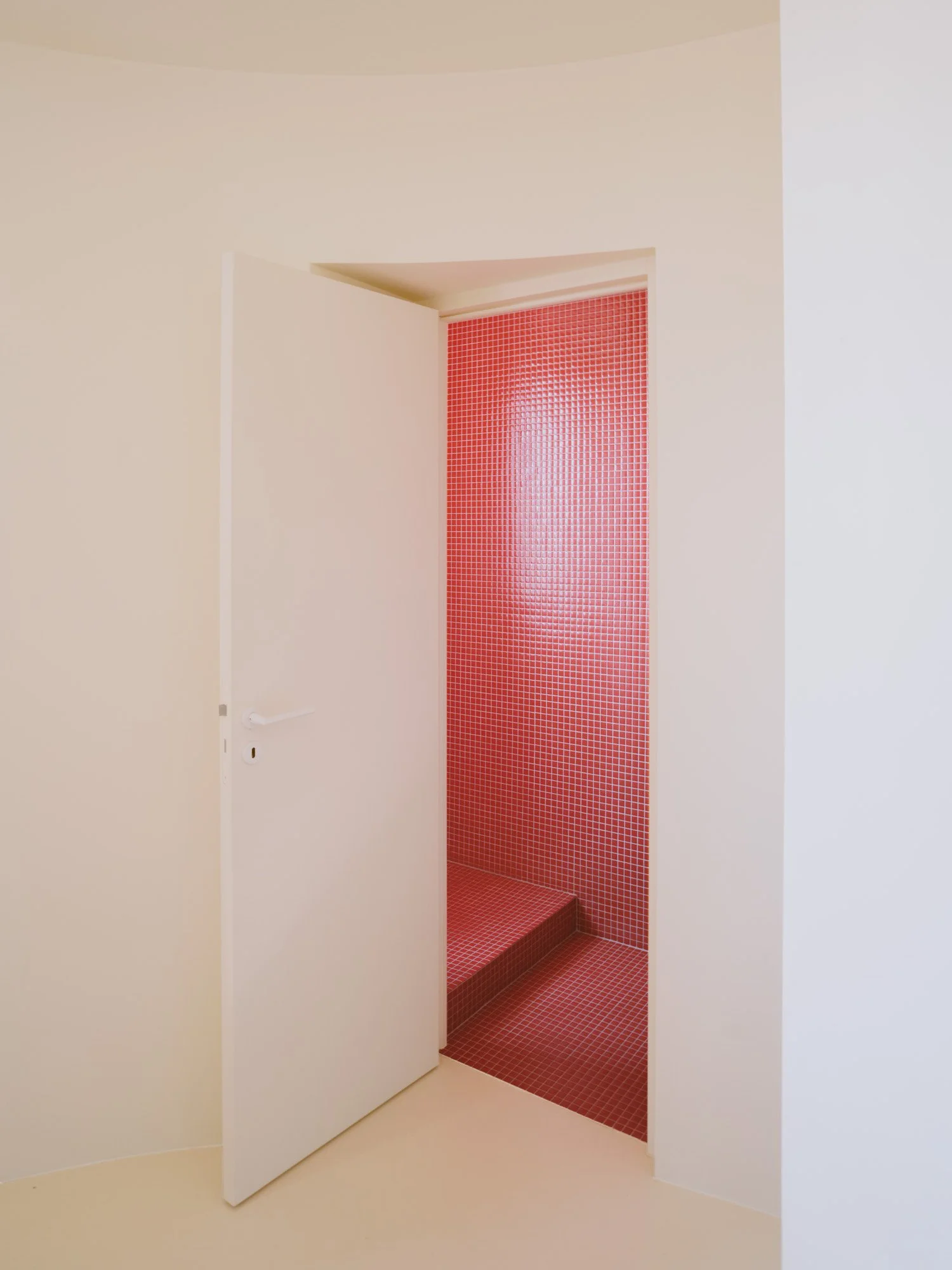
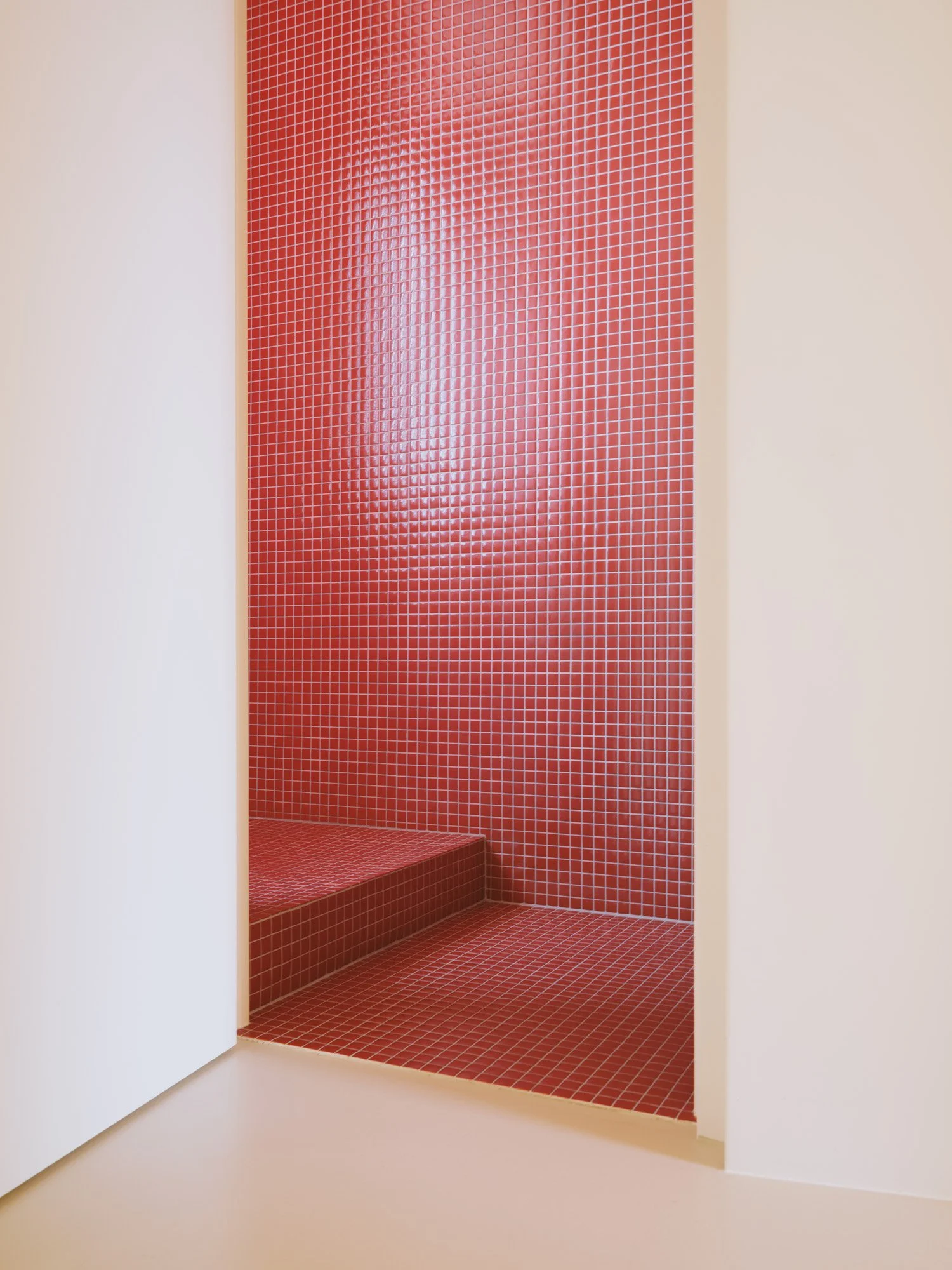
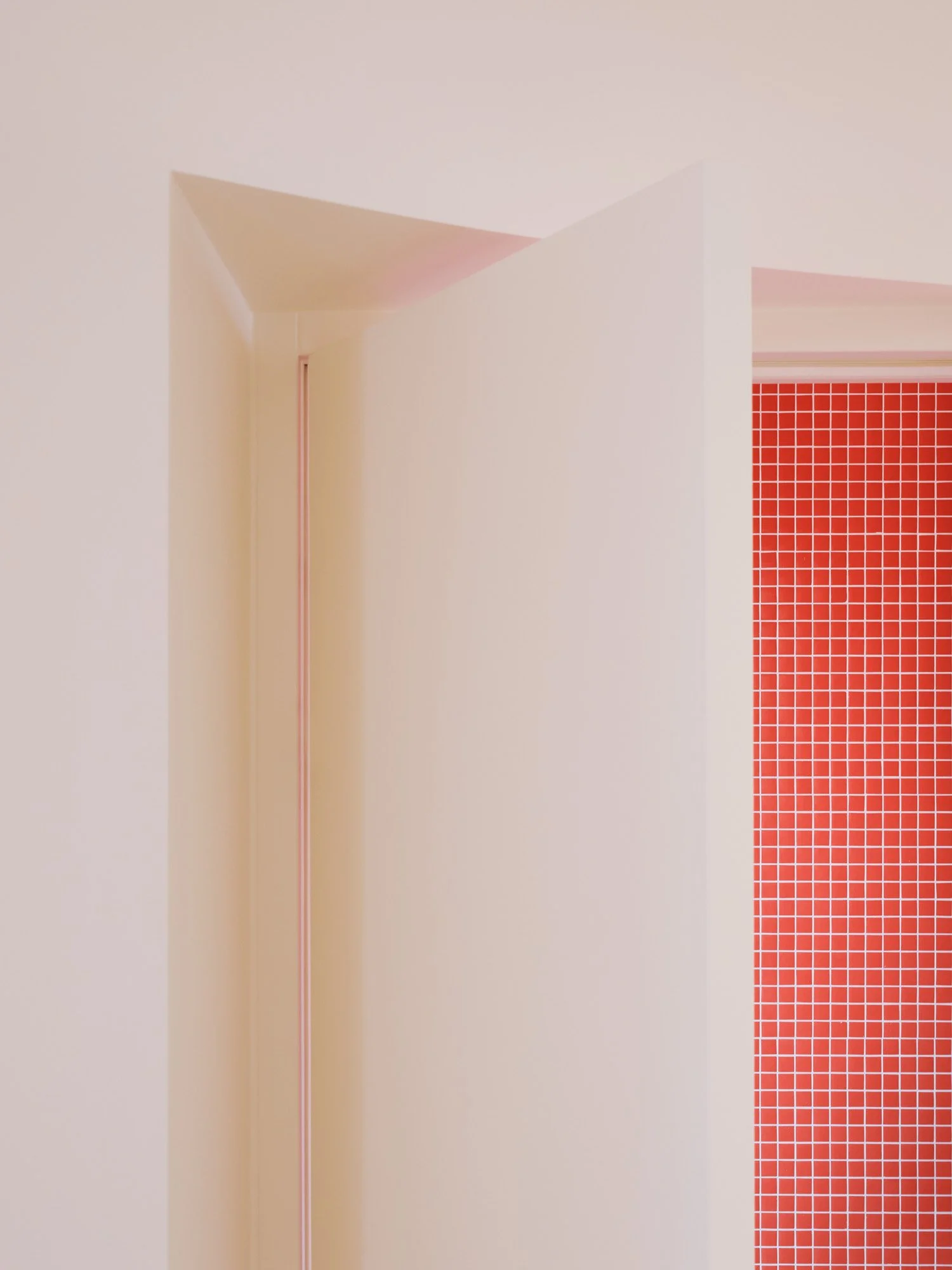
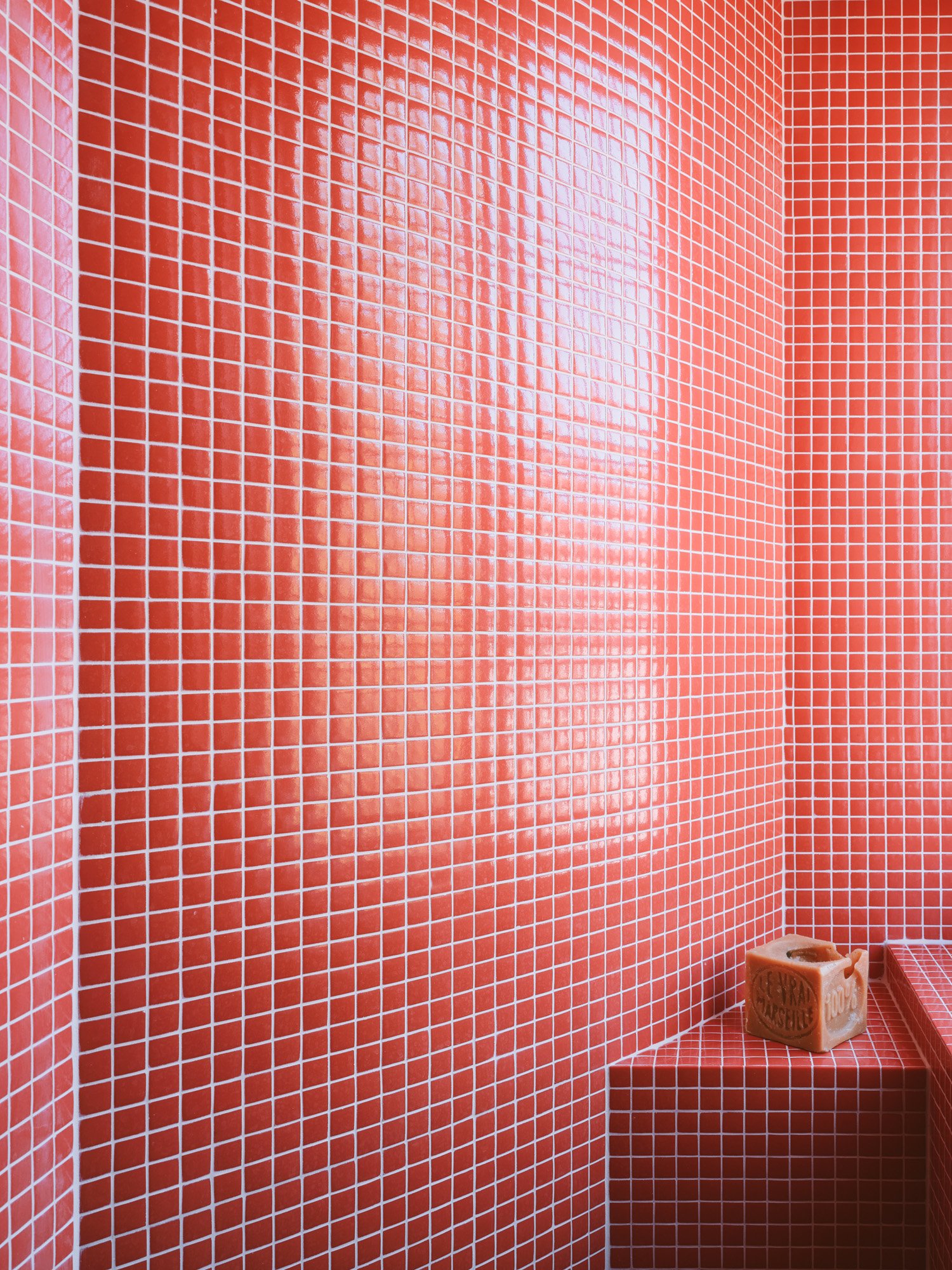
This restrained ambience is animated by a few distinct color accents, including the metal staircase in a soft pink tone and the children’s bathroom entirely clad in red-orange mosaic tiles; it extends and reinterprets the warm tonalities of the overall project. Text description by the architects.