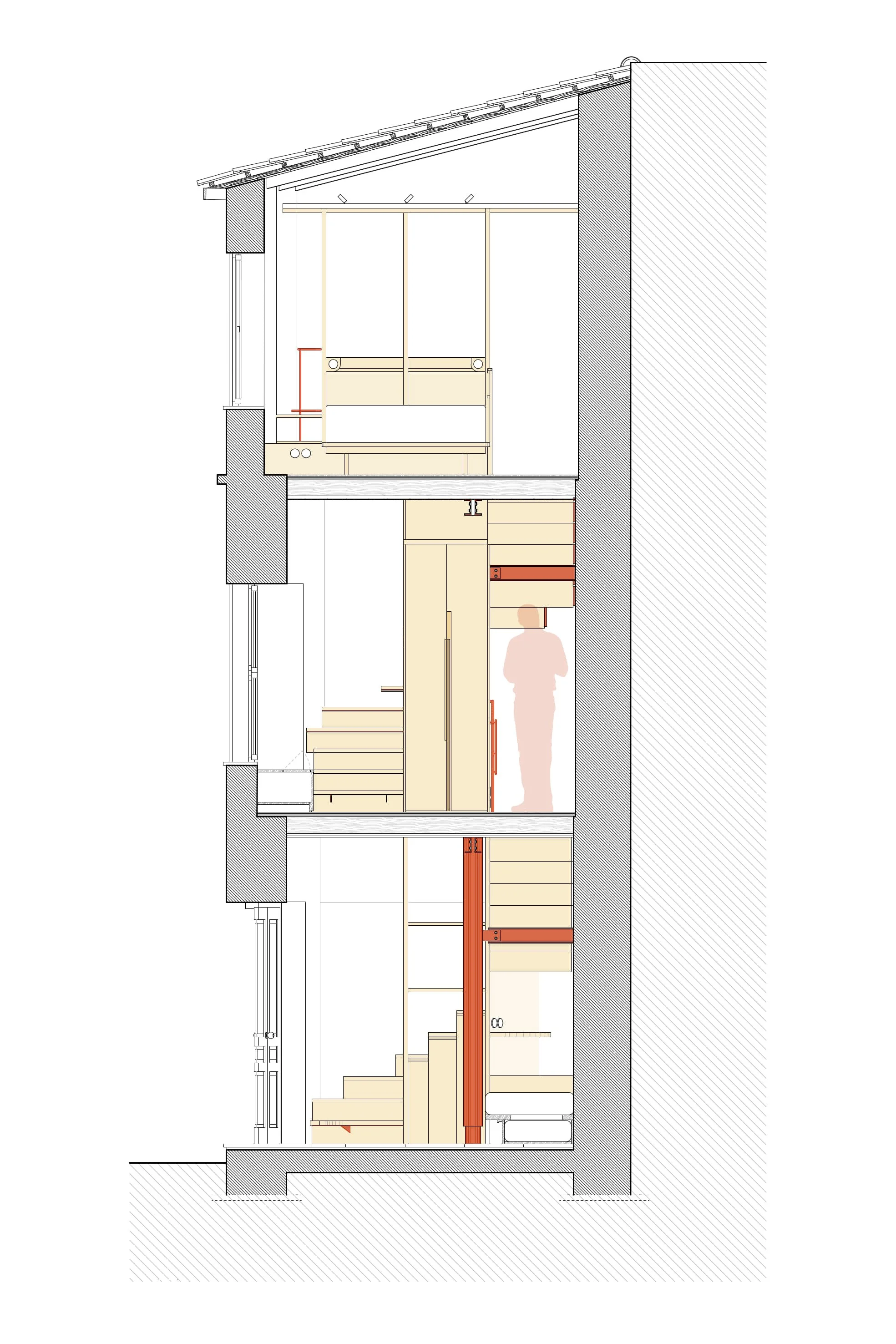
The project concerns the conversion of a three-storey Venetian building in the Old Town of Chania into a residence. The design sought to create new, comfortable living spaces within a particularly confined interior, through the fewest possible interventions to the existing shell, while preserving the original wooden mezzanine floors and roof structure.
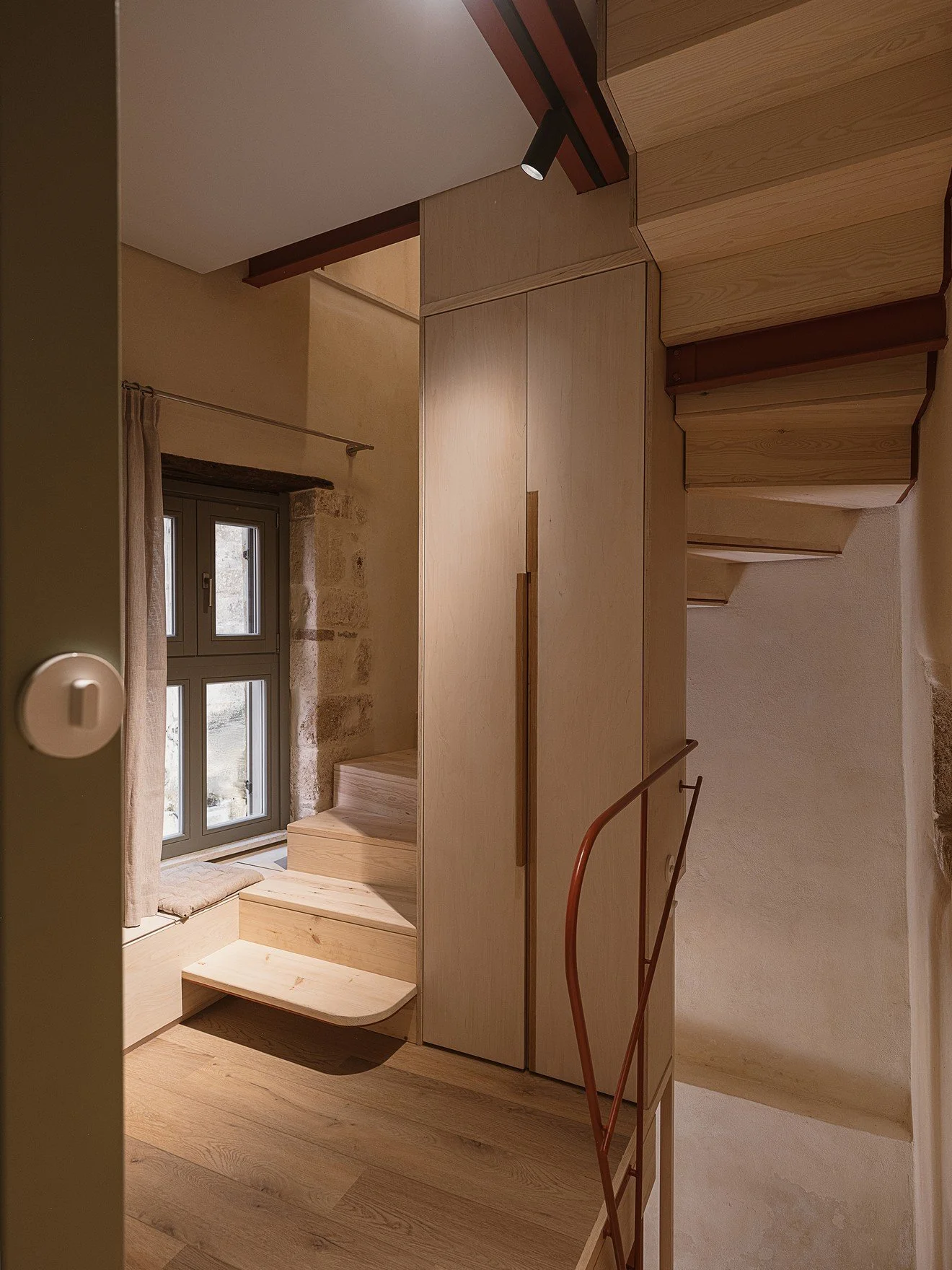
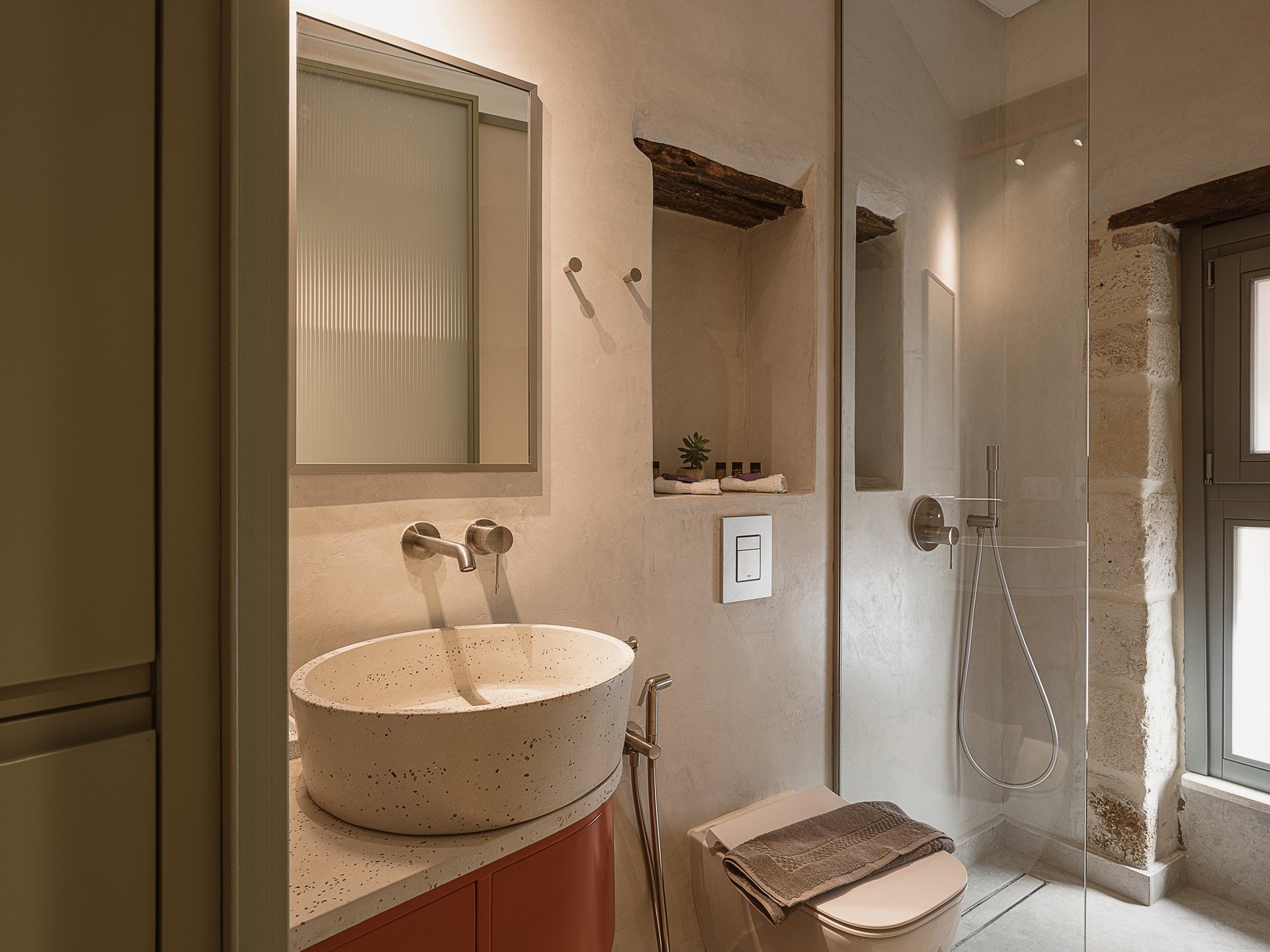
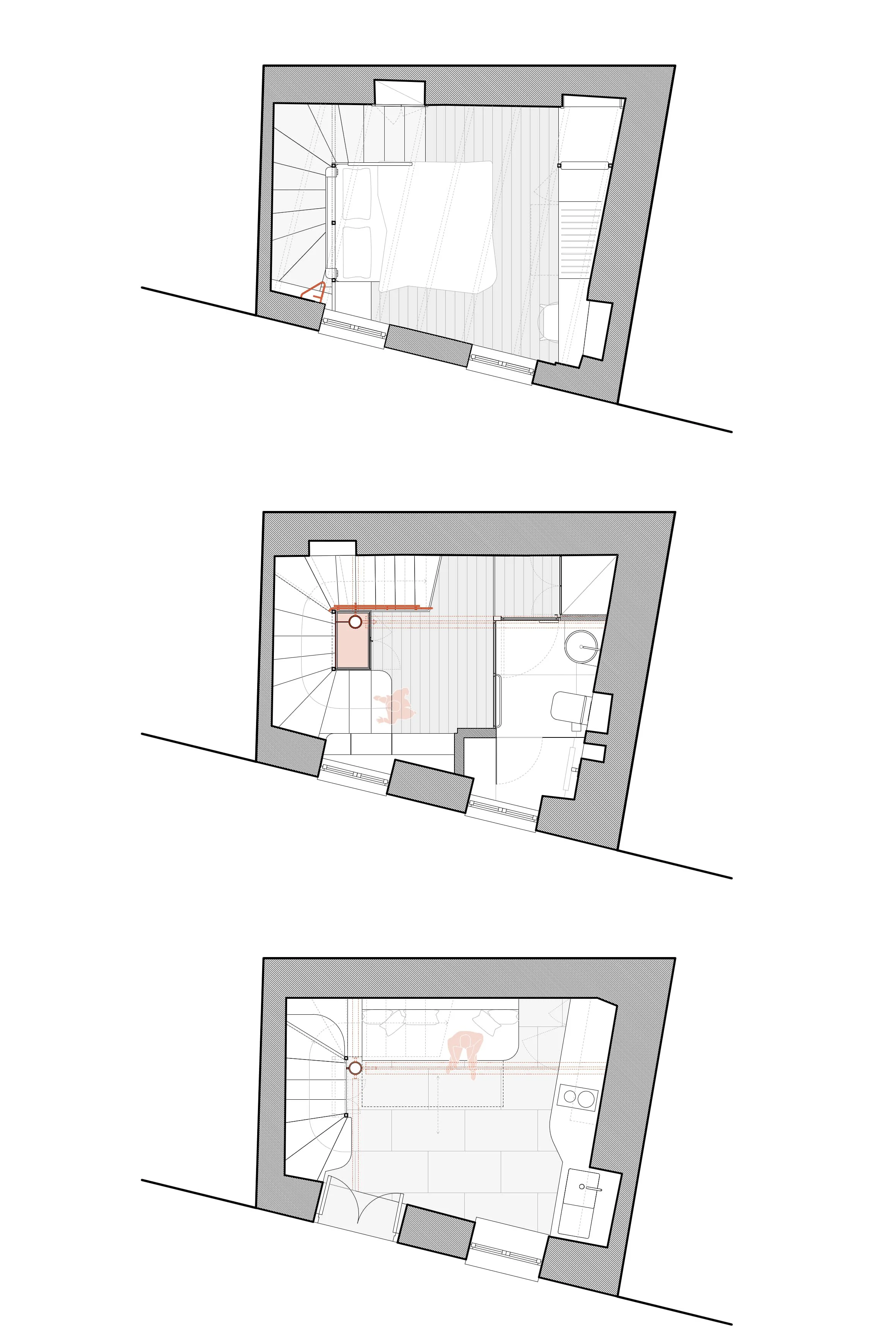
On the ground floor are placed the living area, kitchen and dining space, directly connected to the pedestrian street. The intermediate level, functioning as a pause between floors, accommodates the bathroom and storage areas along with a small sitting area, while the upper level houses the sleeping area and a workspace.
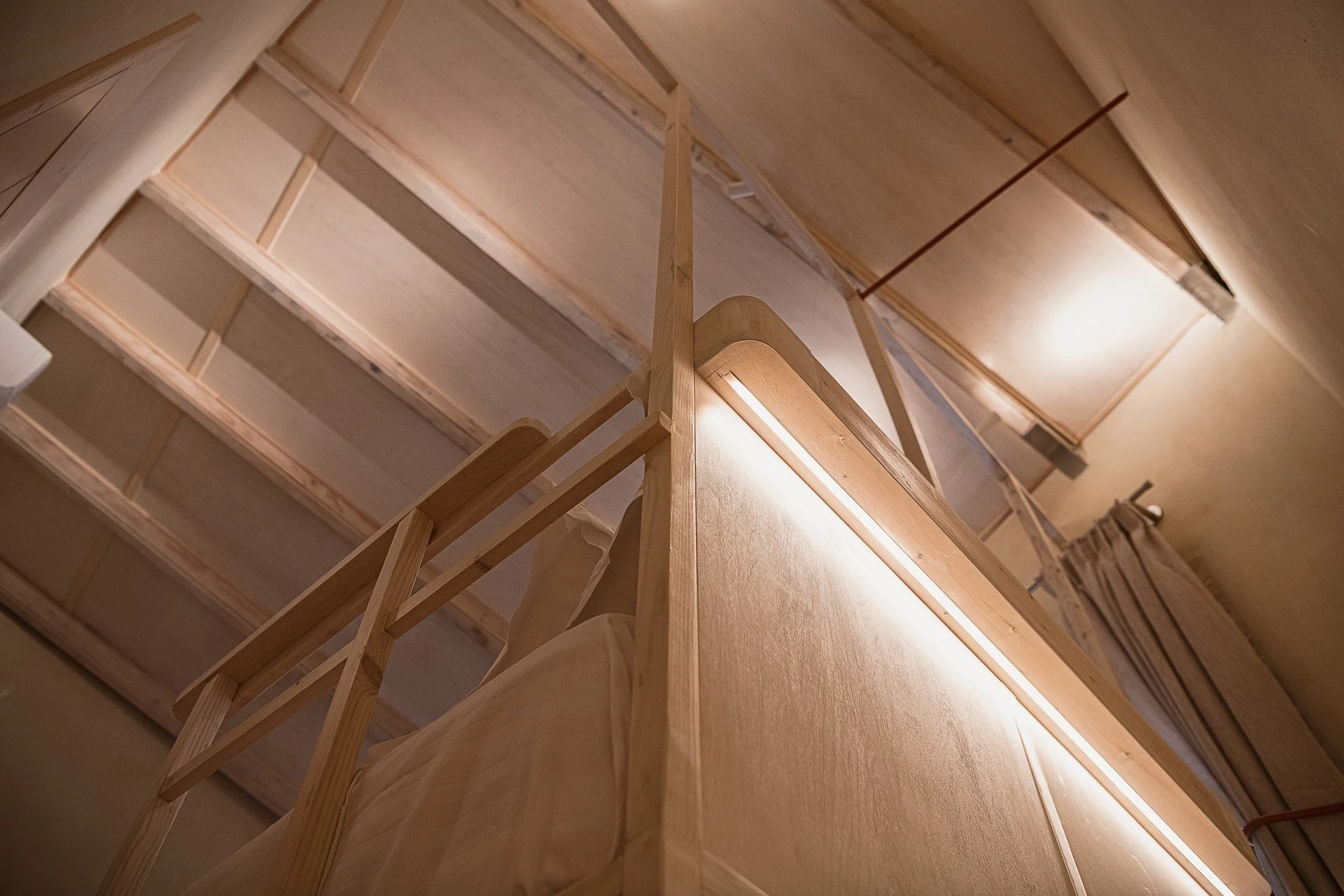
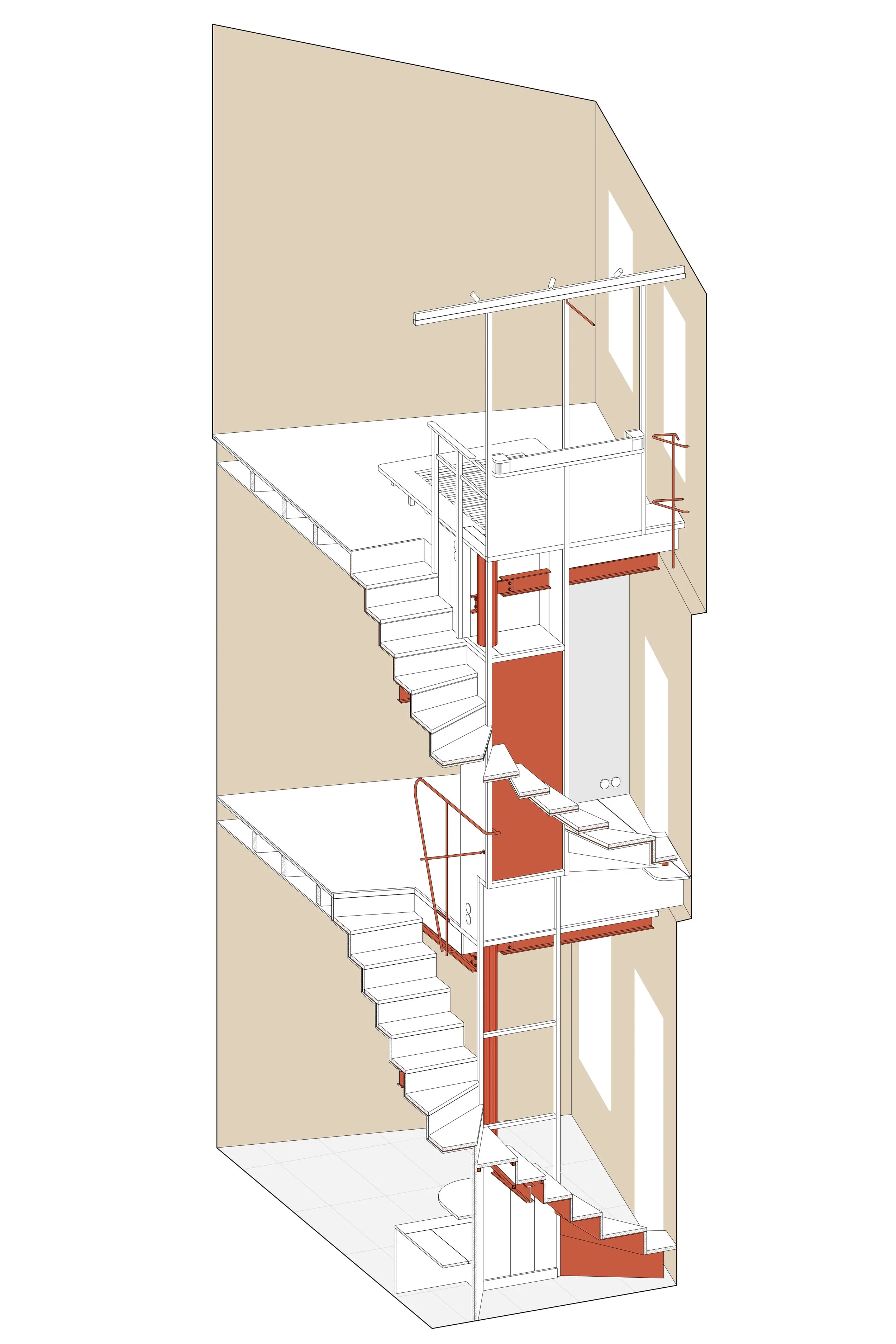
At the core of the composition stands a circular metal column — the nucleus of a complex structure that runs vertically through the building and plays multiple roles within the architectural setting. Composite beams extend from the axis of the column in different directions, taking on the loads of the existing mezzanine floors and supporting the main lighting fixtures. This entire metal assembly shifts in form — from staircase to wardrobe and back to staircase — ultimately supporting a bed that appears to hover above it. At the same time, the column conceals the electrical installations, which are distributed to the upper levels through the wooden structures, leaving the historic shell of the building untouched.
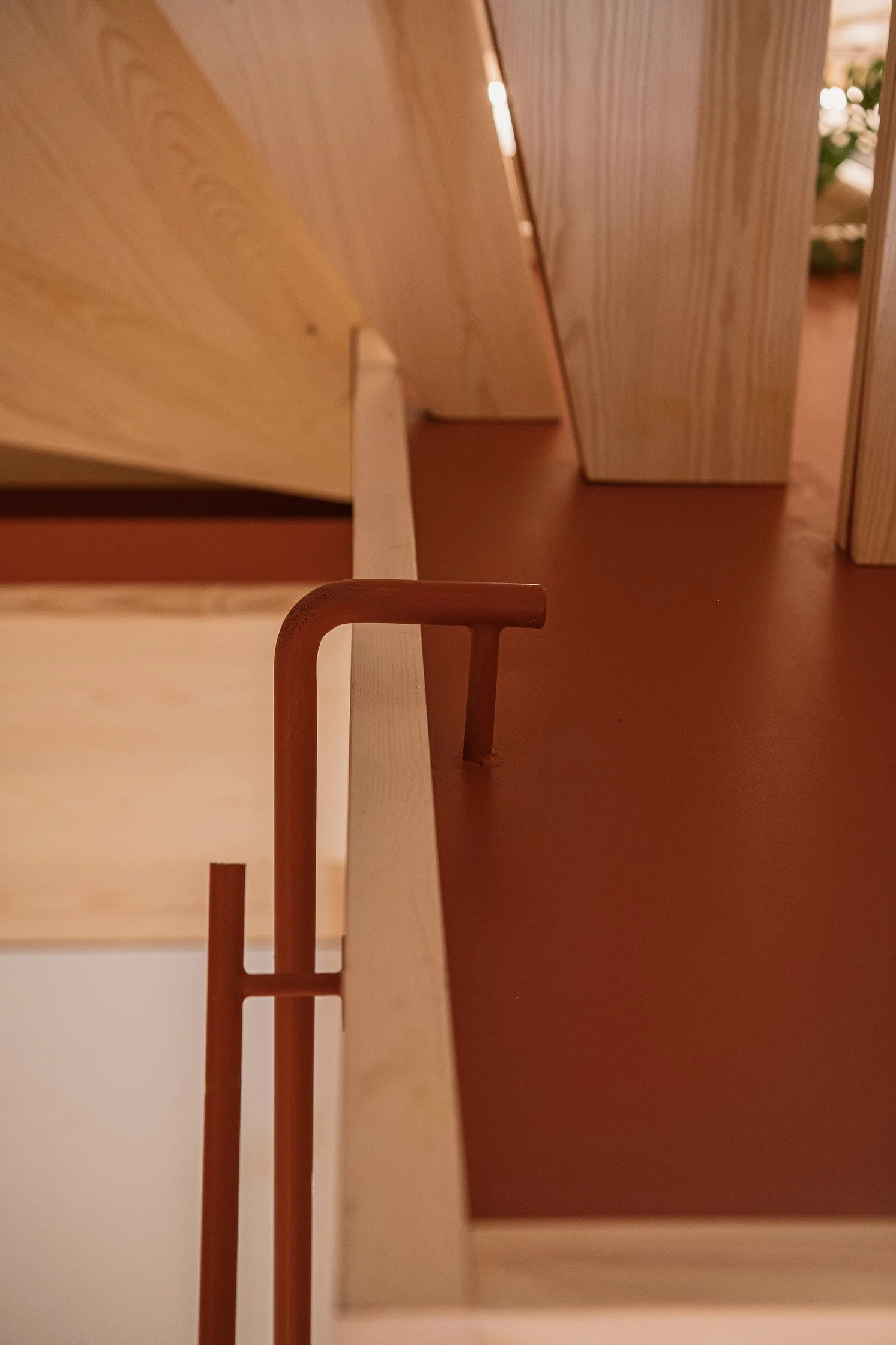
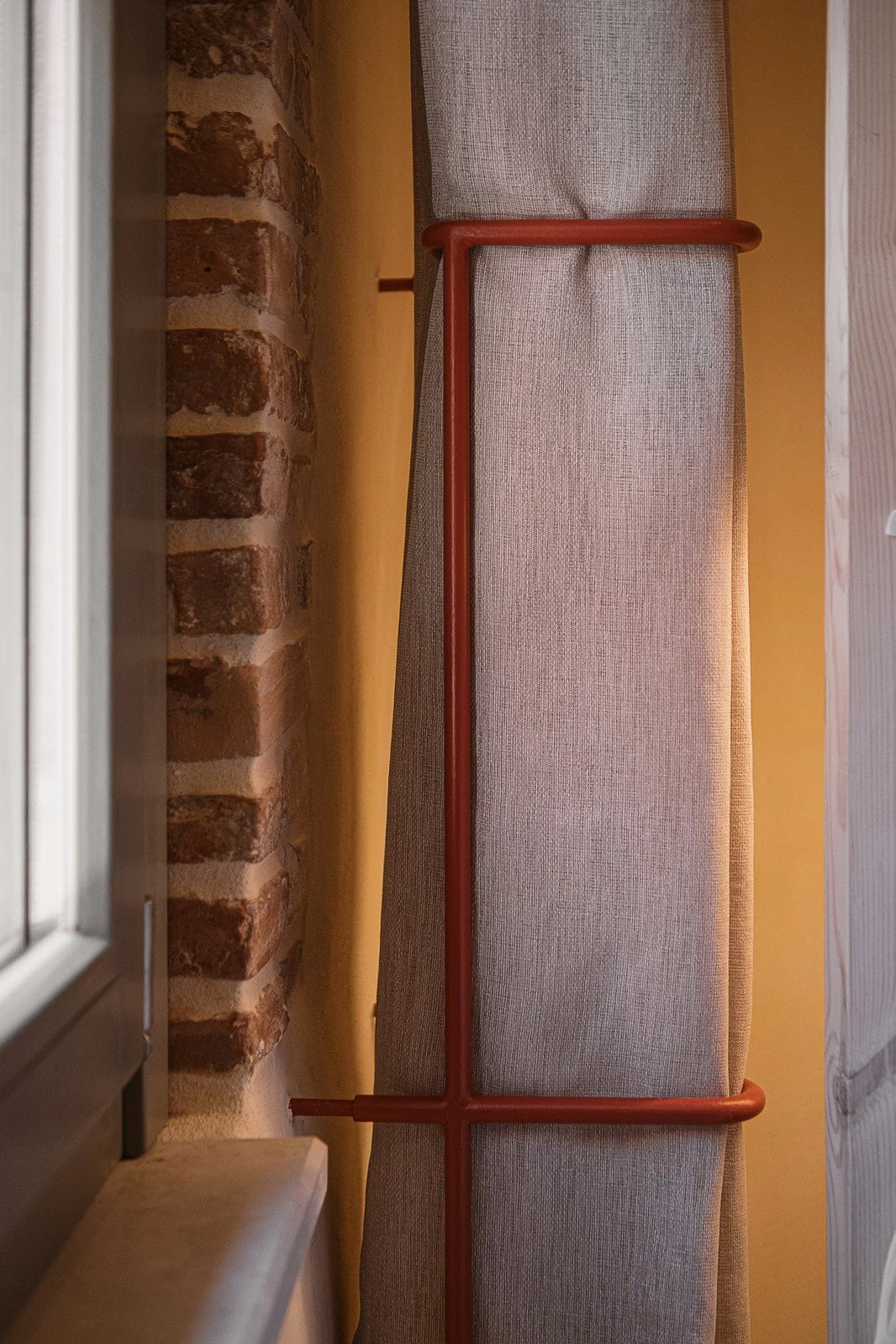
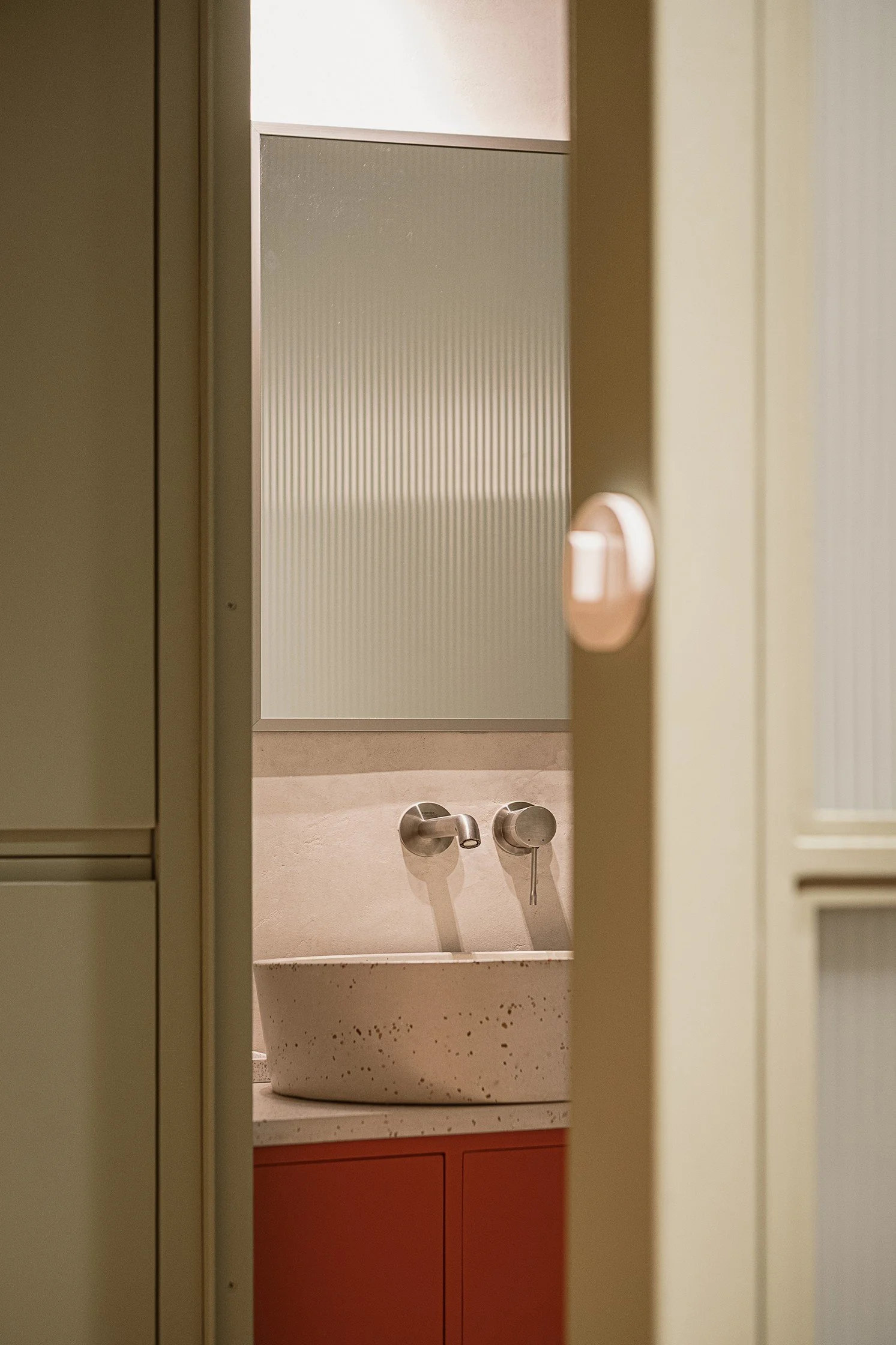
This intricate system is painted in red tones, accentuating its presence, while glimpses of it are revealed to the visitor in movement between the floors. Complementary elements in solid pine and birch plywood define warm and welcoming spaces. The bathroom is enclosed by metal frames with ribbed frosted glass panels, enriching the atmosphere through the play of light. New natural plasters are applied both inside and out, while significant architectural features uncovered during the works are highlighted and allowed to influence the final design decisions. Text description by the architects.