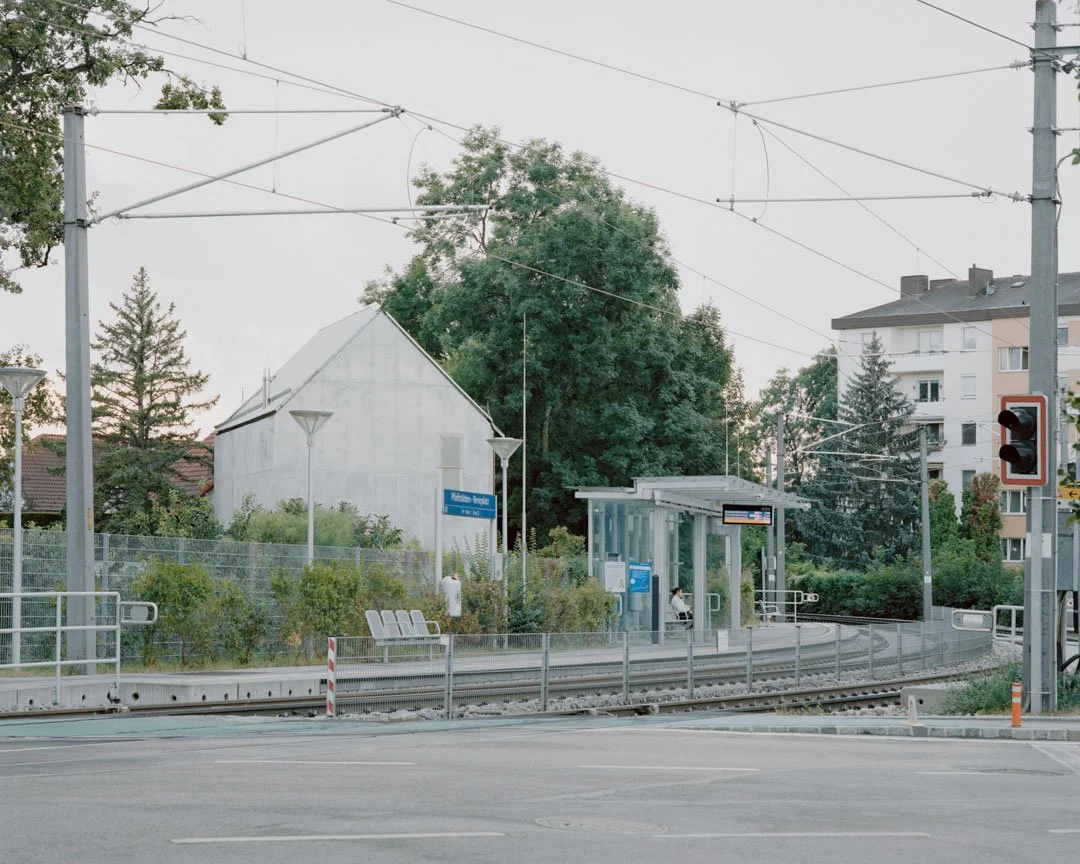
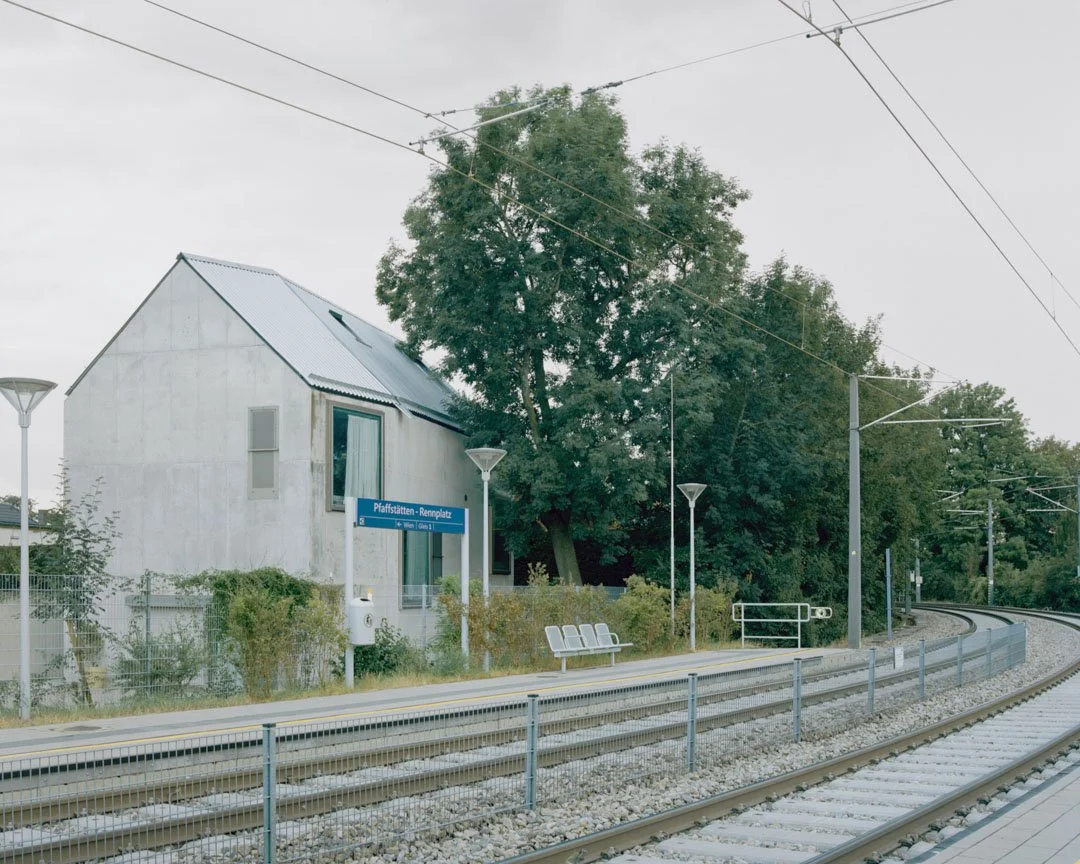
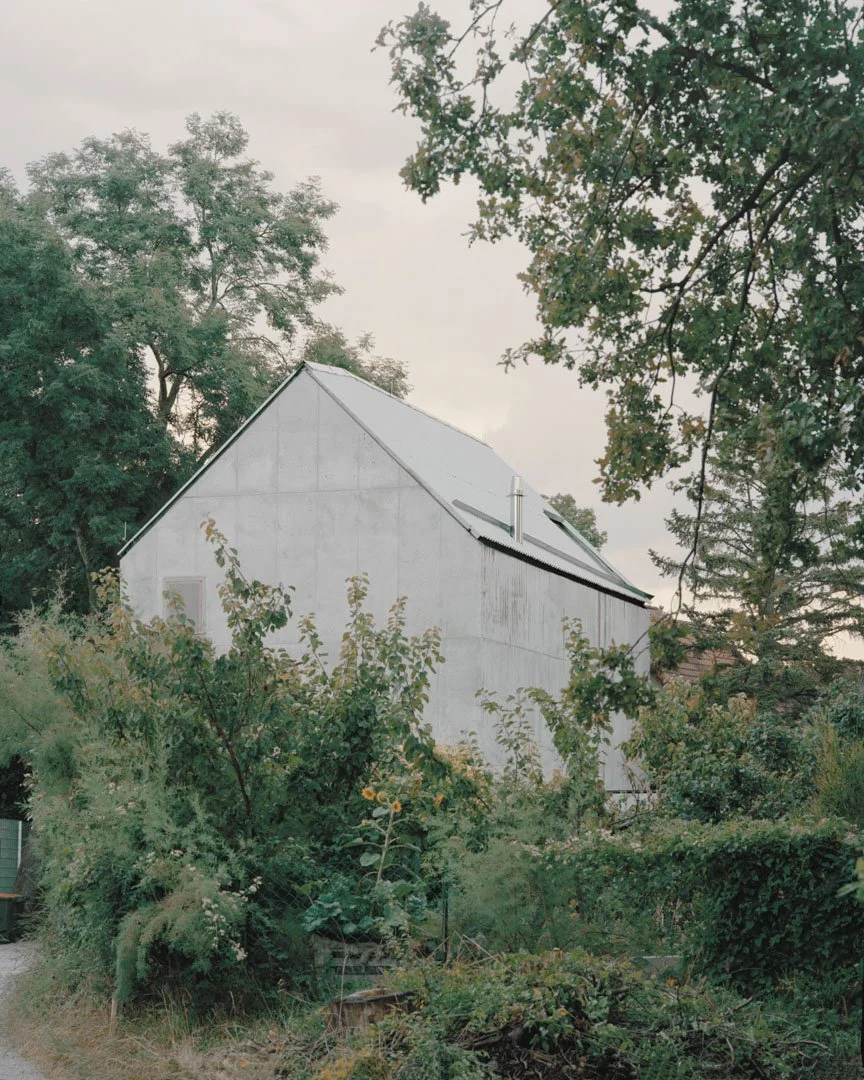
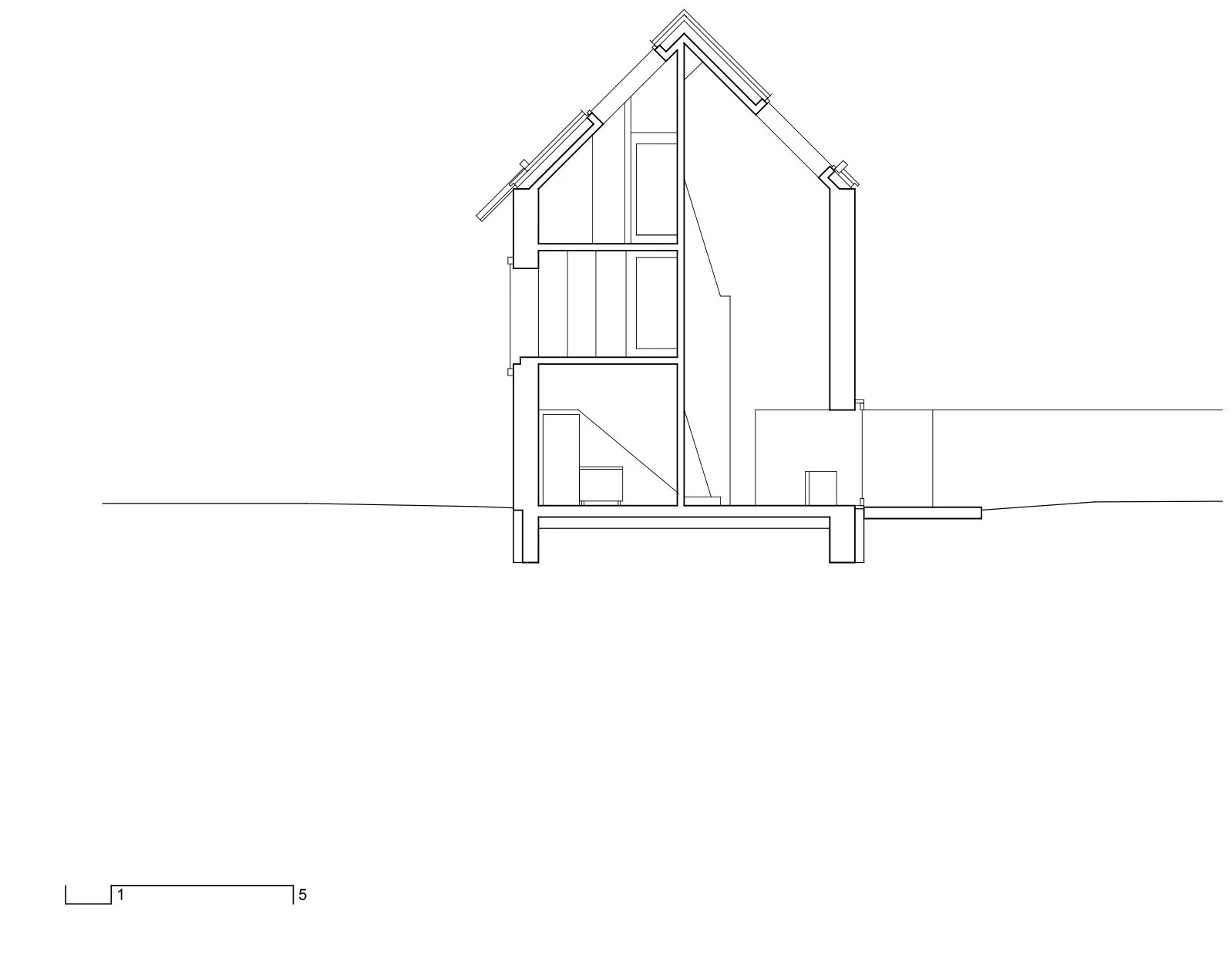
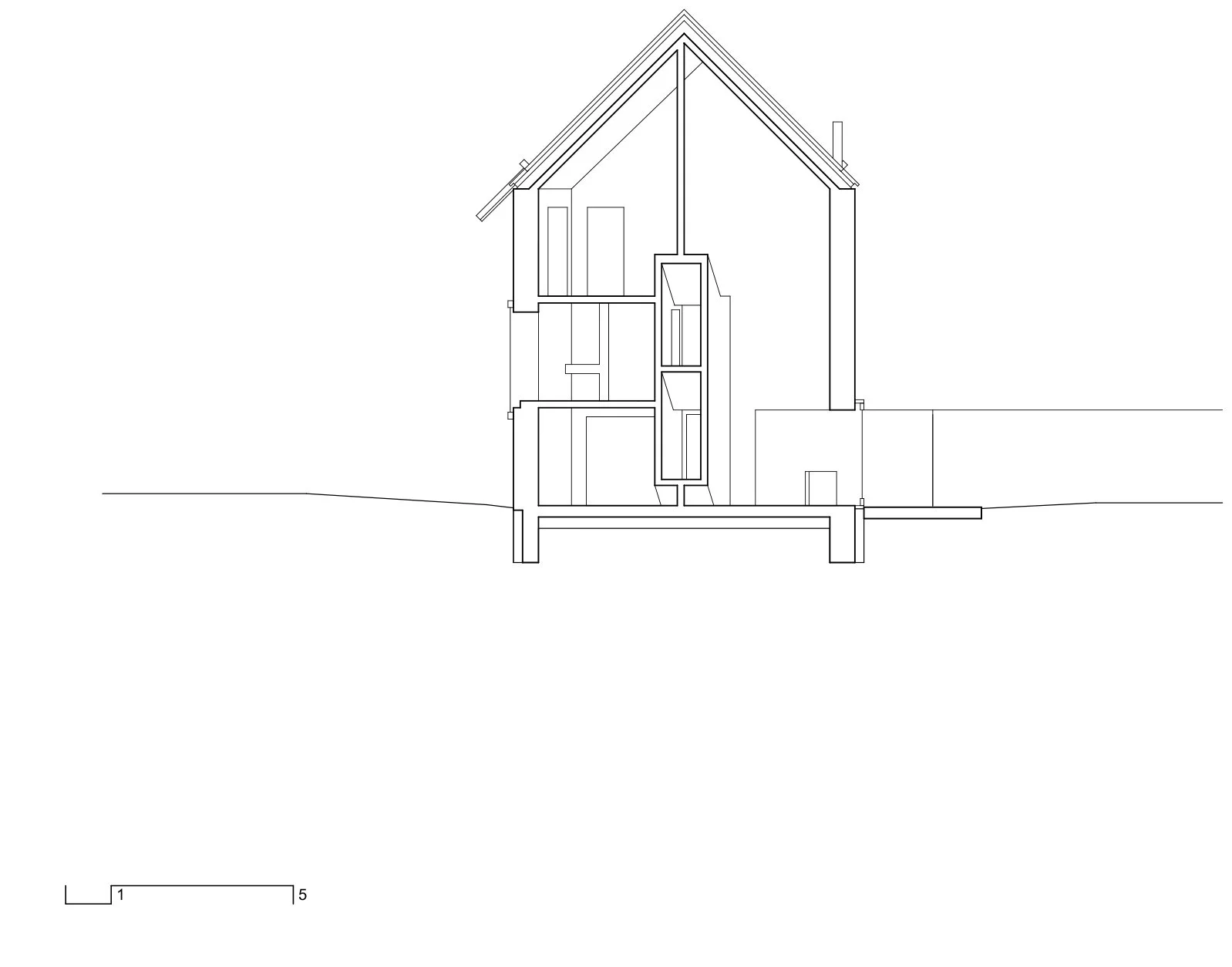
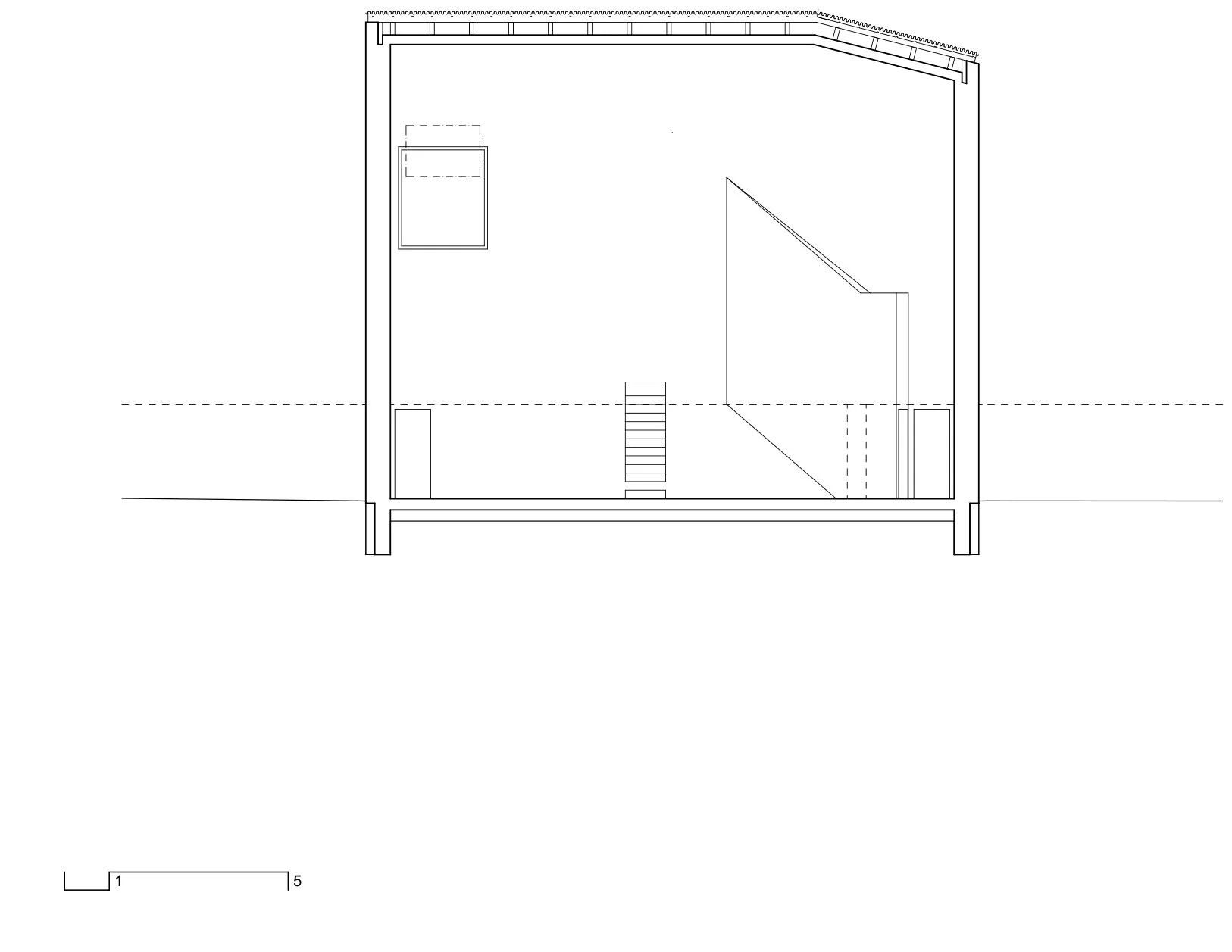
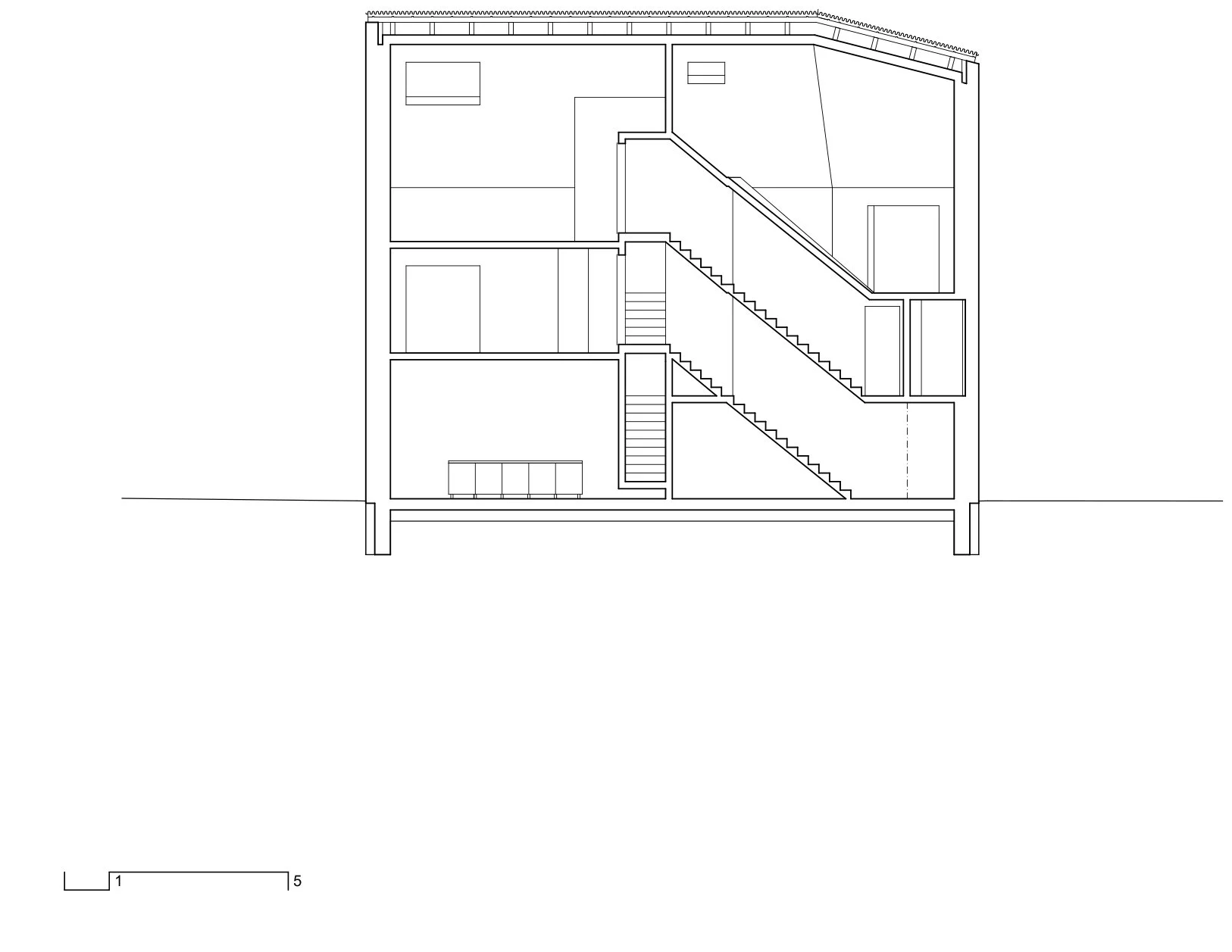
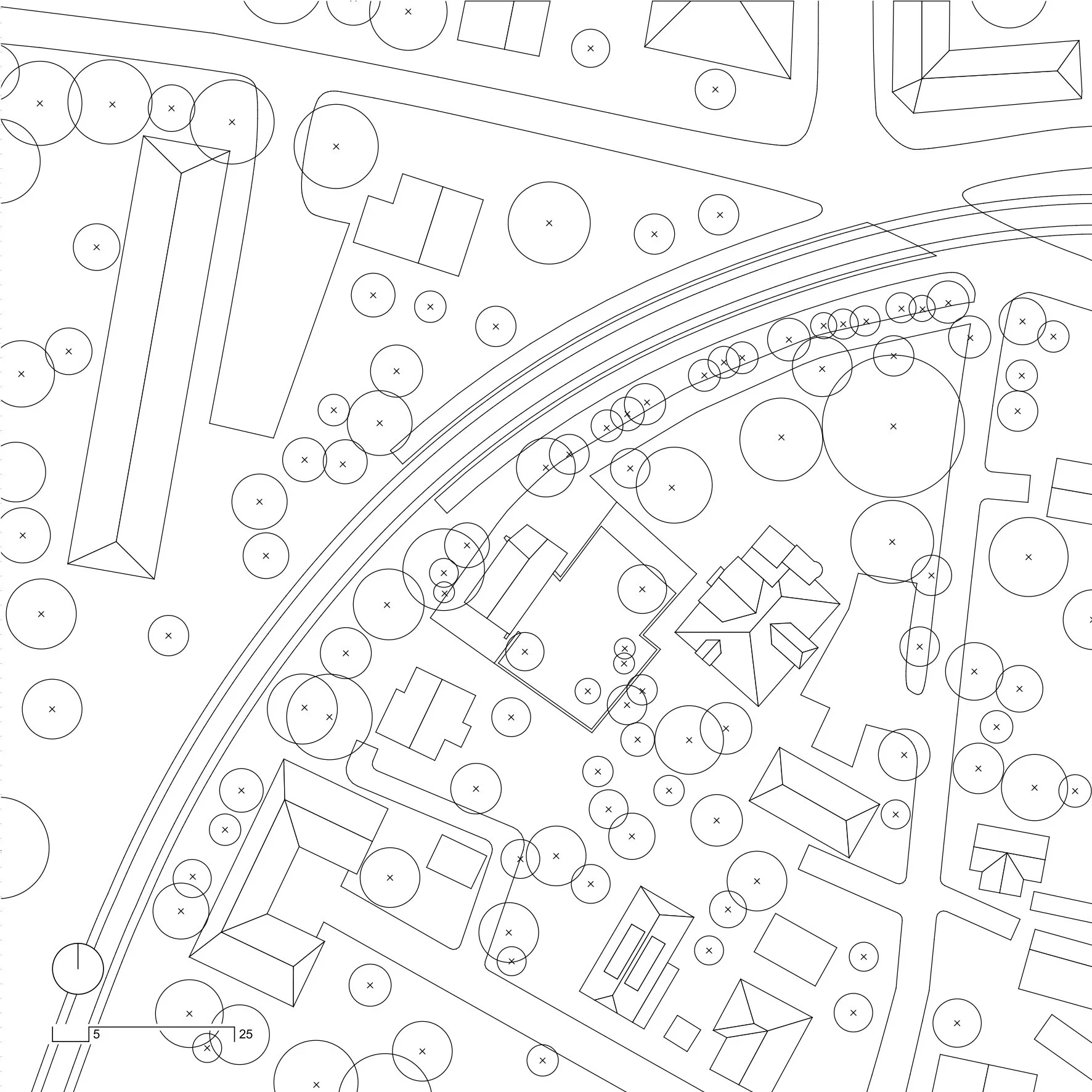
Next to the tracks of the Badener Bahn and behind a former industrialist's villa, the house occupies a plot between the tram and a garden being introverted and exposed at the same time.
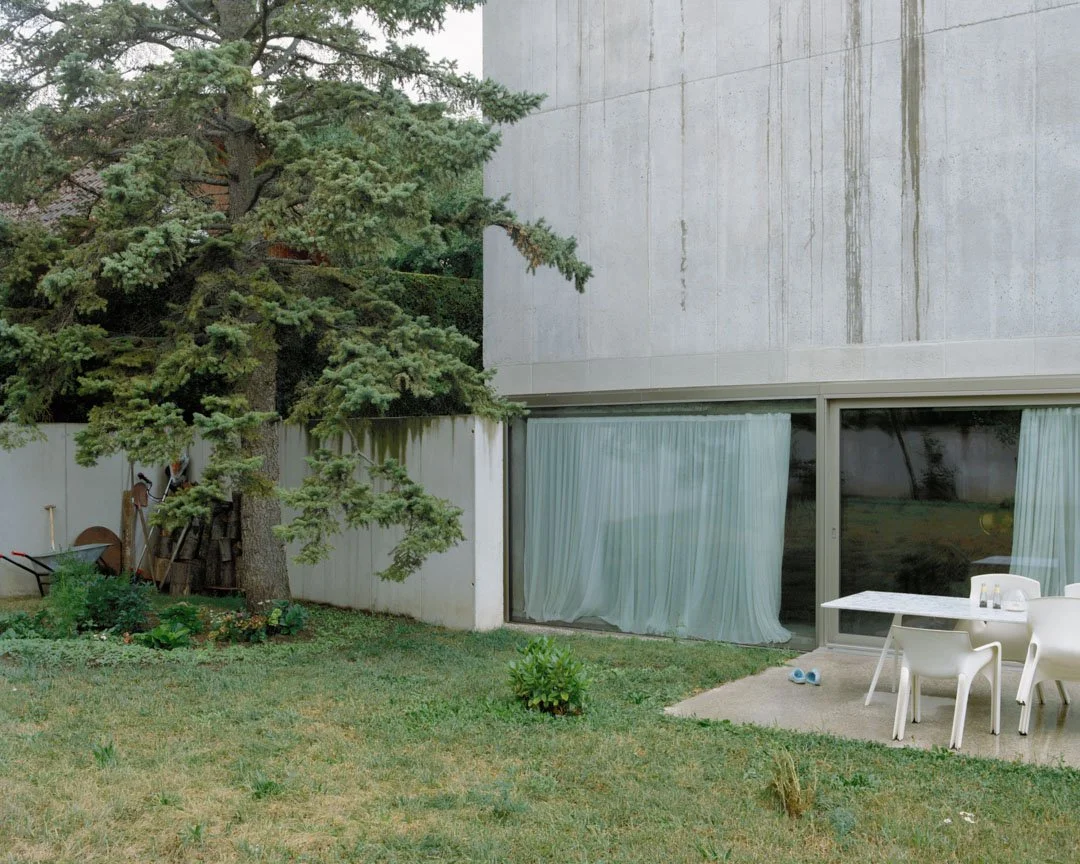
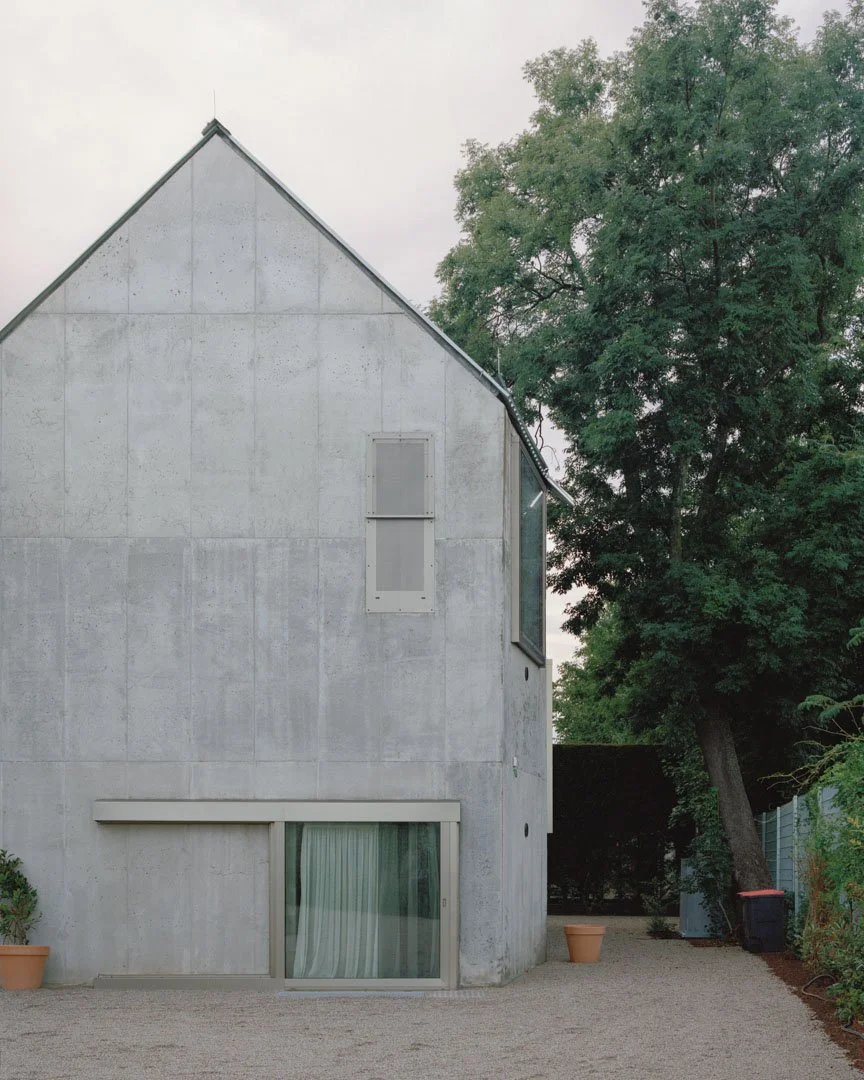
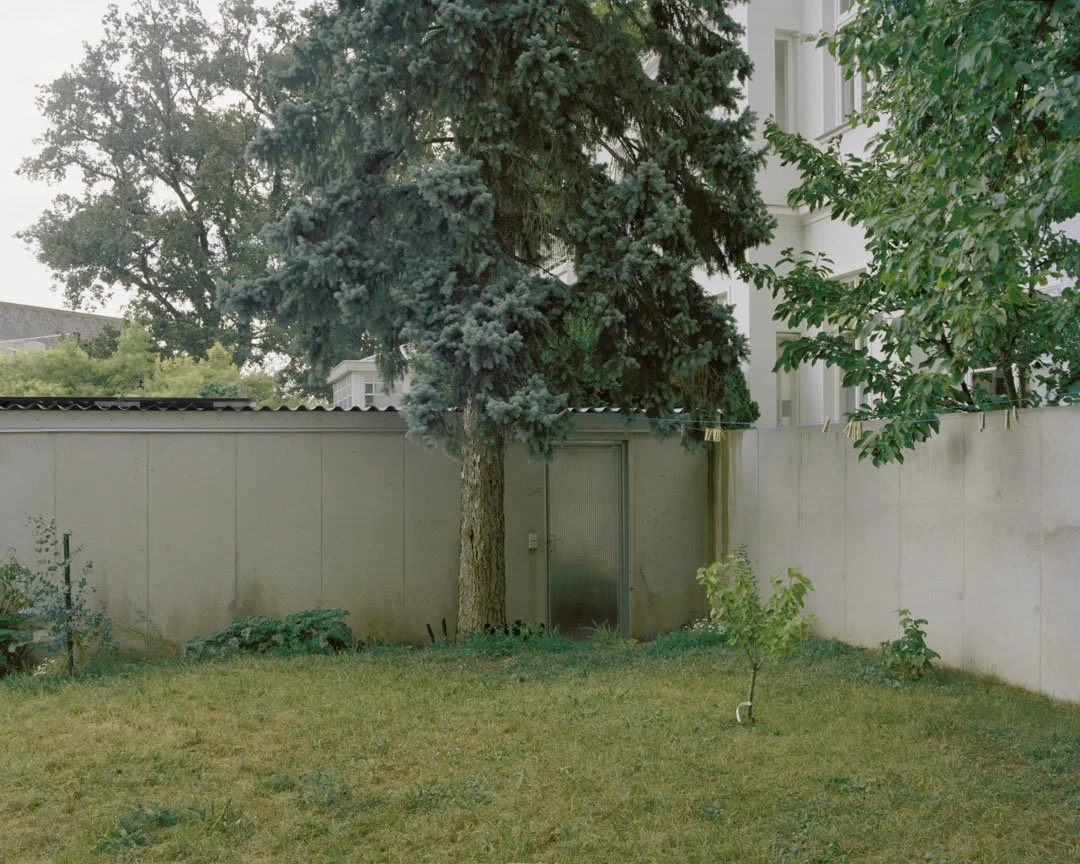
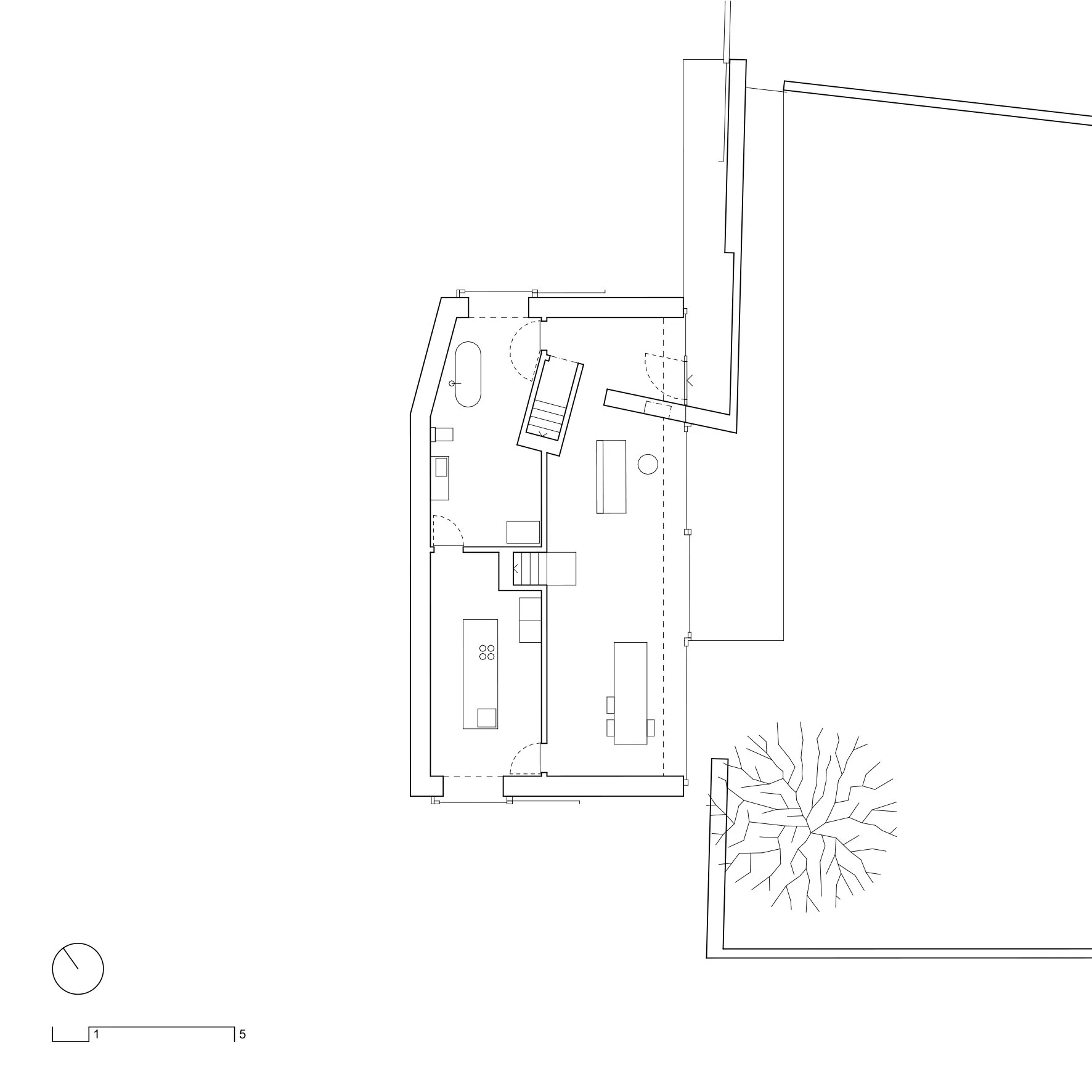
Along the curve of the tram tracks, lined with tall, old trees, a private path tangentially accesses an almost square shaped and segregated section of the formerly large garden of an industrialist’s villa. The front façade of the newly built house marks the end of this path. On one side, the house is in close proximity to the tracks. On the other side, a wall encloses a garden and defines it as an autonomous space shielded from the outside world. This garden forms the conceptual counterpart to the traffic infrastructure and can only be reached and perceived through the house. The house appears to occupy a narrow plot between the tracks and walls.
Dividing and connecting at the same time, the house mediates between the garden and the infrastructure.
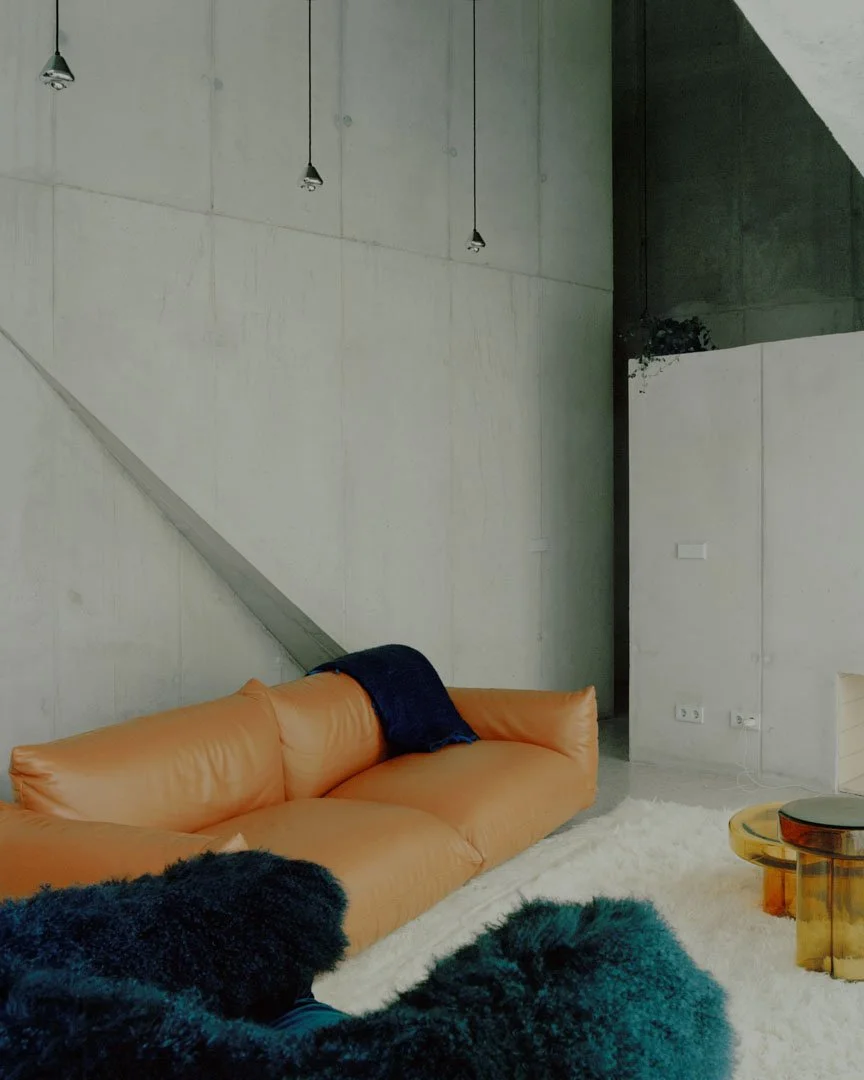
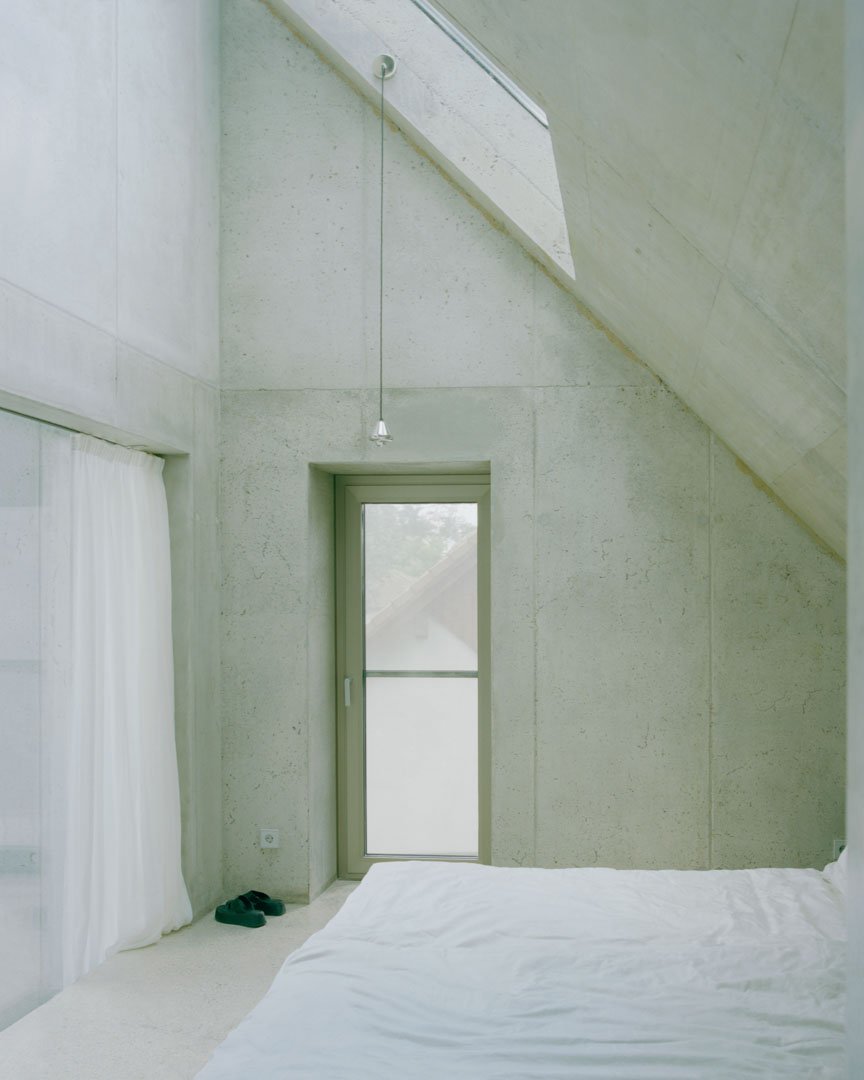
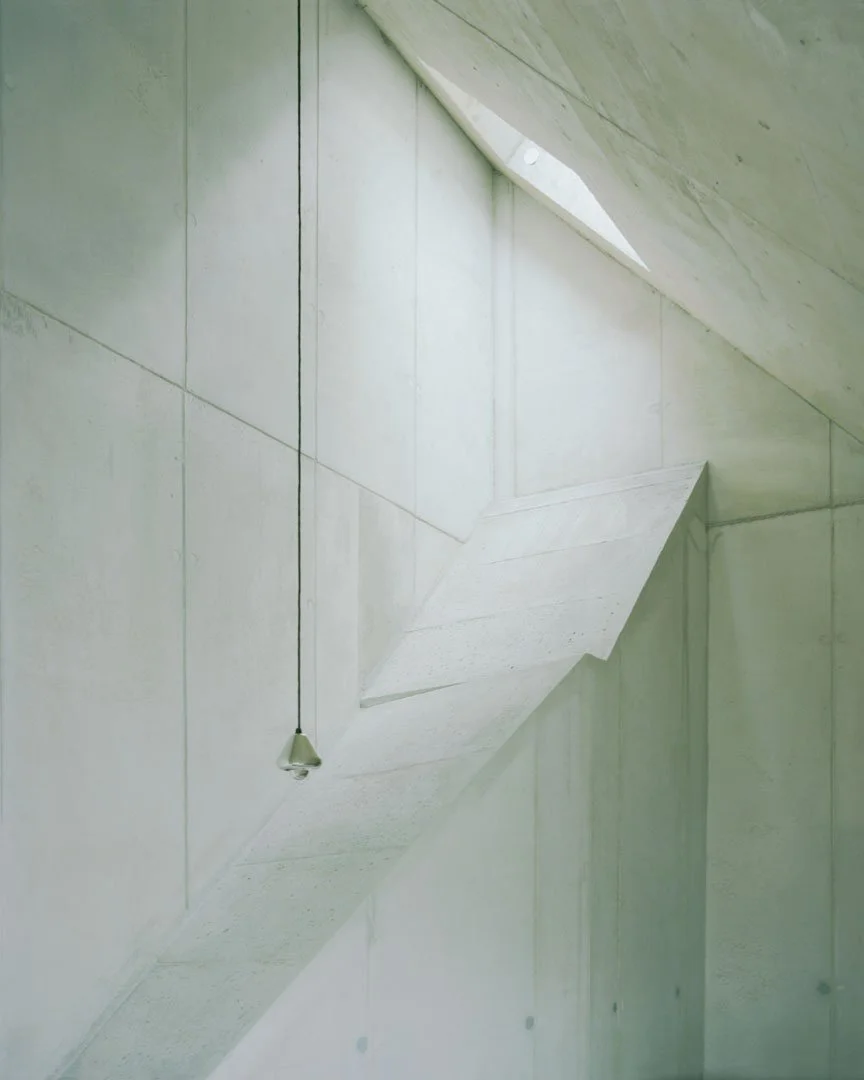
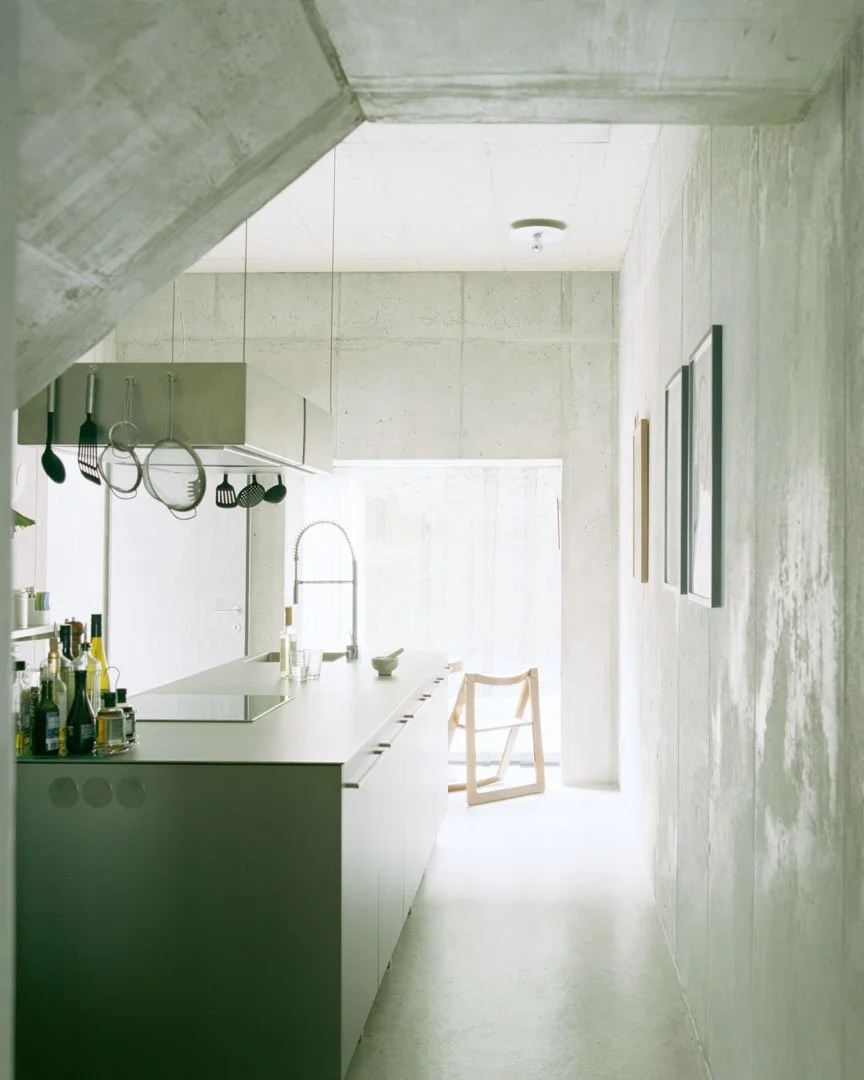
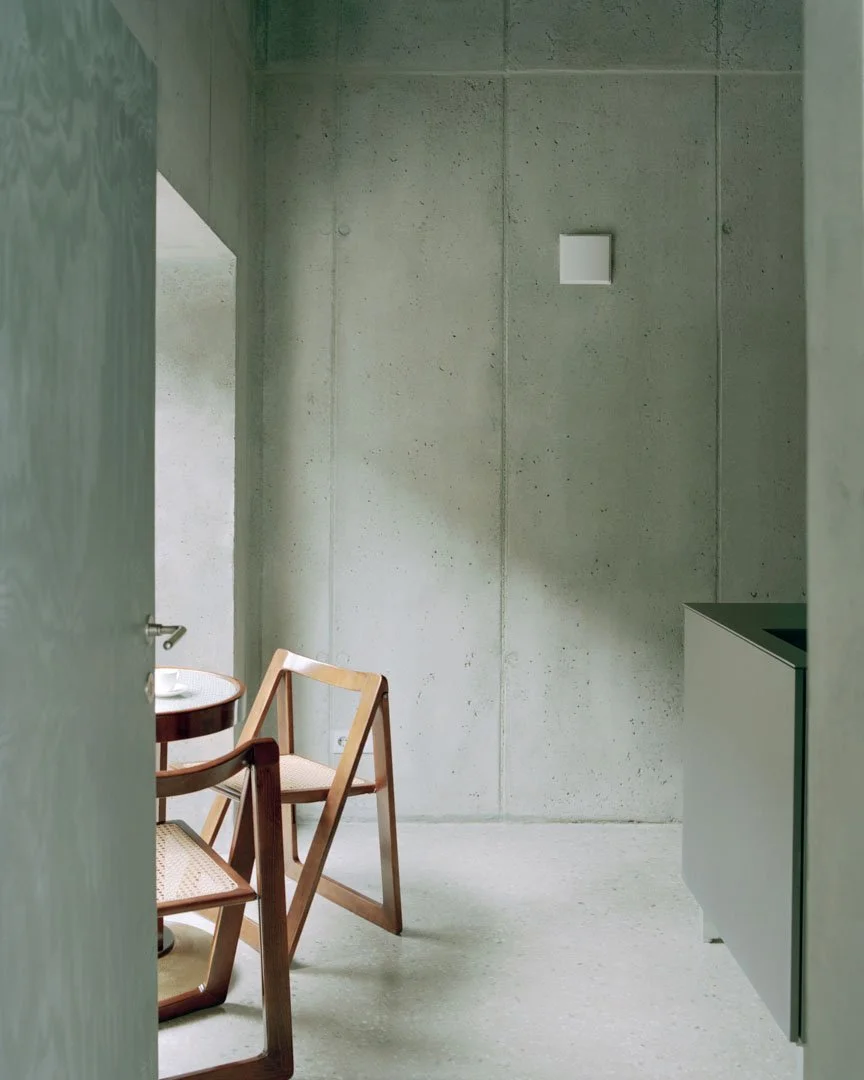
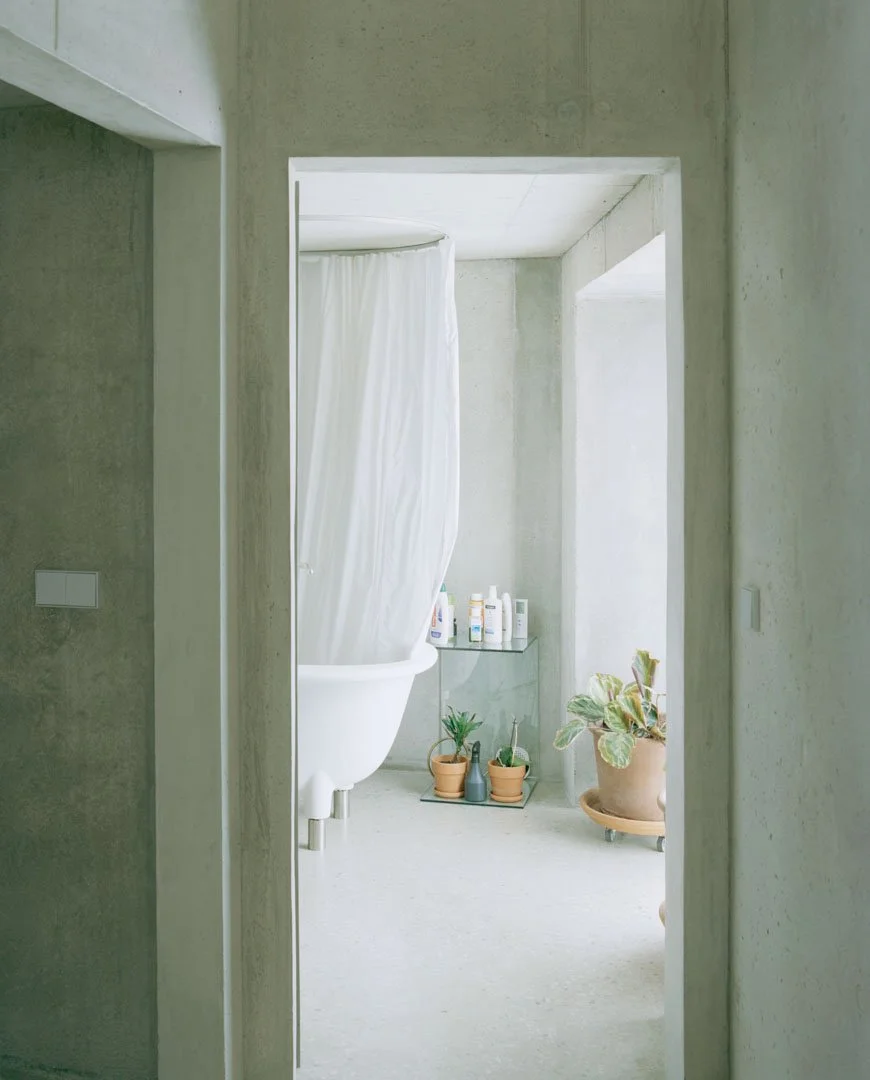
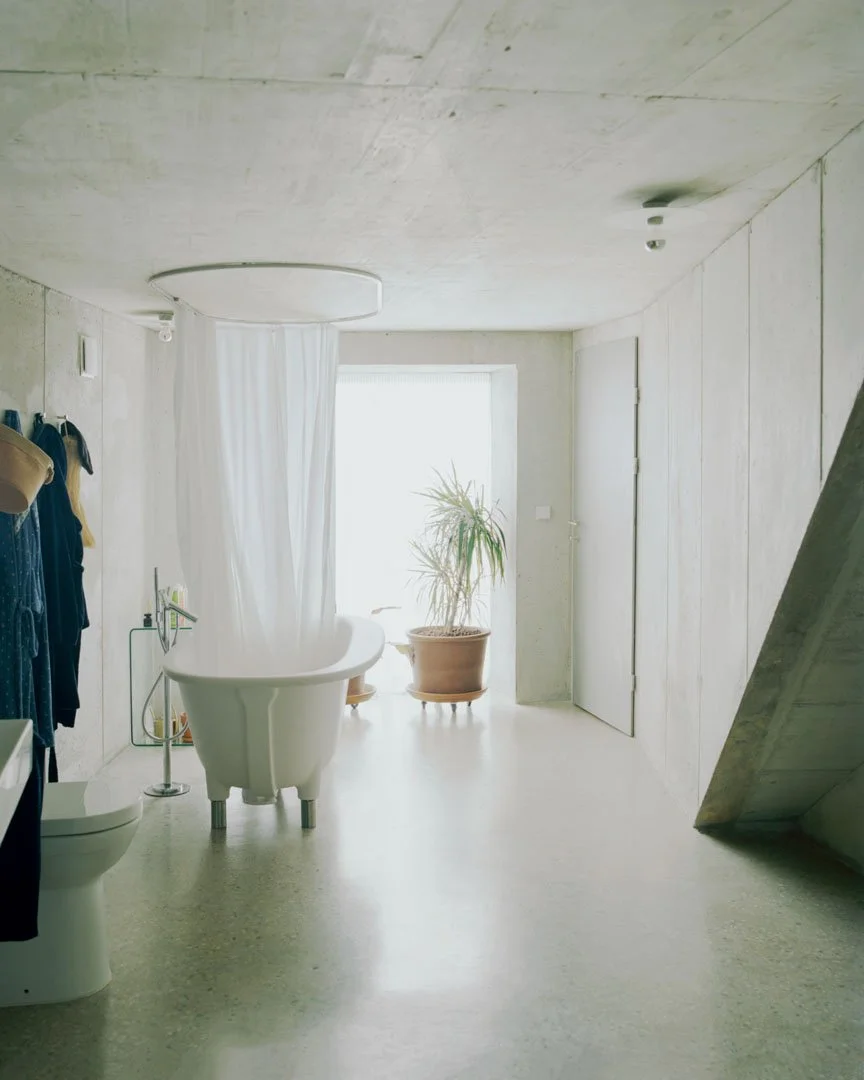
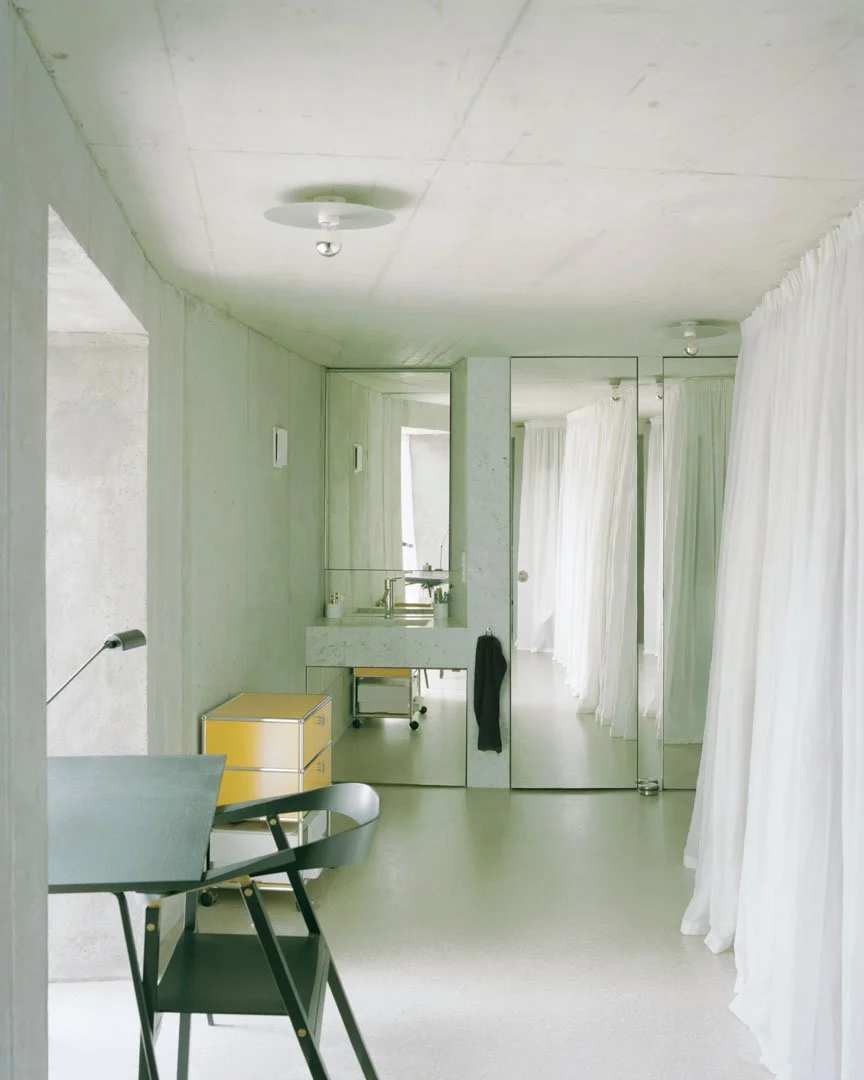
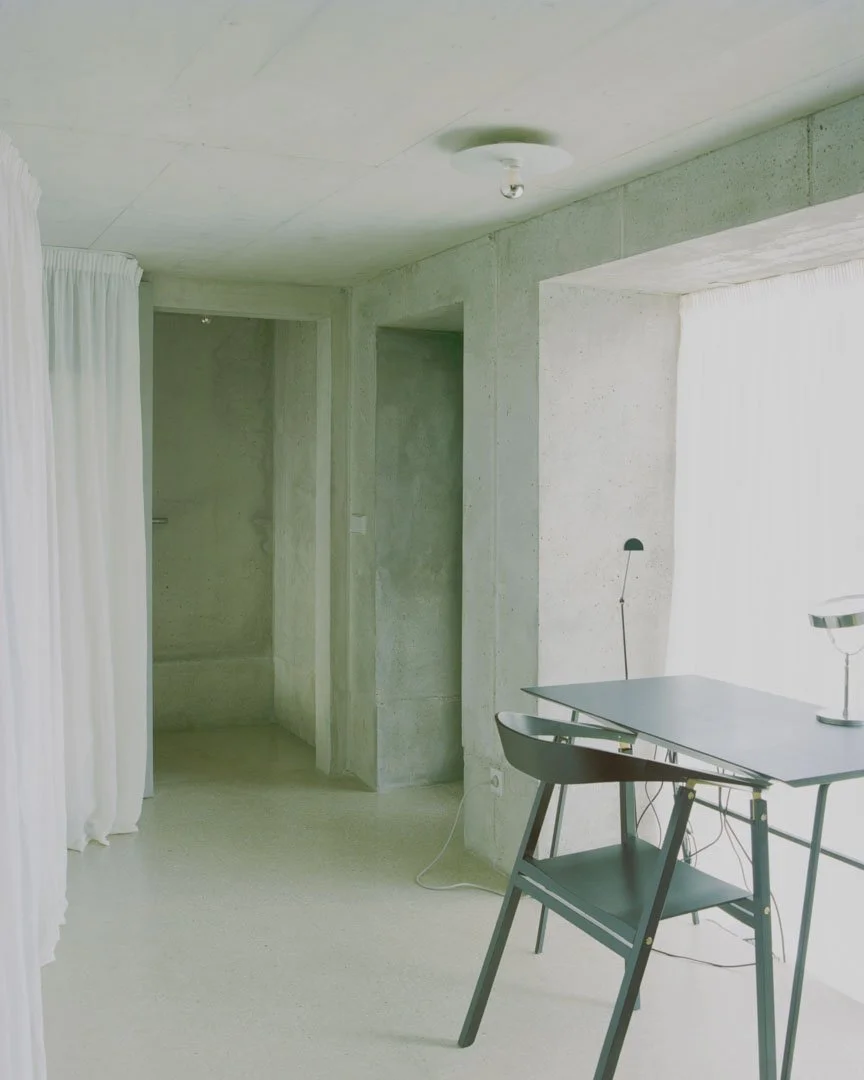
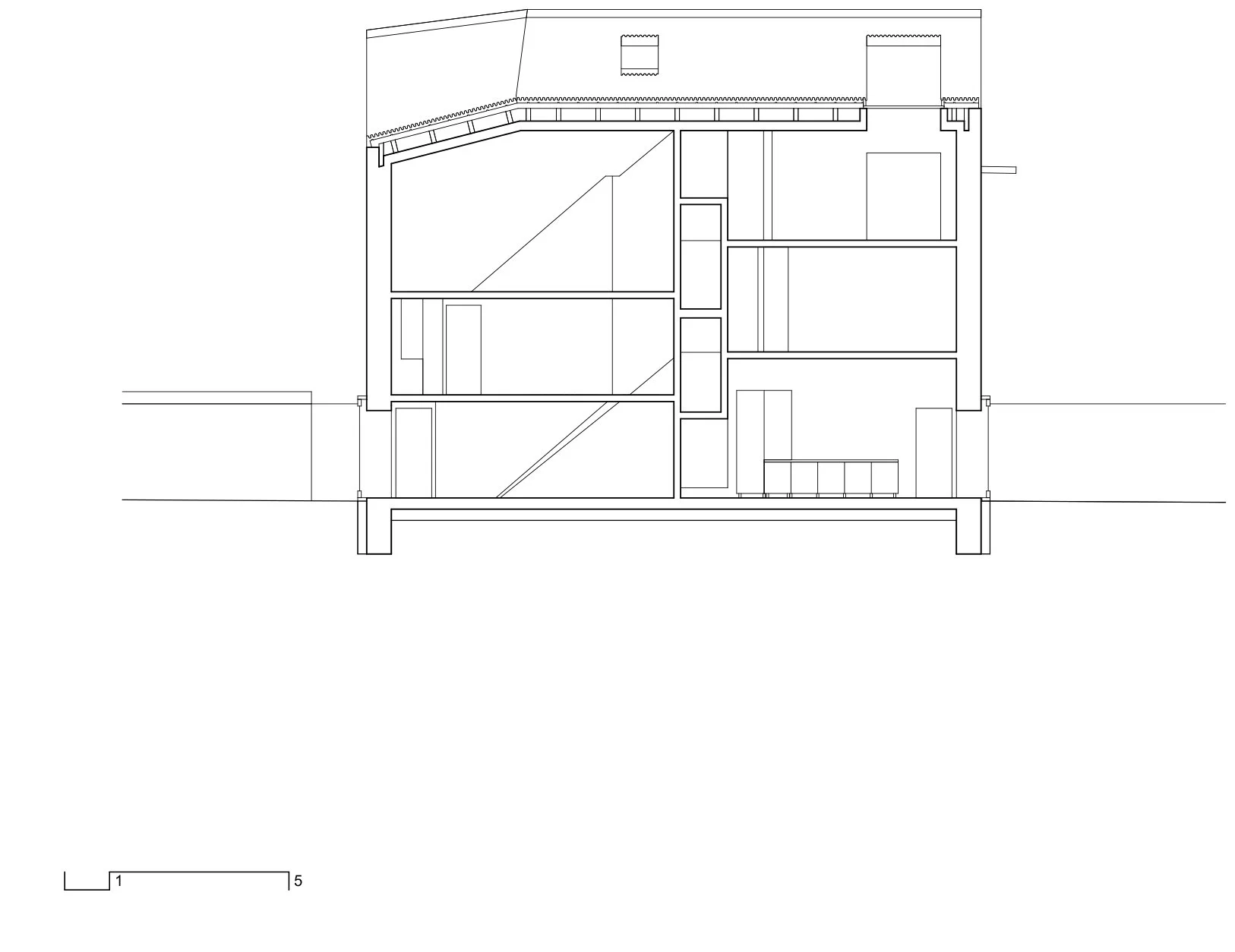
The house is constructed with a 55 cm thick exterior wall made of insulating concrete. This seemingly archaic construction method is open to diffusion and has no layers. It is the same in the interior as in the exterior. All interior walls and ceilings are made of 15 cm thick reinforced concrete. The pipes for heating in winter and cooling in summer are laid directly into the floor slabs, without any additional surface constructions.
The entire house is a monolithic, thermally activated mass.
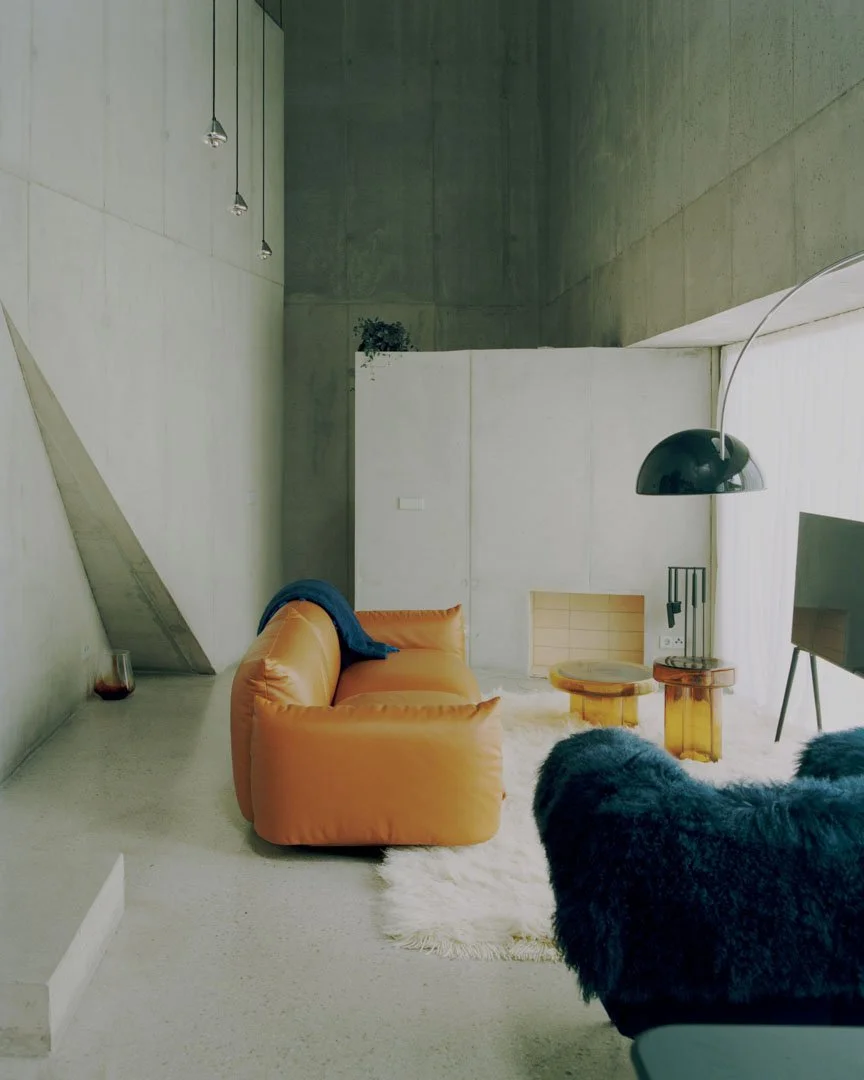
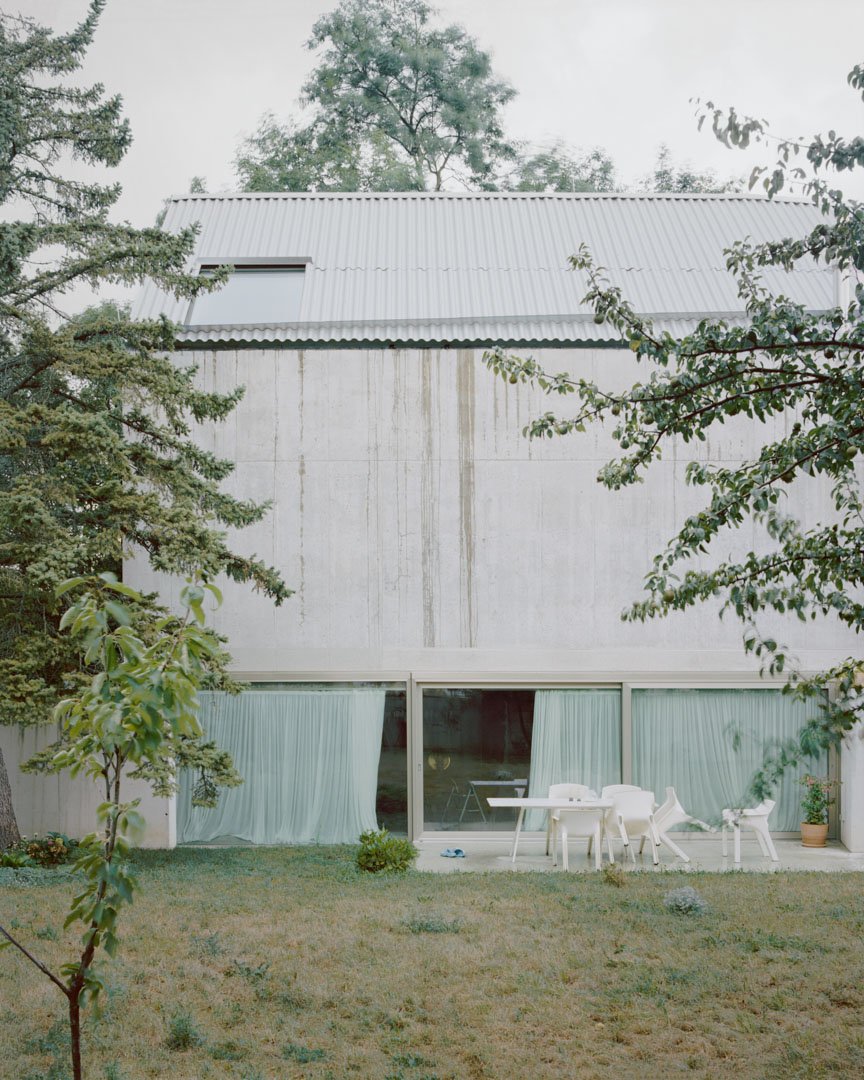
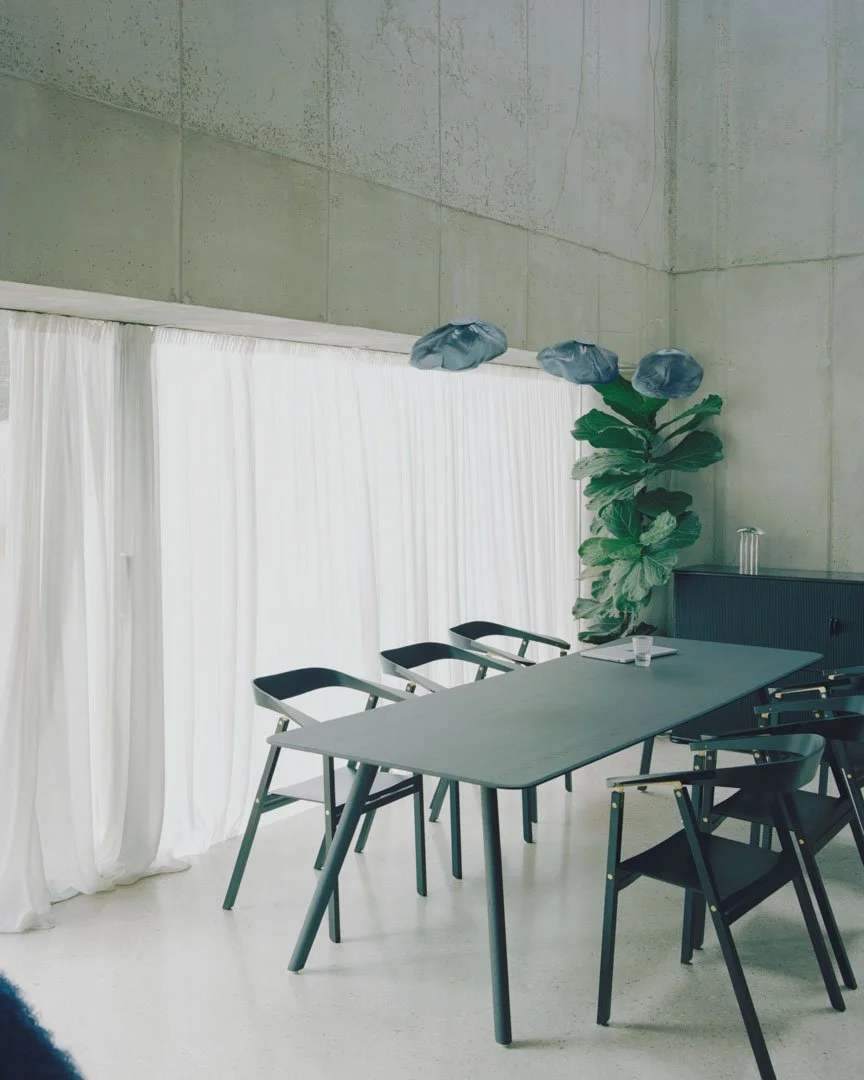
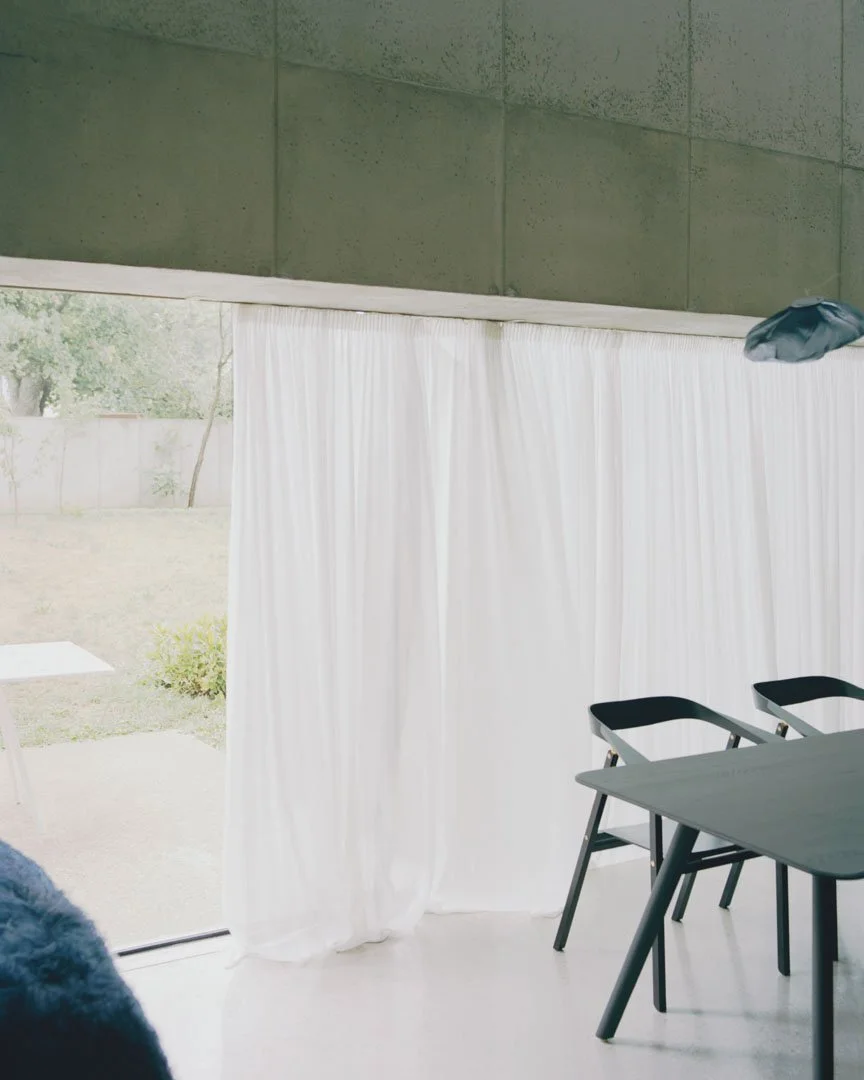
In a gap between the house and the wall, the garden wall folds into the building and defines the entrance. The interior space behind it extends over the entire half of the house facing away from the tracks. Behind the folded-in wall, the space opens up to the garden on its long side. With its dimensions of more than 10 meters high, almost 12 meters long and barely more than 3 meters wide, it forms an empty half.
The garden space is constructively as well as phenomenologically perceived as both an interior and an exterior space.
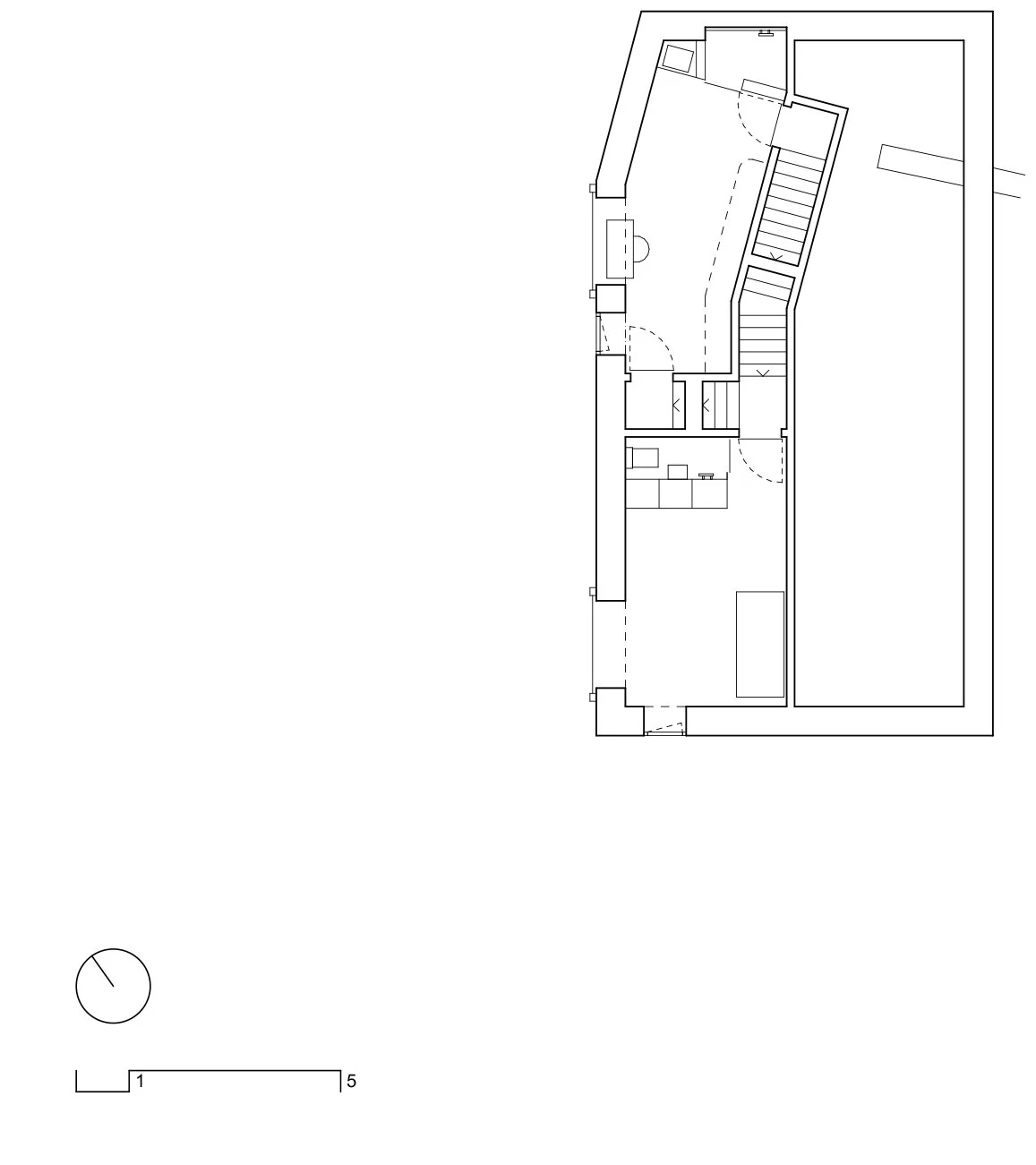
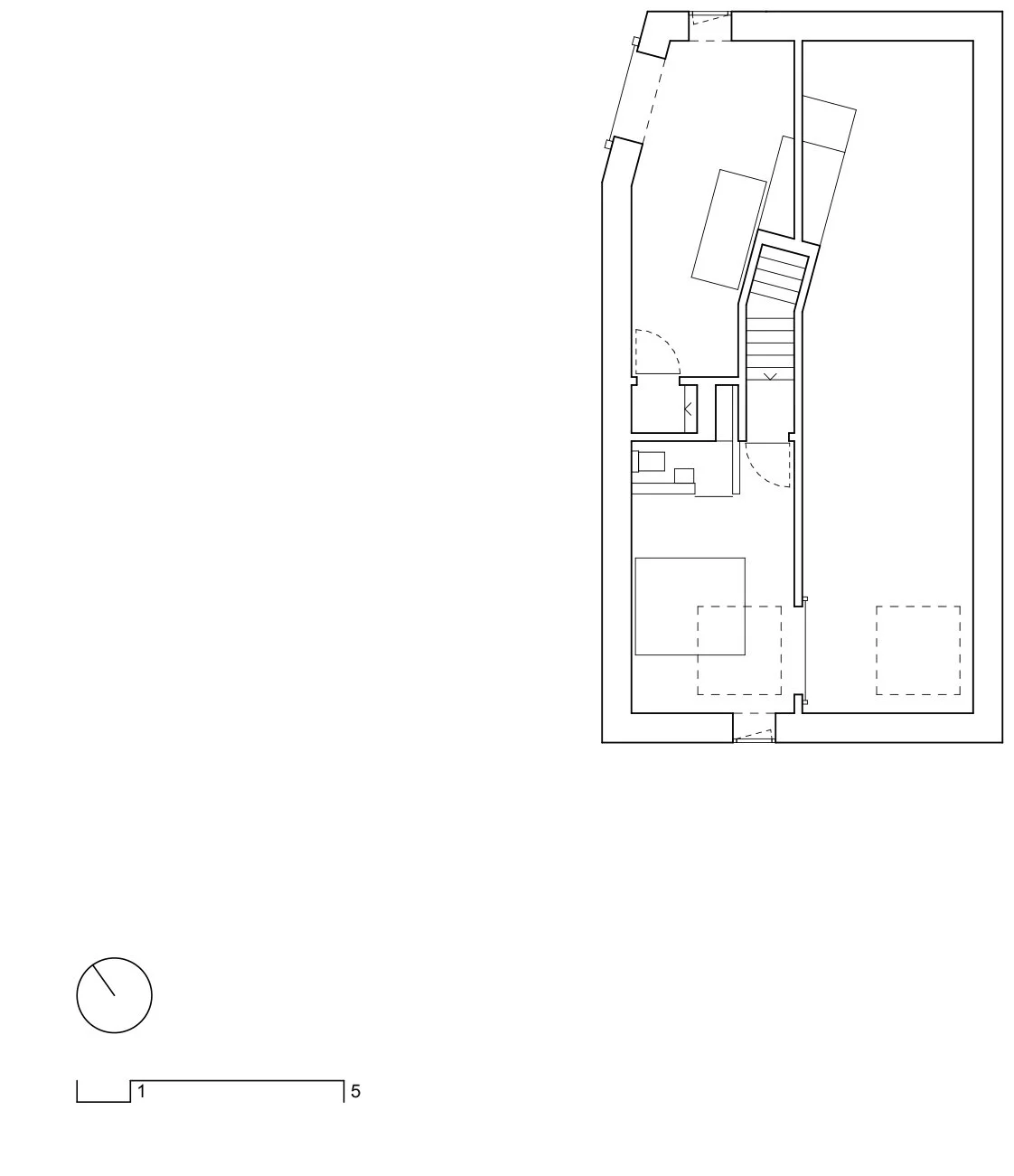
This large room forms the starting point for two staircases. One is located centrally, the other peripherally. Twisted into each other like a double helix, they access the second, full half of the house with six rooms on three floors orienting towards the tracks.
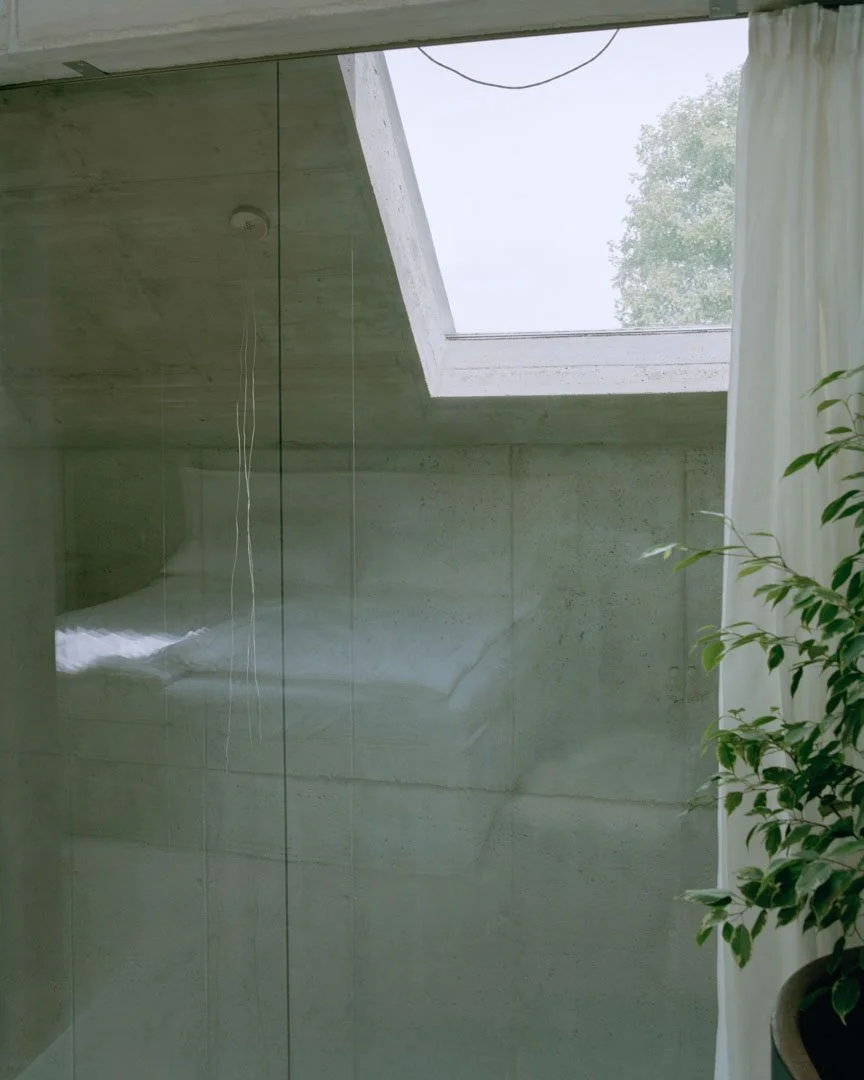
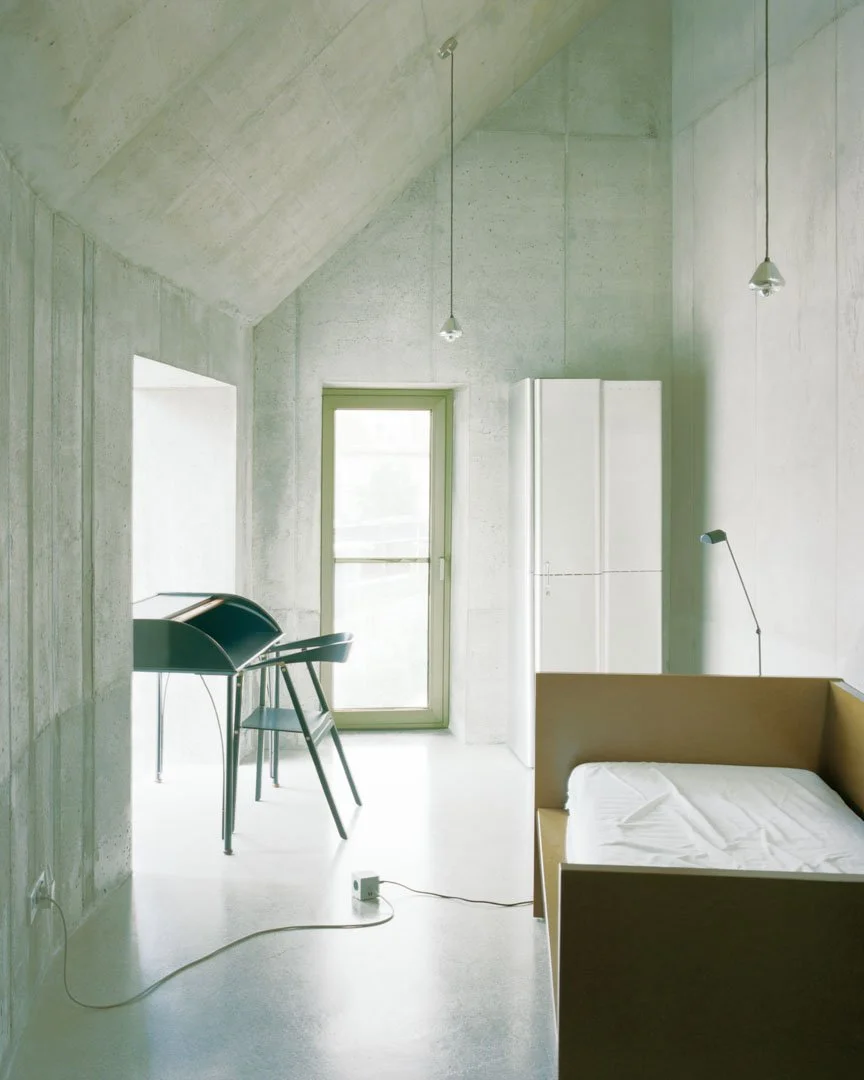
Each of these rooms has the same floor area and proportions, a large fixed glazed window facing the tracks in the north and a door opening away from the noise for ventilation. The different lengths of the staircases generate different heights for these otherwise identical spaces, subtly differentiating them.
The connections with and relationships to each other qualify the quantitatively similar spaces.
The two staircases provide access to two independent, unconnected parts. From the entrance area, the peripheral staircase leads to two rooms one after the other, half a storey apart. The central staircase leads through a room to another room at the top of the house. Although all these rooms are located above and next to each other, they are perceived as being very distant from one another. By interlocking the staircases, both parts reach all four sides and extend over all three storeys of the house.
The house is experienced in a fragmented way, but always perceived as a whole.
The specific spatial qualities create unpredictable and diverse possibilities for the appropriation of the use-neutral rooms and thus simultaneously react to life circumstances that have almost passed or that may never occur. Text description by the architects.