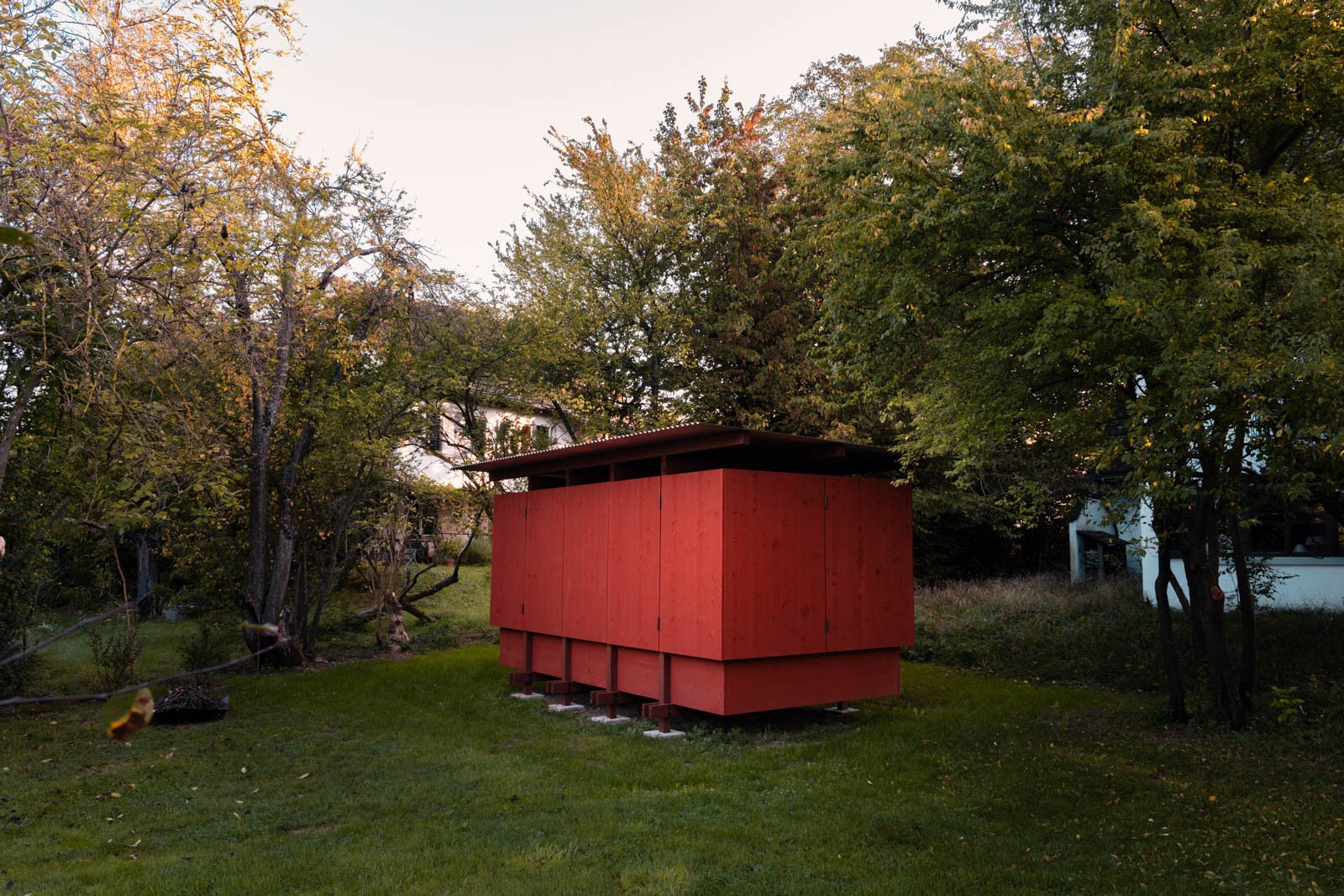
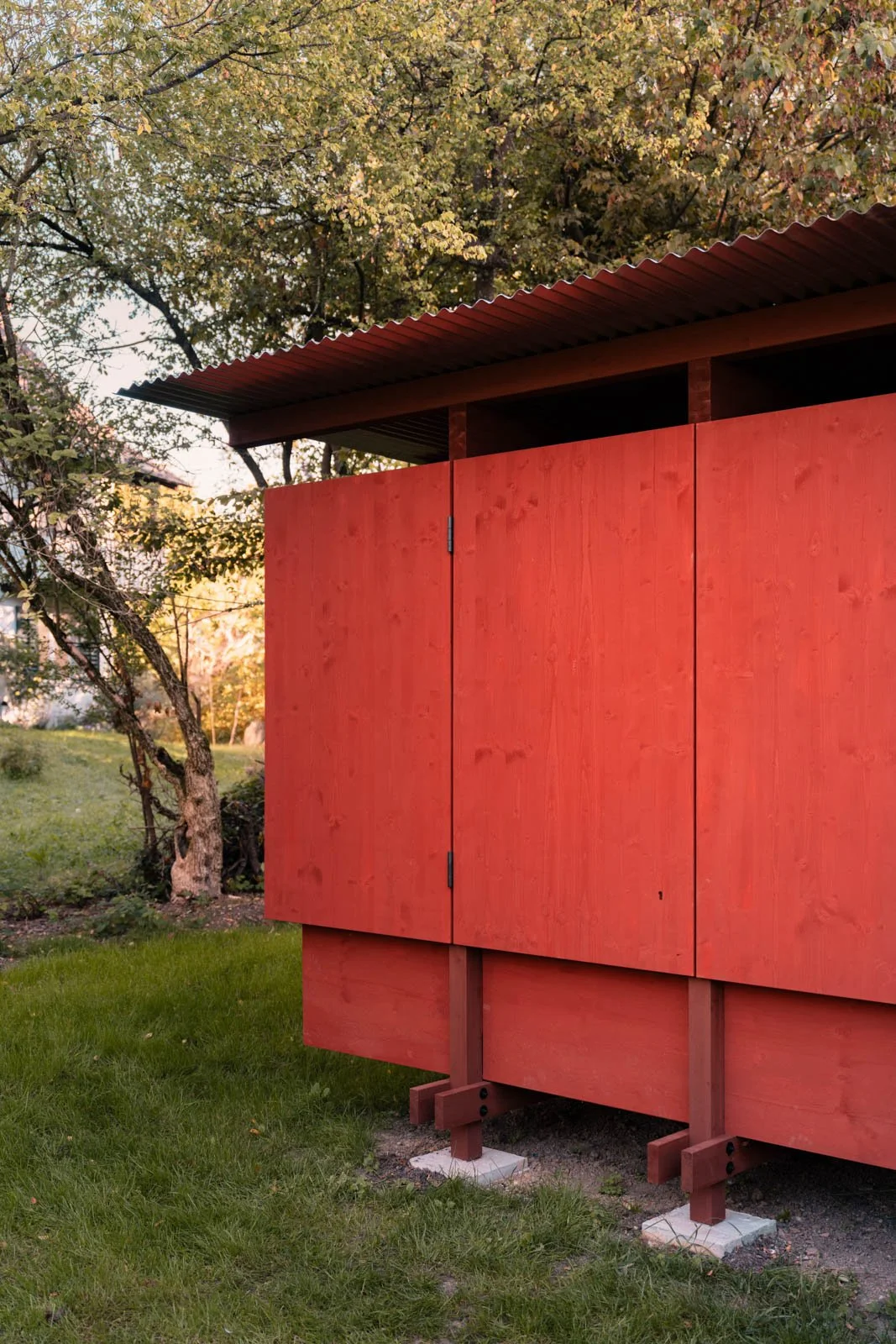
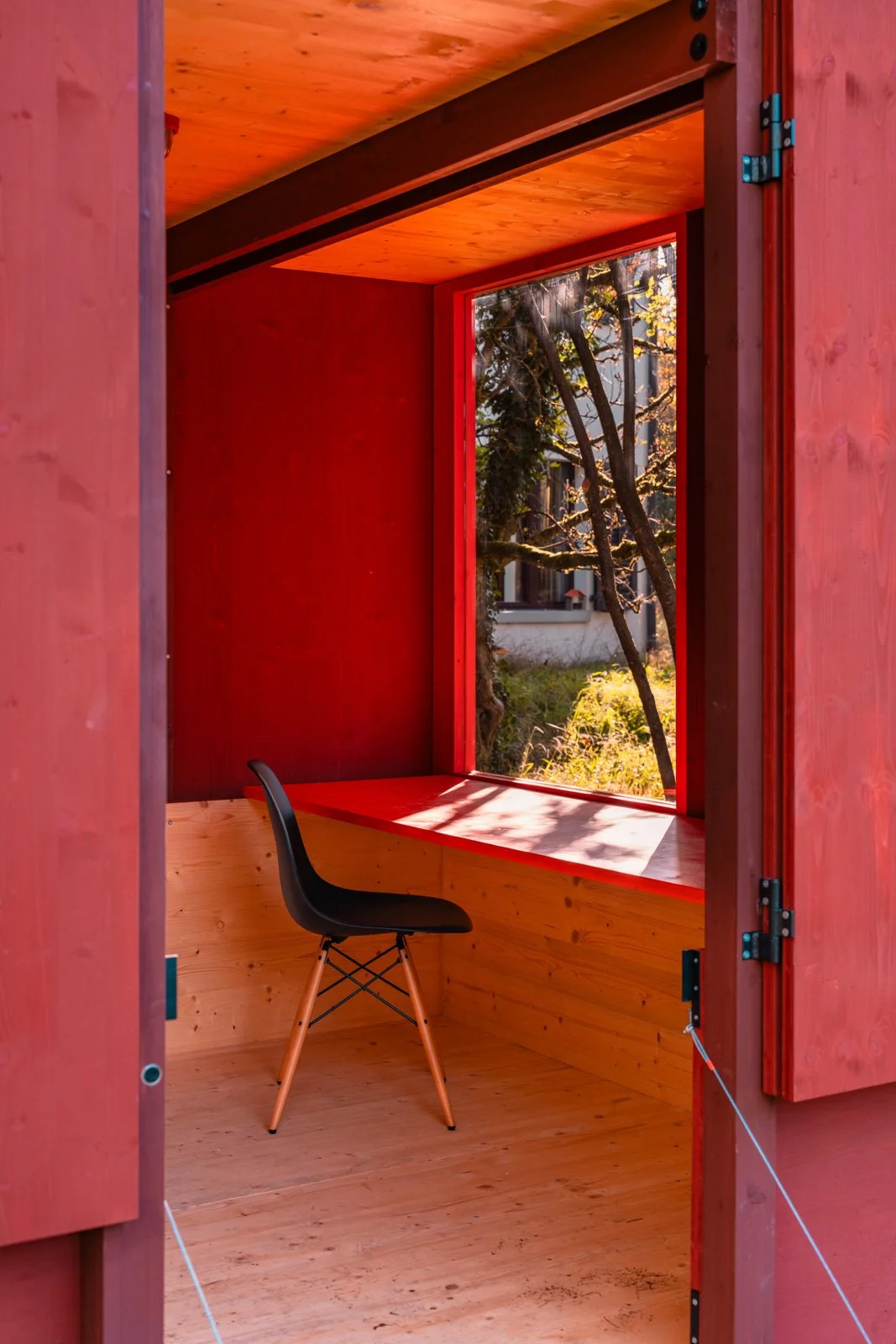
Set in an open garden landscape without fences or boundaries, this garden pavilion transcends the notion of a purely private space. It invites spontaneous encounters and becomes a quiet focal point for the neighborhood.
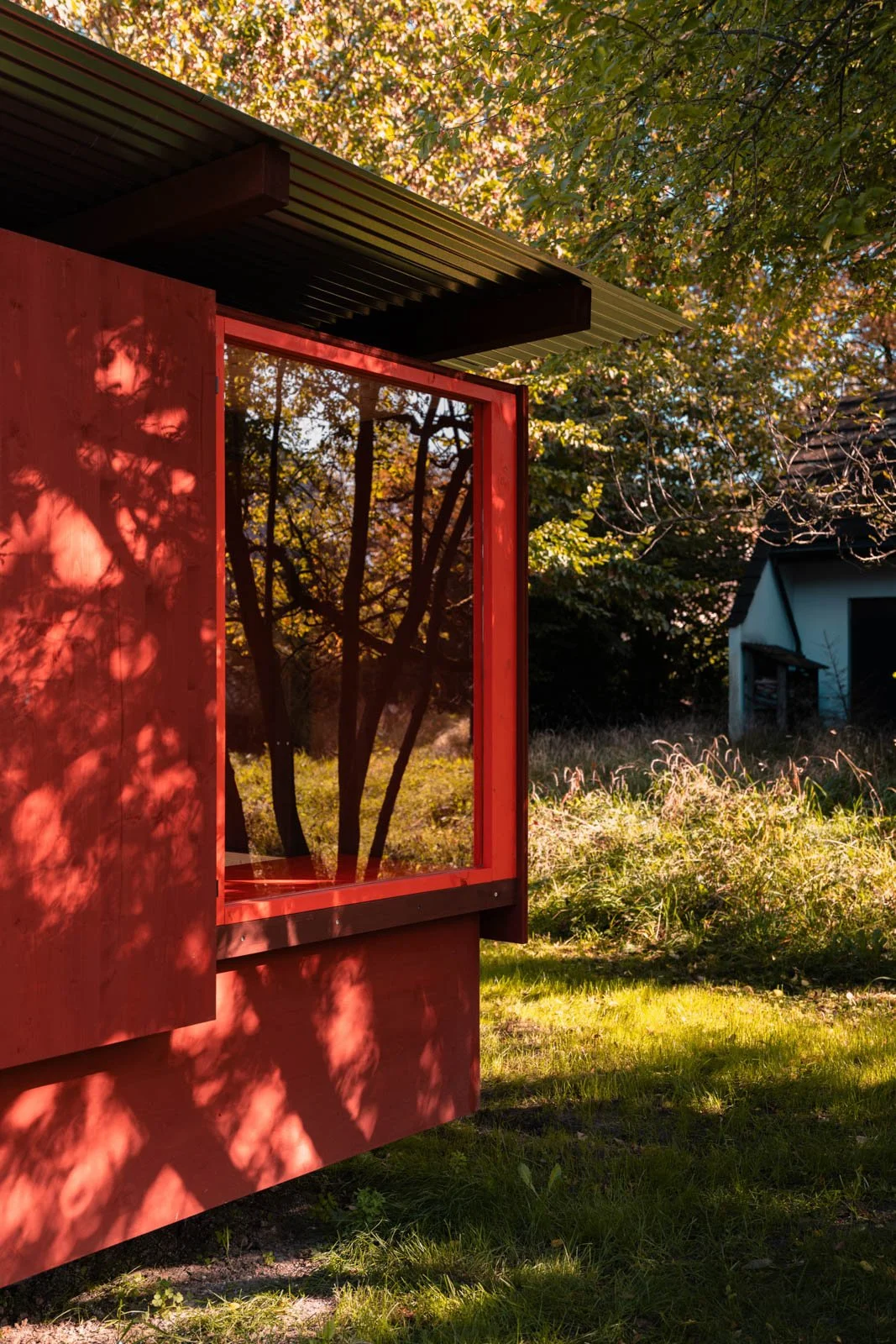
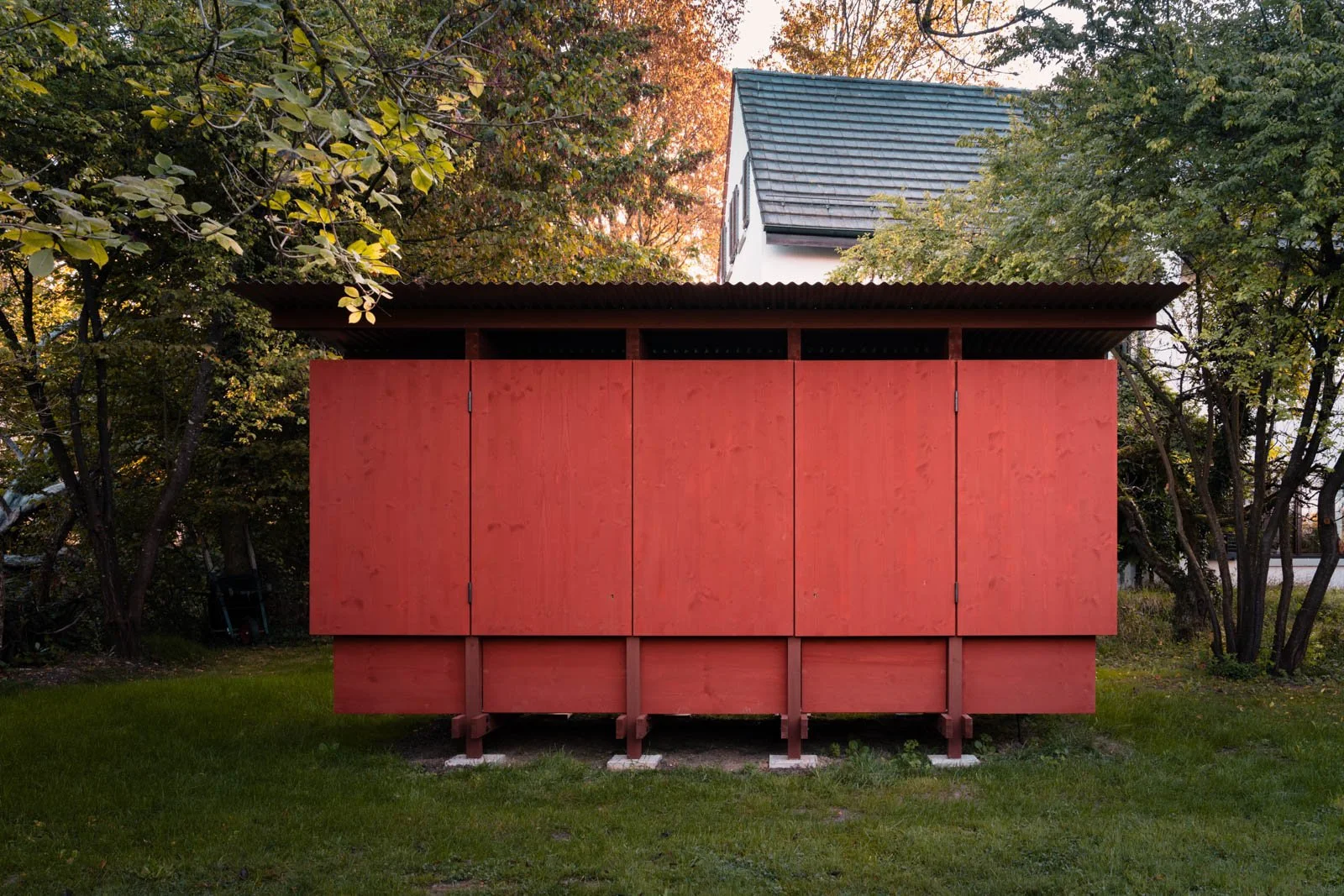
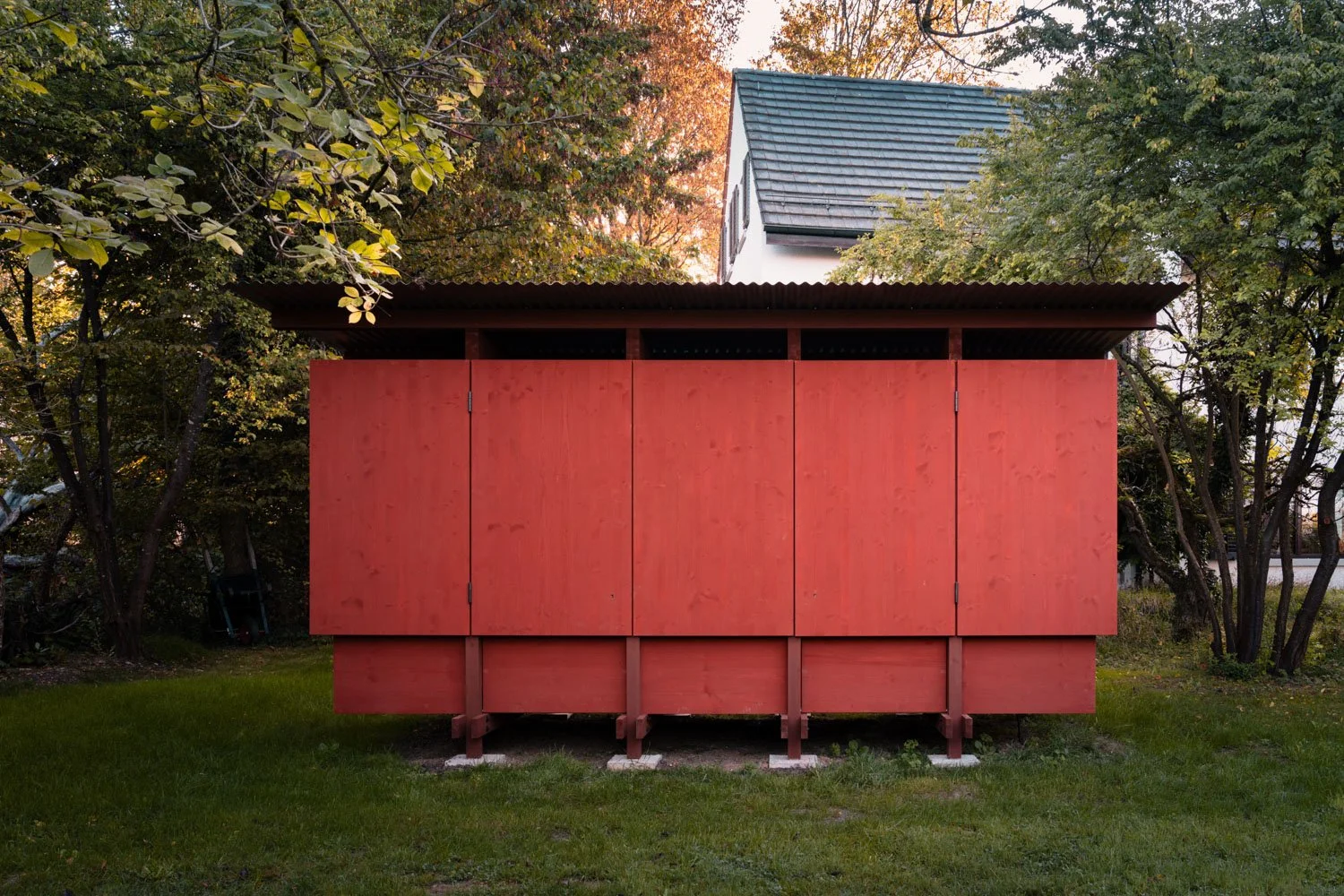
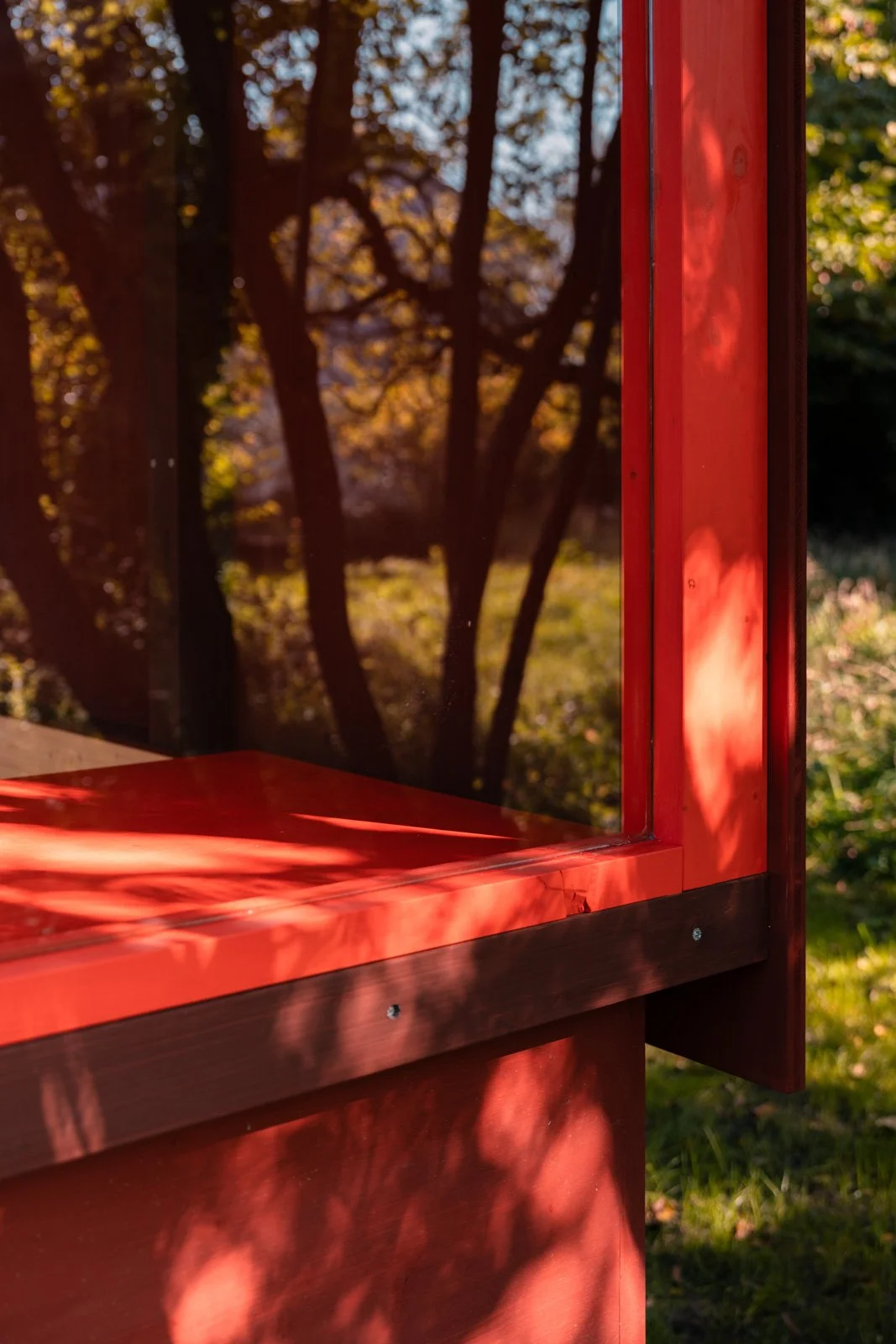
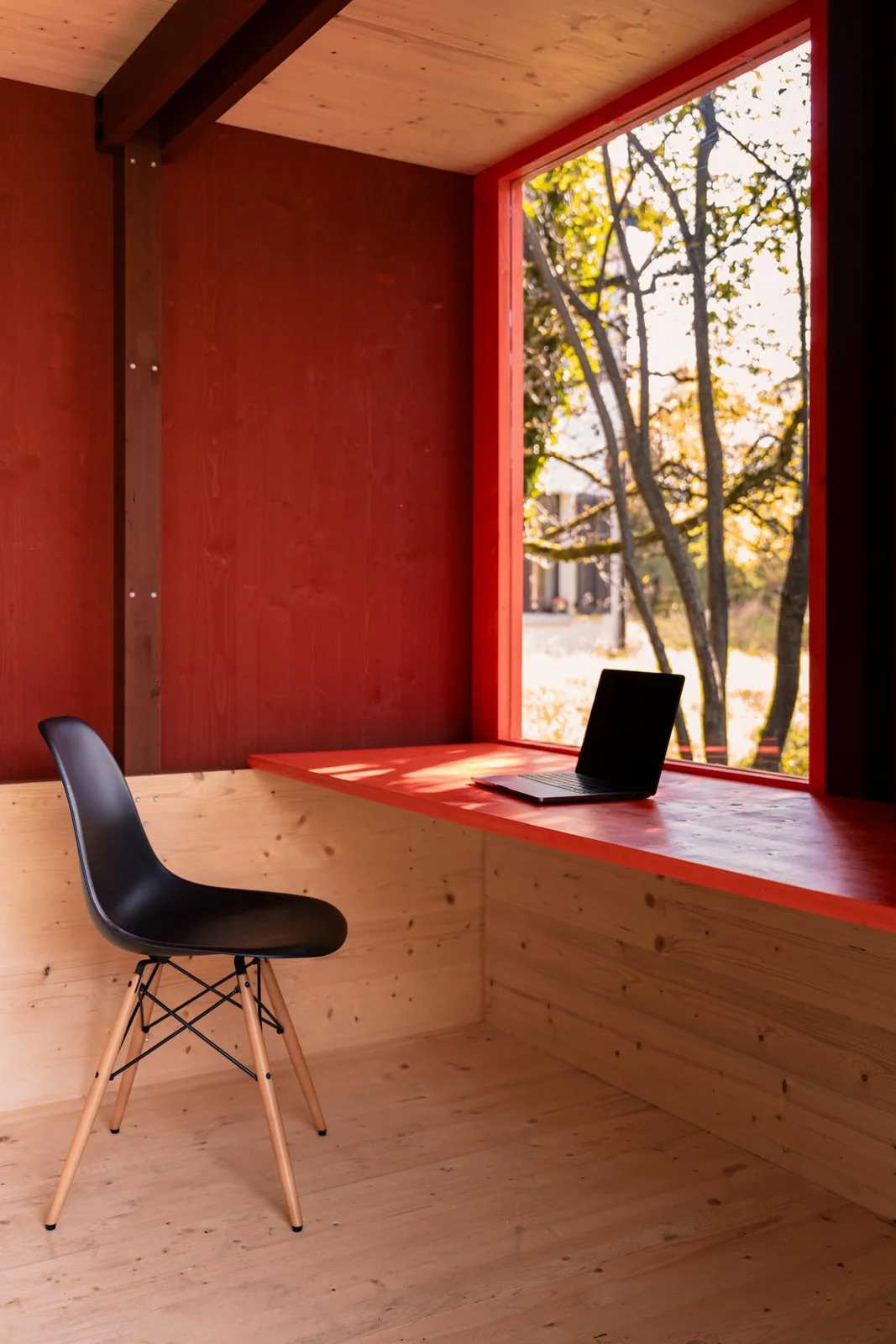
Architecturally, it is characterized by a clear, exposed frame construction that is legible both inside and out. This structure defines the spatial rhythm, gives the building a strong identity, and ensures maximum flexibility of use.
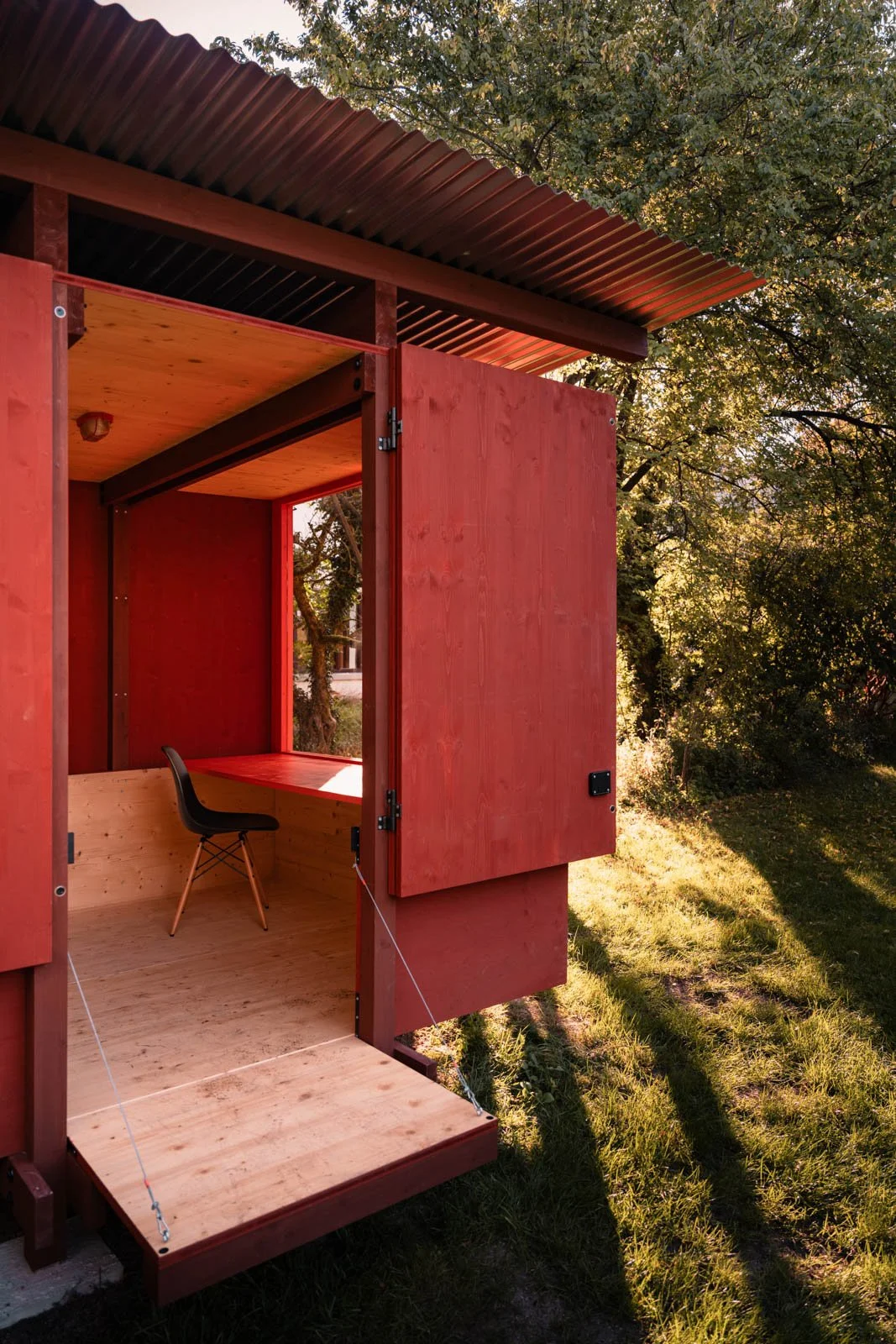
Generous, openable doors dissolve the threshold between inside and outside, transforming the compact volume into a seamless extension of the garden. Along the façade, a continuous work surface accessible from both sides supports various uses — from gardening and creative projects to a quiet workspace on warm days.
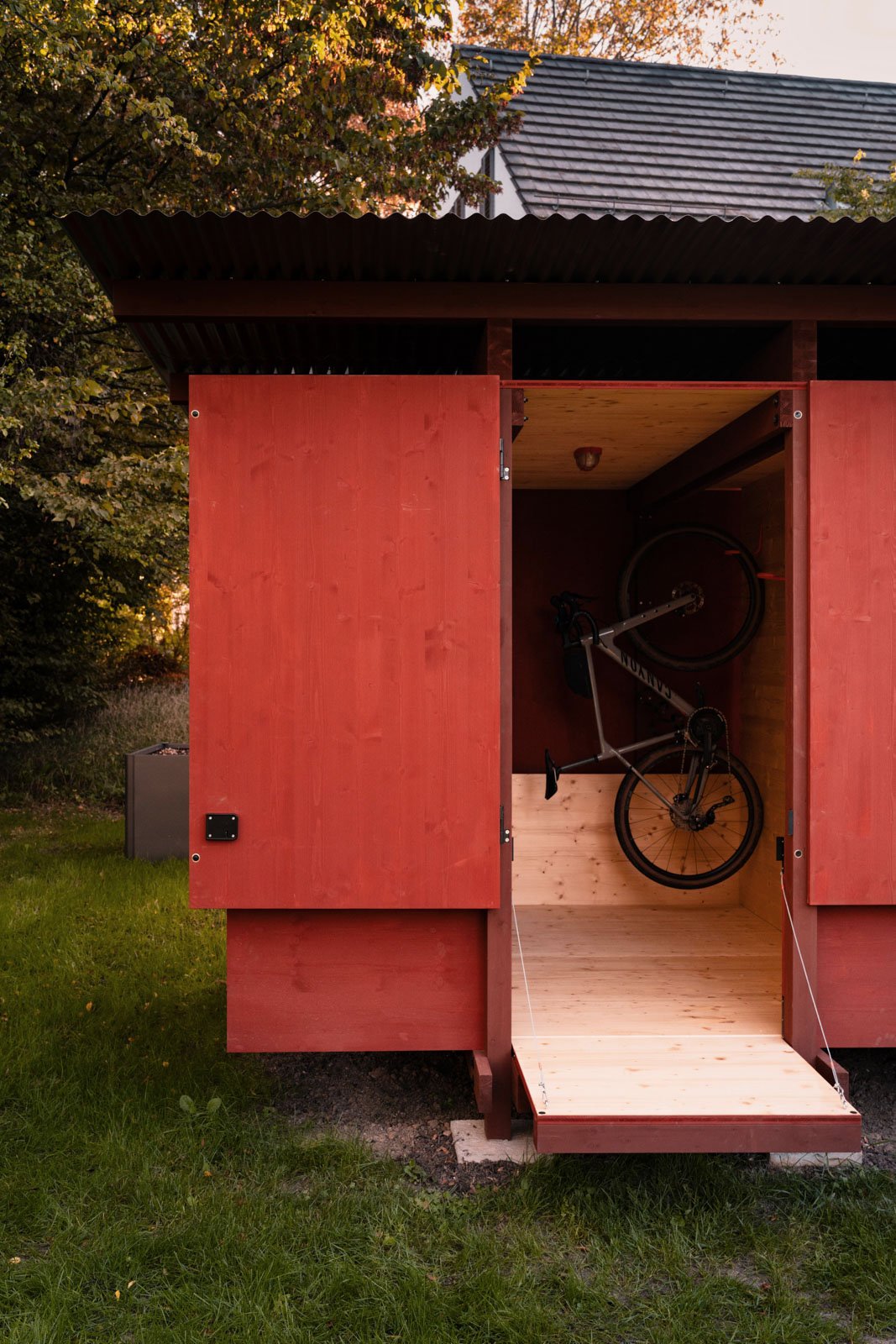
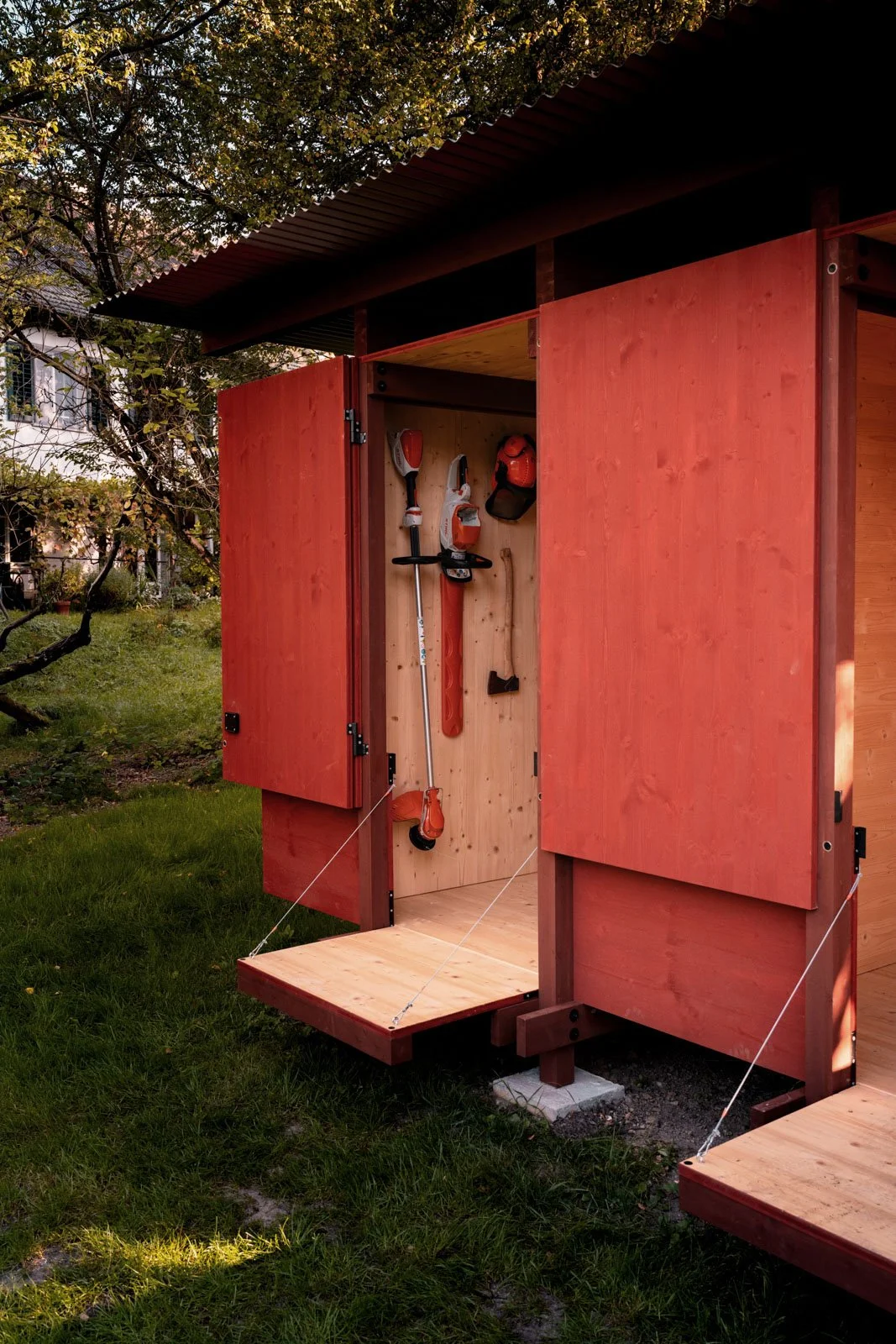
Storage is cleverly integrated and also accessible from both inside and outside, providing space for everything from children's toys and garden tools to bicycles and a robotic mower.
The pavilion functions as a practical and social interface — a place for retreat, focused work, and shared experiences. Designed for everyday life, it is adaptable, open, and connected to its surroundings. Text description by the architects.