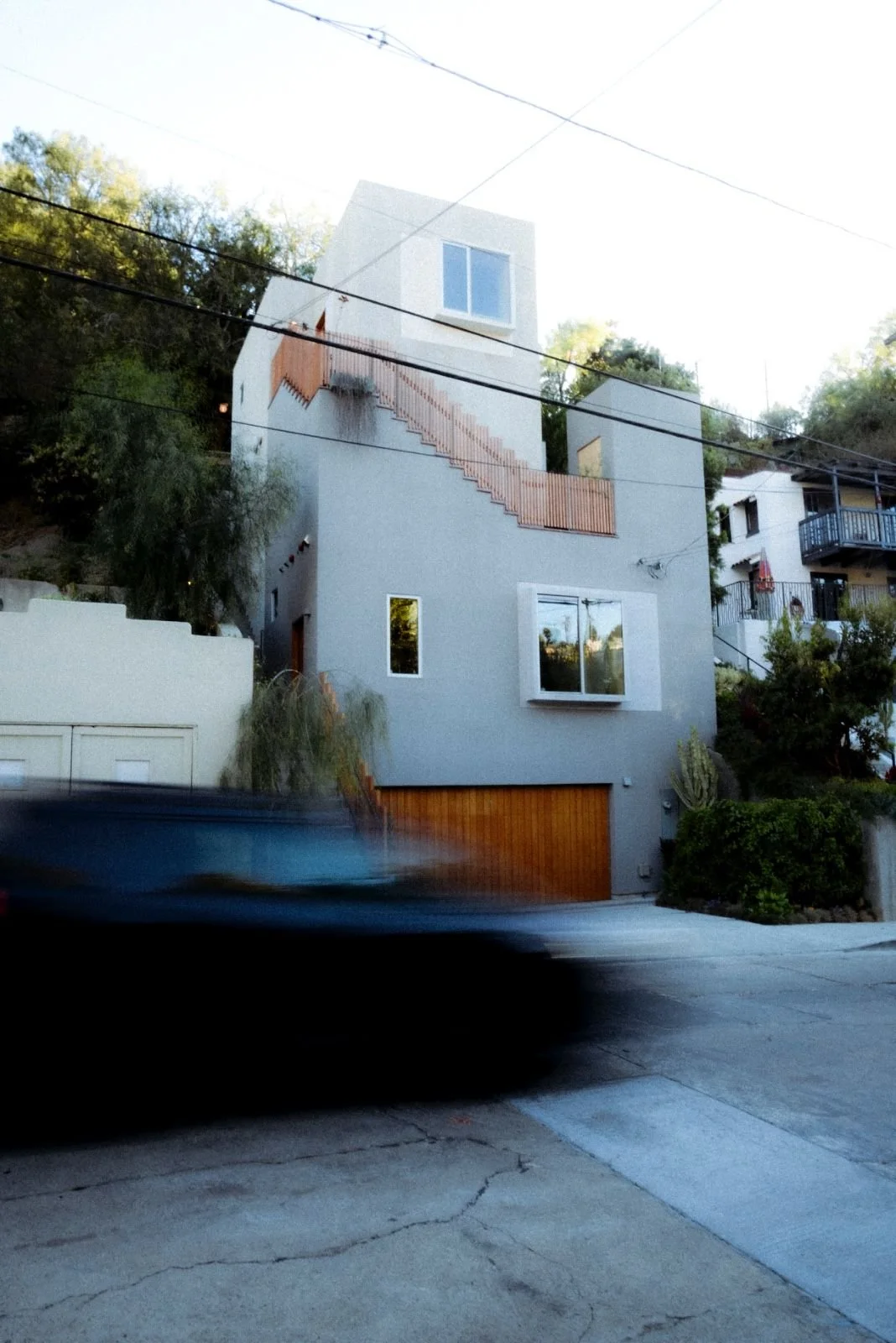
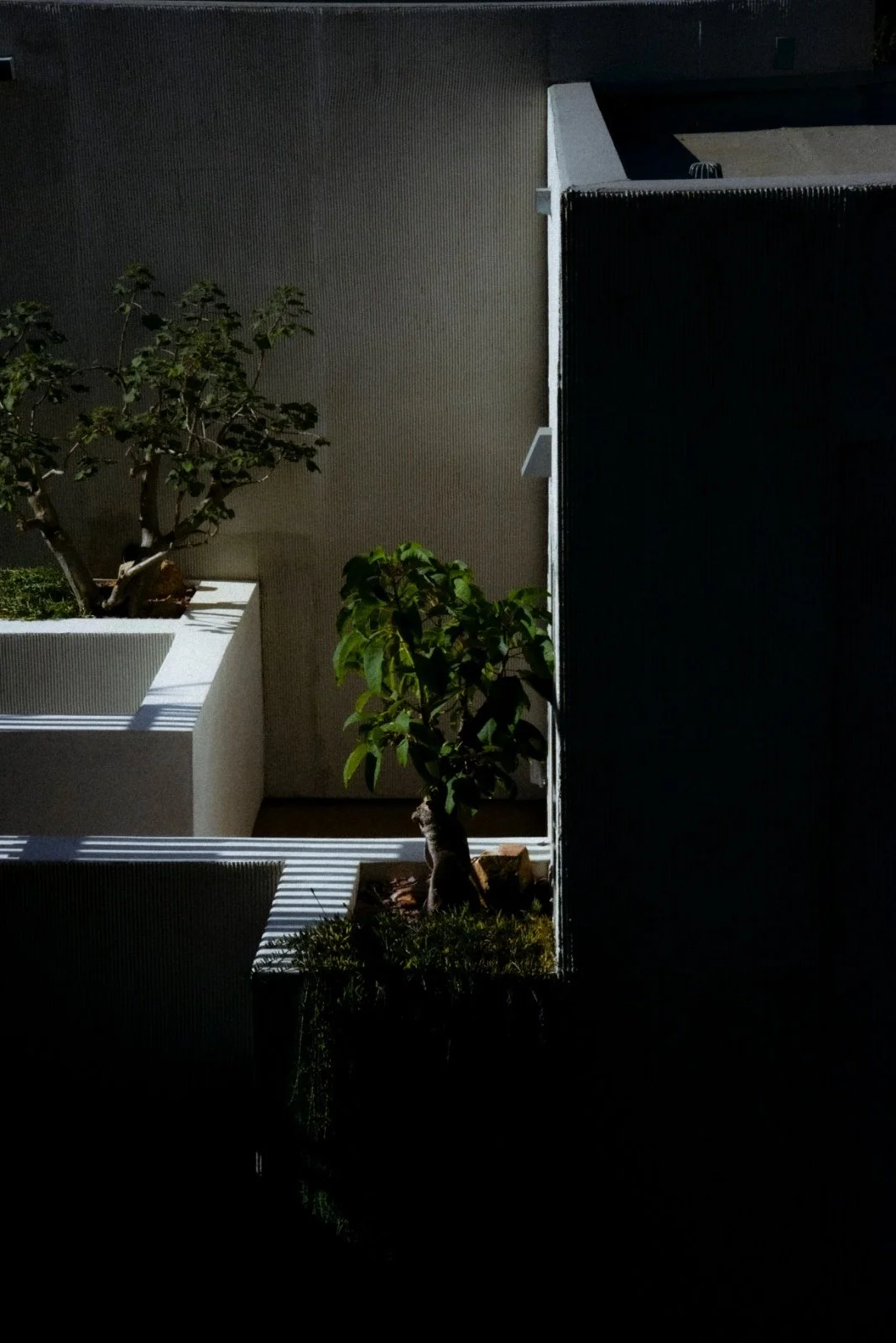
Museum Towers is a house designed by A.TEATRO in homage to the nearby Southwest Museum of the American Indian, which features a single tower visible from multiple vantage points in the surrounding territories and holds a large collection of indigenous art and artifacts. The challenging site is a narrow and steep upslope lot in the Mt. Washington neighborhood with a maximum build allowed floor area of 1,407 SF to include a 2-car garage, an accessory dwelling unit, plus the main residence. The project is a play between volume and void, rough exteriors and smooth interiors. Towers and courtyards appear archaic and monolithic, emphasized by the material choice of a vertically striated plaster to evoke a sense that the structure has been carved into the hill.
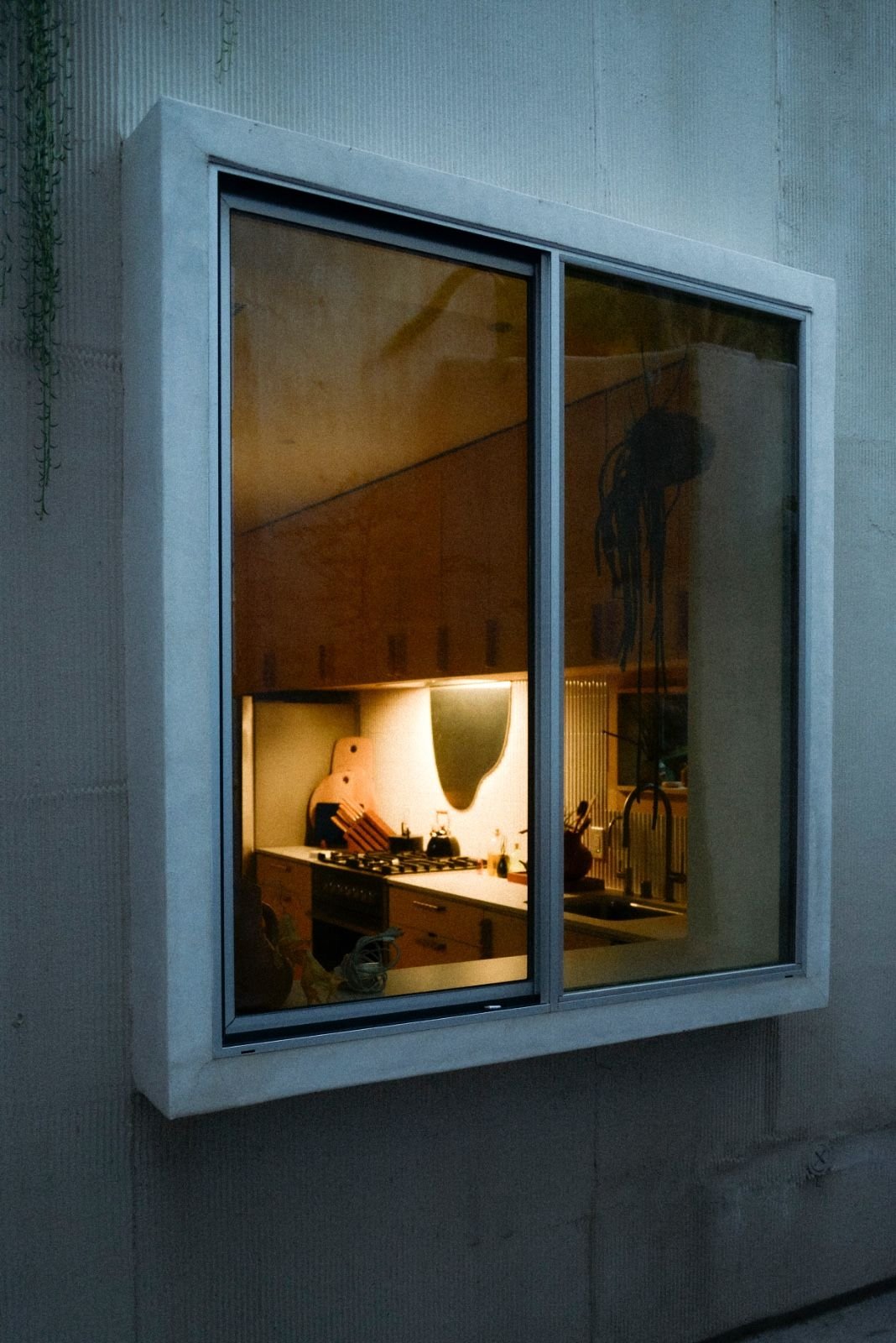
Three open-to-the-sky courtyards were created to prolong the experience from space to space. Circulating up through the building, the spaces oscillate between interior and exterior multiple times before reaching the highest tower. To access it on the 4th level one must climb the exterior steps which notably wrap the corner of the tower. Four large windows, each clad with wood on the interiors, pop out of the towers with views of the natural context, at night glowing like square shaped lanterns on the hill.
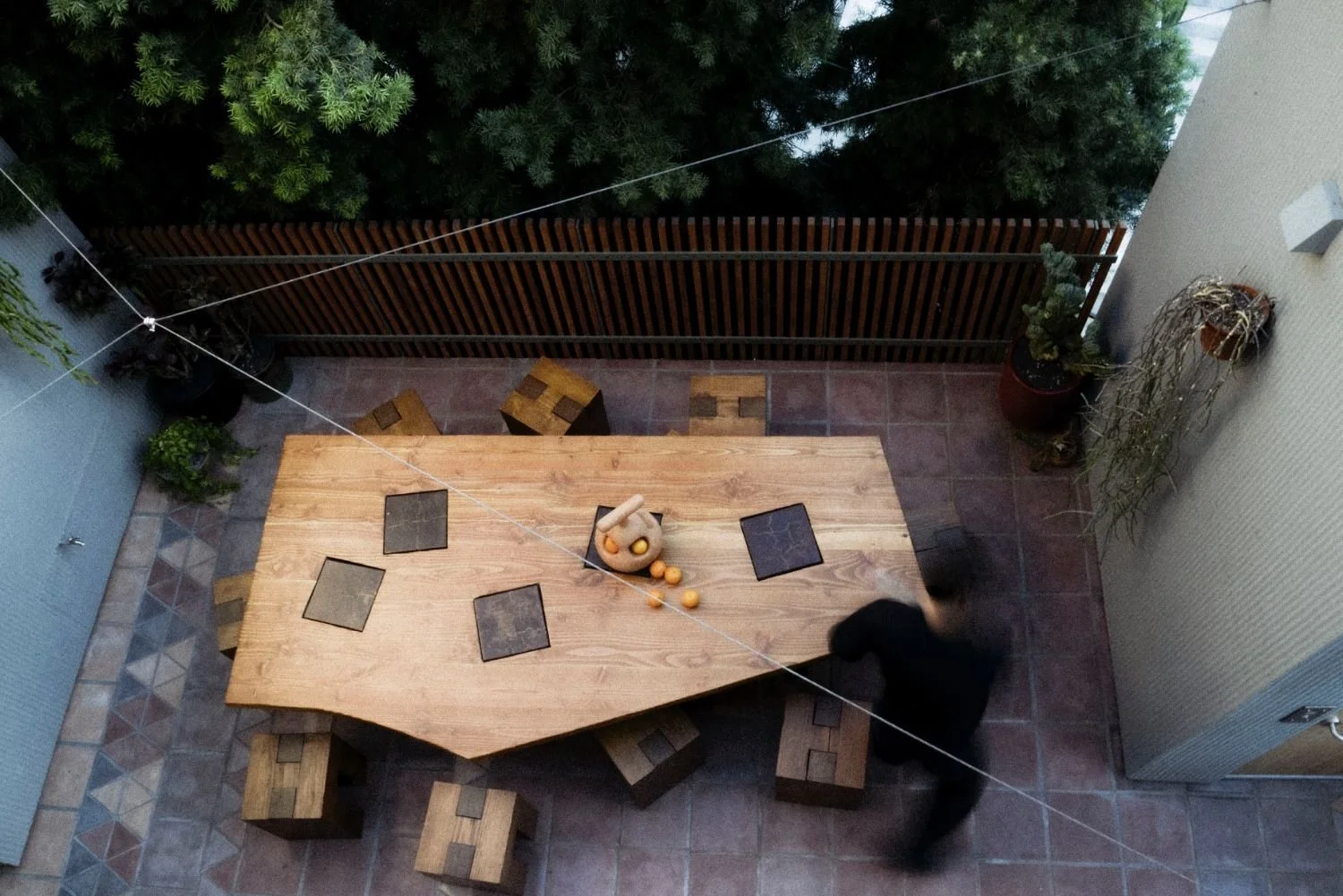
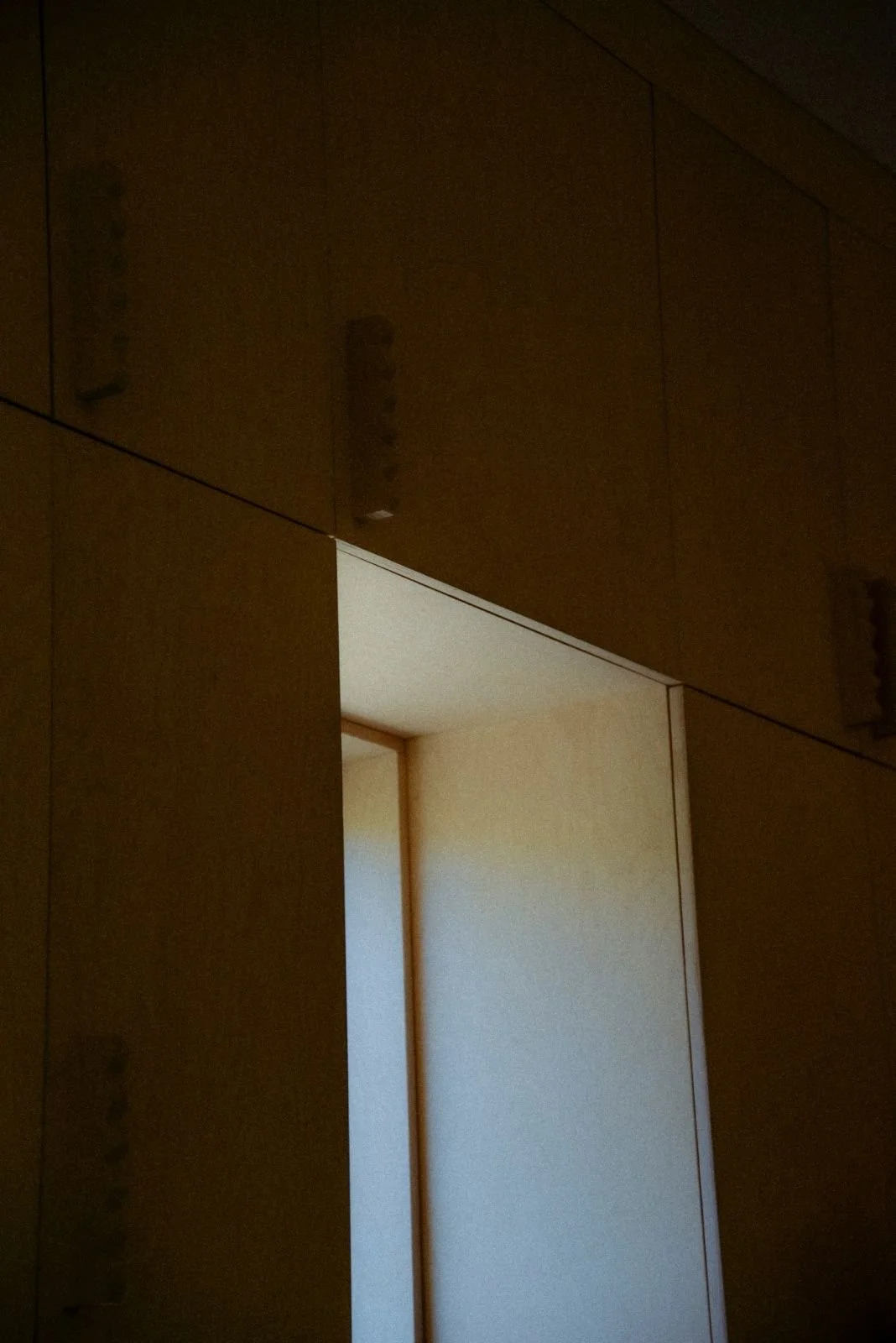
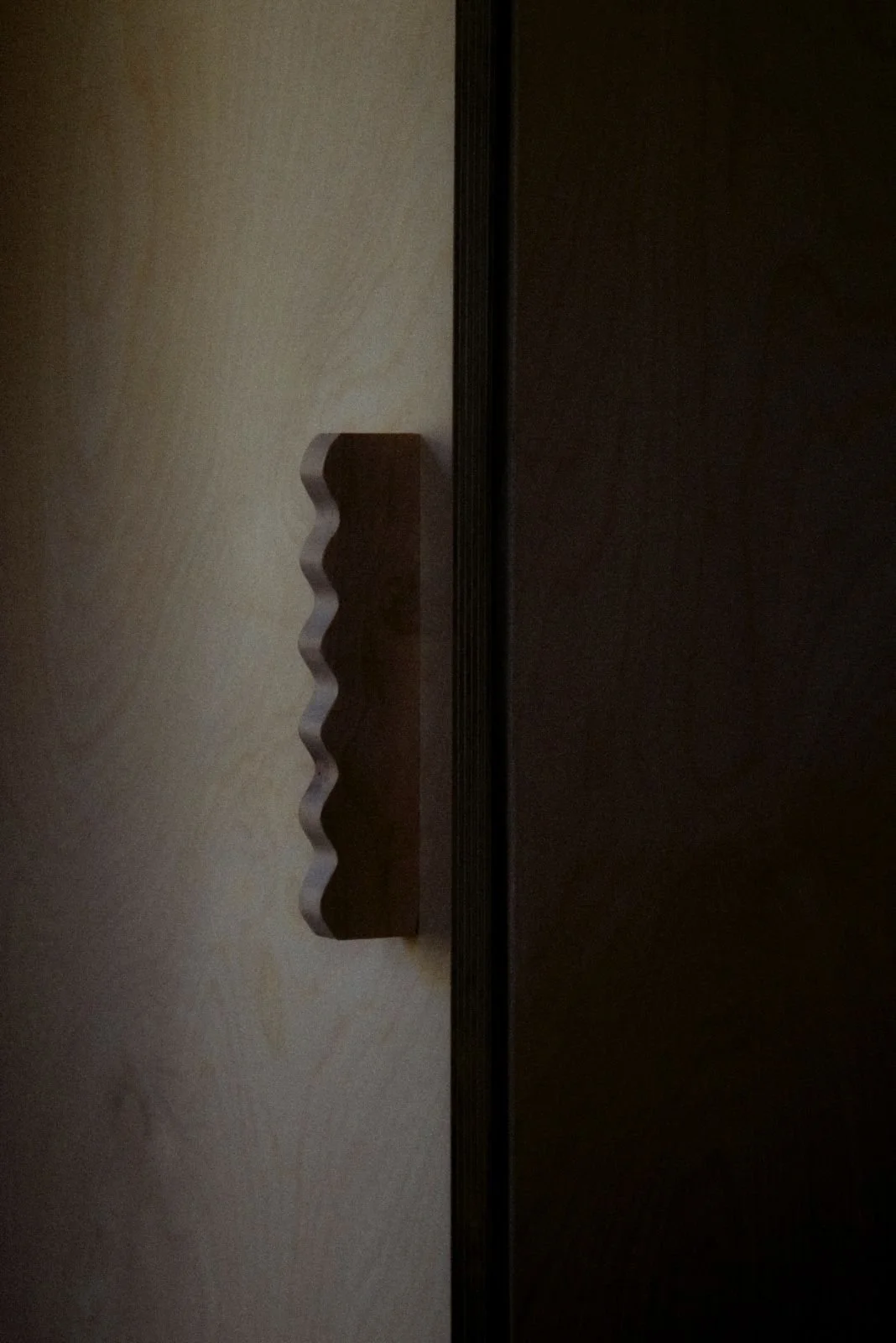
On the main residential level courtyard, a custom tile layout was created with clay colored concrete tiles that reinforce the connection of the home to the earth. Wood slats for the exterior guardrails and wood paneling on the interiors bring warmth to the moments of human engagement. Details such as vertically-oriented quarter round tiles on backsplashes and custom-built wood rake-profile handles on the millwork were used to couple those intimate moments with the larger aspirations of the project.
When the owner first approached Balcony to design the interiors of his home, the vision was clear: to create a space that evokes the experience of a museum—immersive, sensory, and narrative-driven. A home filled with color, texture, light, and shadow, where indoors and outdoors blend seamlessly, and where daily life—living, working, reflecting—unfolds like a curated exhibition.
The house itself is unique. Designed in homage to the nearby Southwest Museum of the American Indian, it features a solitary tower visible from various points in the neighborhood. The museum, known for its extensive collection of Indigenous American artifacts, set the tone for the design’s intent: a place of reverence, discovery, and storytelling.
Balcony’s design approach embraced the owner's passion for nature and rare plants, transforming the home into a series of intimate spaces and open-air terraces that unfold like galleries in a museum. Each area is a fragment of a larger narrative, with recurring elements—plants, pots, light, and sculptural pieces—offering coherence and rhythm. Placed throughout the home, the plants function almost as living sculptures, anchoring the journey between interior and exterior, public and private.
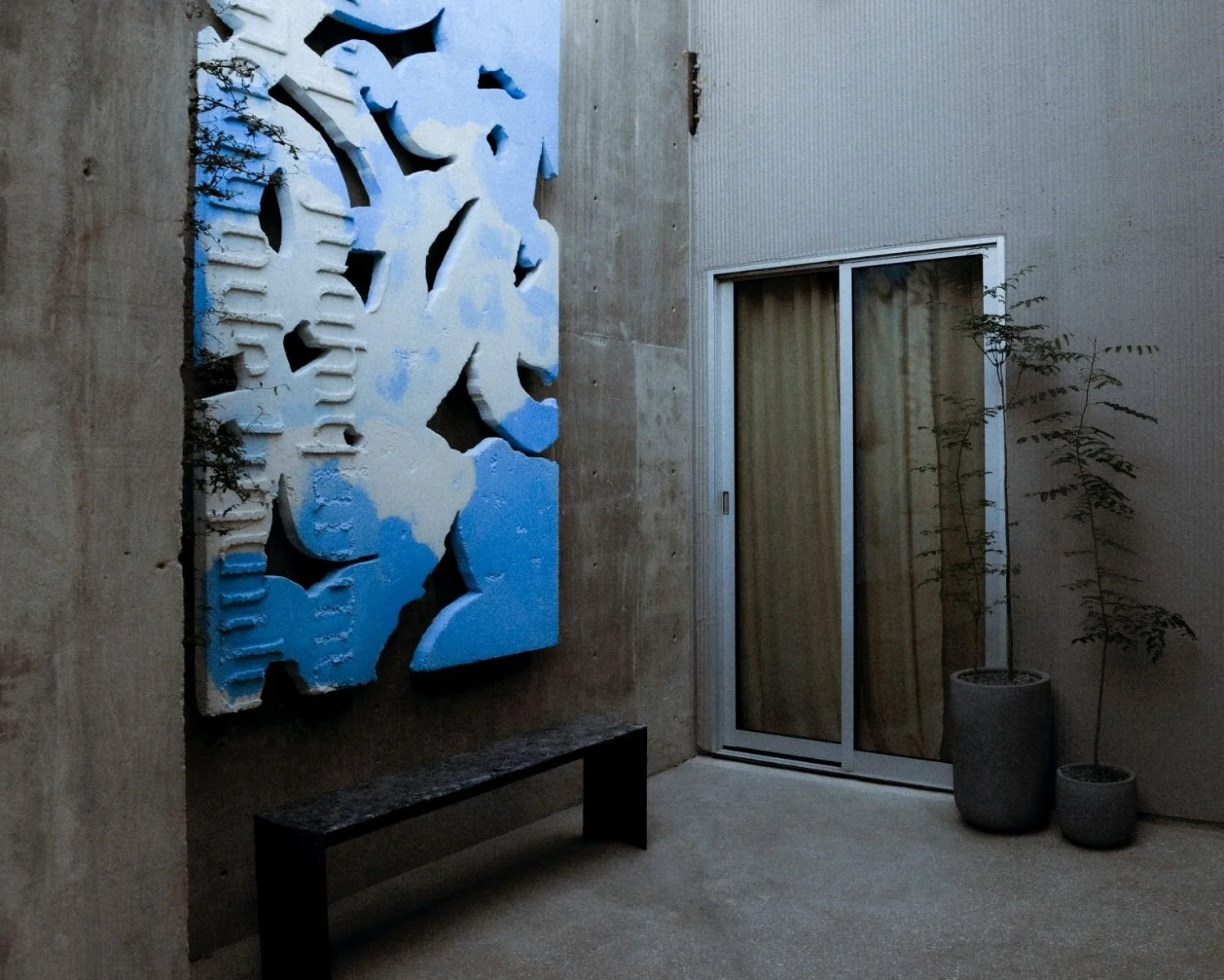
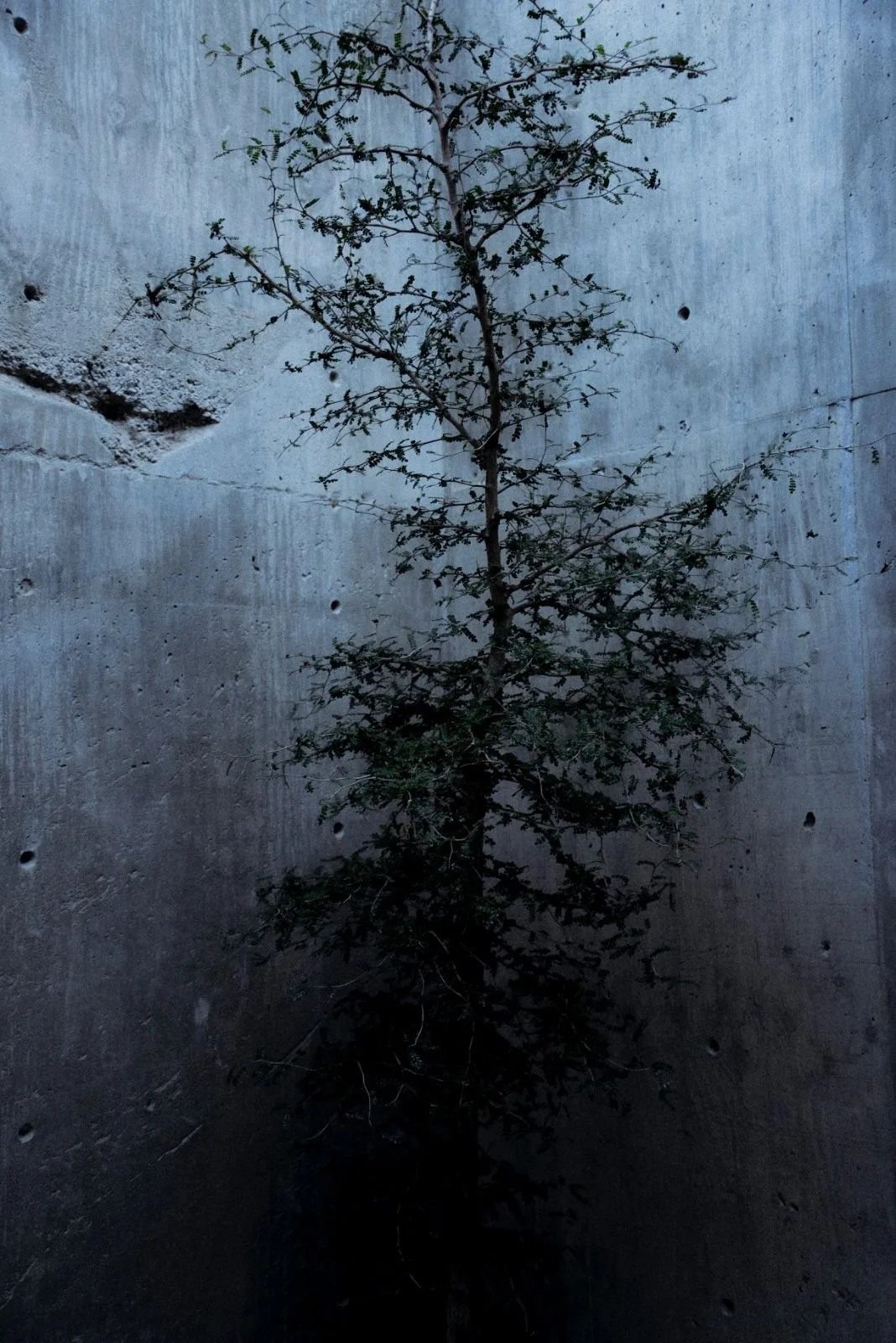
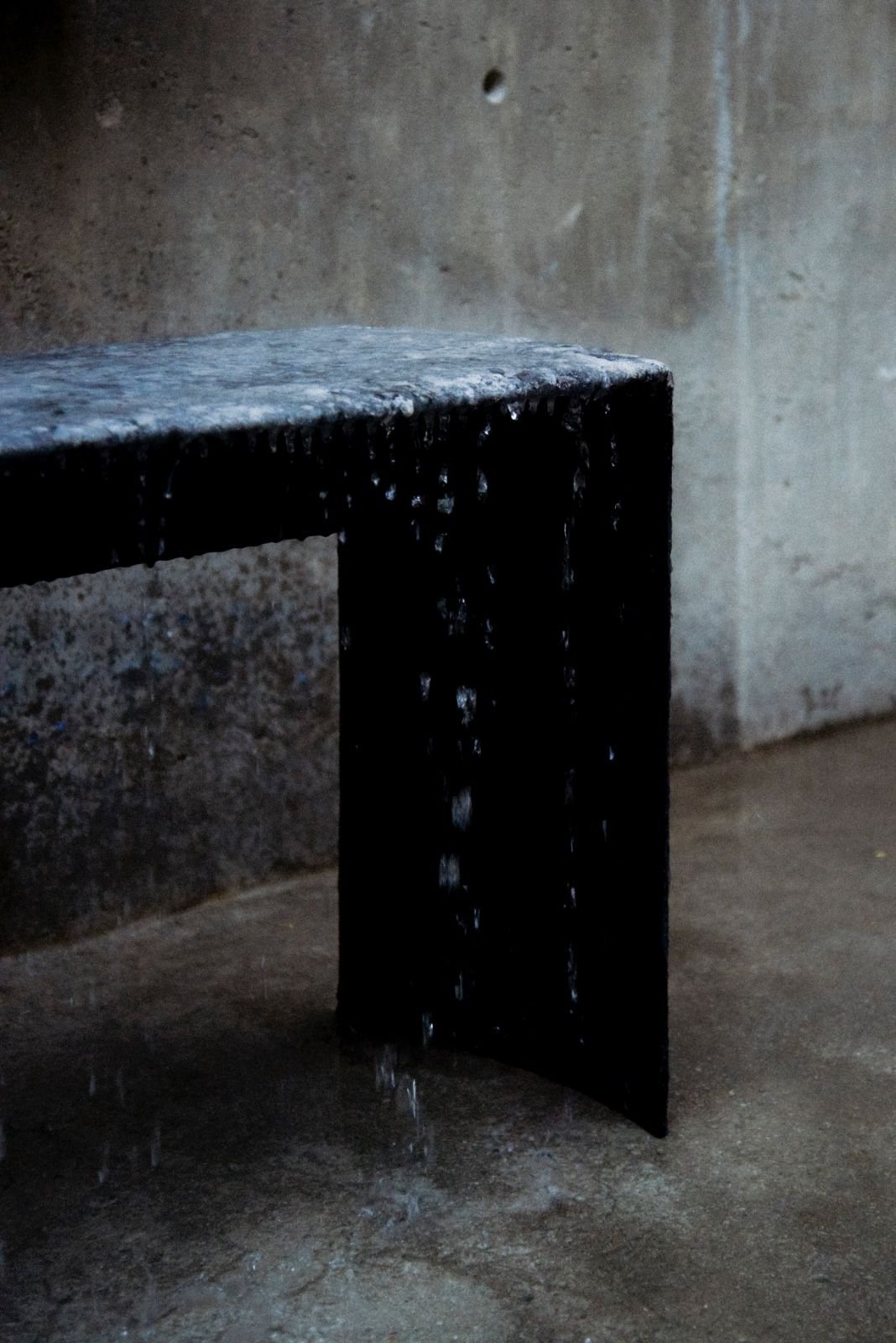
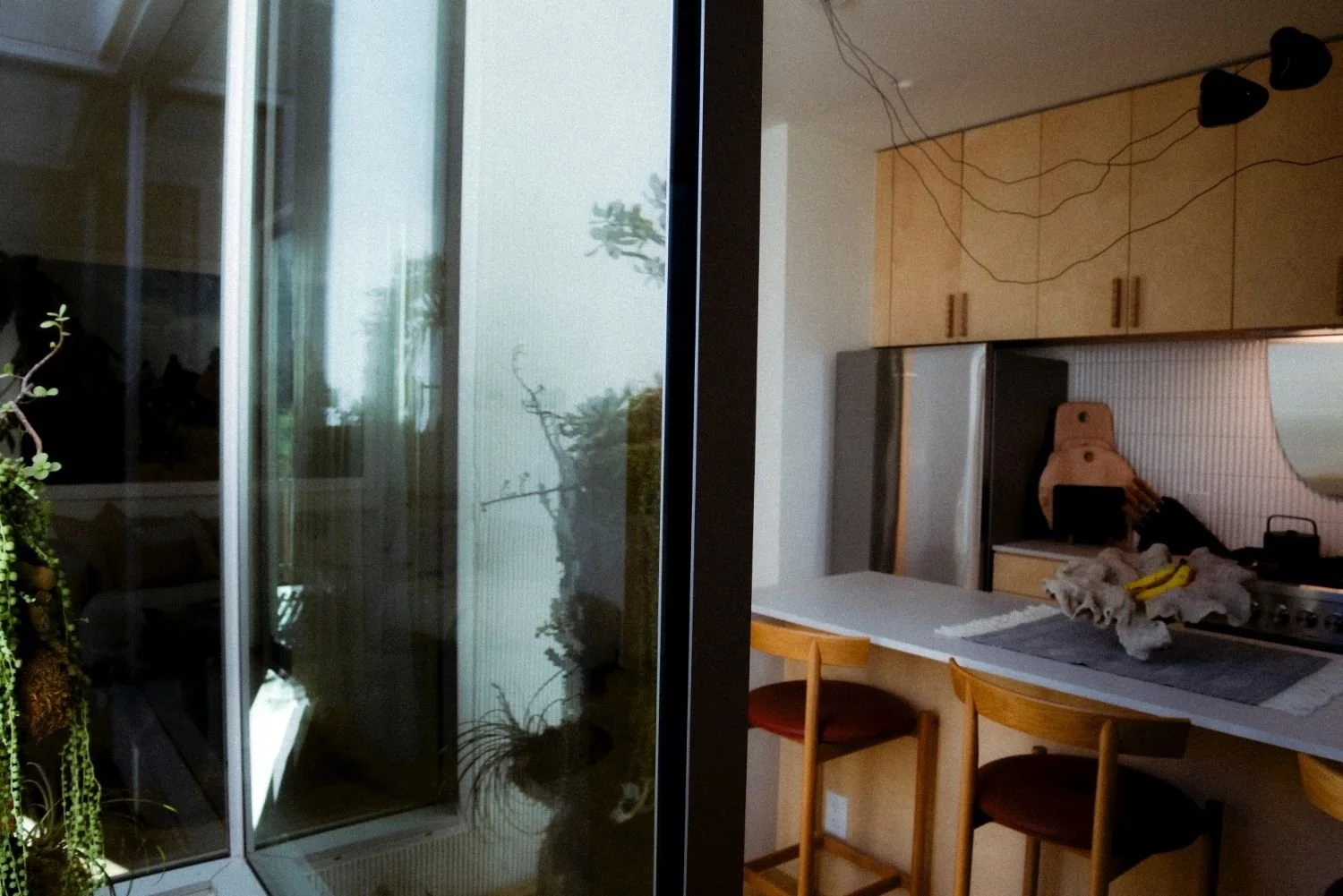
The journey begins at the concrete stairway, leading to a raw, sculptural courtyard. Here, a striking artwork by LA-based artist and owner’s close friend Mike Nesbit hangs dramatically from the raw concrete retaining wall—its colors and textures inspired by the owner's Armenian heritage. Below it, a reclaimed-barrel bench from the owner’s personal collection offers a tactile welcome. Two windows offer framed glimpses into the kitchen and bedroom, teasing what lies ahead.
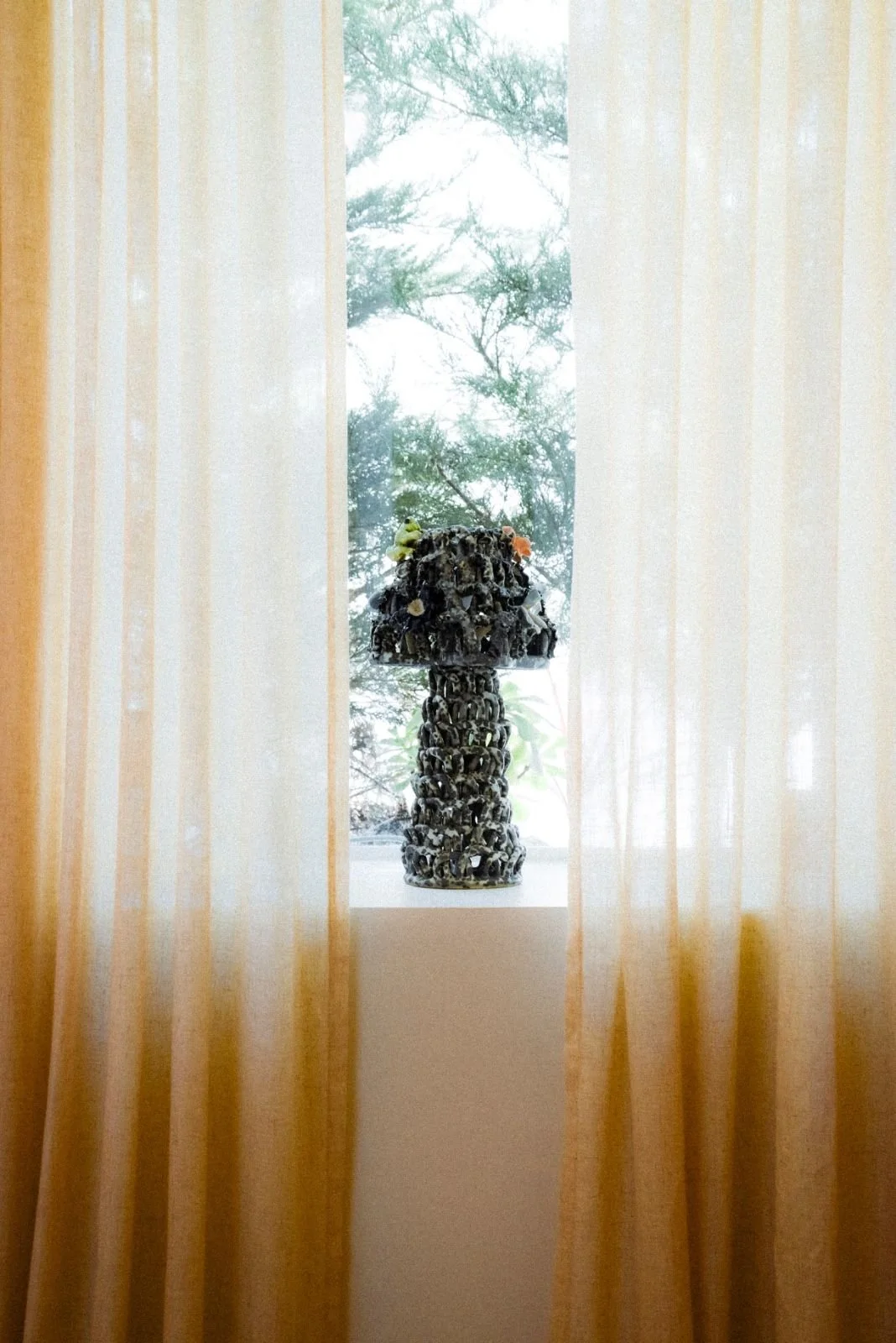
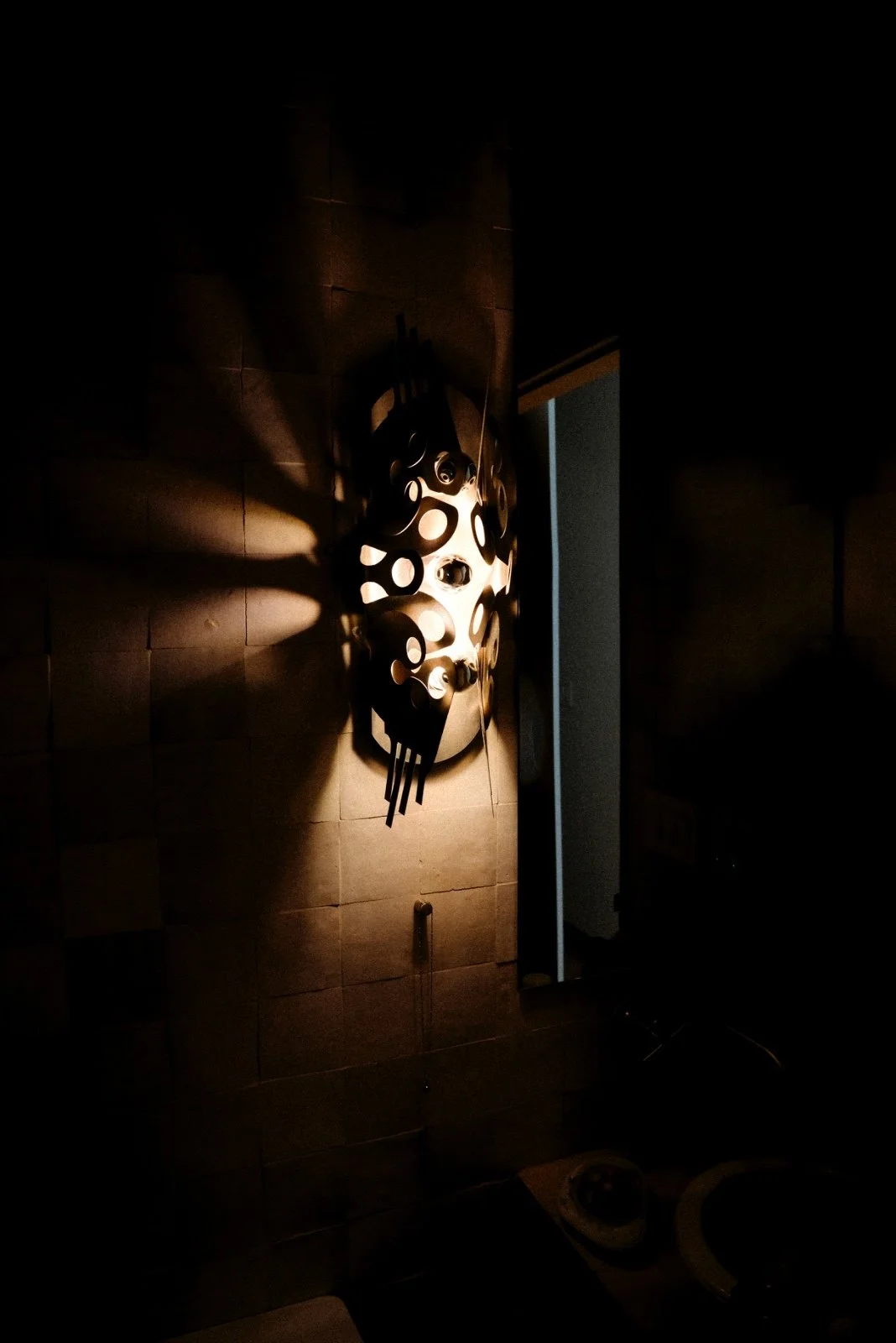
In the compact bedroom, Balcony took an unconventional route: the bed is an L-shaped oversized sofa, flanked by dual wood walls and illuminated by a monumental Noguchi lamp acting as a canopy. The space invites both relaxation and visual connection to the courtyard. A handcrafted desk lamp by local designer Angelica Lorenzi and a bathroom wall sconce by Kiki Goti round out the tactile, personal touches.
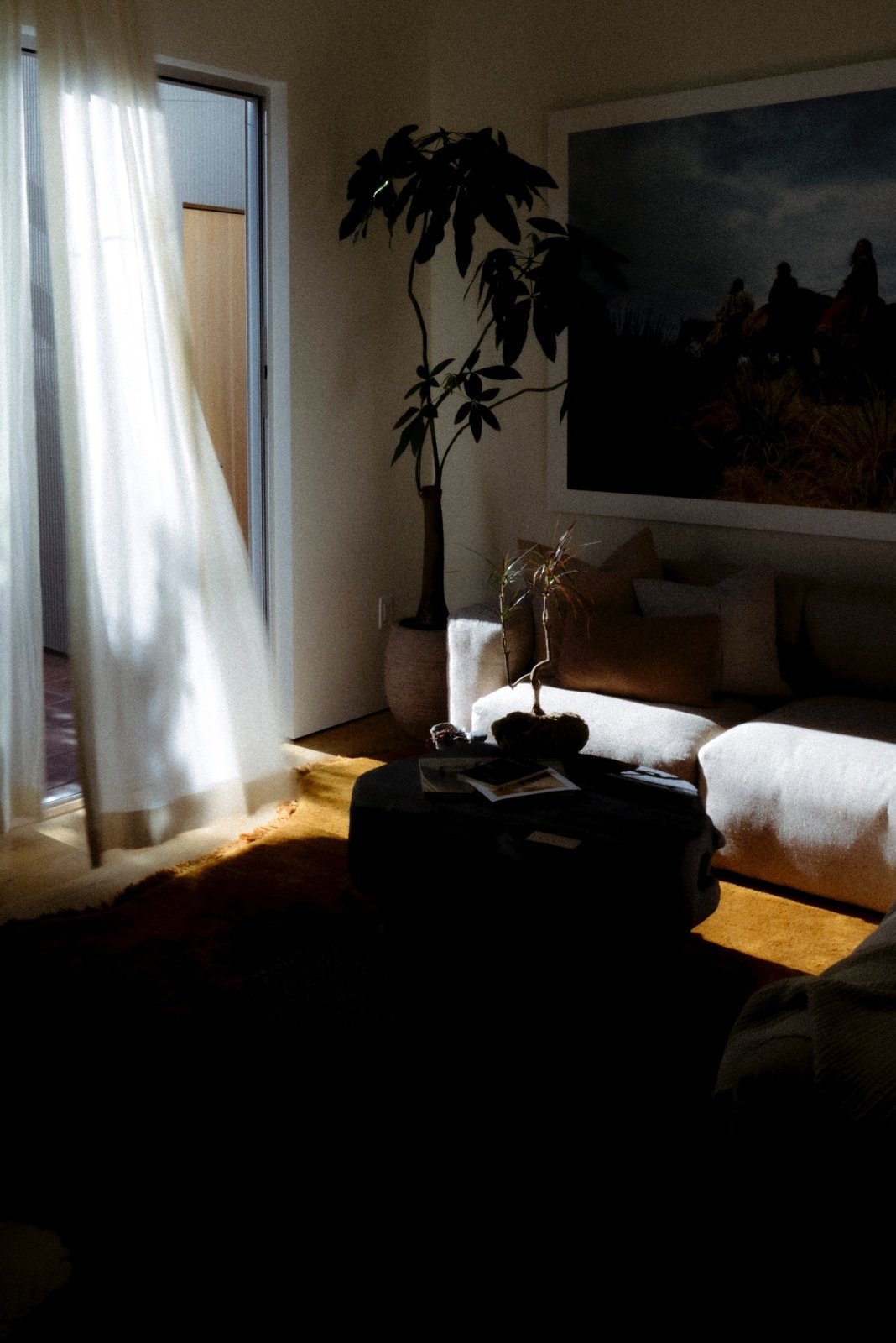
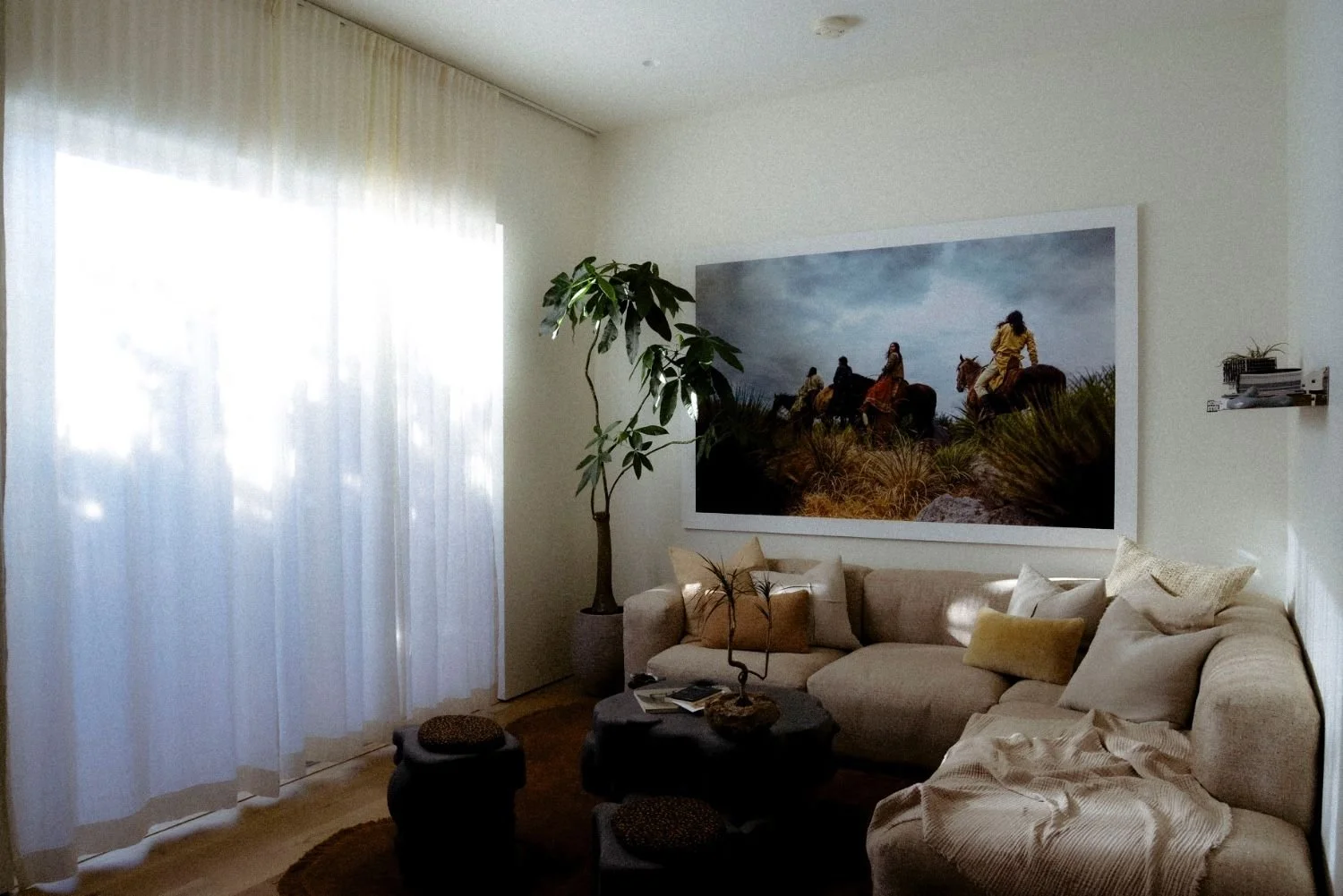
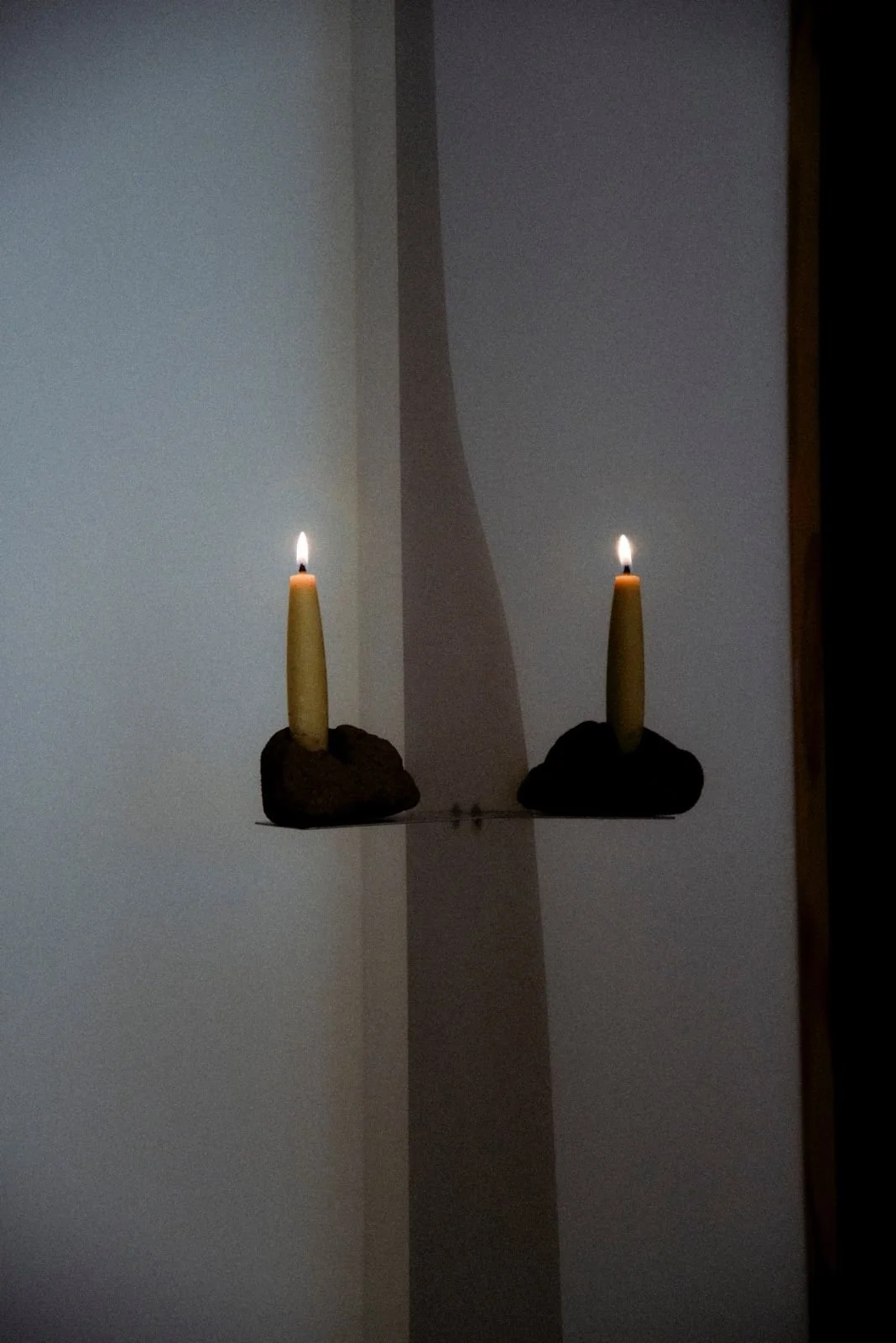
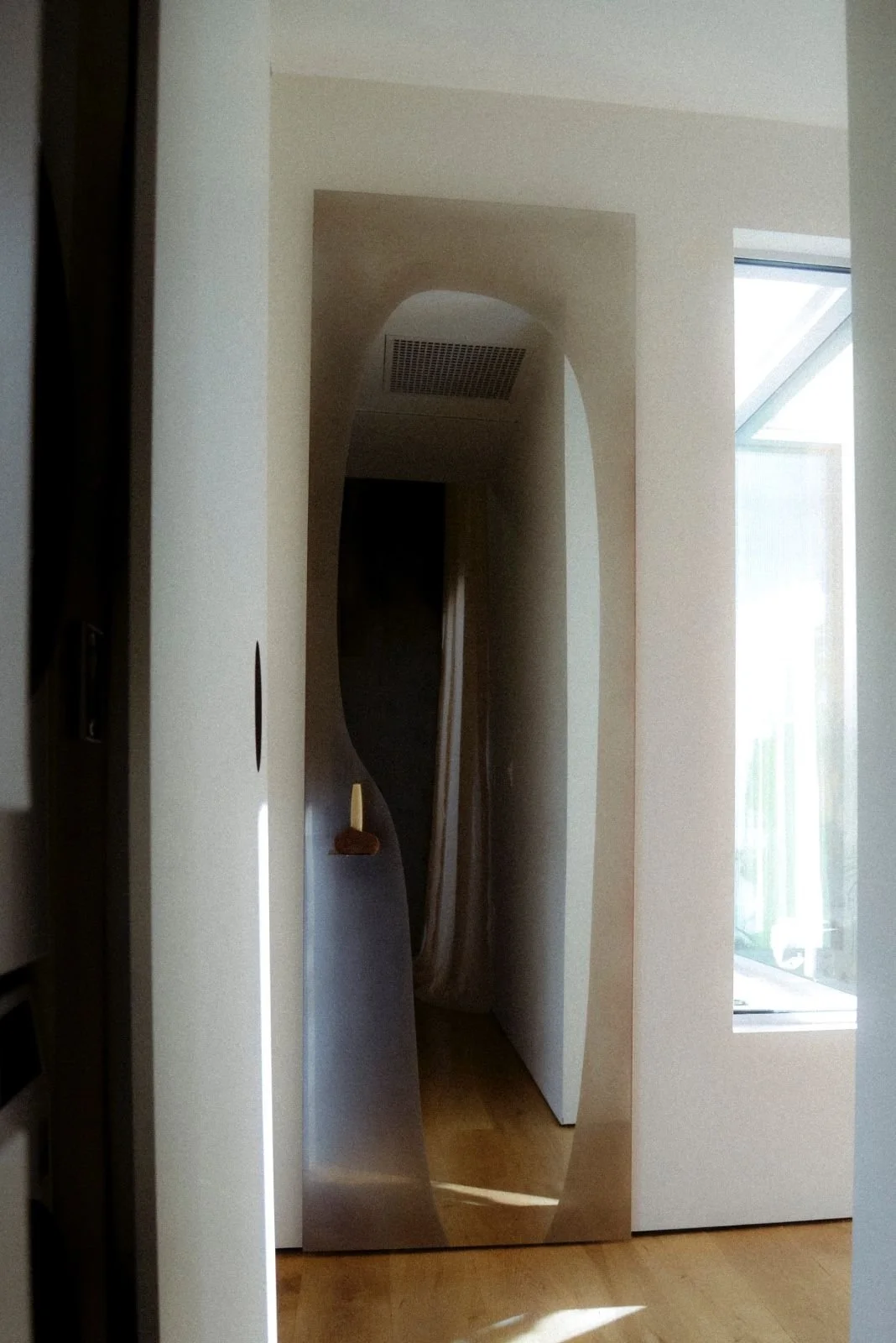
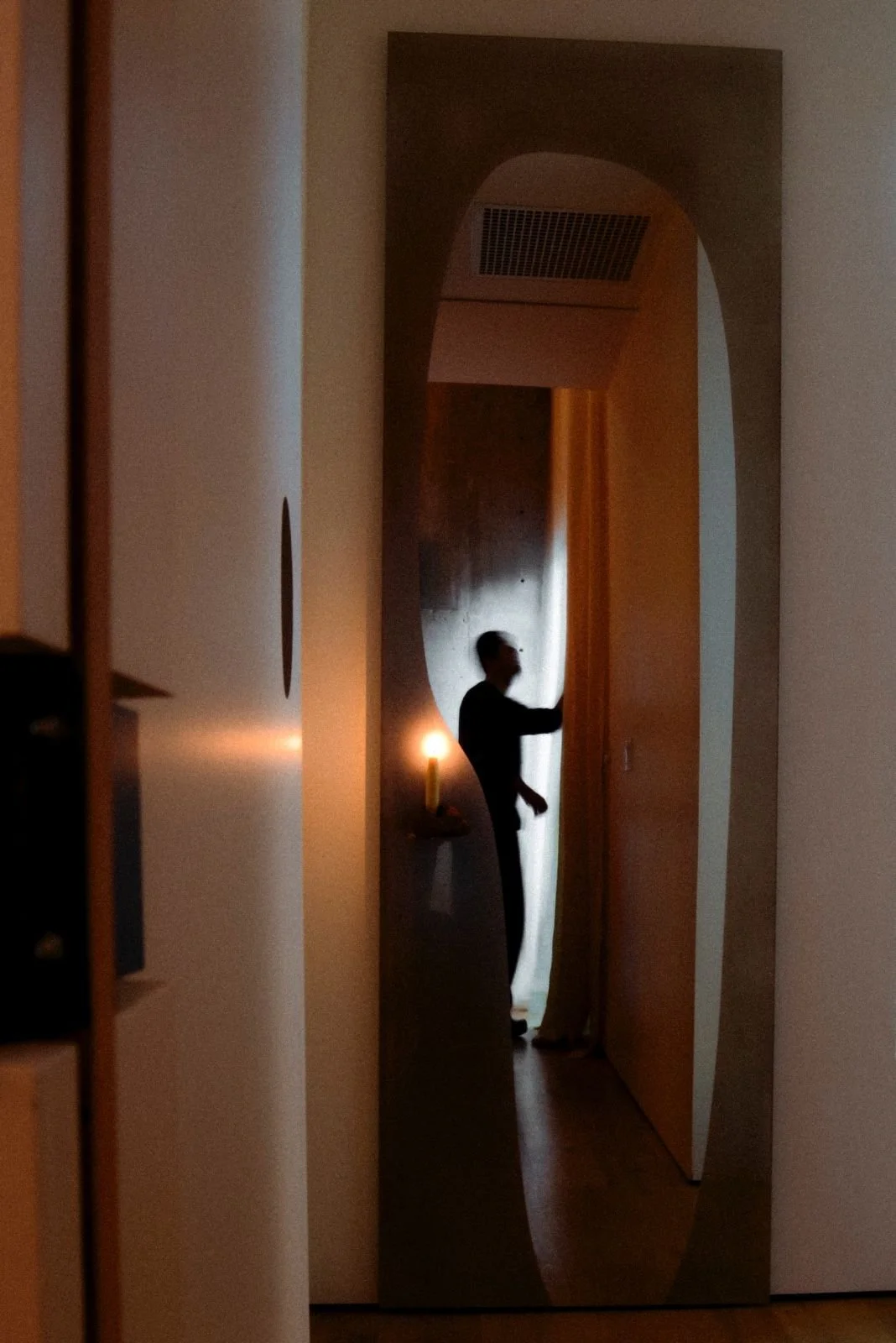
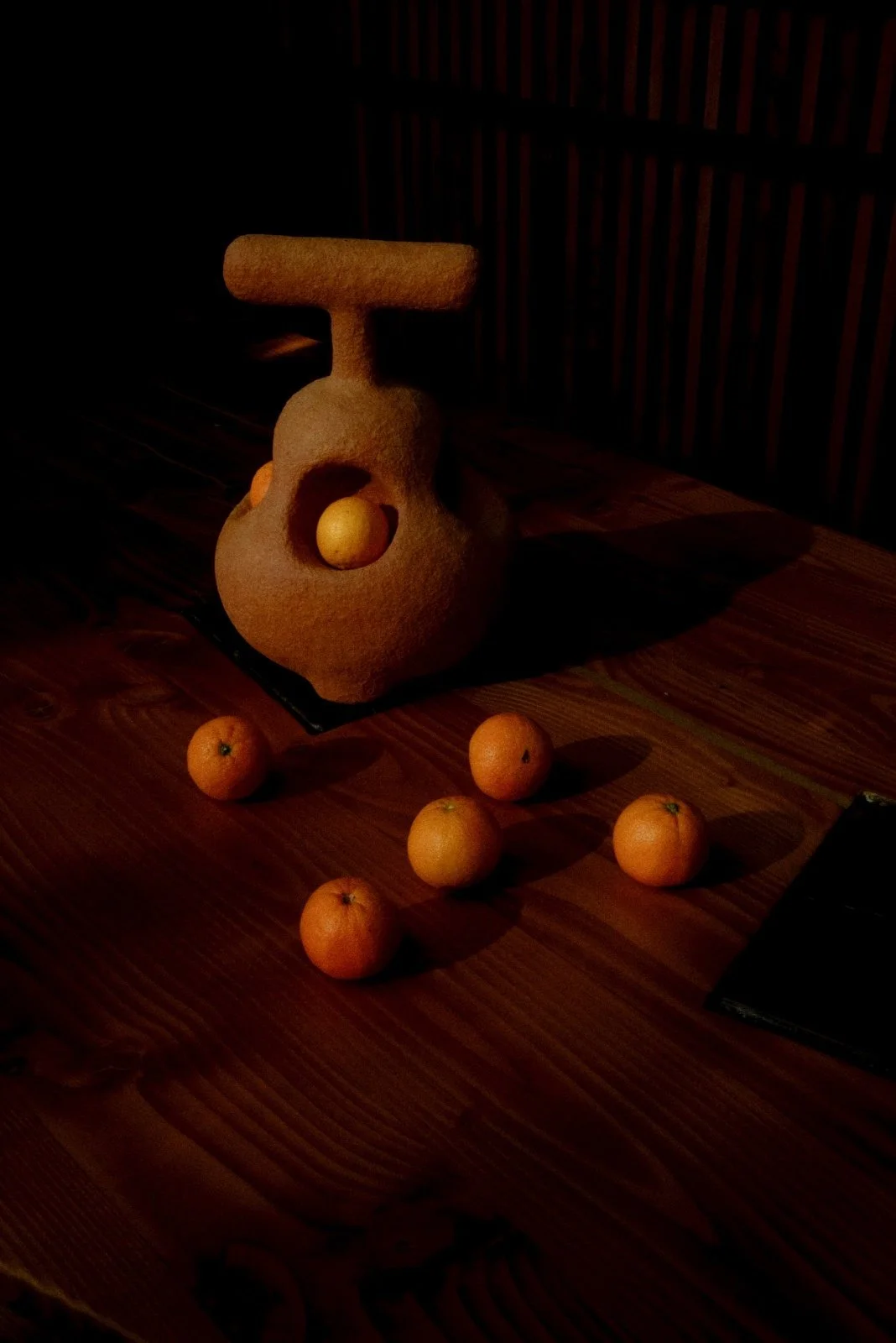
The main living area was envisioned as a shadowed garden—a space where objects are positioned like sculptures, viewed in the round. At its heart sits a glass vestibule housing a living plant-sculpture by floral artist Jiahao Peng, blurring boundaries between indoor and outdoor. Nearby, a large custom mirror reflects the space’s dynamic interplay, while a sculptural coffee table by Polina Miliou anchors the seating area with her signature papier-mâché technique. Surrounding it are custom stools forming all together a kind of indoor rock garden, paired with an understated sofa and a warm, earthy Christopher Farr rug. Personal artifacts and plants round out this tableau, echoing the owner’s identity.
The main courtyard dining space was designed as a place of communion—for dinners, quiet mornings, and summer evenings with friends. Acting as both anchor and altar, the custom solid wood table hosts the rituals of dining and conversation beneath the sky..
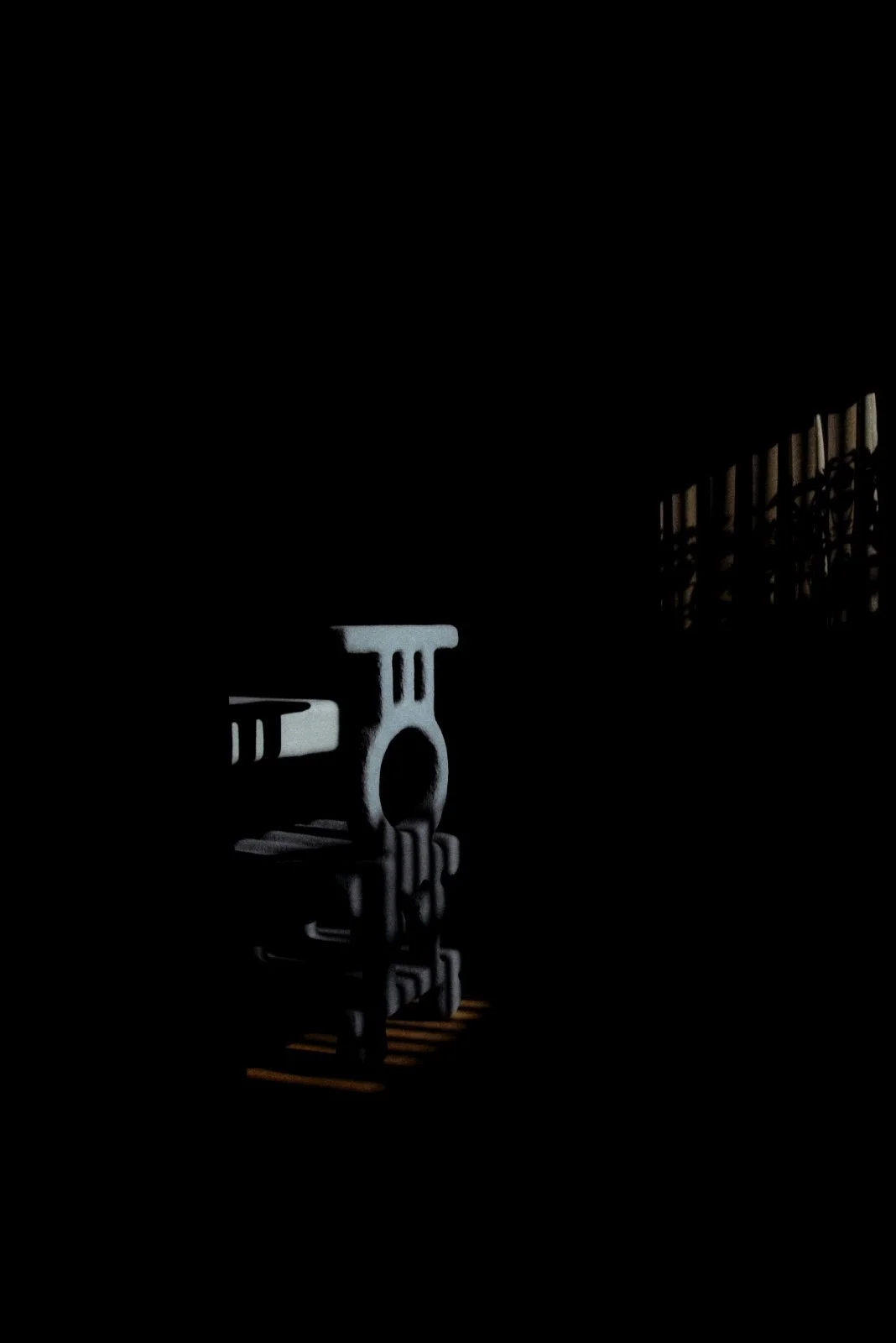
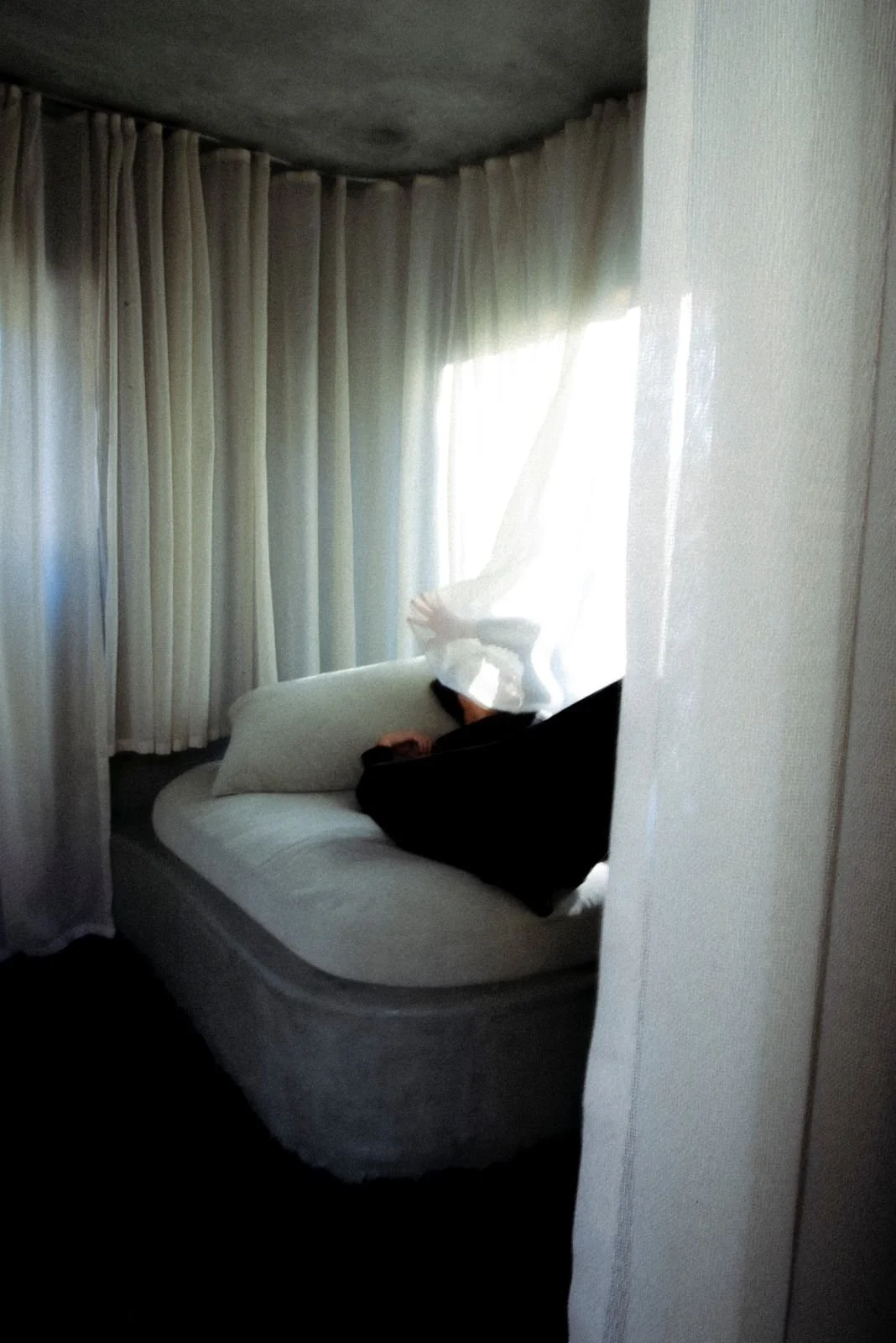
Ascending the outdoor stair to the top floor reveals a space unlike any other—a sculptural sanctuary where materiality and mood take center stage. Clay-like textures create a muddy, grounding atmosphere, forming what could be described as a “Cave Room” or a “Lit à la Duchesse.” A movable drape transforms the space into a cocoon of light and intimacy. Designed for decompression and reflection, the room features a built-in sofa bed, shelving, and a dedicated desk nook with a sculptural chair by Miliou. It is the house’s meditative heart.
At the home’s highest point, the roof deck completes the domestic museum. Divided into two levels, it offers distinct experiences: a lower outdoor living room with daybeds and soft seating for gathering and sunbathing, and an upper yoga deck floating above a botanical garden—a owner’s personal labor of love. Shaded by mature trees, this final space offers quietude and perspective, revealing the home’s full architectural composition—its towers, terraces, and layers—as one looks back from above.
Part of the house complex is a fully integrated ADU, conceived as the owner’s creative studio. Bright and calming, it features sun-drenched wood tones, a custom whitewashed plywood and limestone desk by Balcony, and another suspended plant sculpture by Jiahao Peng acting as a vegetal canopy. The space is adorned with artworks and sketches from the owner’s private collection, cultivating a mood of openness and flow. Text description by the architects.