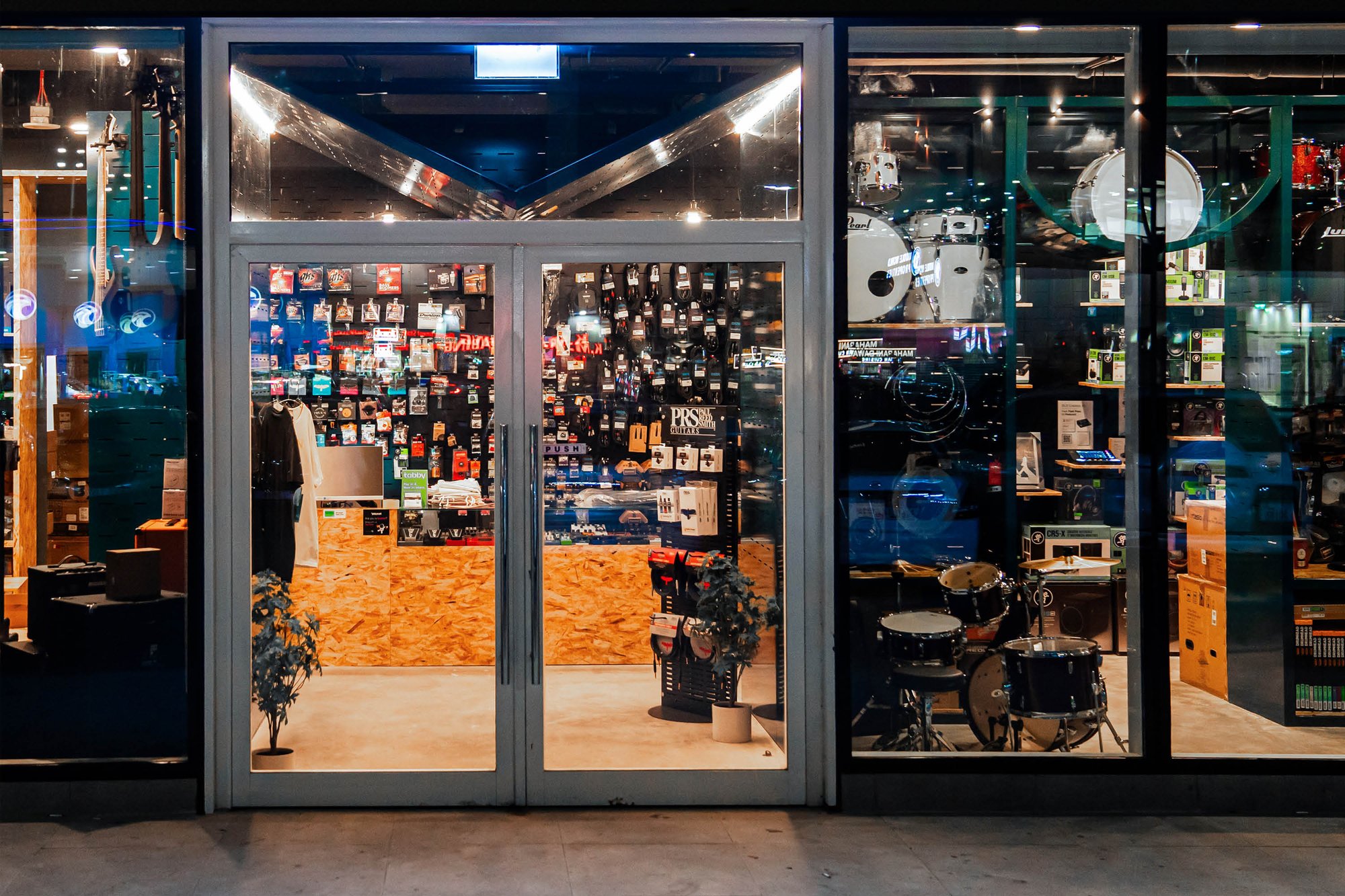
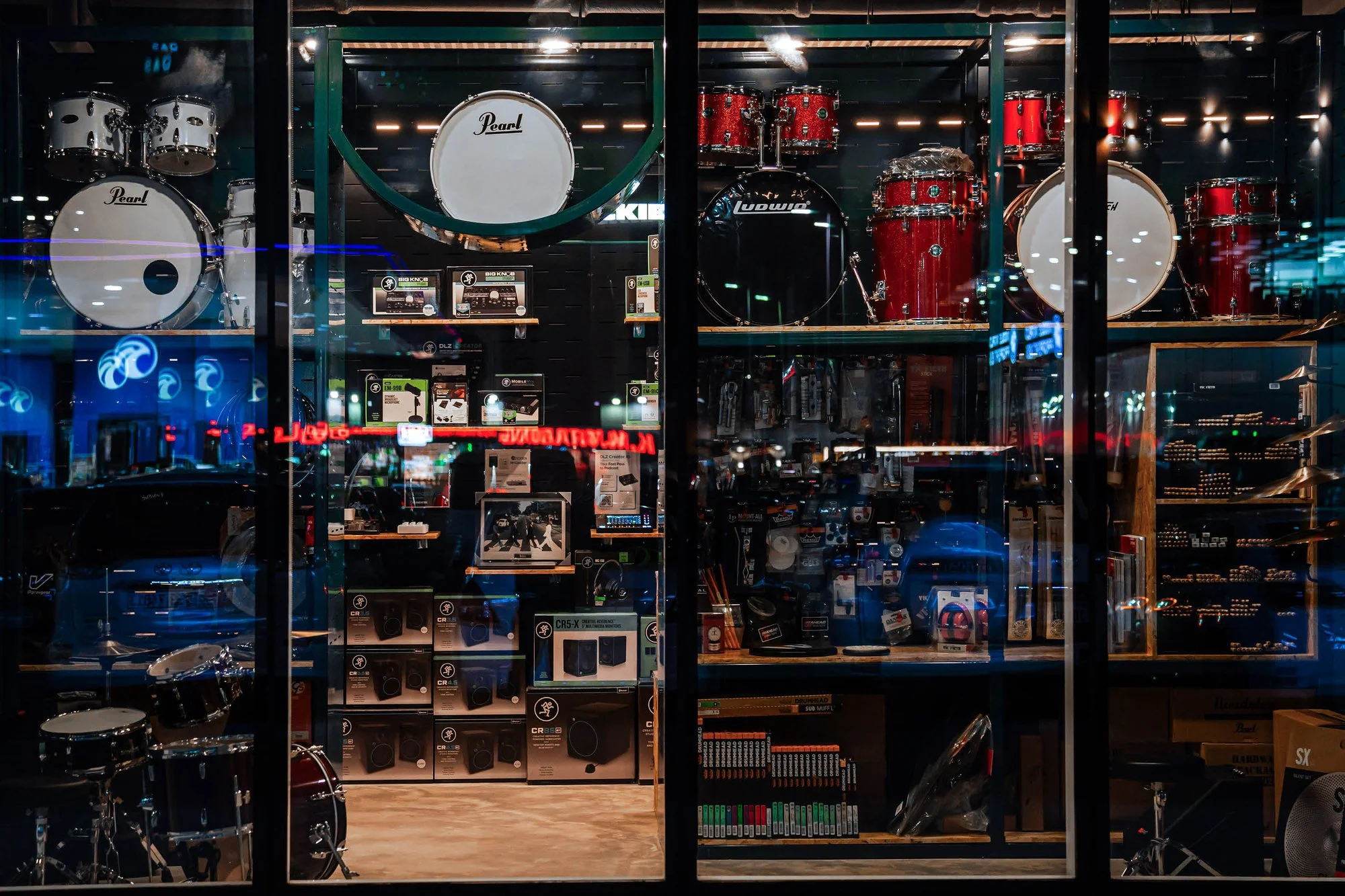
Melody House examines how architecture can act as both background and protagonist, an attempt to disappear while maintaining a strong presence, creating a contradictory experience. The brief called for a space that could meet the functional demands of retail while accommodating the immersive, often personal act of engaging with music. Our response was a spatial narrative built around deliberate contrasts: openness and enclosure, exposure and privacy, lightness and weight, stillness and movement.
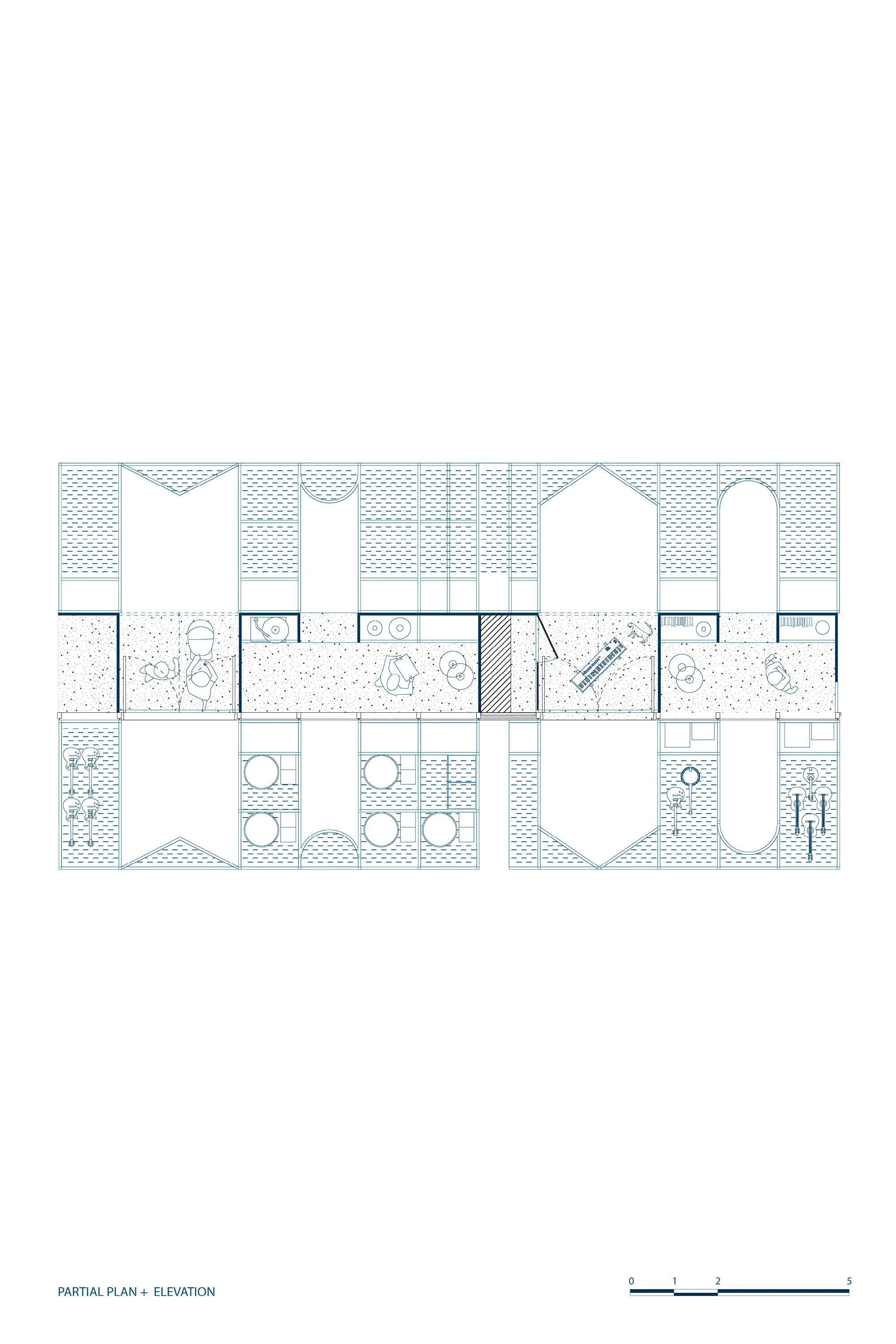
At the center of the project is a custom-fabricated blue perforated metal shell that functions as both a sculptural object and a spatial organizer. Positioned along the front façade, this element creates a threshold that defines circulation and marks transitions between zones arranged by instrument type, forming distinct musical neighborhoods. The perforations allow visual permeability while maintaining a sense of privacy, softening boundaries without closing them entirely. The choice of blue references the store’s branding and gives the space a clear identity within a predominantly neutral palette.
The interior layout avoids singular partitions. Instead, a continuous linear element contains a sequence of alcoves defined by shifts in material, variations in lighting, and four distinct thresholds that act as strong architectural markers. This arrangement enables visitors to experience the space at different rhythms, similar to how musical compositions can alternate between continuity and interruption.
Staff areas are integrated across the various zones, allowing instruments to establish the atmosphere while positioning staff as observers of the interactions that occur within the space. This integration reflects the belief that customer engagement and operational functions should exist as part of a single, unified environment.
The design creates a layered experience in which visitors can feel grounded yet open, guided yet free. It mirrors the inherent contradictions of music, which can be structured yet emotional, technical yet experiential. By embracing ambiguity and resisting conventional retail models, the store becomes more than a point of sale. It is a place for listening, learning, and connection. Text description by the architects.