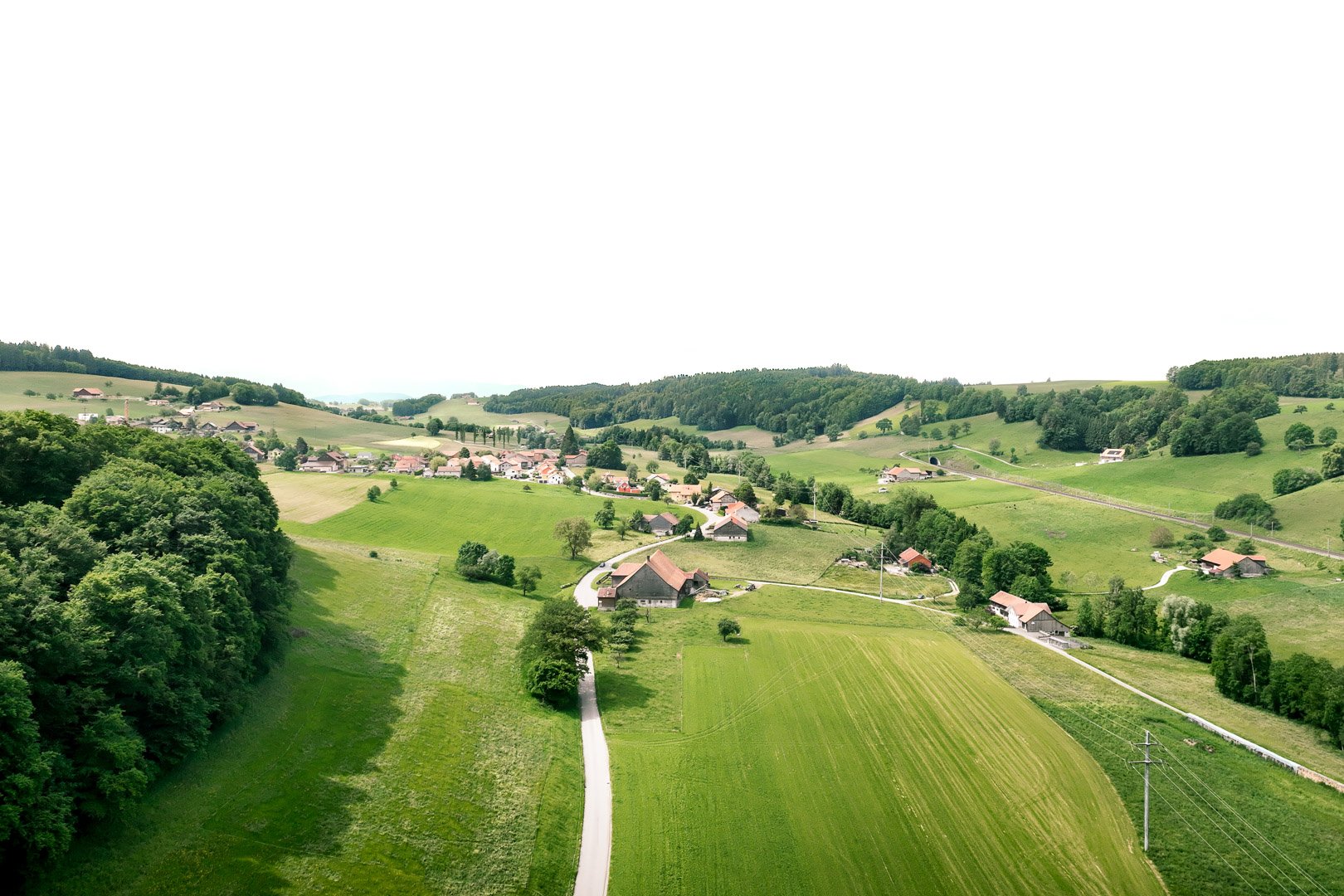
Creation of an apartment in the rural section of a farmhouse in Praz-Pury.
The project involves the creation of an apartment in the partially disused rural part of a 1930s farmhouse. Fribourg farmhouses of that era housed both living quarters and farm functions under one roof. The rural section typically consisted of two stables flanking a central passageway — the fourragère — a through-space used for feeding livestock, which also benefited from additional height allowing hay to be stored above the stables.
The intervention follows a logic of continuity, enhancing existing spatial qualities. The apartment is laid out on the ground floor across two structural bays: living areas occupy the former fourragère, benefiting from its through-space and generous height. Bedrooms and the bathroom are housed in the first stable, while the second continues to serve its original function as stabling for the owner's horses. The roof space remains dedicated to hay storage.
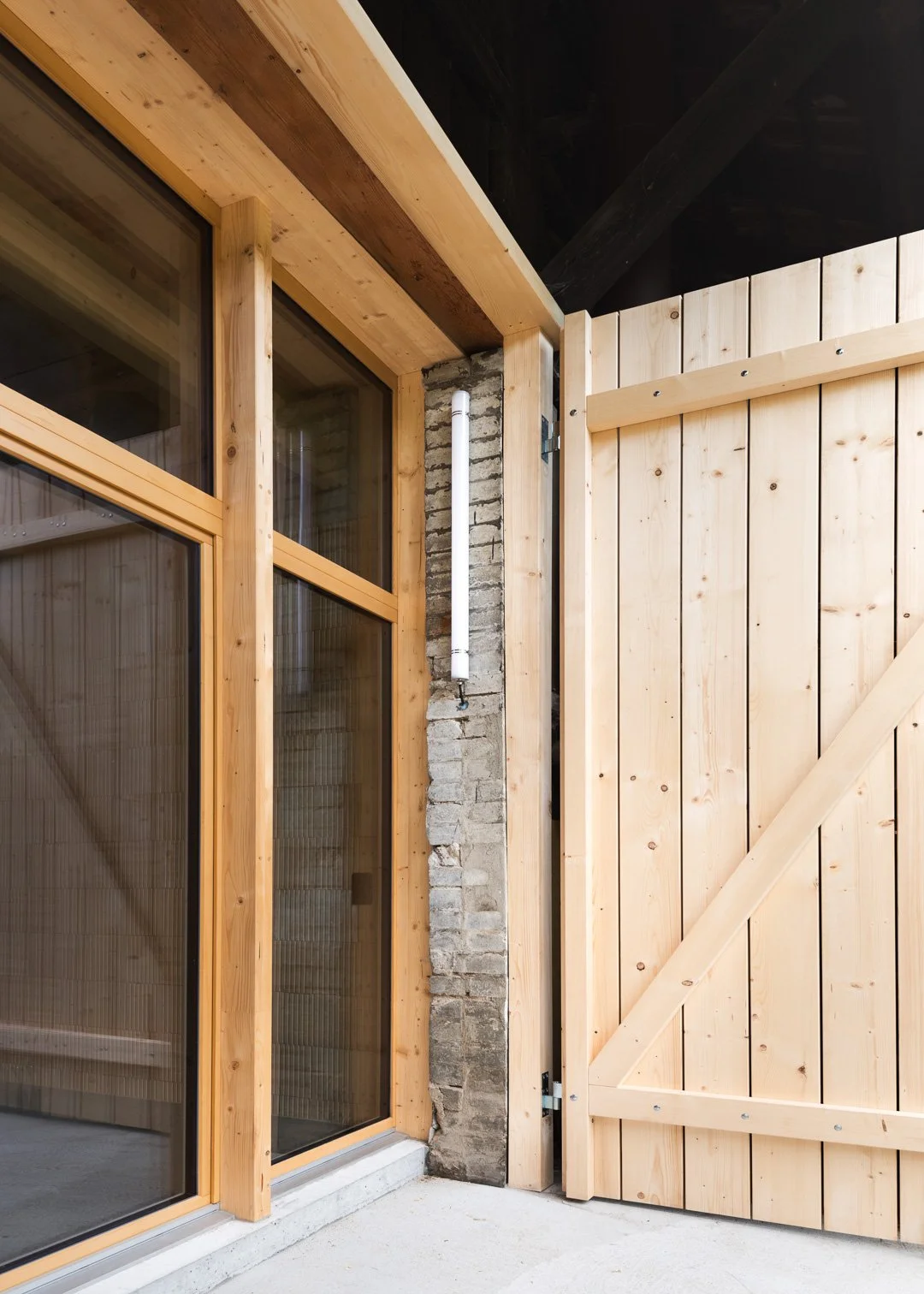
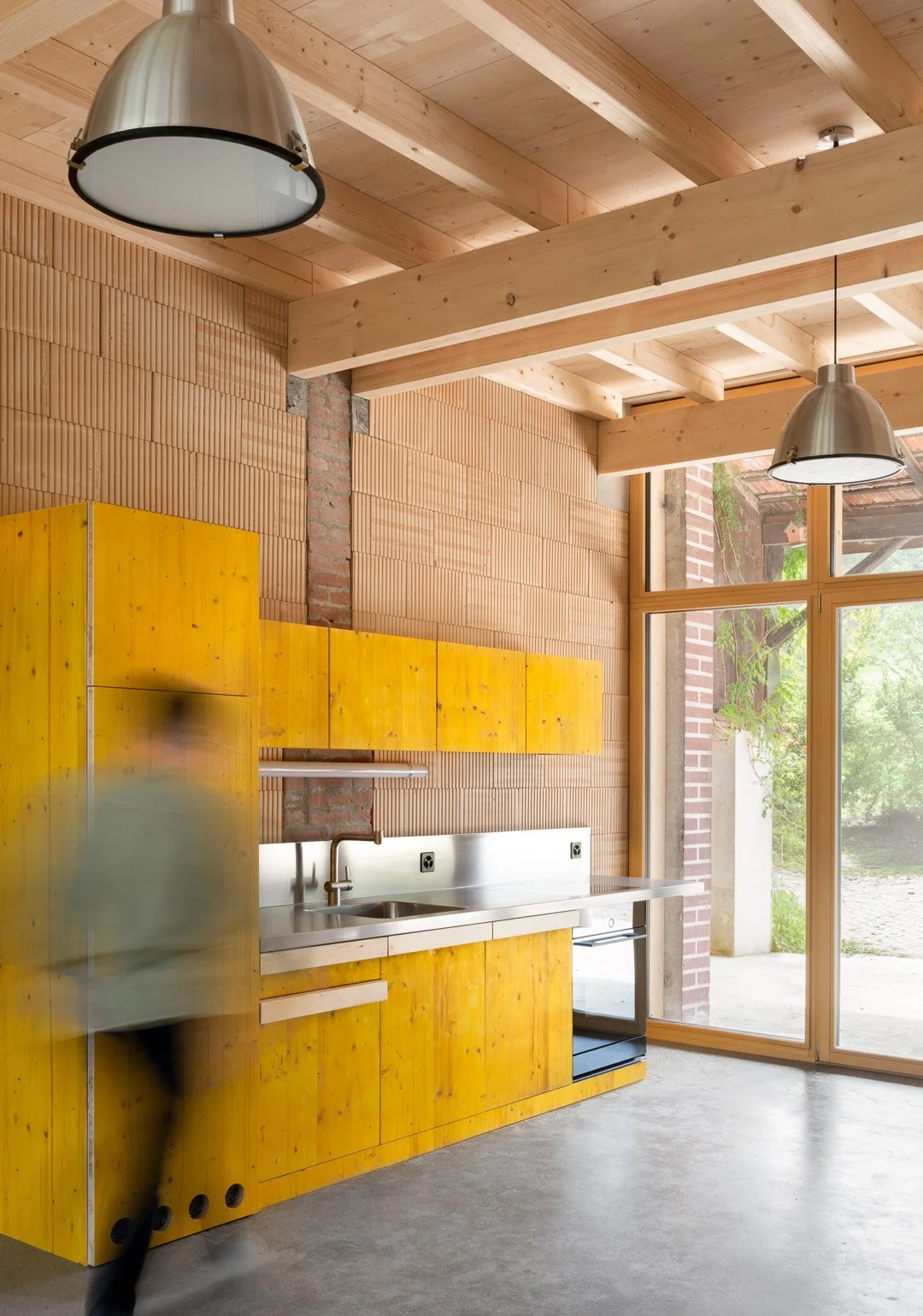
As with the original masonry, new walls are built in exposed terracotta brick, but differ in dimension, clearly distinguishing contemporary additions. Inspired by H. Döllgast’s work at Munich’s Pinakothek, this approach allows to maintain the building in a state of “completeness” without concealing the historical rupture between original construction and intervention. The choice of other materials also reinforces the continuity of atmosphere: a raw trowelled screed recalls stable floors, while the kitchen, made from formwork panels, echoes the ad hoc constructions often found in farm outbuildings. Text description by the architects.