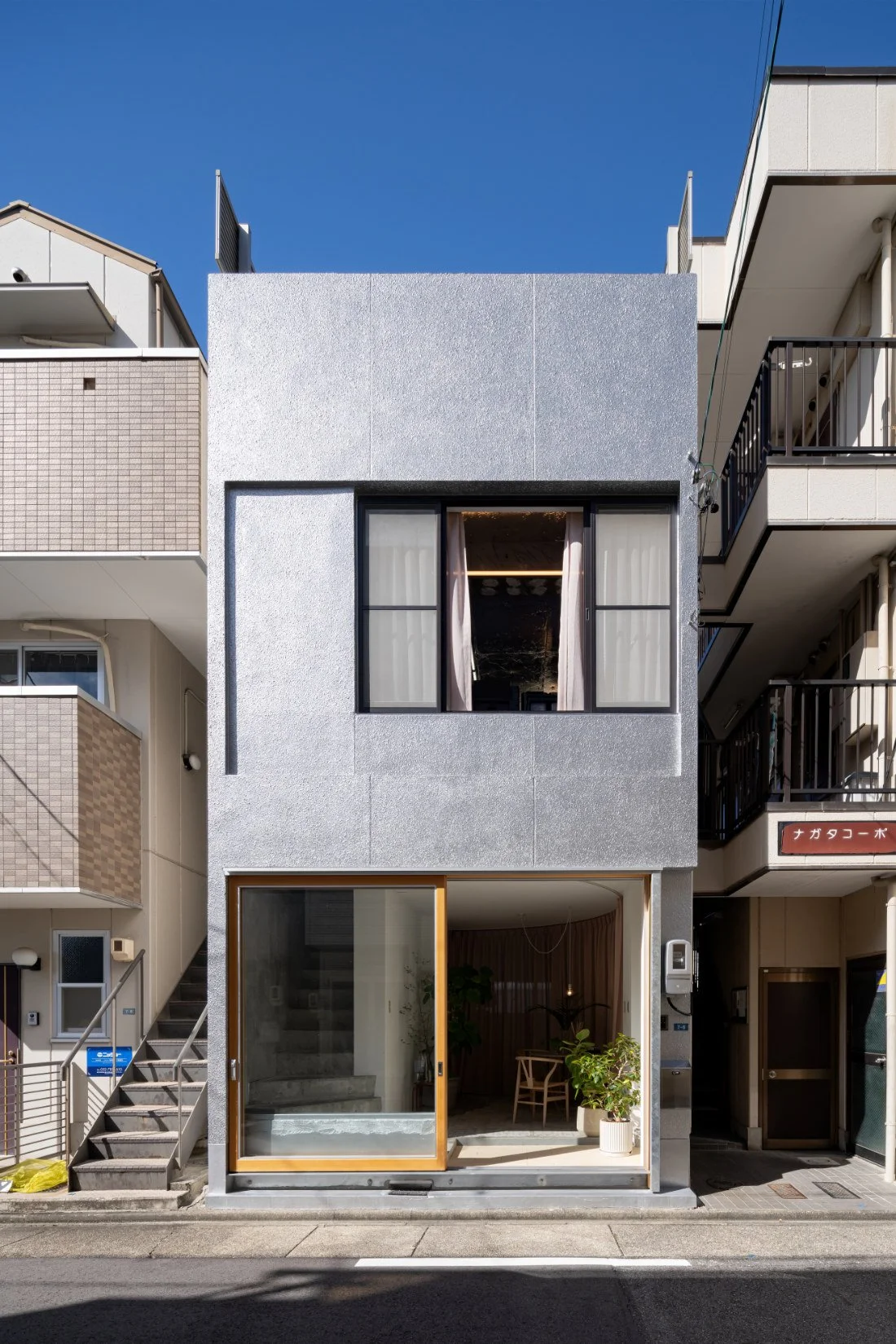
The small two-story reinforced concrete building was renovated into an office.
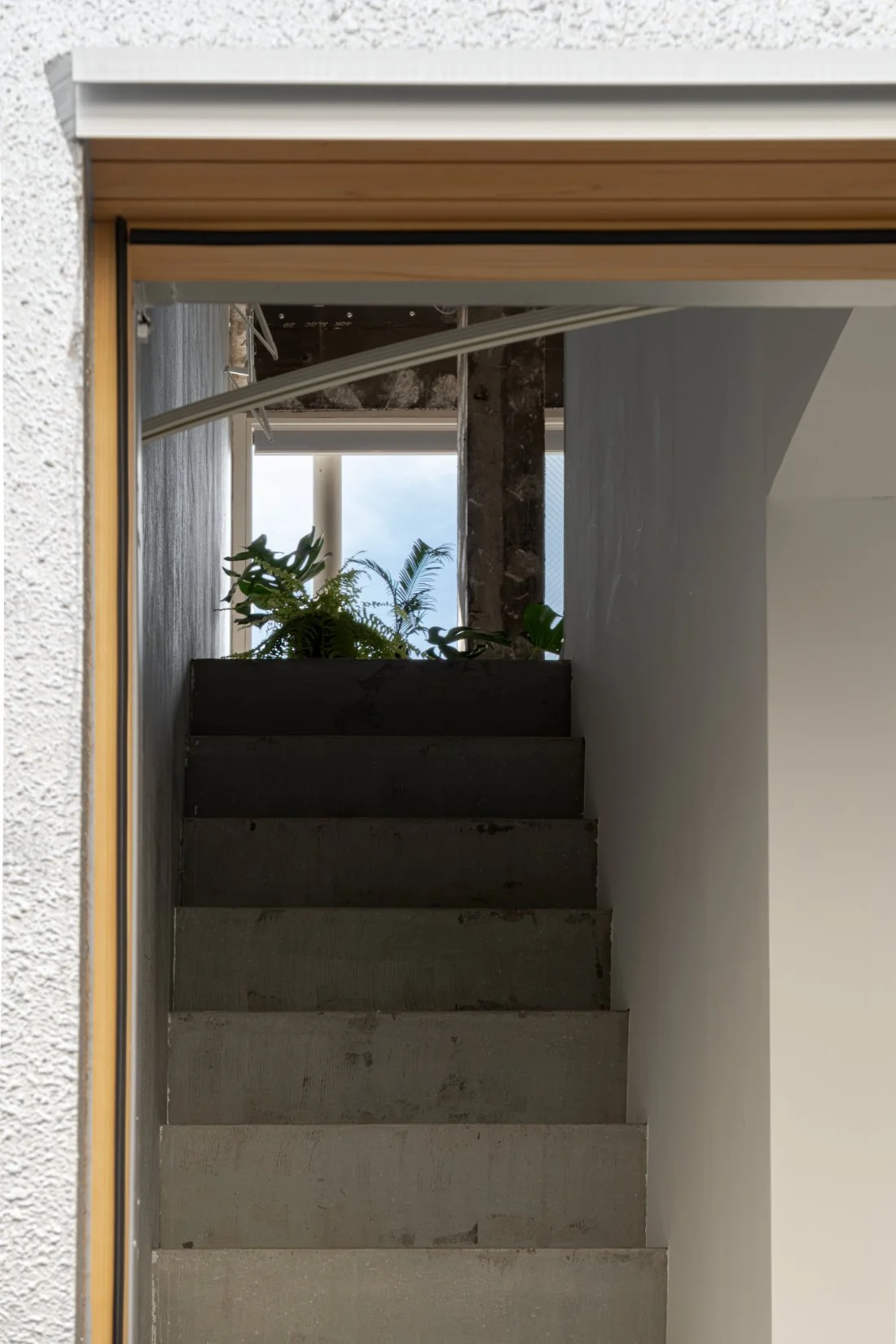
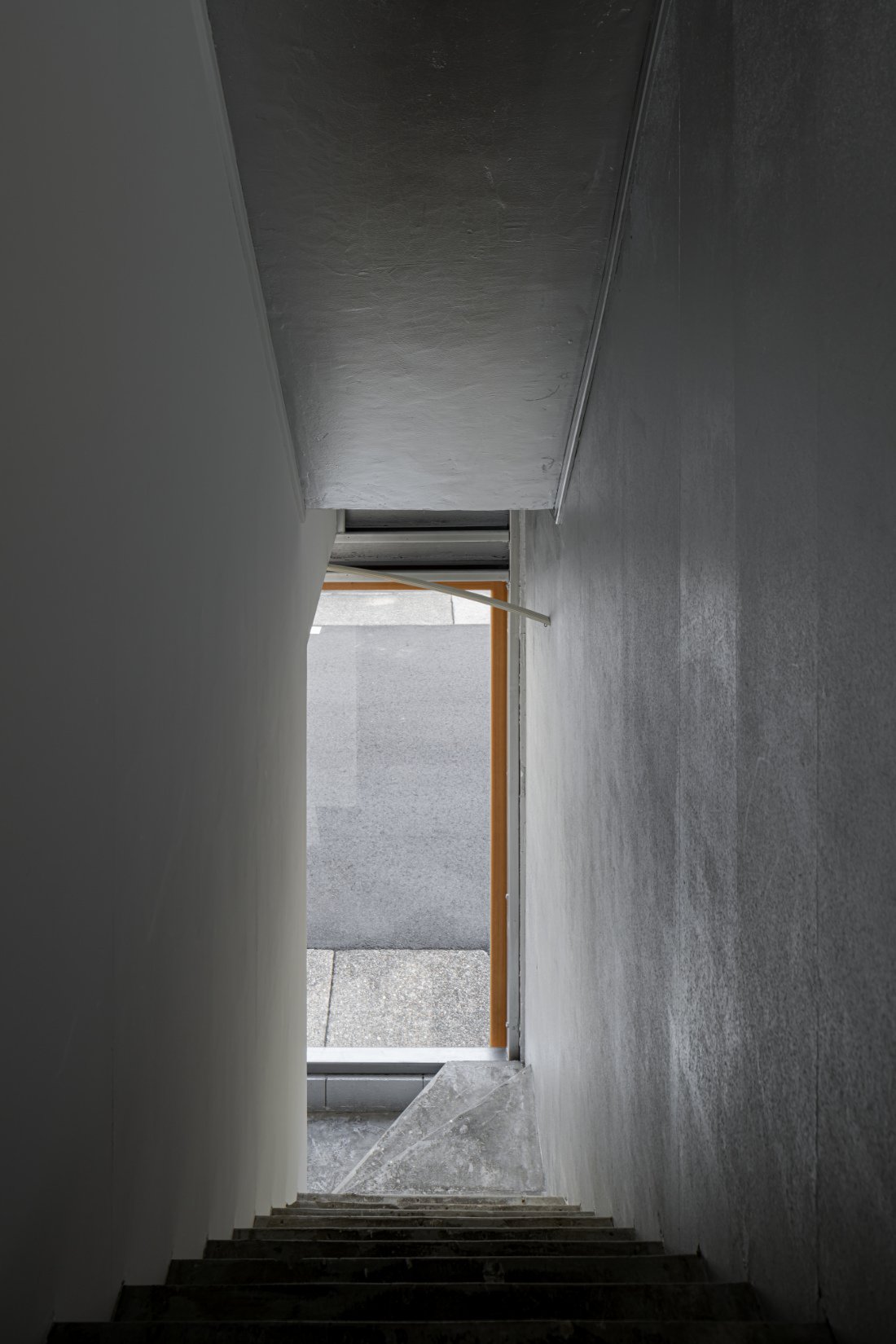
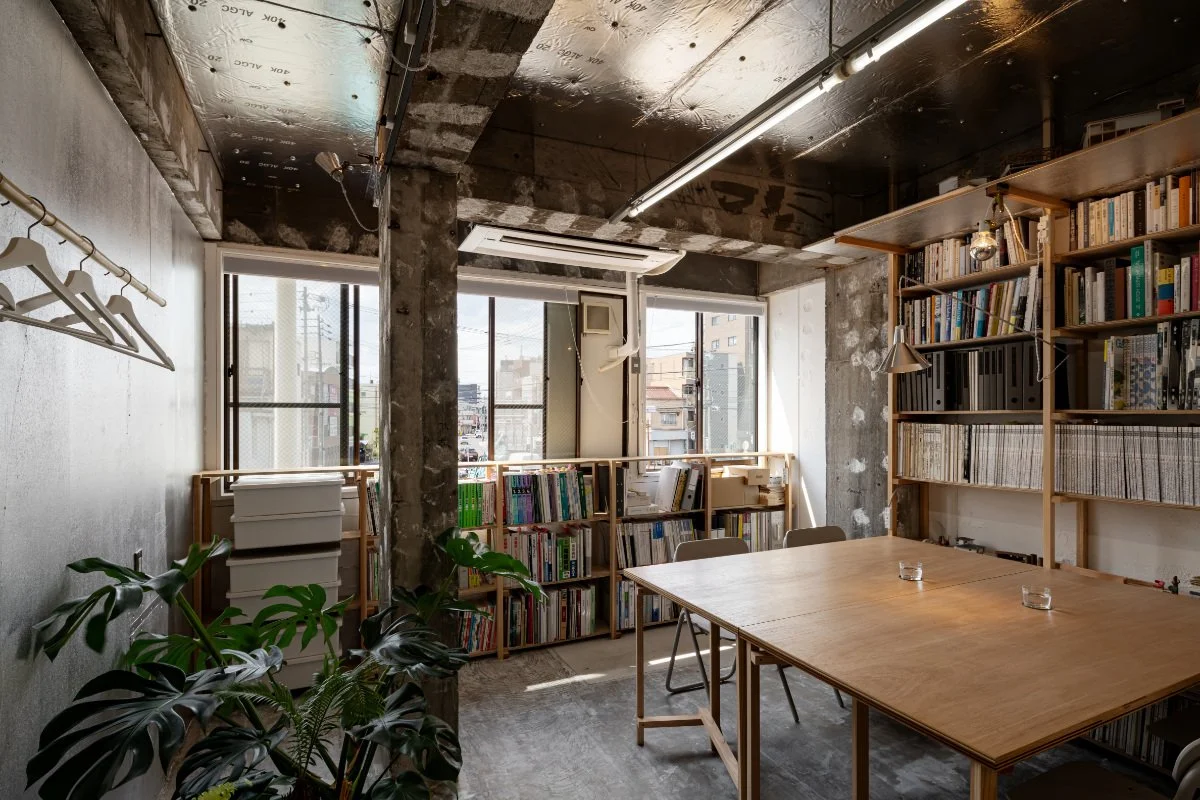
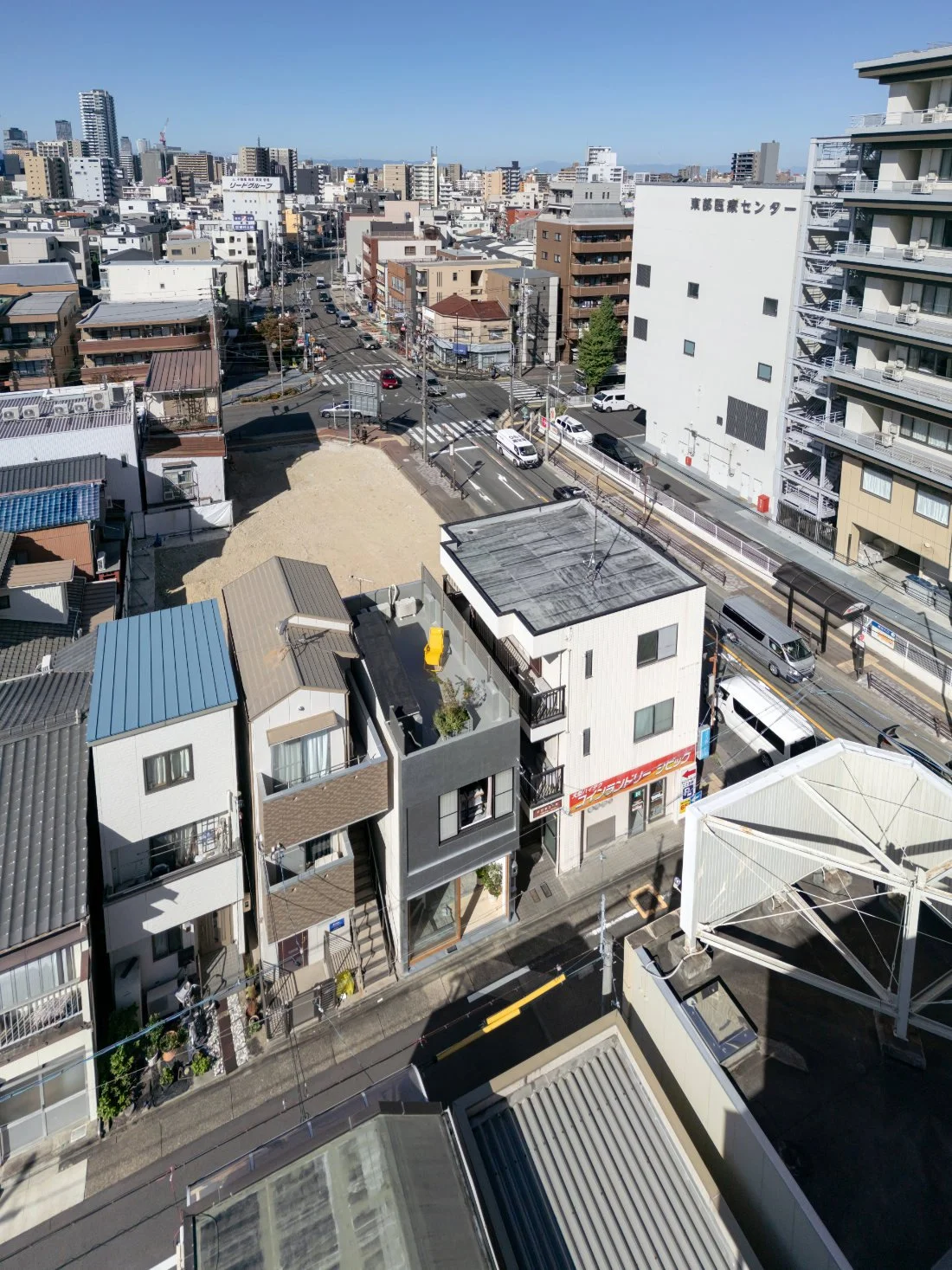
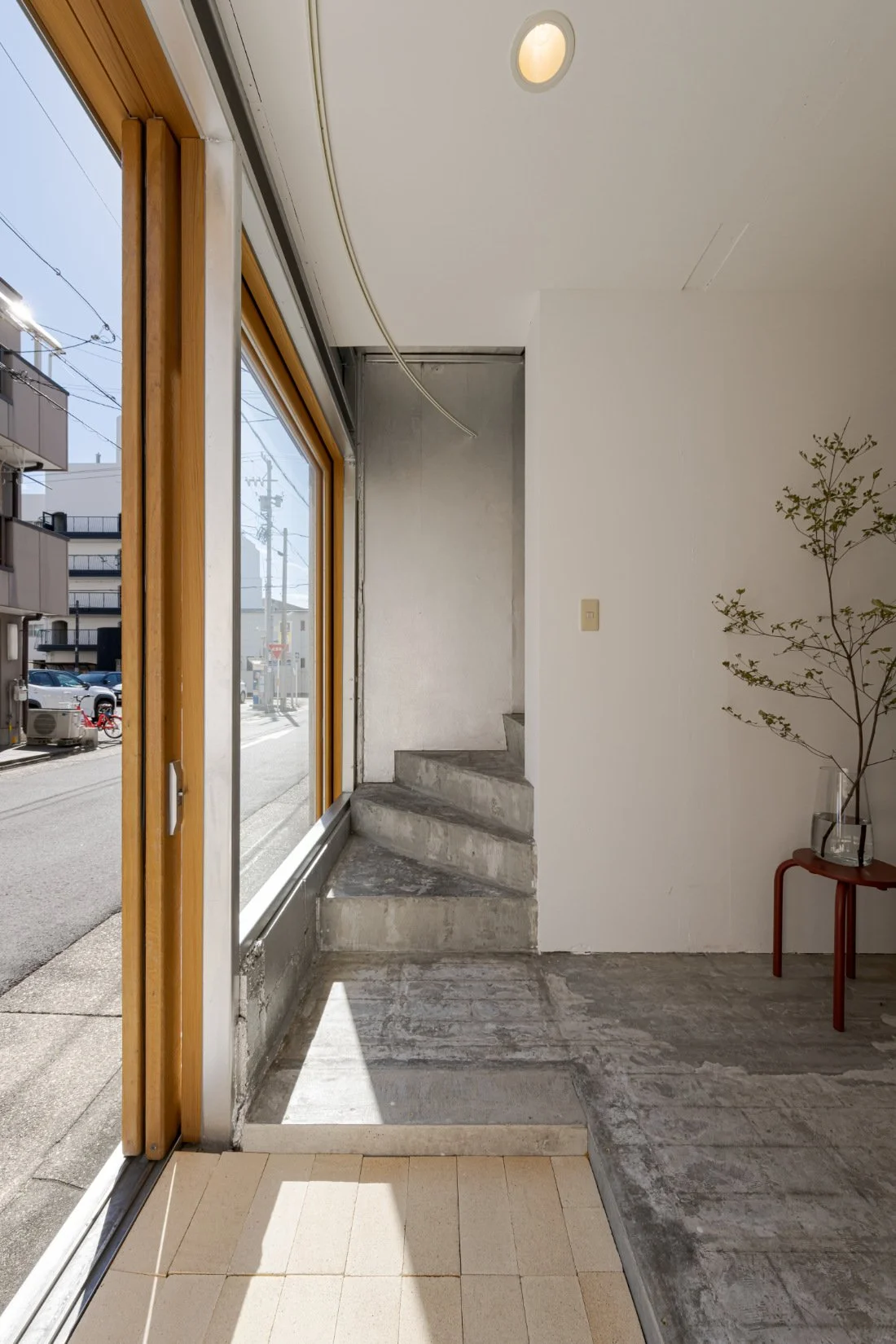
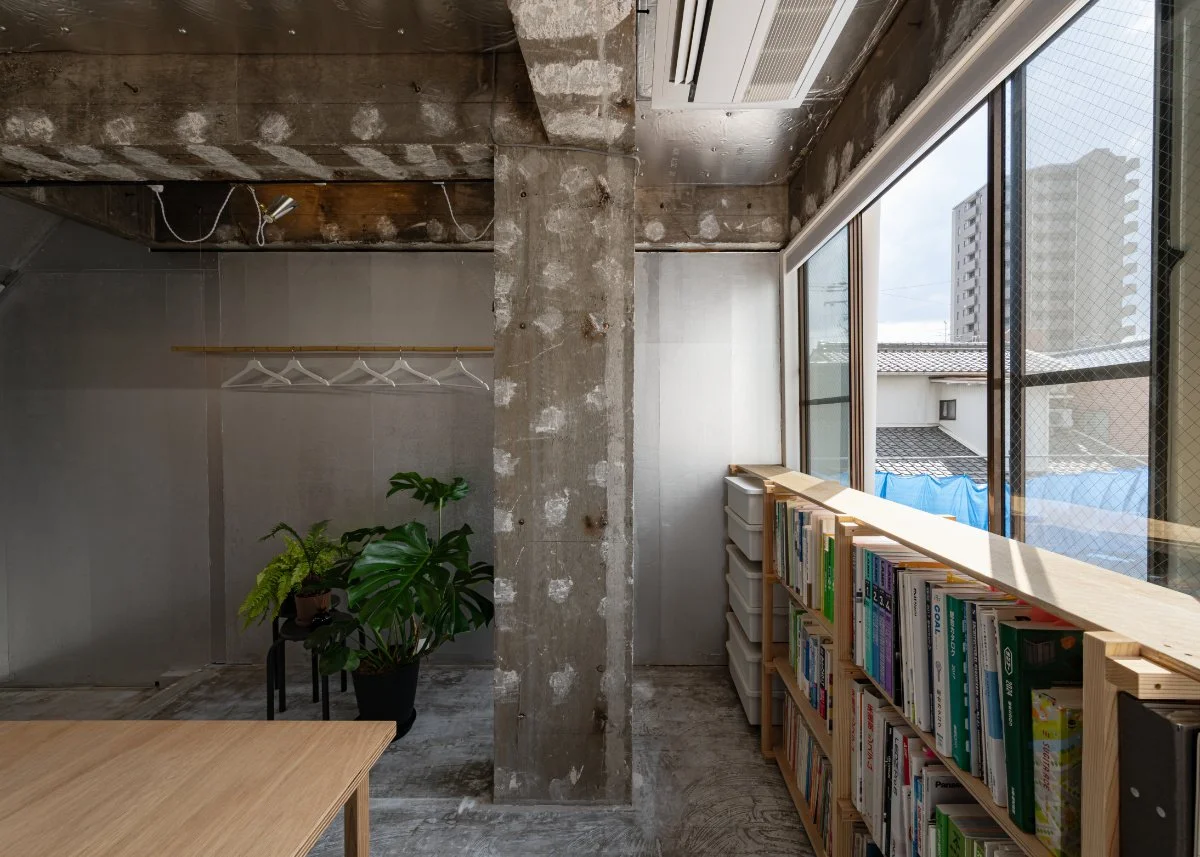
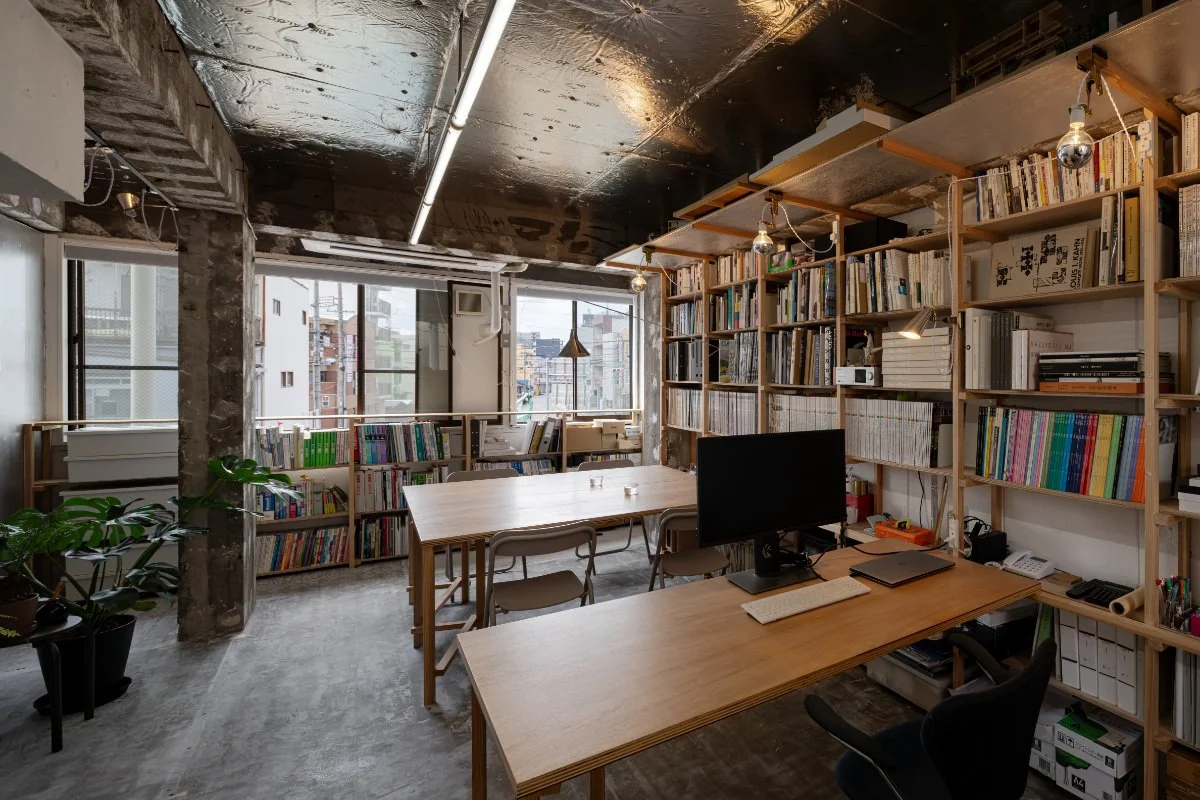
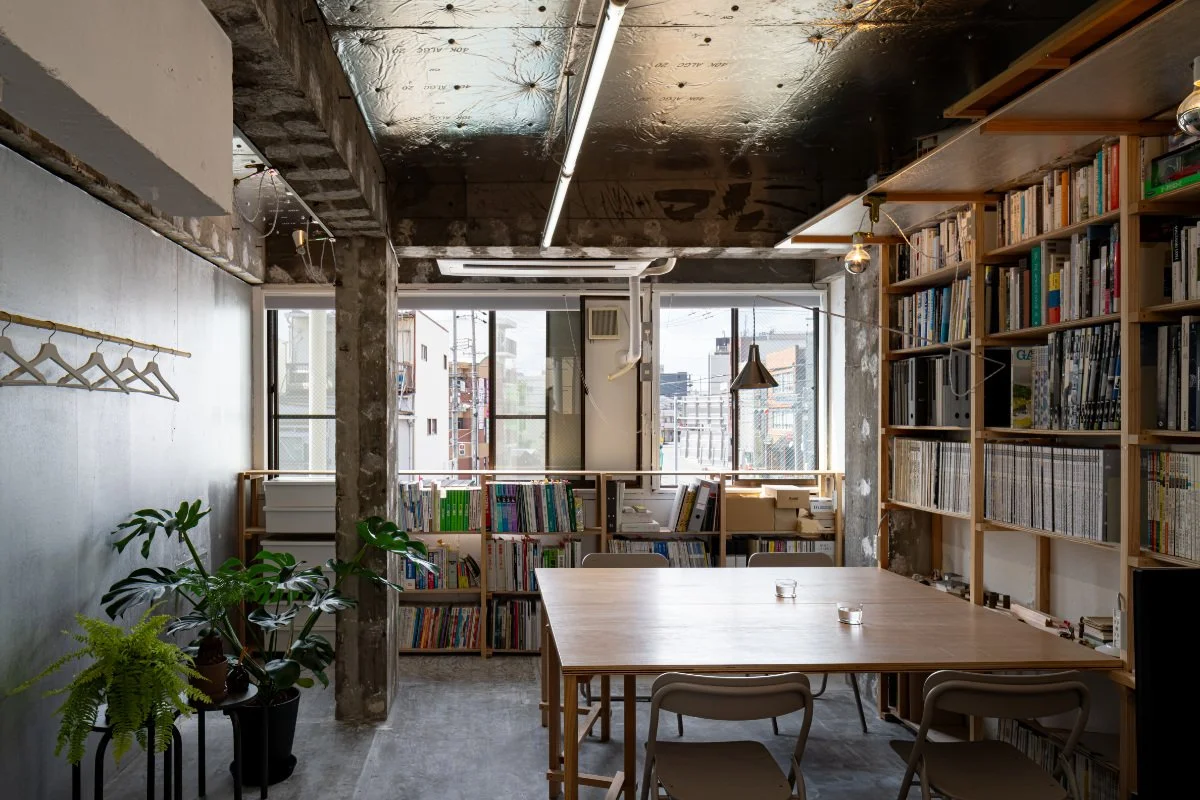
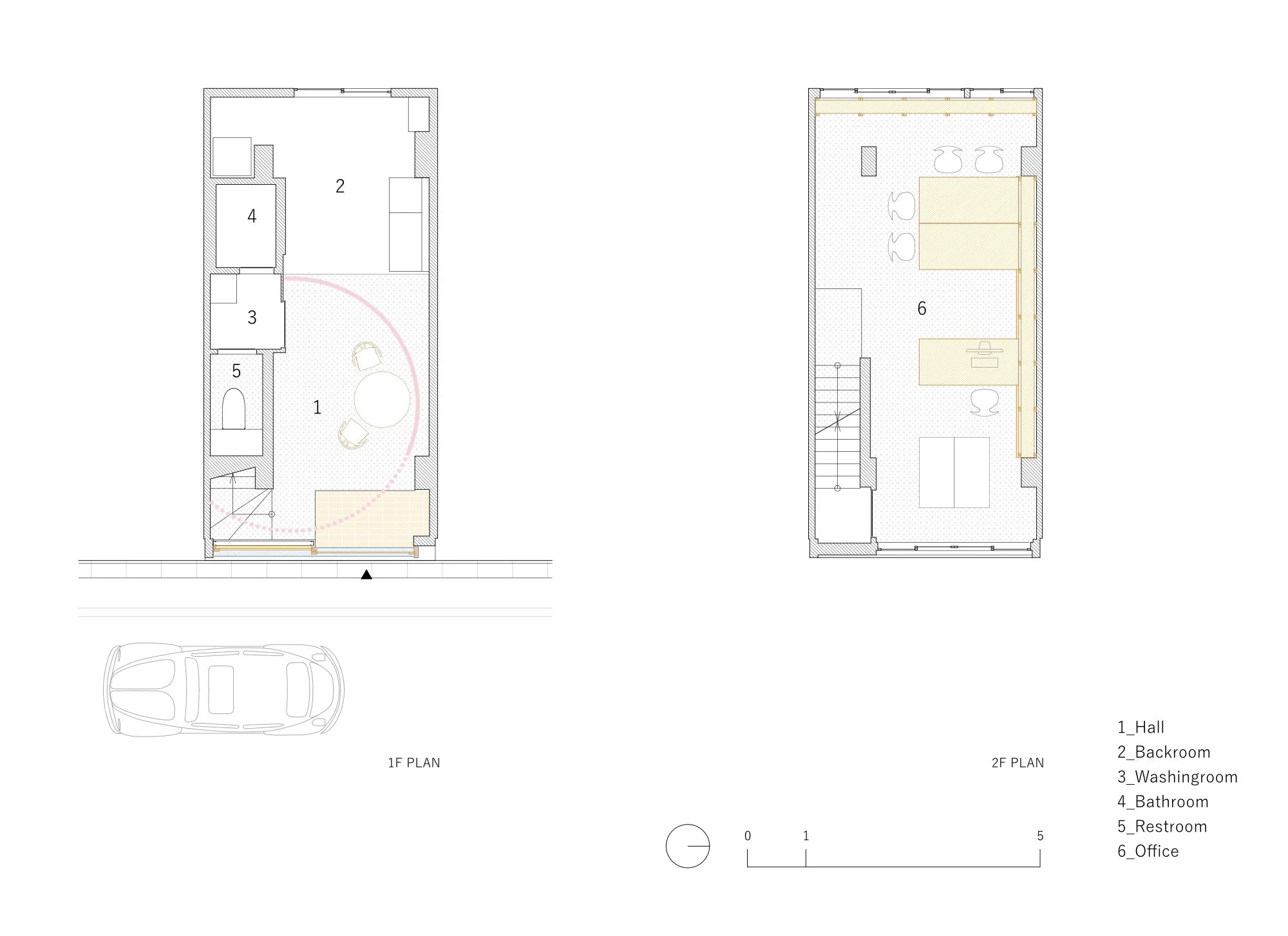
The front faces a 6-meter-wide road, while the rear faces a shopping street across a parking lot. Ascending the stairs from the street-side entrance on the first floor, the windows on the rear side of the second floor offer a clear view across the shopping street toward the downtown area.
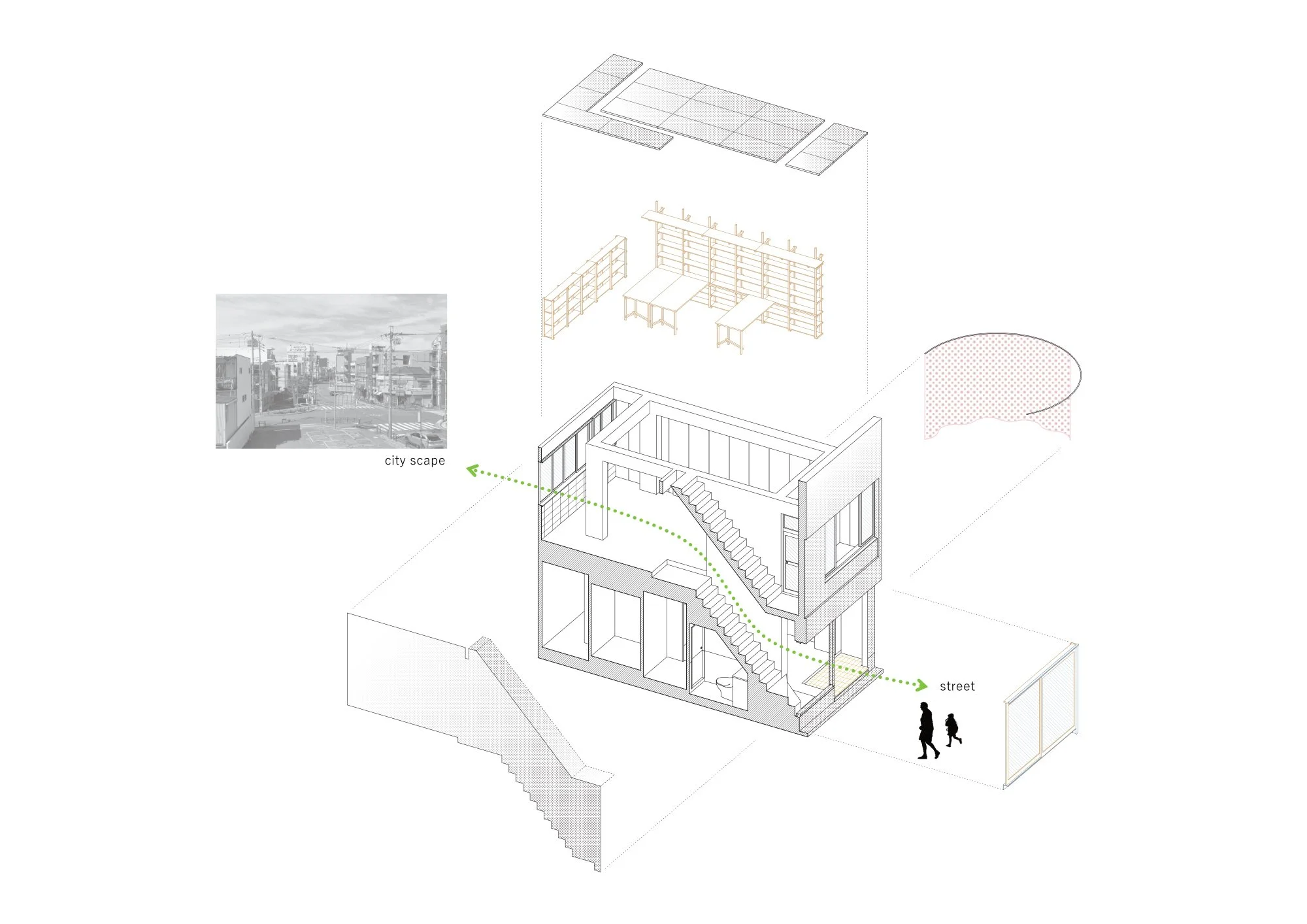
The architecture was designed to create an experience connecting the street to the cityscape.
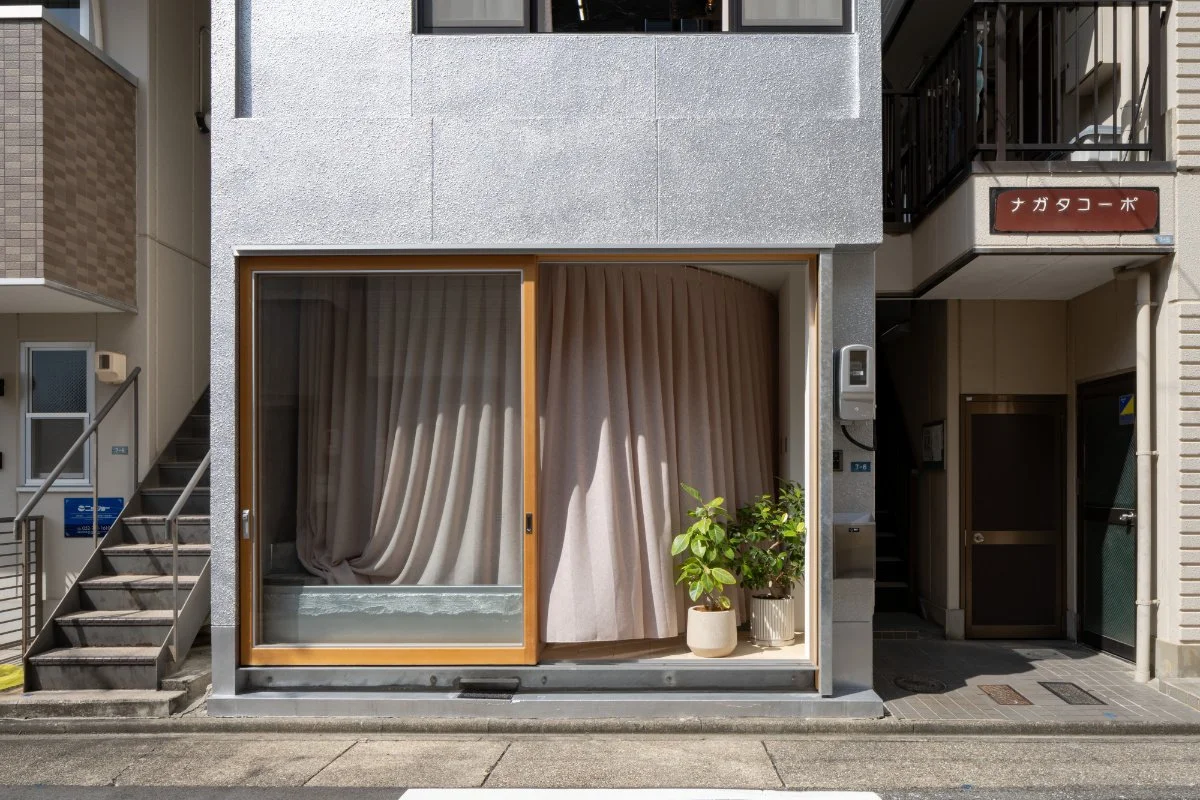
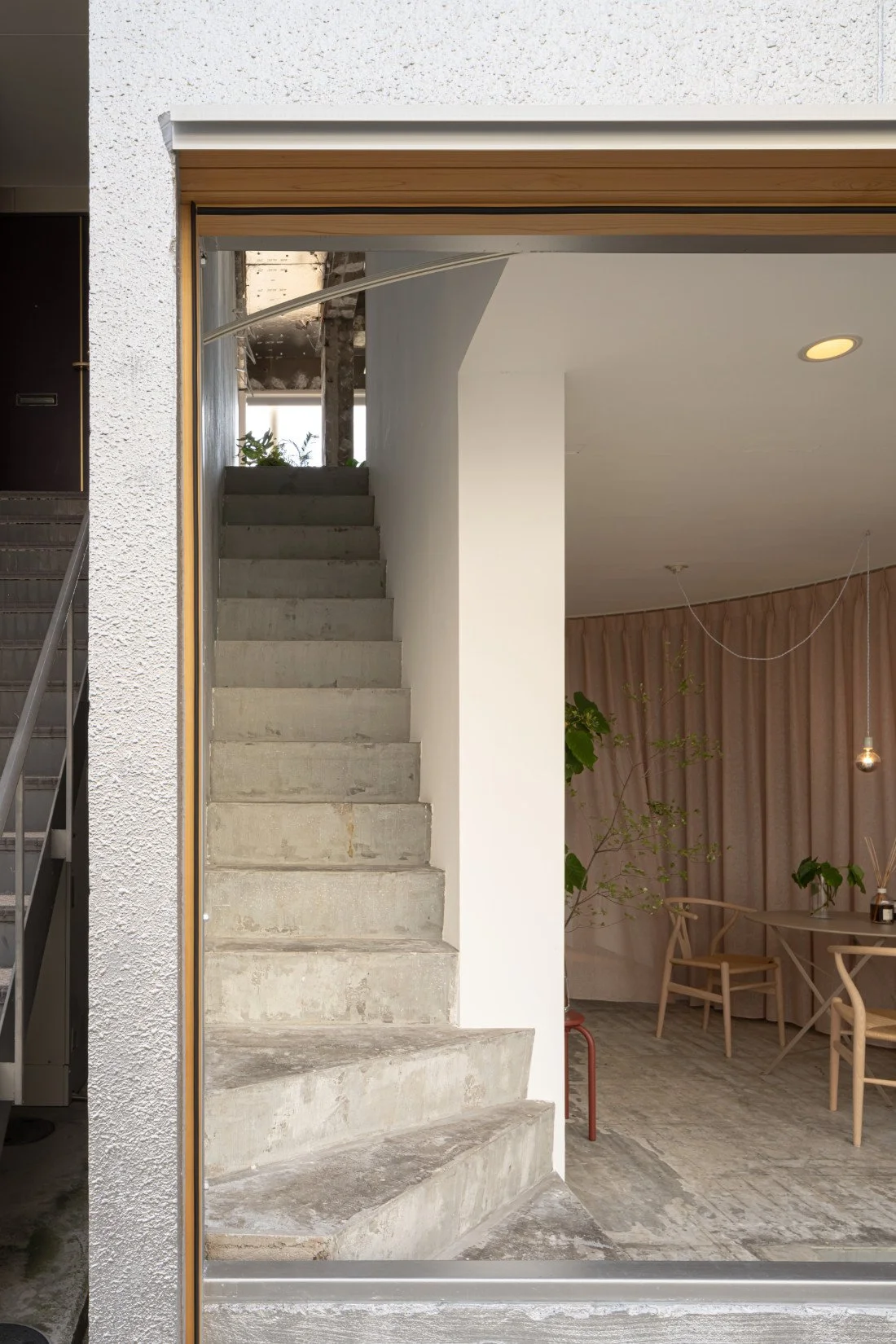
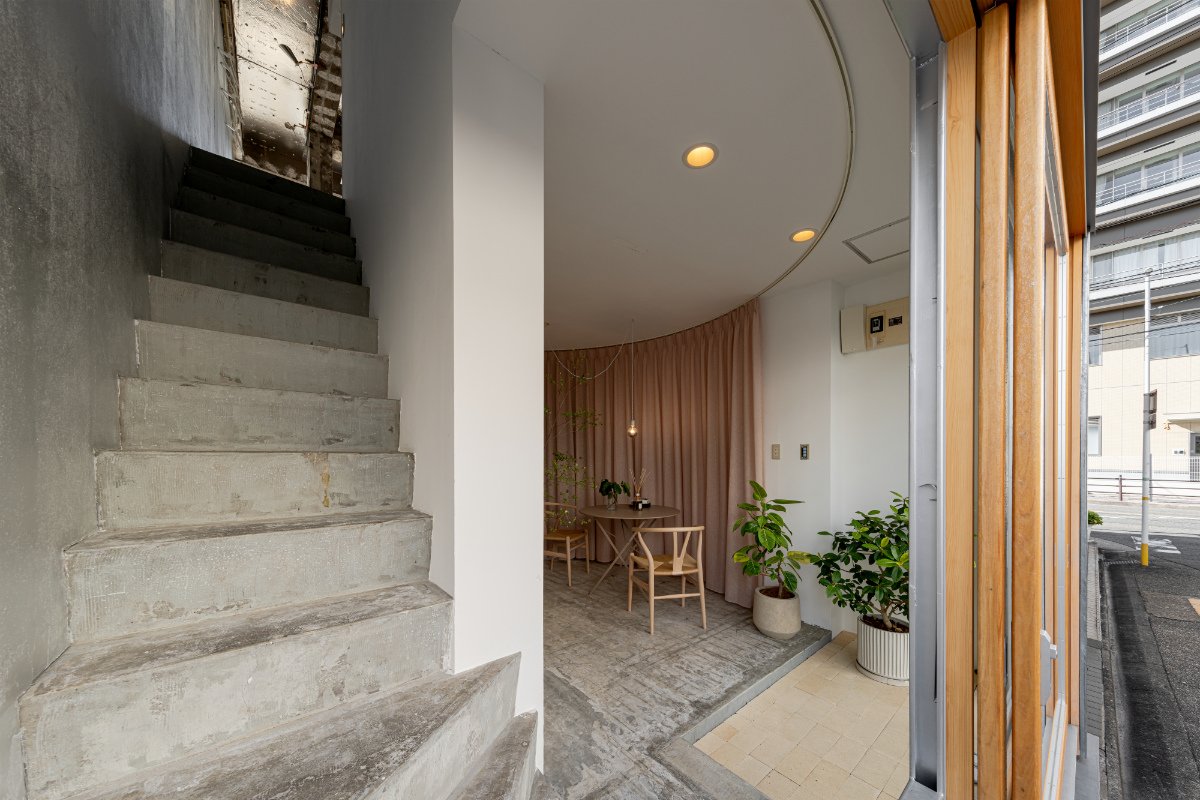
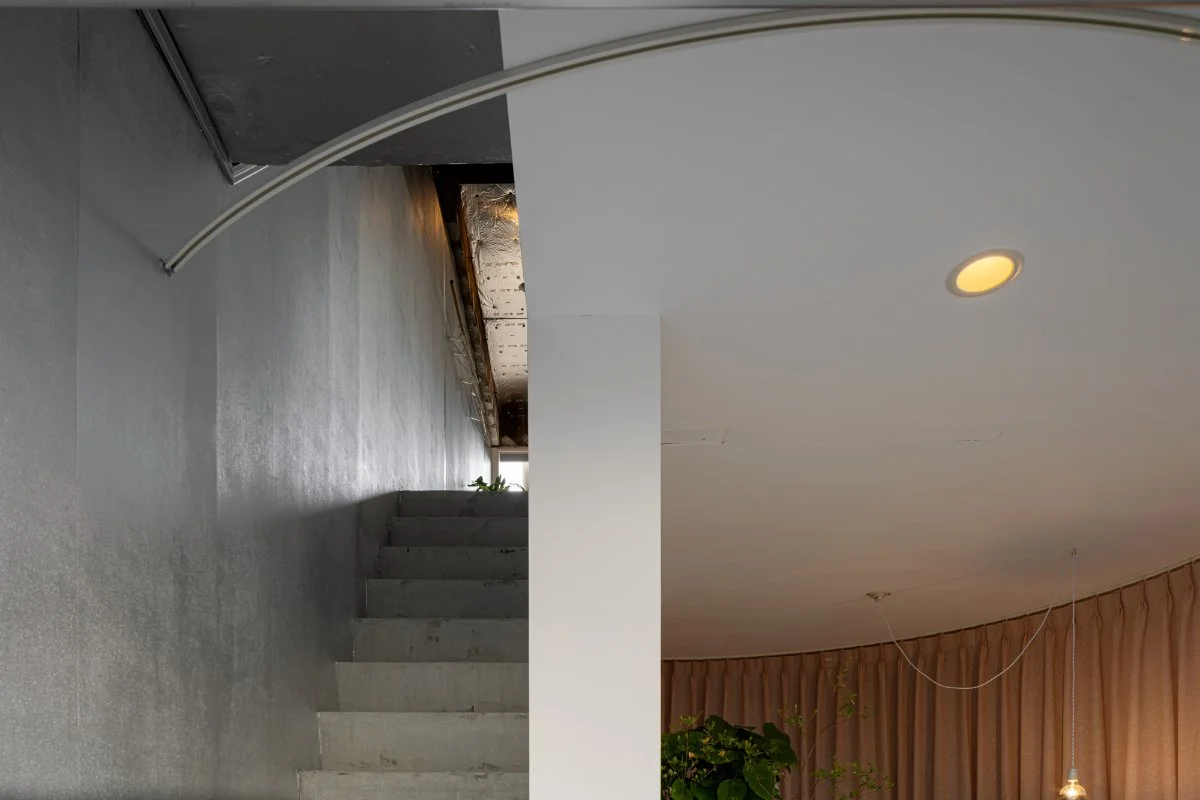
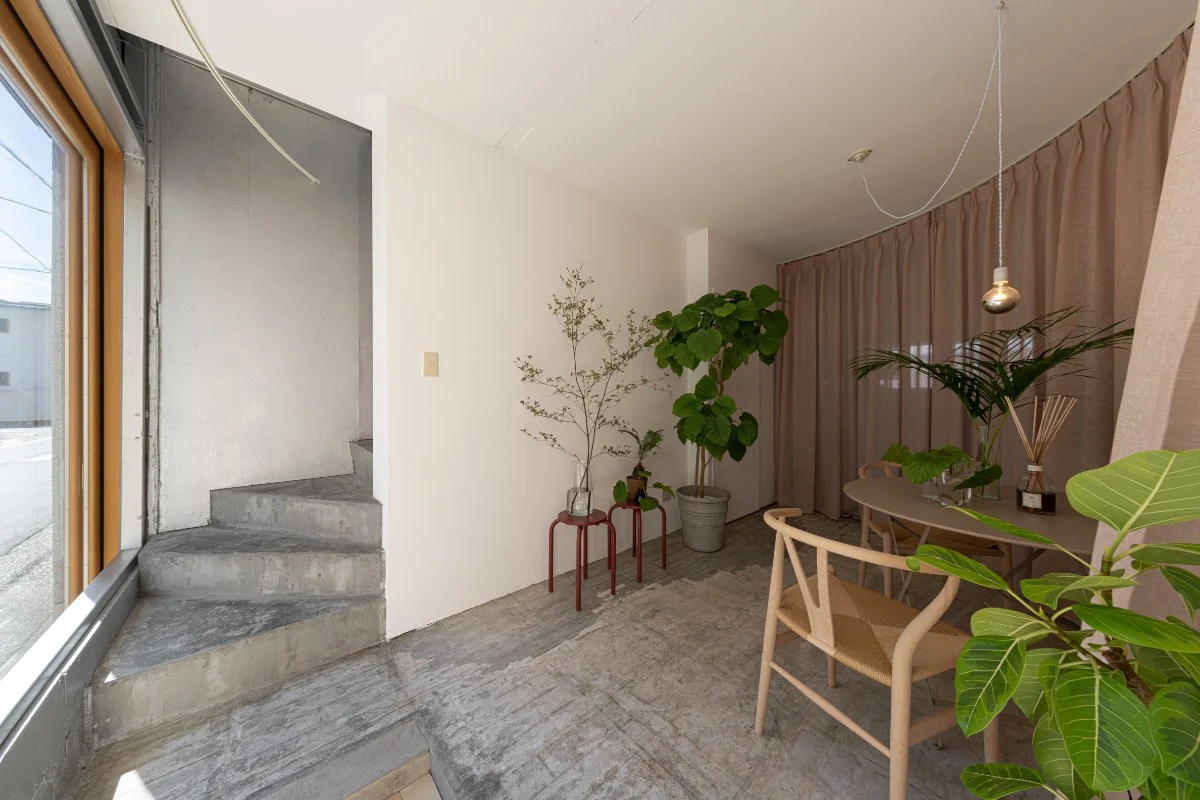
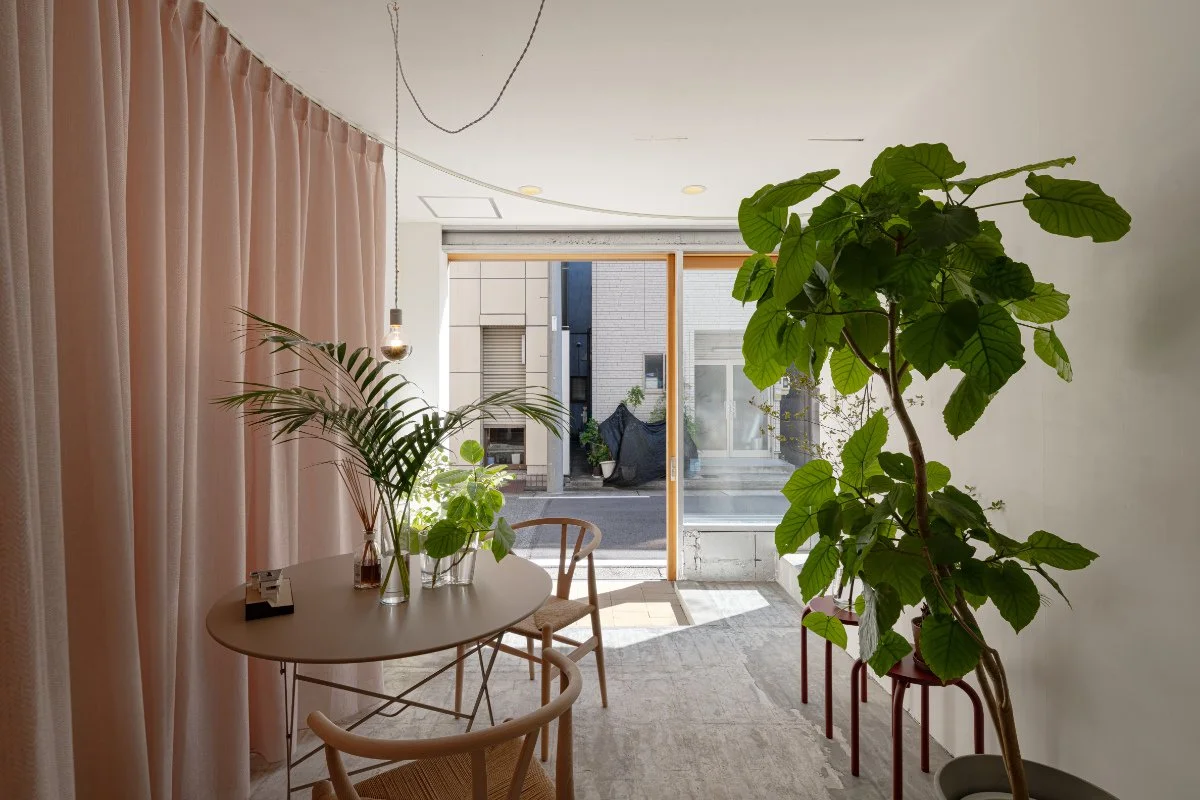
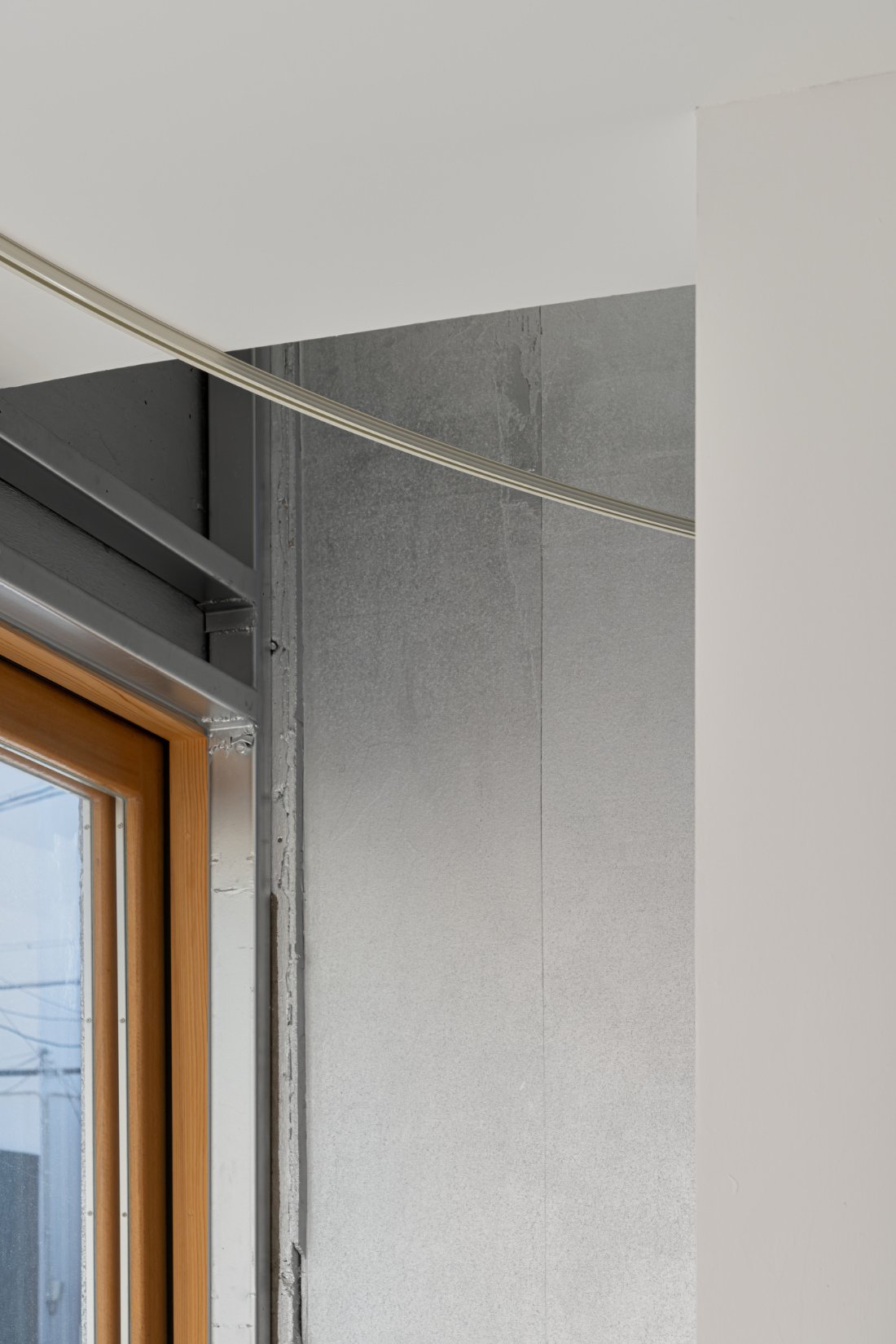
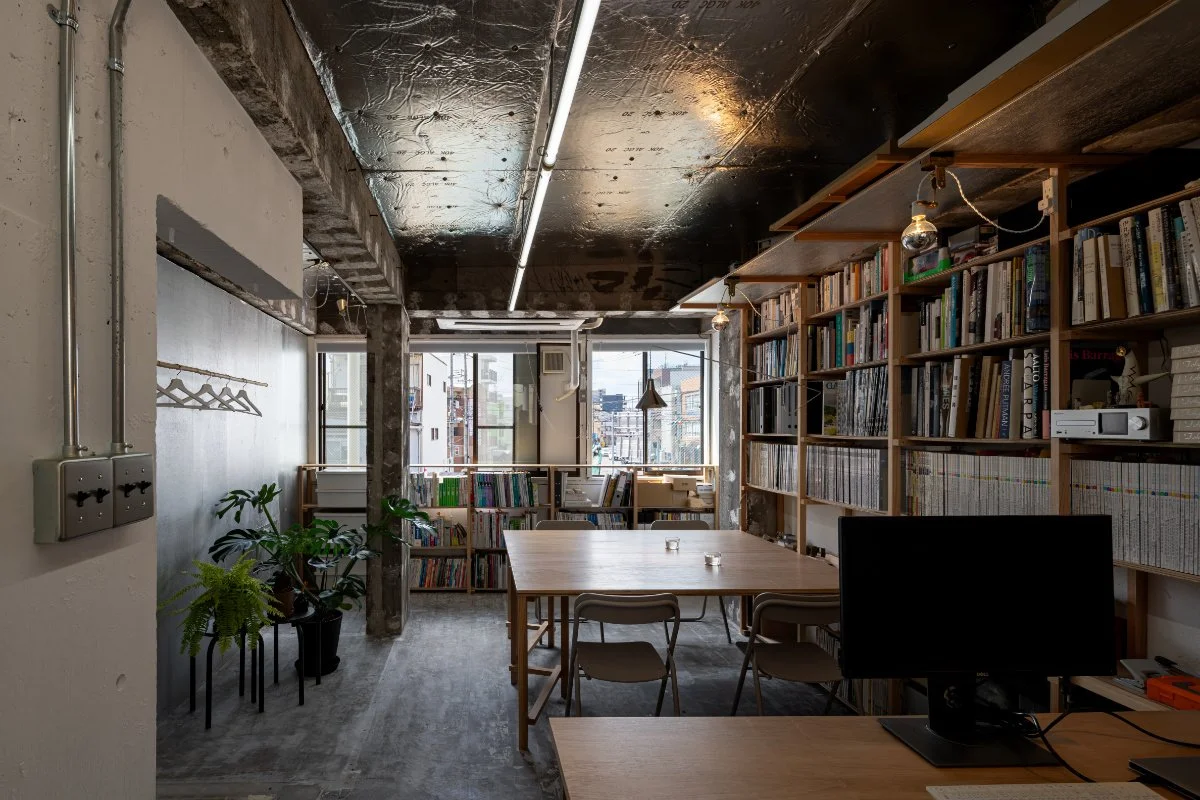
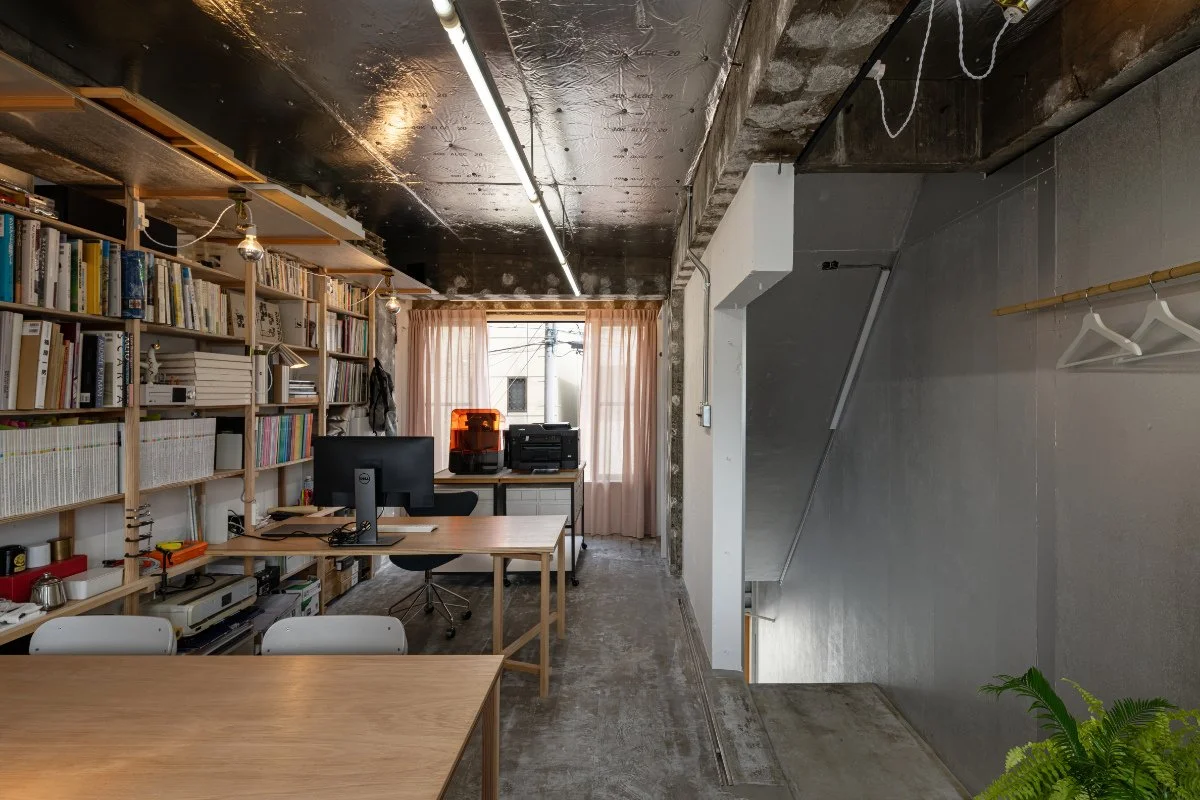
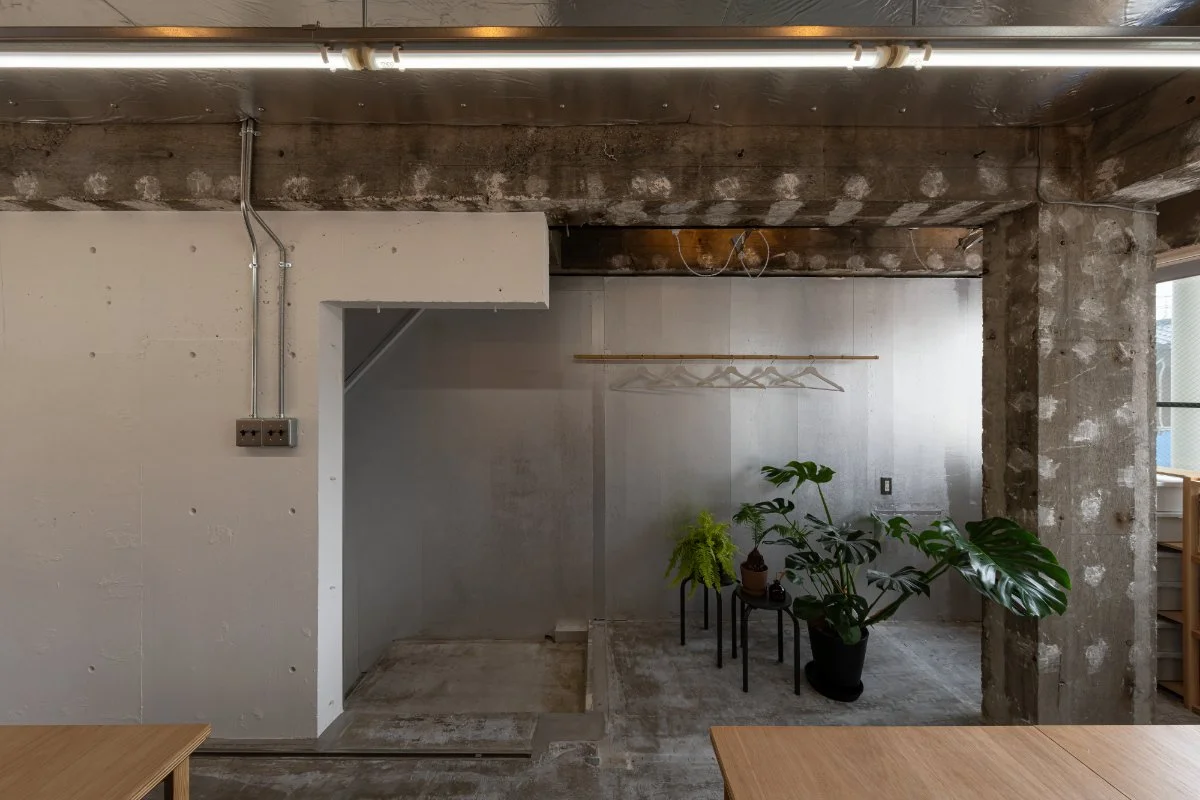
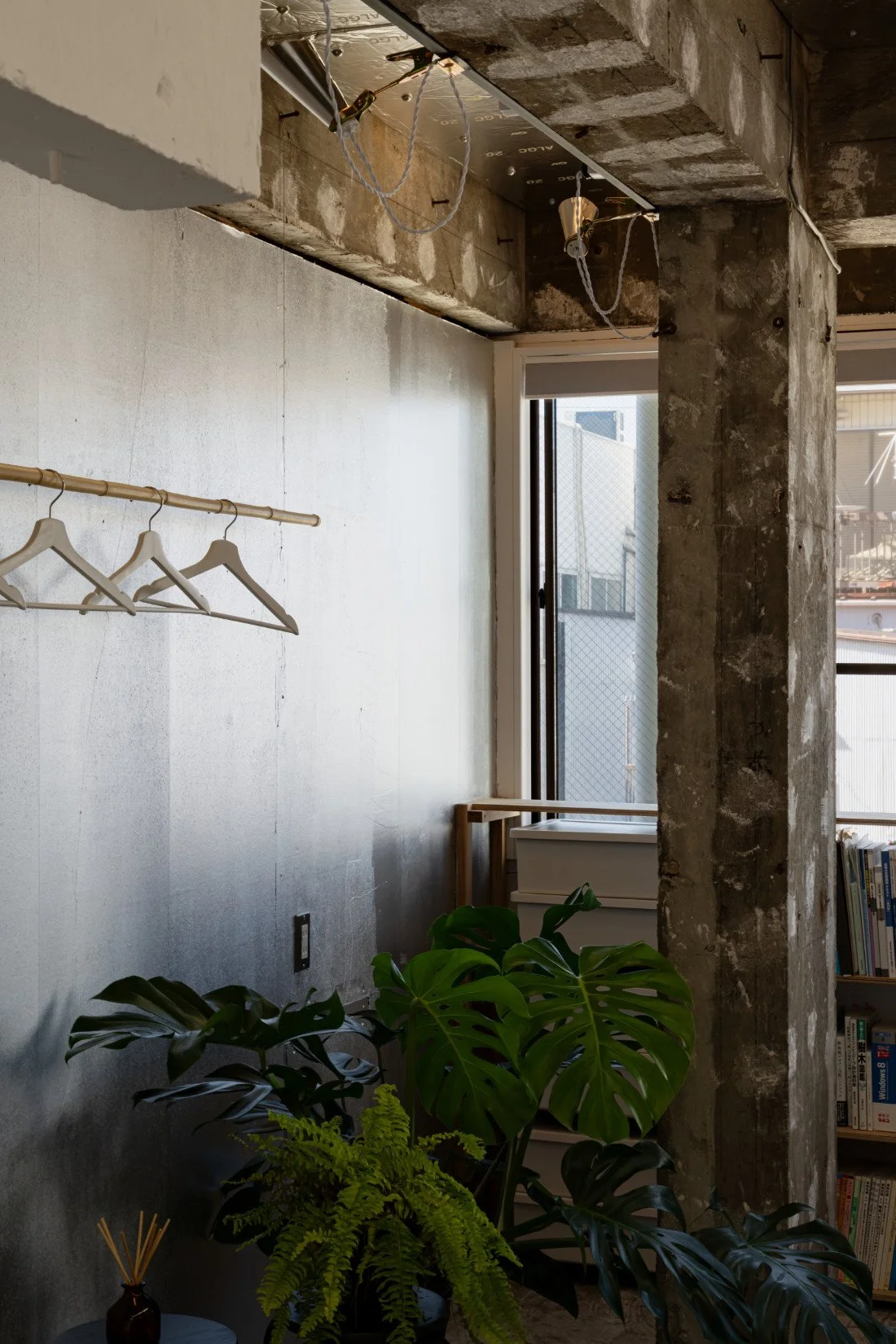
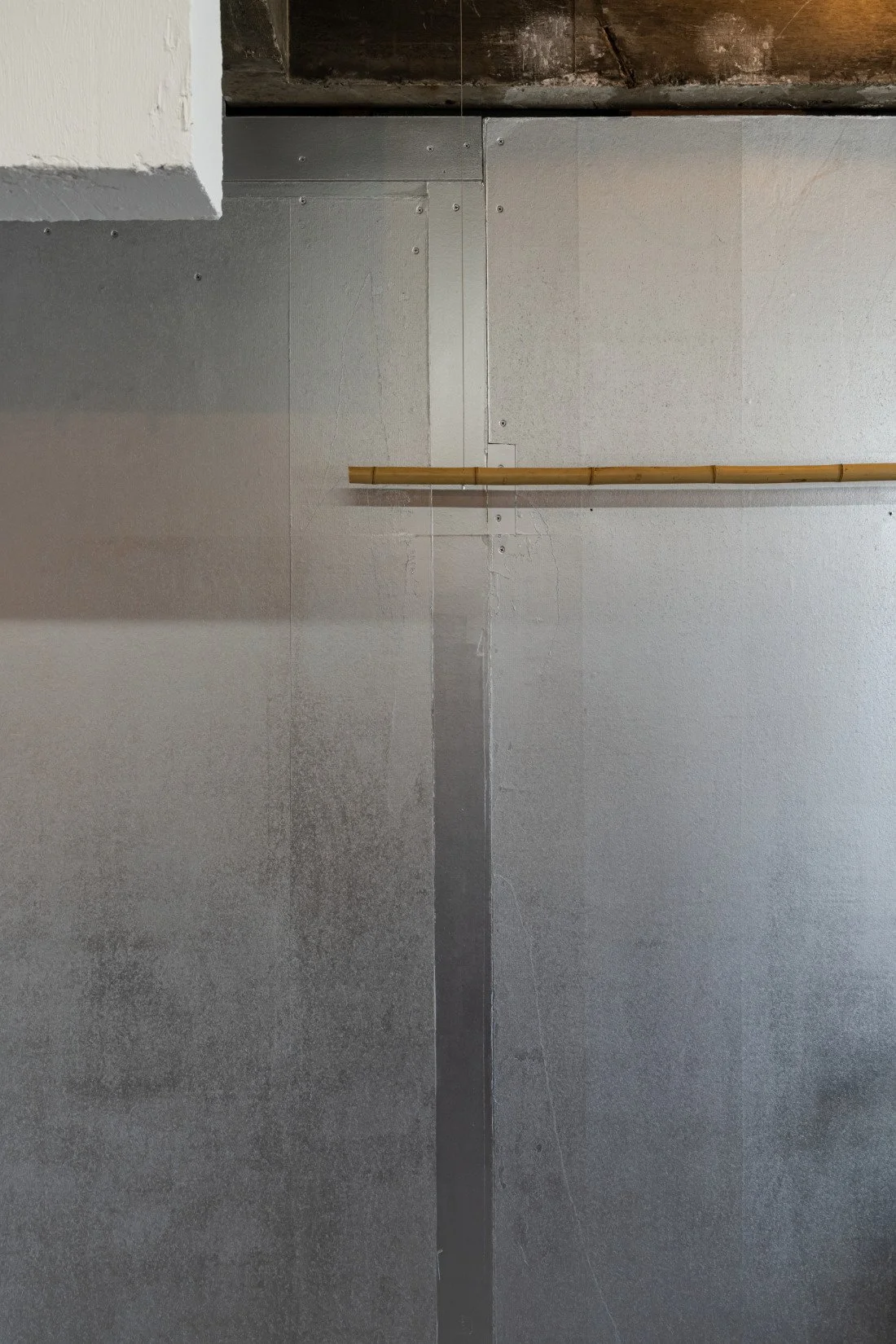
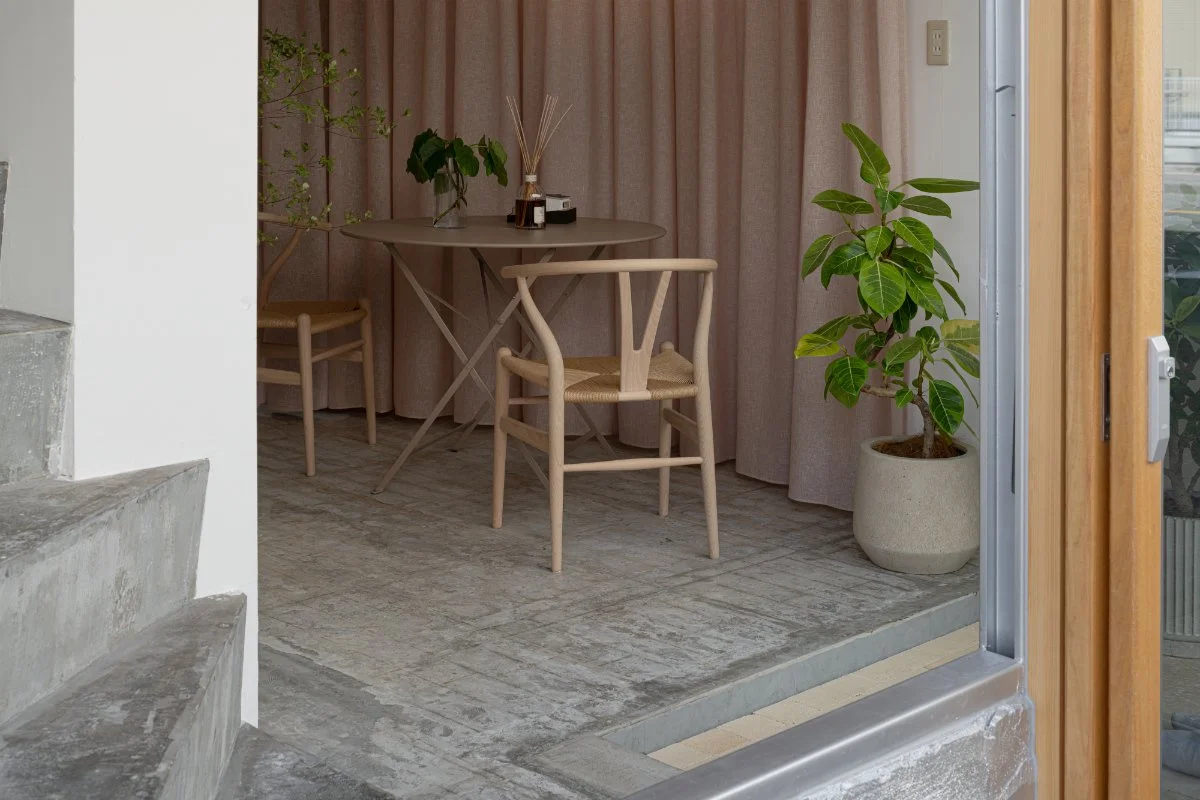
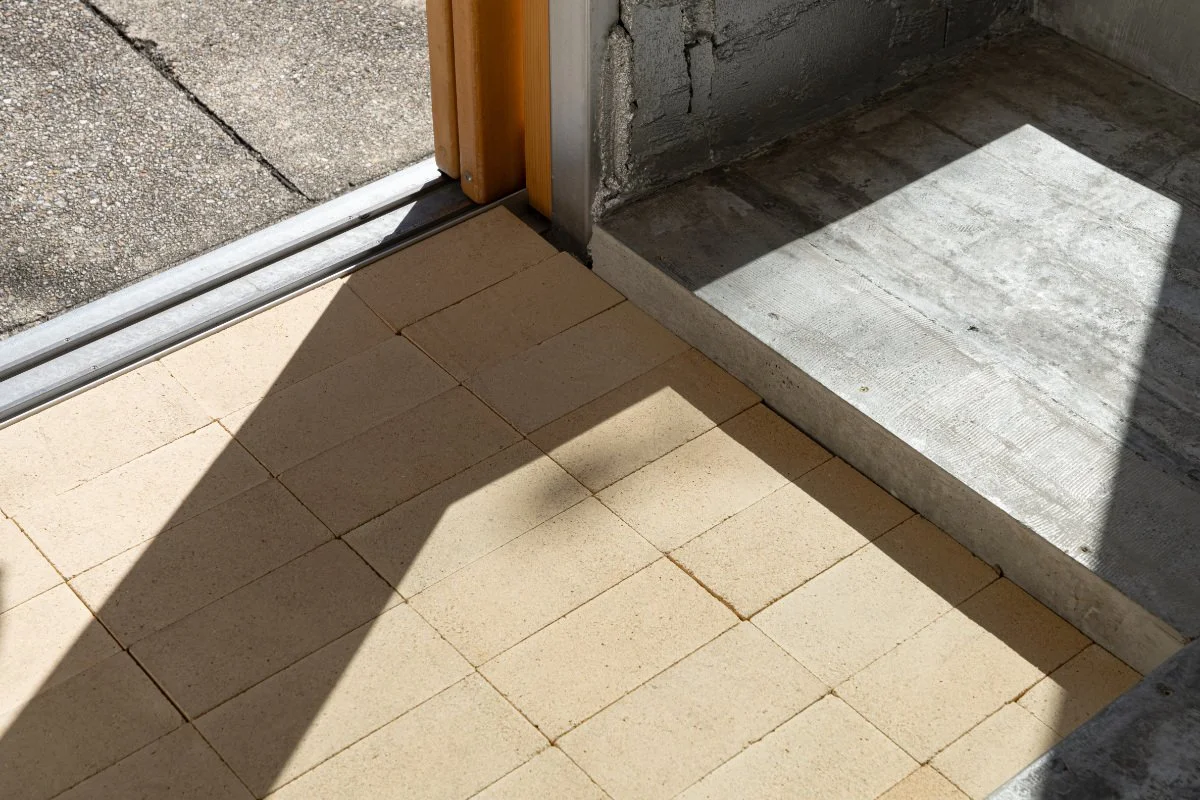
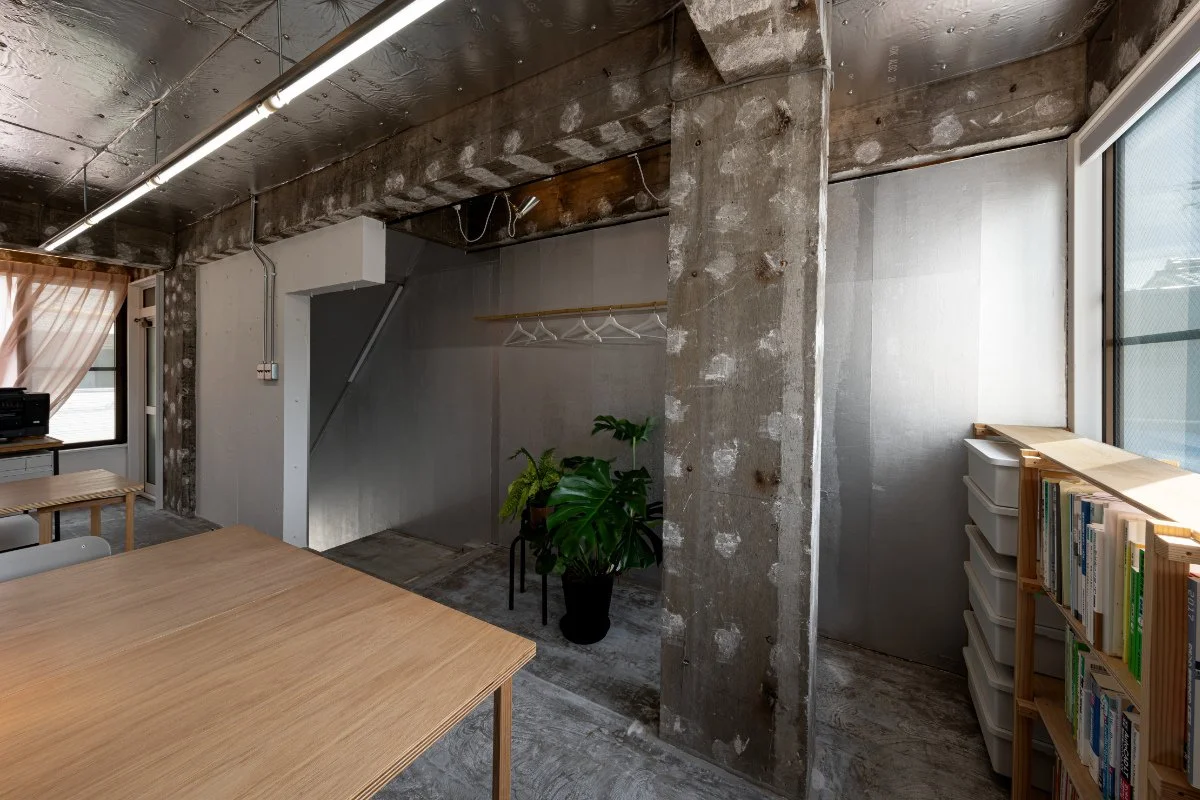
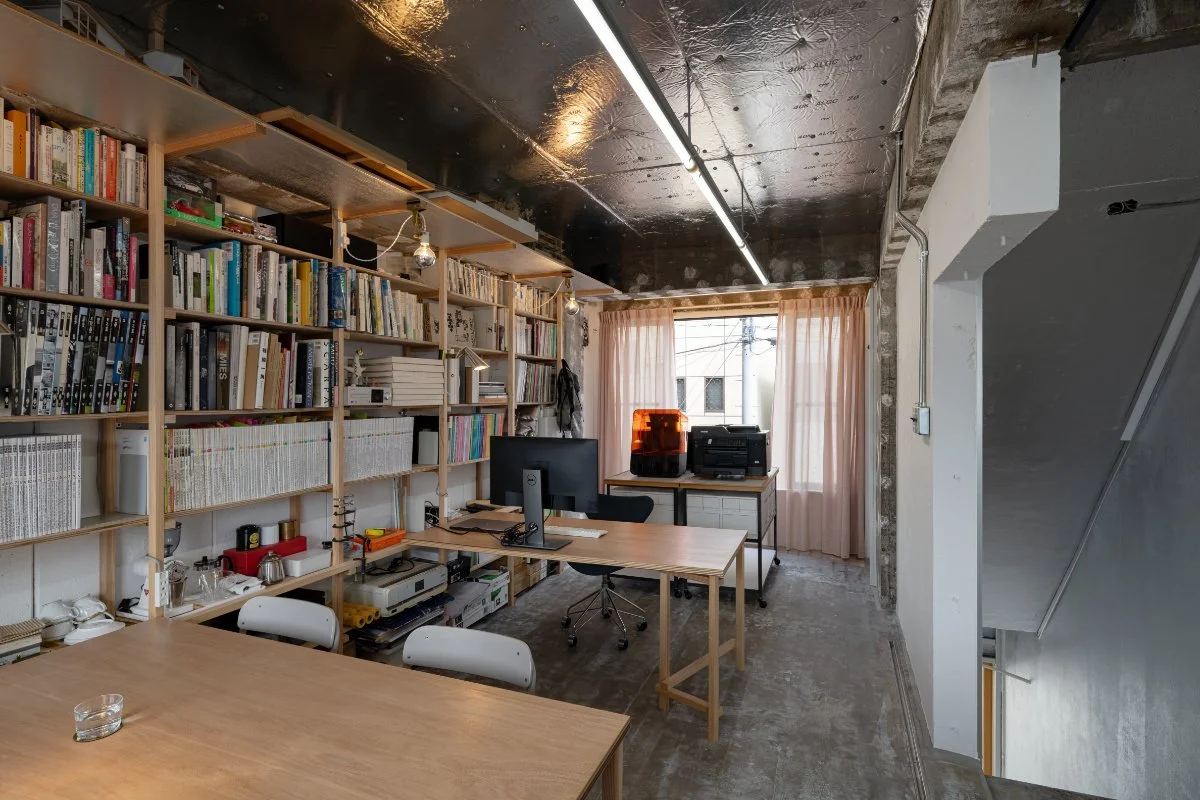
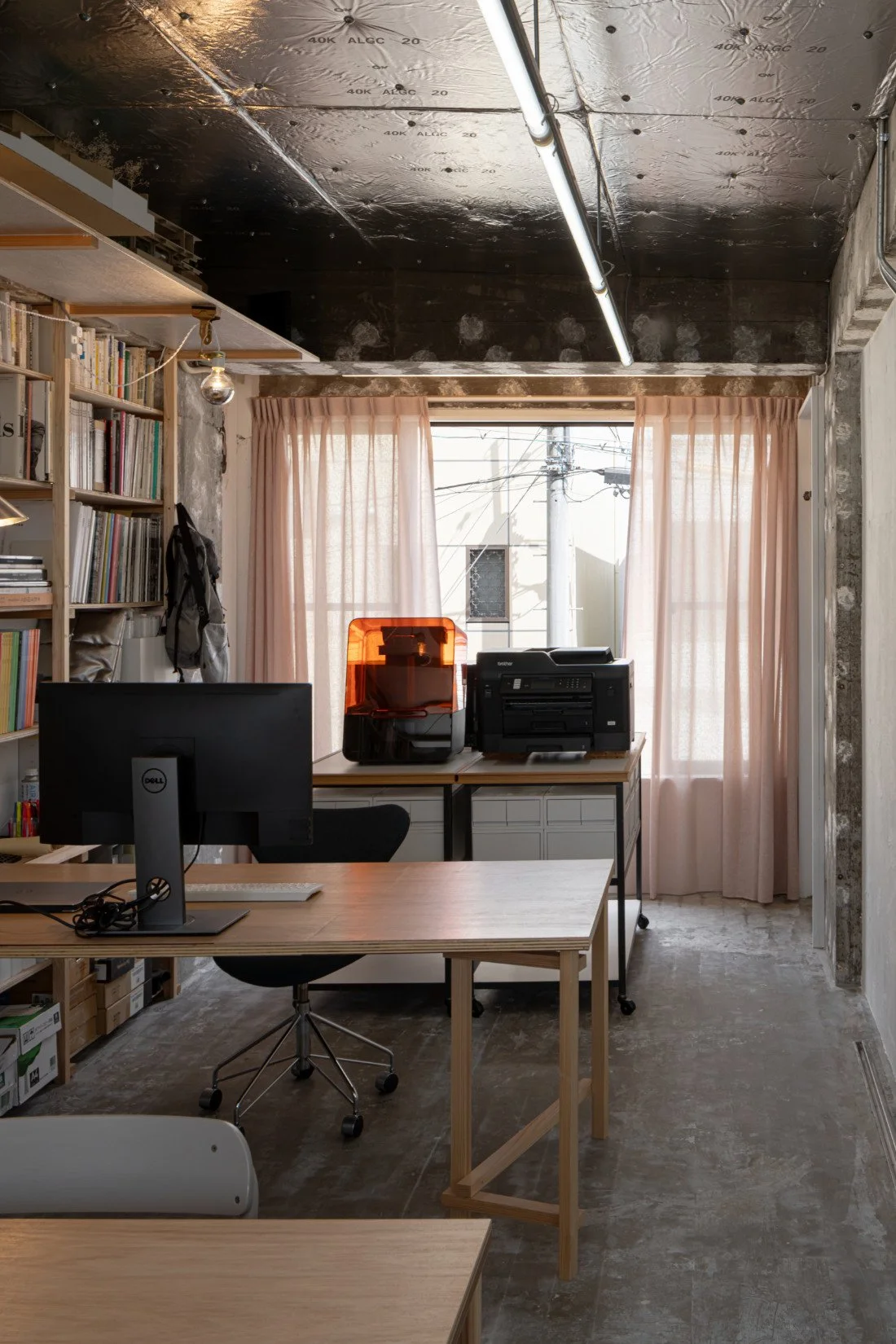
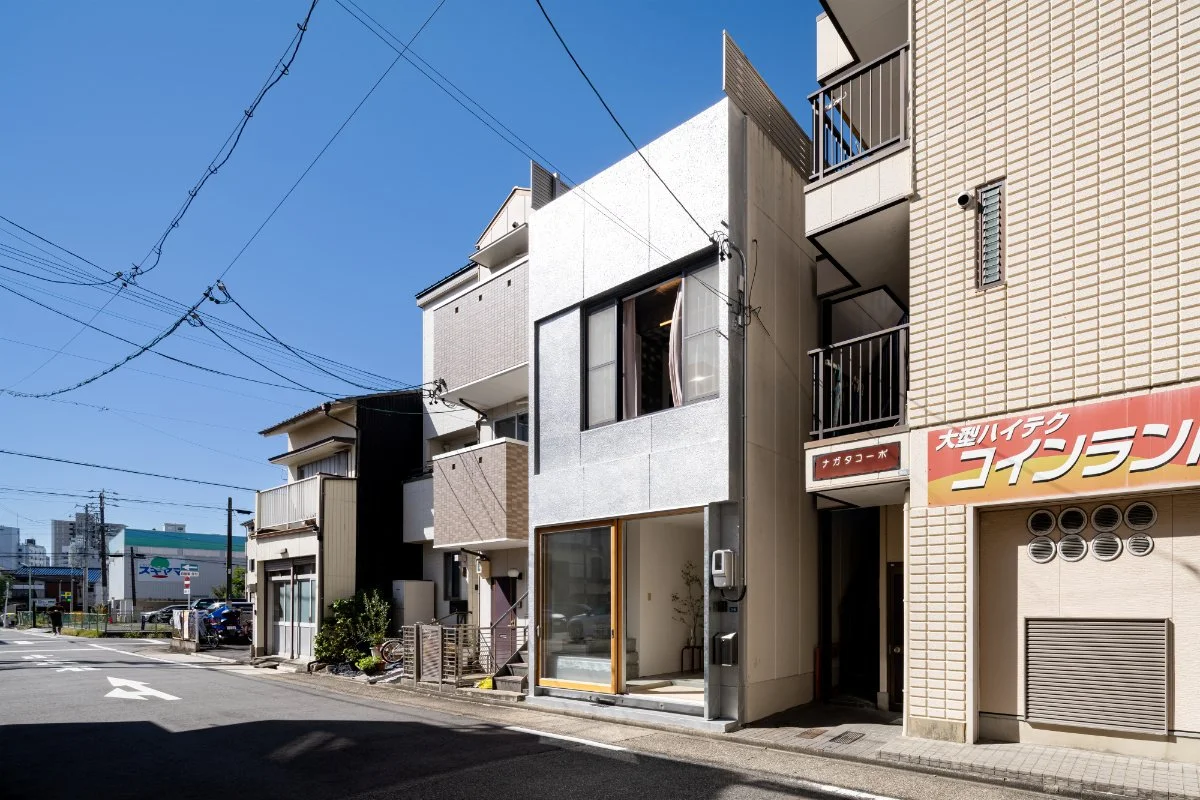
The first-floor exterior walls and window frames facing the street were removed to create a full-width opening, establishing a vertical sequence linking the street, the internal staircase, and the cityscape. The second-floor ceiling was reinforced with aluminum-clad glass fiber glass wool insulation. The staircase interior was finished with silver paint, forming an aluminum layer similar to the insulation finish. Reflection draws in light from both sides and the atmosphere of the city, blurring the boundary between the building and the urban environment, lending a sense of expansiveness to the compact space.
Furthermore, as if peeling back and flipping the interior from the staircase, the exterior wall facing the street was also finished with aluminum paint, linking the operations performed inside to the façade.
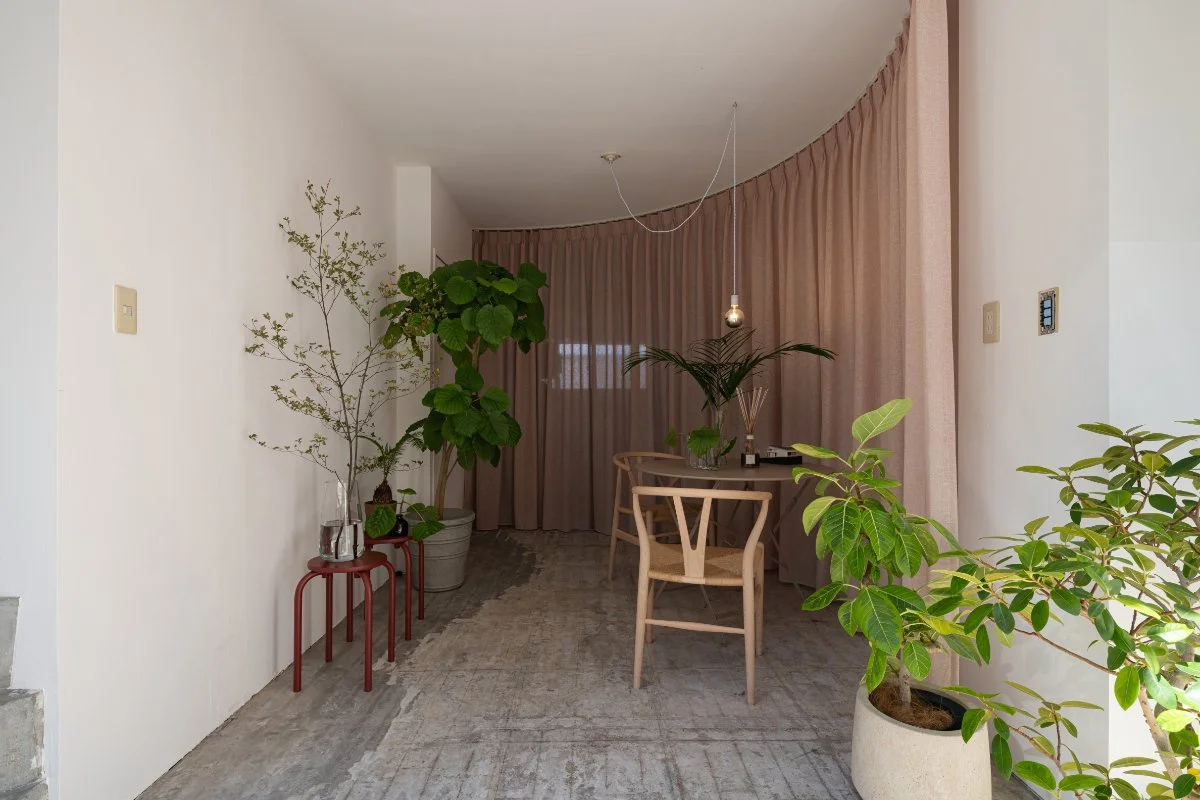
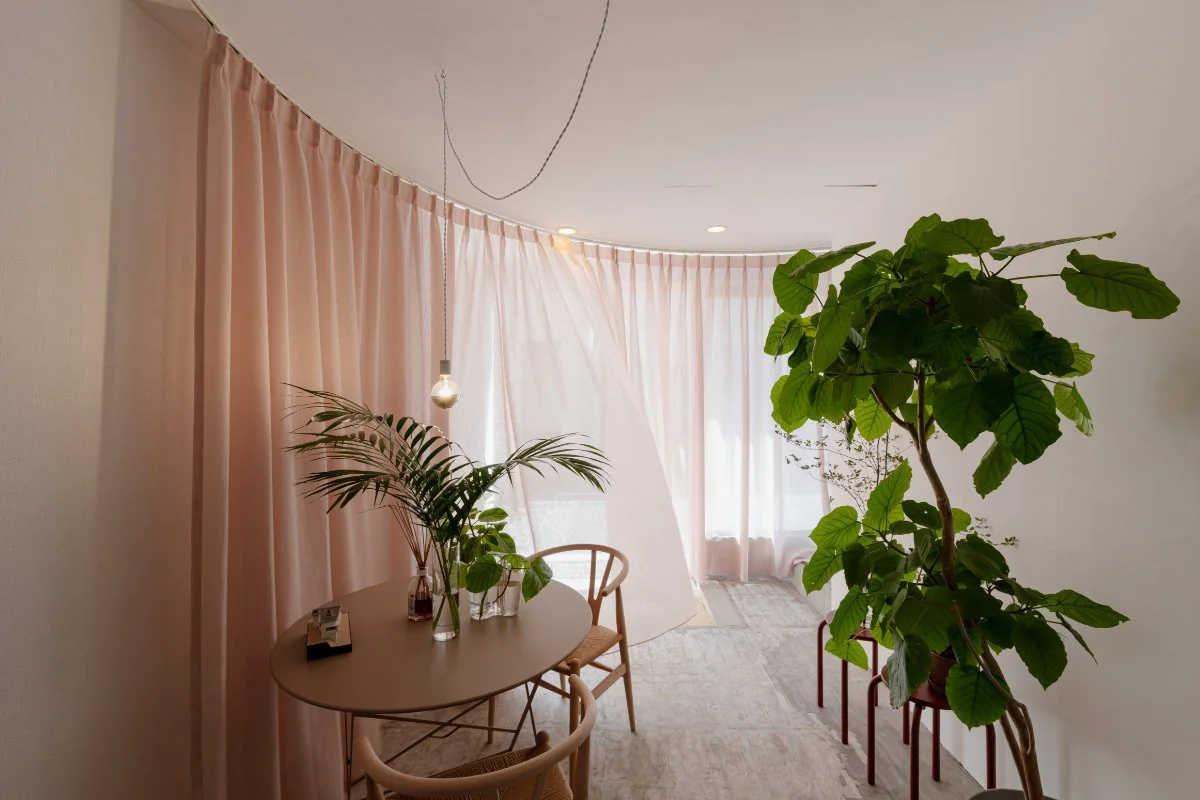
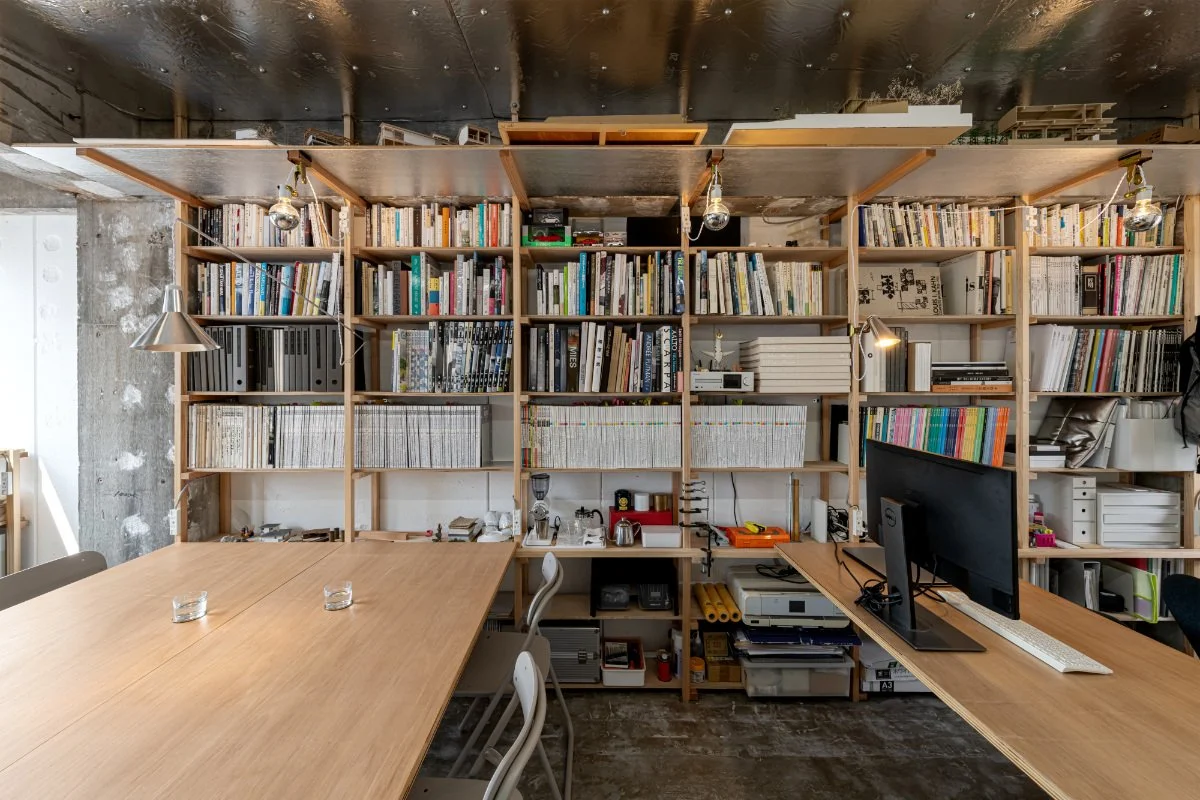
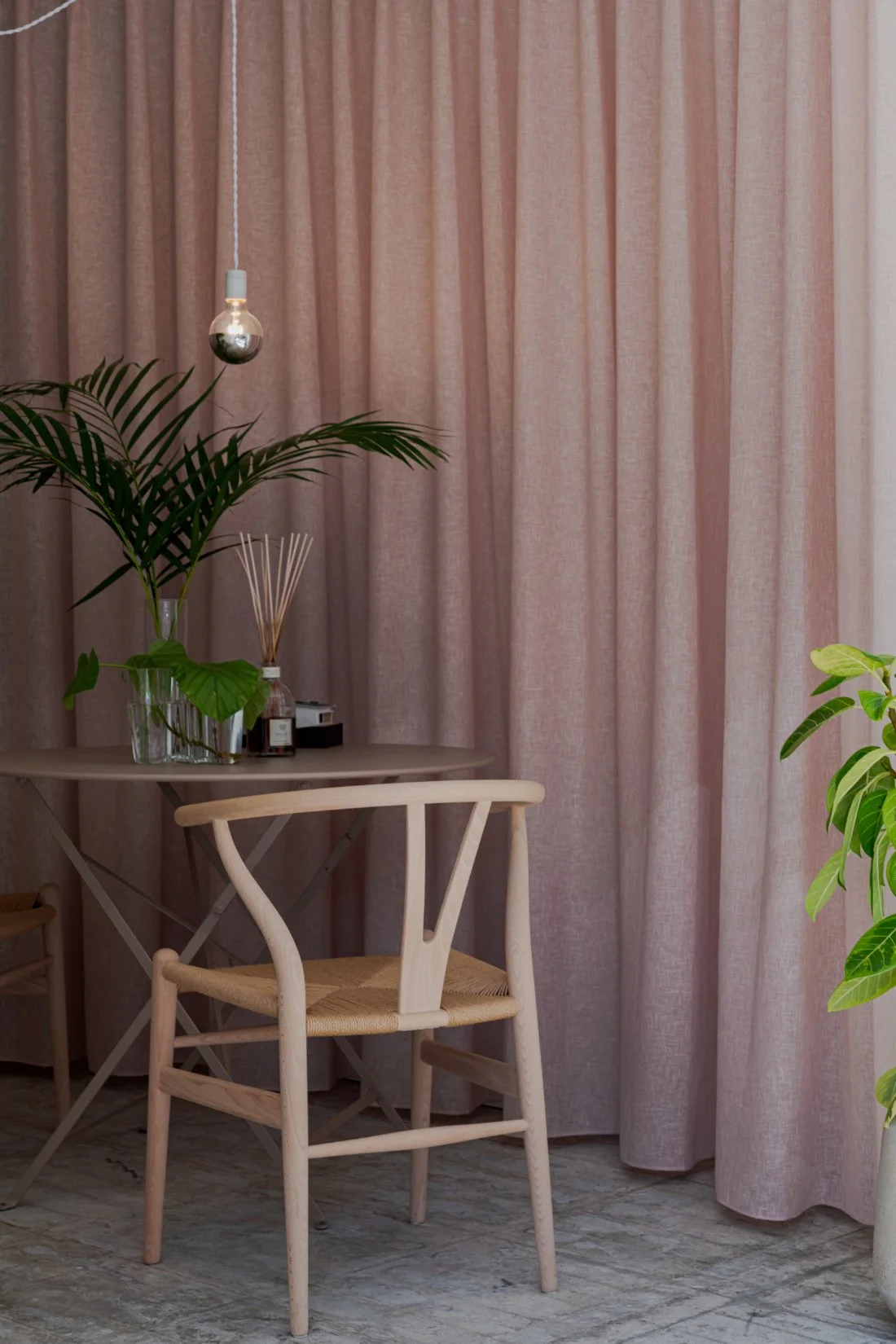
The second floor features minimal furnishings. Constructed from inexpensive, versatile cedar base materials and plywood, it arranges the existing structural frame, wooden-framed furniture, and the overflowing books and documents into a scene reminiscent of a bustling cityscape. On the first floor, curtains drape around the street-facing space in a gentle arc, creating a pocket-like spot along the street.
By connecting the street view at the front with the townscape spreading out at the rear, the architecture achieved a sense of wholeness through the act of adding elements that relate to the existing structure and the preceding design. Text description by the architects.