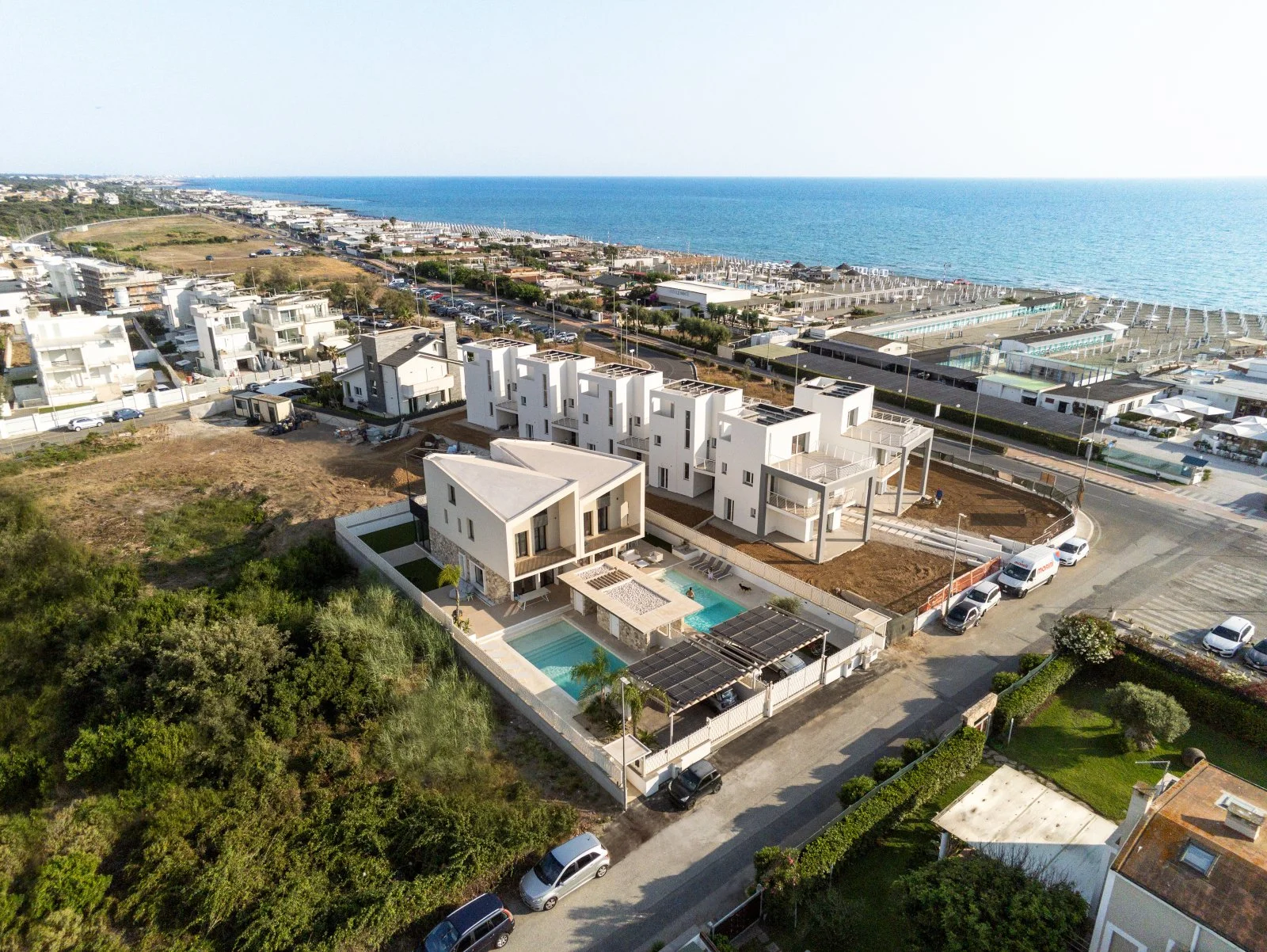
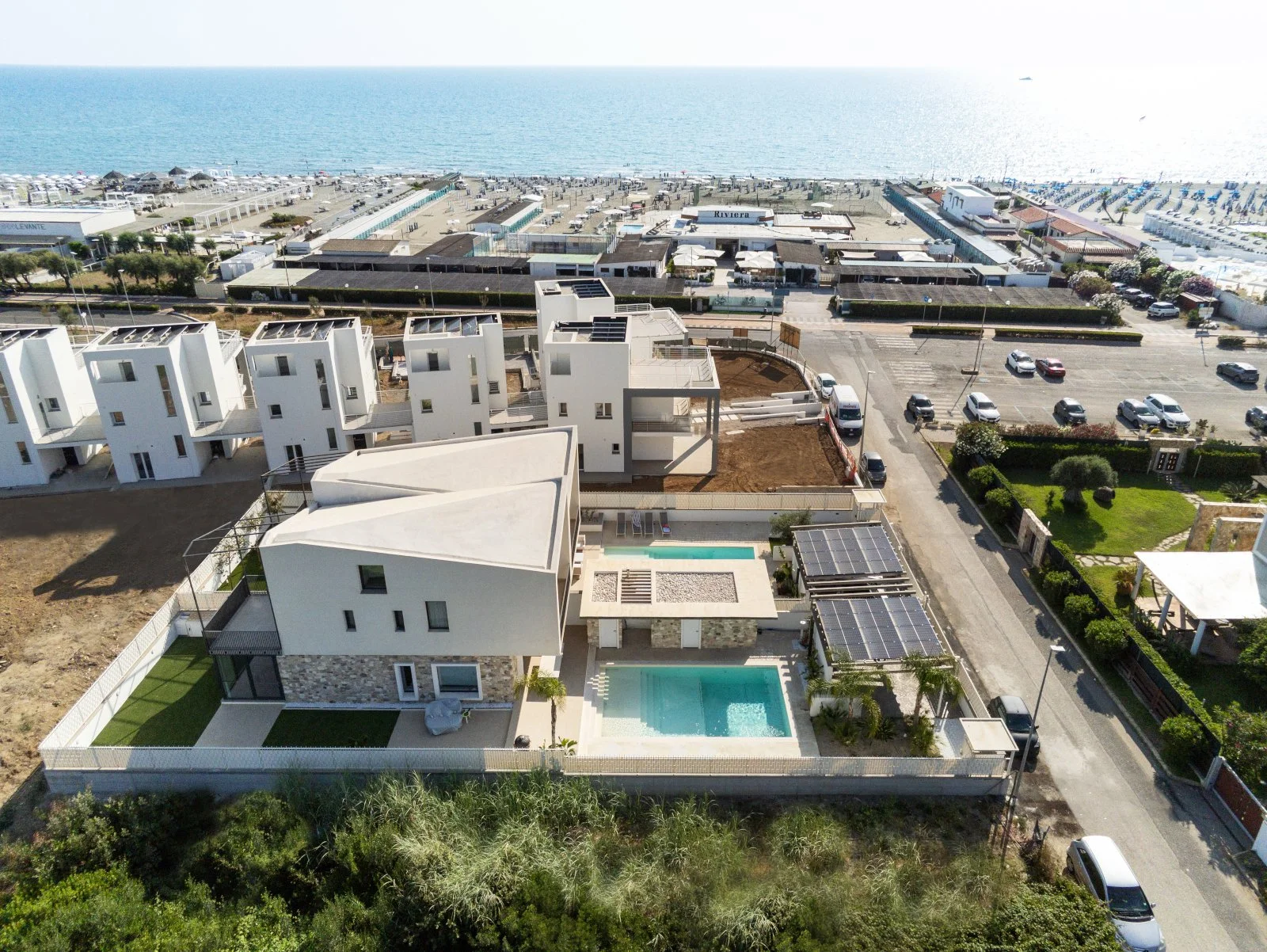
The project is located along the coast of Fregene, a historic seaside town (close to Rome) once favored by artists and intellectuals such as Federico Fellini and Alberto Moravia. Set within a fragmented urban landscape—characterized by low-rise villas, leftover lots, and surviving patches of Mediterranean scrub—the intervention marks the initial phase of regenerating a long-neglected site, laying the groundwork for a broader, sustainable coastal redevelopment strategy.
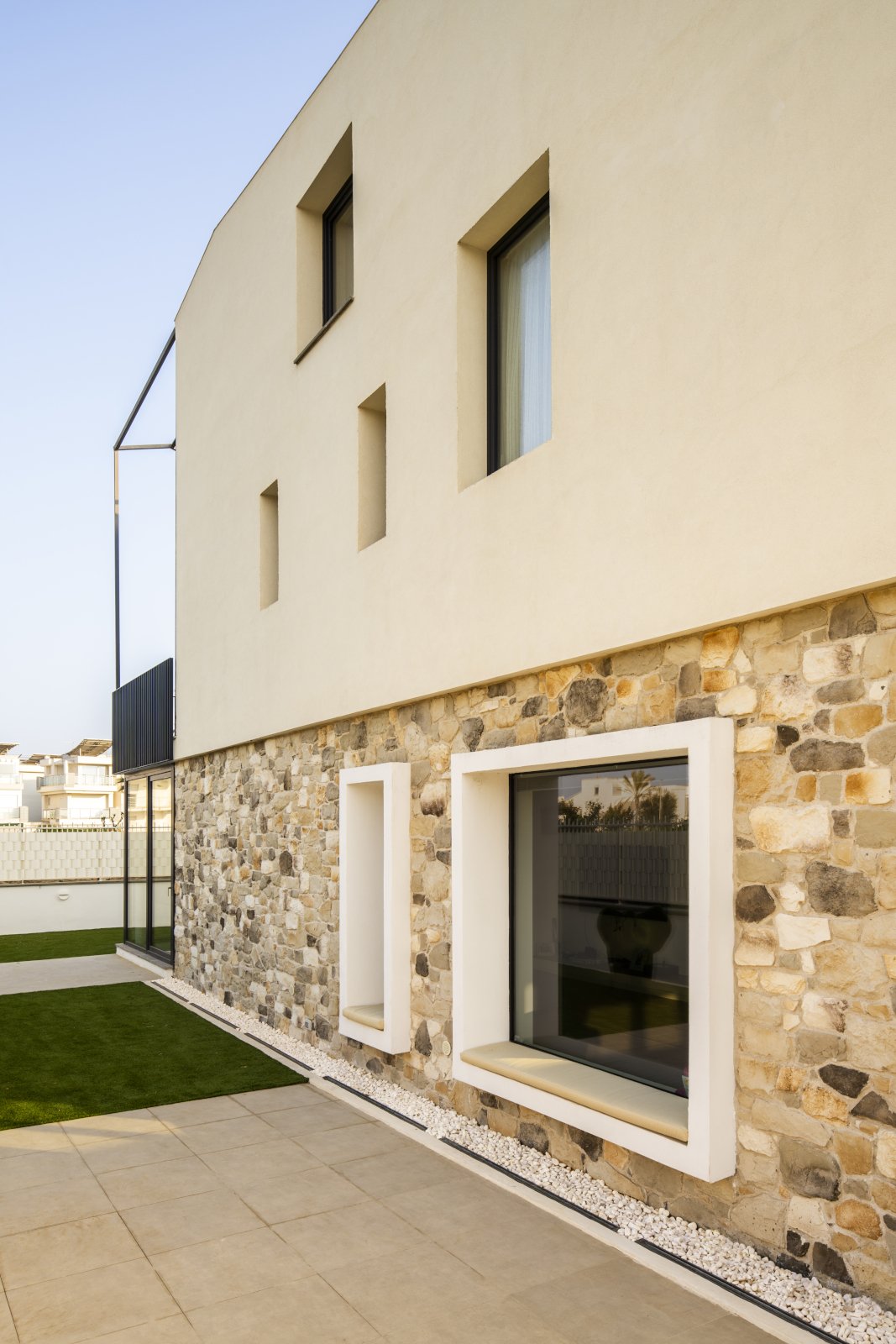
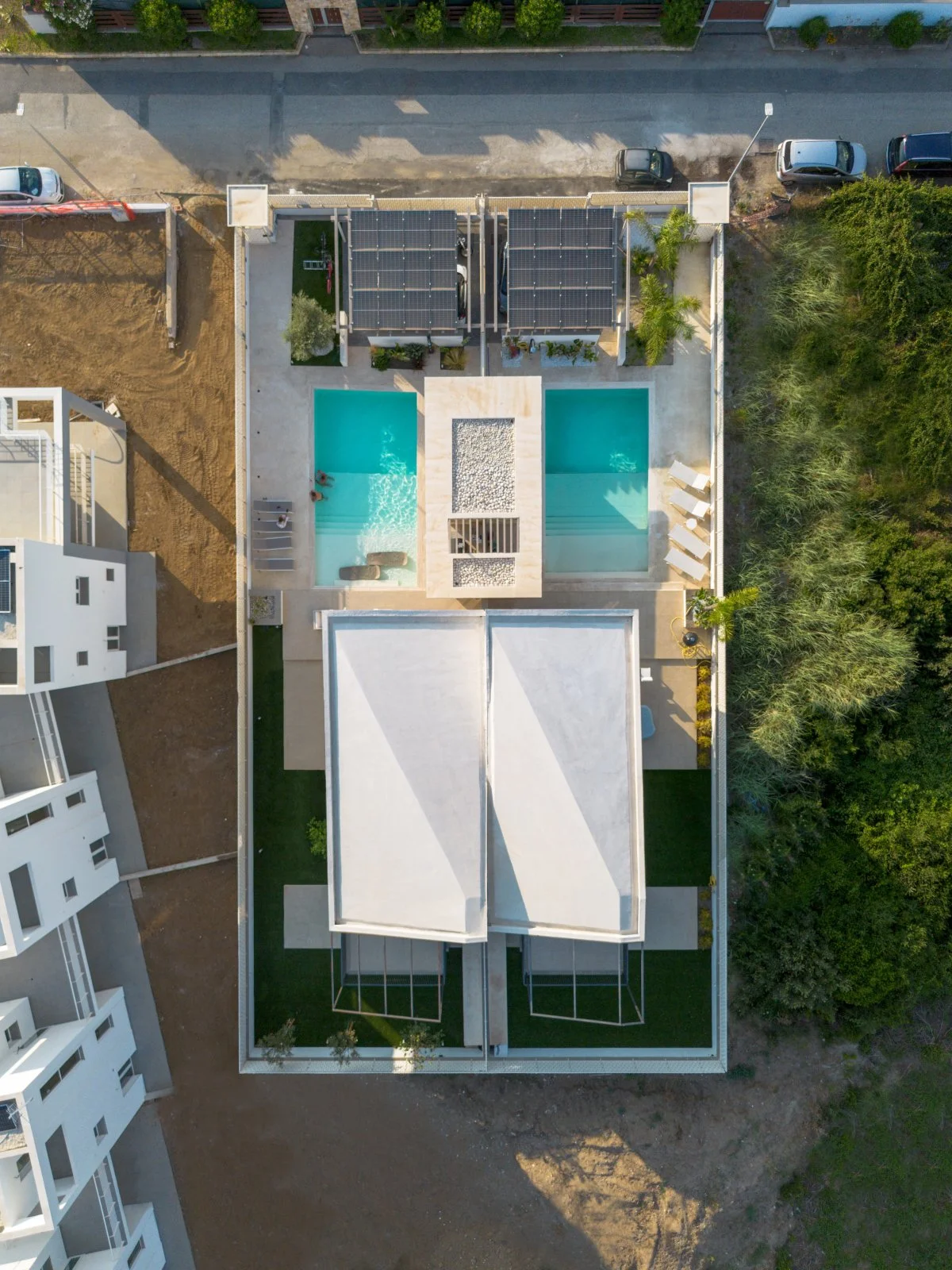
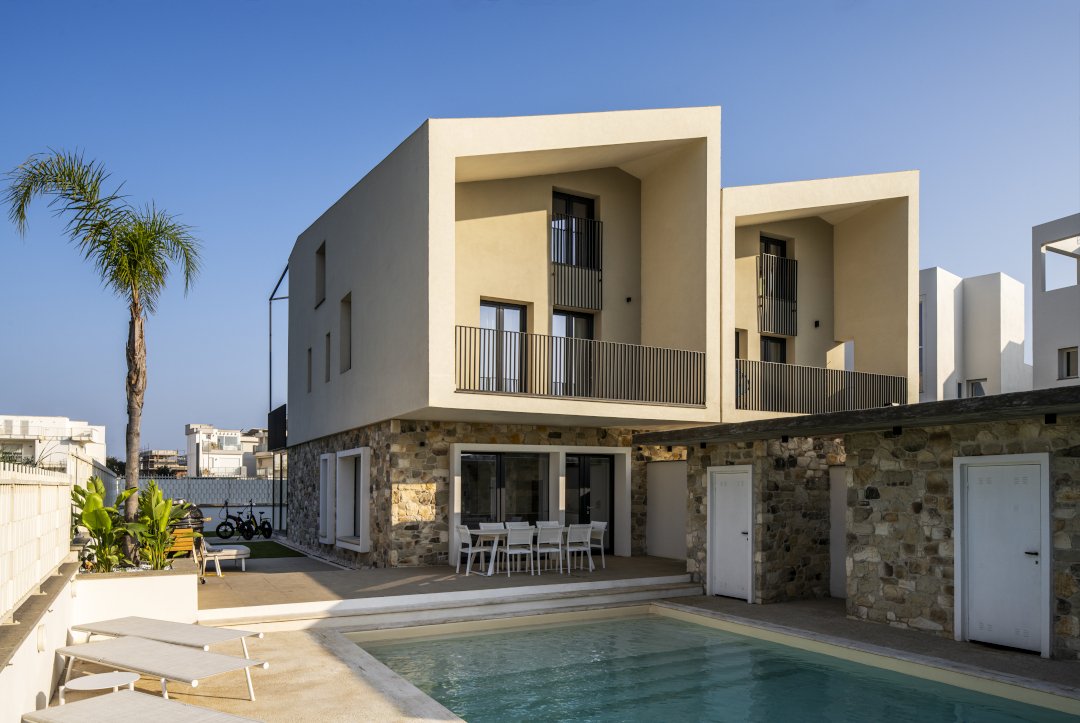
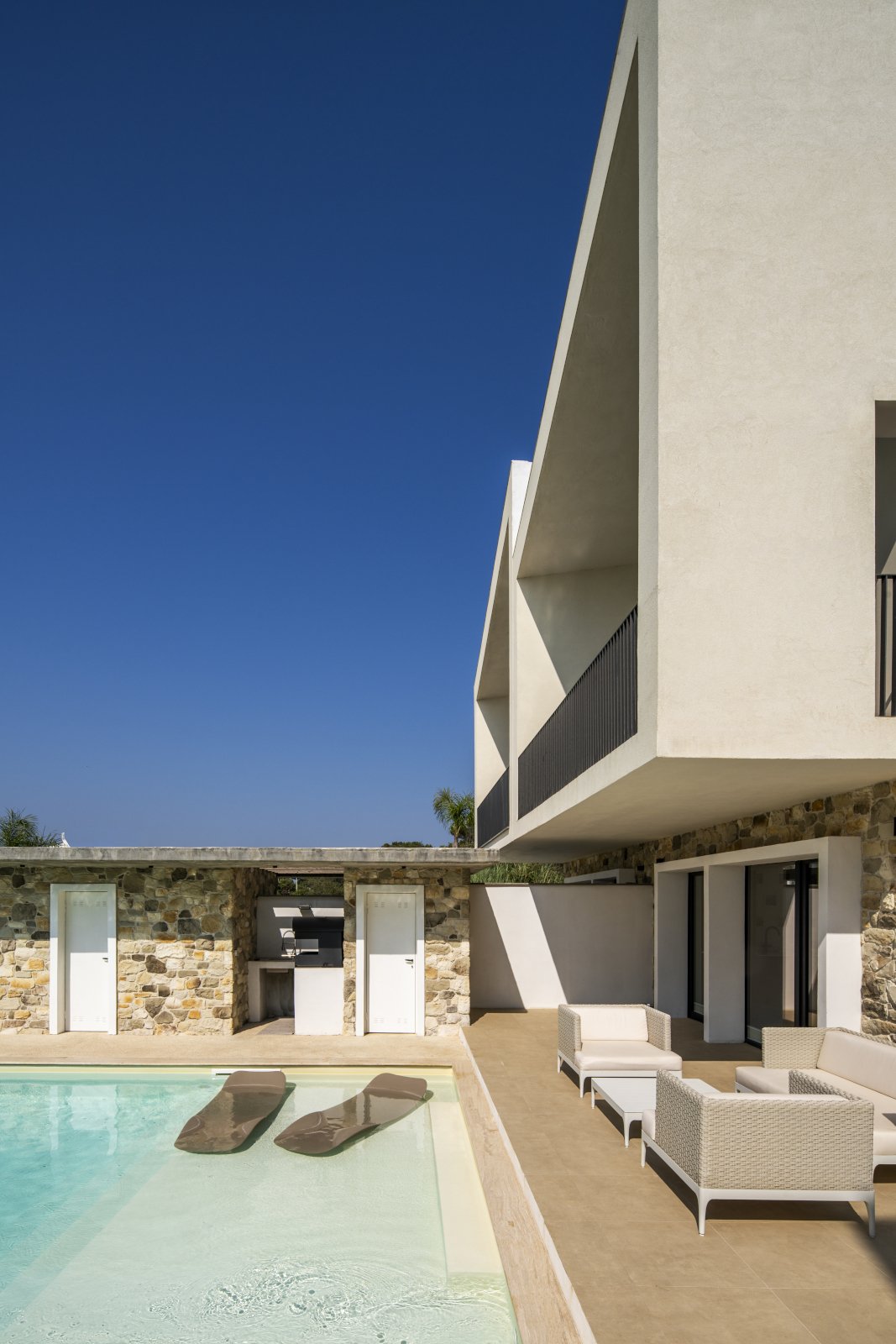
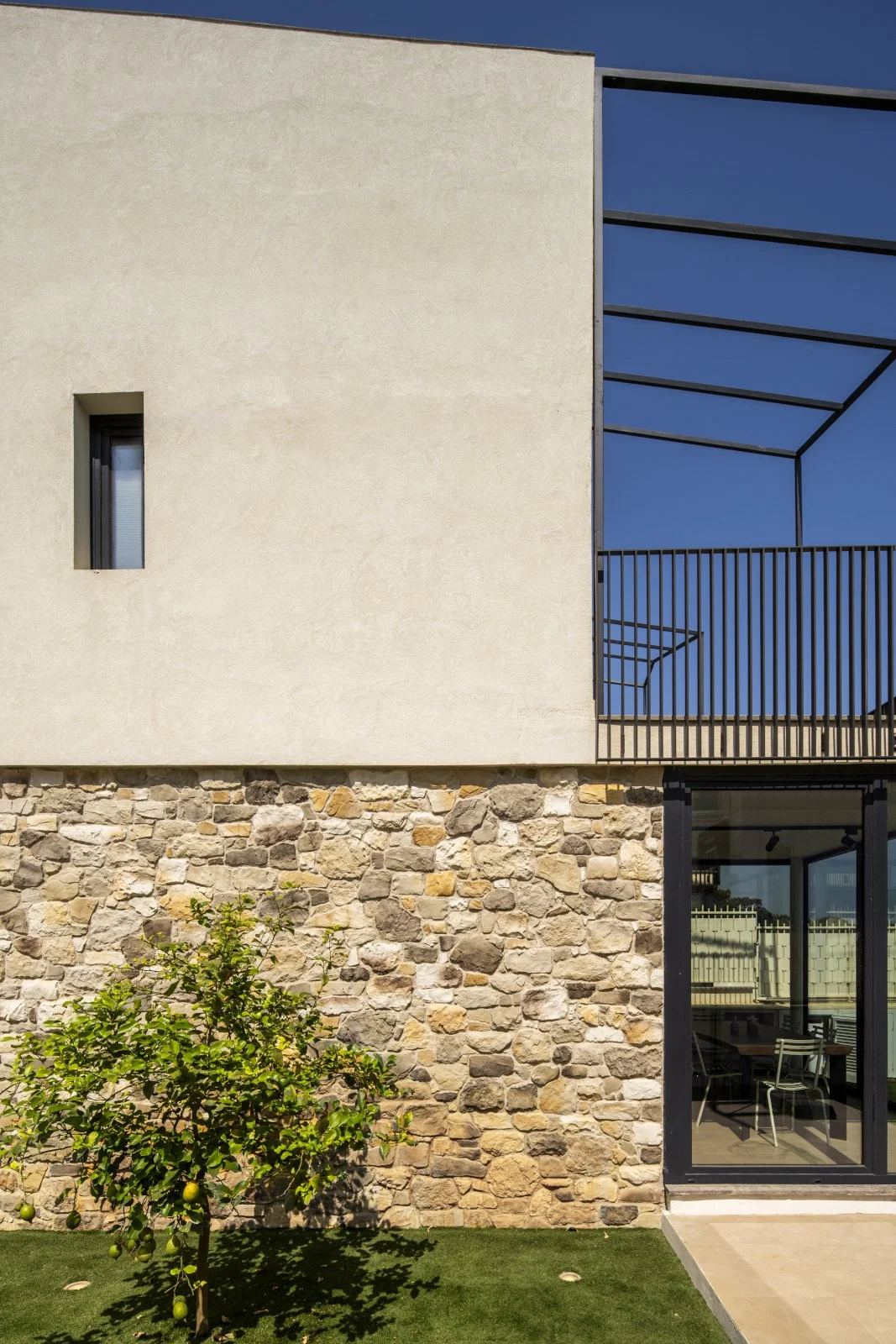
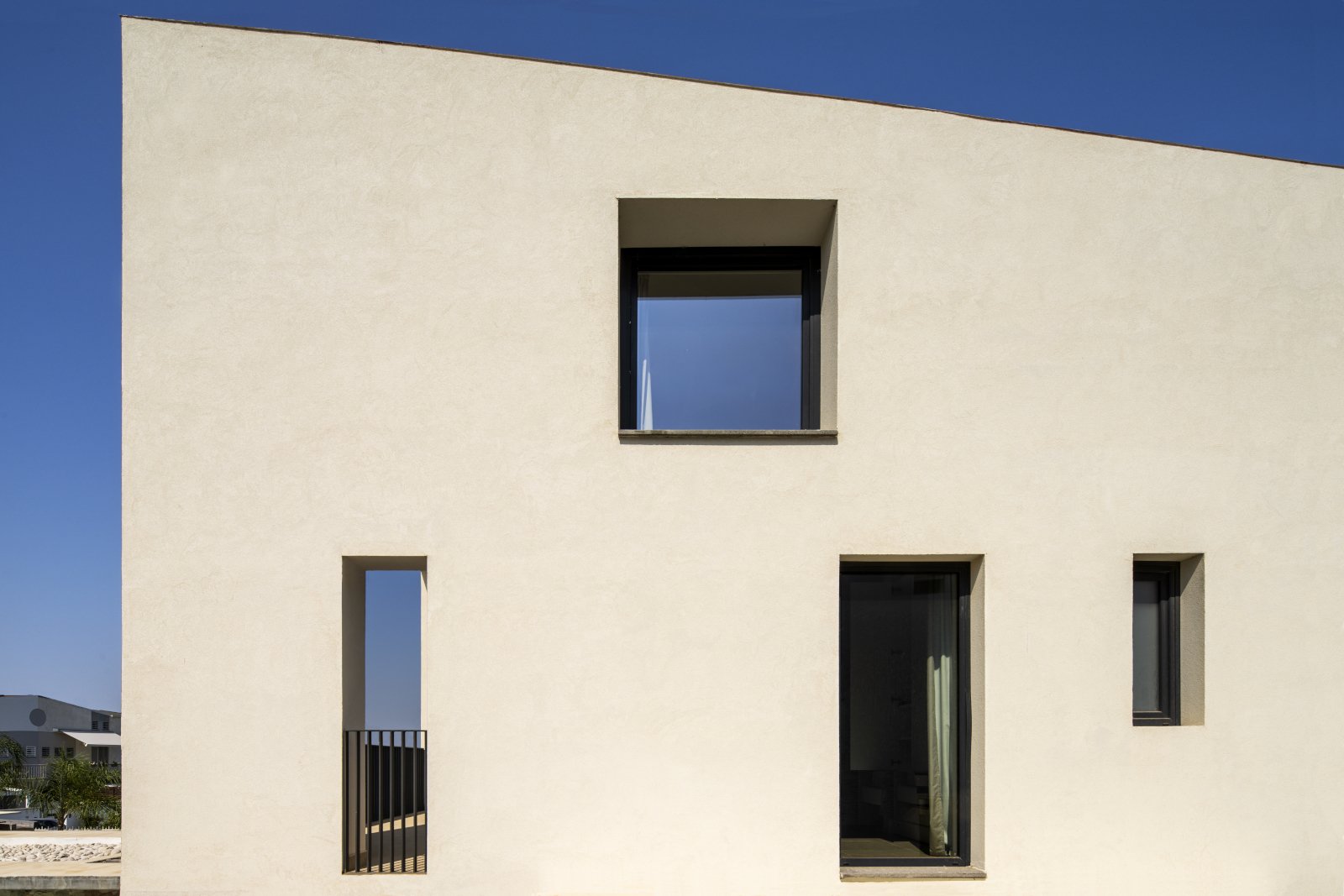
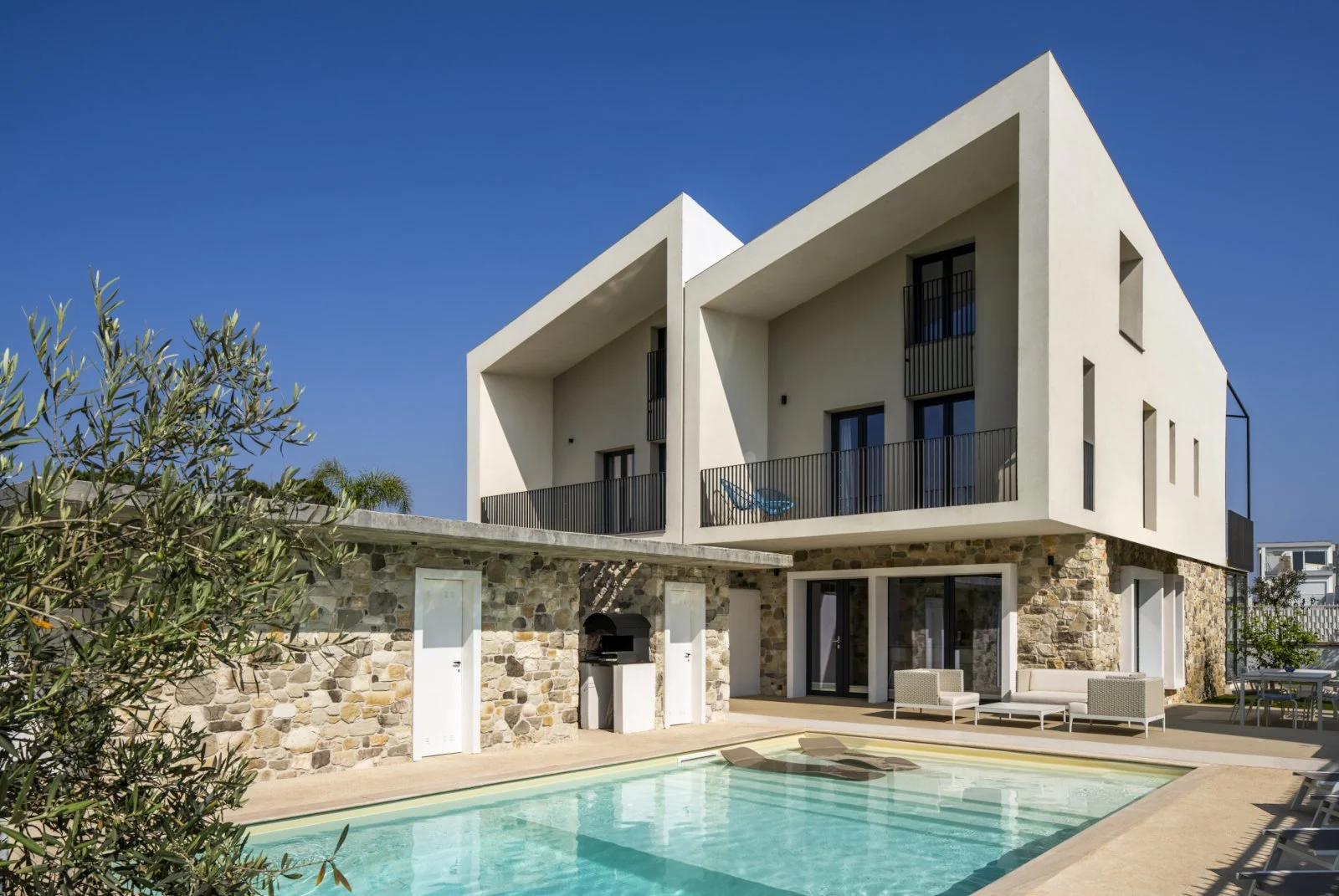
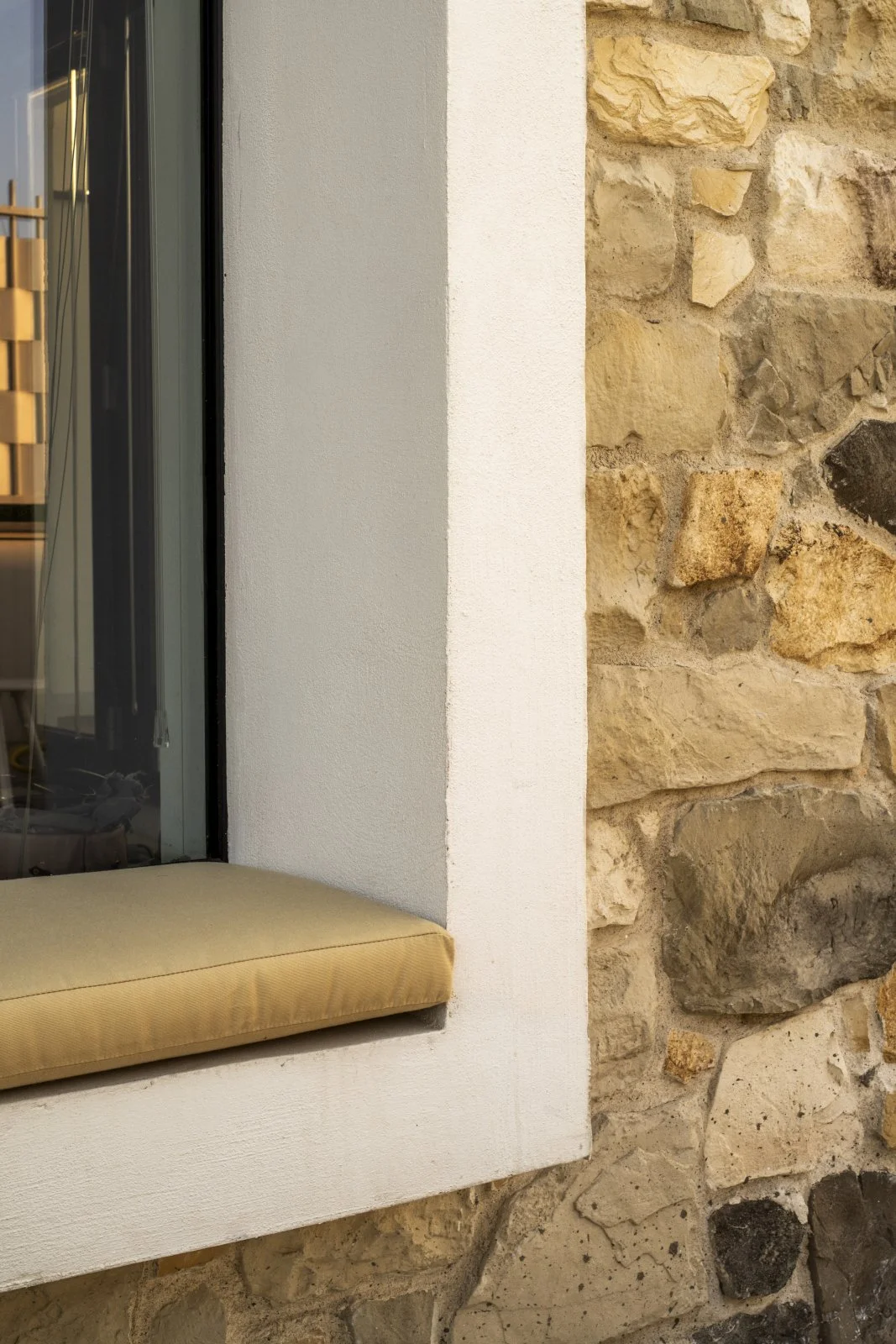
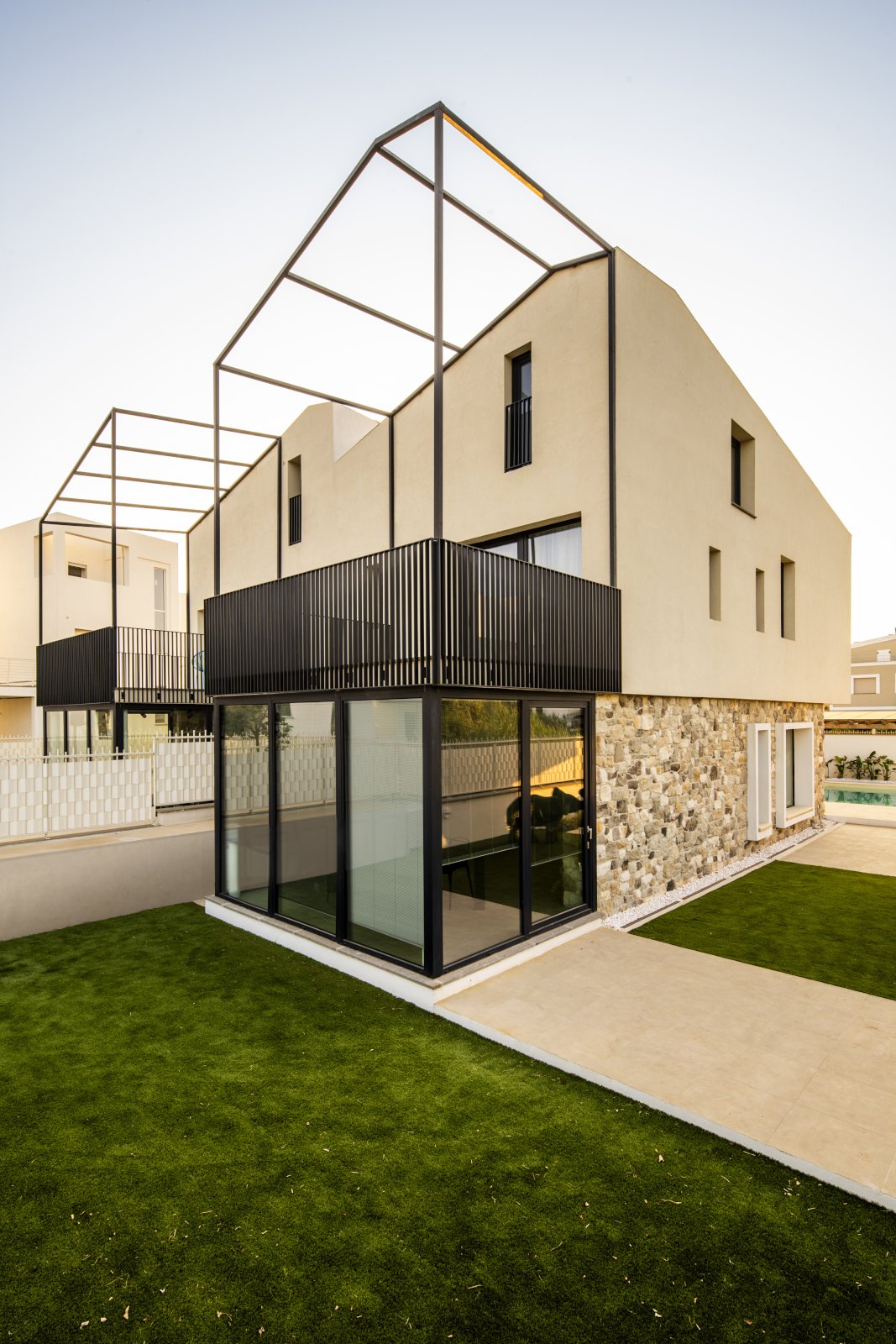
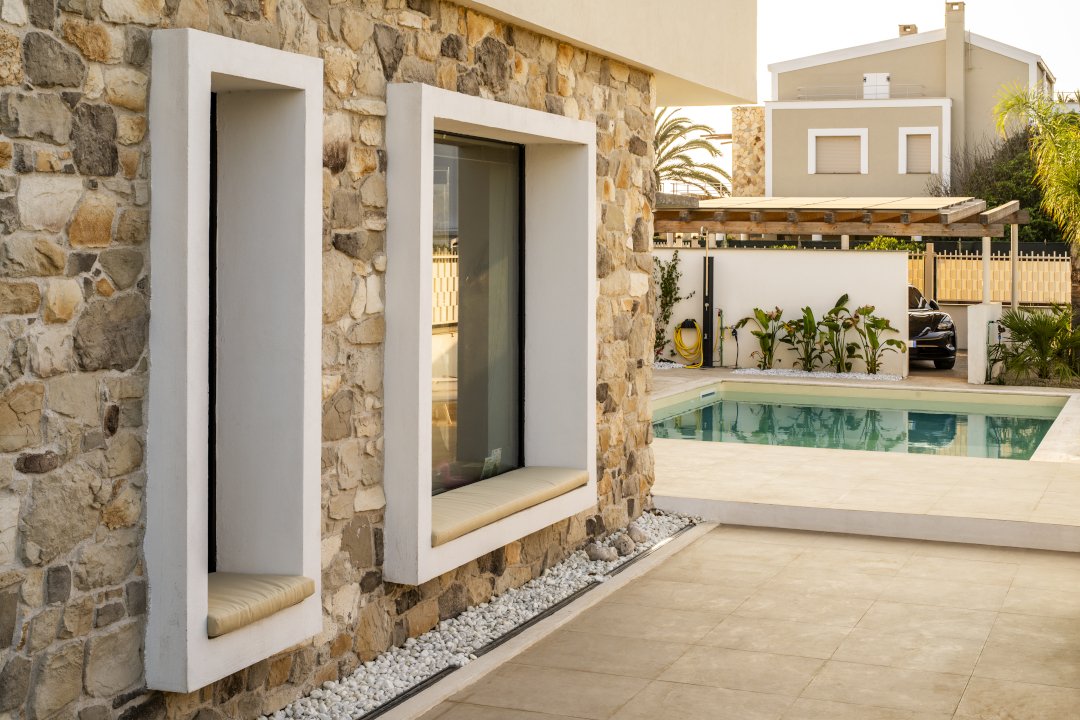
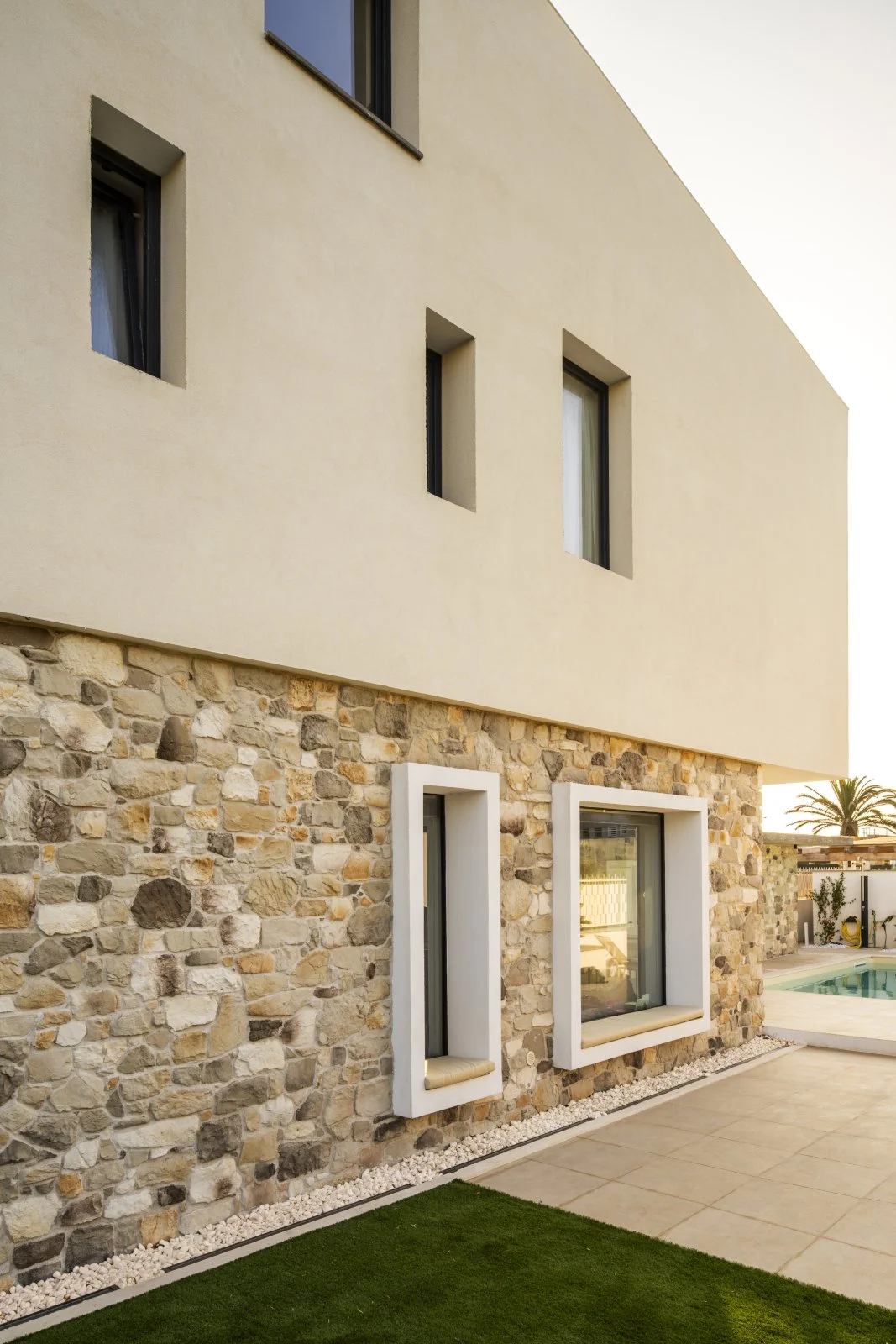
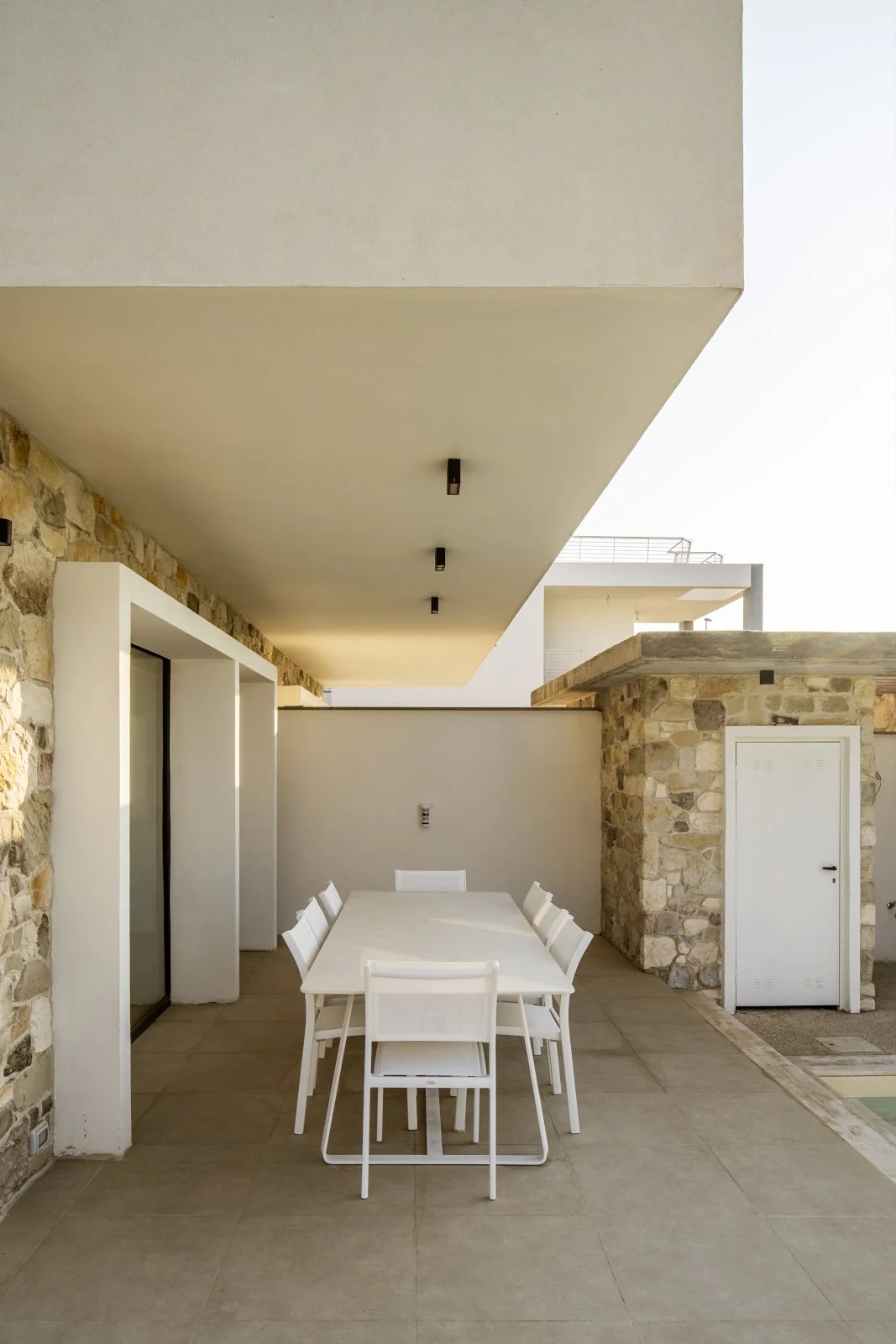
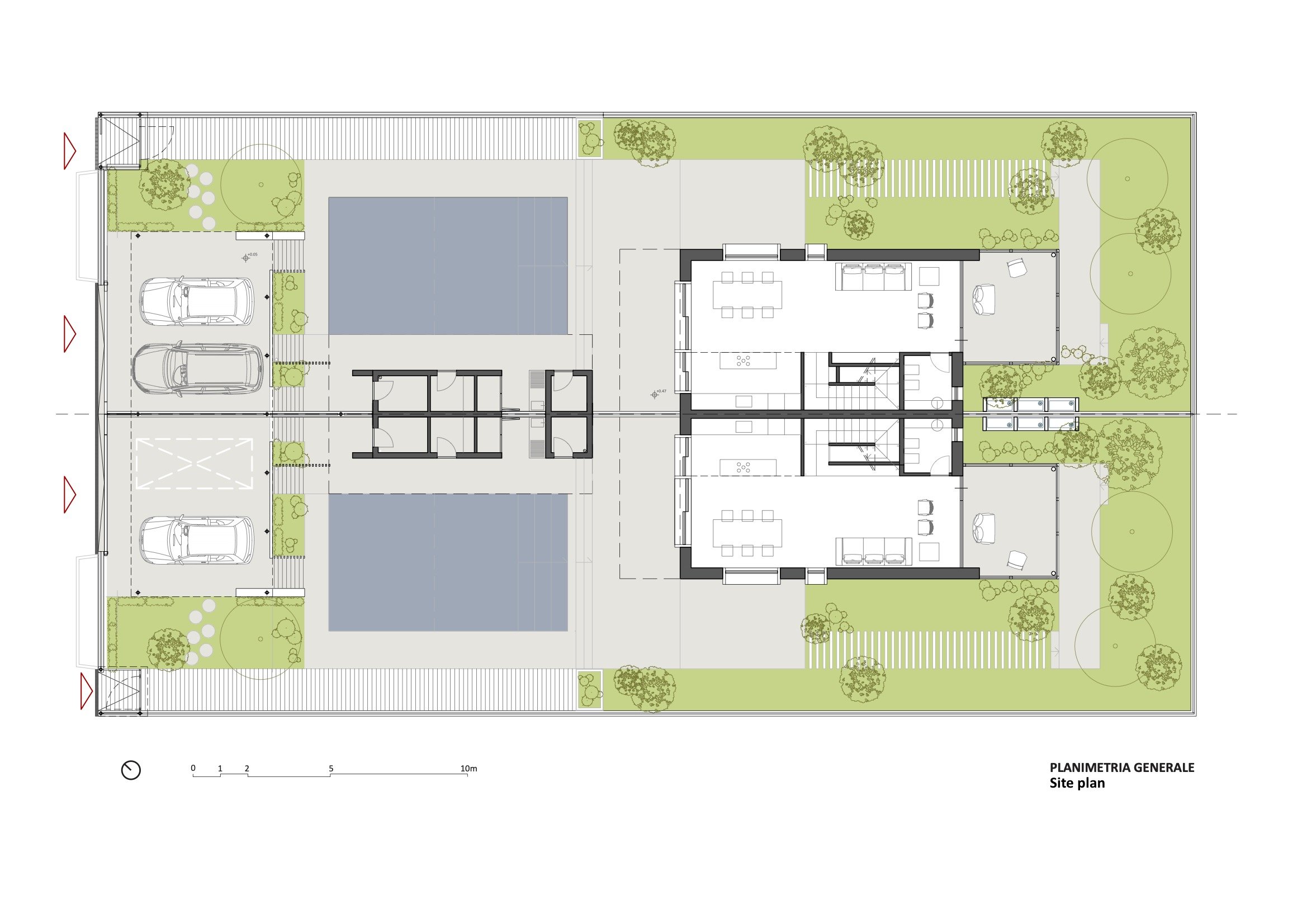
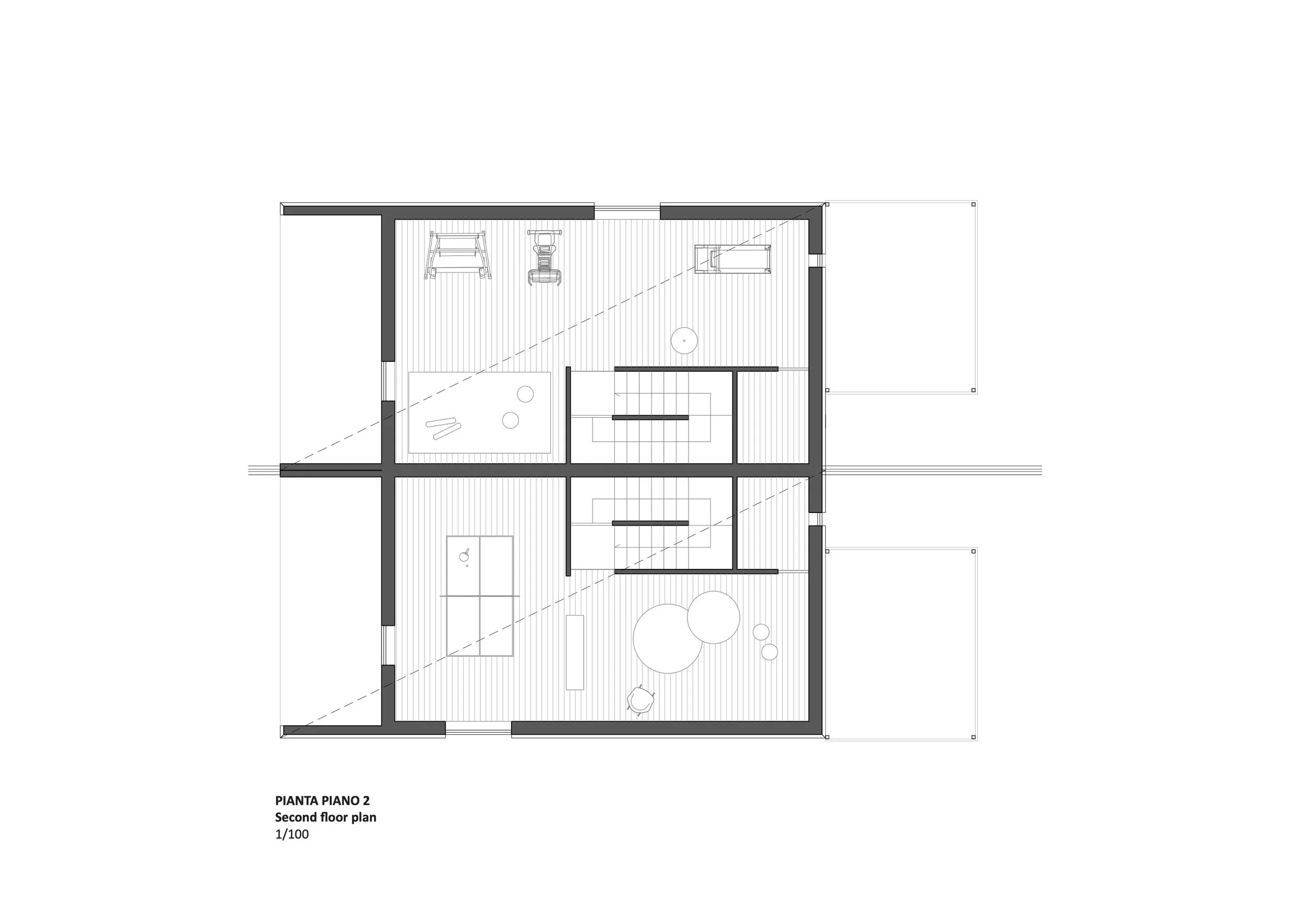
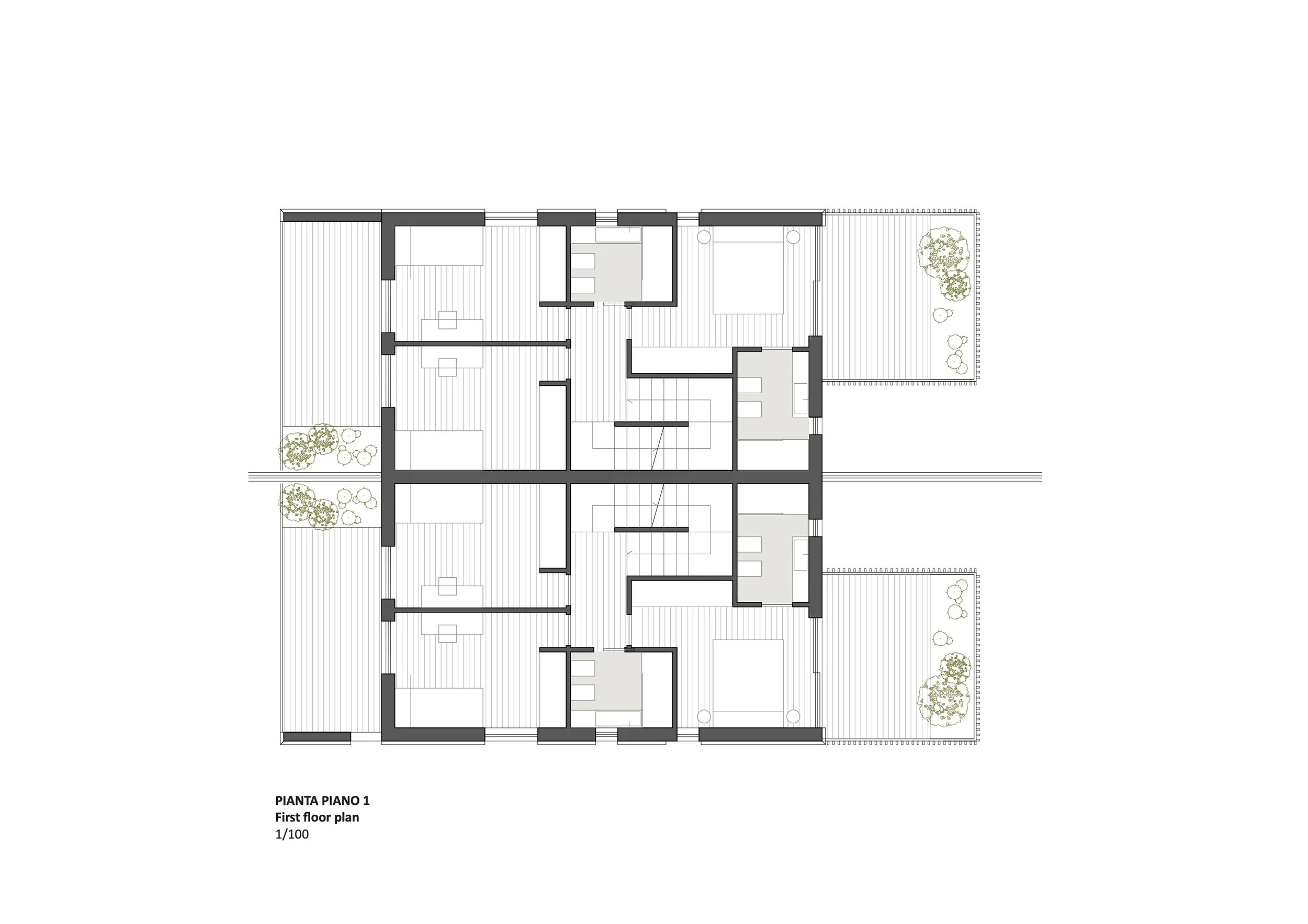
The design consists of two villas, each organized over three above-ground levels. The architectural concept is based on the juxtaposition of two material languages inspired by Mediterranean tradition: • a stone-clad base, housing the living area, kitchen, services, and a bioclimatic winter garden; • a pure white sculptural volume above, defined by projecting elements, openings, and frames that interact with natural light, creating shifting shadows and reflections that enhance the lightness of the upper structure.
The diagonal ridge of the roof, conceived as a formal continuation of the façades, creates a sense of visual continuity between levels, emphasizing the volume’s plasticity and offering ever-changing spatial perspectives.
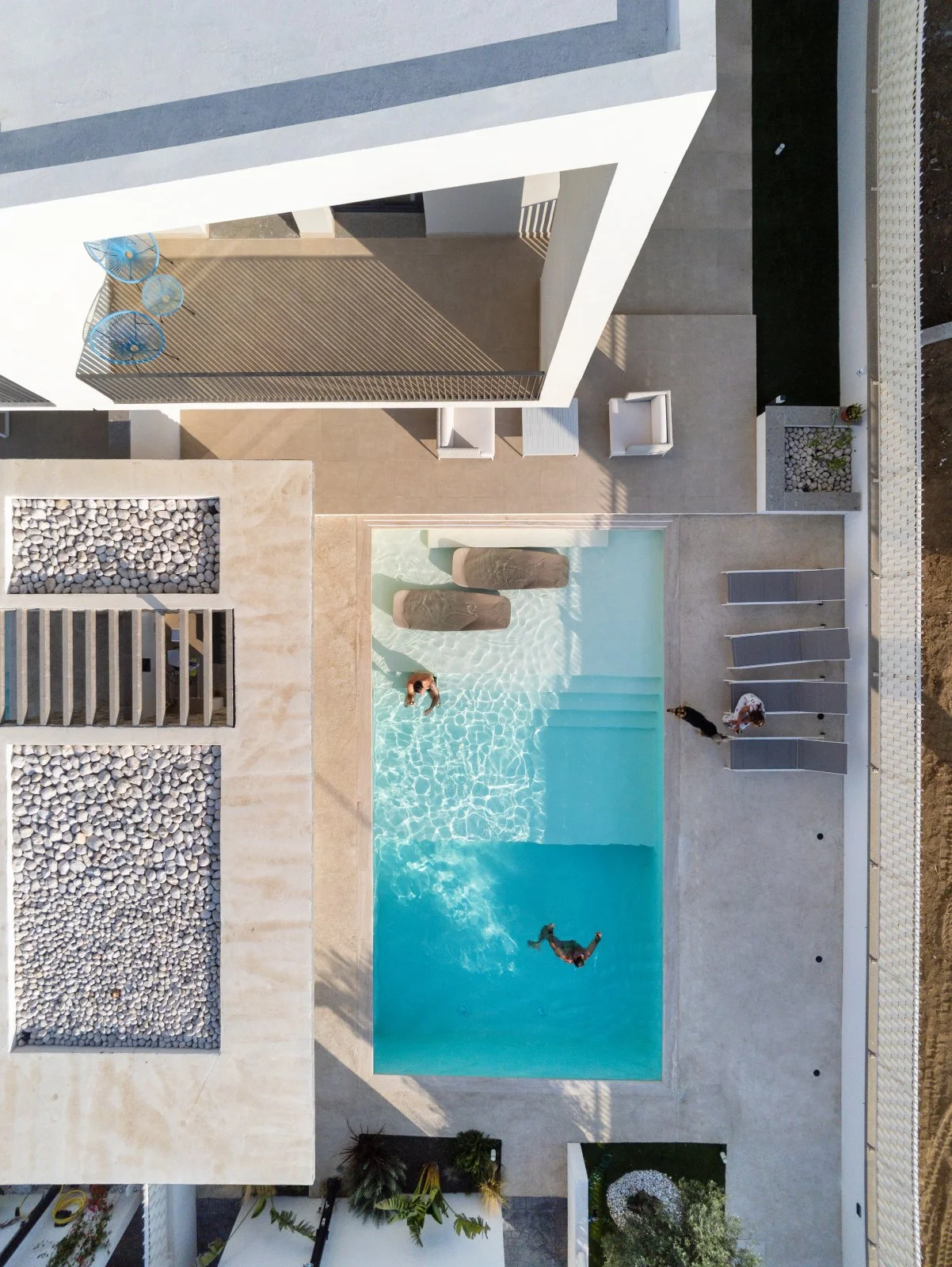
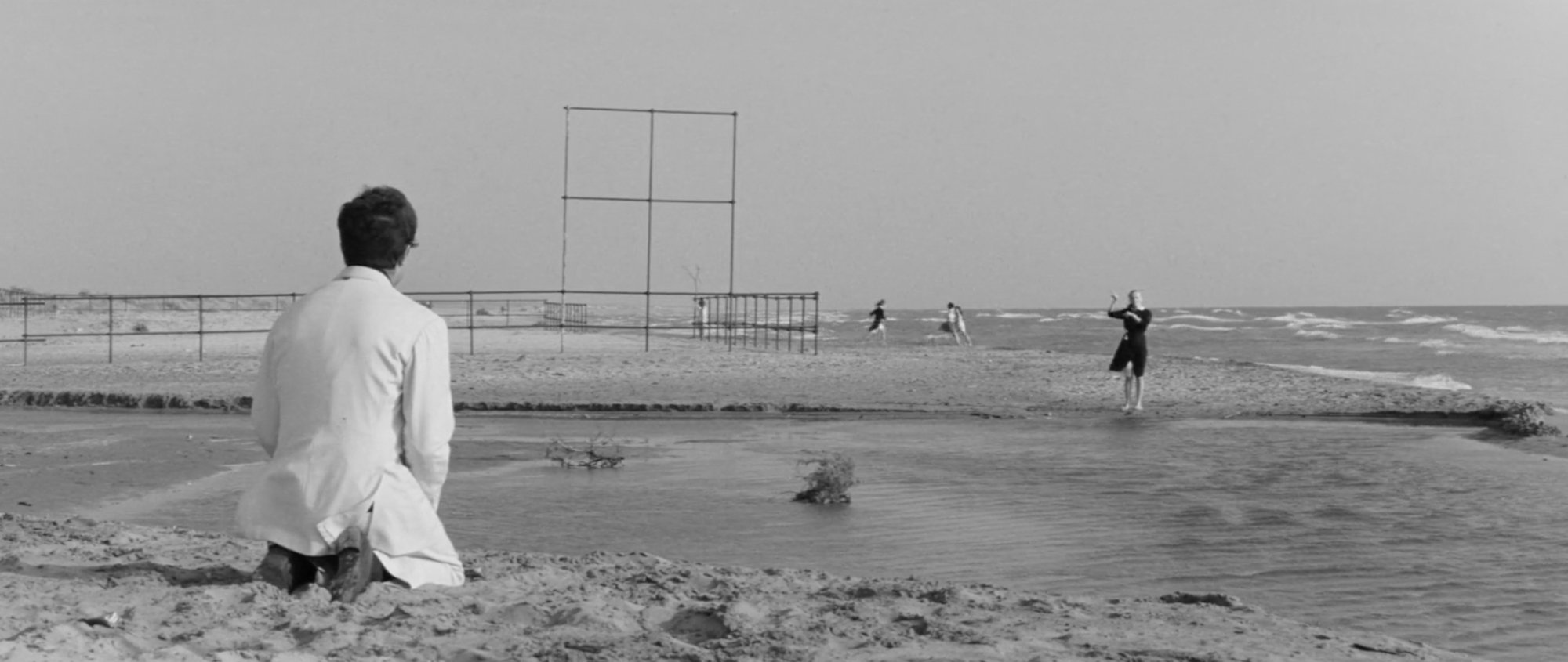
In the private garden, architectural elements such as the pergola over the bioclimatic winter garden draw inspiration from the temporary beach structures found in nearby seaside resorts. These features evoke a suspended, almost weightless aesthetic.
They deliberately reference the cinematic imagery of La Dolce Vita—specifically the iconic final scene on the beach: a metaphysical landscape of minimal, transparent structures in silent dialogue with the coastline.
The “La Playa” project proposes a residential typology embedded in the landscape, capable of combining formal quality, cultural references, and a strong focus on environmental sustainability. Text description by the architects.