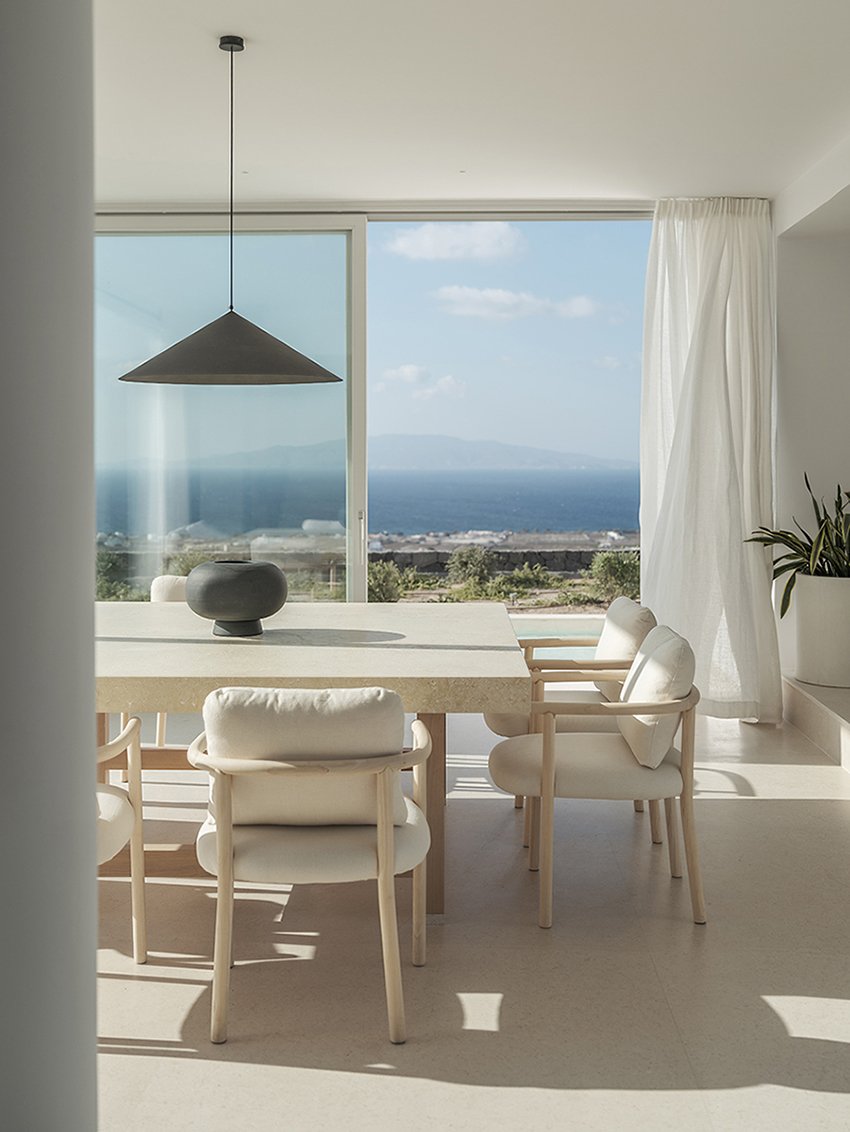
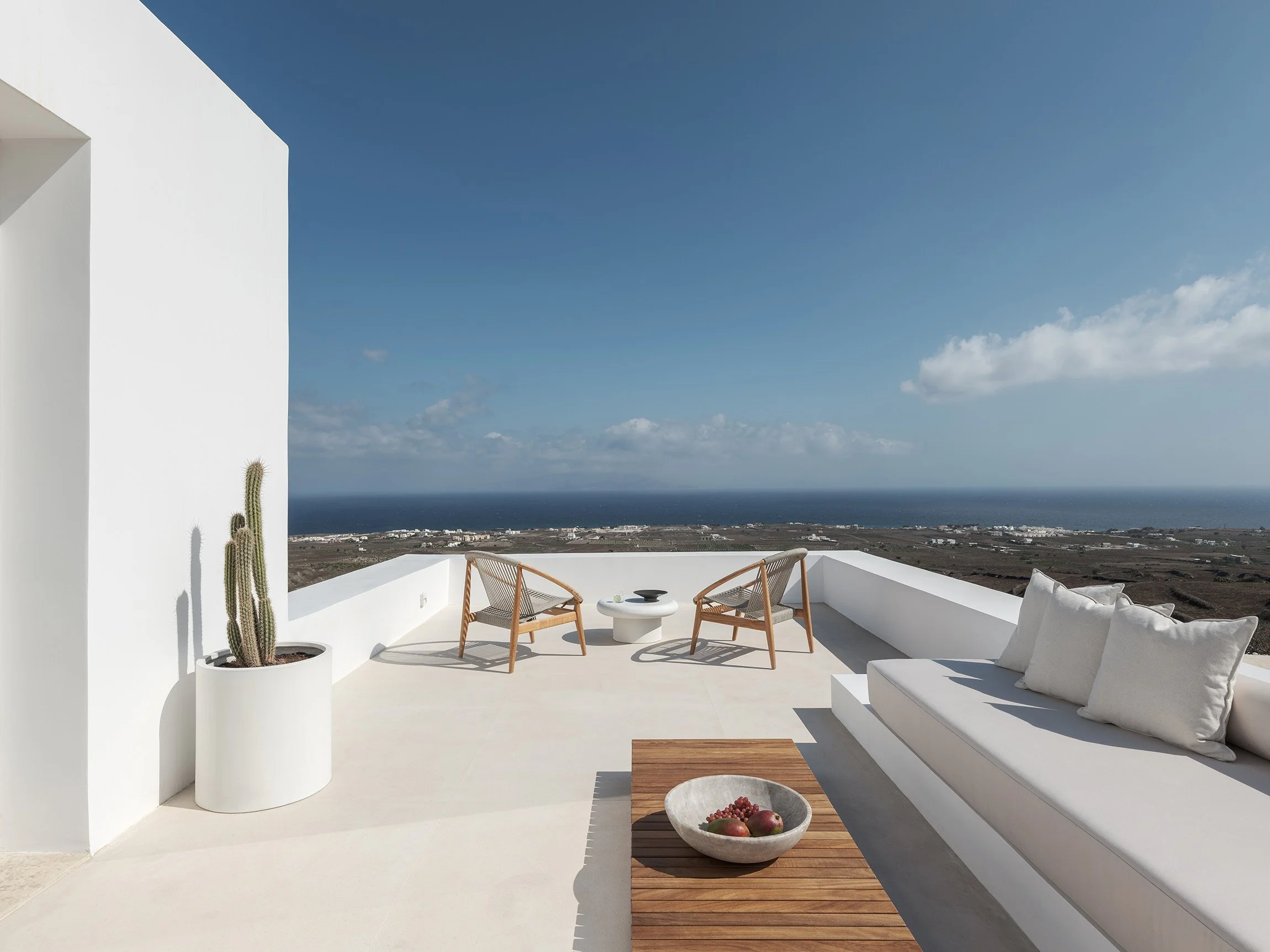
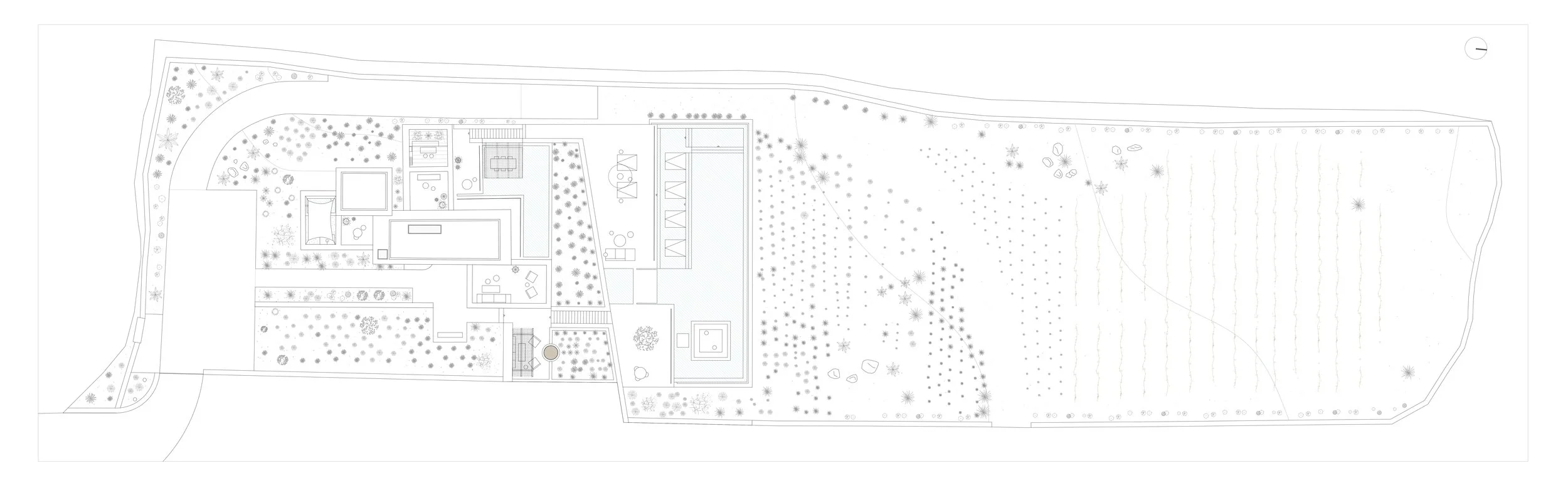
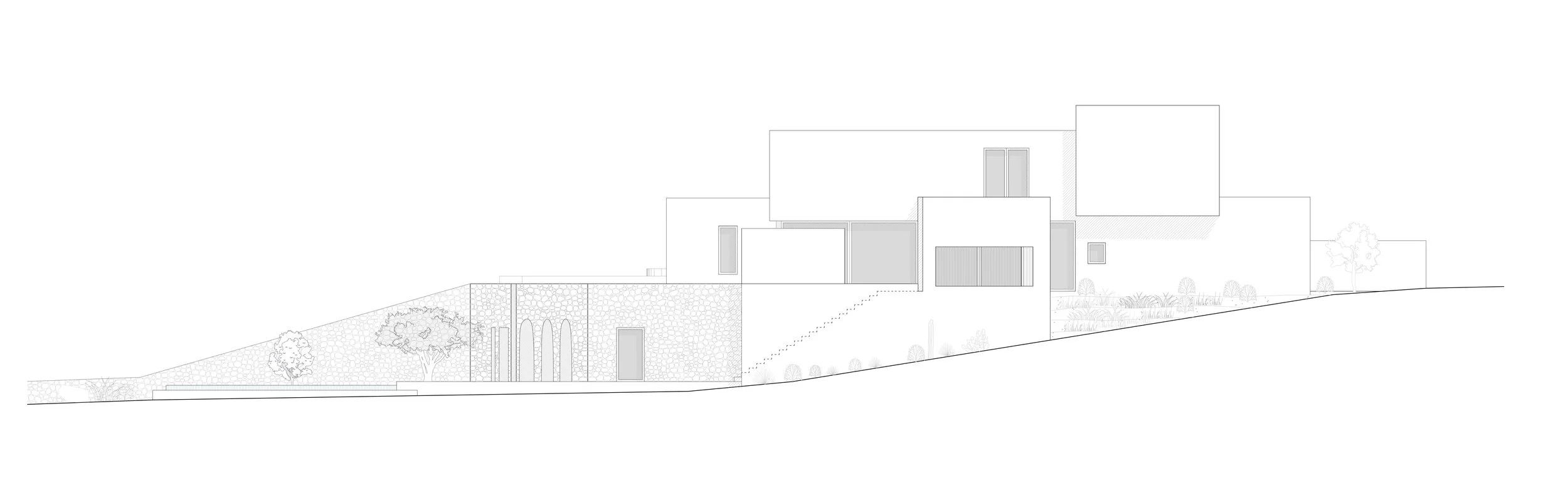
The house is located in a rural area, on the outskirts of the traditional village of Oia in Santorini, looking northwest to the surrounding landscape of vines and to the Aegean sea. The access to the plot is via an old and narrow pedestrian, connecting the main street of the village, on the top of caldera with the vineyards lower on the hillside.
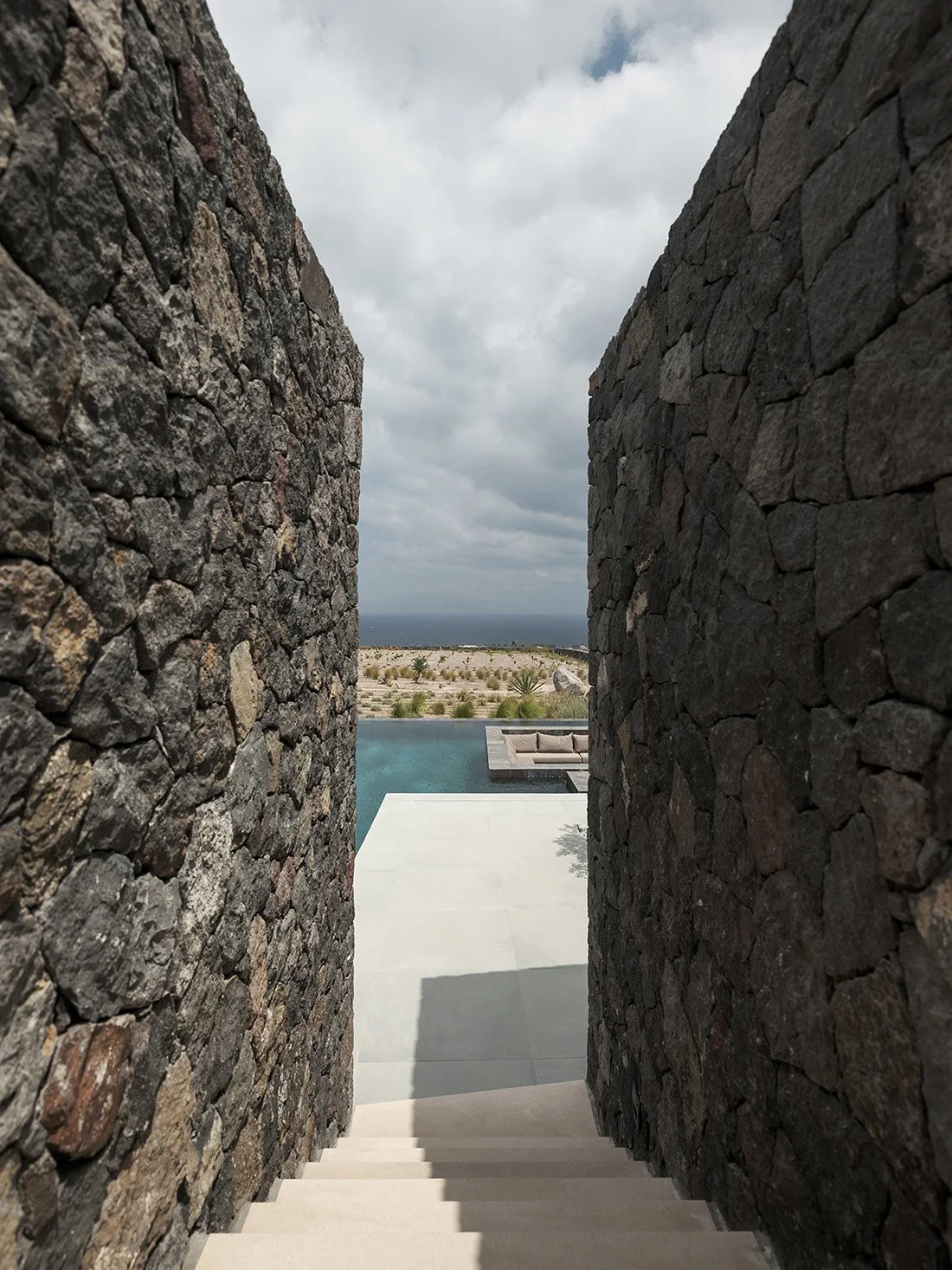
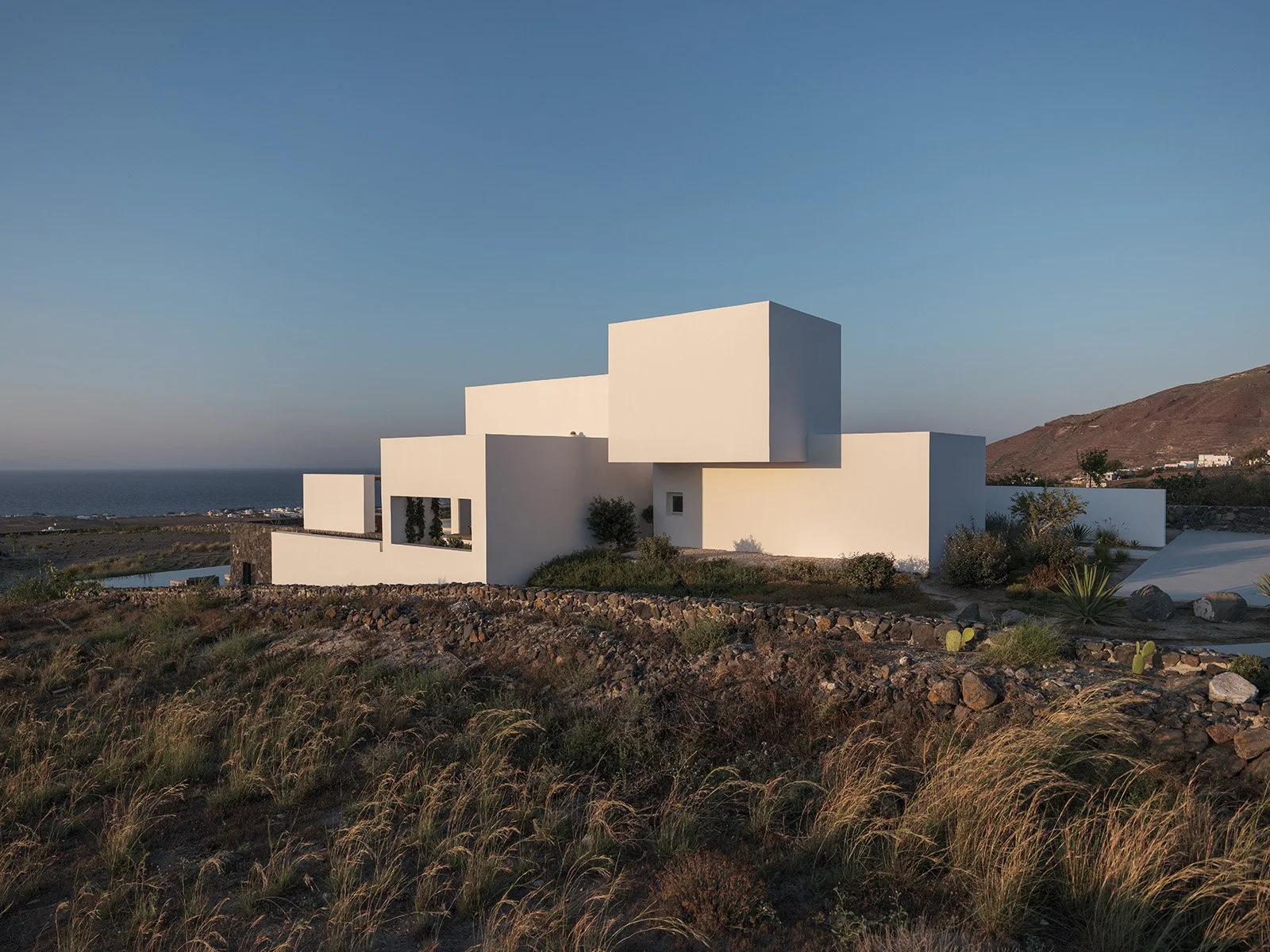
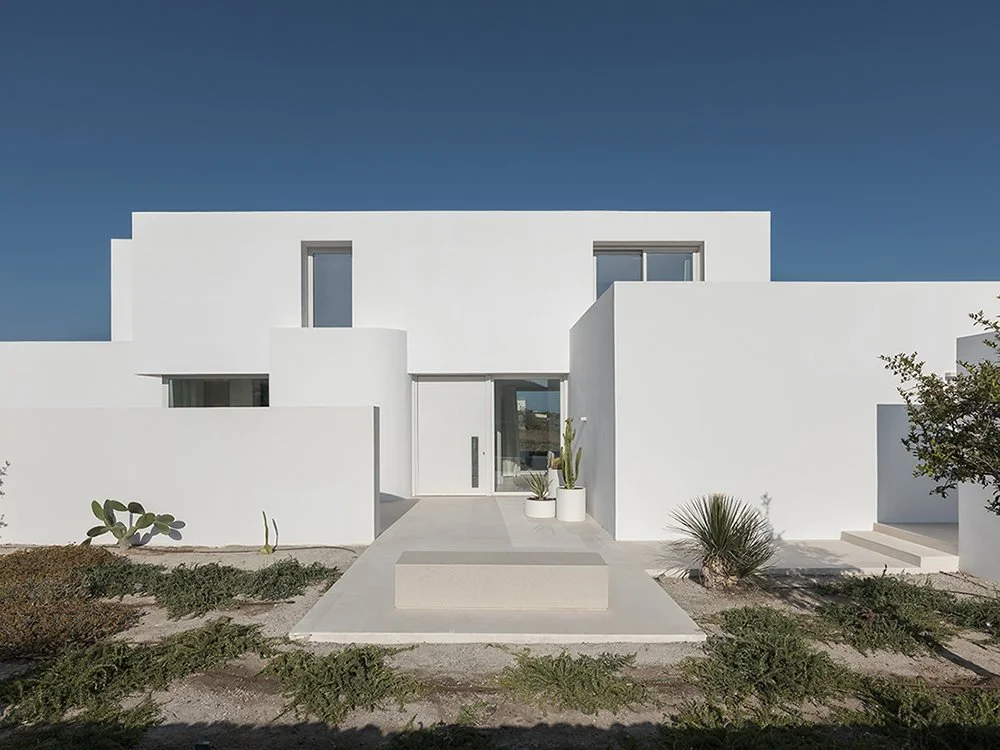
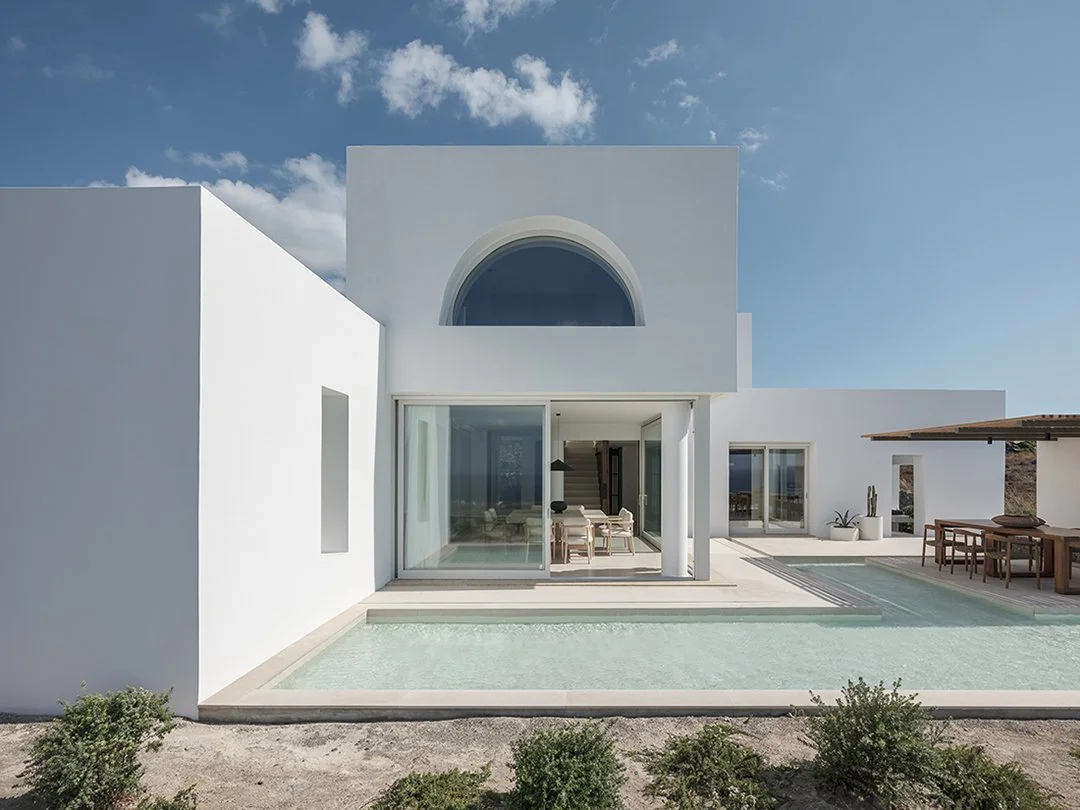
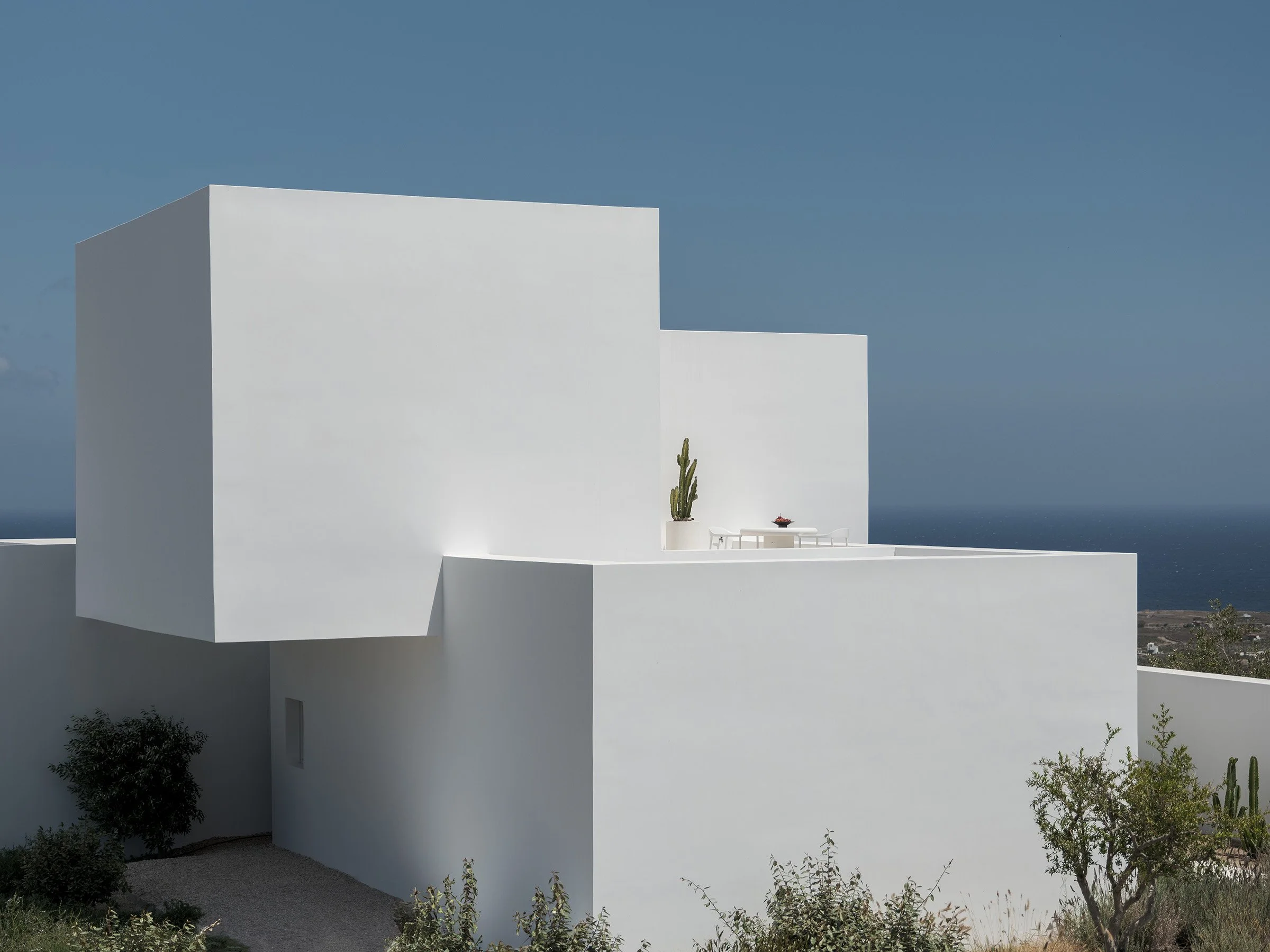
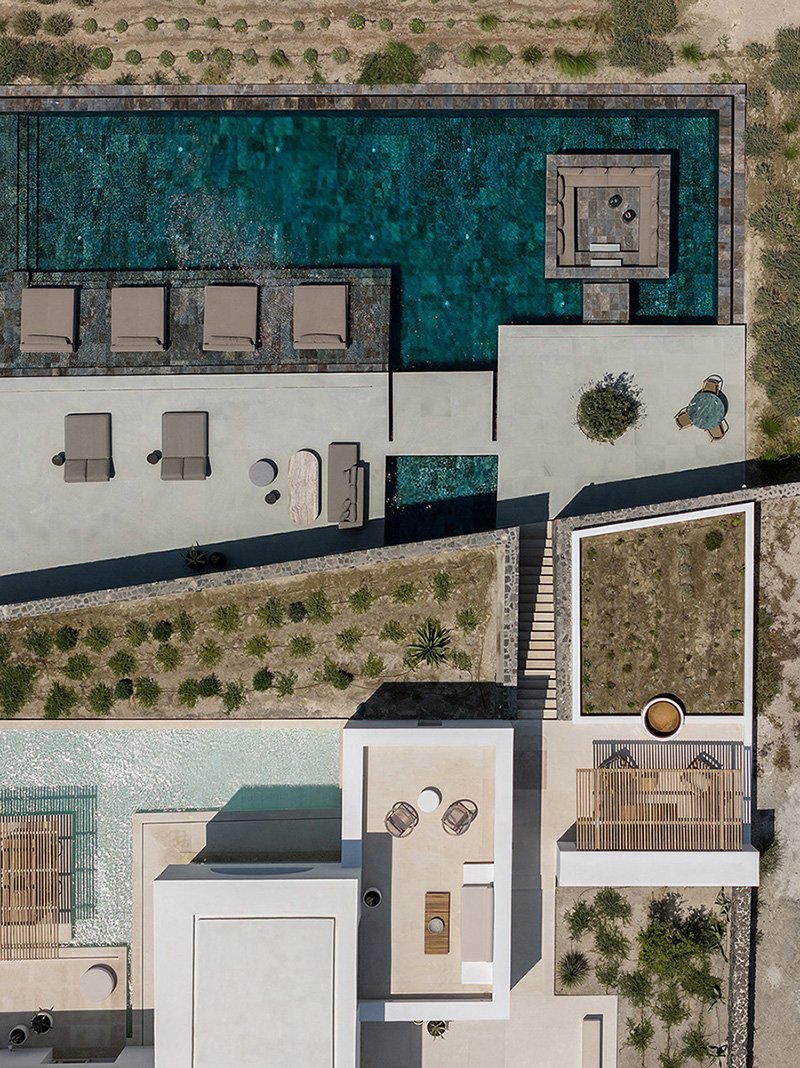
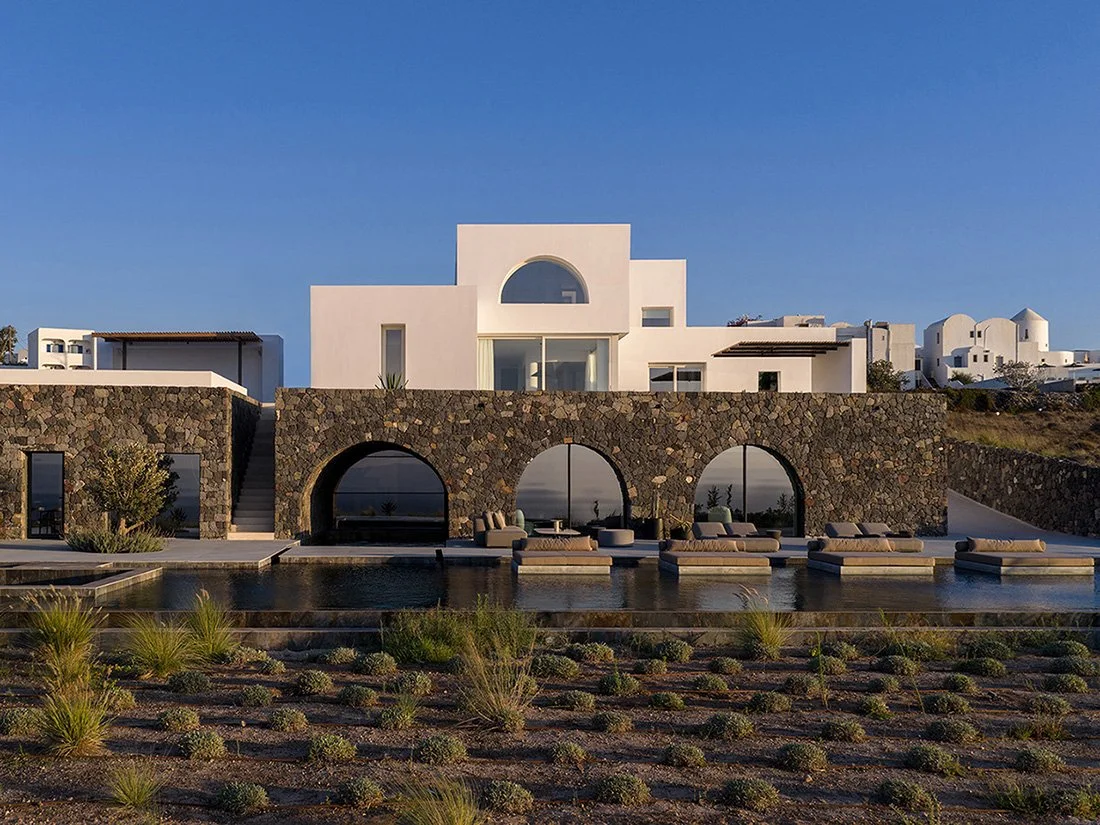
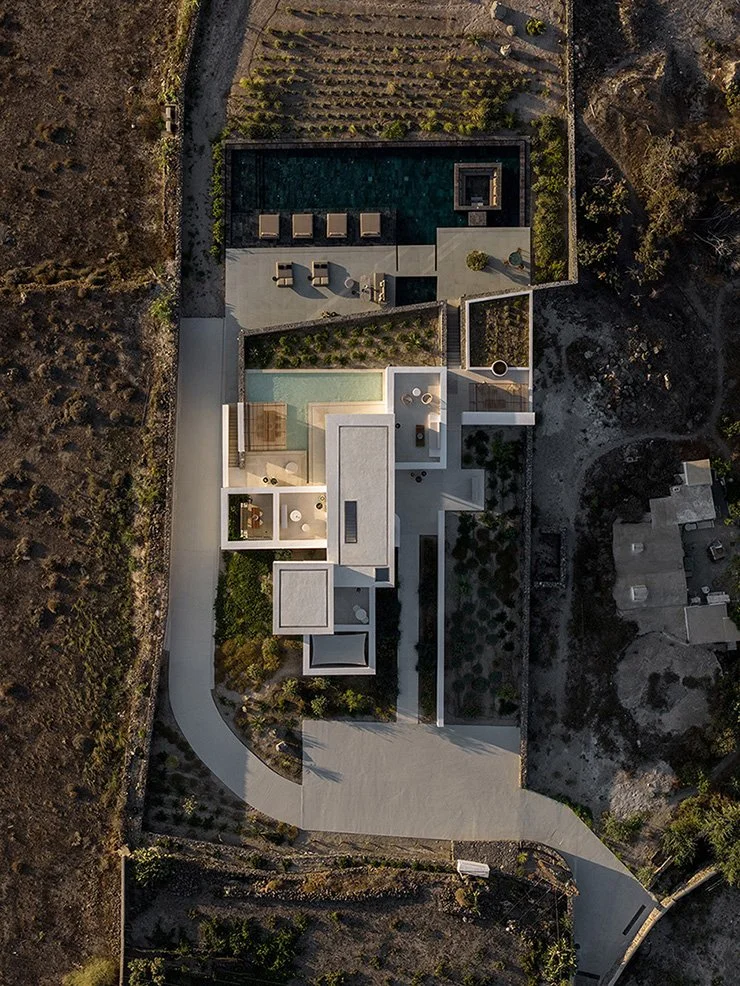
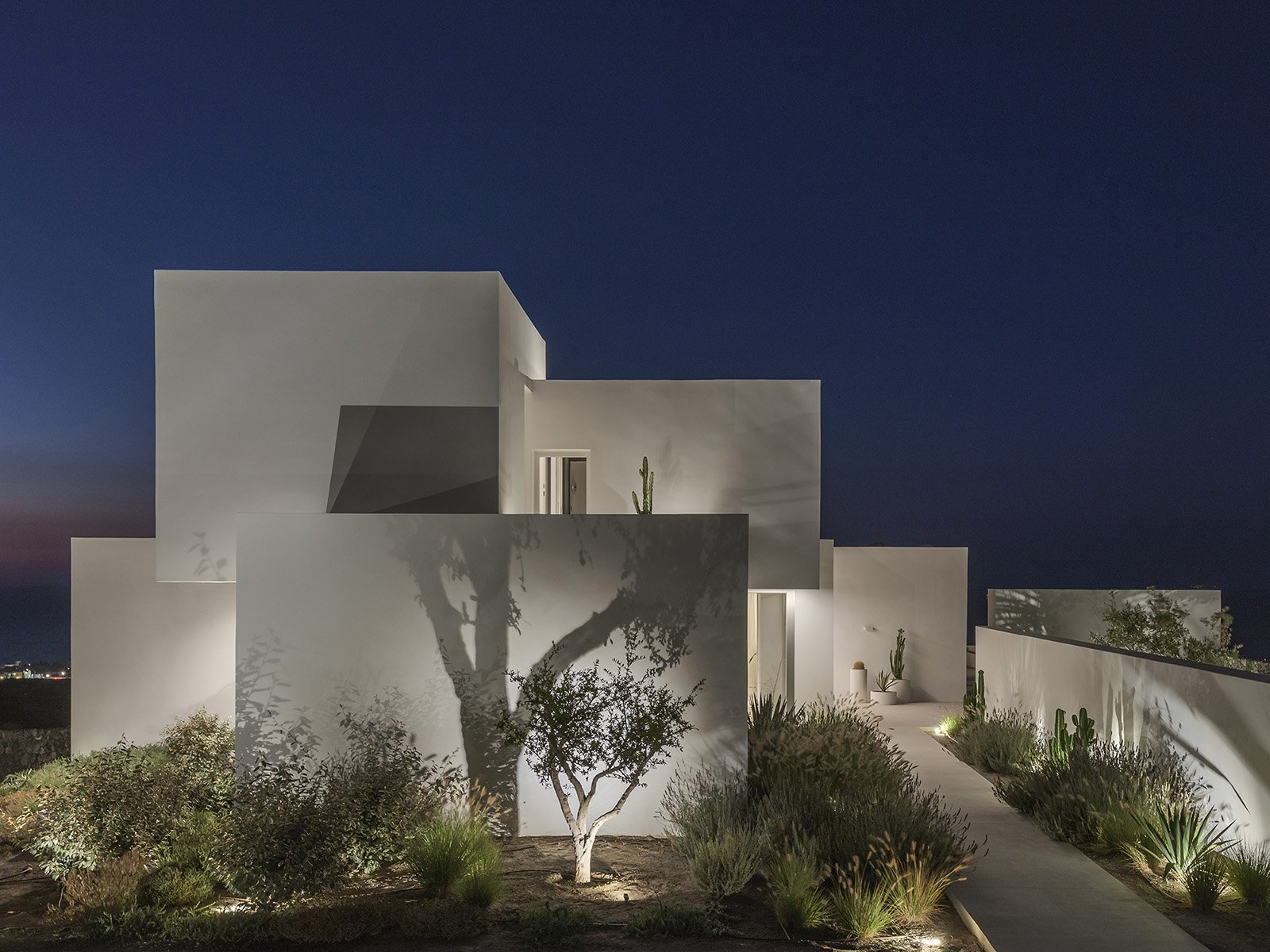
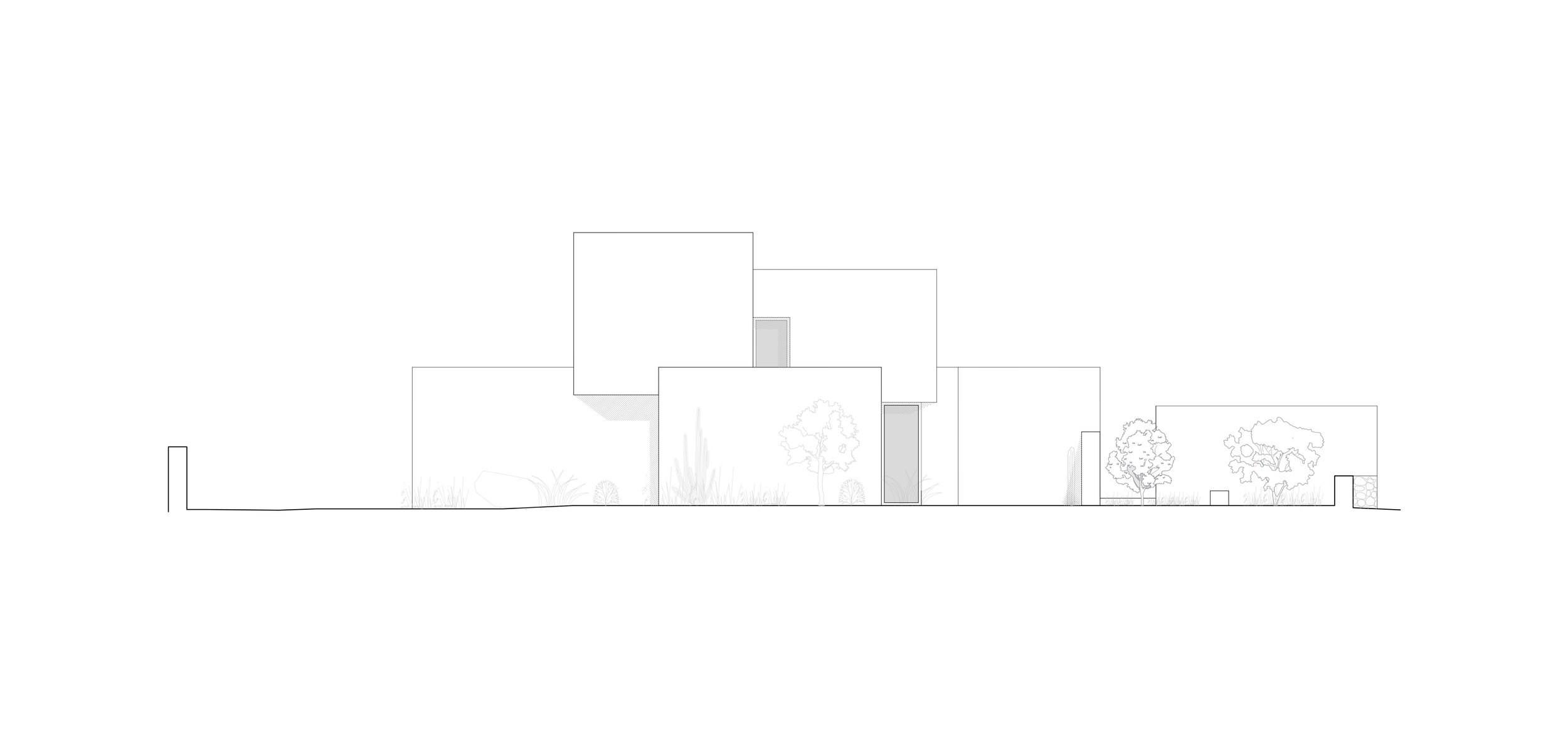
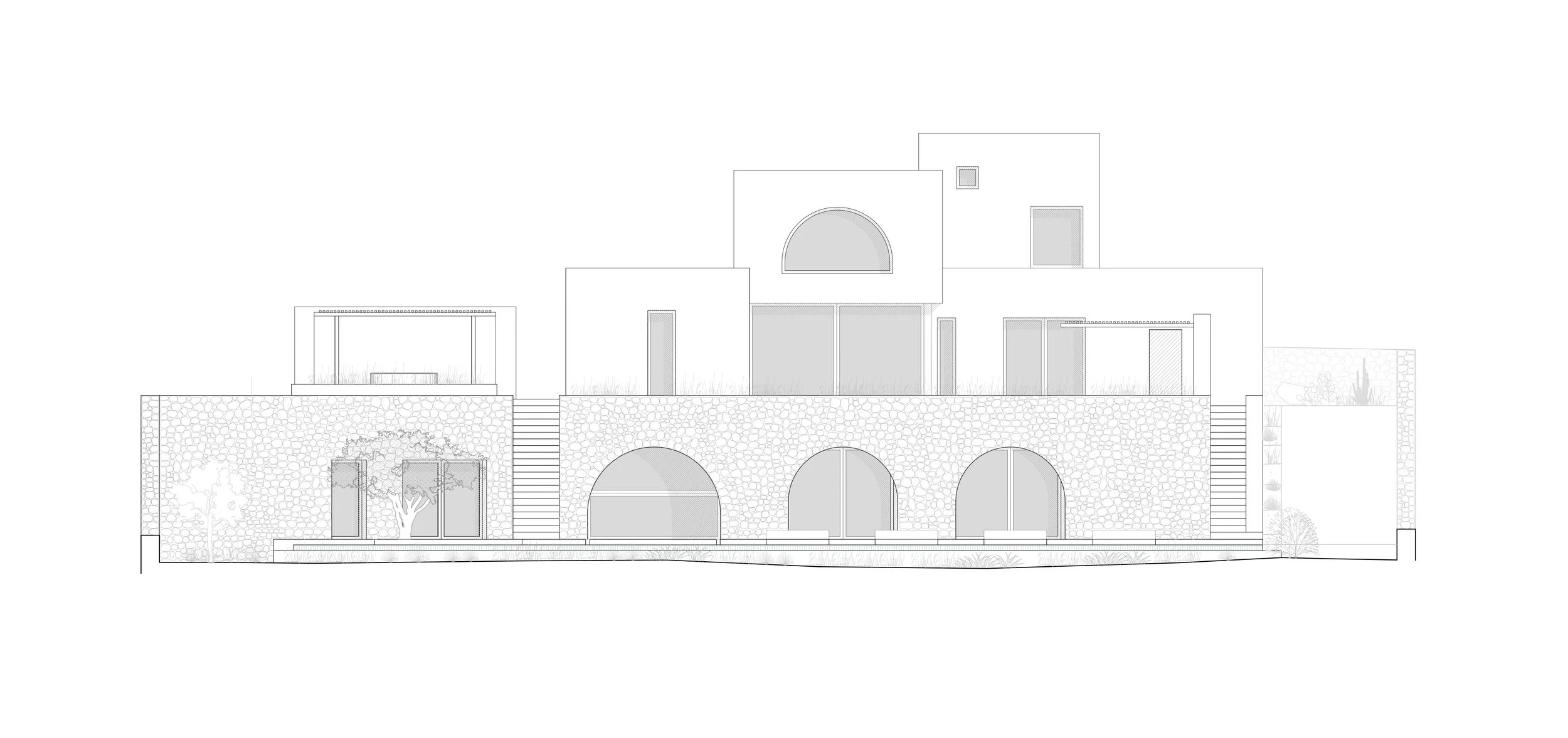
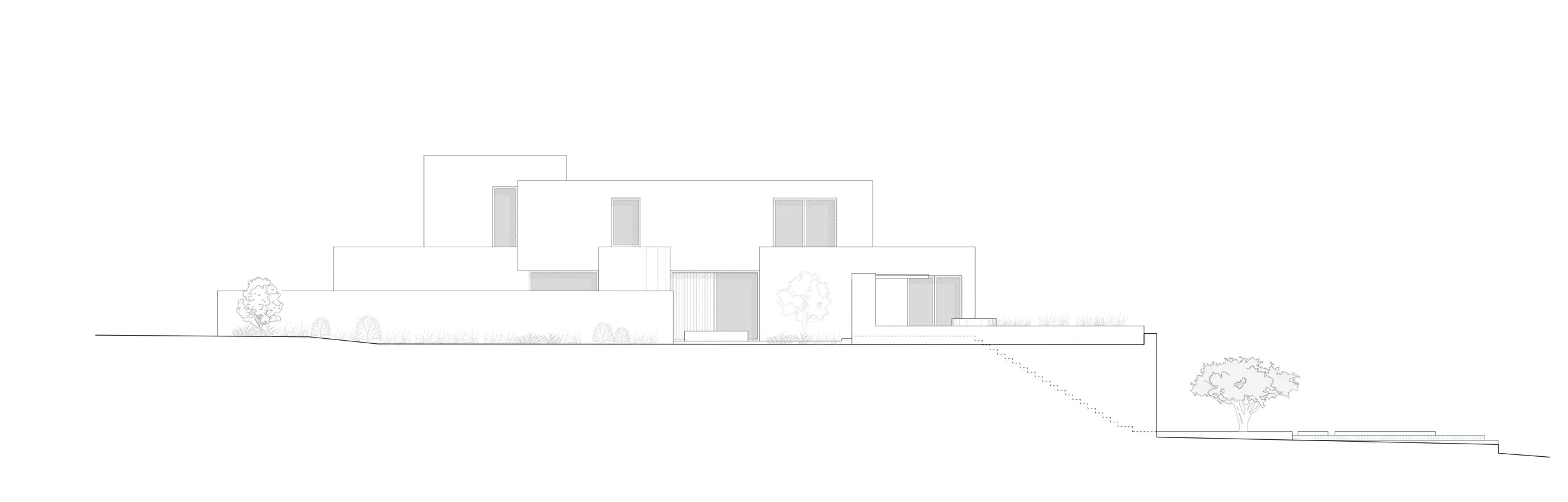
In the context of the plot’s direct relation with the settlement and the rural landscape, and its slim rectangular form with an old stone berm in it, the proposal is a free composition of white prisms, based on subterranean spaces which are formed behind the existing stone wall.
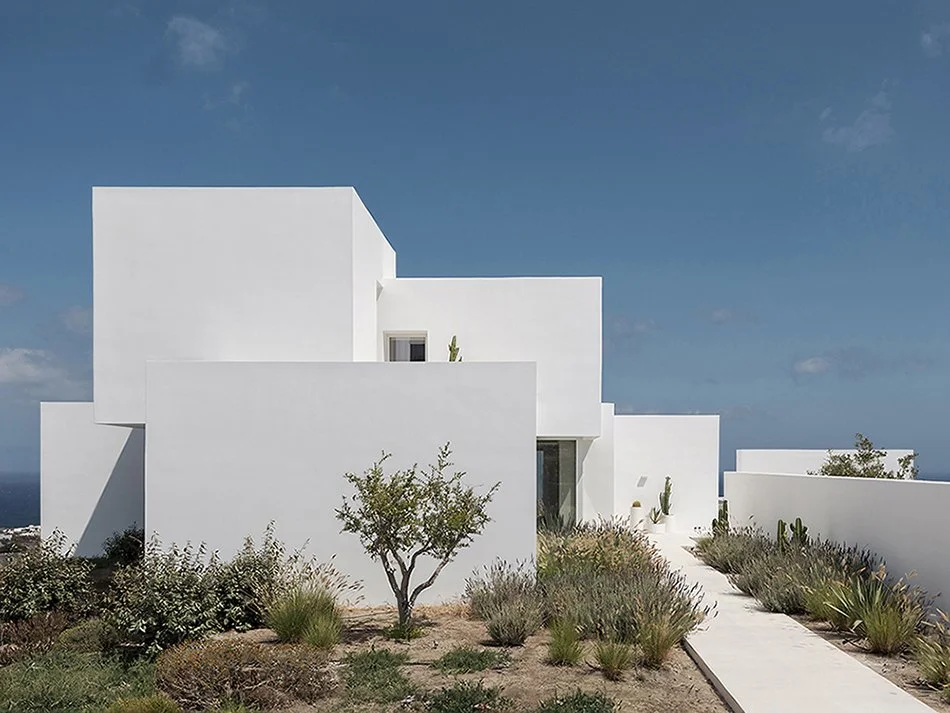
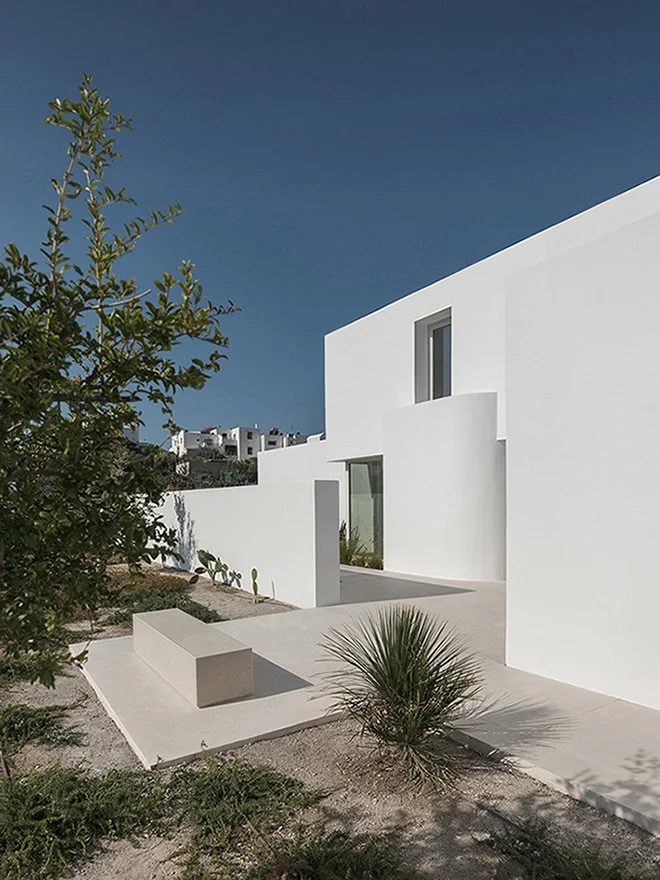
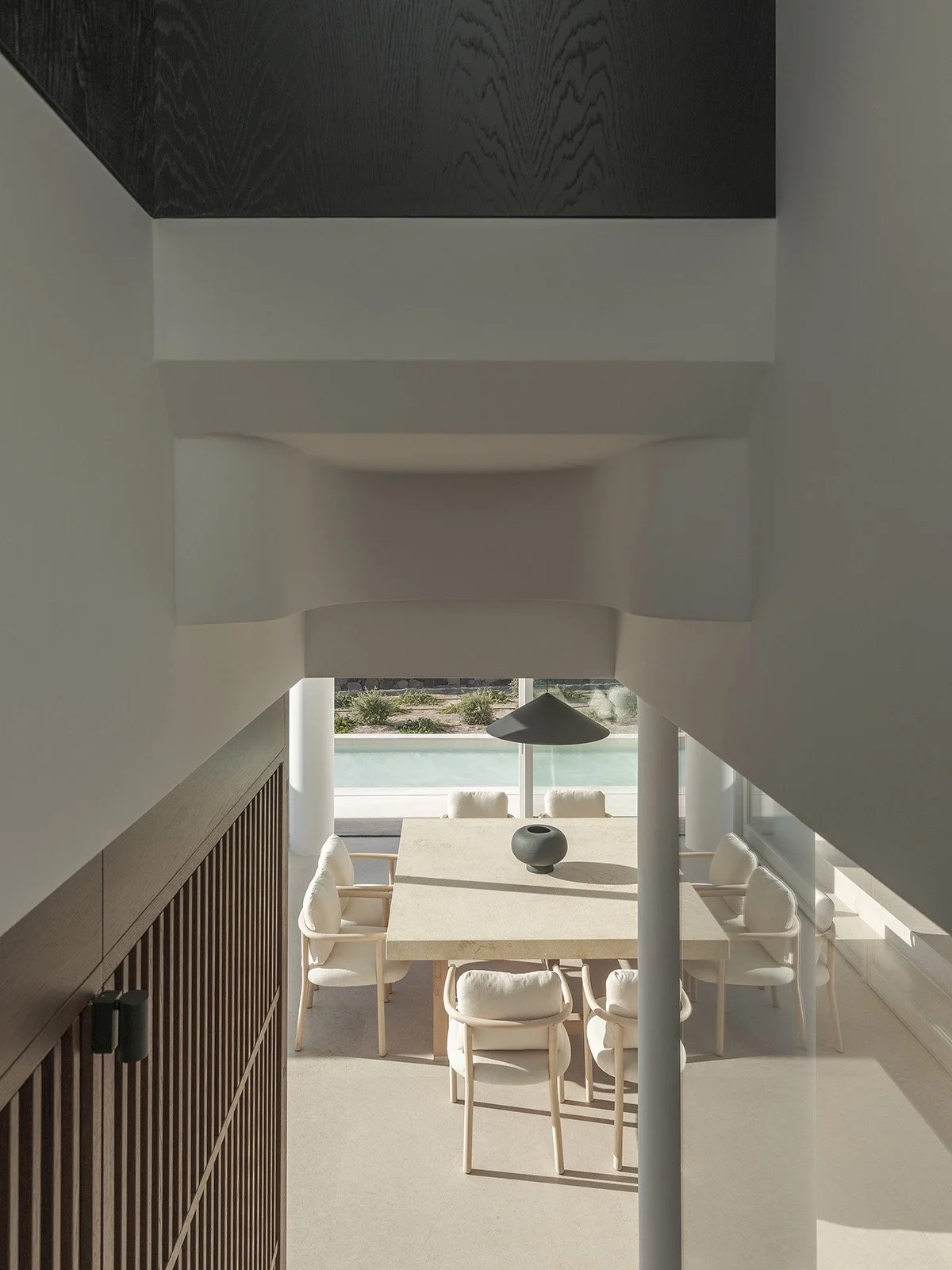
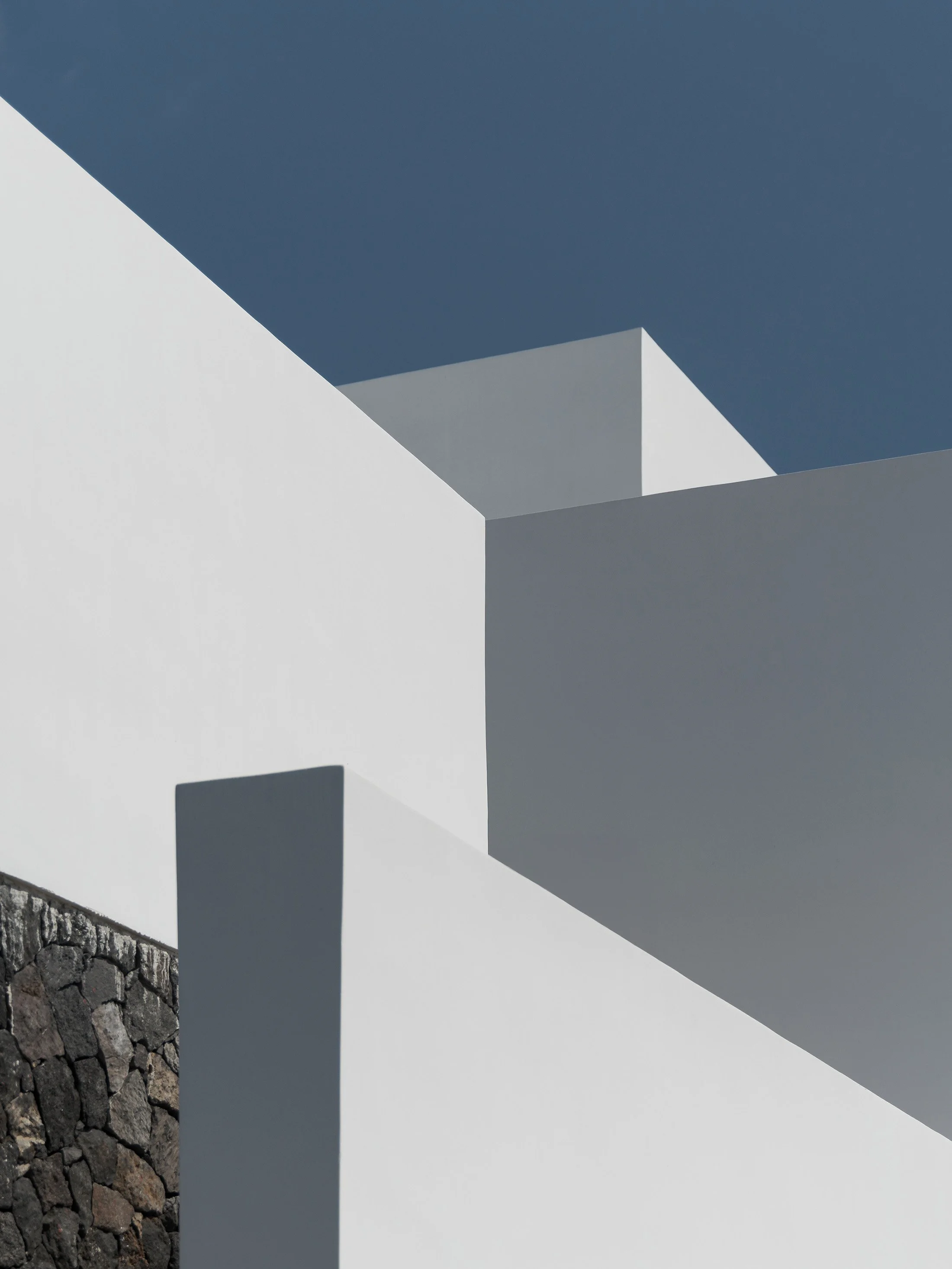
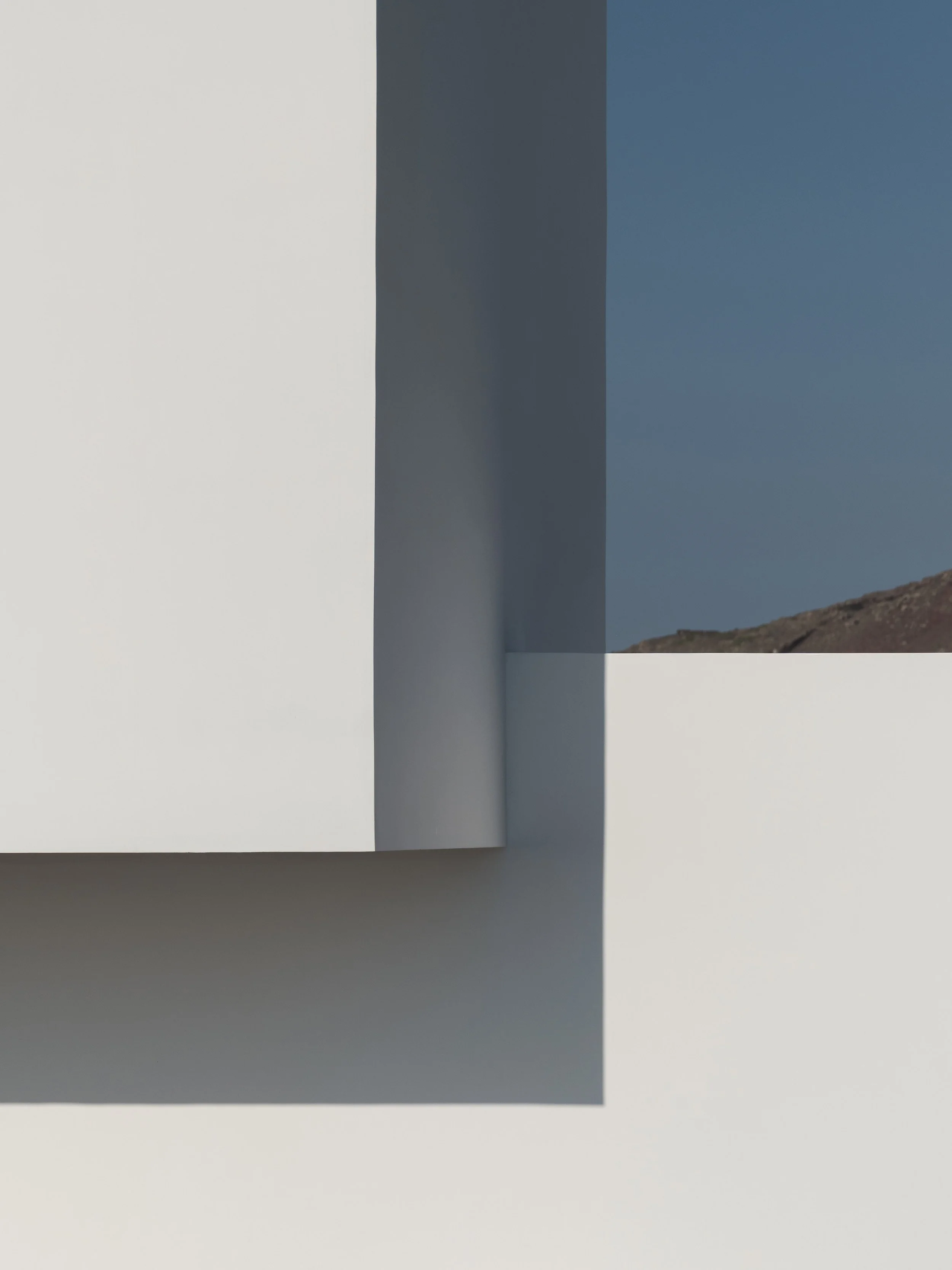
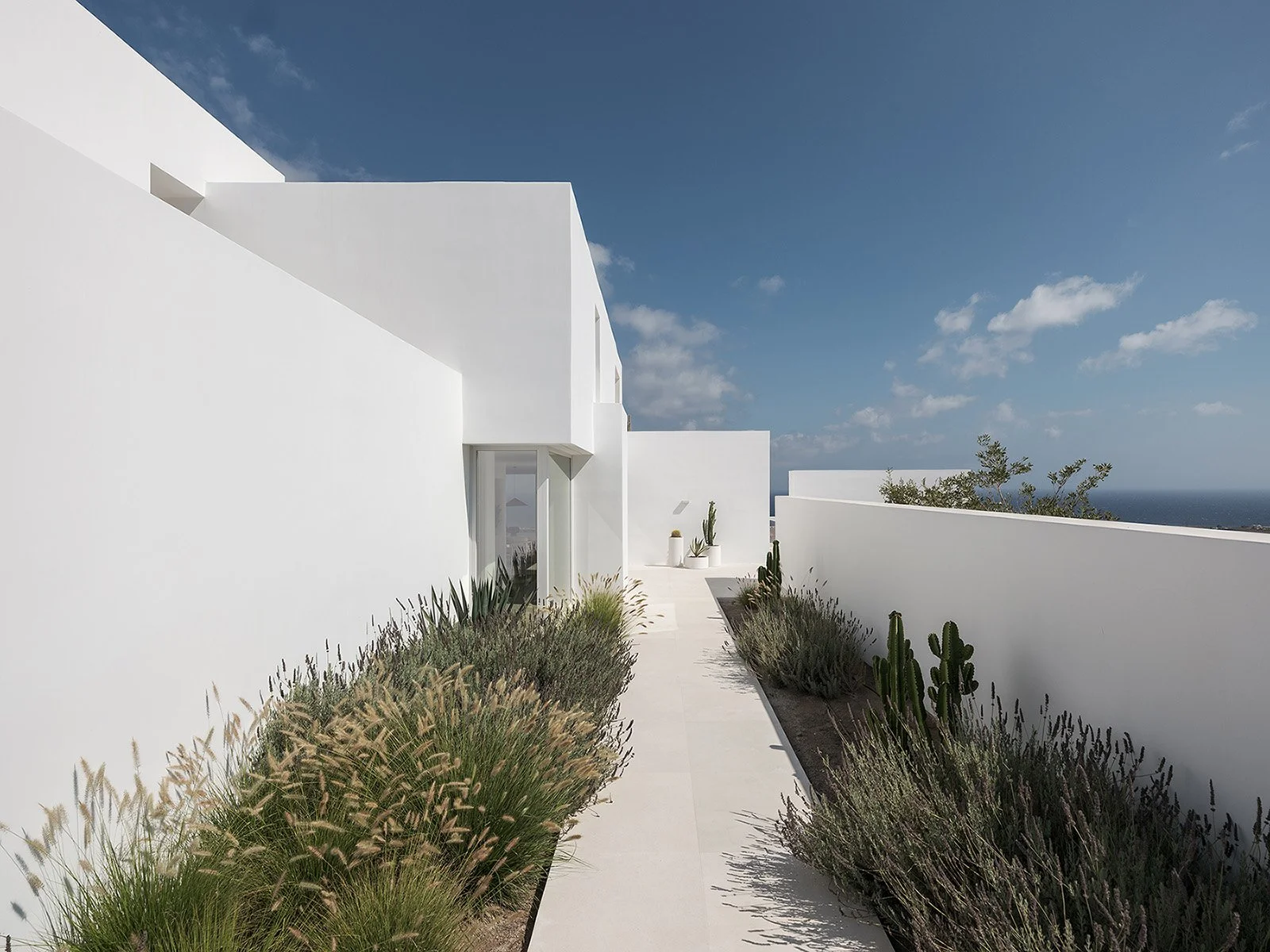
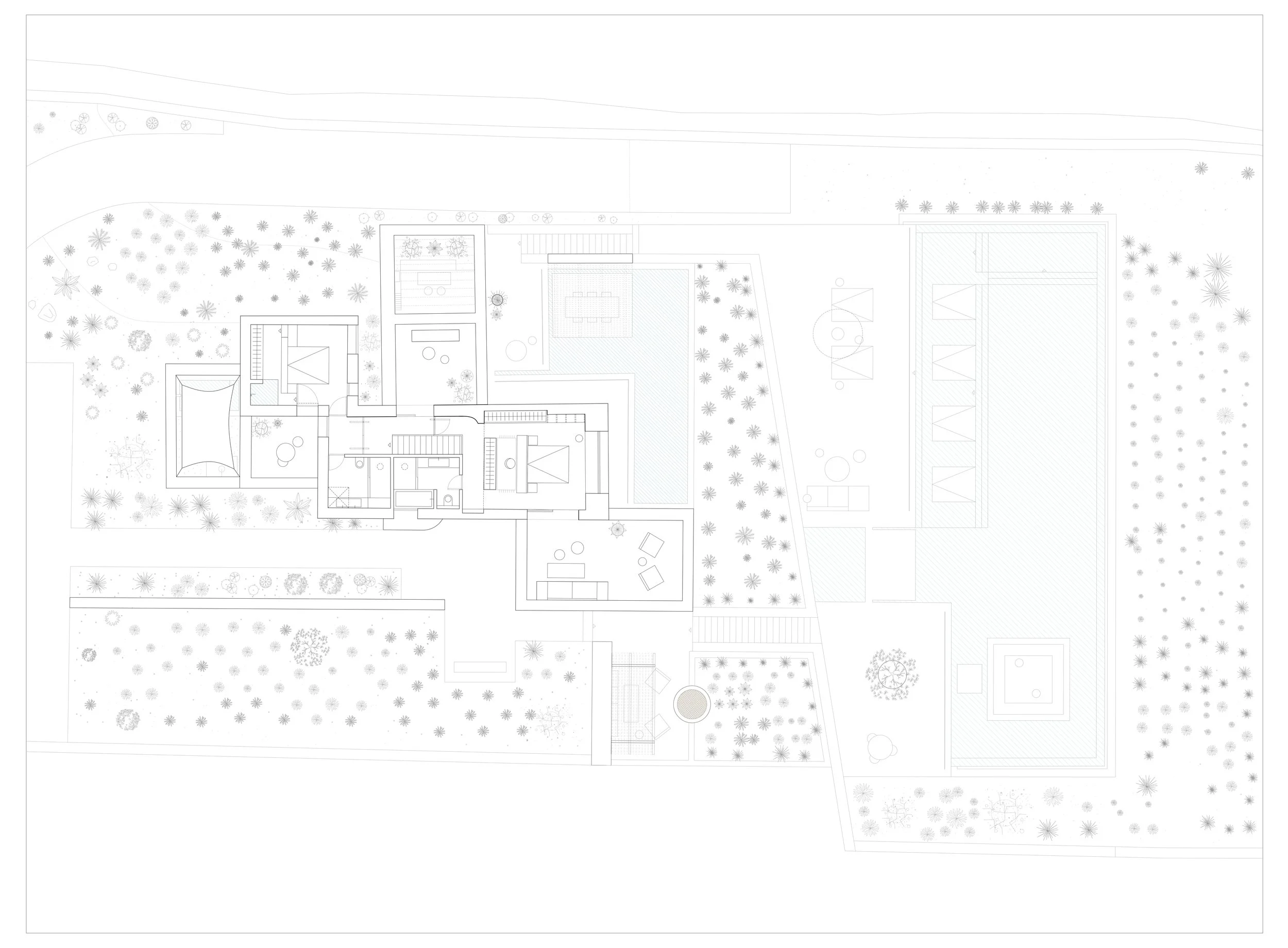
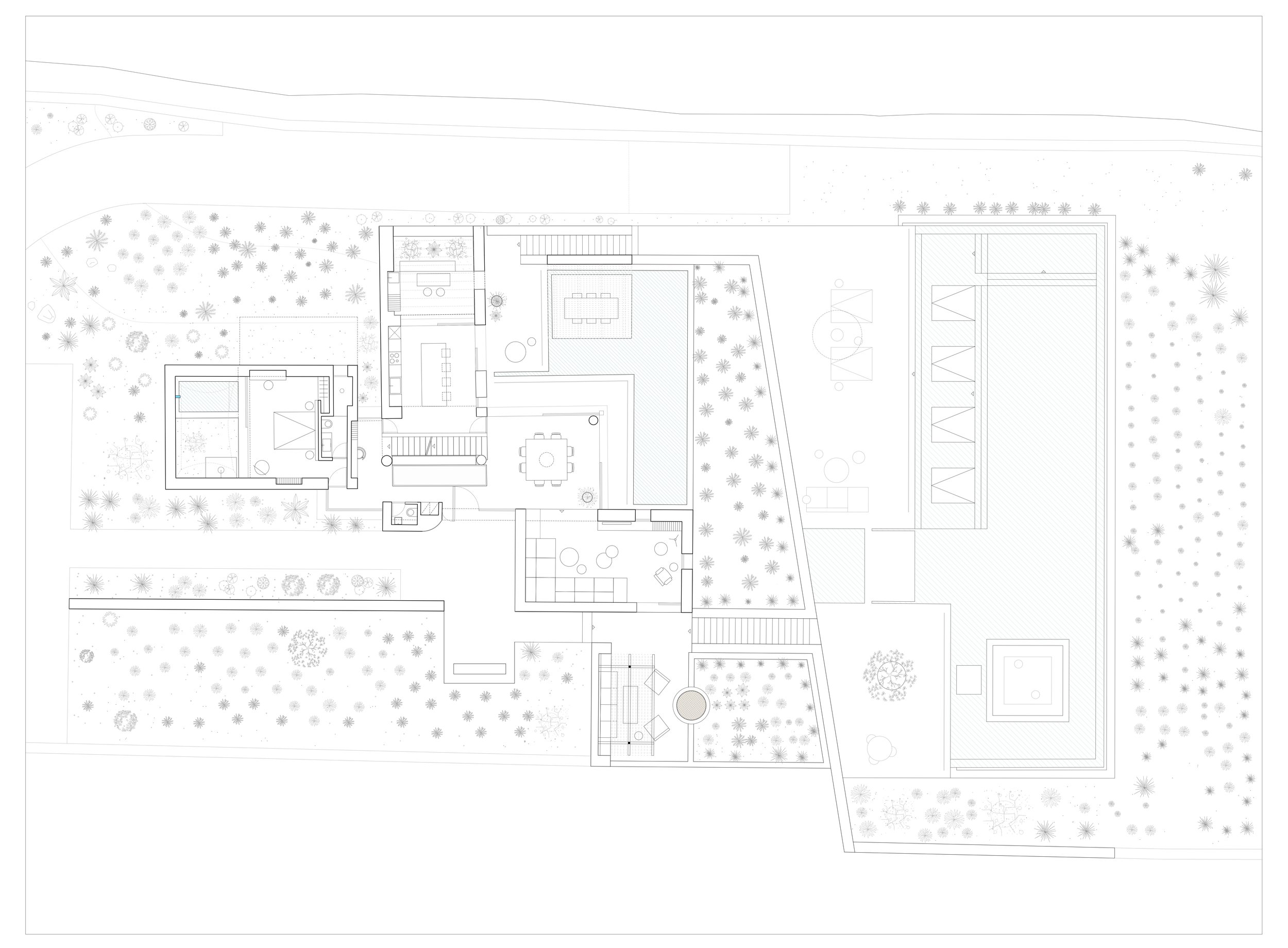
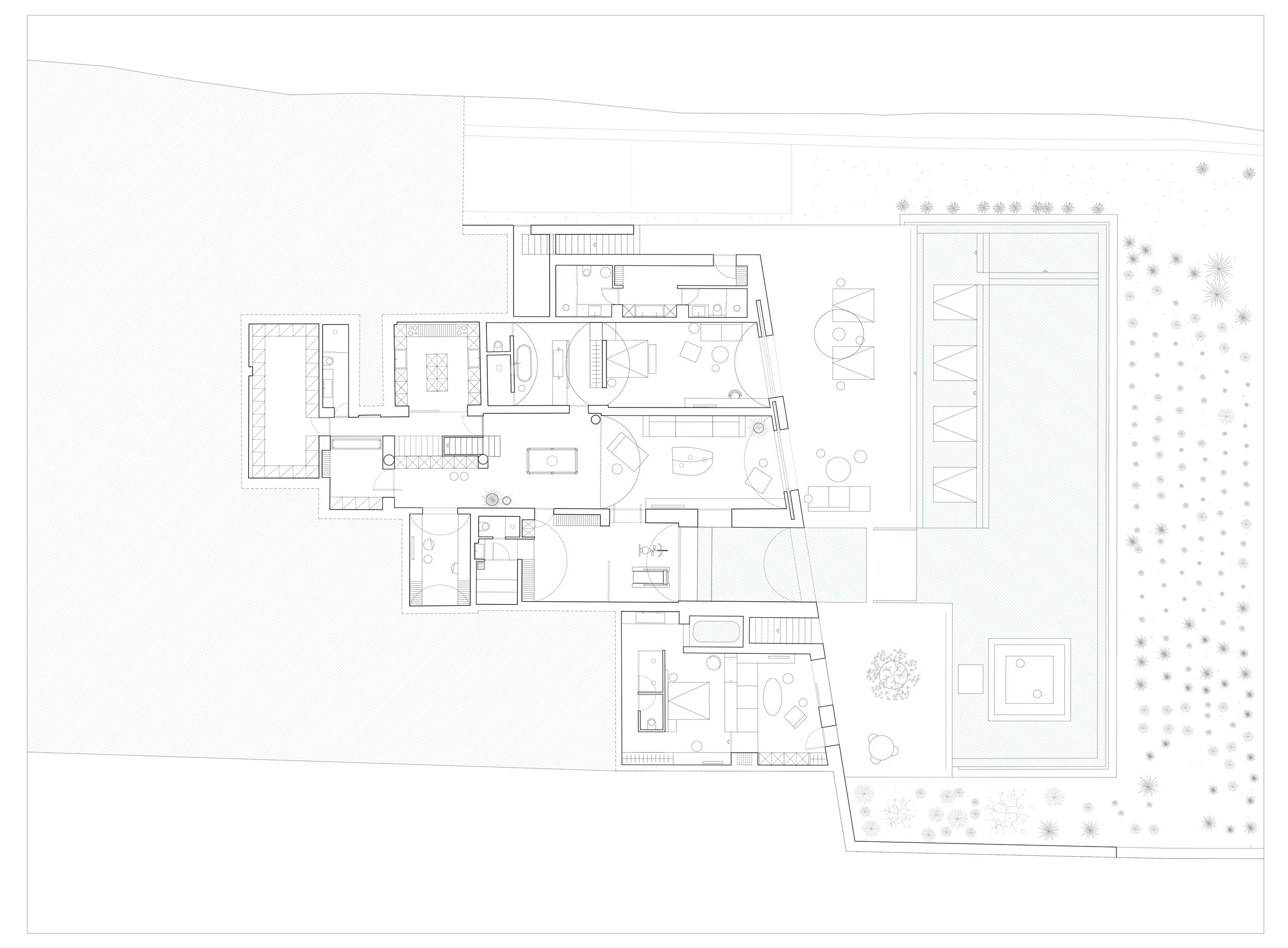
As a contemporary translation of the traditional cubistic architecture, the white boxes of different proportions and dimensions, which include the private & semi-private spaces of the house, are placed in a certain layout, in the ground floor and the upper floor levels, forming among them the main common space of the house, as a defined void inseparably connected with its exterior space.
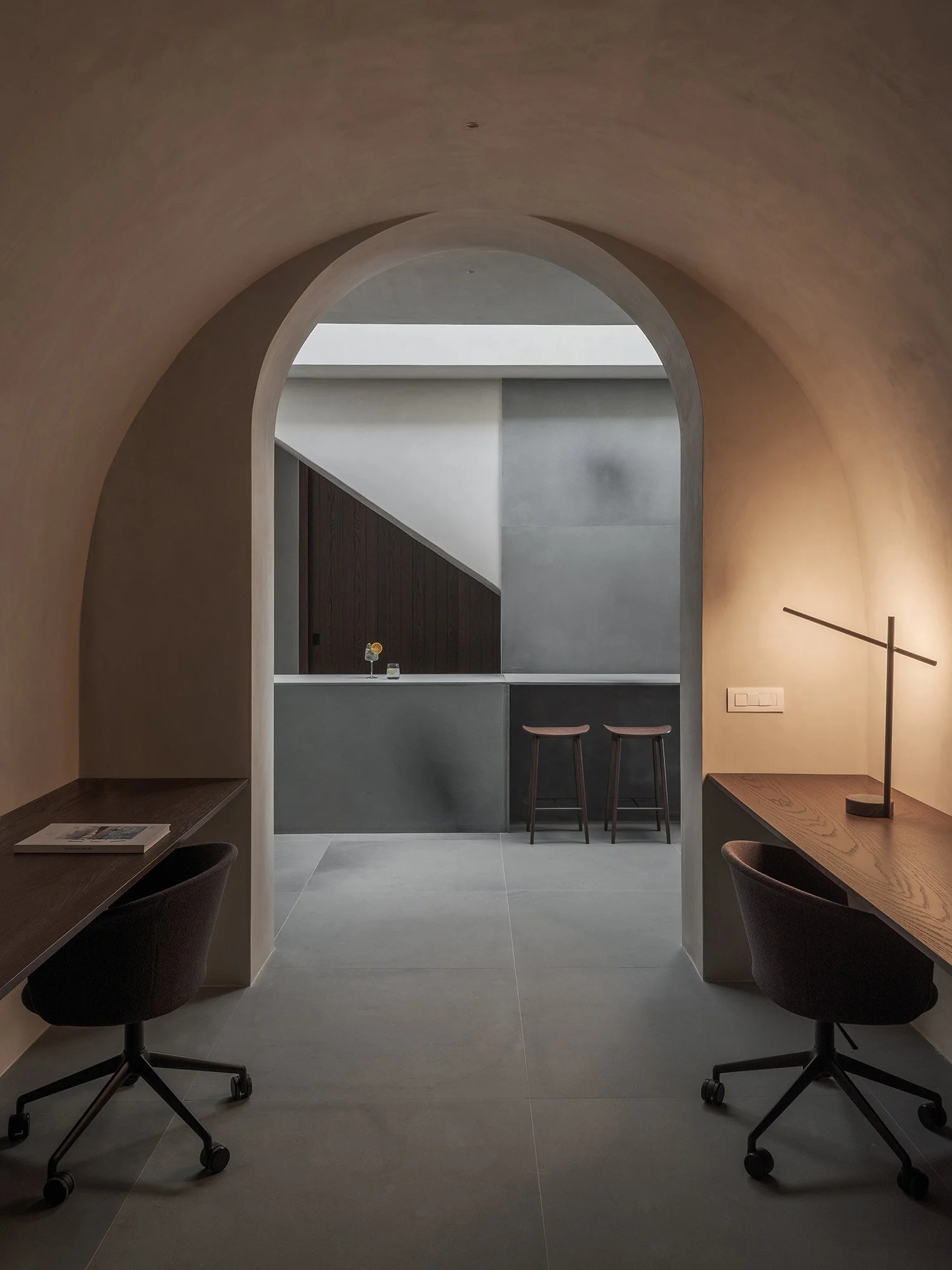
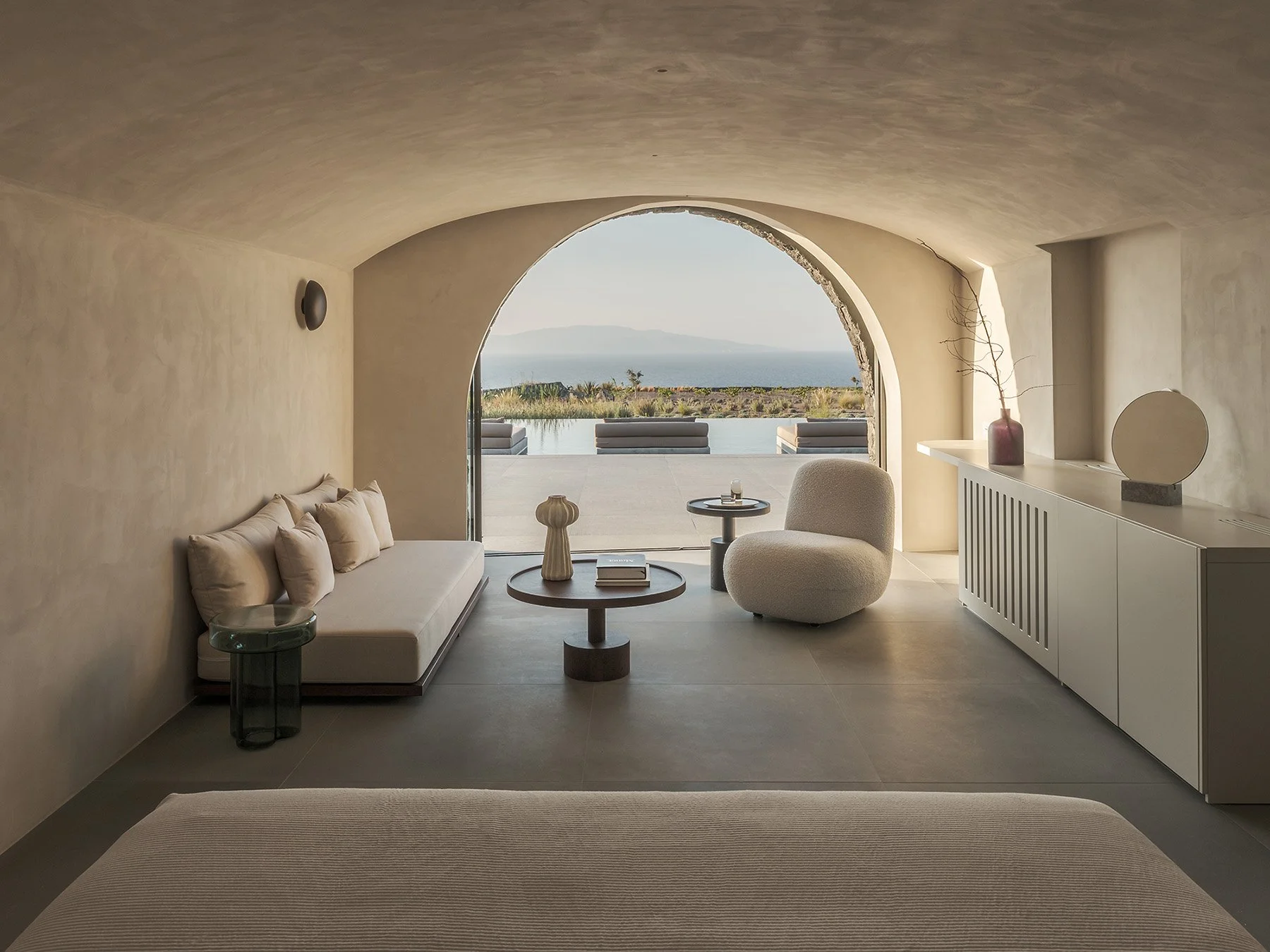
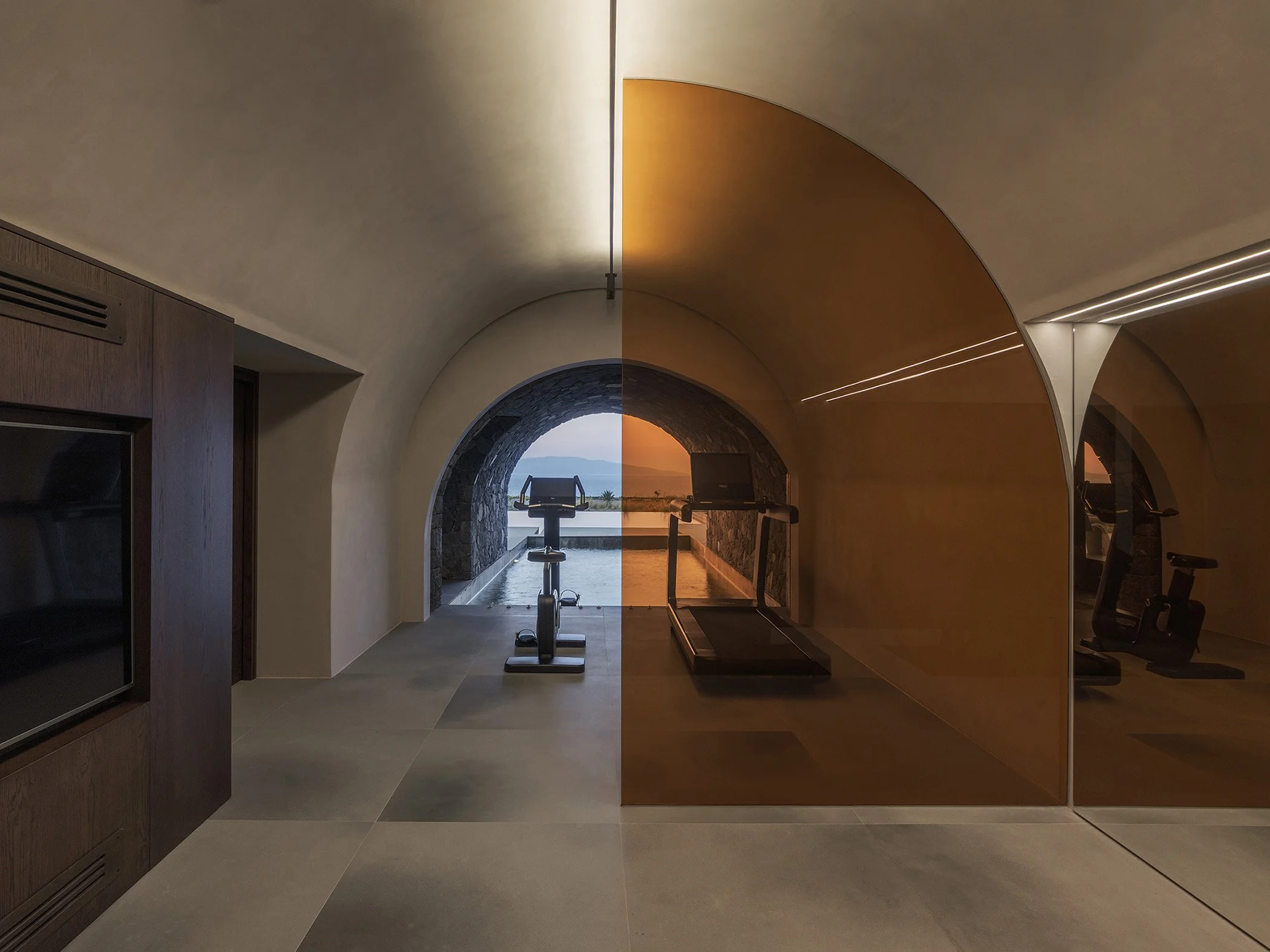
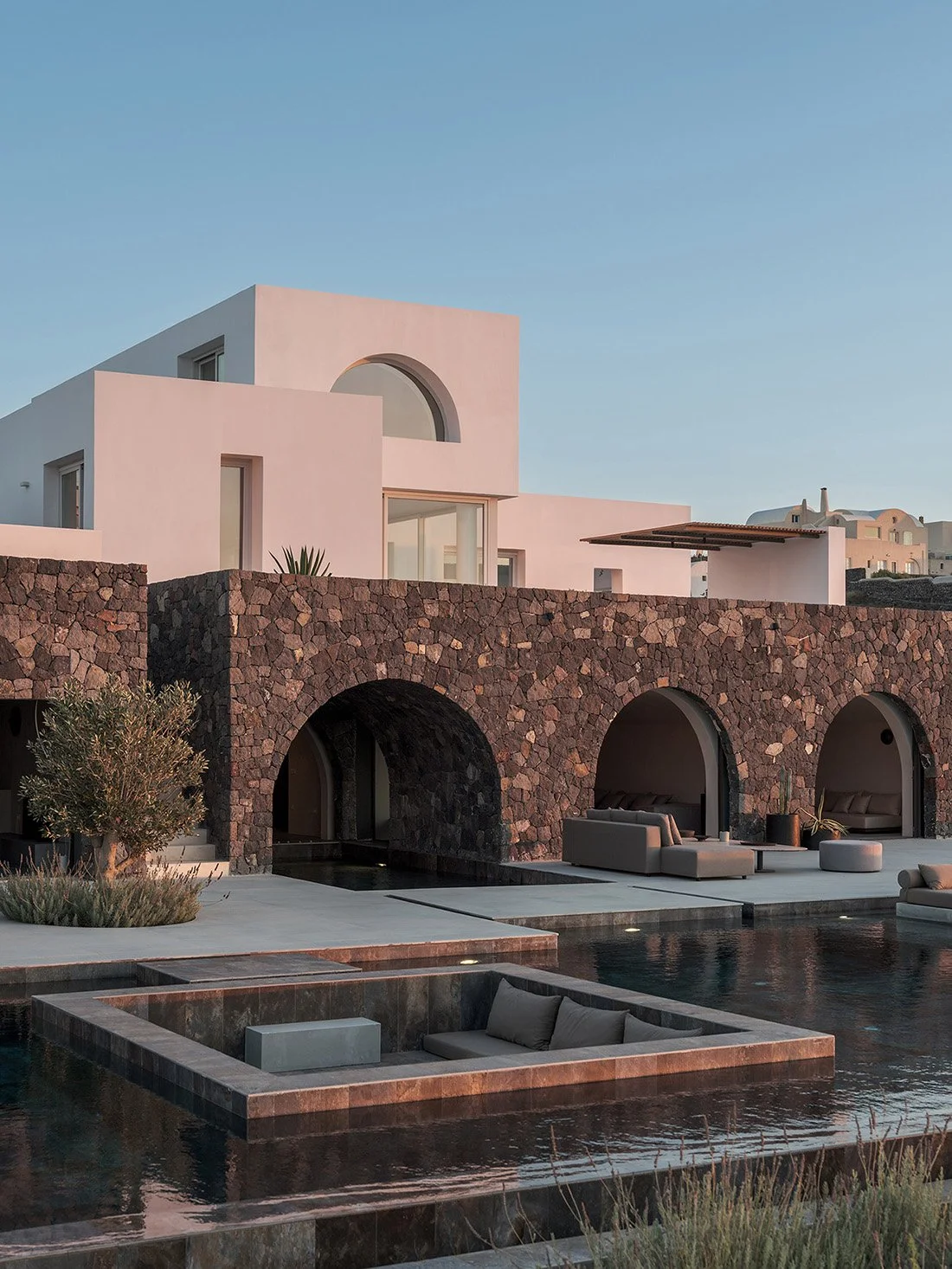
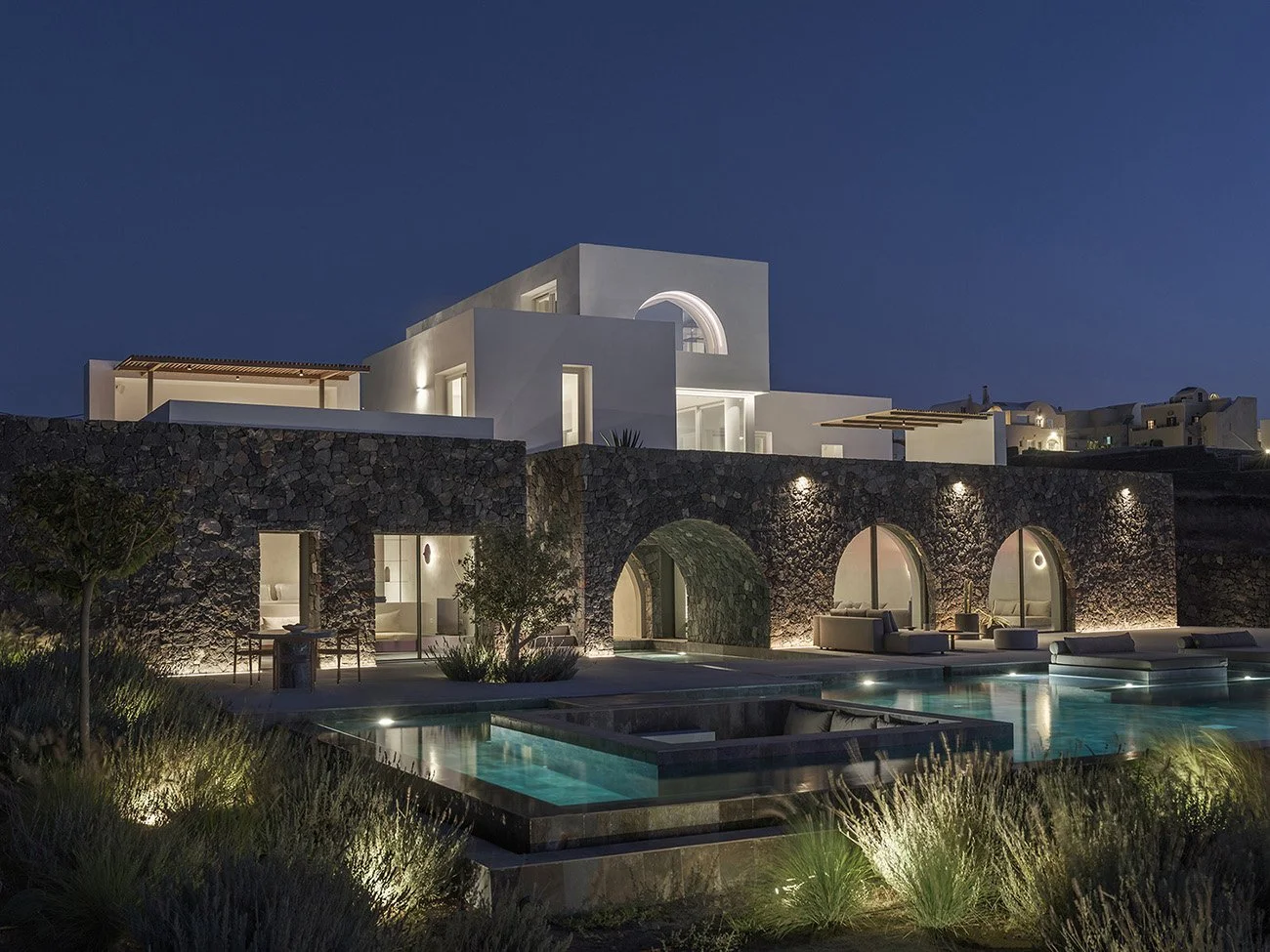
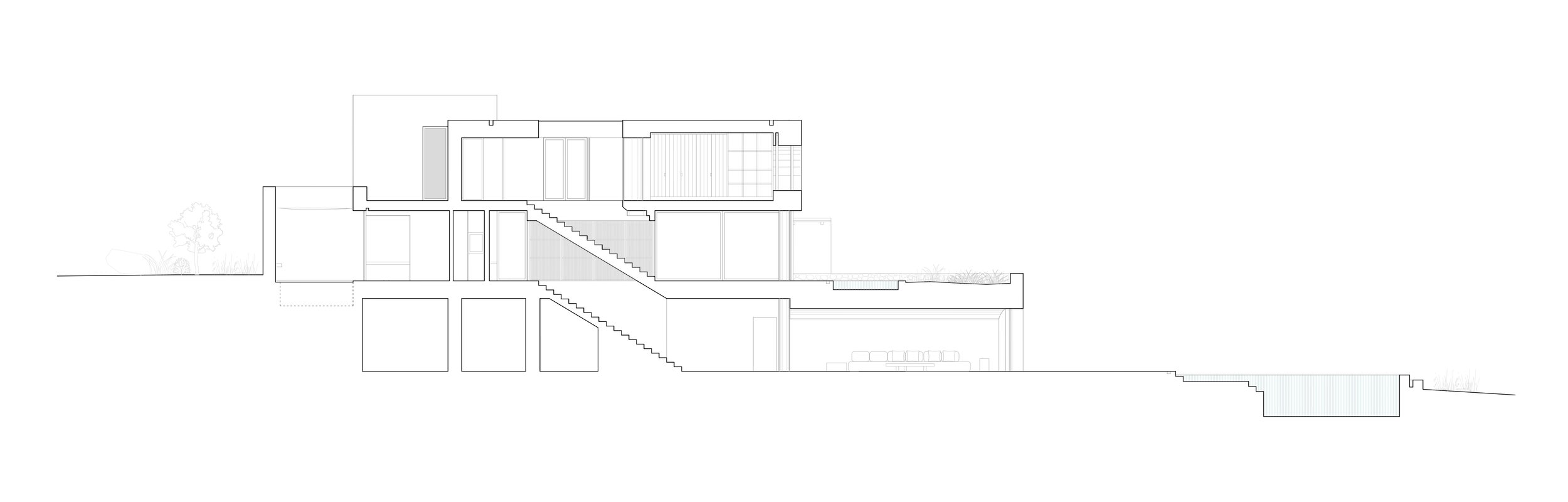
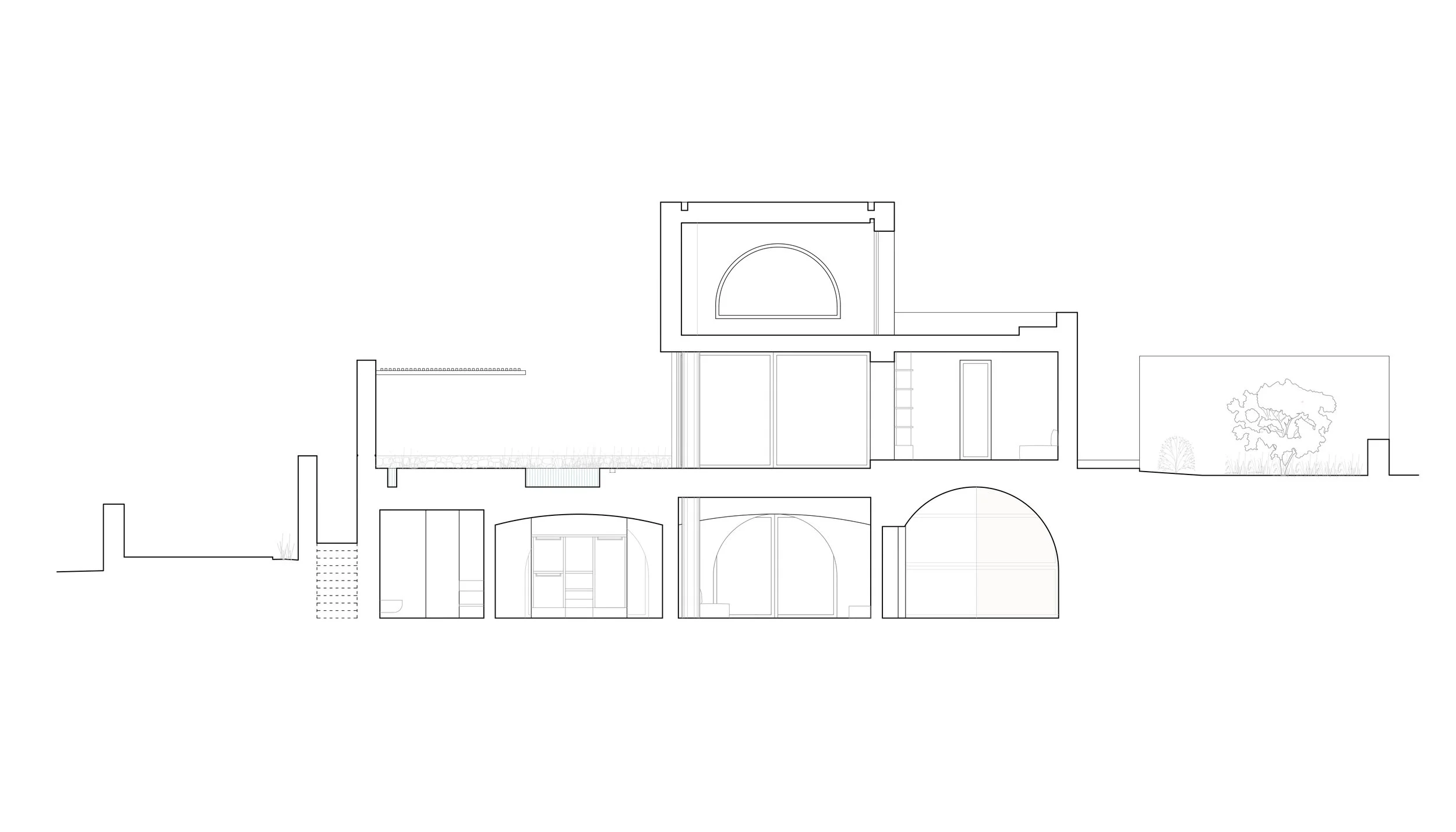
The interrelation of volumes and voids creates a continuity of space horizontally and vertically and contributes to the better natural lighting through patios and skylights. On the contrary, the subterranean spaces on the lower level of the residence, as a reinterpretation of the traditional settlements’ cave house structures, placed next to each other, expanding in depth, disappear inside the earth, leaving openings only on the façade-stone wall.
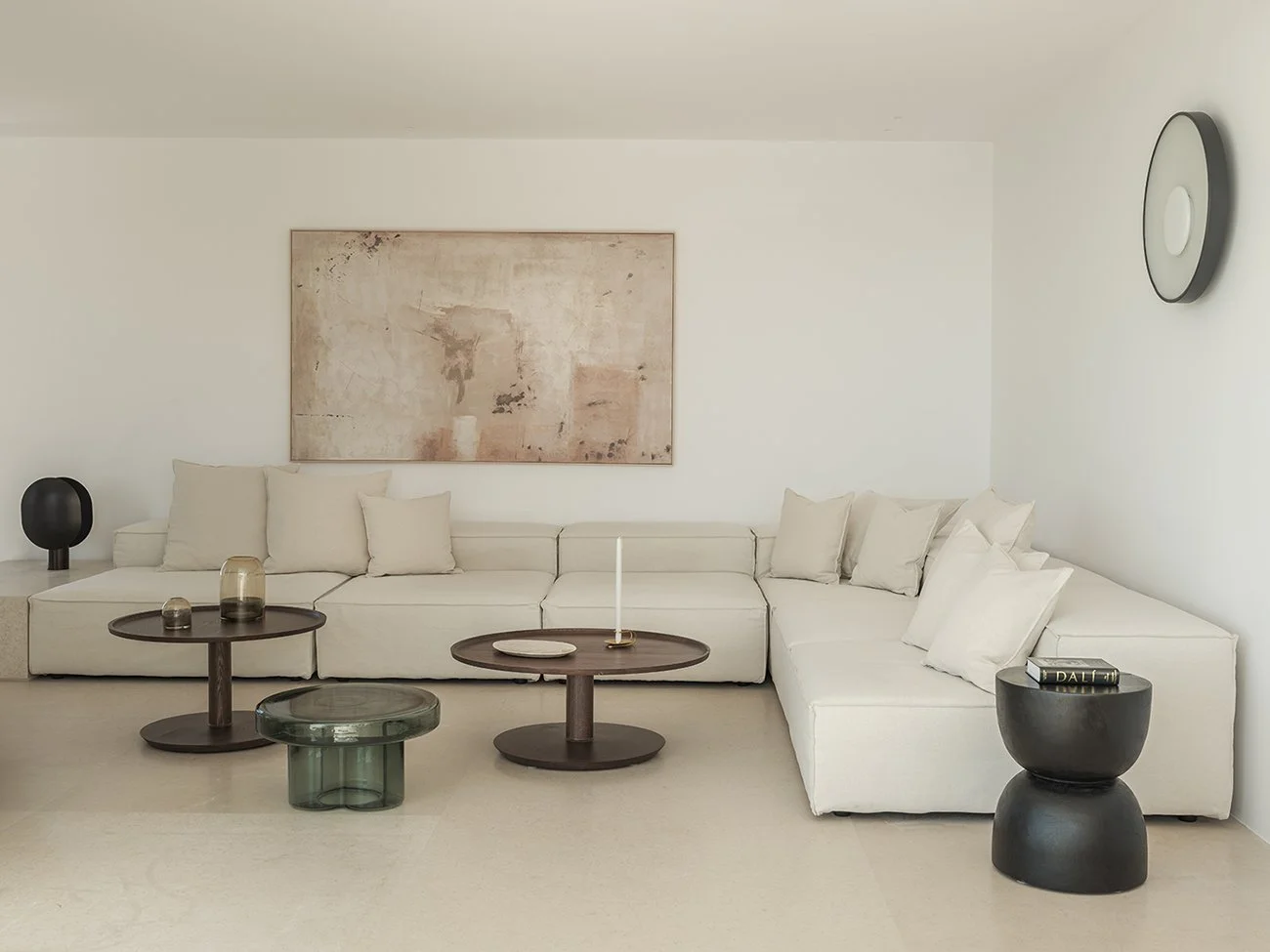
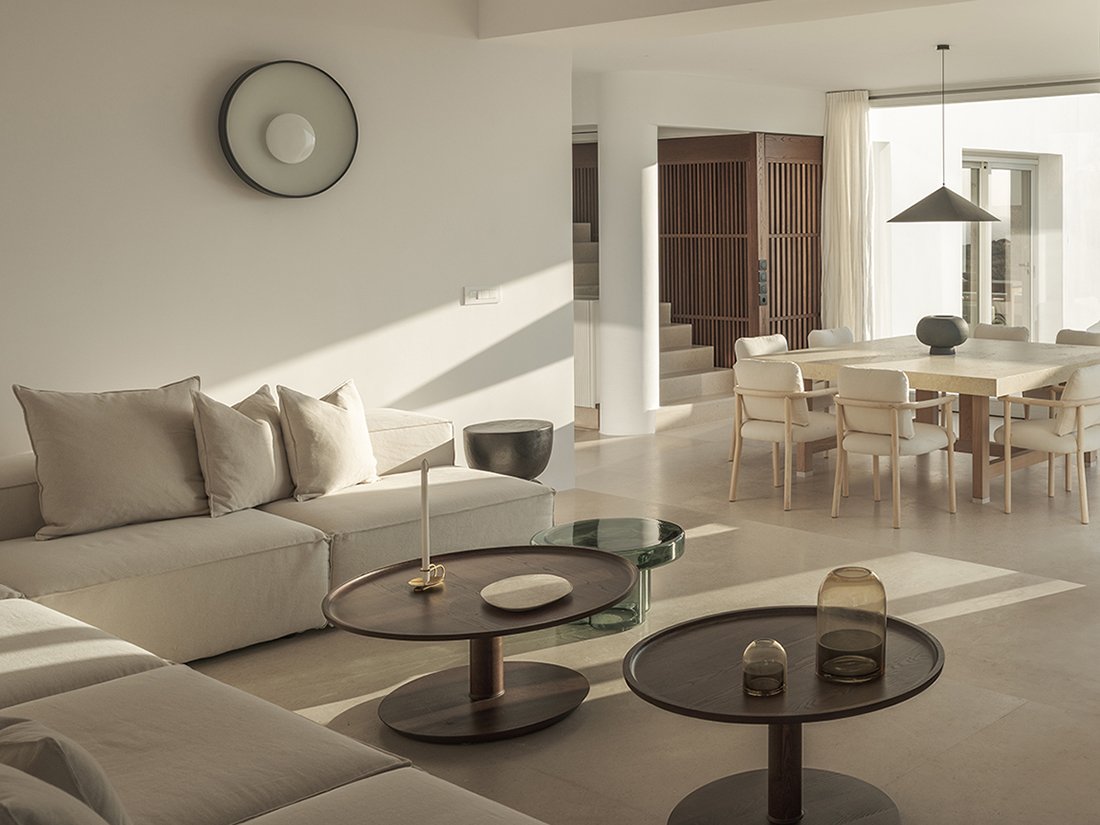
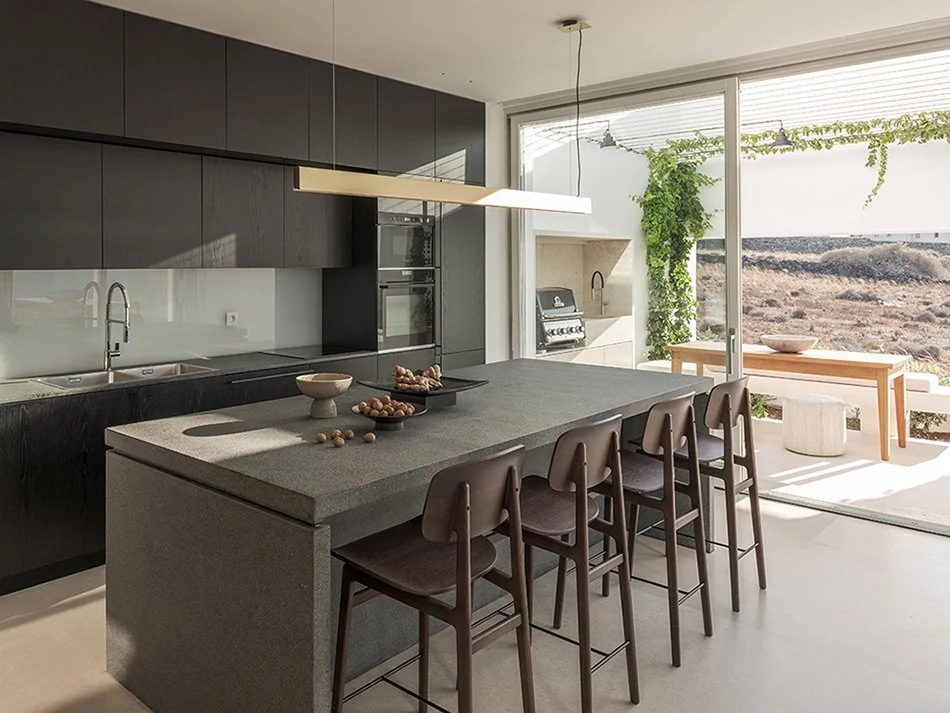
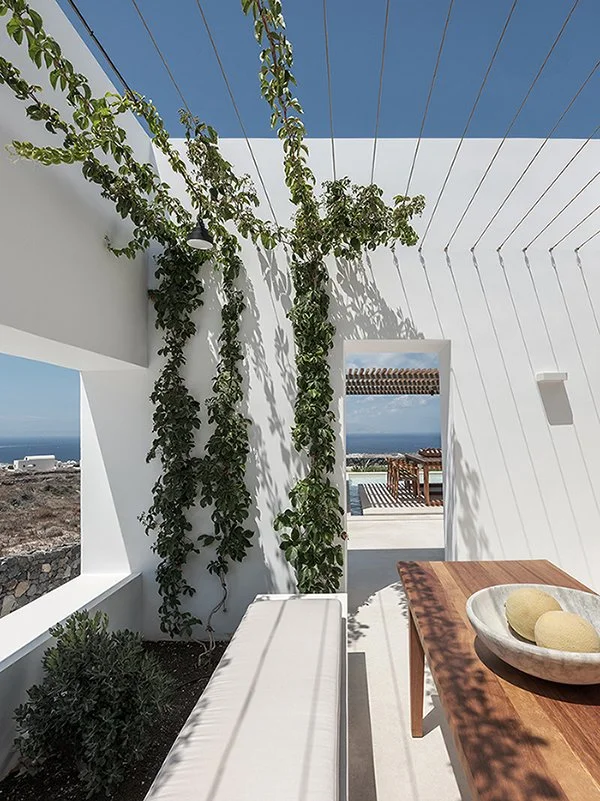
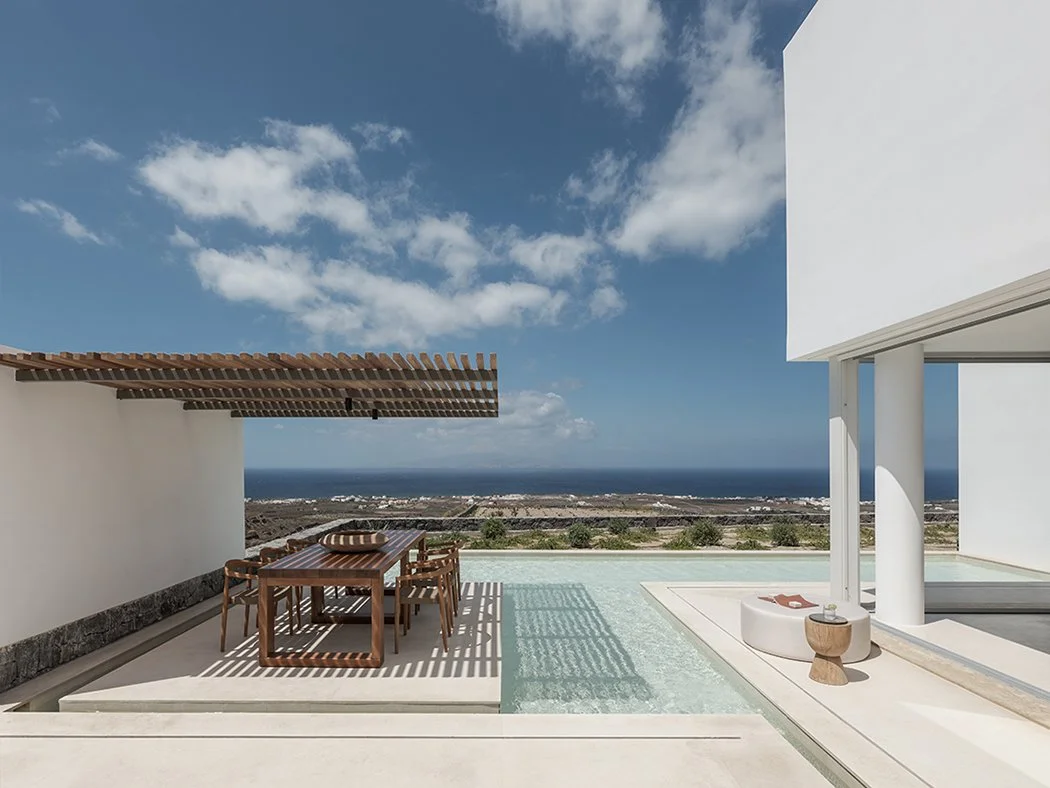
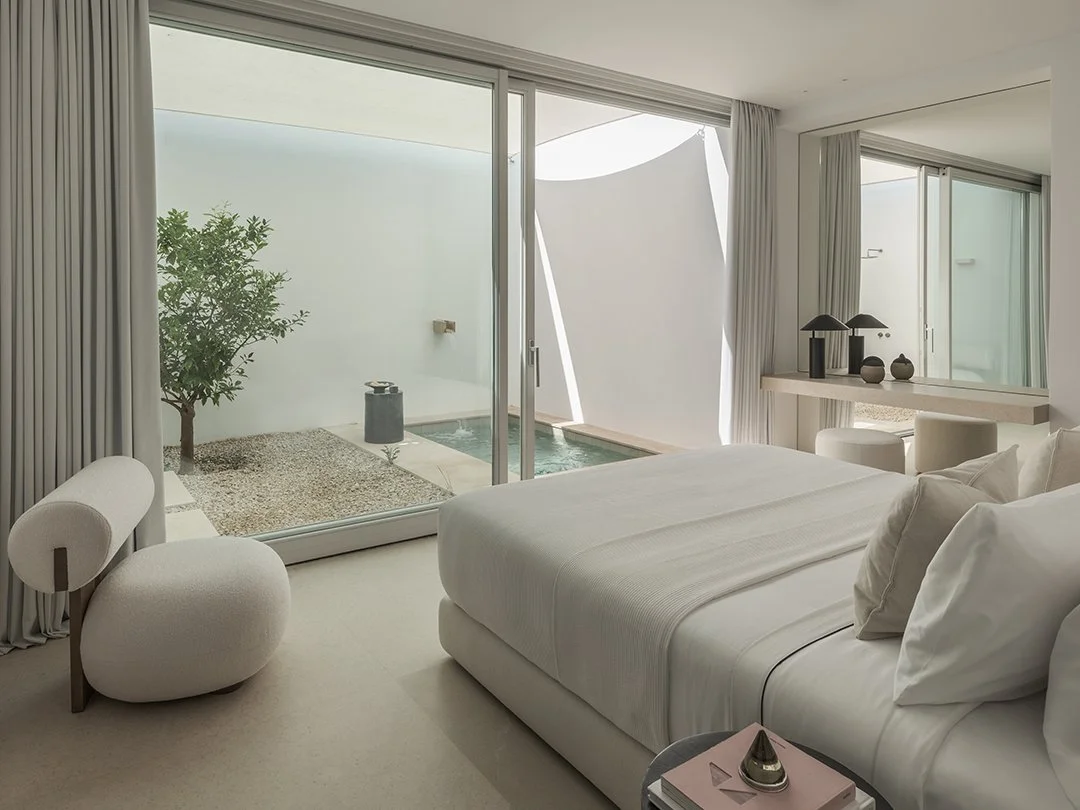
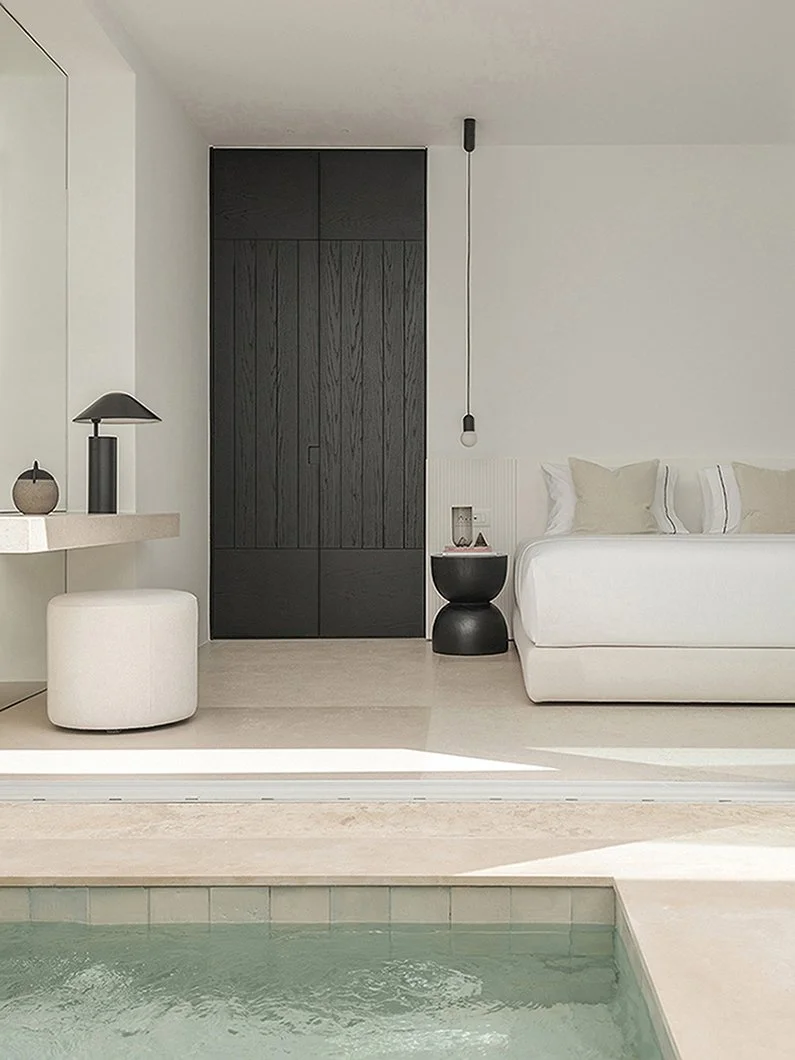
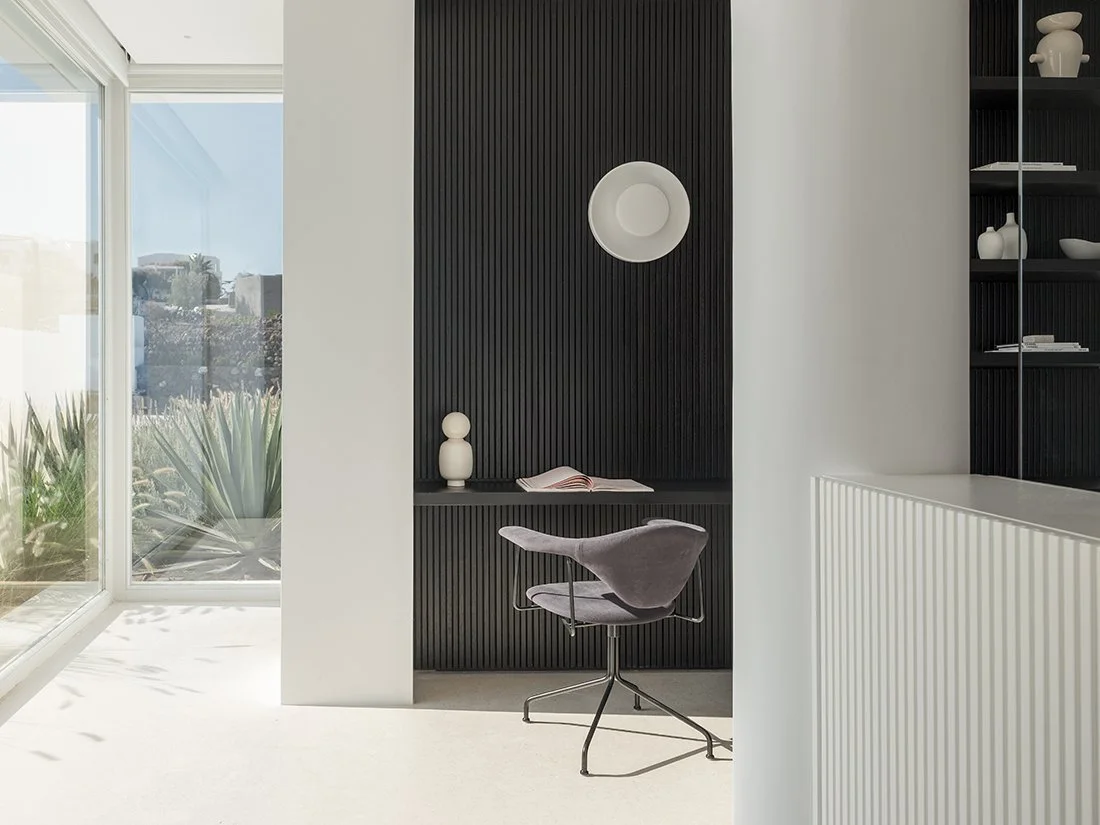
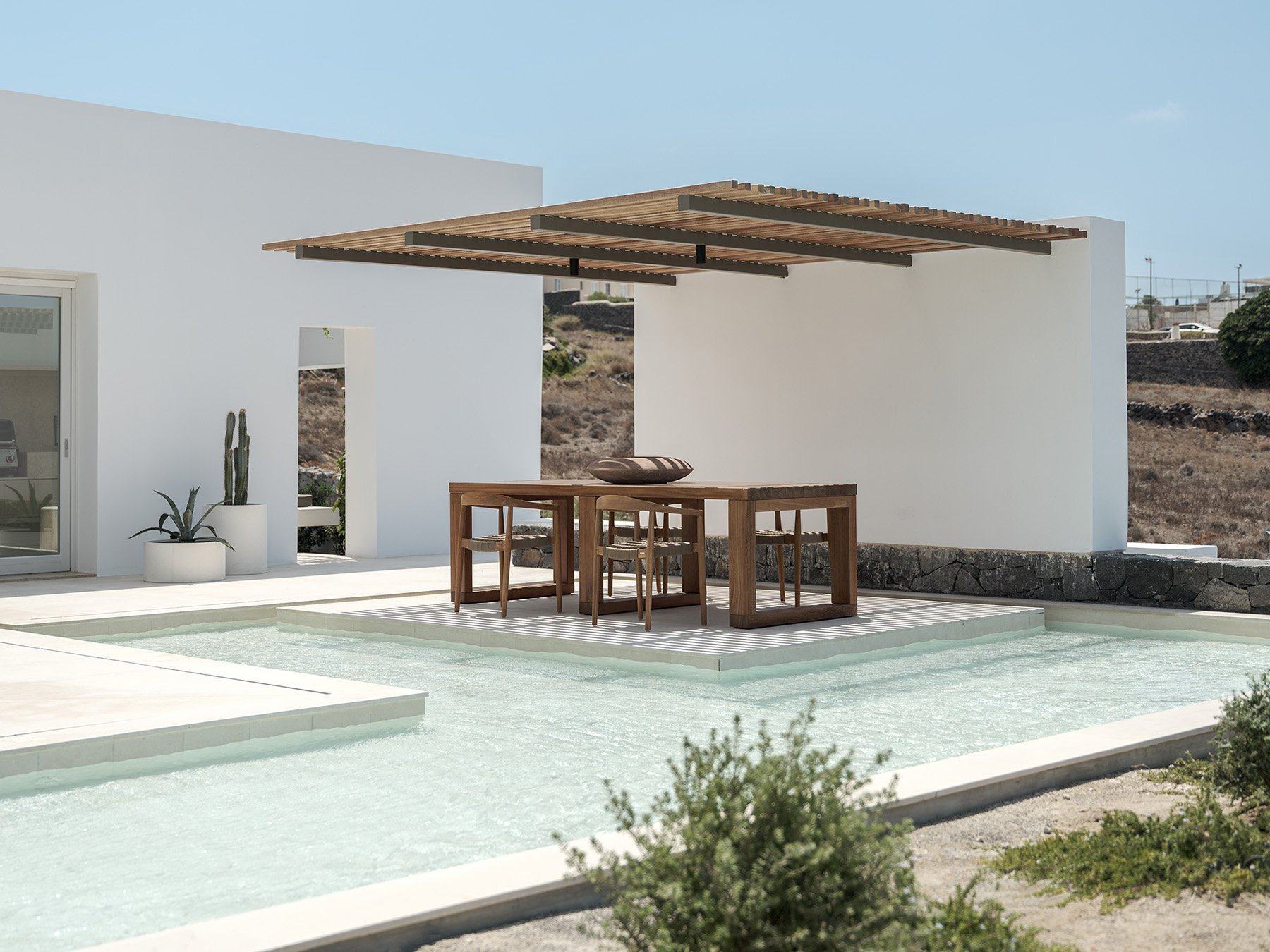
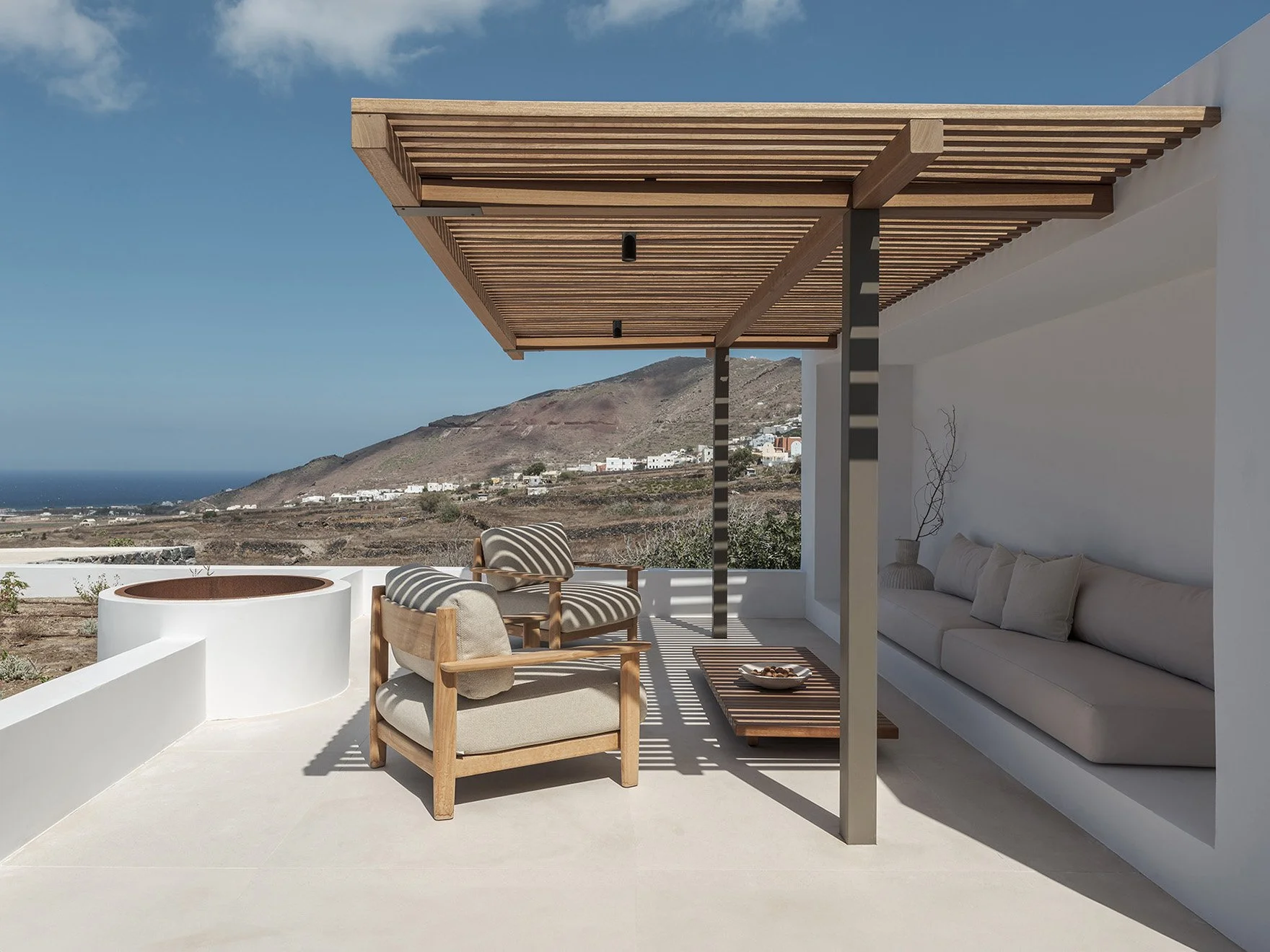
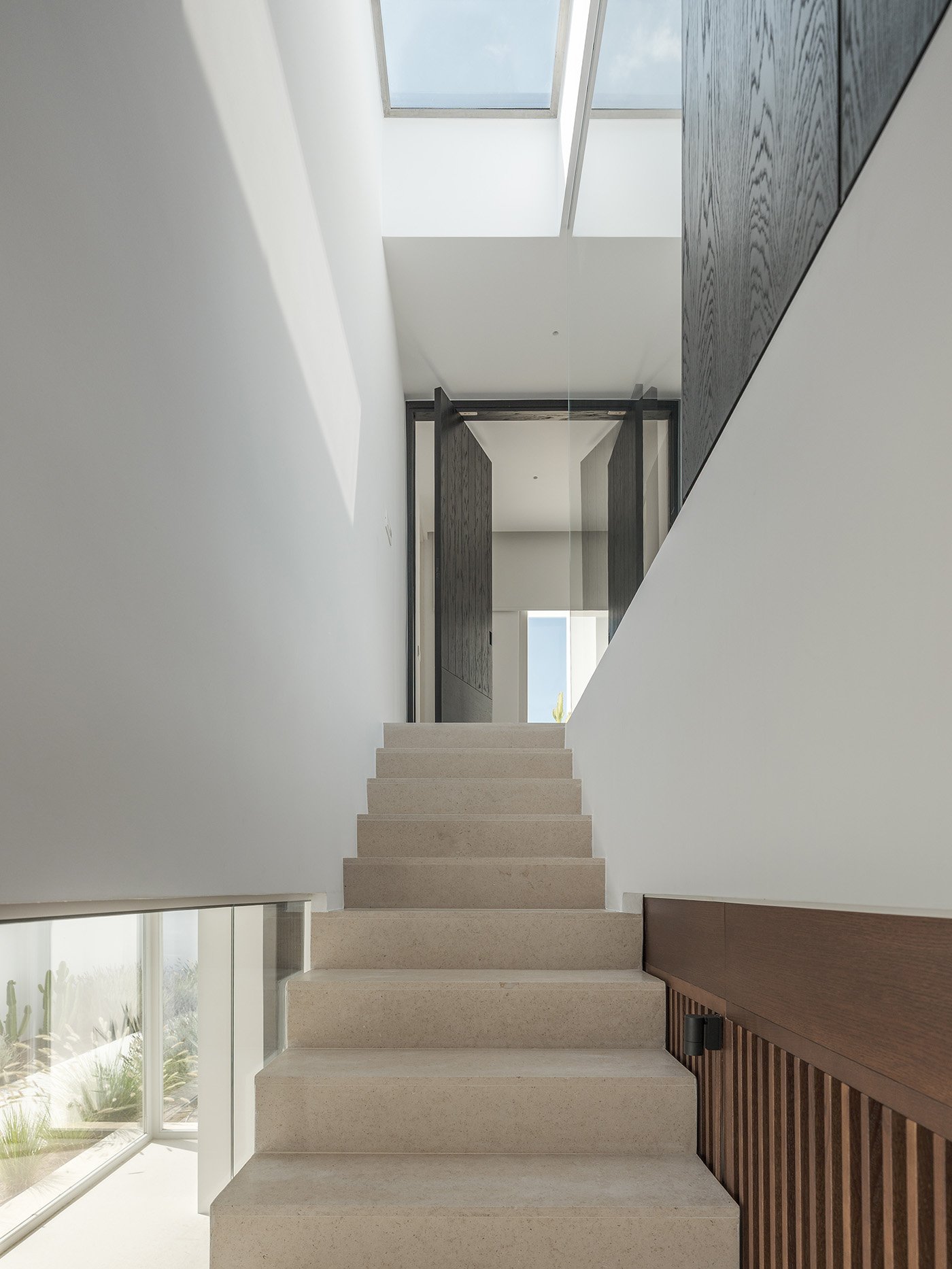
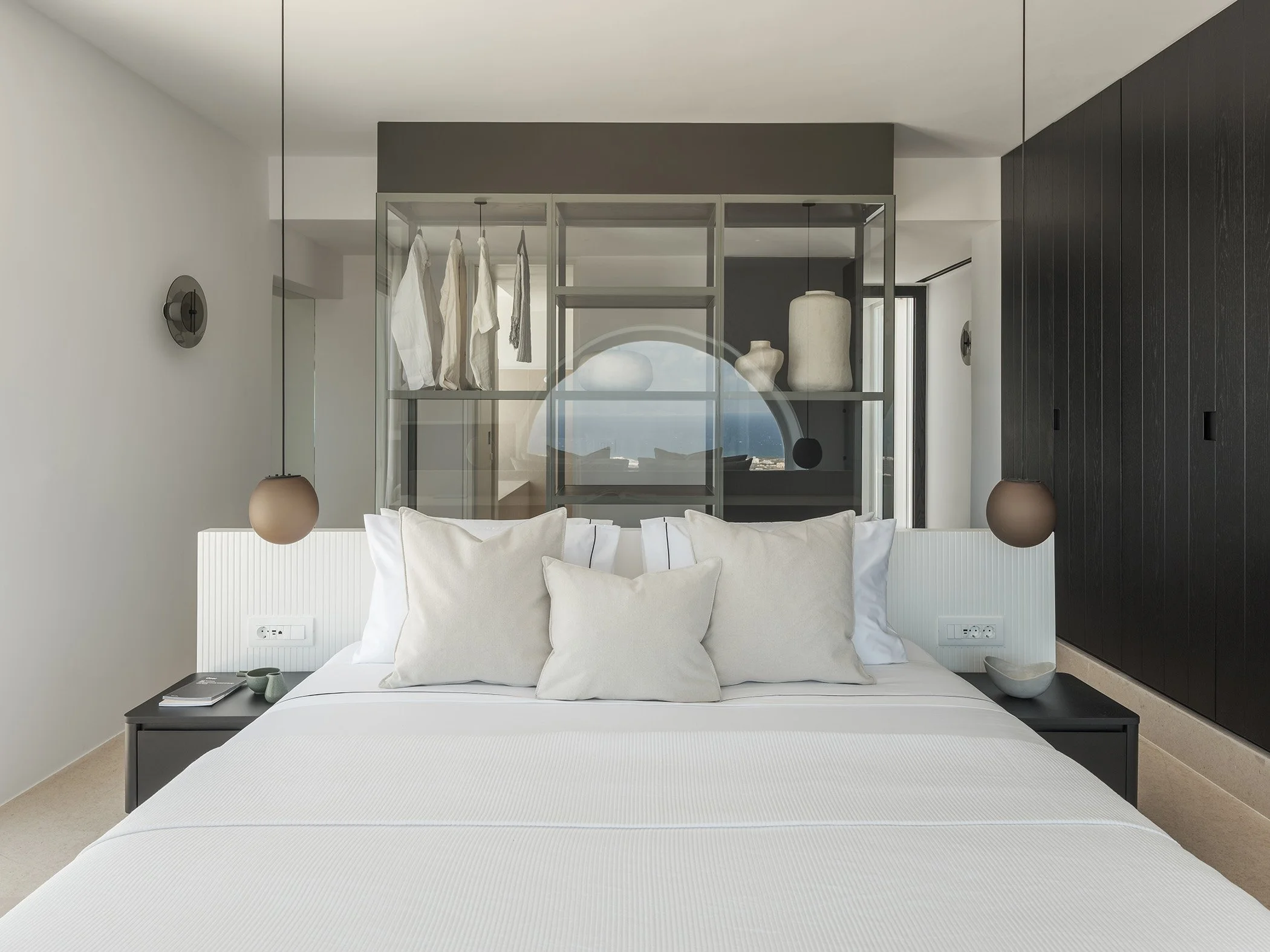
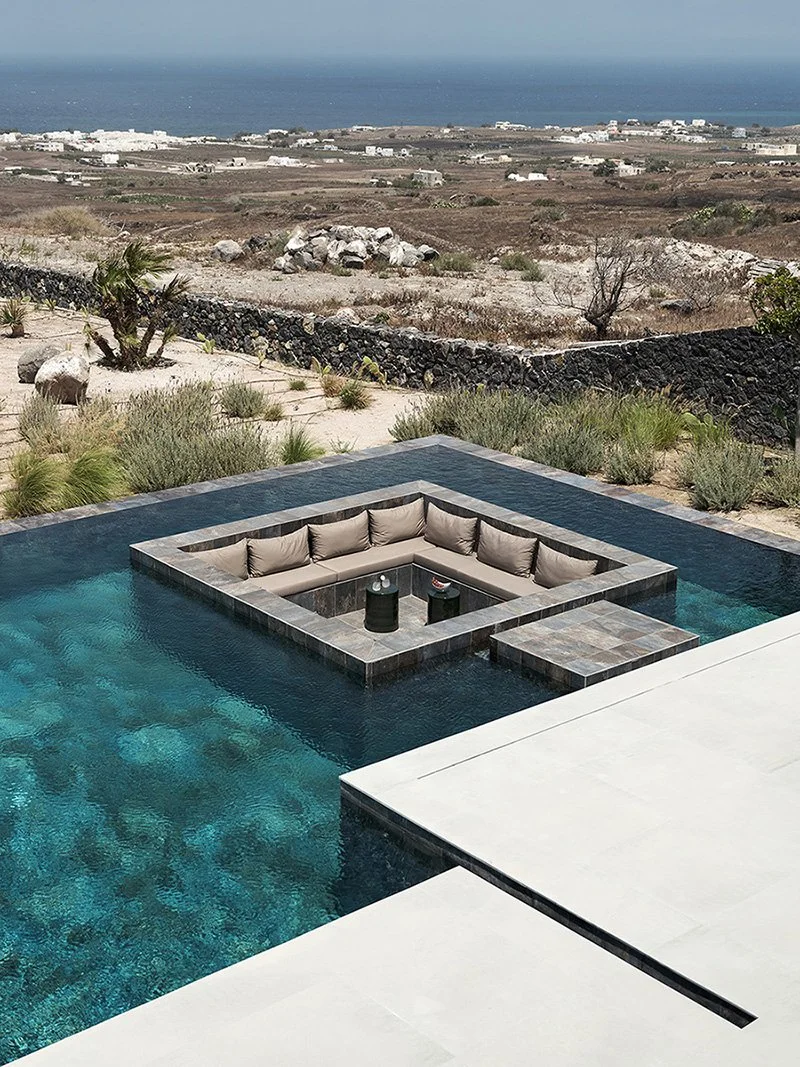
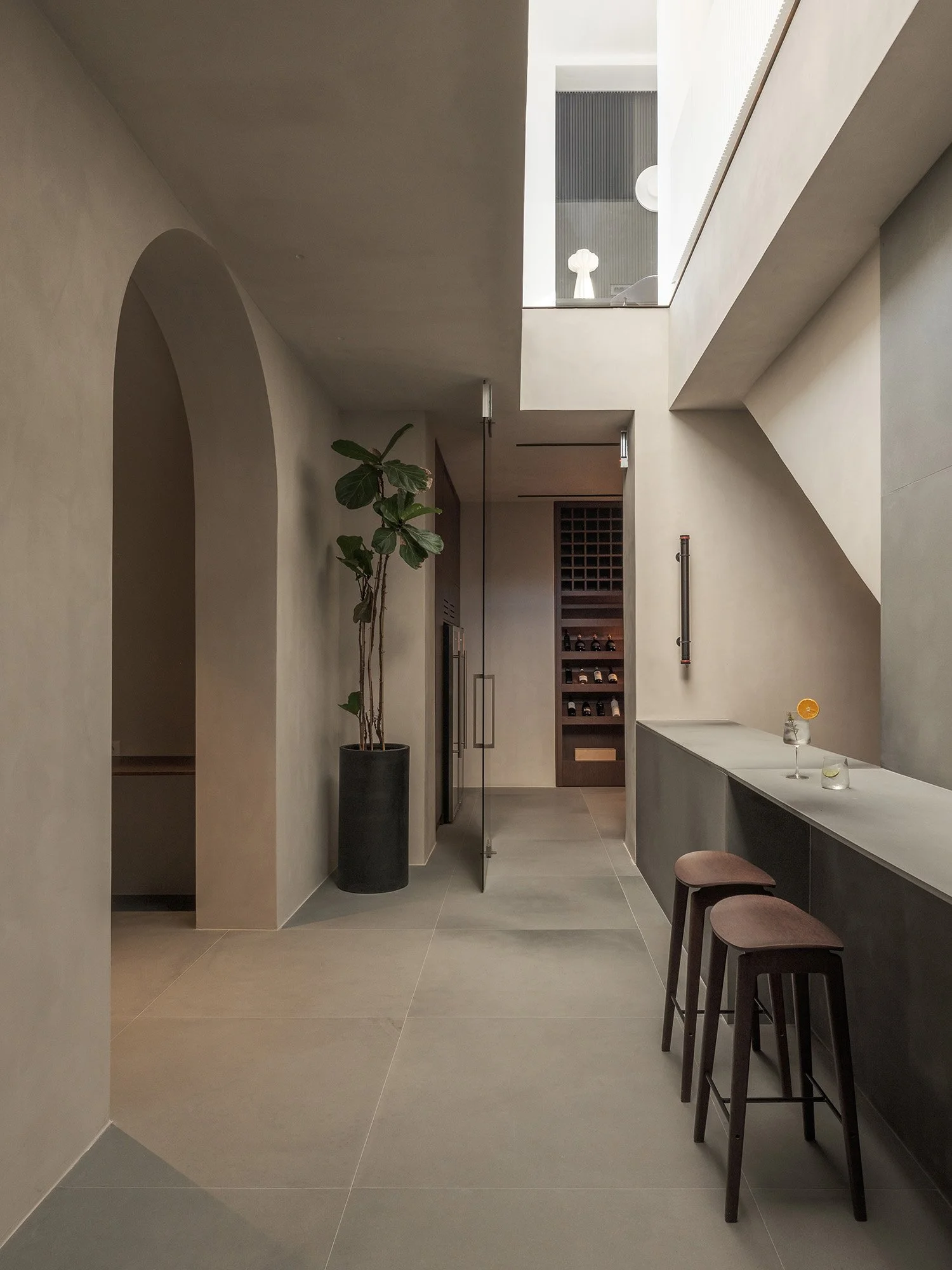
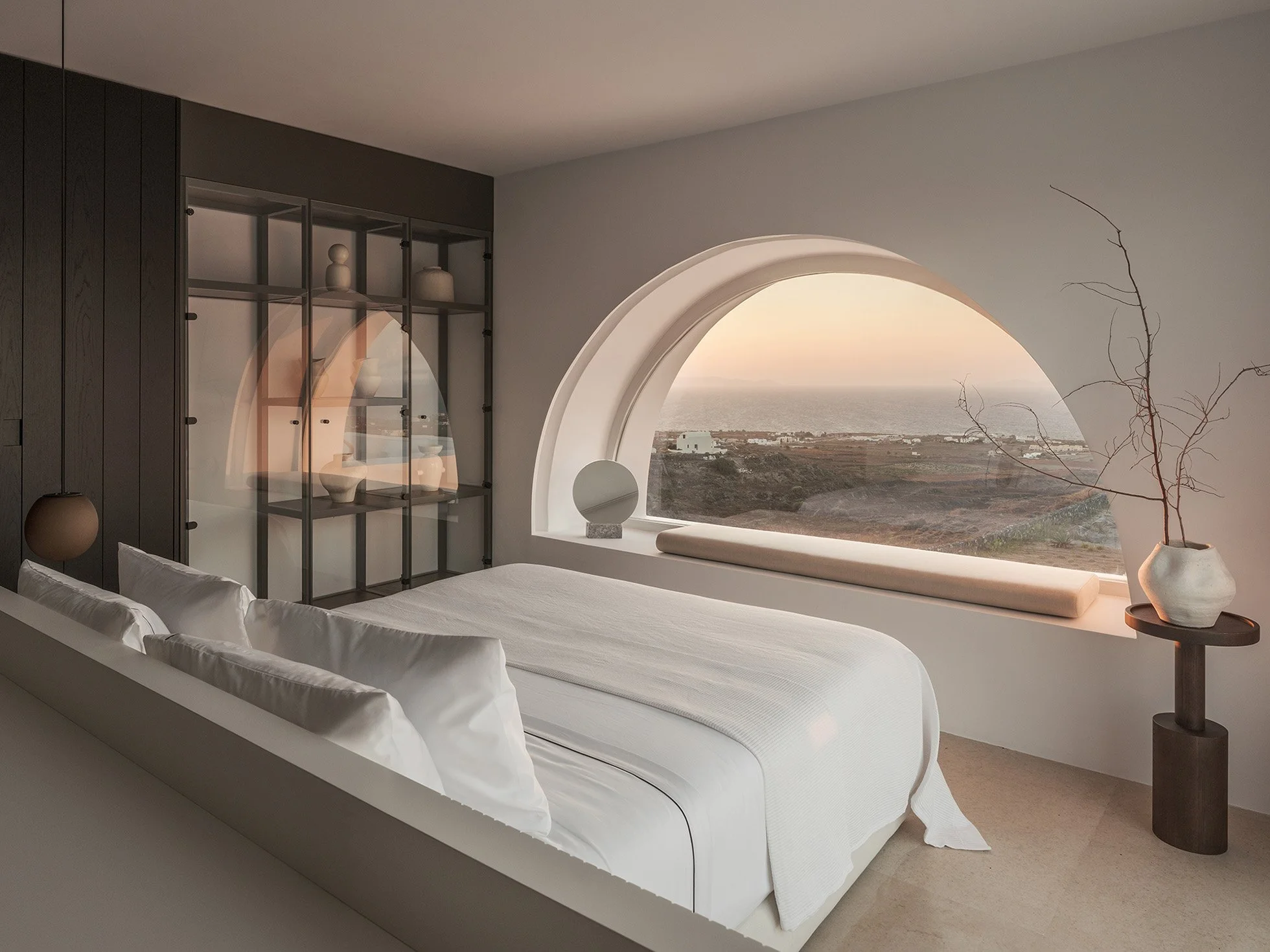
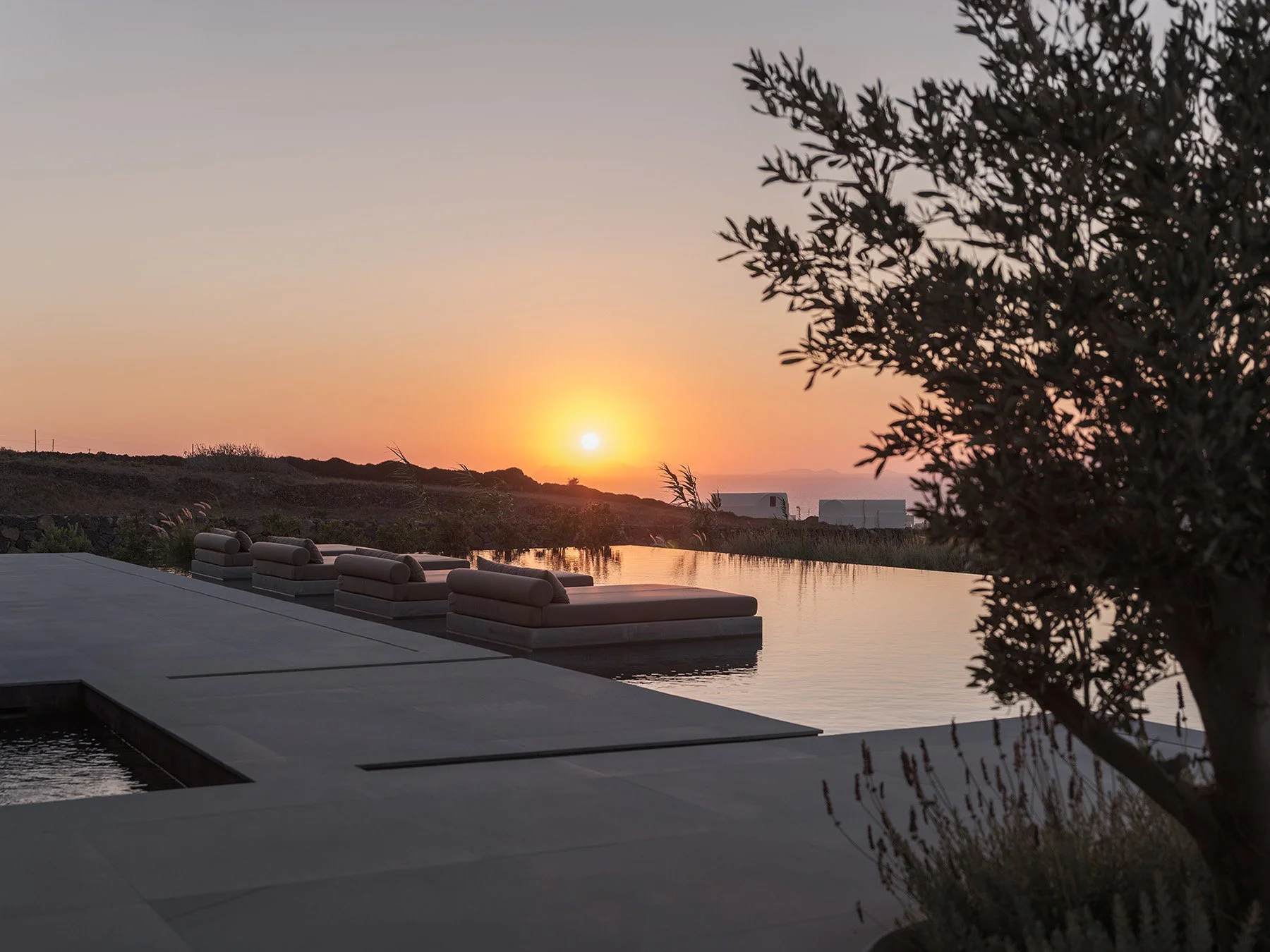
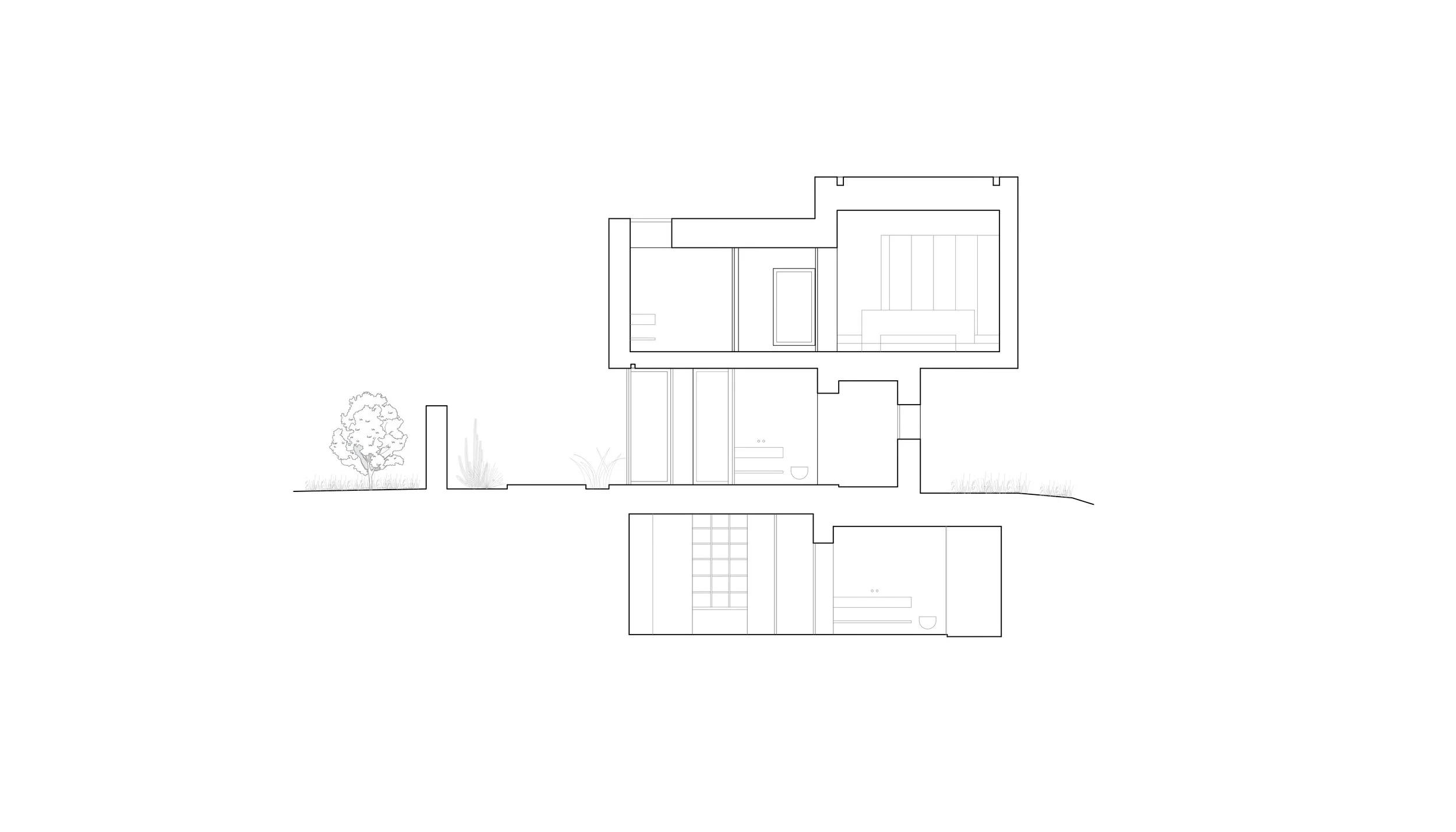
The house, on the ground floor consists of an entrance area, a dinning space, a sitting room, a kitchen, a bedroom with an enclosed bathroom, a wc, a library corner and an internal staircase that leads to the upper and lower levels. The upper floor consists of two bedrooms with their bathrooms, while the lower level consists of a sitting area, an office, a wine cellar with its bar, a gym with its sauna and bathroom and two guestrooms with their bathrooms. The internal space of the ground floor unwinds north to an exterior yard with a water surface and a floating dining area, west to a protected patio with a barbeque corner, east to a smaller yard with a lounge area and a fireplace and north to an enclosed patio with a plunge pool. On the upper floor, three terraces are formed, hosting the exterior lounge areas of the bedrooms, while the internal spaces of the lower levels open north to the main yard with a swimming pool and lounge areas. Gardens of mediterranean vegetation, herbs and vines cover the main surface of the plot and surround, in different parts, the residential complex.
Local volcanic stone, found in the plot from the existing stone berm and building’s excavation, for the exterior façade-stone wall of the lower levels and the plot’s fencing, white plaster for the exterior wall surfaces, white colored wood for the windows, iroko wood for the pergolas as also beige and grey marble for the exterior floors are the main materials used.
In terms of achieving energy efficiency and bioclimatic comfort, a combination of high quality insulation, thick brick walls, effective windows in a suitable position based on orientation, planted roofs and water surfaces are applied in the construction model.
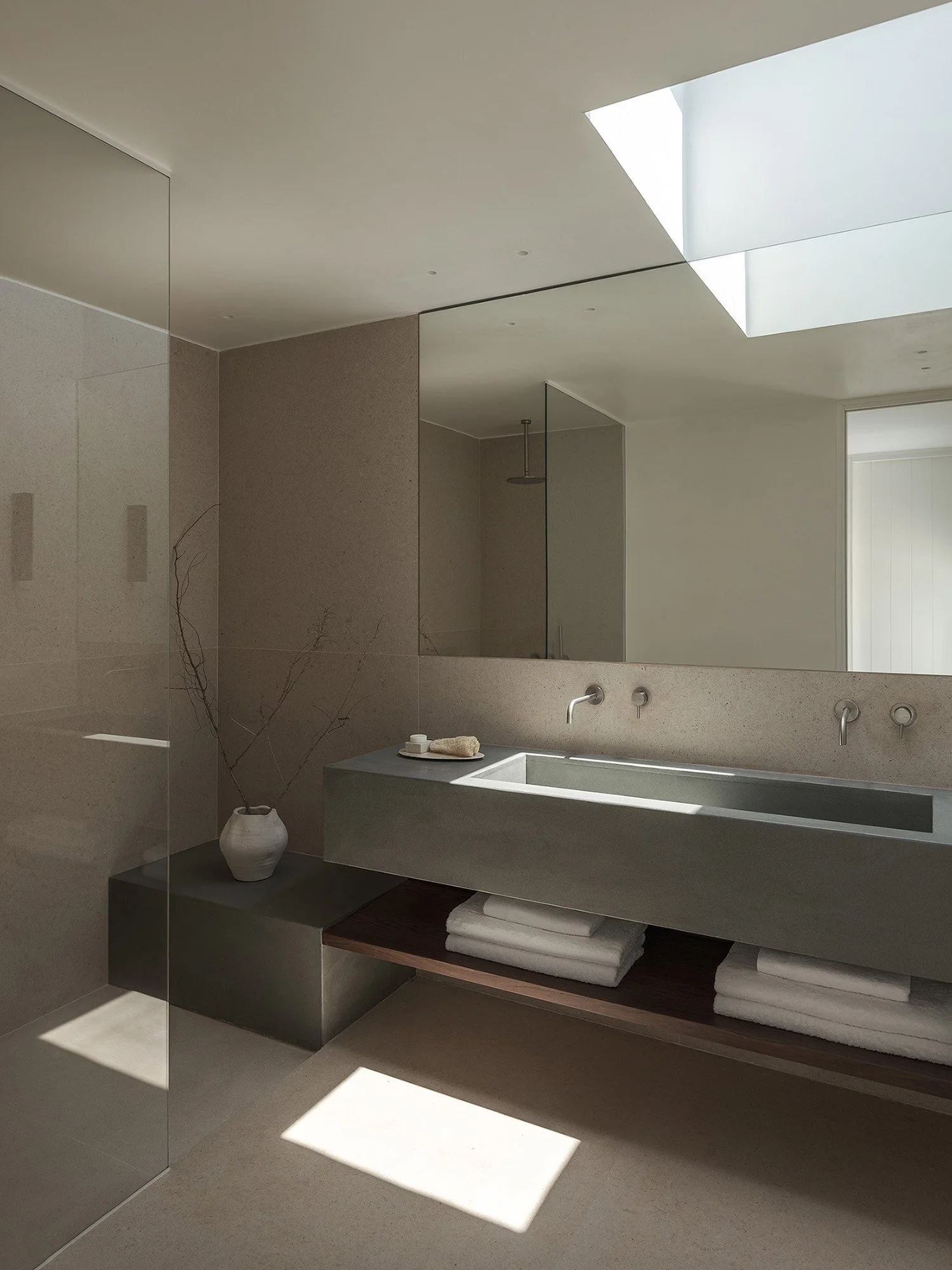
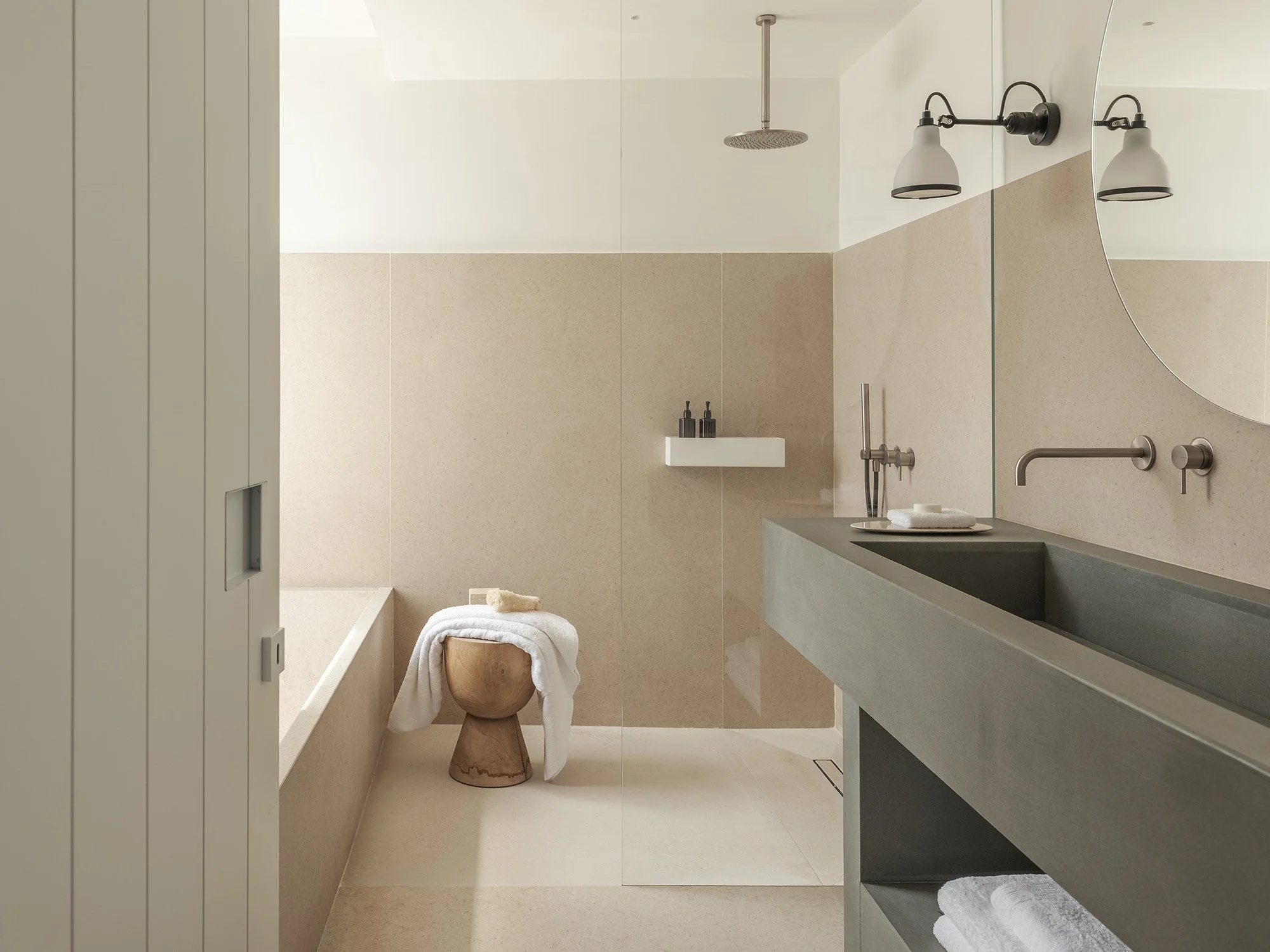
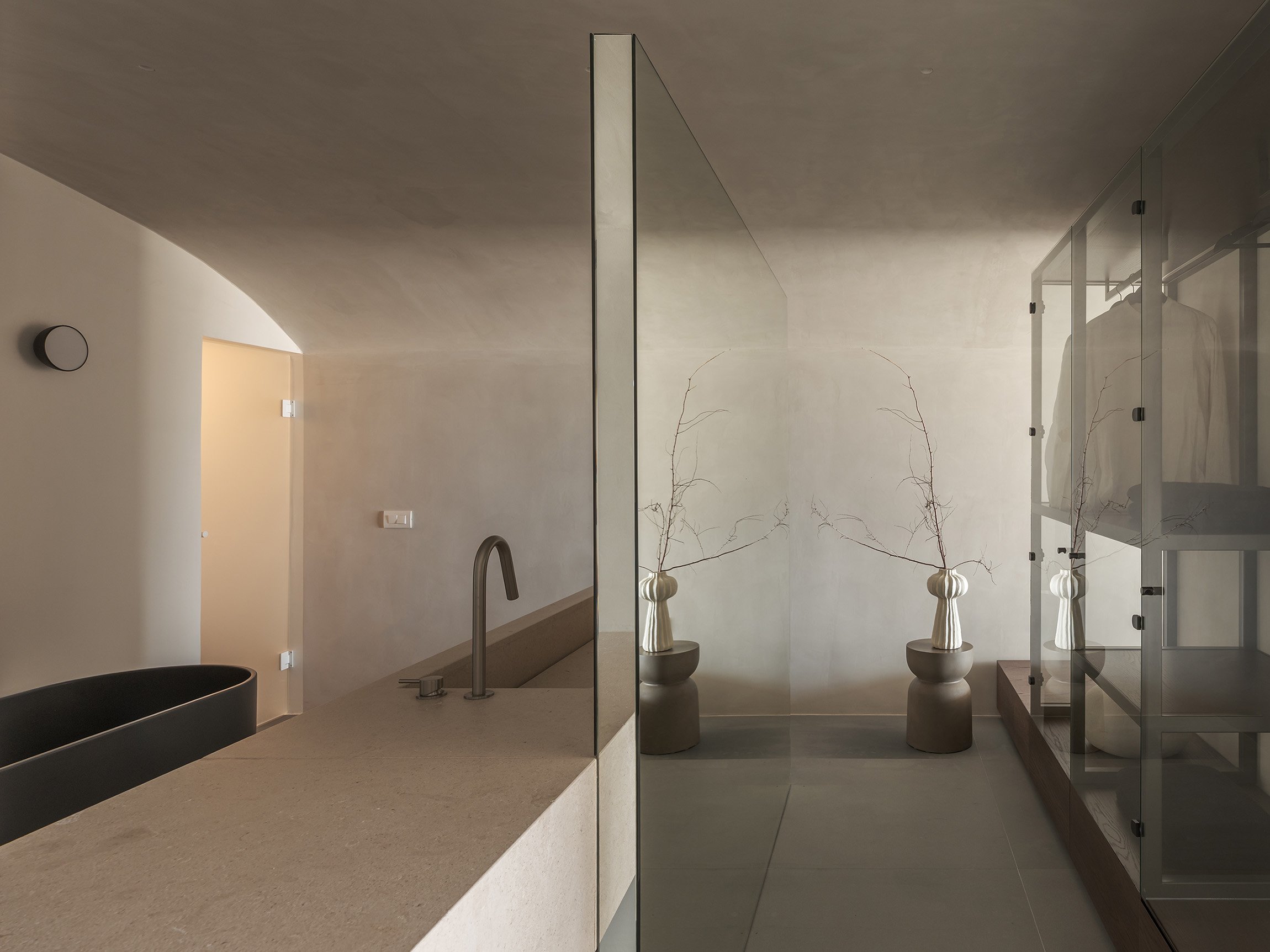
The interior design builds upon the exterior form of the house, creating a cohesive and unified aesthetic result, through the selection of same colors, materials and common architectural elements accordingly. Bright white and beige color tones as also clean and cut space and built-in furniture geometries for the ground and upper levels, while earthy beige and dark grey color tones and curvy forms for the lower levels are the main components of this diverse design approach. Natural stones, woods, metal - glass works, furniture and decoratifs blend in both interiors, acting as unifying elements, creating subtle spot contrasts. Text description by the architects.