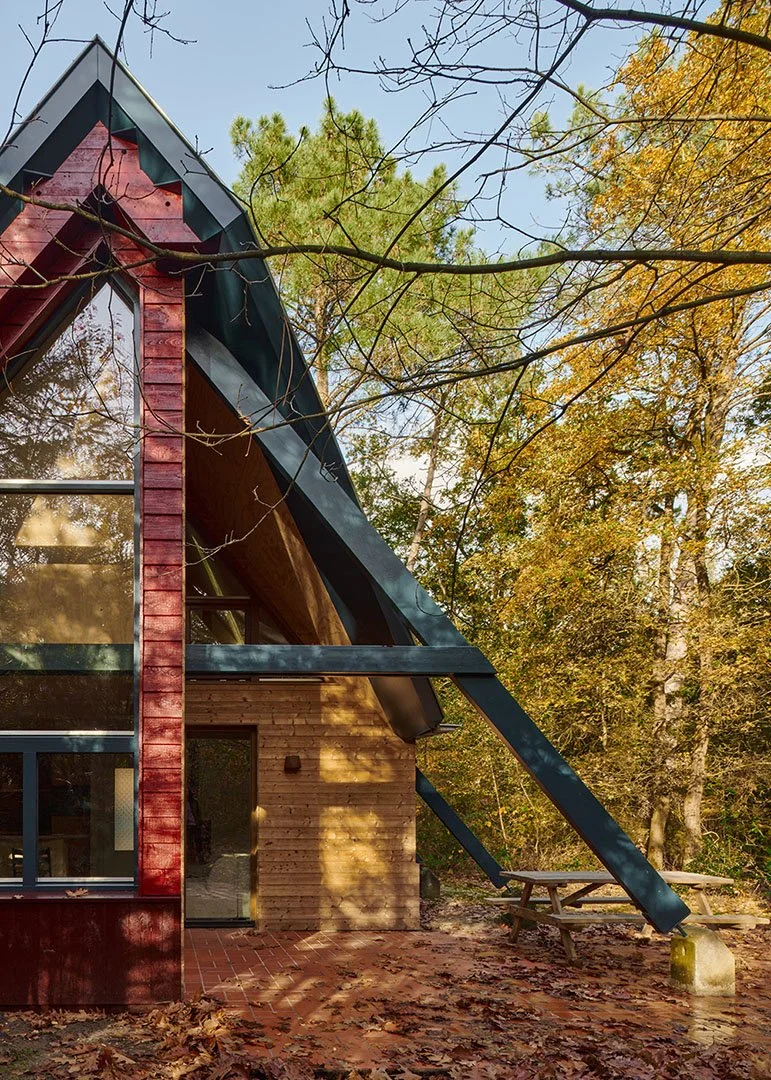
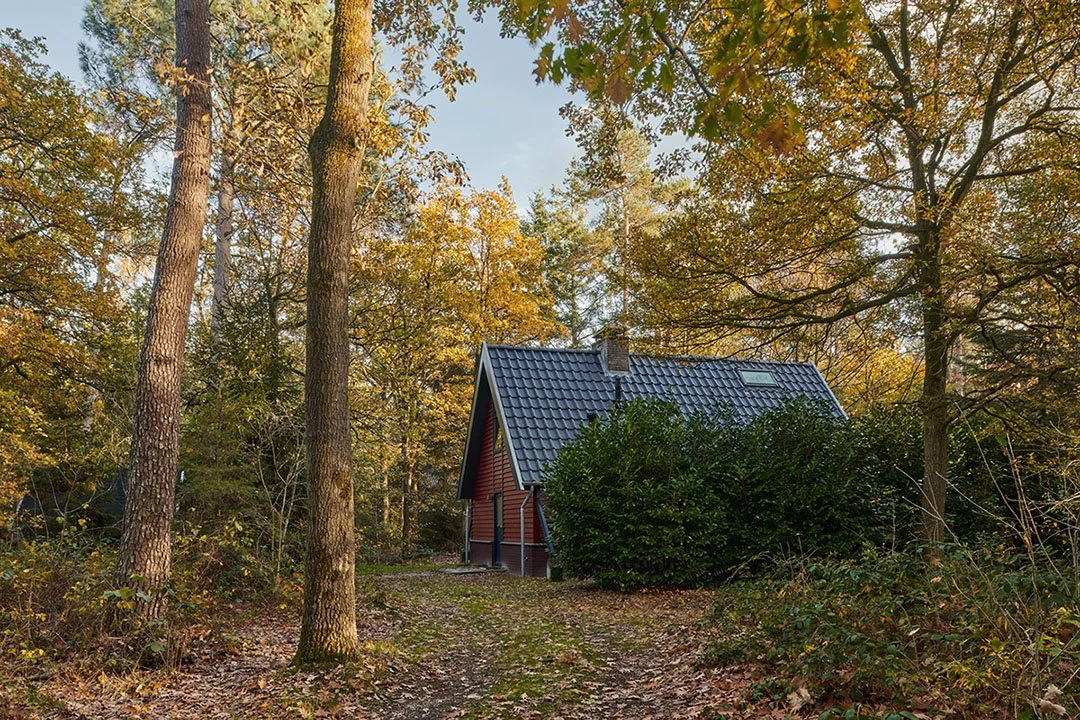
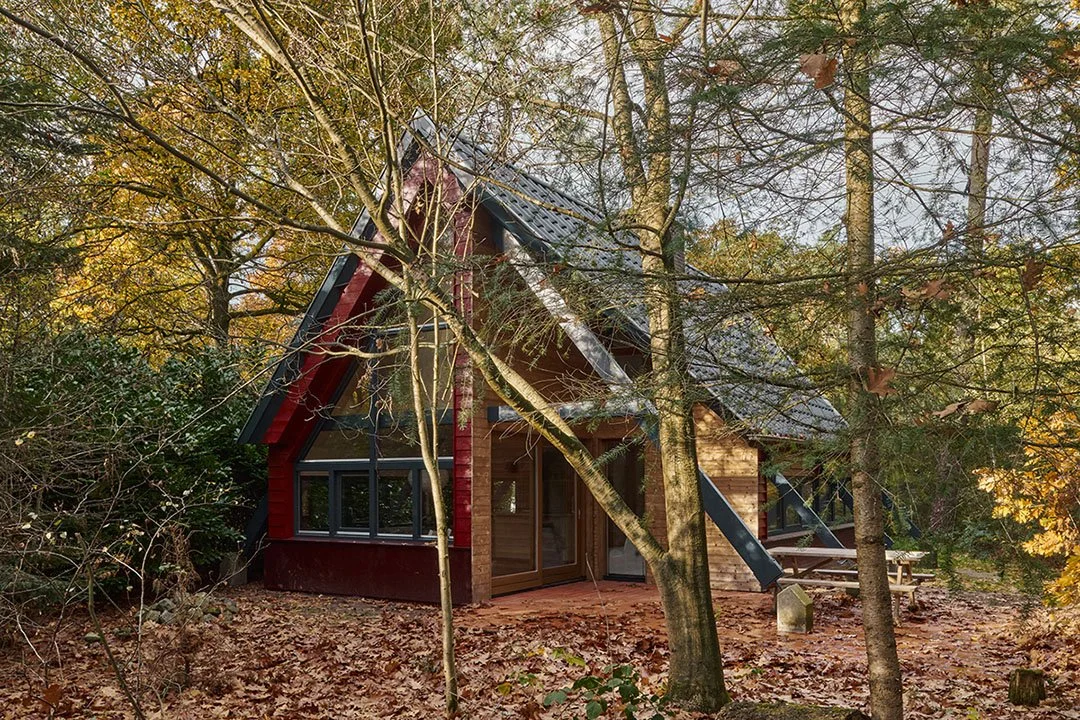
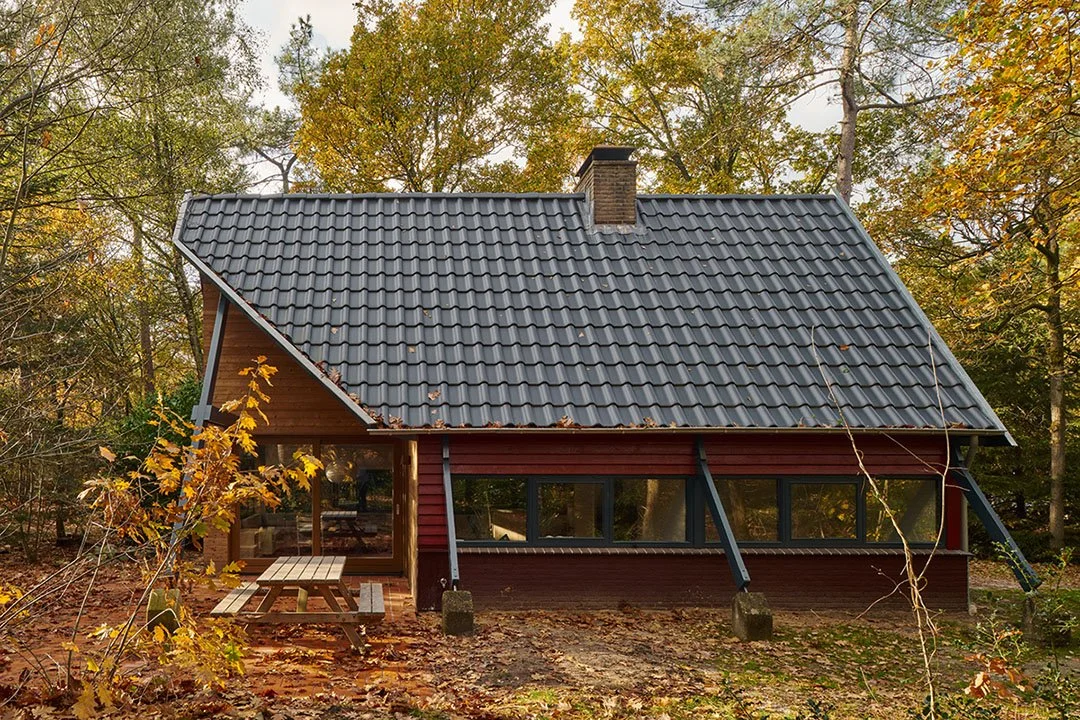
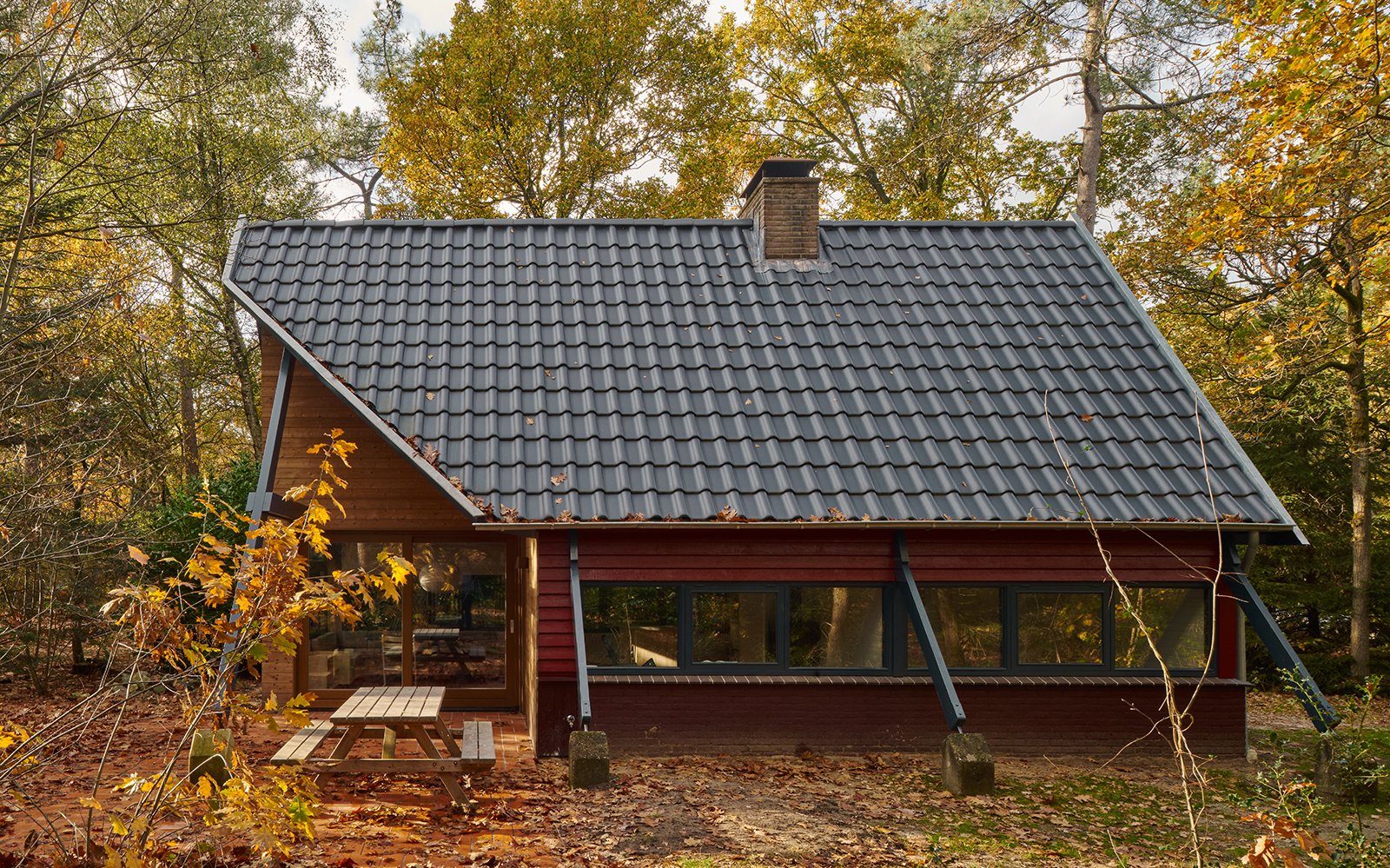
Amidst the forest park near the Herperduin nature reserve, surrounded by heathlands, ponds, and sand drifts, stands a characteristic A-frame holiday home from 1984. Through an extension and renovation, it has been transformed into a retreat for a young family, a place to escape the bustle of the city and reconnect with nature.
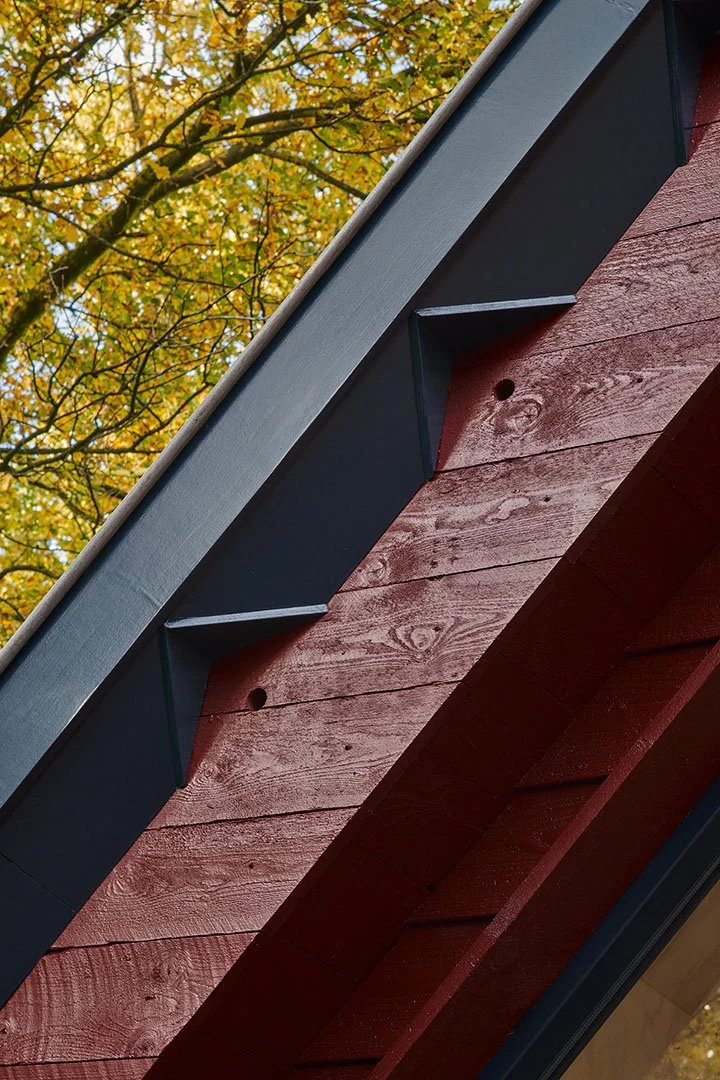
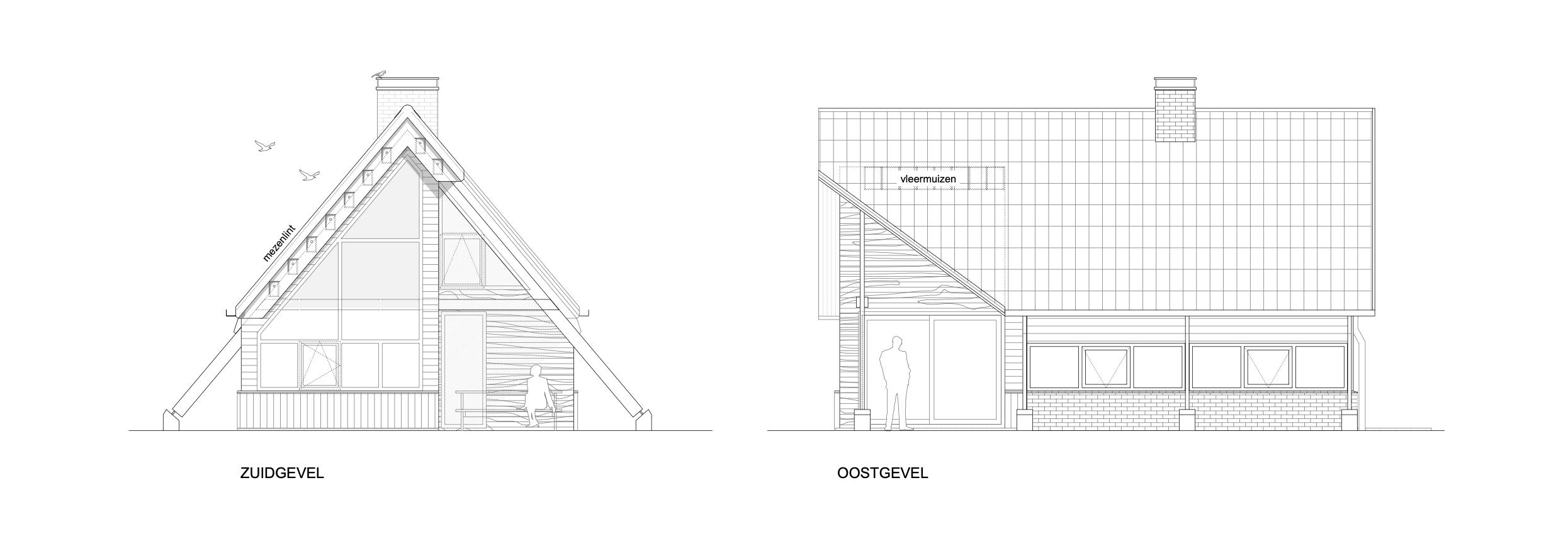
In collaboration with the client and an ecologist, a design was developed in which architecture and ecology intertwine. The guiding principle: sharing the house with nature. When the family is away, birds, bats, and other animals take over. Nesting boxes are integrated into the eaves, and a “bat hotel” is built into the façade. This integrated ecological plan strengthens biodiversity and allows the kids to learn about the life in and around the forest.
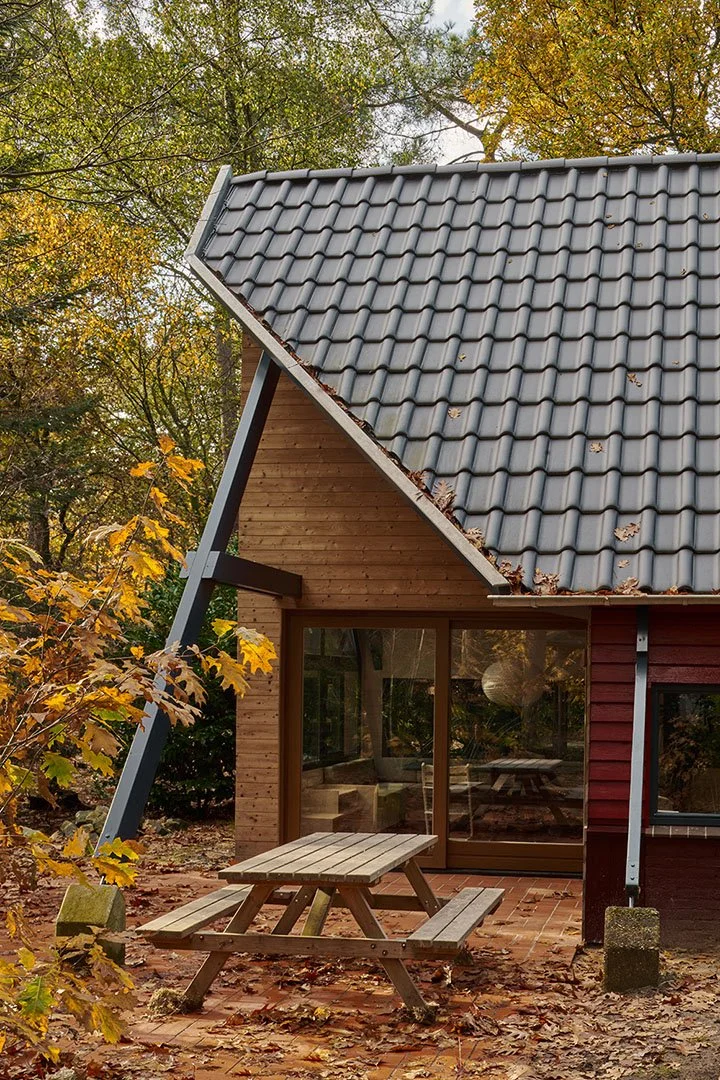
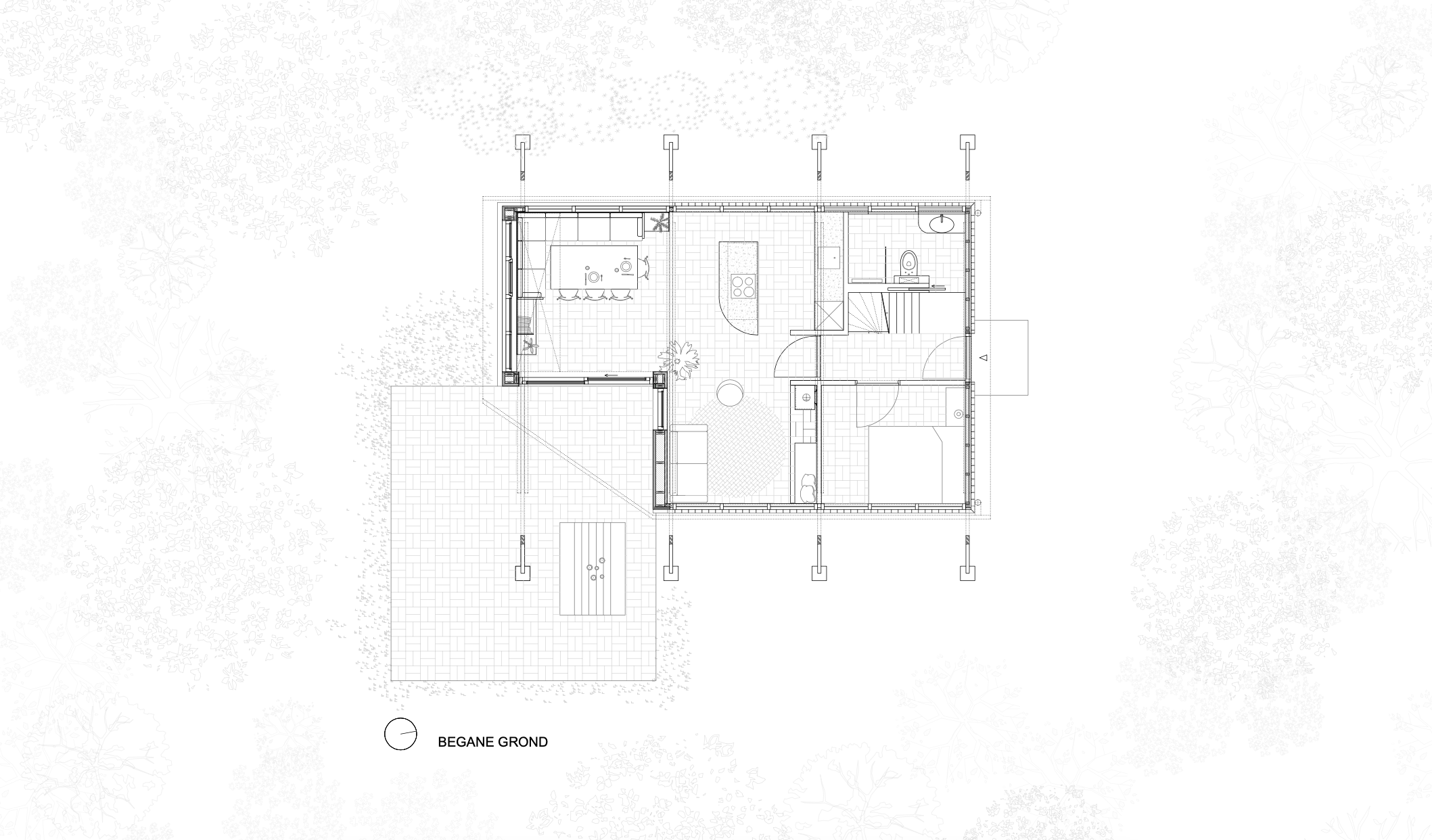
The extension follows the logic of the original A-frame, extending its rhythm across two storeys. Only at the terrace does a new architectural element deliberately break from the existing form. Here, the roof is cut at an angle to allow sunlight to reach deep into the interior, while the large overhang provides shade and protection from rain and summer heat. The terrace cut-out is deliberately differentiated in material, marking the moment the house opens itself toward the forest.
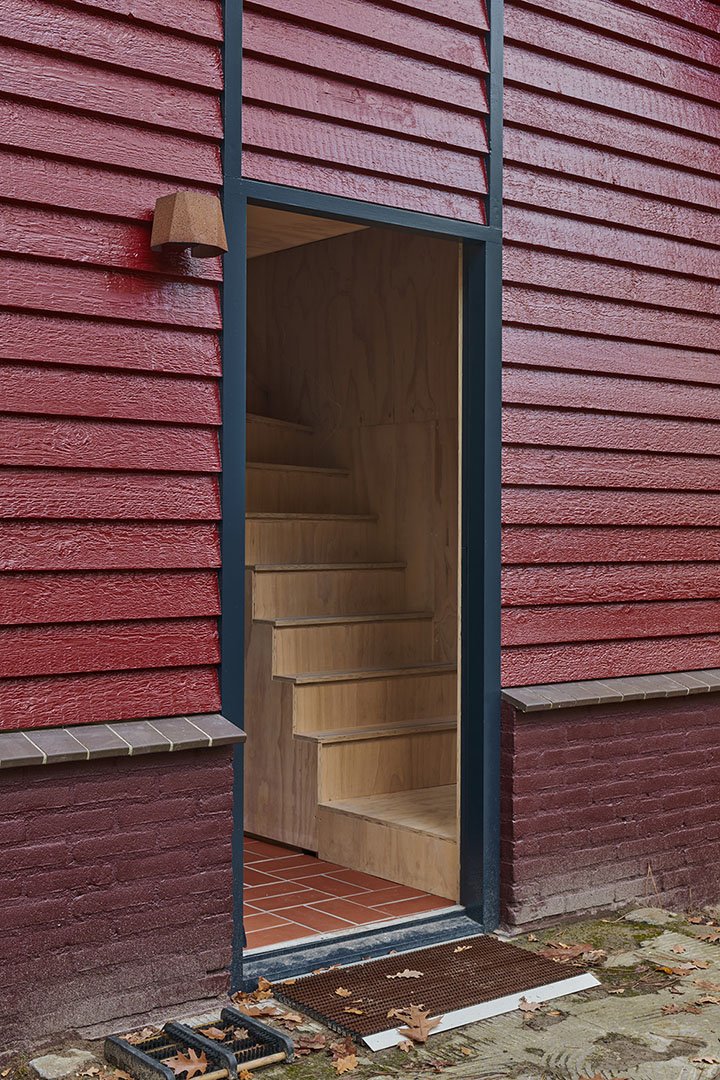
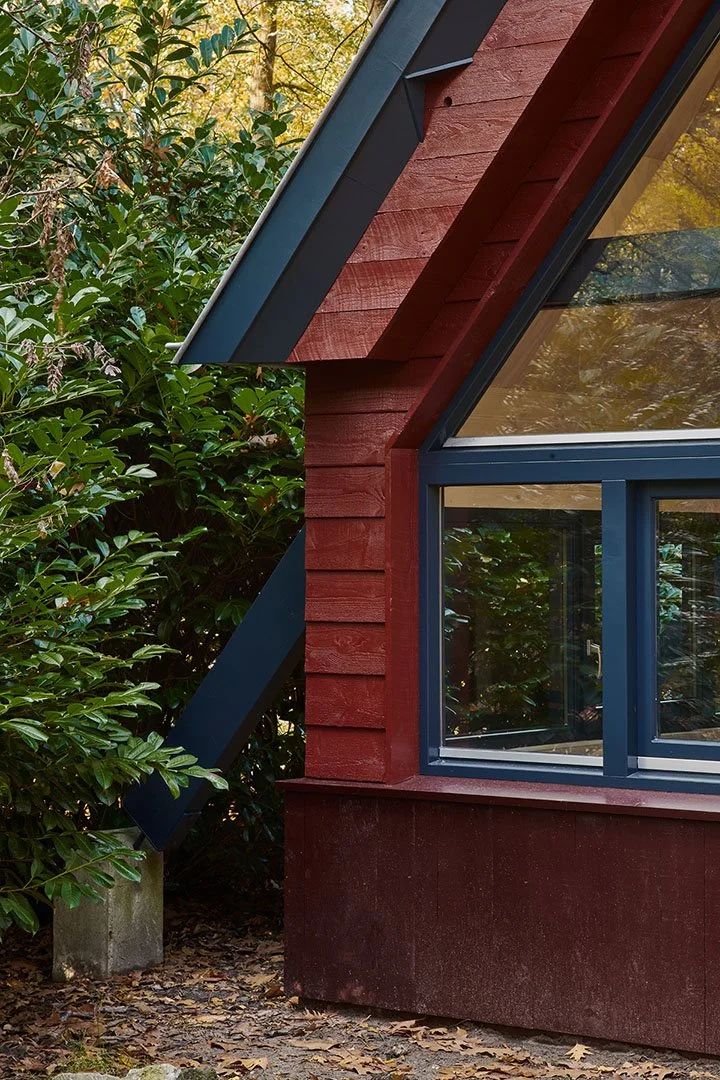
The new exterior colours are inspired by the earthy tones of the surroundings, allowing the house to blend naturally into the landscape. The renewed roof is insulated with wood fibre and finished with new rooftiles, a contemporary update that builds upon the original character of the holiday home.
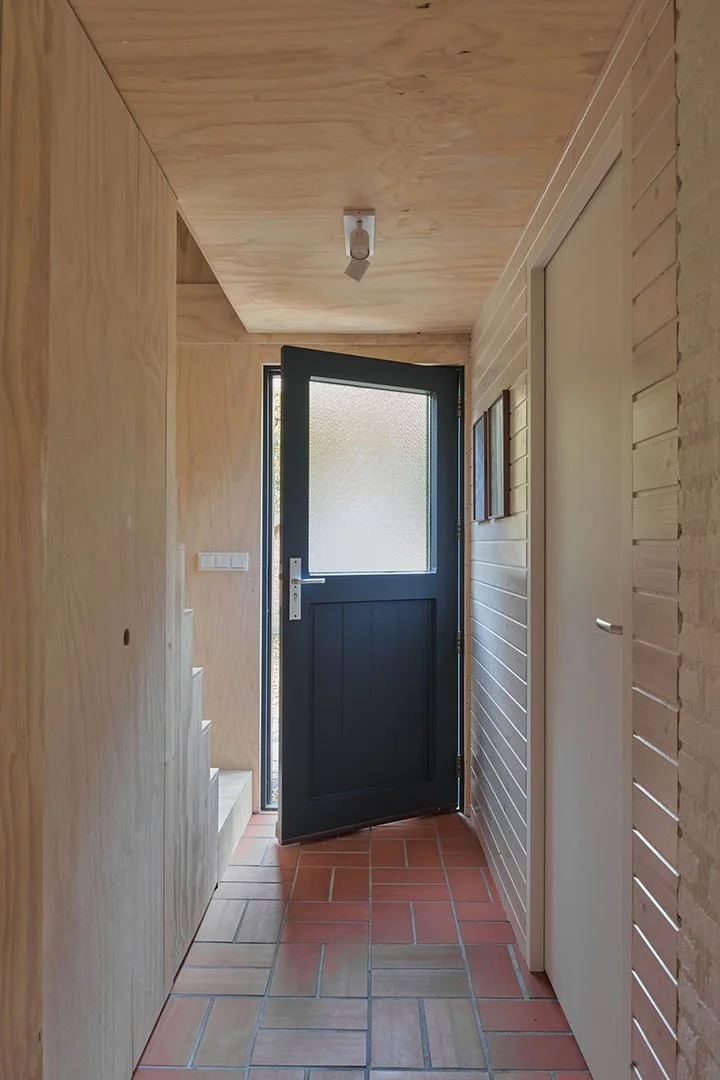
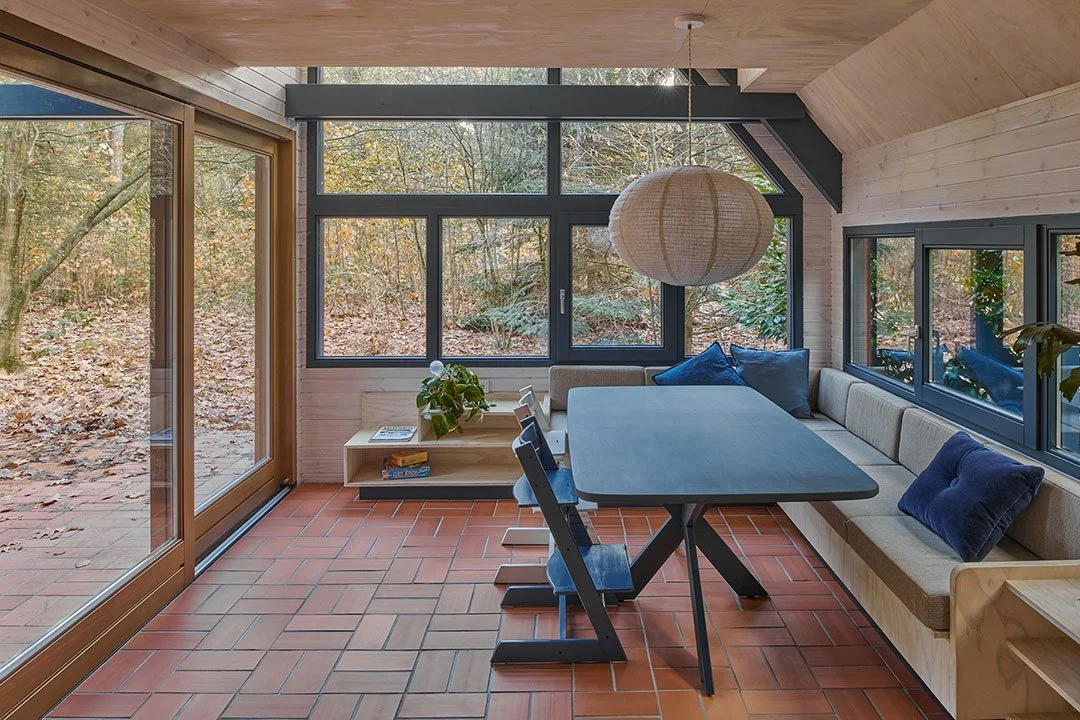
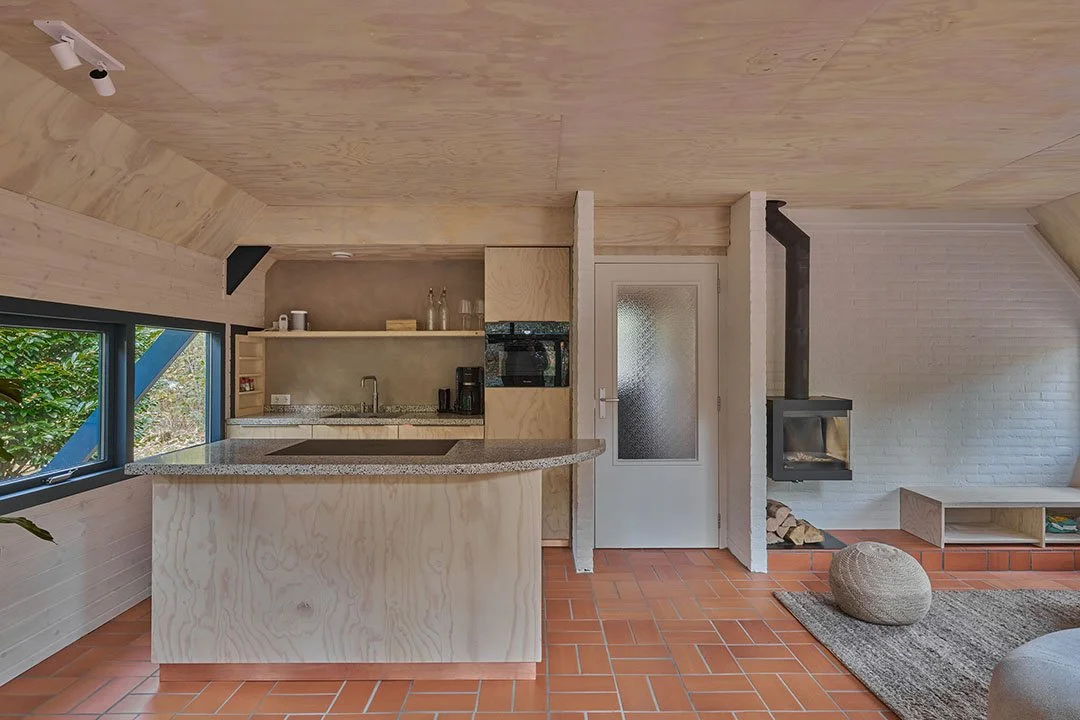
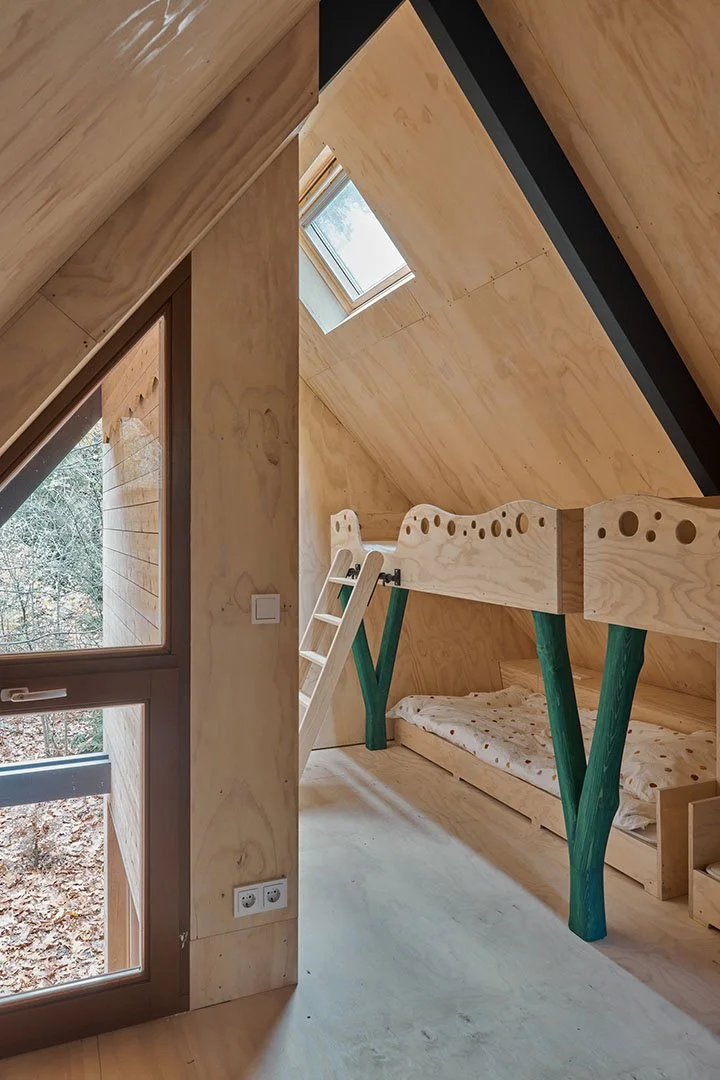
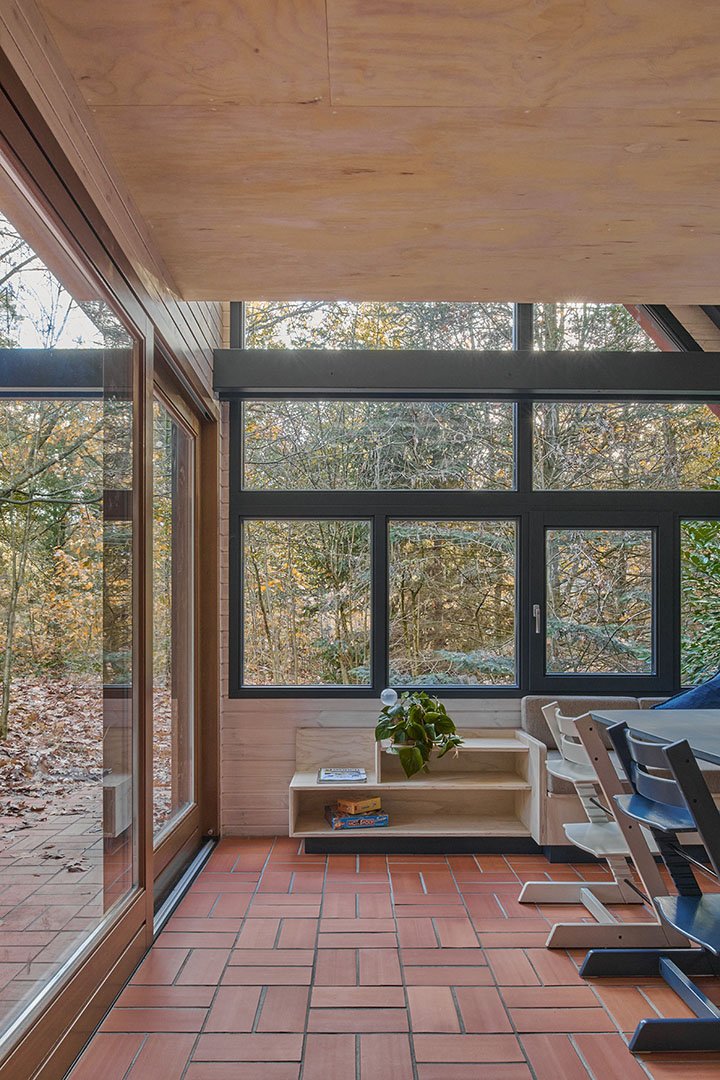
Inside, the sloped ceiling and large south-facing window create a bright and spacious atmosphere. Natural and rugged materials contribute to a relaxed rhythm of living. Terracotta floor tiles continue seamlessly onto the terrace, blurring the boundary between inside and out. Upstairs, a cosy alcove bed for adults and a children’s bedroom with a double bunk bed, supported by tree branches, offer playful references to the forest outside.
With a multi-year planting plan, rainwater collection, and habitats for wildlife, the holiday home plays an active role in the broader ecosystem of Herperduin. The ecological concept now serves as a blueprint for future renovations across the holiday park, allowing the entire area to grow as part of this green network. In this way, the house becomes not only a place for rest and retreat, but also a living example of regenerative living, where every intervention gives something back to nature. Text description by the architects.