Restructuring and Vertical Extension on Rue du Docteur Finlay: How to Combine Parisian Heritage with Lightweight Construction to Revitalize an Office Building.
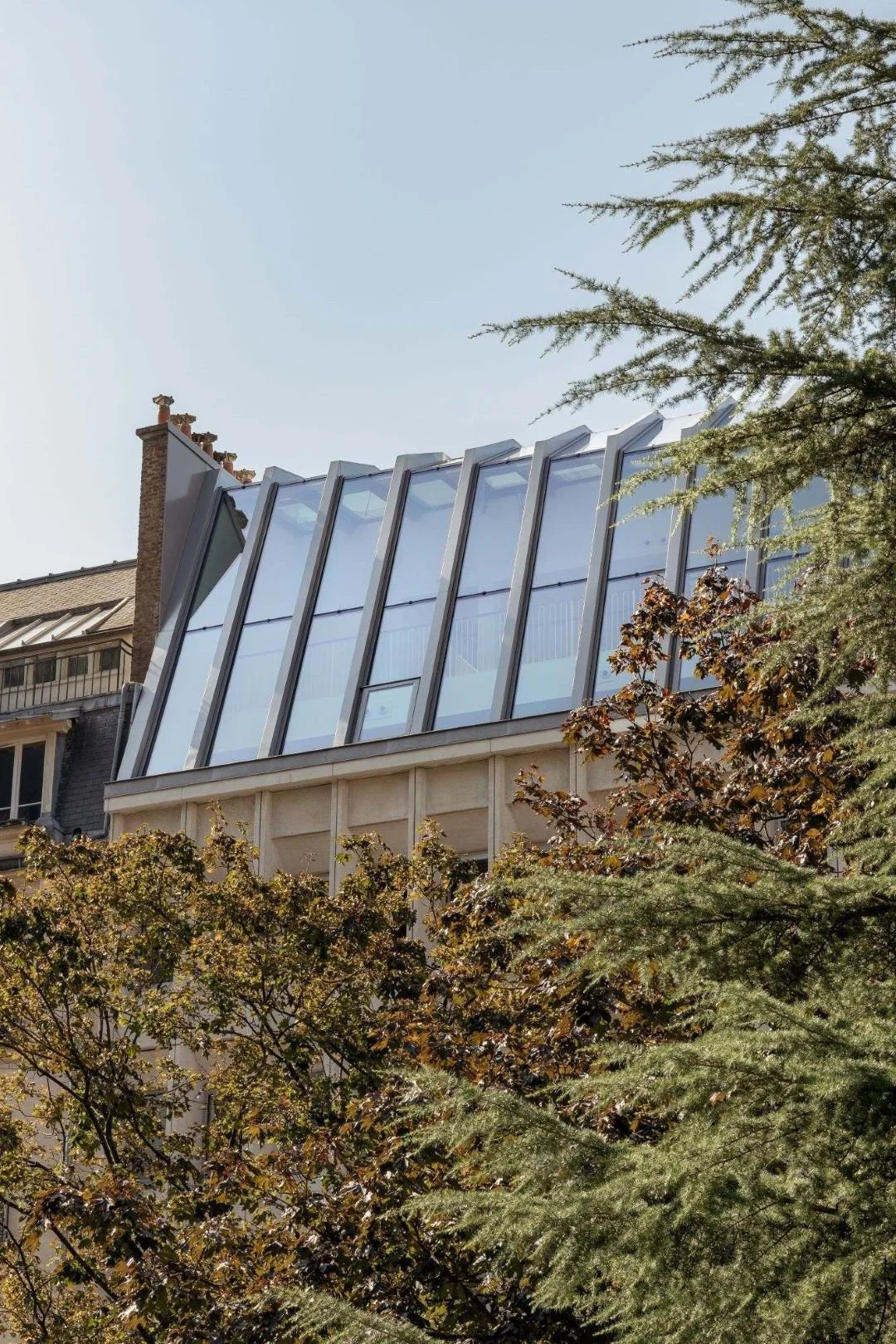
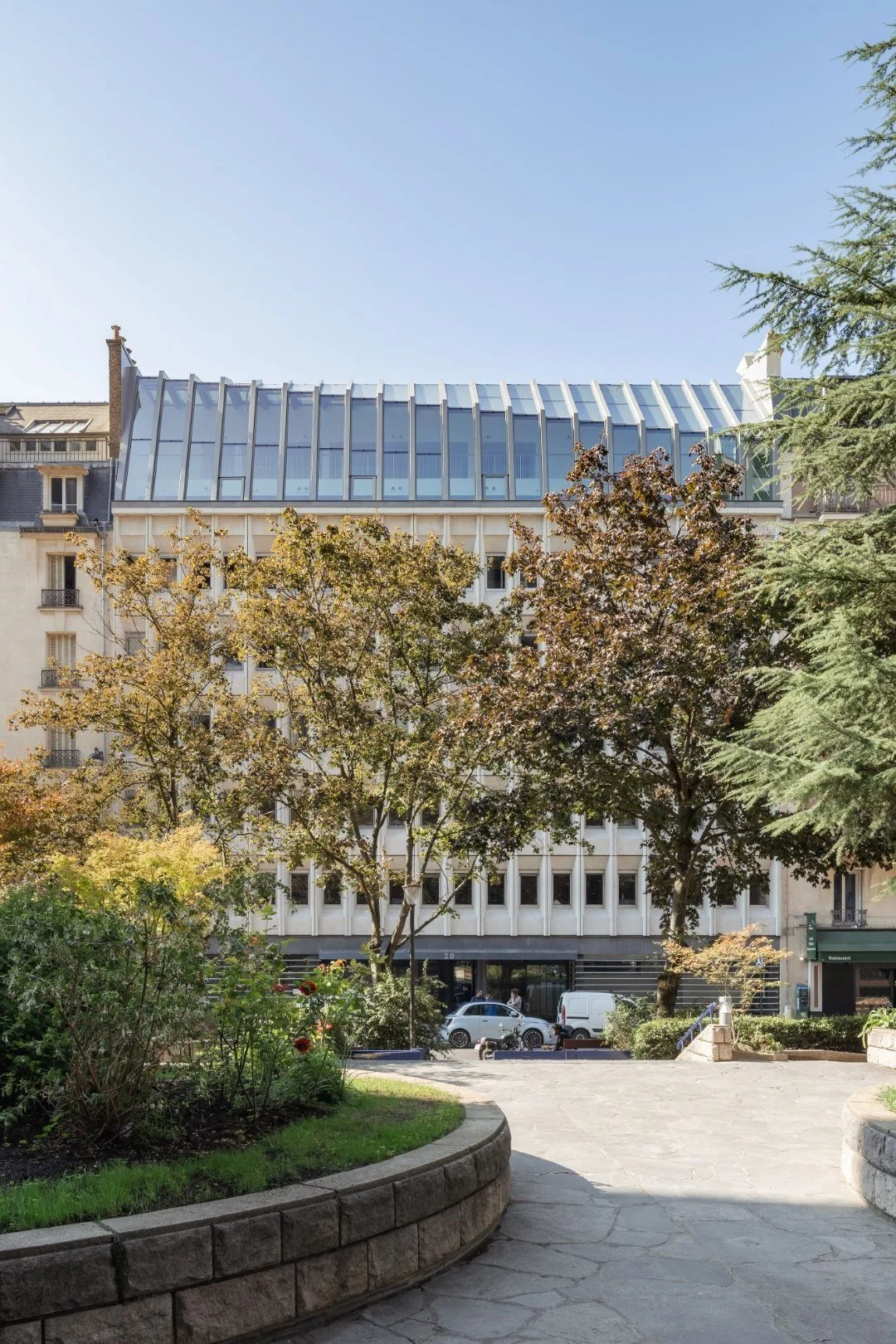
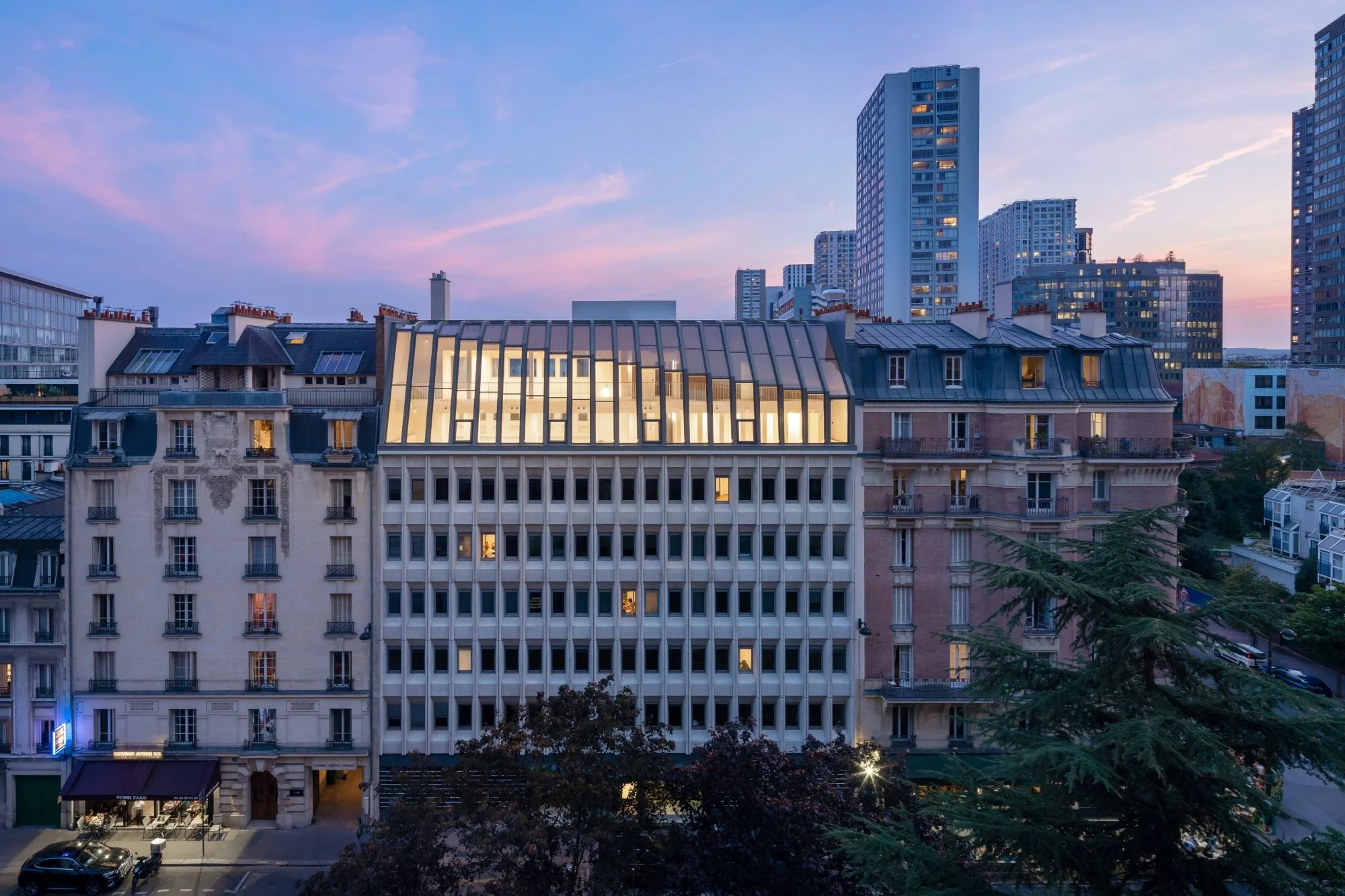
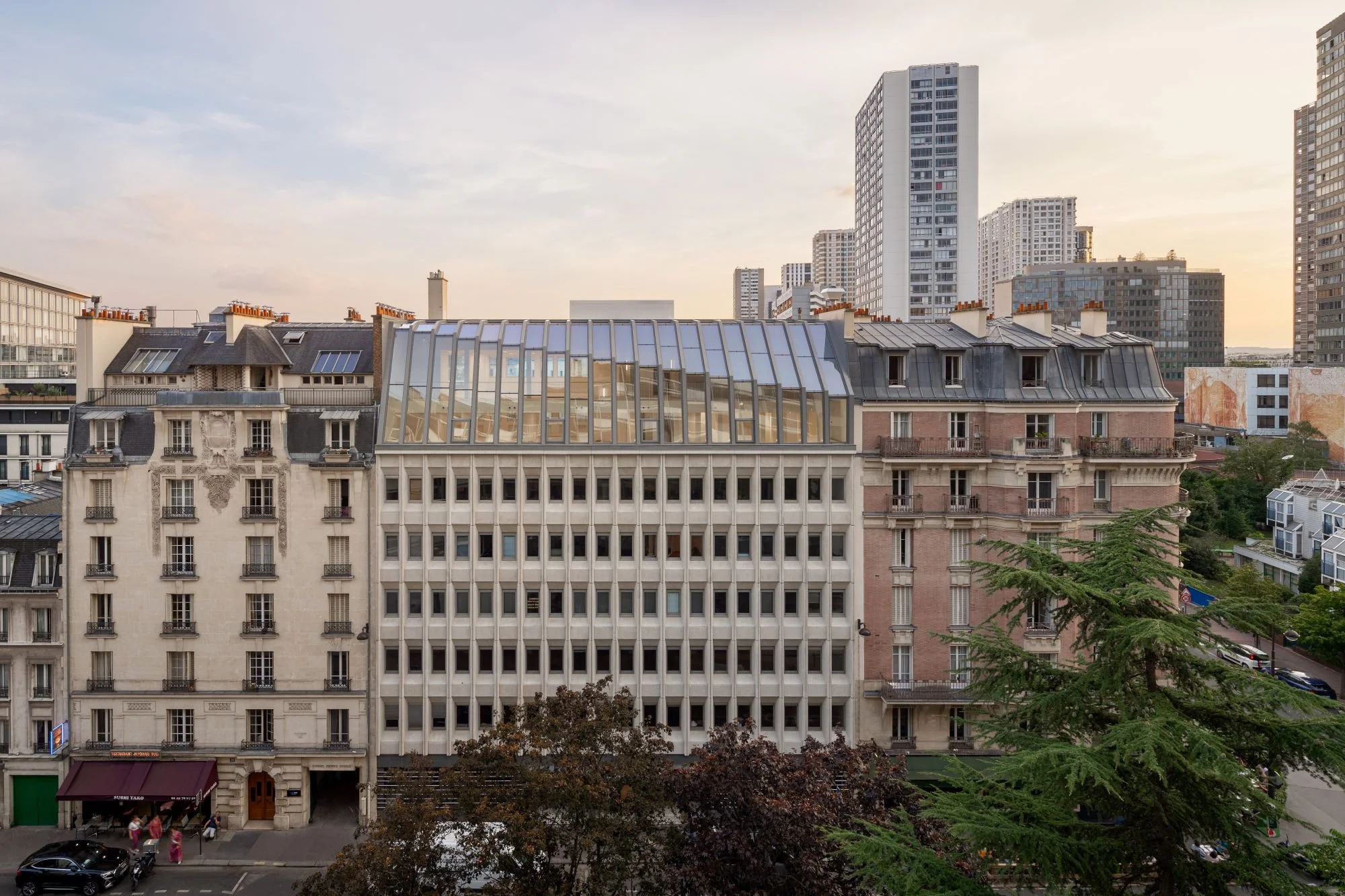
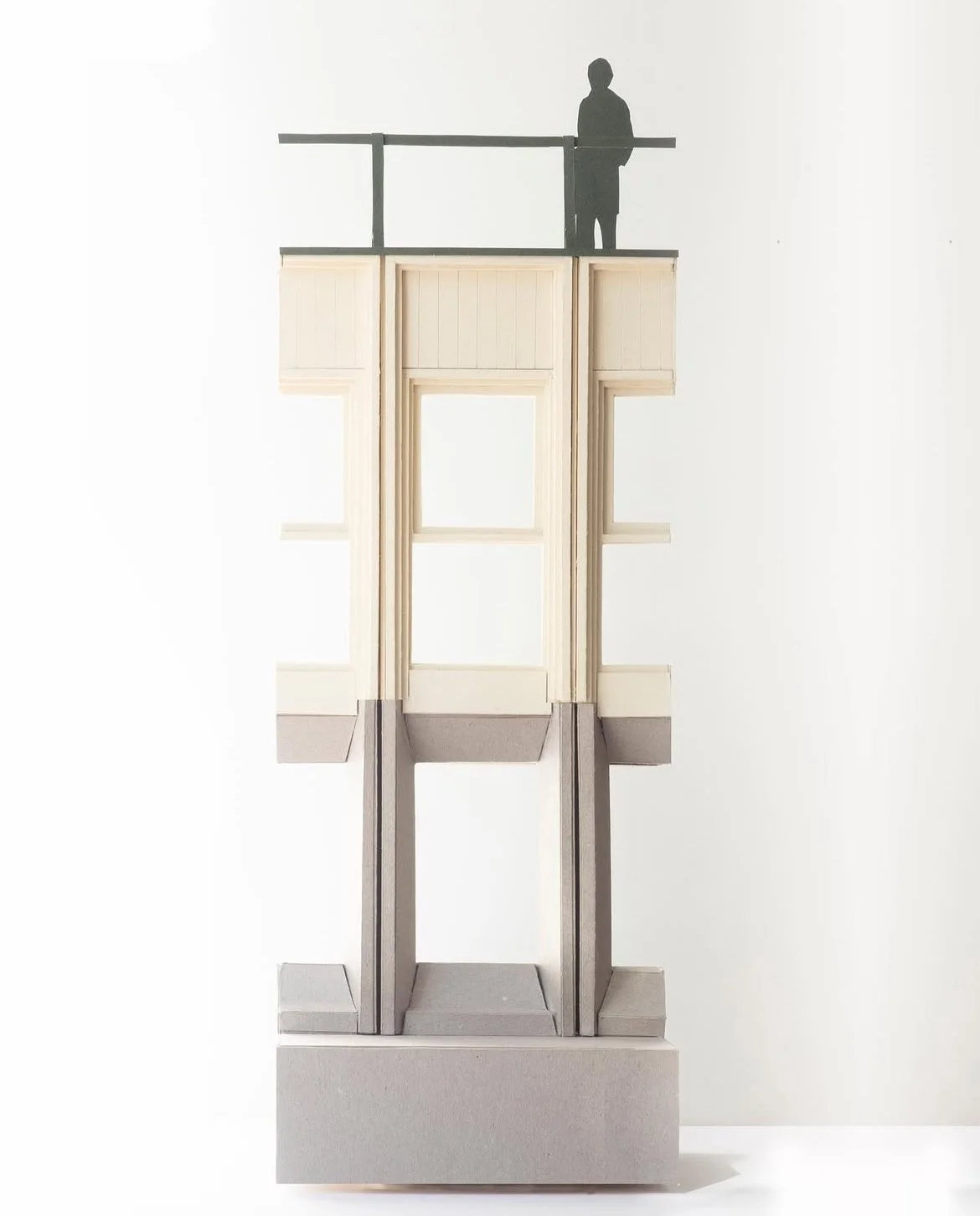
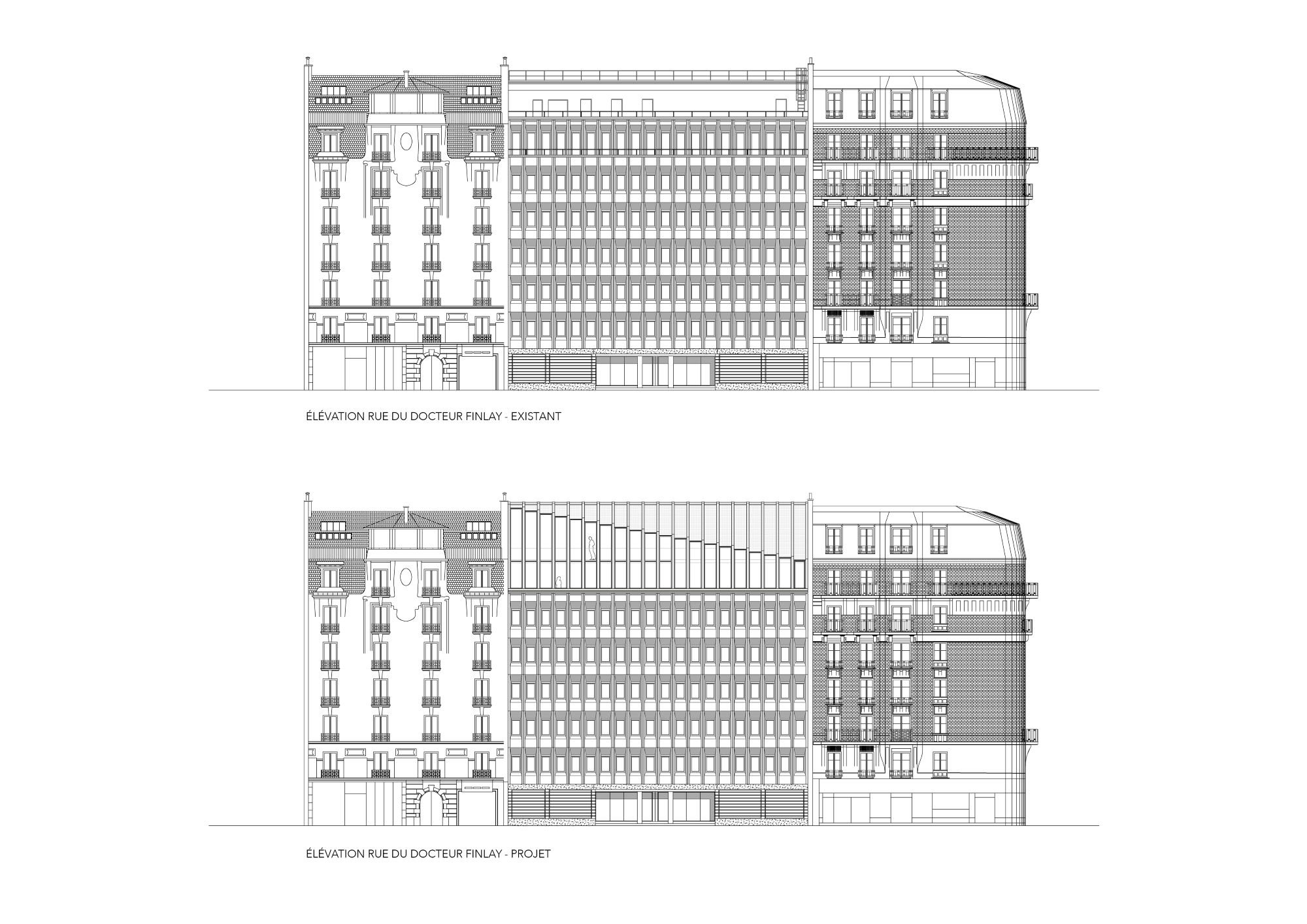
On Docteur Finlay street, a tripartite roof lifts up as the sun rises, and gradually twists so as to align with the neighboring roofs. Inserted in an empty space caught between two roof gables, the project defines itself as a wide glass structure, reinterpreting the traditional Parisian roof.
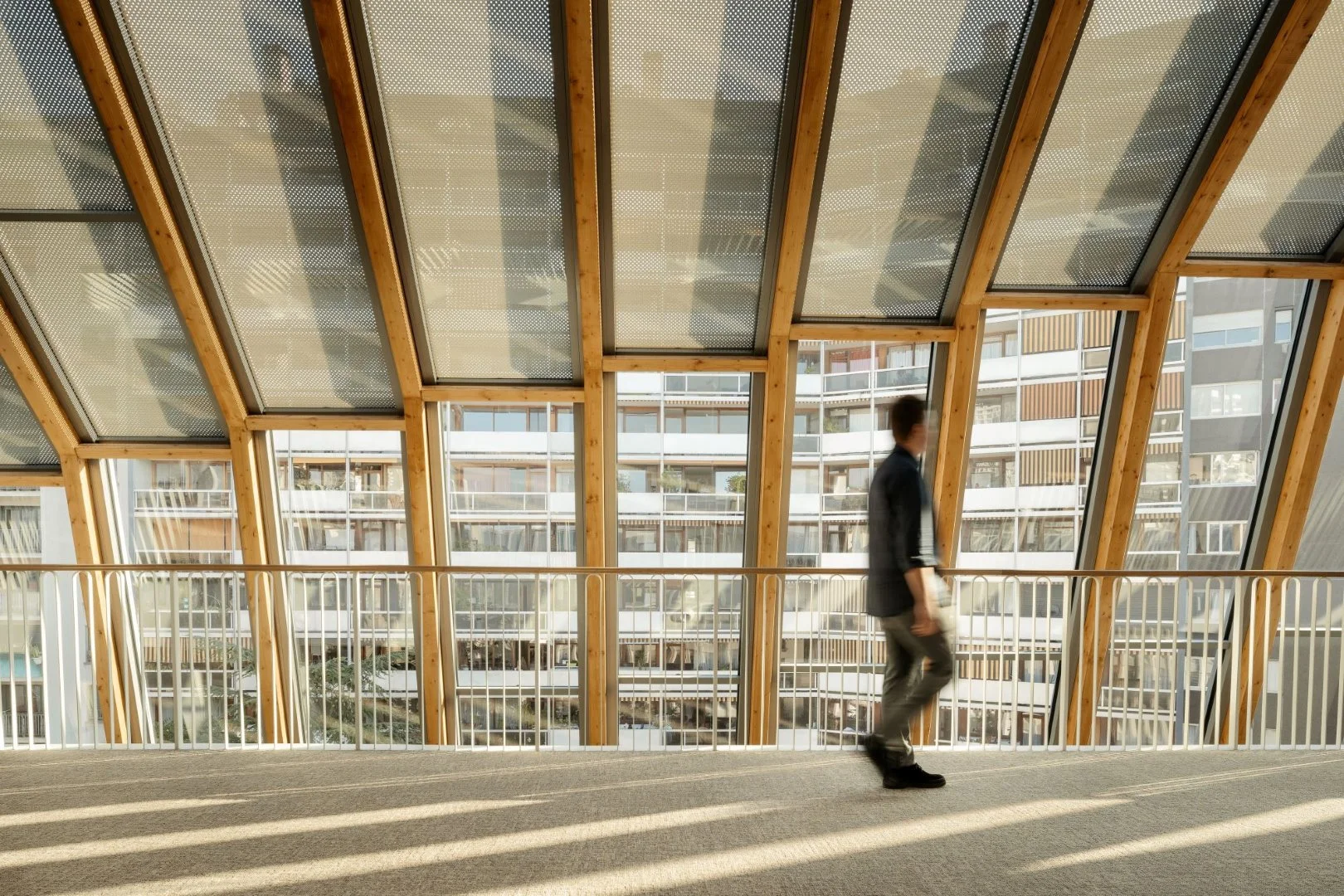
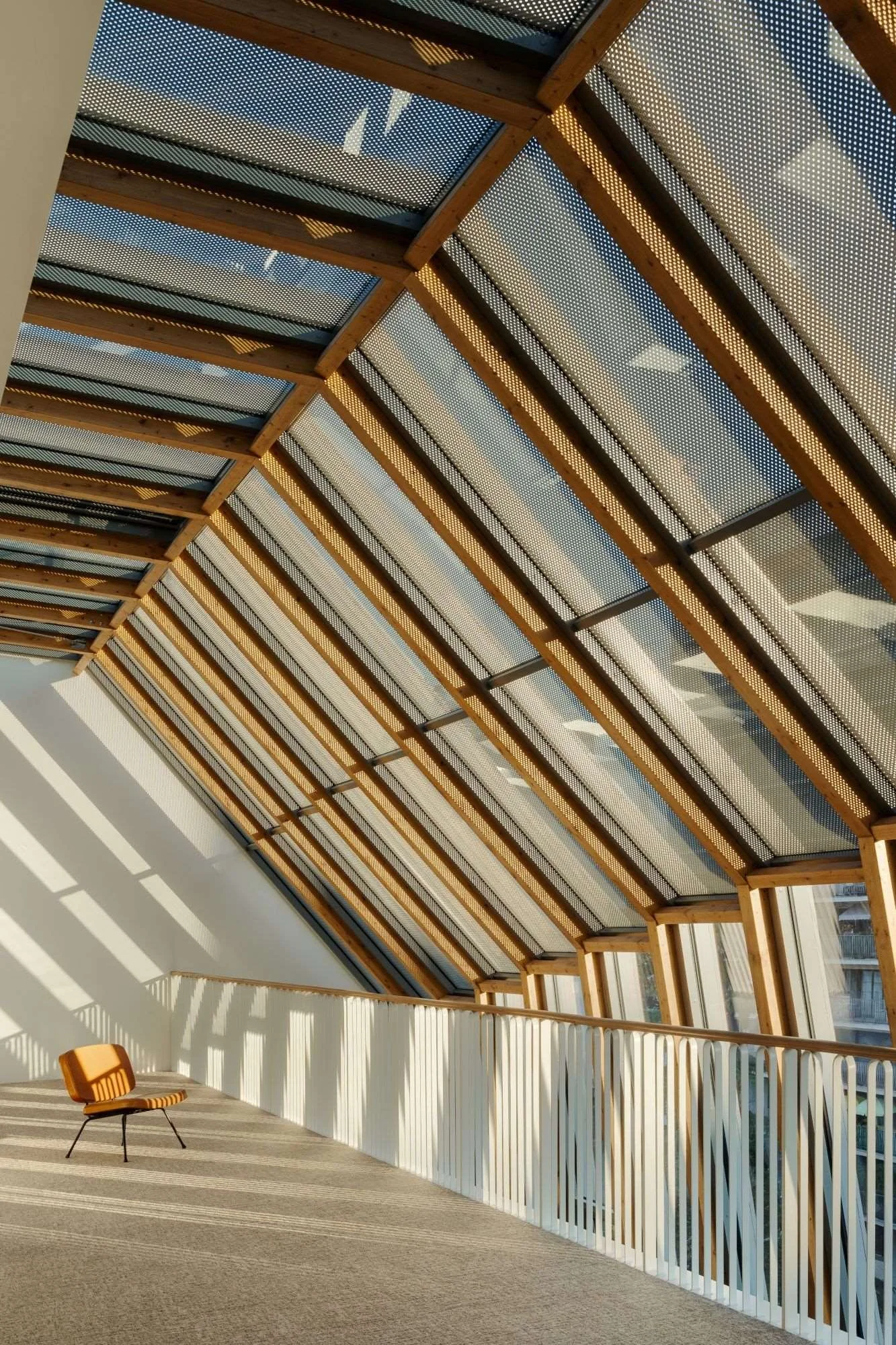
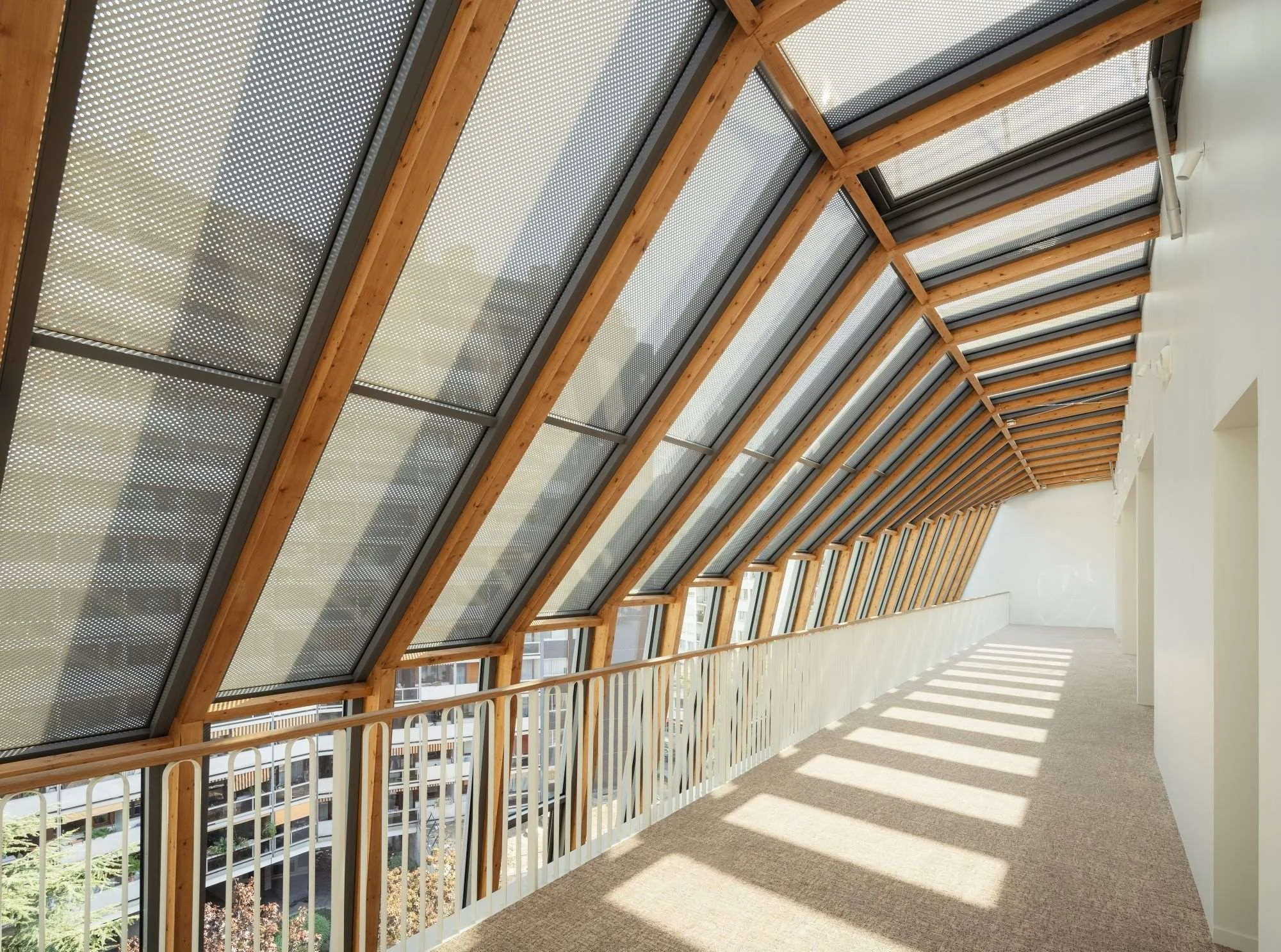
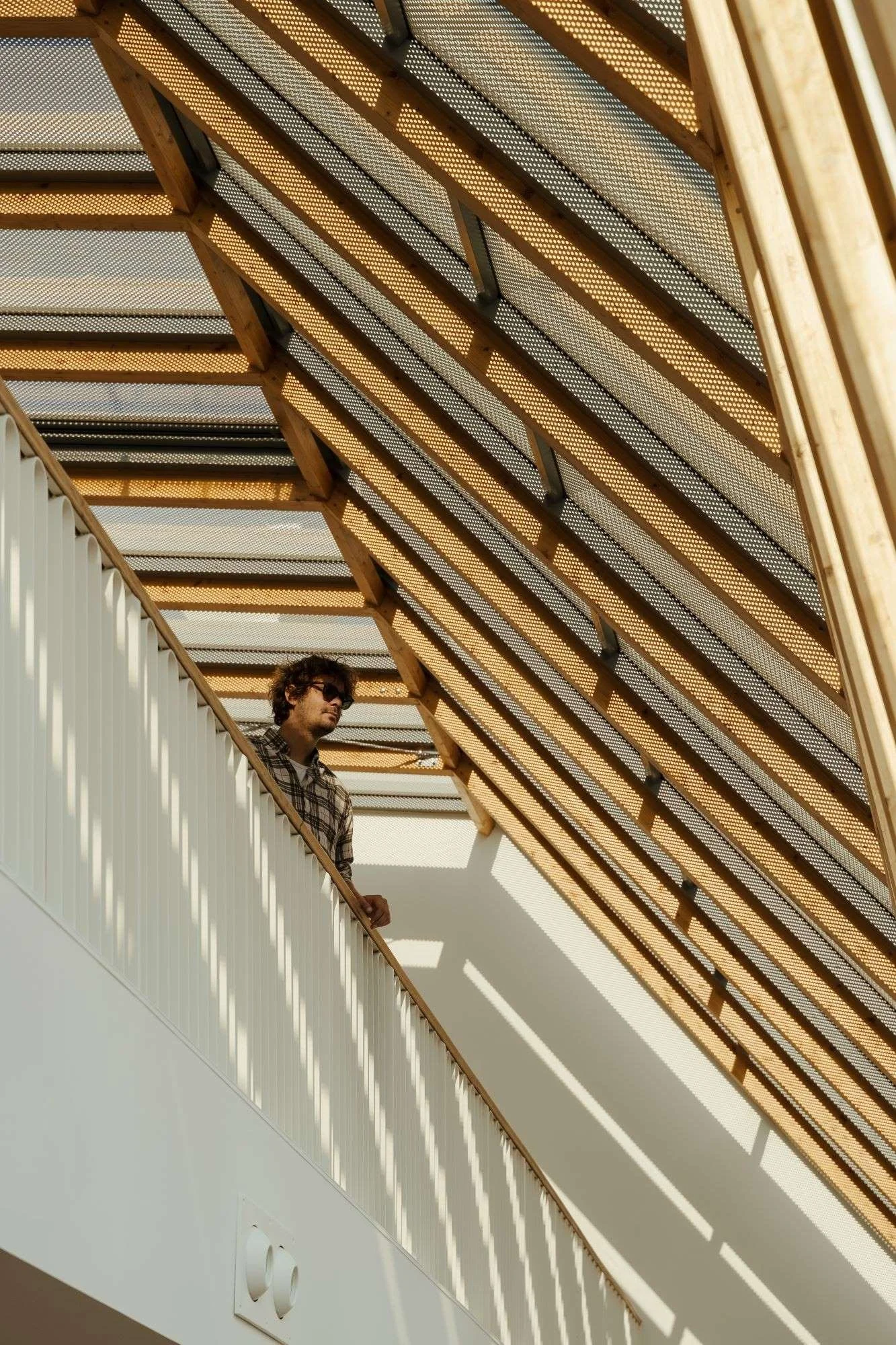
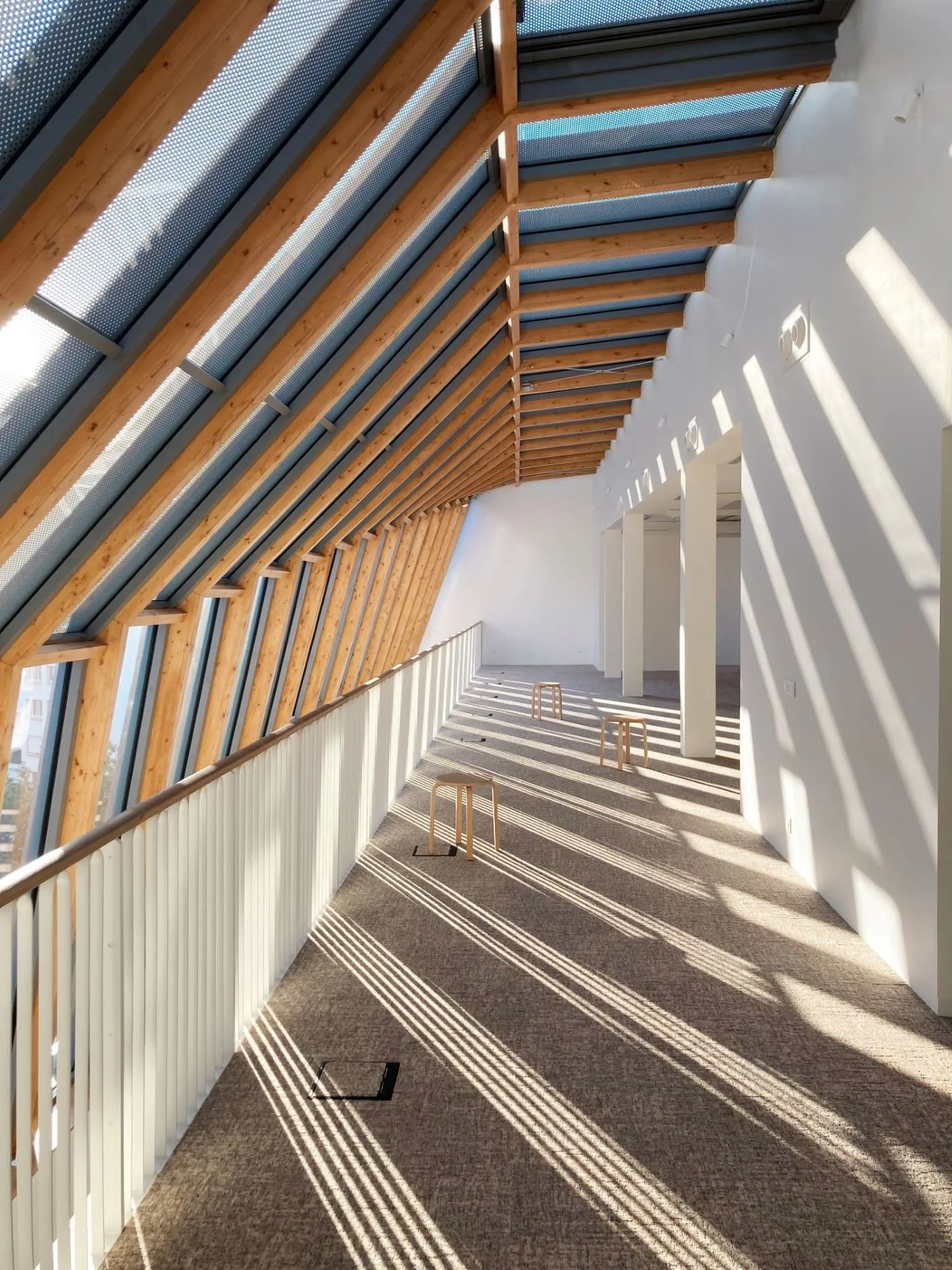
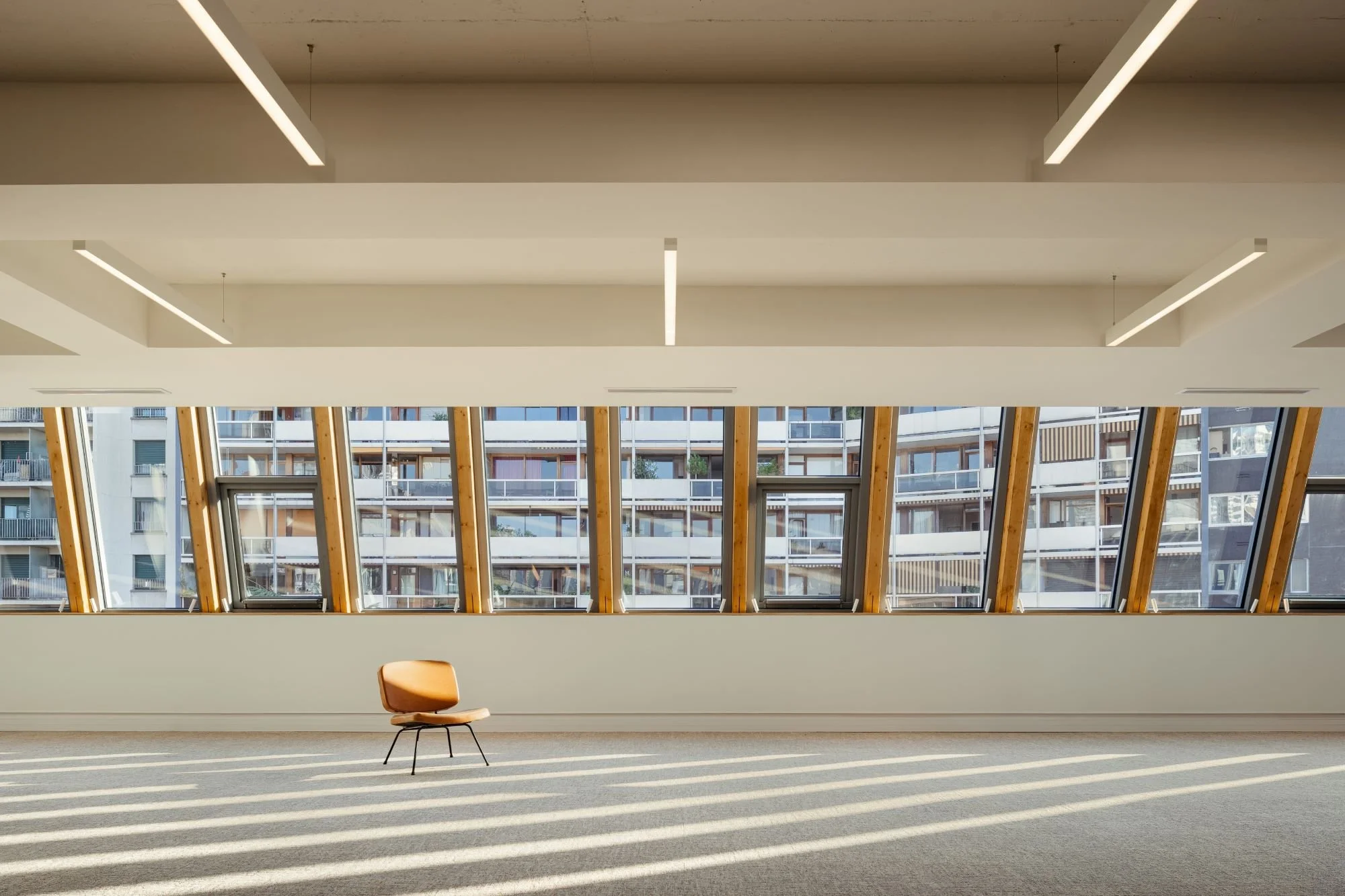
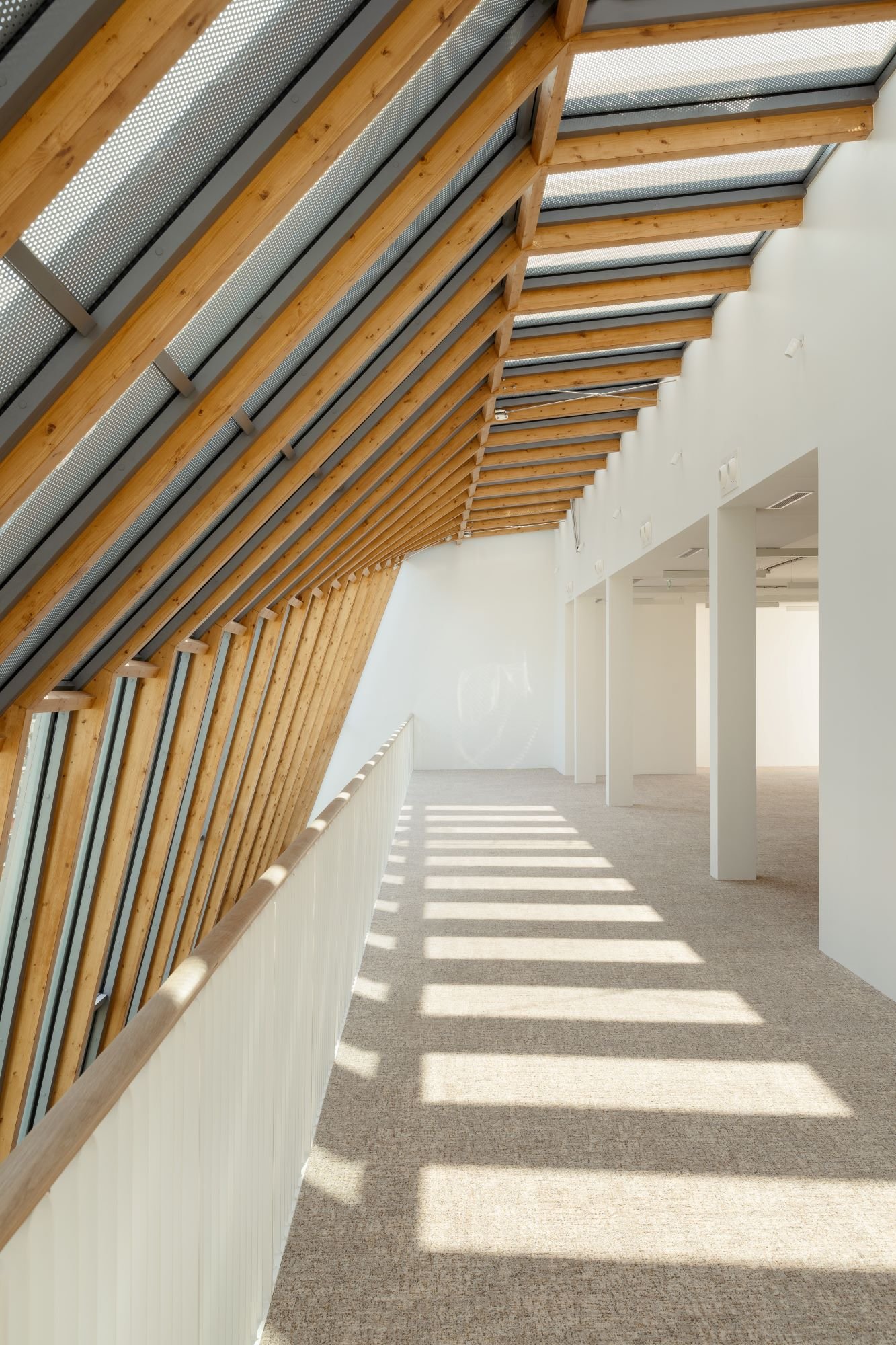
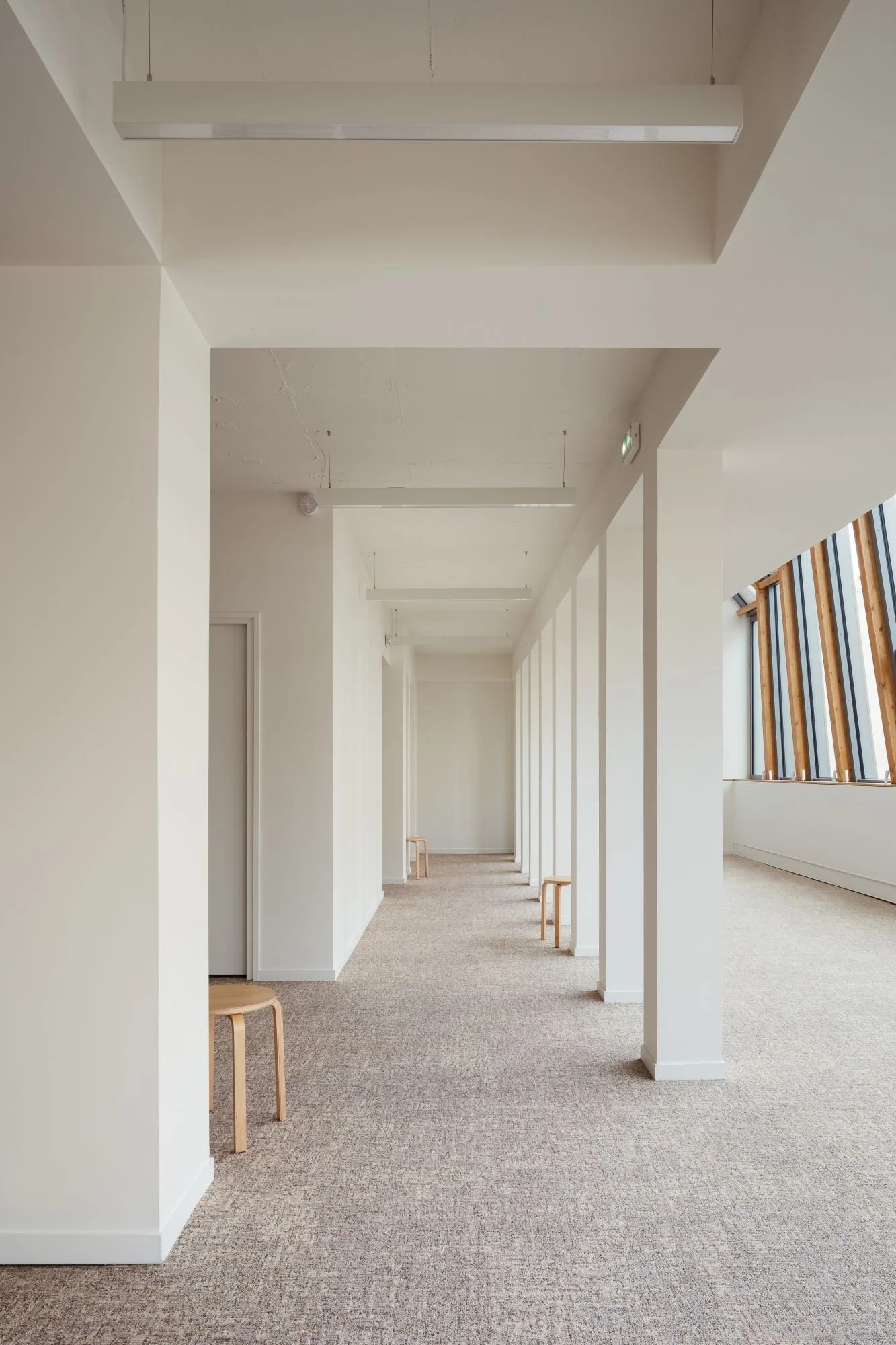
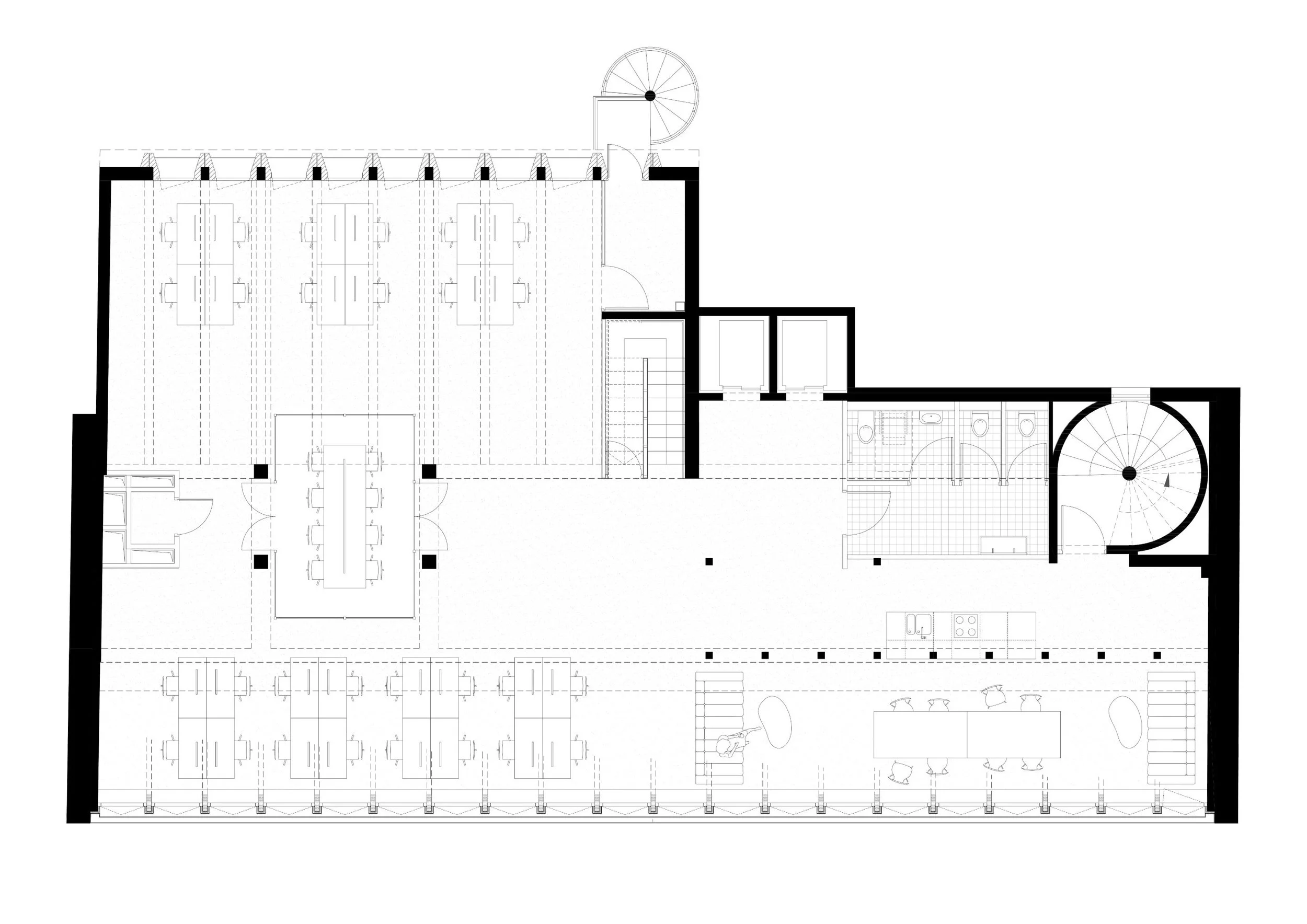
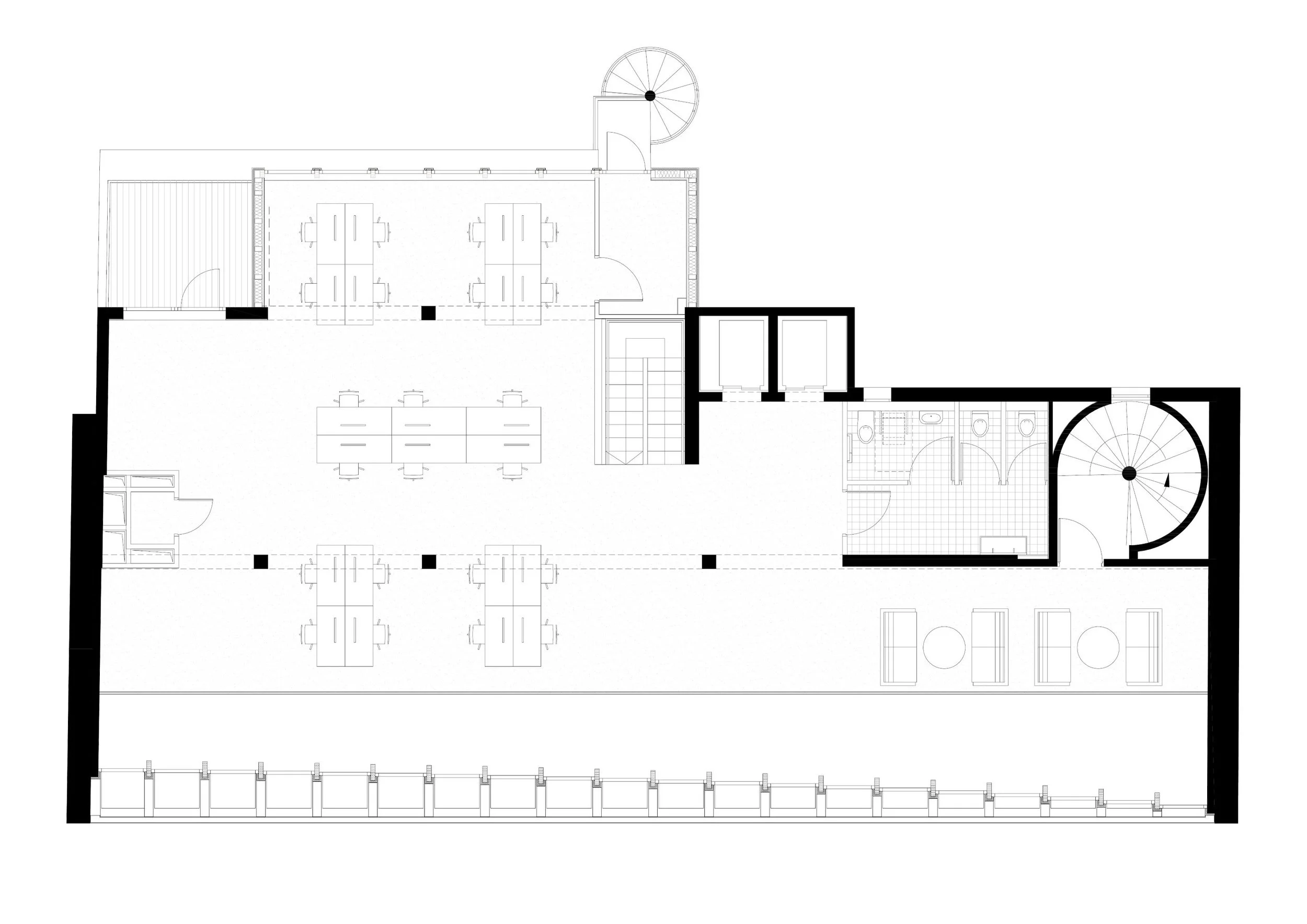
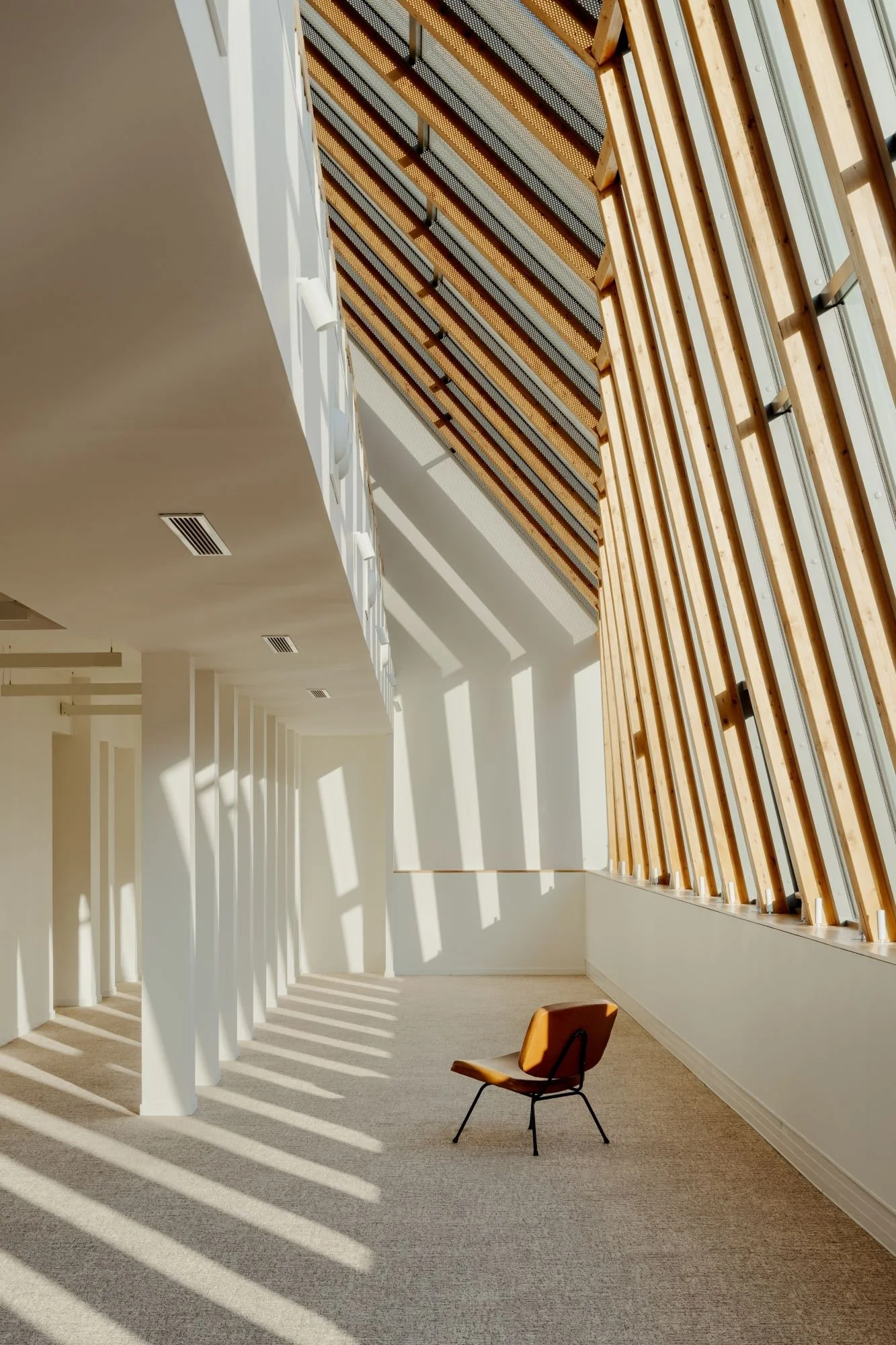
The closure of the previous terraces requires the dismantling of the former facade’s upper wall, in order to provide room for the first office space and to insert a second level on a cantilevered mezzanine floor. Under the glass roof, of which the upper part is silk-screened, the two office floors are brought into dialogue with the residential units across the street, maintaining a non-intrusive relationship given the distance separating them.
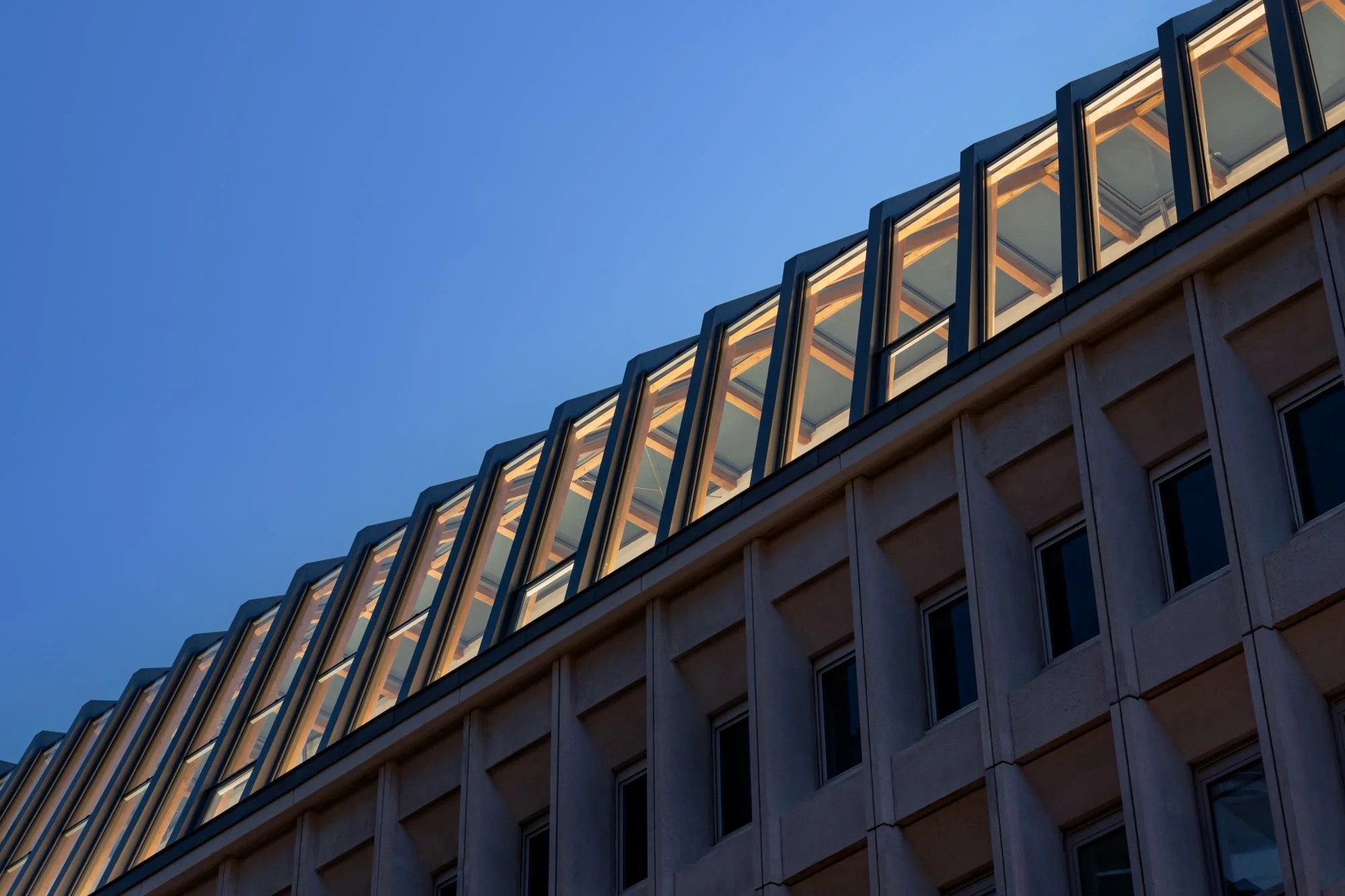
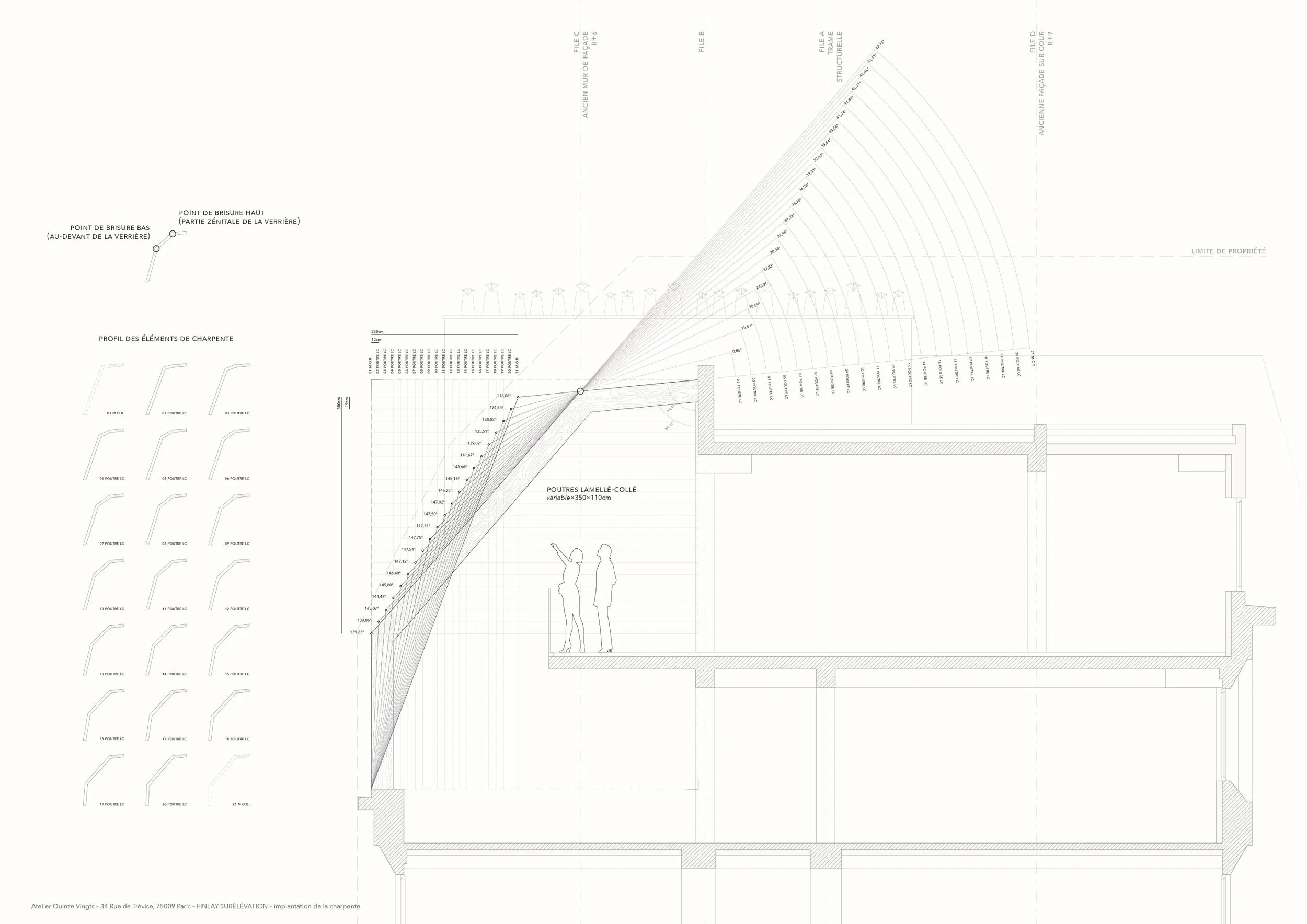
Nineteen glue-laminated timber elements form the three-sloped roof which defines the volume. The upper slope stays unchanged along the entire span of the roof, while the two lower slopes progressively alter in inclination. The framework is assembled in accordance to the Simonin Résix® method, and its prefabrication allowed to reduce the on-site construction time down to two days.
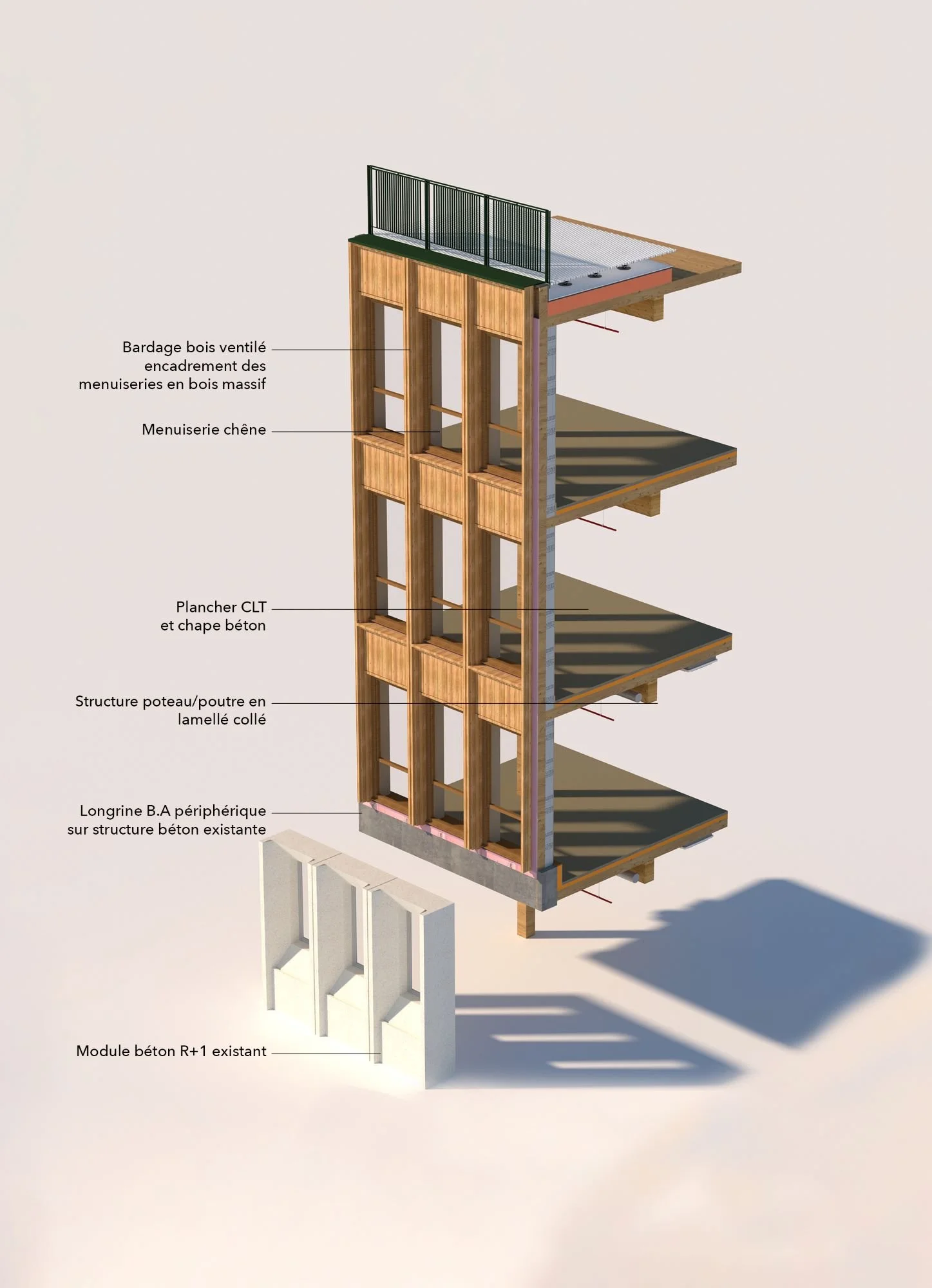
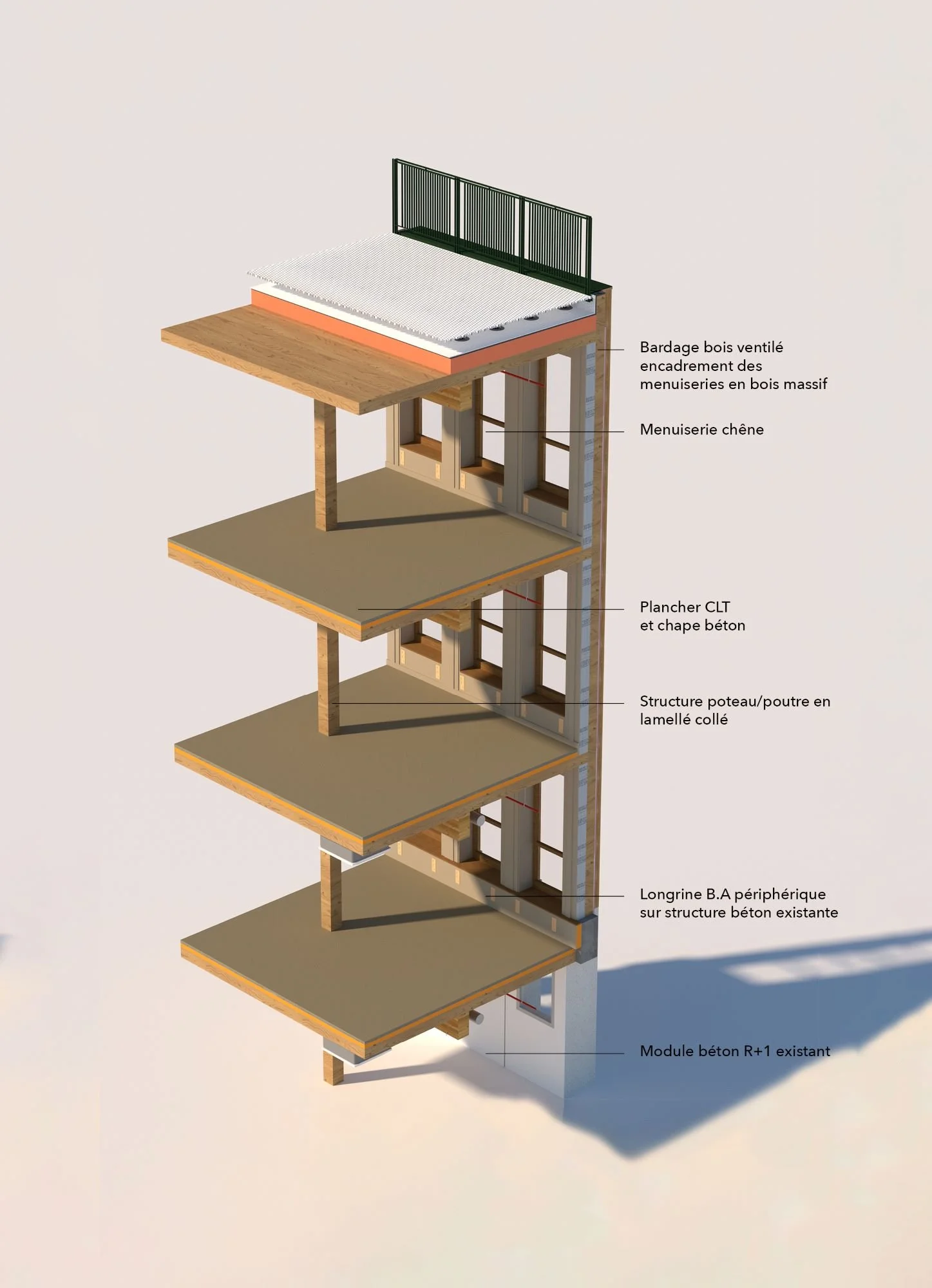
The project demonstrates Atelier Quinze-Vingts’s commitment to finding the most relevant architectural solution while giving priority to a rapid execution and the economy of all resources. The extension of the building, built in the 1970s, goes hand in hand with the thermal and energetic renovation of all its levels. The operation is being pursued in the heart of the block where an additional planted elevation is to be built: four timber-framed levels have been added, extending the existing structure with restraint, precision, and breathing space. The project initiates a threefold transformation: complete asbestos removal, deep energy renovation, and structural elevation, all carried out in an occupied site.
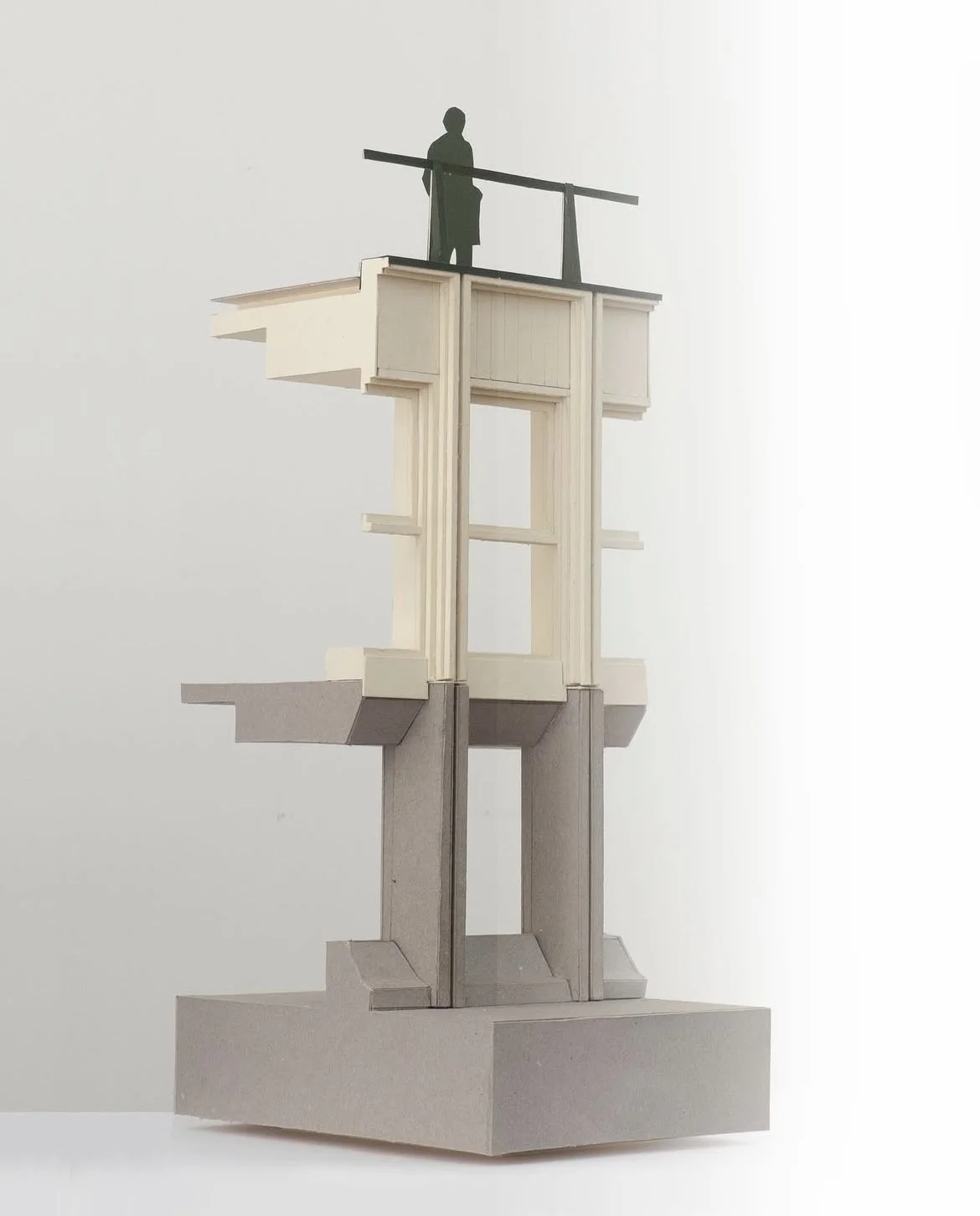
The elevation rests upon a pre-existing structural grid (regular and rational) whose rhythm it adopts to anchor a fully prefabricated modular system. Each level is made up of timber-frame units, manufactured off-site and installed in just a few days : a choreography of efficiency, material economy, and silent construction. This structural rigour meets the strict standards of the Paris Fire Brigade: structure, façades, and interiors are entirely in exposed wood, punctuated here and there by discreet steel reinforcements that ensure bracing without disturbing the overall harmony.
Dialogue with the existing is not a gesture, but an obvious choice. The new façade continues the logic of the original composition: the use of wood brings warmth, texture, and an evolving character. The project does not add — it extends. Crowning it all, a green and accessible rooftop unfolds a suspended landscape — a discreet belvedere and a thermal reservoir alike.
This elevation is also a manifesto: that of a committed, fertile, and measured architecture. HQE and BREEAM certifications, biobased materials wherever possible, a clean site and controlled carbon footprint — the project is grounded in the real, yet animated by unwavering faith in the elegance of means. It expresses a deep conviction: that building can no longer be separated from ecological intelligence and the logic of reversibility. Text description by the architects.