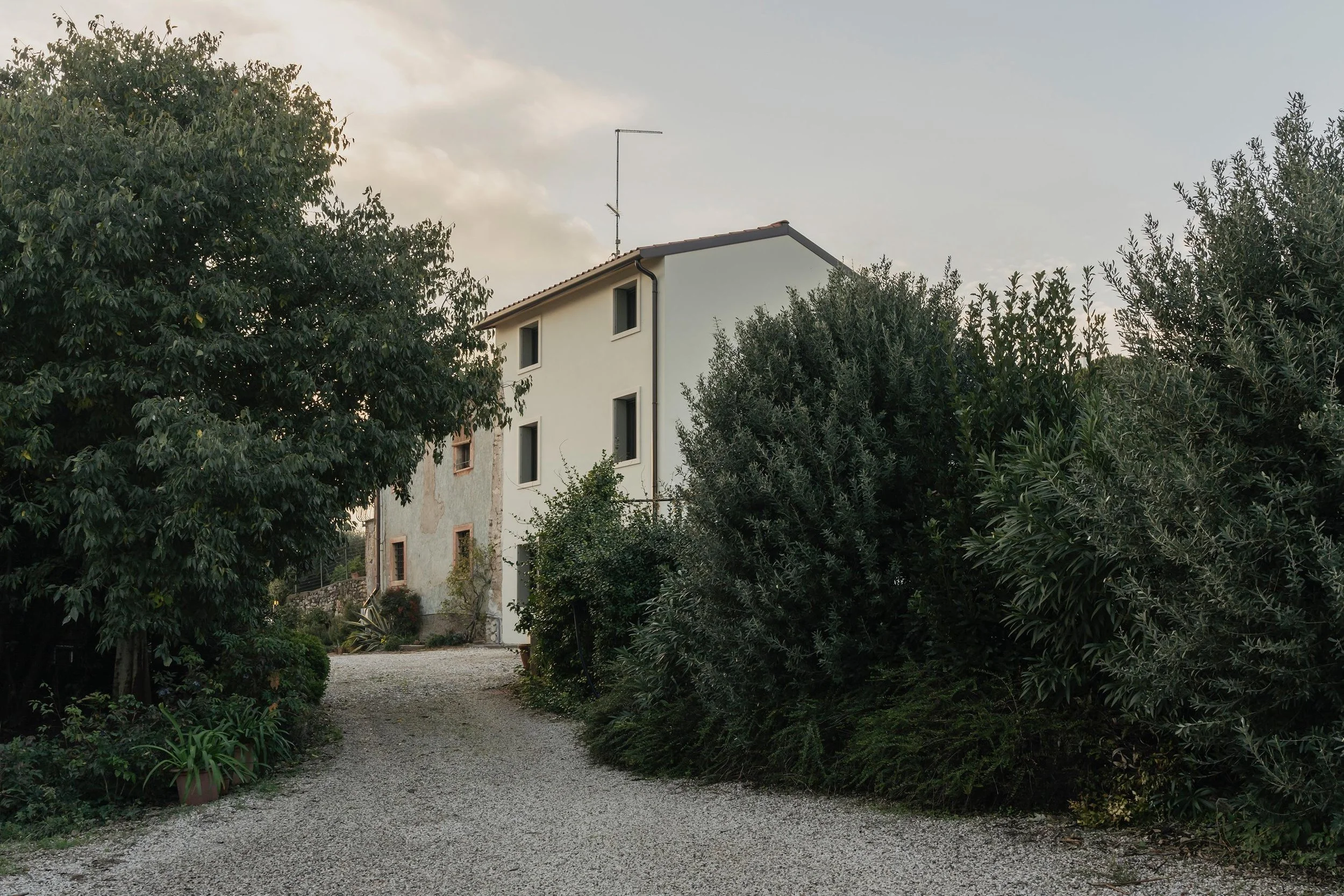
Casa Can Cain surges from the restoration of a stone ruin built approximately two centuries ago. The decisions behind its shape and materiality are rooted in an interpretation of the local building culture, aligned with the need to create spaces suited to a new lifestyle through the use of contemporary construction techniques. The goal was to create a new space that emotionally connects with the characteristics of the surrounding territory, without rejecting or directly replicating traditional architecture, but rather presenting itself as an evolution of it.
Casa Can Cain is located in Valpolicella, in a hilly area that connects the Pre-alps and the Po Valley, in the province of Verona. The original ruin, being enclo-sed on one side by an adjacent building and on the back by an embankment, was very dark, and certain rooms, lacking ventilation, were also unhealthy. In the past, these types of dwellings were designed to provide shelter and respite from the hard work in the open fields. However, in the post-pandemic era, this concept has been reversed; work is predominantly carried out in offices, and naturally, people seek a close connection with the outdoors and nature in their homes.
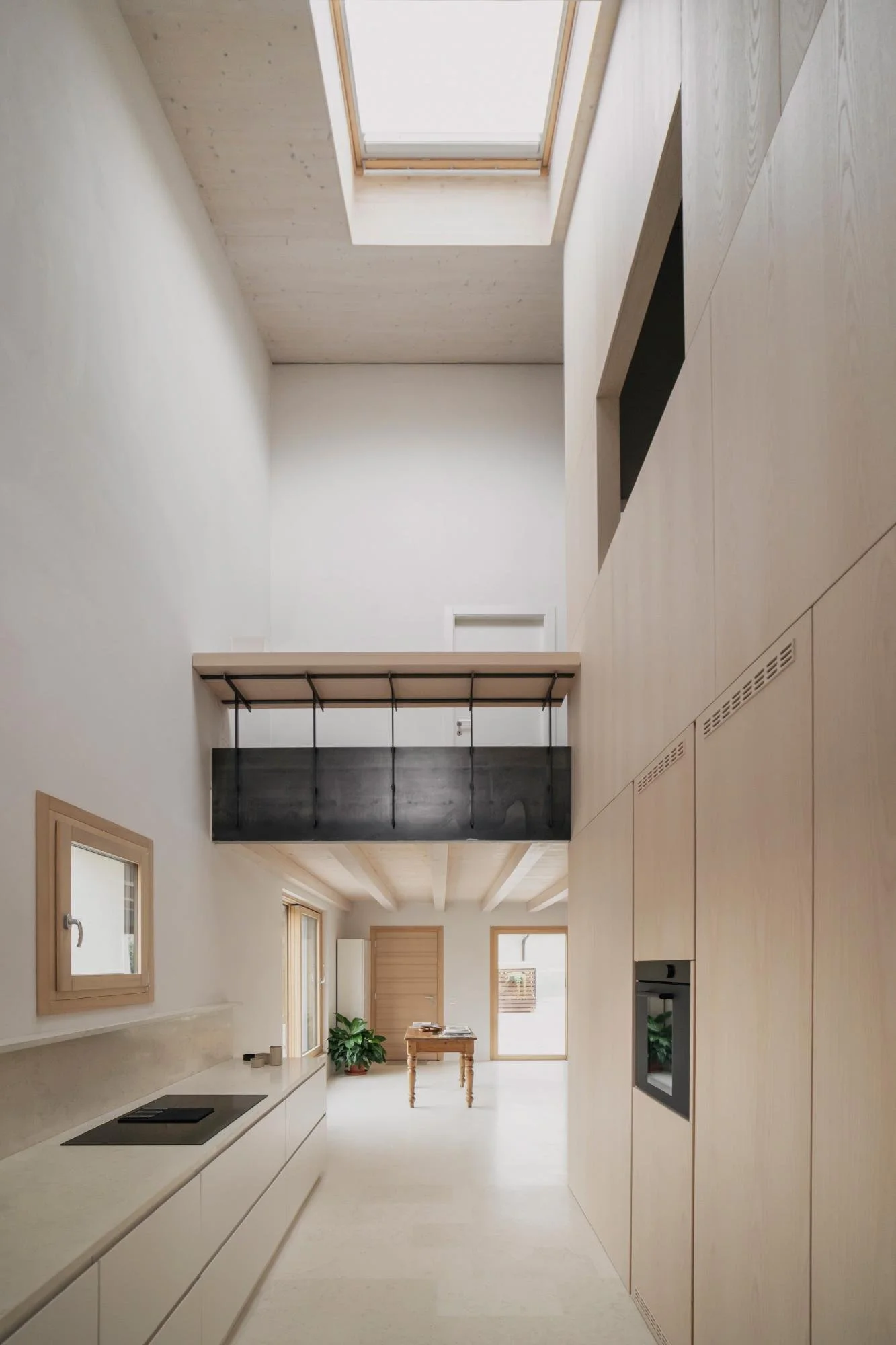
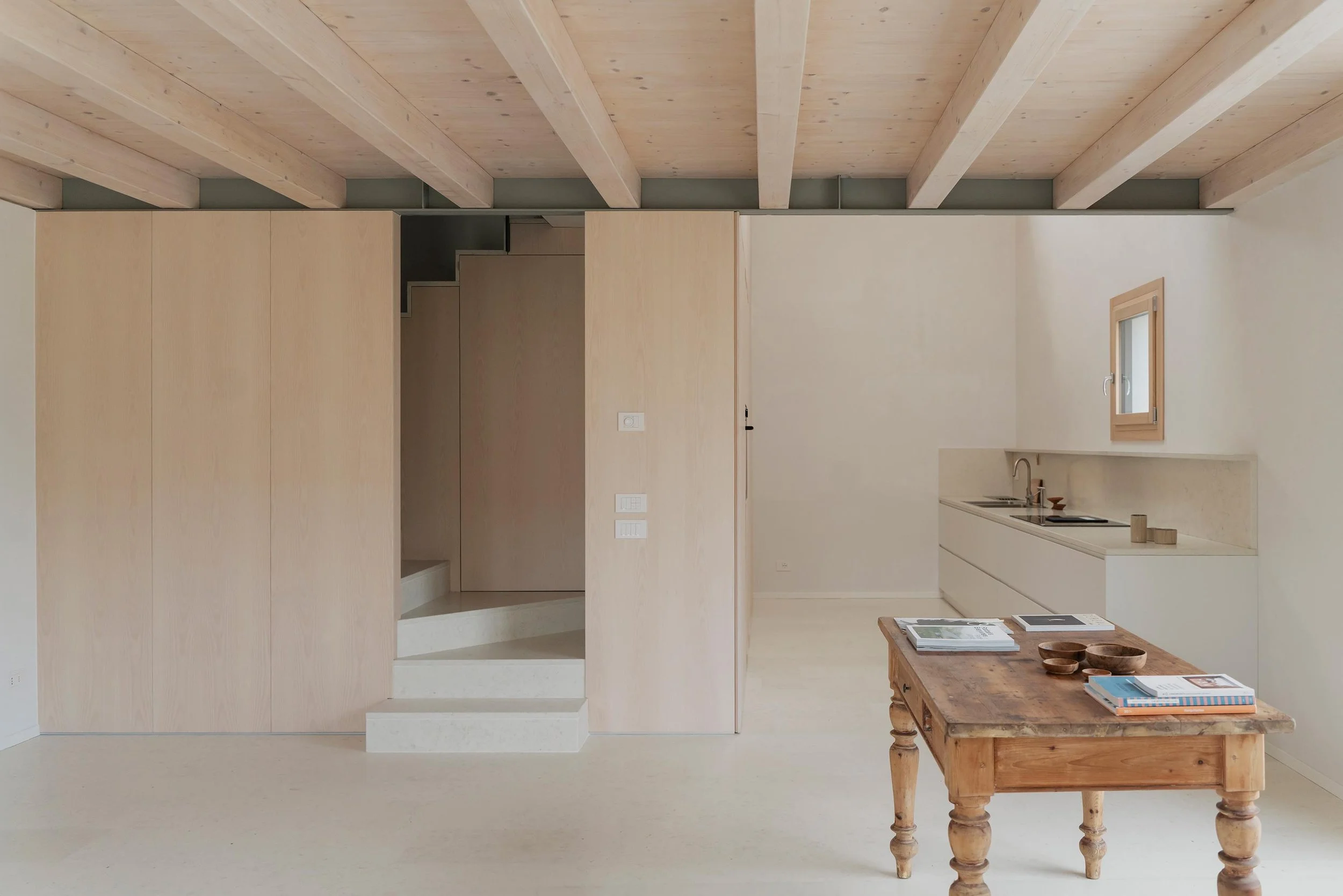
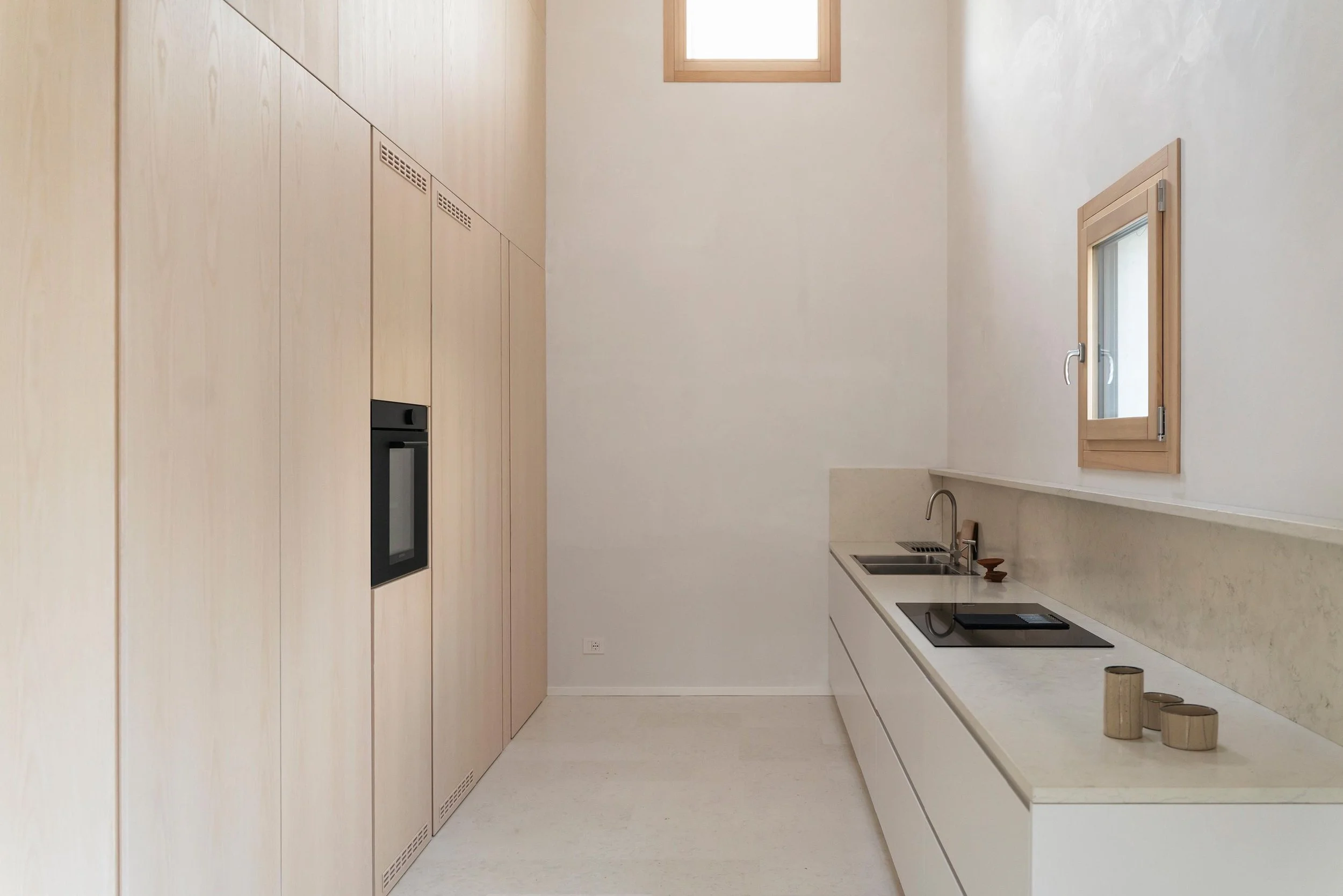
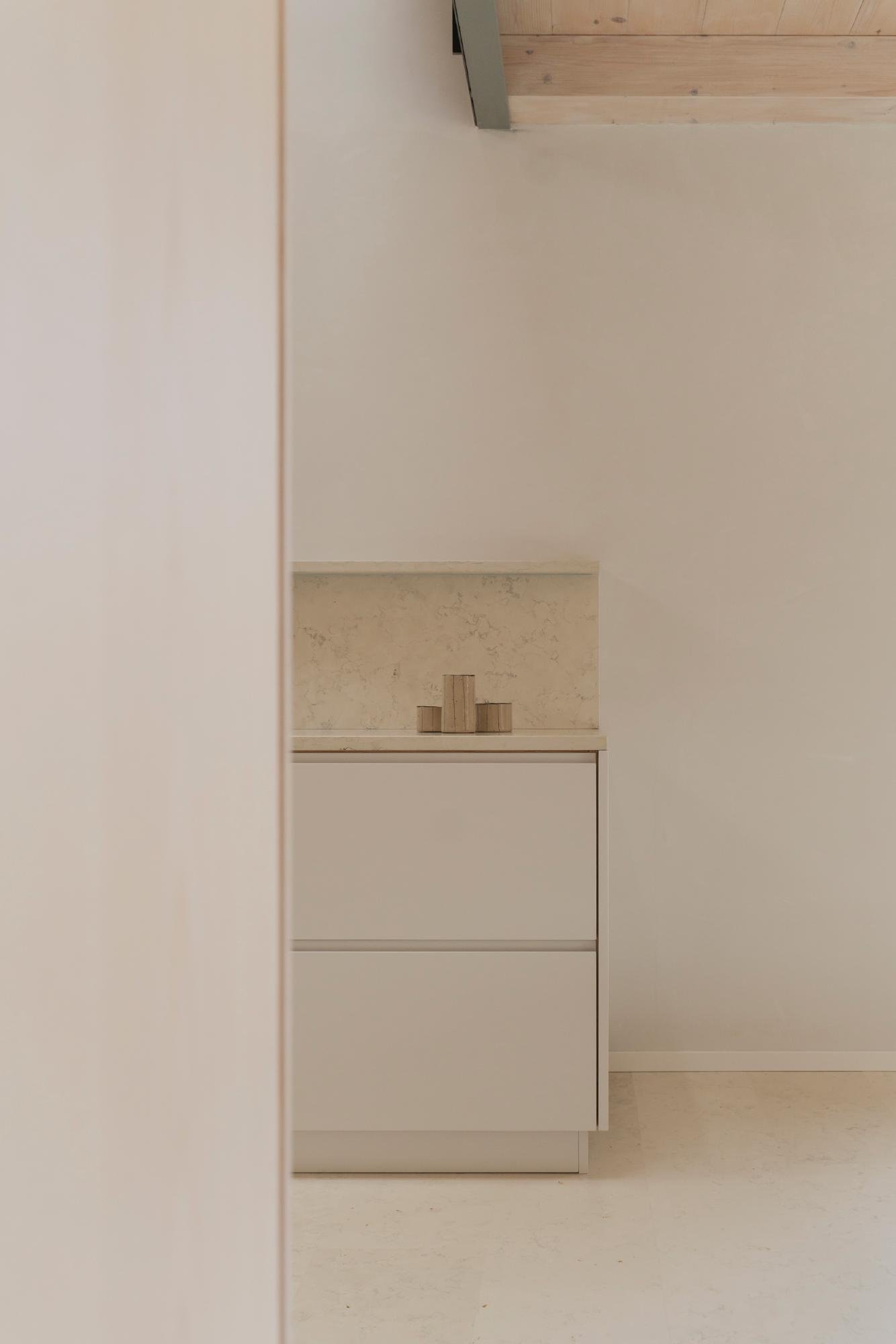
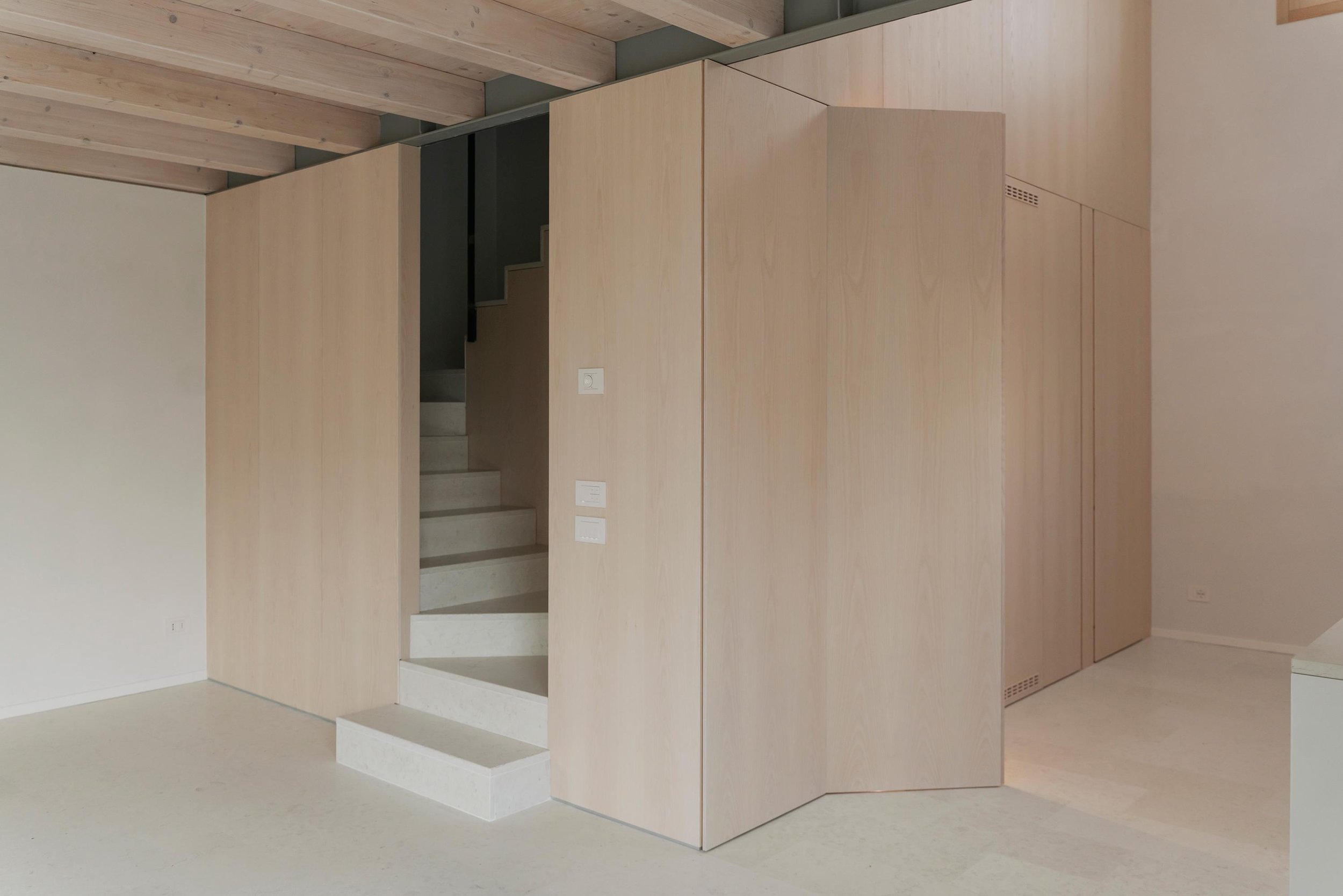
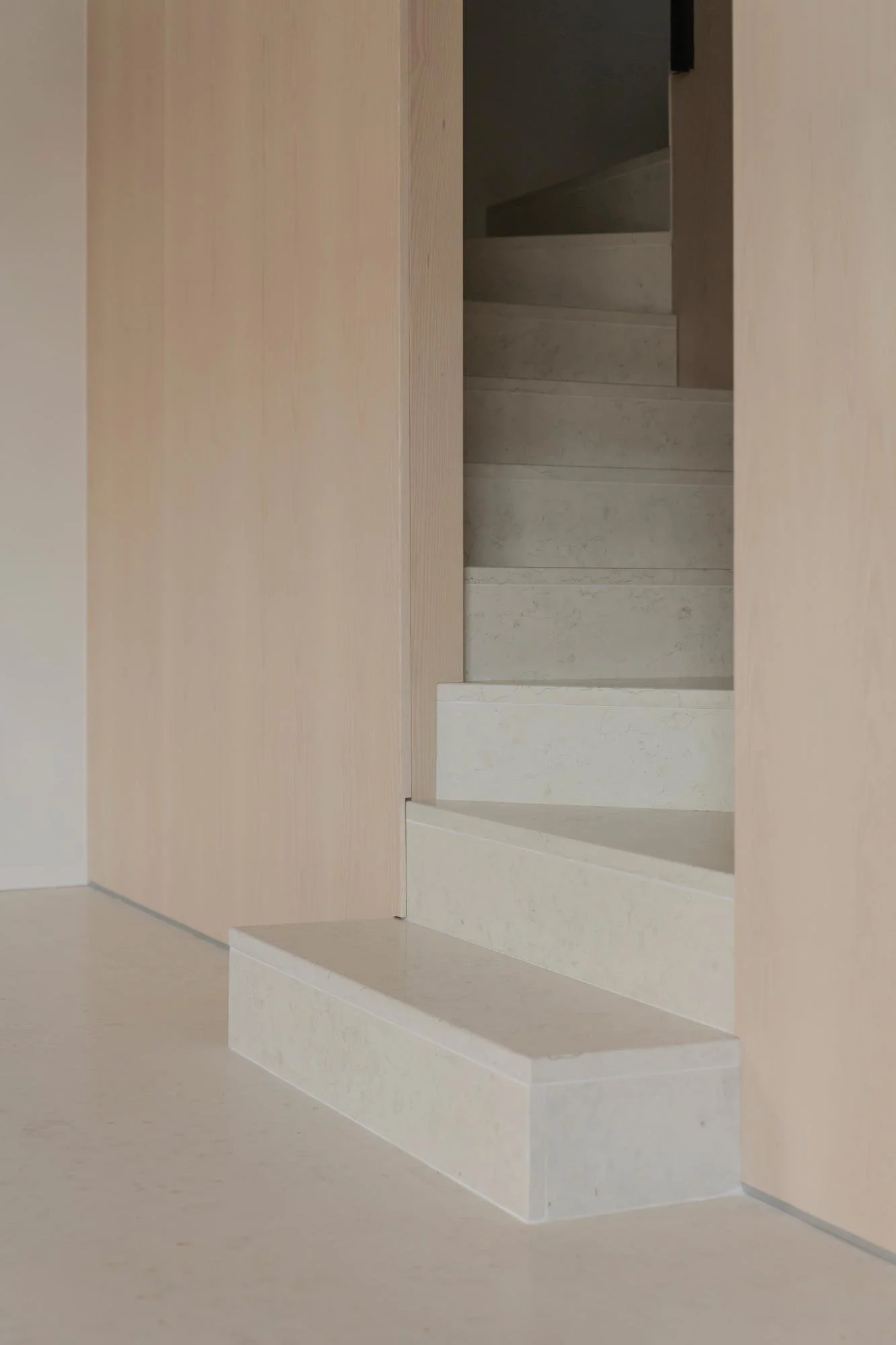
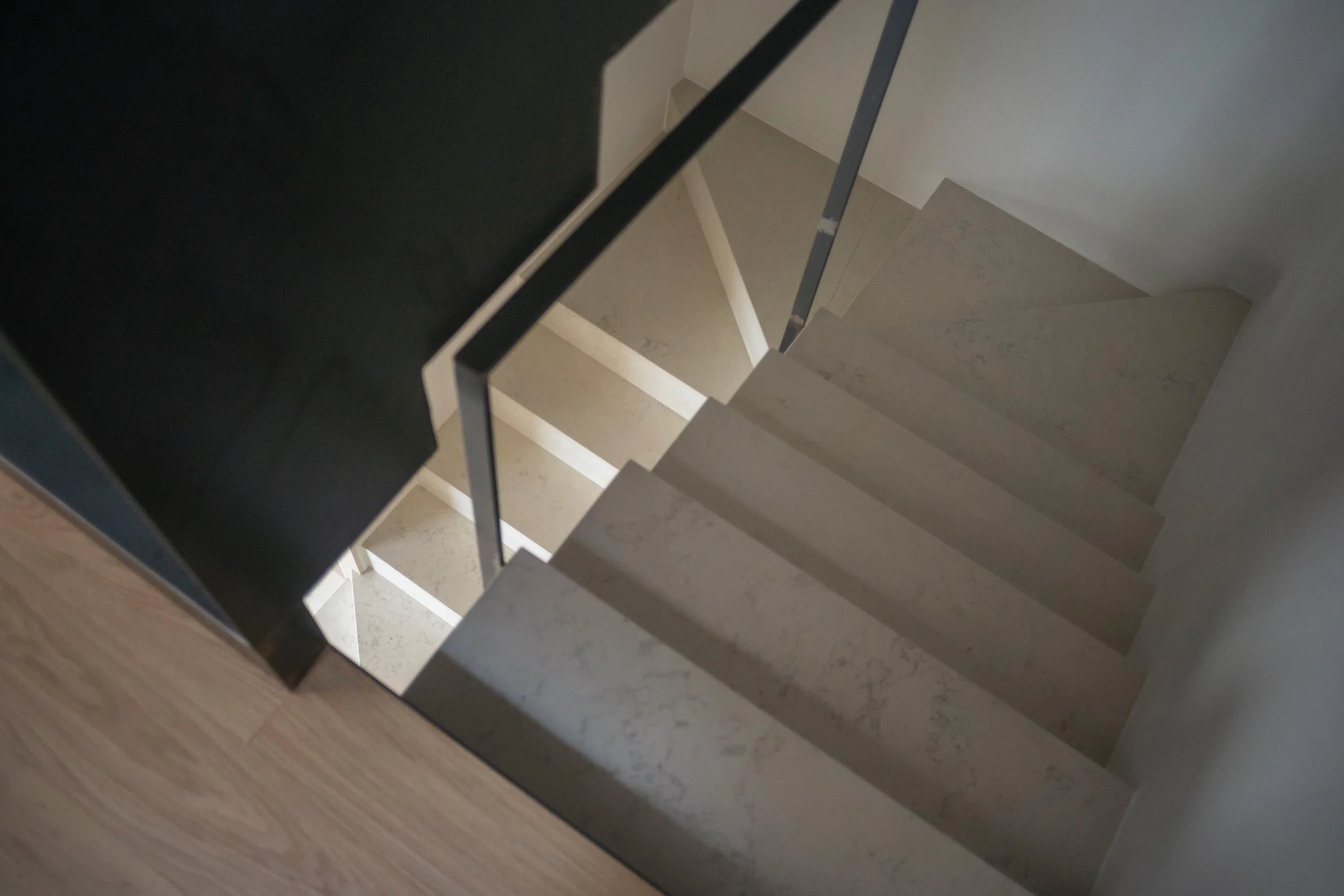
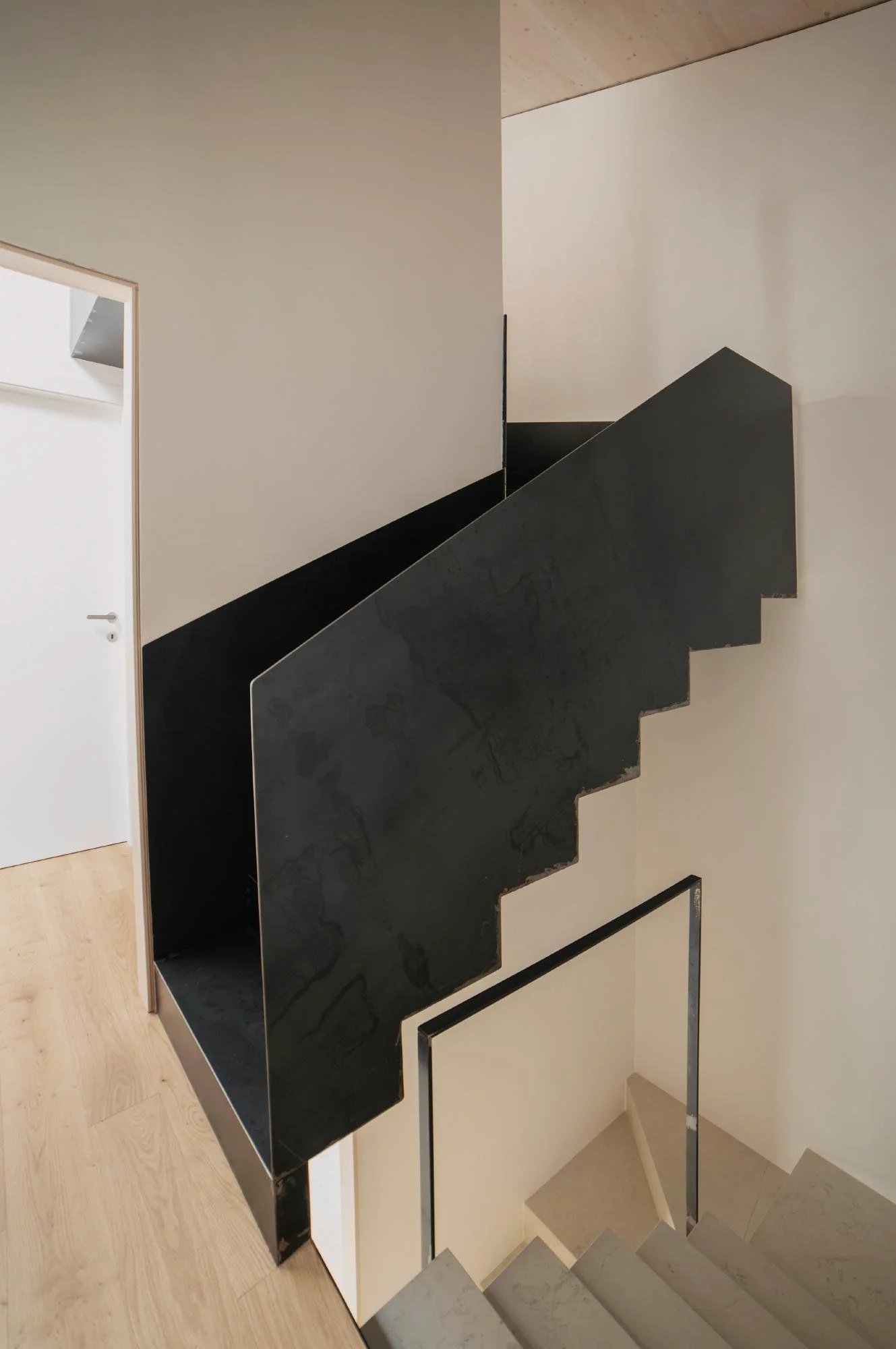
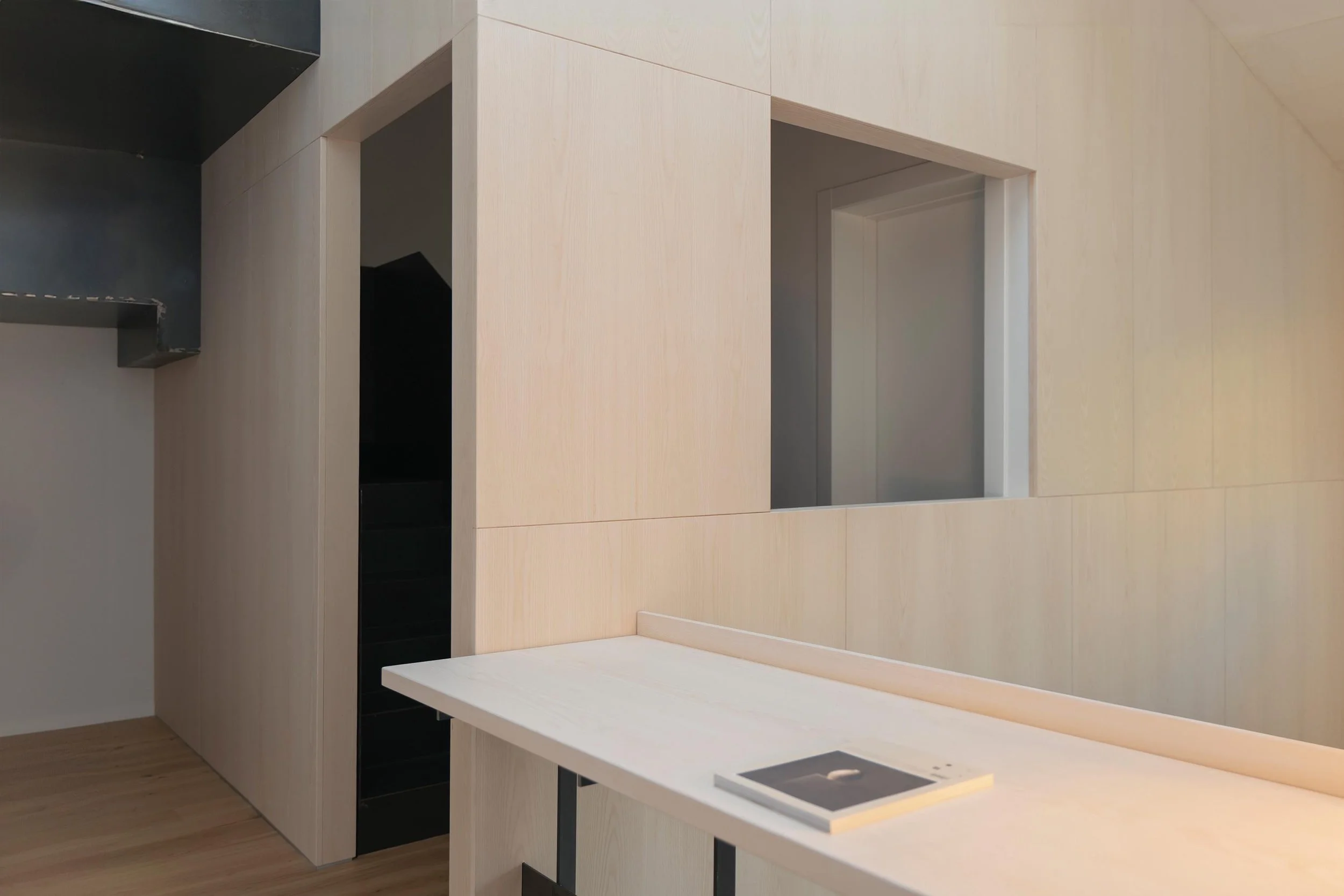
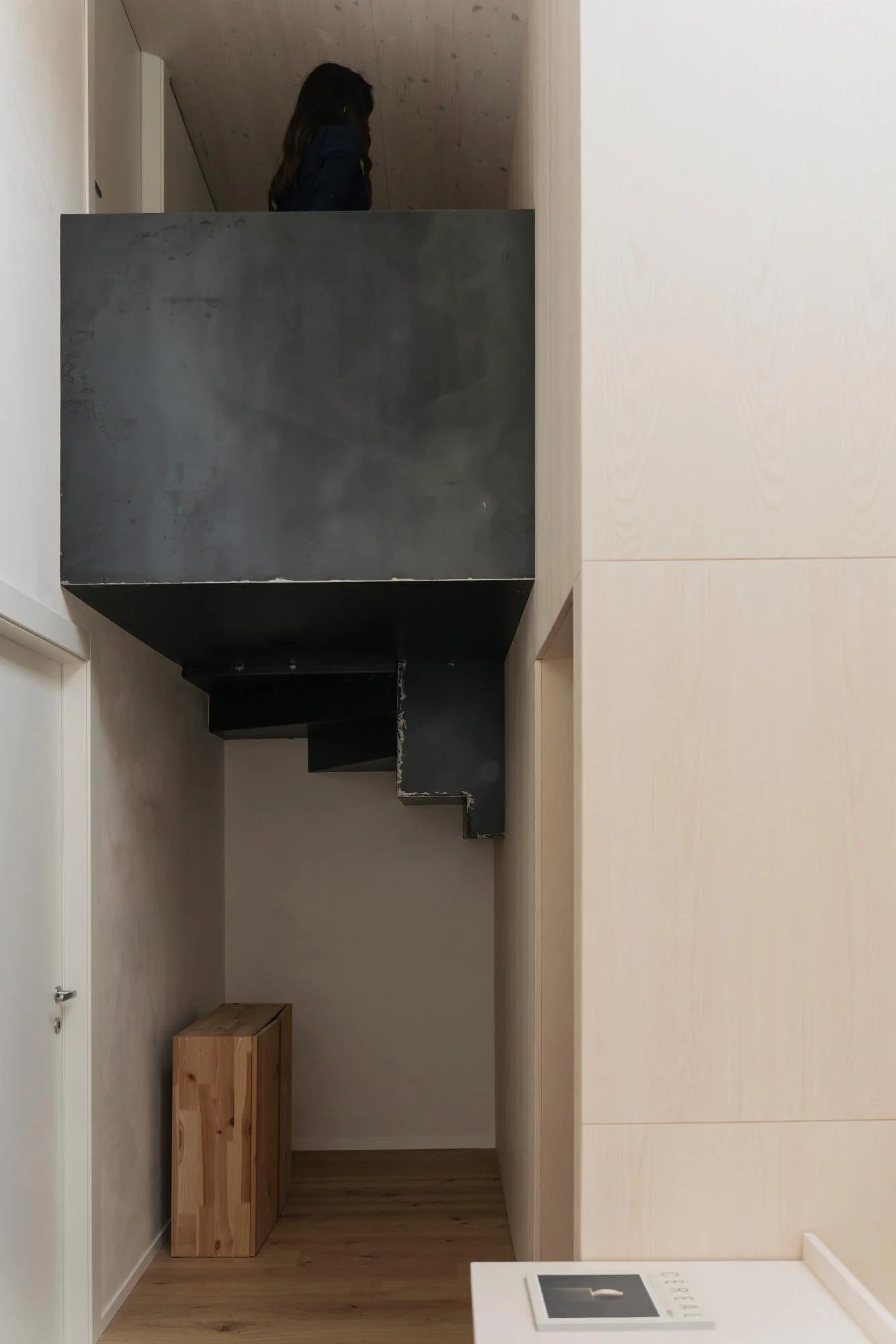
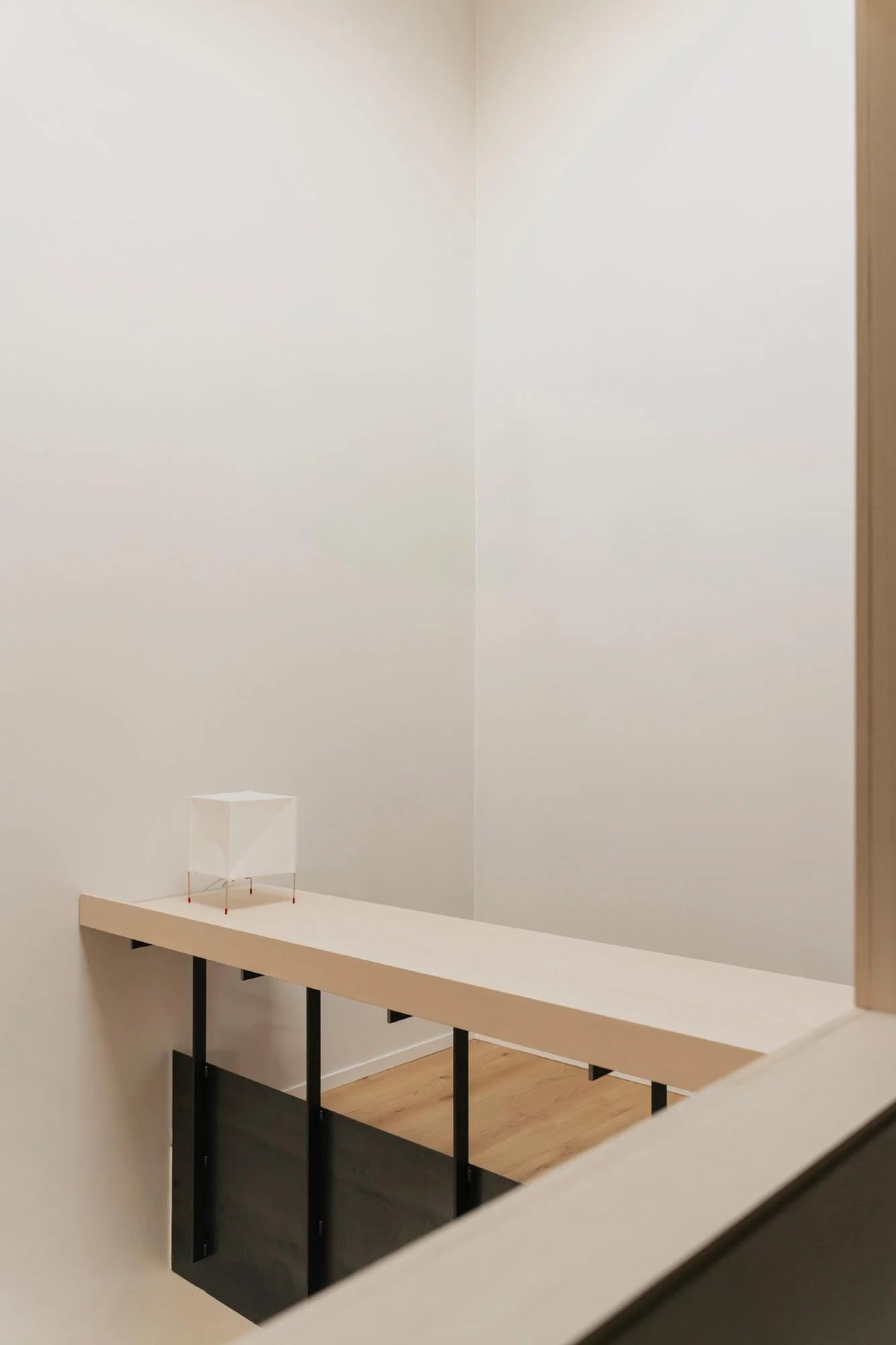
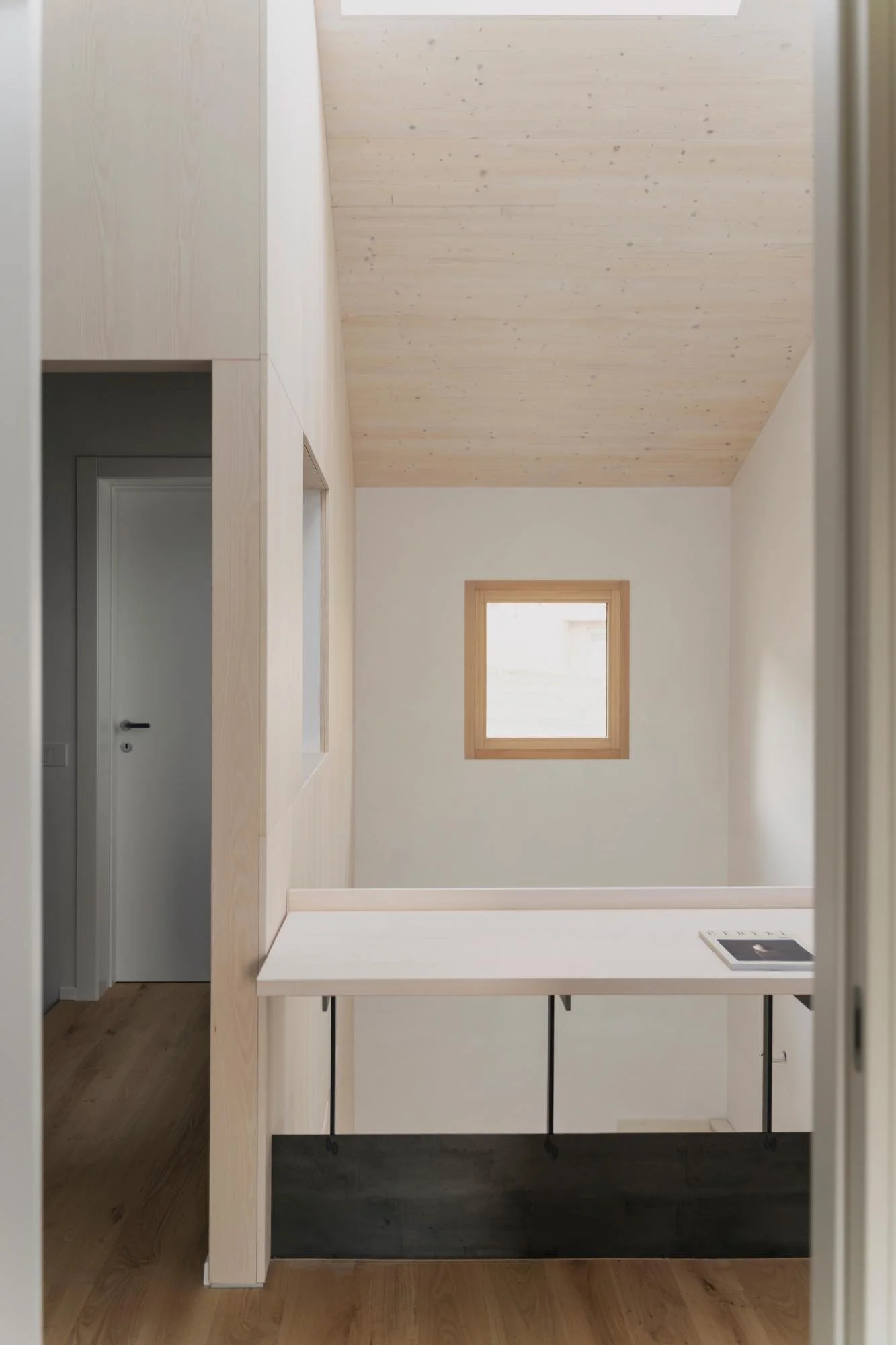
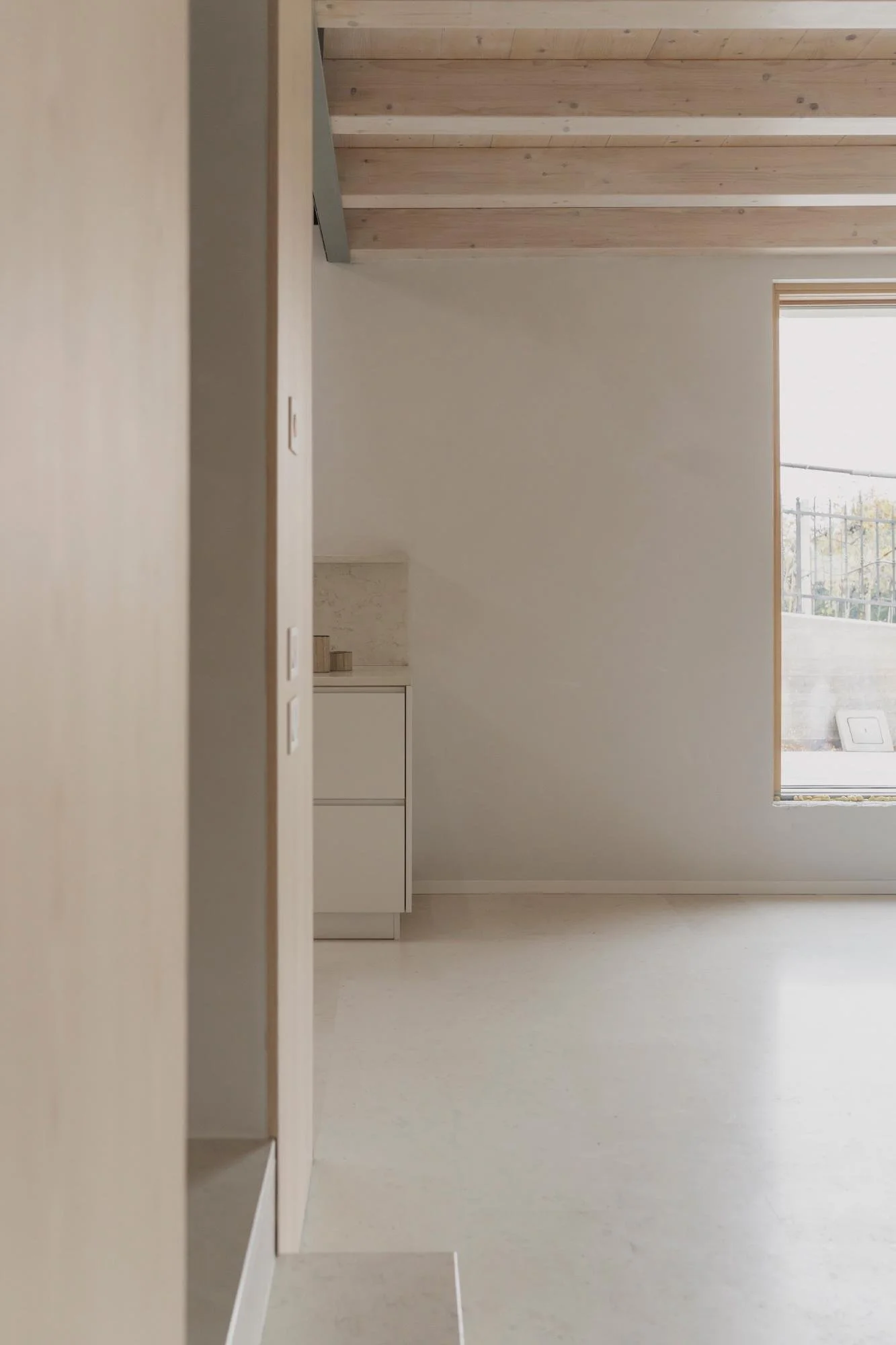
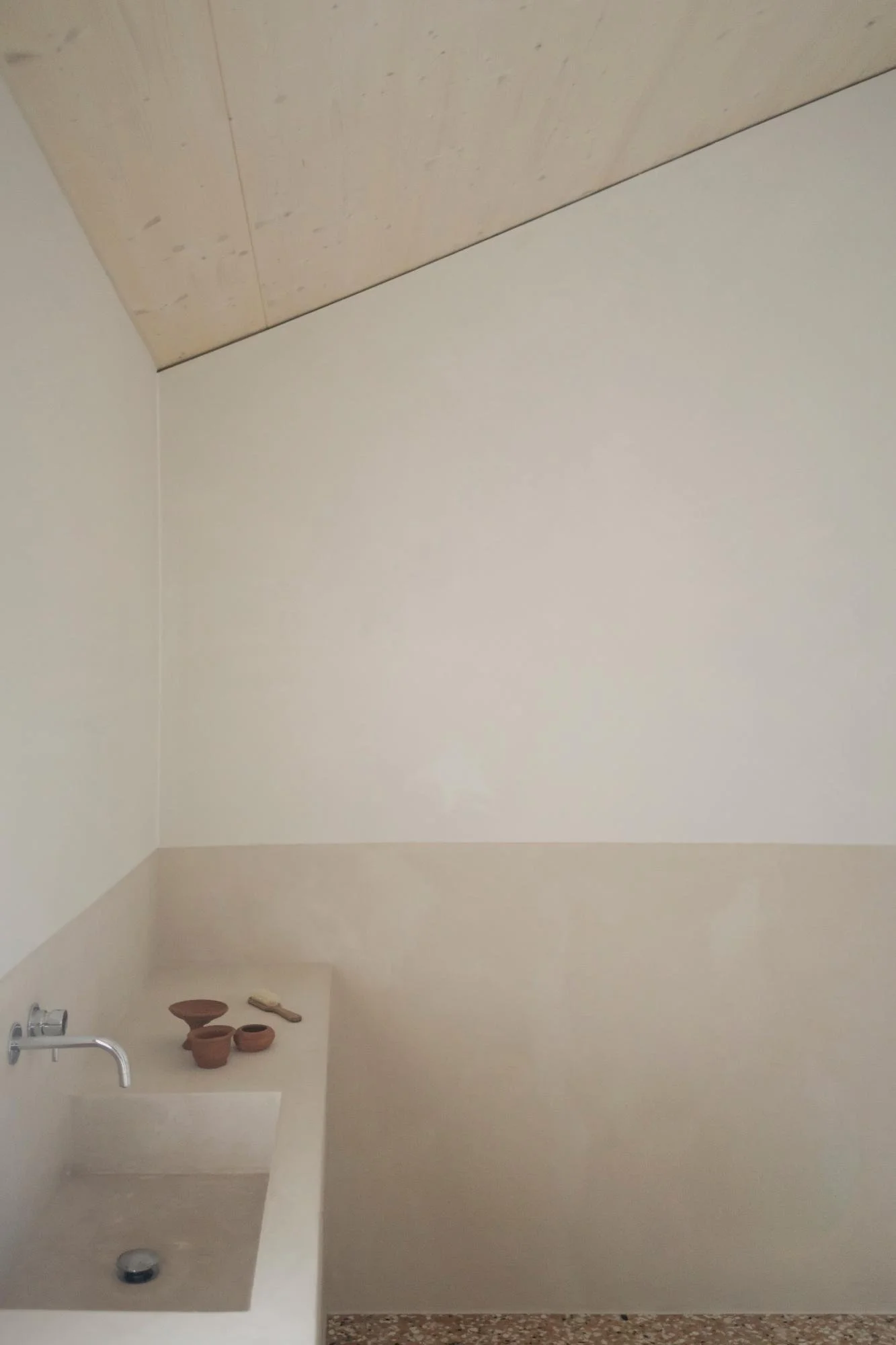
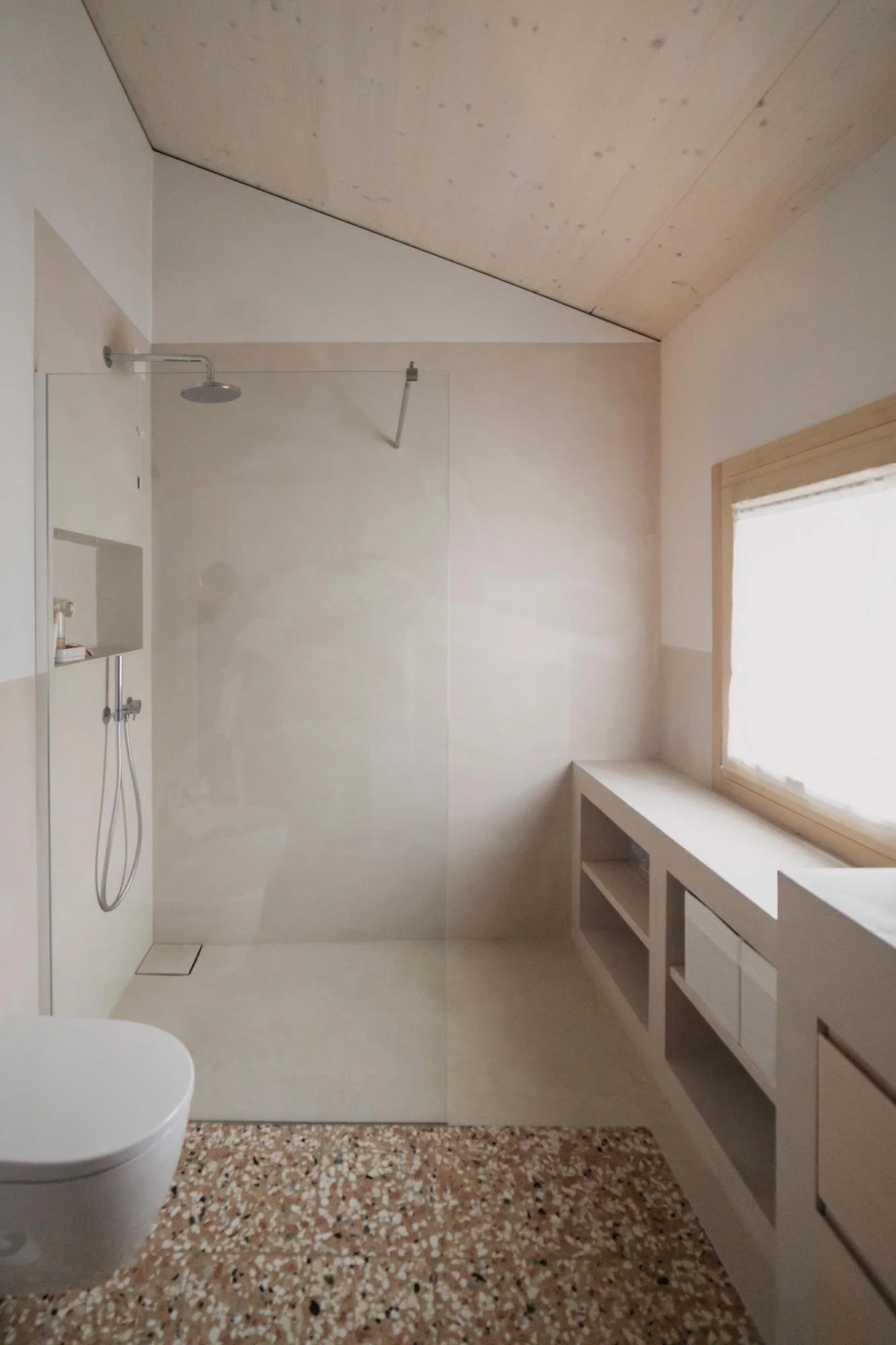
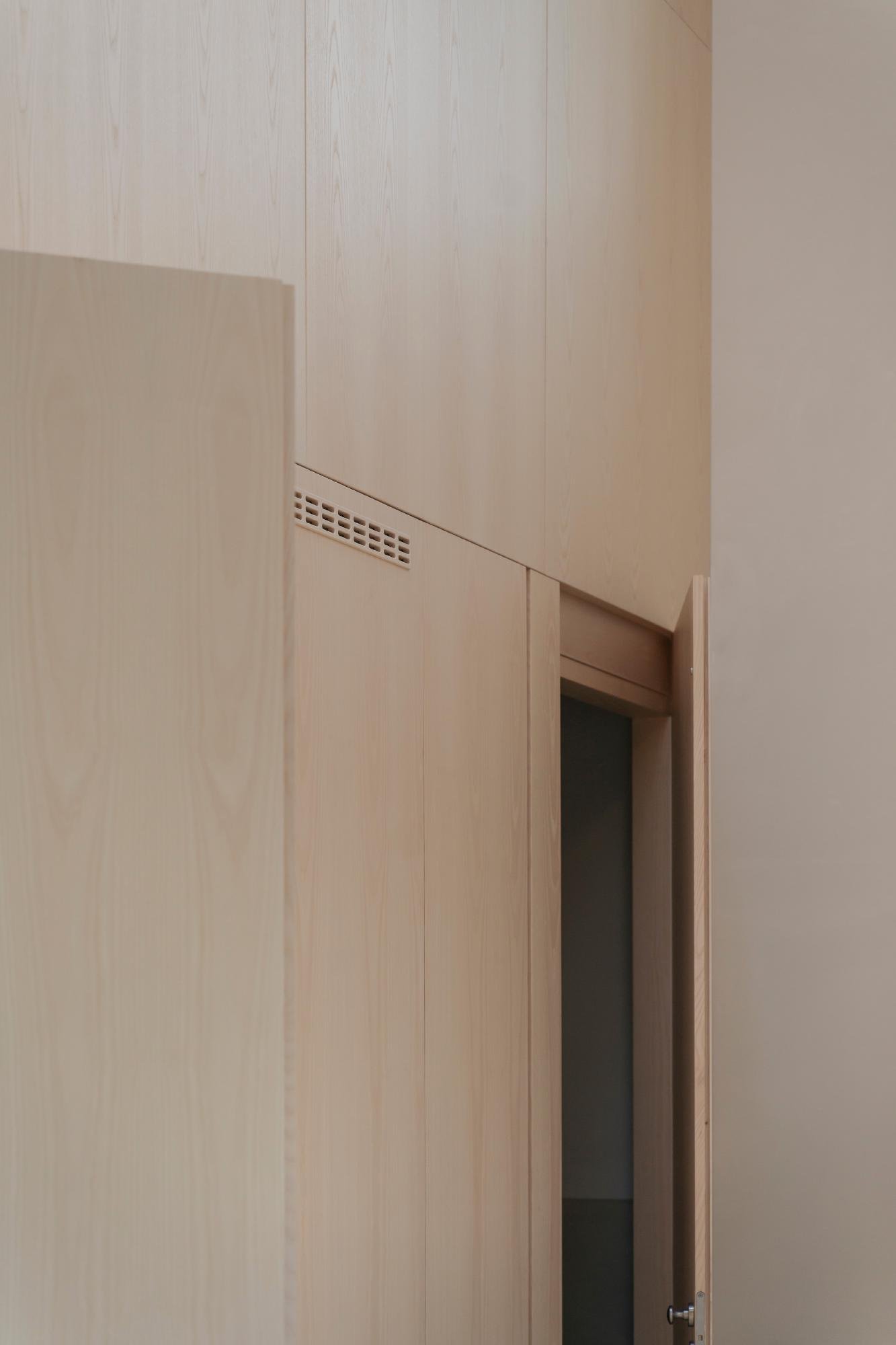
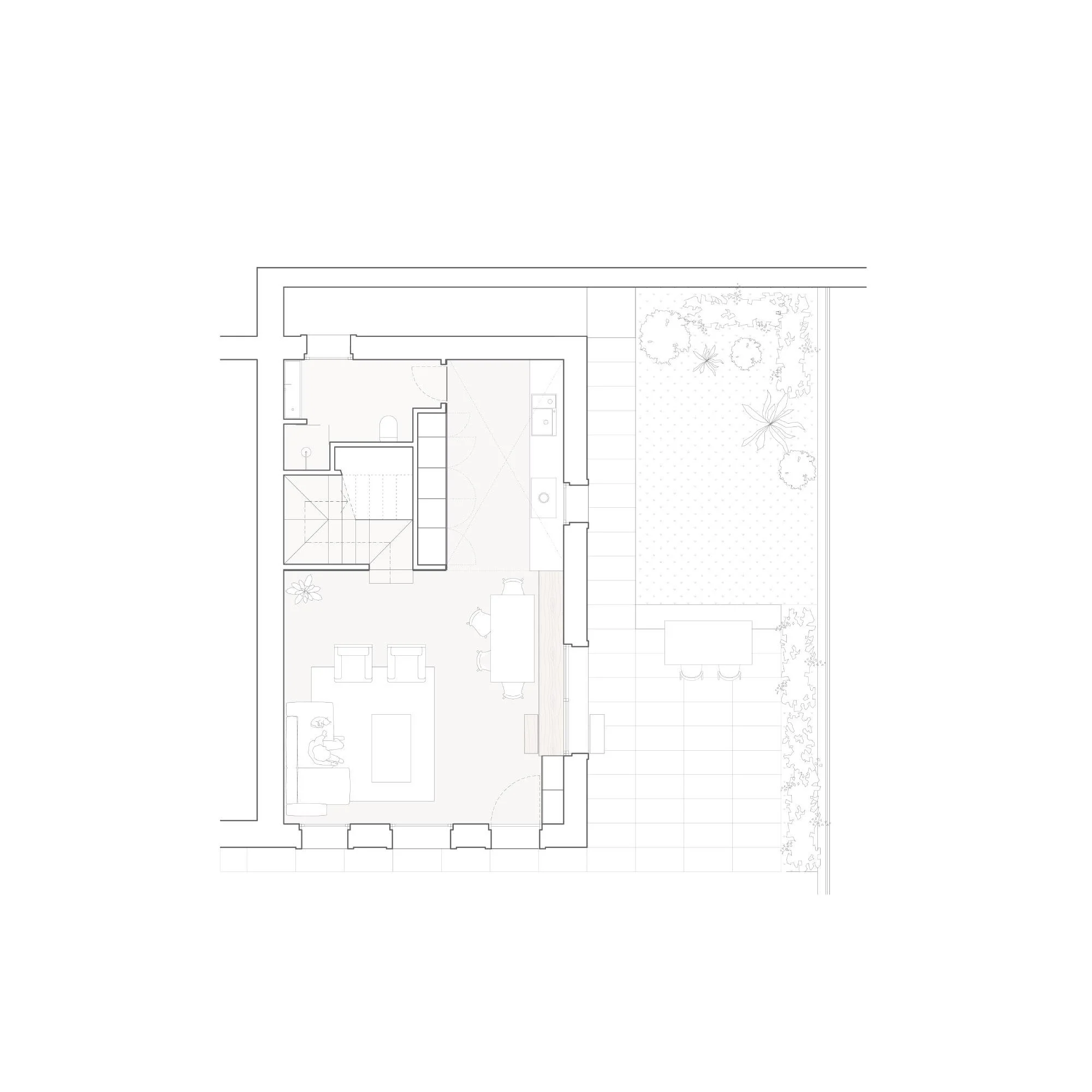
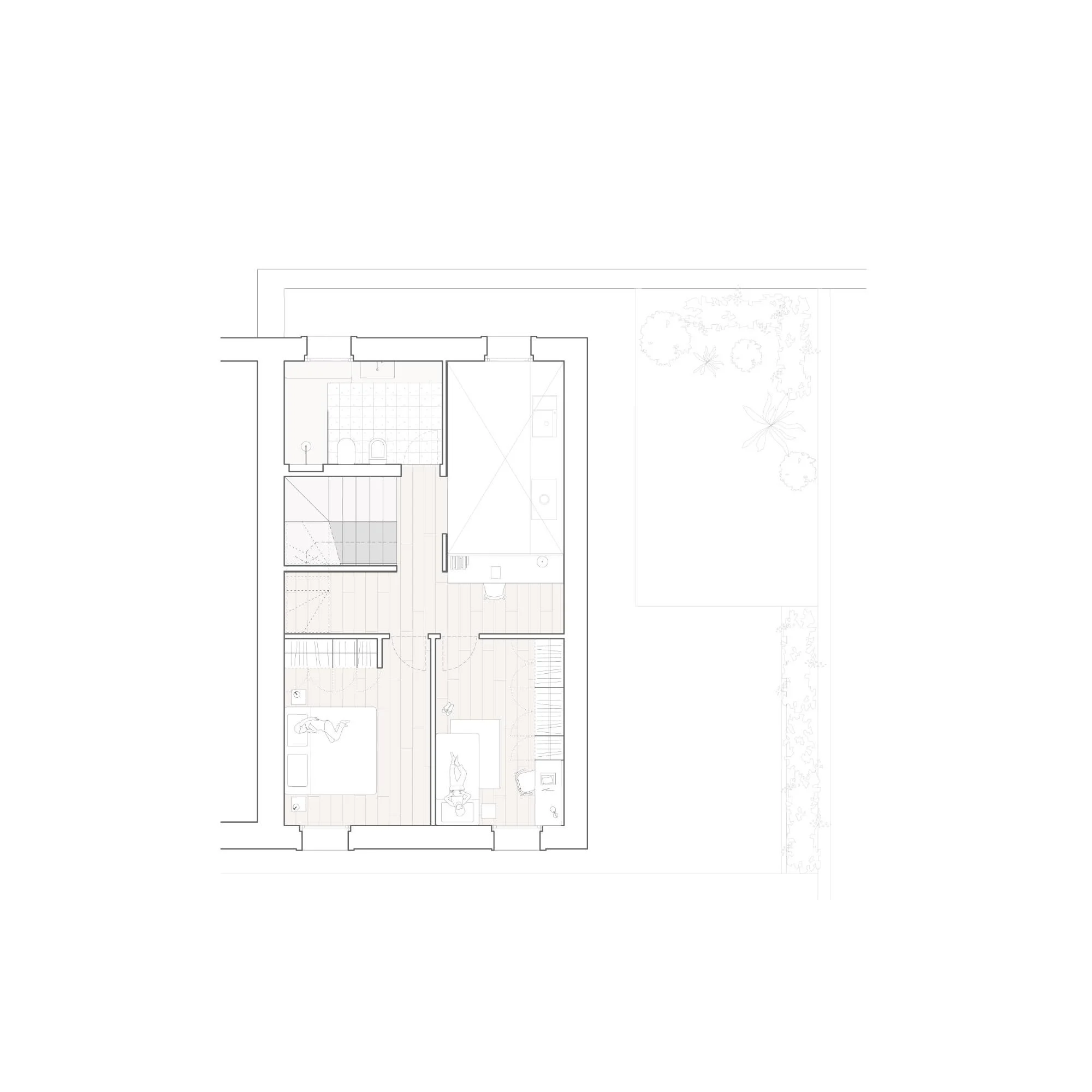
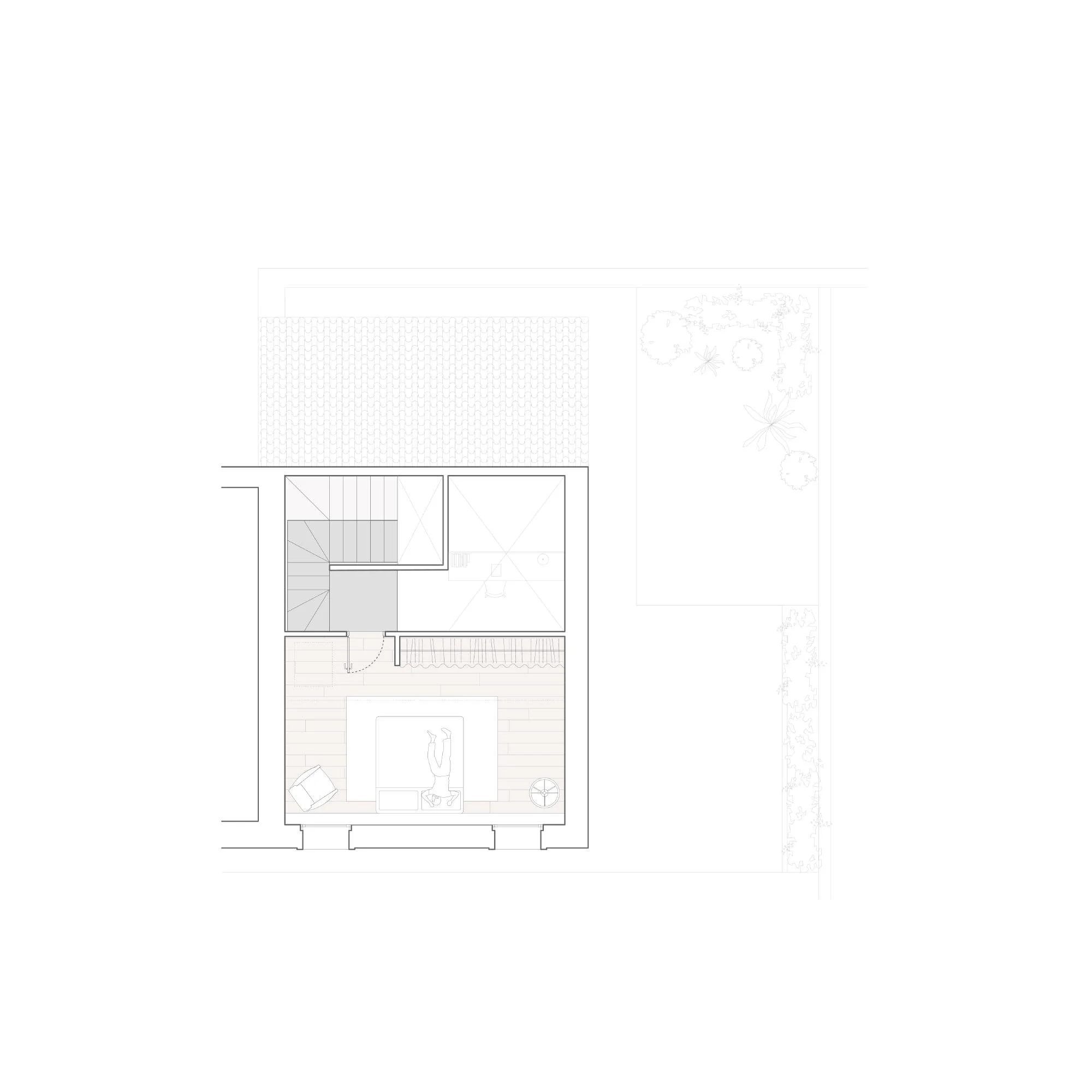
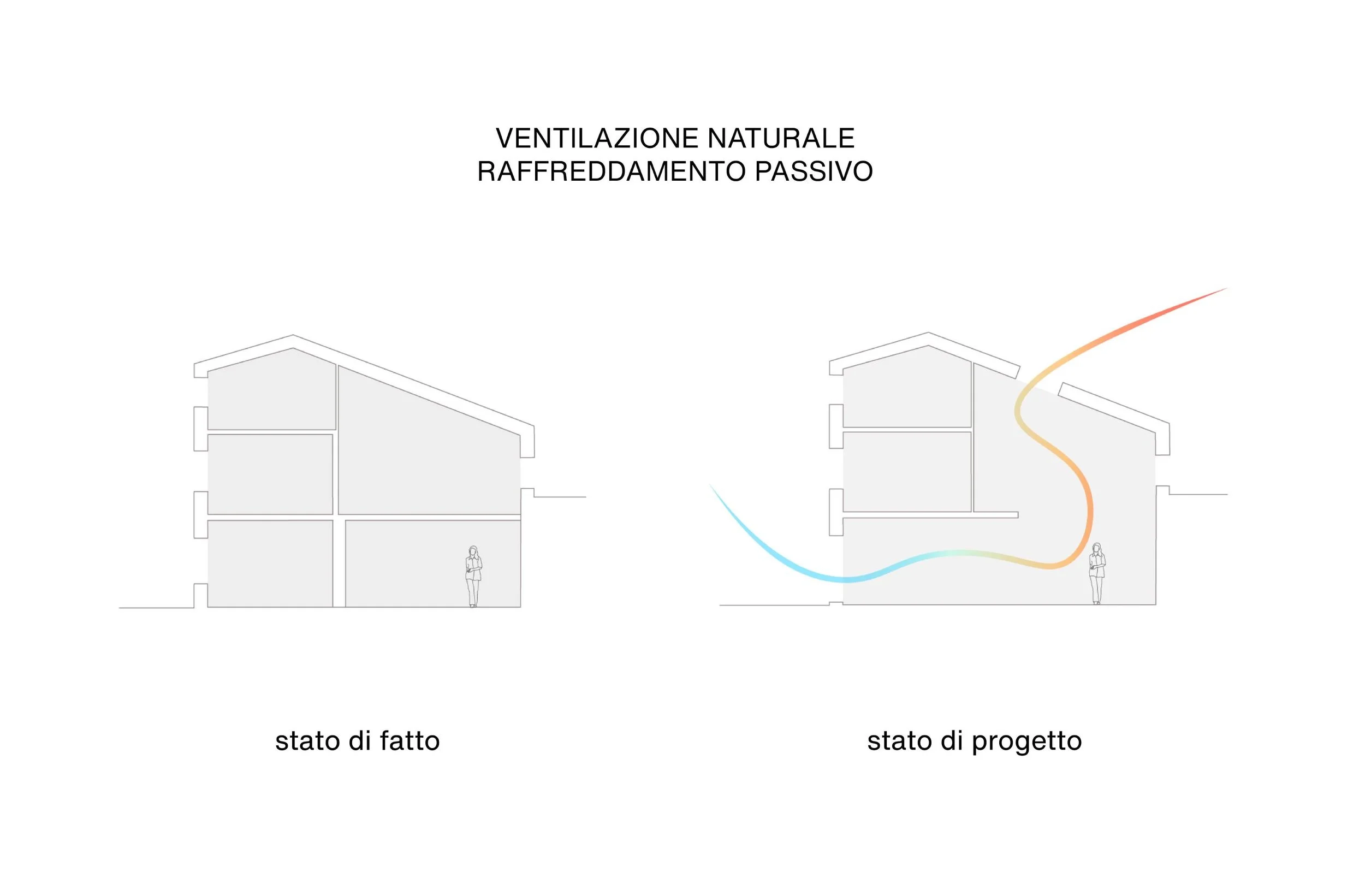
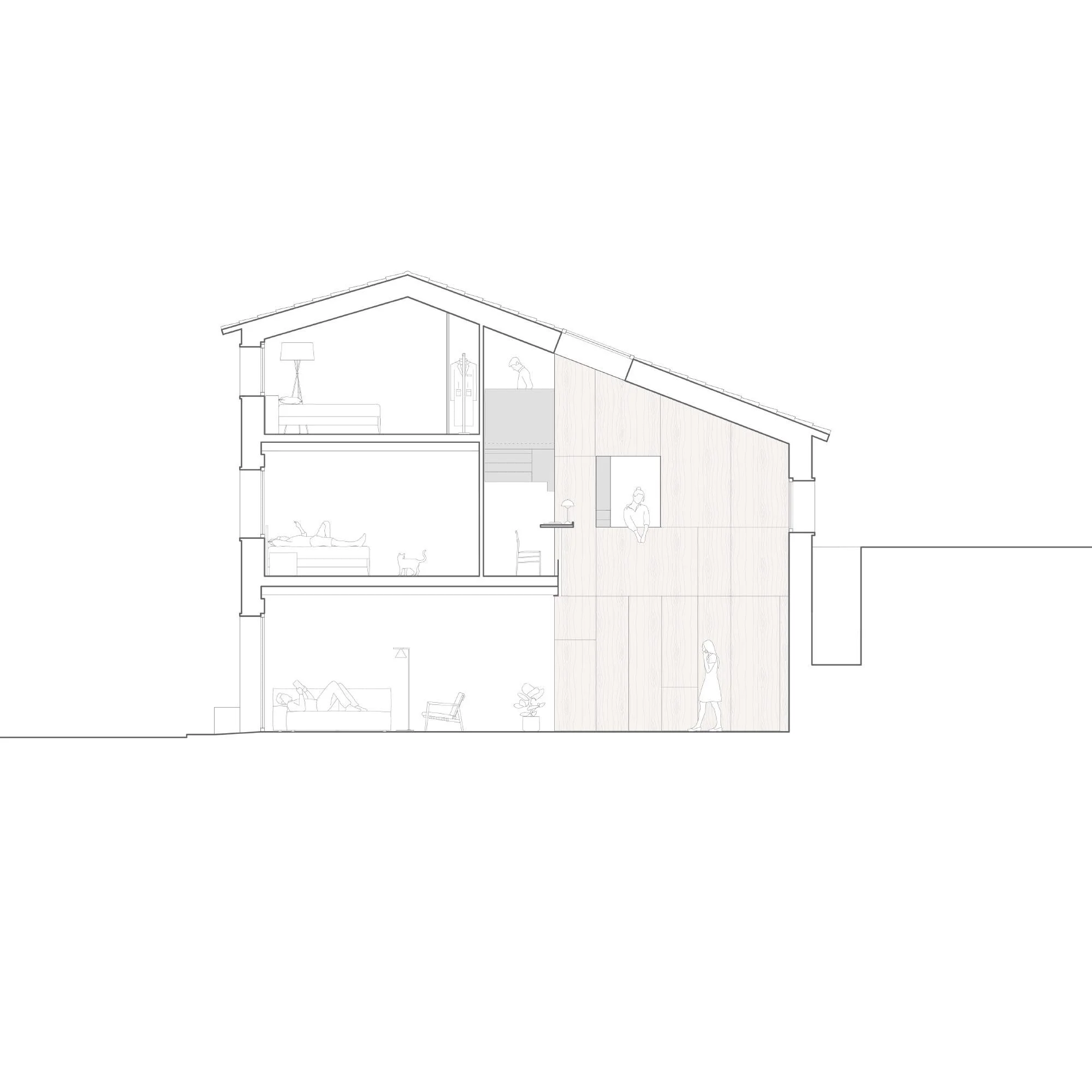
Despite the surrounding constraints, the design challenge was to bring natural elements like air and light into every space of the house through the introduction of an empty tower that connects the ground floor to the sky, allowing light to enter and air to circulate naturally throughout the spaces, thanks to a large skylight. Contrary to the common ‘more is better’ logic, the project opts to eliminate two floors to create an empty space, which becomes the key element of the entire design solution. At the base of this void is the kitchen, occupying a quarter of the almost square floor plan, and it is counterbalanced by a service tower, which houses two bathrooms and the stairs. From this solid ash wood vertical core, two balconies extend, providing access to the three bedrooms.
Casa Can Cain is made by prefabricated blocks that not only incorporate insulation but also function as formwork for the load-bearing structure. The floors are built with wooden beams, and the roof is composed of large prefabricated. Text description by the architects.